Showing posts with label spain. Show all posts

Monday, October 18, 2021

Female Spanish thriller writer Carmen Mola revealed to be three men

A million euro literary prize has lured three Spanish men out of anonymity, to reveal that they are behind ultra-violent Spanish crime thrillers marketed as the work of “Spain’s Elena Ferrante”

The men had published under the pseudonym Carmen Mola, which roughly translates as “Carmen’s cool”.

When one of their books won the lucrative Planeta prize, the trio went public to pick up the cheque at a glitzy ceremony attended by the Spanish king.

Agustín Martínez, Jorge Díaz and Antonio Mercero had published novels and worked as scriptwriters under their real names before coming together to write as Mola. Credits include work on TV series “Central Hospital” and “Blind Date”.

Their lead character in the Carmen Mola novels is detective Elena Blanco, a “peculiar and solitary woman, who loves grappa, karaoke, classic cars and sex in SUVs”, according to publisher Penguin Random House.

The men, all in their 40s and 50s, denied choosing a female pseudonym to help sell the books. “We didn’t hide behind a woman, we hid behind a name,” Antonio Mercero told Spanish newspaper El País. “I don’t know if a female pseudonym would sell more than a male one, I don’t have the faintest idea, but I doubt it.”


read more here @ The Guardian

Sunday, December 20, 2020

Review: The Princess Spy by Larry Loftis

Synopsis: When Aline Griffith was born in a quiet suburban New York hamlet, no one had any idea that she would go on to live “a life of glamour and danger that Ingrid Bergman only played at in Notorious” (Time). 

As the US enters the Second World War, the young college graduate is desperate to aid in the war effort, but no one is interested in a bright-eyed young woman whose only career experience is modeling clothes.

Aline’s life changes when, at a dinner party, she meets a man named Frank Ryan and reveals how desperately she wants to do her part for her country. Within a few weeks, he helps her join the Office of Strategic Services—forerunner of the CIA. With a code name and expert training under her belt, she is sent to Spain to be a coder, but is soon given the additional assignment of infiltrating the upper echelons of society, mingling with high-ranking officials, diplomats, and titled Europeans, any of whom could be an enemy agent. Against this glamorous backdrop of galas and dinner parties, she recruits sub-agents and engages in deep-cover espionage to counter Nazi tactics in Madrid.

Even after marrying the Count of Romanones, one of the wealthiest men in Spain, Aline secretly continues her covert activities, being given special assignments when abroad that would benefit from her impeccable pedigree and social connections.

Filled with twists, romance, and plenty of white-knuckled adventures fit for a James Bond film, The Princess Spy brings to vivid life the dazzling adventures of a remarkable American woman who risked everything to serve her country. 


For me, this was cosy-espionage, a new term I am applying to works on espionage where there is not really a lot of espionage substance.

One cannot take away from Aline that work that she did for the USA whilst she was based in neutral Spain - she was a coder and a field agent of sorts; she underwent the training before being handed a cover story and assigned a task.  Yes, anyone caught spying in Spain was at risk of being arrested, imprisoned and deported - but all, including the Nazi, were on the same playing field. However, the risks associated with her work are a far cry from those who were air-dropped behind enemy lines and were at risk of being captured by the Nazi and executed.

Much of Aline's "work" was social - meeting and mingling with society notables to gain access to any information that might come her way.  The odd bits of derring-do come in the form of being tailed by "associates" of a jealous boyfriend (a bull-fighter of renown) and a short spell of imprisonment.  Her work was carried out in the last year or so of the war in Europe - and with the surrender of the Germans, her work - for all intents and purposes - was over.


By this time, she was more or less ensconced in Spanish society and being courted by a Spanish prince.  Though she claims she wants to do her part, one finds that Aline was more interested in the social aspects that this covert work provided her - so much so she quits to marry her prince.

We are only told that during her marriage that she was working for the CIA - but there are no details that are indeed forthcoming to really give credence to this theory.  Her latter years could be taken from the covers of the gossip columns.

" ... Aline had perfected the art of gathering and keeping friends, weaving them together in a tapestry that spanned from Madrid to Paris to New York to Hollywood ..."

The author himself lets us know quite early on that even he was unsure if her story was even true, and that numerous events in her memoirs are indeed highly imagined. The constant adjustments to her narrative in her own books did not help matters in her favour.  

I would not class her as a war heroine along the lines of say a Nancy Wake, Odette Sansom, Noor Inayat Khan or even Violette Szabo, but one cannot discount that fact that she did serve her country in some capacity (more of a Bletchley Park type role).  I did appreciate the wrap up of the main characters at the end - it is always to see where they ended up after the war.

This is a very readable story of a small town girl, who went from model to spy to novelist to celebrity all in one incredible lifetime.

Tuesday, September 24, 2019

Royal Favouritism by Alistair Malcolm

Cover for 

Royal Favouritism and the Governing Elite of the Spanish Monarchy, 1640-1665


Royal Favouritism and the Governing Elite of the Spanish Monarchy, 1640-1665 presents a study of the later years of the reign of Philip IV from the perspective of his favourite (valido), don Luis Méndez de Haro, and of the other ministers who helped govern the Spanish Habsburg Monarchy. It offers a positive vision of a period that is often seen as one of failure and decline. Unlike his predecessors, Haro exercised the favour that he enjoyed in a discreet way, acting as a perfect courtier and honest broker between the king and his aristocratic subjects. 

Nevertheless, Alistair Malcolm also argues that the presence of a royal favourite at the head of the government of Spain amounted to a major problem. The king's delegation of his authority to a single nobleman was considered by many to have been incompatible with good kingship, and Philip IV was himself very uneasy about failing in his responsibilities as a ruler. Haro was thus in a highly insecure situation, and sought to justify his regime by organizing the management of a prestigious and expensive foreign policy. In this context, the eventual conclusion of the very honourable peace with France in 1659 is shown to have been as much the result of the independent actions of other ministers as it was of a royal favourite very reluctantly brought to the negotiating table at the Pyrenees. 

By conclusion, the quite sudden collapse of Spanish European hegemony after Haro's death in 1661 is represented as a delayed reaction to the repercussions of a flawed system of government.

Saturday, June 29, 2019

The Sassana Stone Pentalogy by James Vella Bardon

Synopsis: the adventures of Spaniard Abel de Santiago are told in five volumes by author James Vella-Barden: The Sheriff's Catch; A Rebel North; Hero of Rossclogher; Trials in Tumult; Ring of Ruse.

Army deserter Abel de Santiago has all but avenged his murdered wife, when he is captured and sold as a galley slave as part of the the Spanish Armada bound for England (May 1588). After a crushing defeat, the Spanish ships are battered by extraordinary storms. Santiago soon finds himself washed ashore in Ireland, a country terrorised by men that the natives call Sassenachs. Santiago’s faint hopes of survival appear dashed when he is captured by the brutal Sheriff of Sligo, who has orders from Dublin to torture and kill all Spanish castaways. An unlikely twist of fate leaves Santiago fleeing Sligo with a jewelled ring worth a King’s ransom. His escape leads to a desperate chase across a strange and stunning land, where danger lurks at every turn.

It was the real events of the fate of the Spanish Armada that first drew me to the first in the series - The Sheriff's Catch. I was familiar enough with the basic history of Ireland in the 16th Century to be aware of the links between the "native" Irish and the Spanish, particularly those post-Armada. So my curiosity was piqued and lead to my own discovery of the events which form the backdrop of Valla Barden's series.

In Ireland, the last Desmond rebellion had been crushed around 1583, by Elizabeth’s army, their lands were confiscated and planted with English settlers. The defeated chieftains of Munster and their compatriots went into exile in Spain, many working in navy and army. These Irish exiles hoped that a Spanish victory might restore their lands. The first Irish regiment in Spanish service was born in 1587 when an Irish unit raised under an English Catholic, William Stanley and sent to the Netherlands, defected to the Spanish side. As a result Ireland appeared to the Spanish to be an obvious weak point for England, with a restive Catholic population that could be mobilized in their favour. 

The Spanish Armada was the largest naval invasion fleet ever known at the time, consisting of 130 ships and 29,450 men of various nationalities, including soldiers, sailors, a large number of priests and servants, all under command of Duke of Medina Sidonia, who ruled with an iron fist.

The historical events of the Spanish Armada of 1588, Spain’s great naval effort to conquer Protestant England, and the devastating consequences off the Irish coast have been well documented and as such will not be covered off here. Suffice to say that the decision to return home through North Atlantic proved fatal as they were driven off-course by bad weather and close on 24 ships were wrecked off the Irish coast from Antrim in the north to Kerry in the south (September 1588). 

The Annals of the Fours Masters says: 
Great numbers of the Spaniards were drowned, and their ships were totally wrecked in those places. The smaller part of them returned to Spain; and some say that nine thousand of them were lost on this occasion. 

In Dublin, Elizabeth’s government issued dire warnings about how Spanish were to be dealt with, along with any Irish who attempted to aid them immediate death. The English Lord Deputy of Ireland, Fitzwilliam, issued a proclamation whereby ‘Harbouring Castaways’ was punishable by death. To his own officers he wrote; 
‘Whereas the distressed fleet of the Spaniards by tempest and contrary winds, though the providence of God have been driven on the coast… where it is thought, great treasure and also ordinance, munitions [and] armour hath been cast. We authorize you to… to haul all hulls and to apprehend and execute all Spaniards found there of any quality soever. Torture May be used in prosecuting this inquiry.’ (source: Calendar of Carew Manuscripts 1575-1588) 

This chilling order, not to spare prisoners ‘of any quality [i.e. rank or social status] whatsoever’ was startlingly ruthless. Accordingly, Richard Bingham, the President of Connacht, and his brother George Bingham, executed up to 1,100 Spanish survivors of the wrecks who made it ashore in the western province. For instance, at Galway city, 300 Spanish prisoners including 40 aristocrats were beheaded on Fitzwilliam’s orders – though Bingham apparently regretted the loss of ransom money. Only a handful such as Don Luis de Cordoba, managed to secretly buy their way to safety in Scotland.
 

Native Irish treatment of the Spanish survivors was extremely varied. In Connacht, most Irish lords cooperated with Bingham, particularly the largest lords O’Brien, Earl of Thomond, and Burke, Earl of Clanricarde. Other clans such as the O’Flahertys also handed over Spanish prisoners. Others, seem simply to have seen the Armada as an opportunity for personal gain. Dubhdarach O’Malley Roe, on Clare Island, for instance killed the Spanish survivors and kept their gold for himself. However, in modern north Mayo, Sligo and Leitrim, areas which had very recently been in armed revolt against the English Crown – chieftains such as MacWilliam Burke, and Brian O’Rourke harboured Spaniards. 

In County Sligo, where three ships of fleet - La Lavia, La Juliana, and Santa Maria de Vision - sunk off the coast in a treacherous gale on September 25, 1588, a recent exciting discovery has confirmed their existence at bottom of the sea in Streedagh Strand which is near the village of Grange. 

The three ships had become detached from their squadron and drifted off the coast of Streedagh. A westward wind was howling and ships had few anchors, having cut them at English fire ship attack near Calais. They were hit by Atlantic storm and lifted as pounding waves on seaward side forced them over and eventually, the vessels rapidly broke up. 

A series of letters of one of Spanish aboard La Lavia who escaped subsequent massacre ashore, provides us with evidence of what occurred and is an important social and historical document detailing often horrific events he witnessed as he journeyed throughout areas of north Sligo, Leitrim and on Causeway coast of north Antrim. 

Francisco de Cúellar’s record of events when he was washed up, exhausted and broken, in Streedagh and his subsequent travels until he eventually got back to Spain survives. De Cúellar, a native of Castille-Y-Leon in Spain originally joined the fleet as captain of galleon San Pedro which was part of the squadron of Castille (he lost his rank and was transferred to La Lavia for disobeying orders). 

It is estimated that from three vessels about 1,800 men drowned and the rest came ashore at Streedagh. The English George Bingham’s army killed 140-150 Spanish at Streedagh. However, even before English forces arrived, surviving Spanish had to deal with Irish. Thousands of Irish natives gathered in sparsely populated Streedagh, beach now littered with bodies, flotsam and injured. Several Irish attacked (but contrary to popular view at the time, did not kill) Spanish, instead they took their money, clothes, jewellry and whatever could be salvaged from ships. 

Captain Francisco de Cuellar later wrote that, as a survivor, he found: “the land and shore were full of enemies, who went dancing with delight at our misfortune; and when any one of our people reached the beach, two hundred savages and other enemies fell upon him and stripped him of what he had.” 

Having escaped, de Cúellar’s now famous testimony records his epic journey. He found refuge from friendly chieftains of Sligo & Leitrim - De Cúellar wrote of ‘passing seven months among mountains and woods with savages’. 

O’Rourke of Breifne, whom he described as ‘a savage but a very good Christian and an enemy of the heretics, always carrying on war with them’, sent him through the territory of several other friendly clans including McClancy of Rosclogher and Redmond O’Gallagher, Bishop of Derry and the O’Cahans. 

De Cúellar also witnessed much cruelty, arriving at nearby Staid Abbey he found "twelve Spaniards hanging within the church by act of Lutheran English." Later, after being forced to work as a blacksmith in Glenade valley de Cúellar fetches up at McClancy castle at Rossclogher, Lough Melvin, County Leitrim. After defending McClancy’s castle from English forces, de Cúellar was offered, as a token of gratitude, hand in marriage of McClancy’s sister. However, de Cúellar slipped away quietly and secretly took ship back to the Spanish Netherlands. - 

Subsequently, Brian O’Rourke, Prince of Breffni (who was said to have fled to Scotland before being handed over to the English) and McClancy who had helped not only de Cúellar but other Spanish survivors, were both executed by the English crown. 

In Ulster, which was still largely outside of English control, the Spaniards seem to have fared somewhat better, at least if they survived shipwreck. In Antrim the Scottish/Irish MacDonnell clan led by Sorley Boy (Somhairle Buidh) helped up to 500 Spaniards escape to Scotland. 

The position of Hugh O’Neill, Earl of Tyrone, the most powerful northern leader, at this point still proclaiming himself a loyal subject to Elizabeth I, was hard to pin down. He sheltered and kept on a number of Spanish commanders to train his own forces, whom he was soon to lead in a war against the Elizabethan state. Nevertheless, he also reported to Fitzwilliam the Lord Deputy that he had ‘put a large number of Spaniards to the sword’ in Inishowen (modern Donegal). During Hugh O’Neill and Hugh O’Donnell’s Nine Years War (1595-1603) against the English Crown, both lords were in constant communication with Phillip II, who aided them with weapons, money and finally a landing of Spanish troops at Kinsale in 1601-2. 

Ironically enough, those Spaniards lucky enough to be shipwrecked in England itself were generally treated much more leniently. Most were taken prisoner and eventually repatriated.


As I said, what better backdrop of an epic series with all the essential elements: an quest for vengeance; a priceless treasure; an emotional journey; a desperate escape; a daring and exciting adventure.

further reading & sources:
Ireland: Graveyard of the Spanish Armada by TP Kilfeather
Rónán Gearóid Ó Domhnaill's Blog Post: 1588 - A Dark Year For Galway

Monday, June 17, 2019

Inspector Alvarez Series by Roderick Jeffries

Mystery / crime series starring Enrique Alvarez, a police inspector in Mallorca, Spain, with the first in the series published in 1974 and the last (to date) in 2013.


Related imageAlvarez is nothing special as far as detectives go. He isn’t necessarily the smartest or most astute individual on the block. His strength lies in his determination. Alvarez is what one might call a humane detective.  He cares about people. More importantly, he cares about the people of Mallorca. And when something goes amiss, he cannot help but investigate, if only to make sure his community is safe. And Alvarez doesn’t stop hunting and seeking until he gets his man.

Alvarez’s heart is always getting him into trouble. He cannot help but stick his nose into other people’s business, especially when a murder occurs. Even when the victim in question is despised by all who knew him, and even when everyone on the island couldn’t be happier that the individual in question is dead, Alvarez makes it his goal to care.  He makes it his mission to deliver justice even when justice isn’t wanted. That often means stepping on all the wrong toes.

The Inspector Alvarez series is typically deliberately paced. Even in the most serious of criminal cases, Alvarez has a penchant for taking his time, slowly working through the evidence and scrutinizing the clues until he finds his suspect.

An Inspector Alvarez MysteryThat is often what fails Alvarez’s targets. They tend to dismiss him and his slow-paced approach to detective work. They only realize their folly when the good inspector is at their doorstep, waiting to slap the handcuffs on.

A lot of the crime committed in the Inspector Alvarez series revolves around English men and women who are either staying on Mallorca or simply visiting. Sometimes trouble comes to them from within Mallorca.  Other times, they bring the trouble over from England. Either way, it falls on the shoulders of Alvarez to clean up their mess, and he does a pretty good job of it.


List courtesy of Fantastic Fiction (read L -> R)

Mistakenly in Mallorca
Two-Faced Death
Troubled Deaths
Murder Begets Murder
Just Desserts
Unseemly End
Deadly Petard
Three & One Makes Five
Layers of Deceit
Almost Murder
Relatively Dangerous
Death Trick
Dead Clever
Too Clever By Half
Murder’s Long Memory
A fatal Fleece
Murder Confounded
Death Takes Time
An Arcadian death
An Artistic Way To Go
A Maze of Murders
An Enigmatic Disappearance
An Artful Death
The Ambiguity of Murder
Definitely Deceased
Seeing Is Deceiving
An Intriguing Murder
An Air of Murder
A Sunny Disappearance
Murder Delayed
Murder Needs Imagination
An Instinctive Murder
Sun, Sea & Murder
A Question of Motive
Murder, Majorcan Style
Murdered By Nature
In Search of Murder


read more here @ Scene of the Crime

Sunday, June 9, 2019

Review: The Samurai's Daughter by John Healey

The Samurai's Daughter: A Novel
The follow up to The Samurai of Seville - its is a story of acceptance and finding your place in the world as Soledad Maria - the Samurai's daughter - finds herself torn between two cultures - that of her Japanese father and that of her Spanish mother; and never quite accepted in either.

We follow the alternating storyline - Shiro and Catriona / Japan and Spain, as Soledad Maria and her father return to his native Japan where she will be raised. On the way, many adventures take place - shipwrecks, mutiny, imprisonment, gladitorial style combat, narrow escapes, separation and reunion. New characters appear - the Irish captive, Catriona; the Dutch sea captain, Kurt; new family members in both japan and Spain.

In Japan they are received by the Shogun Tokugawa Hidetada, who hears their amazing tale of survival; Soledad maria (now Masako); is trained in the arts of the samurai, all the while being courted by the vengeful Data Tadamune.

On the run and attempting to return to Spain, many more adventures take place until finally they arrive and all stories merge into one.

It is a quick moving tale - slightly smaller in volume that the first. It is ultimately a young woman's reflections of both her own and her family's lives.

"... each of us is hos own person to be respected and understood ..." a poignant message.


Saturday, April 6, 2019

Hernando Colon - The man who tried to read all the books in the world


129,864,880. That’s the number of books in the world, according to an estimate by Google Books, which since its launch in 2005 has been trying to scan them all, convert them to searchable text using optical character recognition and then make them publicly available online. Although Google Books’ hopes have been slowed by wrangles over copyright and fair use, if it succeeds it could become the largest online body of human knowledge ever available.

Half a millennium earlier in Seville, Spain, Hernando Colón (1488–1539) had the same ambitious aim: to create a library that would be universal in a way never before imagined because it would contain everything. And Colón really did try to collect everything: from precious manuscripts to books by unknown authors, from flimsy pamphlets to tavern posters, from weighty tomes to throwaway ephemera.

Colón’s bibliomania took him back and forth across Europe for three decades. According to Dr Edward Wilson-Lee, from Cambridge's Sidney Sussex College and the Faculty of English, he bought 700 books in Nuremburg over Christmas in 1521, before passing on to Mainz where he bought a thousand more in the course of a month. In a single year in 1530, he visited Rome, Bologna, Modena, Parma, Turin, Milan, Venice, Padua, Innsbruck, Augsburg, Constance, Basle, Fribourg, Cologne, Maastricht, Antwerp, Paris, Poitiers and Burgos, voraciously buying all he could lay his hands on.

Today, just over 3,000 books of Colón’s library remain. Until now, the life of this extraordinary man has largely escaped notice; it’s taken another revolution to grasp how visionary he was in recognising the power of tools to order the world of information.


read more from University of Cambridge

Tuesday, October 30, 2018

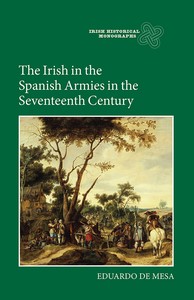
The Irish in the Spanish Armies in the Seventeenth Century by Eduardo de Mesa

Irish in Spanish ArmiesReview by Craig Nakashian for De Re Militari:

Eduardo de Mesa’s tome on Irish soldiers that served in Habsburg Spain’s armies succeeds on at least five levels. First, it establishes a significant (and convincing) revisionist position on the military revolution. Second, this work constitutes a contribution to the literature on early modern European identity. Third, de Mesa makes accessible a trove of archival evidence. Fourth, readers with interests beyond Ireland’s shores and the Spanish Road will find insights illuminating the broader topography of the early modern world. Finally, the book advances the historiography that underscores Ireland’s importance in the early modern state-system.

Medieval historians have long recognized that although on the geographical periphery of Europe, Ireland occupied a central place in letters, theology and culture. Early modernists increasingly have appreciated the reach and relevance of the Irish. As de Mesa documents, Irish arms were, in certain well-defined periods, instrumental in preserving the fortunes of the Catholic Crusade against Protestantism and in championing the survival of the House of Habsburg. The book’s conclusion makes clear how political and military reverberations from Ireland affected Habsburg strategy.

Saturday, September 29, 2018

Review - Soul of Toledo by Edward Webster

The reign of Alfonso X the Wise was the one which entailed the greatest prosperity and splendour for the Jewish community of Toledo. During his reign the Jewish quarter of Toledo became known for its scale, the luxuriousness and beauty of its public buildings, and the intellectual quality of its rabbis.  This was the place where the Jews of Toledo could work, raise families and practice their religion at one of the region’s 10 synagogues, without the fear of being persecuted for their beliefs. 

However, during the 14th century, the epidemic of the Black Death (1348), and the war between Pedro I the Cruel and Enrique of Trastámara resulted in deep social ill-feeling borne out by the attacks on the Jewish quarter in 1355 and 1391. In addition, there was a fire in the enclosure of Alcaná, a commercial district where the Jews had their shops, workshops and some houses. 

Image result for toledo spain

In the latter part of the same century the construction of the cathedral cloister was planned and this began to be built on August 14th 1389. There is some doubt as to whether the fire was started by the Chapterhouse of the cathedral to allow the construction of the cloister planned by Archbishop Pedro Tenorio in the Alcaná area.

The anti-Jewish revolts of 1391 reached Toledo too. On June 18th 1391 the Jewish quarter of Toledo was attacked at night in a similar way to other cities in the kingdom. Induced by the violent exhortations of Vincente Ferrer, the city was the scene of one of the most appalling outbreaks of violence. Previously the nobles of Toledo had on the whole done their part in protecting the Jews; but when the agitation reached that city they were found among the most violent in the onslaught on the larger Jewry. This had resisted the attacks of Henry II.; but it was now entered by the rioters at different gates, almost all the Jews being put to death - The victims of the slaughter included prominent craftsmen, poets and men of letters. The majority of the synagogues of the city were destroyed or seriously damaged. This was practically the ruin of the Toledo Jewry.

The disastrous economic consequences for the city were soon felt; particularly by private individuals, monasteries and other religious institutions who lost the income they had from the taxes on the Jewish aljamas. The hardest hit was the chaplains whose ecclesiastical profits derived from the rents in the Jewish quarter.

Ferrer again visited the city for a fortnight in May, 1411, with the result that the synagogue of St. Maria la Blanca was turned into a Church. In truth, the majority of the survivors of the massacre of 1391 had saved their lives by becoming converted; so that very few true believers still remained in the city, and these were deprived in 1419 of all opportunity to hold public office; and on June 15, 1449, thirteen of them were turned out of office as "suspects in faith," among them being members of the Lunez, Lopez, Gonzalez, Herrera, and Cota families, afterward distinguished among the Maranos, whose very name is supposed to have originated in Toledo at this time .

The aggressiveness of the Christians to Jews and Moslems, which became ever more pronounced, resulted in the proclamation of a series of ordinances against them (1451) whereby they were required to obey a series of restrictive measures such as the prohibition to walk around the streets at night, enter churches or monasteries without authorisation, leave their houses during Christian festivities as well as the obligation to wear distinctive signs sewn into their clothes. The Jews of Toledo had already complained that in 1450 King Juan II had ordered the revocation and cancellation of all anti-Jewish ordinances in place in the Castilian kingdom as there had been many places where they had done so and the Jews had left. The King ordered the Town hall of Toledo to follow his order and the latter, meeting on February 23rd 1452, reviewed the ordinances, doing away with some, but modifying and maintaining others.

Several fires accompanied the conditions of social disequilibrium which were still in place in the 15th century. Supported by the League of Nobles, who symbolically dethroned Enrique IV in the so-called Farce of Ávila  and crowned his brother Alfonso (5th July 1465), the old Christians started clearing the lands of Castile of all those who had Jewish blood, whether they were Jewish or convertsas well as Moslems converted to Christianity. The latter, feeling threatened, staged an uprising in Toledo on the day of the fires of Magdalena (22nd July 1467). Heavily armed, the converts surrounded the cathedral and they kept the Christians under siege after killing two canons and a few others. A thousand Christians and reinforcements came to the rescue of those besieged. The fighting then began on the outskirts of the cathedral and continued in the Magdalena district. Those besieged were able to get out. The converts responded by setting fire to the Magdalena district. All the neighbouring houses burned to the ground immediately; due to a high wine, the fire spread quickly resulting in an estimated one thousand six hundred houses were destroyed. The old Christians, after many days of fighting, were finally able to control the fire and reduce the converts. Their ringleader, Fernando de la Torre, was put to death; the same fate would befall many other converts in the following days.

The uprising was of little benefit to the insurgents who were forced to flee from Castile with their assets. Those who decided to stay, deprived of their right to bear arms ( 1468) or hold posts in the Administration (1469), finally had to convert and attest to their good faith to be Christians before the Inquisition Court.  Yest still more persecutions, forced conversions, mass murder, and rioting was prevalent in the city 1486 - 1490) before the establishment of the Inquisition under the Catholic Monarchs.


28526087This then is the backdrop of the novel - and it is a powerful one. The character of Vincente is born in the city in the wake of the violence of 1391 - his parents are secret conversos - he is a man conflicted in a time of political and religious upheaval. His nemesis is a power-driven lawyer who wants to incite a religious purge (I am wondering if he has been based on the notorious Vincente Ferrer).

This is a well-crafted tome - there is the human, historical and political element; the characters aren't perfect - they are flawed.  The plot is engrossing, suspenseful and dramatic due - I am certain - to the research that went into the storyline (many events mentioned in the novel are based on real events).  The narrative draws the reader into the everyday struggles of a persecuted group and you can't help but empathise.

I would put this on the same shelf as Ken Follett's "Pillars of the Earth" and "Cathedral of the Sea" by  Ildefonso Falcones.  These are stories of epic proportions - and I have no doubt it will join the other two in being made into a series.

Saturday, April 14, 2018

The last Muslim King in Spain

9781781256862.jpgBased on original research, and drawing attention to the connections between the medieval Moorish king Boabdil, and current social and political concerns in Europe today, Elizabeth Drayson presents the first full account in any language of the Moorish sultan of Granada, and head of the Nasrid dynasty - The Moor’s Last Stand: The life of Boabdil, Muslim King of Granada.


The academic’s research has also uncovered a potential mystery regarding the final resting place of the last Muslim king in Spain. Long thought to have died in Algeria in 1494, experts are now hoping to exhume and DNA test what they believe to be the remains of the sultan beneath a derelict mausoleum in Fez, Morocco.

According to her, Boabdil’s heroism, long repudiated by most historical commentators, is evident in his ability to recognise the futility of further resistance, and the choice he made in rejecting the further suffering, starvation and slaughter of his people. Instead, he bargained for the best terms of surrender possible, rejecting martyrdom and willingly sacrificing his reputation for the greater good.

read more here at University of Cambridge

Sunday, June 25, 2017

Review: In and of the Mediterranean by Michelle M. Hamilton


Spain & the Mediterranean - a collection of essays on medieval Iberian history in relation to the Mediterranean Sea. It is a study of the diverse religious and ethnic groups, of the politics of the period, and the interaction and co-existence of all groups.

The focus of each chapter is, either singularly or collectively, mainly from the Spanish perspective, whether Christian, Muslim or Jew. Each chapter (or indepth essay) is followed by extensive notes and works cited to enable the reader to explore further should they wish to do so. It is an academic tome not designed for the everyday layman.

Personally, I would purchase this book simply for Chapter 3 (The Princess & the Palace: On Hawwa' bint Tashufin & Other Women from the Almoravid Royal Family) and Chapter 10 (Amadis of Gaul's novel of chivalry, trans Jacob Algaba).


Review also posted @ Goodreads

Thursday, June 22, 2017

The Myth of the Andalusian Paradise

There is a widely held belief that in Spain, during the European Middle Ages, Islam, Christianity and Judaism co-existed peacefully and fruitfully under a tolerant and enlightened Islamic hegemony. Dario Fernandez-Morera, associate professor of Spanish and Portuguese at Northwestern University in the US, with a PhD from Harvard, has written a stunning book that upends this myth.

The myth itself has been a comforting and even inspiring story that has underpinned the so-called Toledo Principles regarding religious tolerance in our time. It has buttressed the belief that Islam was a higher civilisation than that of medieval Europe in the eighth to 12th centuries and that the destruction of this enlightened and sophisticated Andalusia should be lamented.

The myth of Andalusia has been based on neglect of primary sources and selective adulation of worldly Muslim rulers, as if they were representative of the clerical ulema and Muslim masses. In fact, as Fernandez-Morera shows, both mullahs and masses tended to bigotry and anti-Semitism. There were anti-Semitic pogroms every bit as violent and irrational as those in Christian Europe. And many Christians were expelled from Muslim Spain.

read entire review by Paul Monk @ The Australian

Saturday, July 2, 2016

A mysterious medieval text decrypted

A mysterious medieval text, decrypted - The Boston Globe
AROUND THE YEAR 1290, a set of mysterious writings began to circulate in the Jewish community of Castile, an area in what is now modern-day Spain. Written in a lyrical, abstruse Aramaic, they were disseminated by a man named Moses ben Shem-Tov de León, a member of the region’s circle of Jewish mystics. De León claimed that the work was not his own — that he had copied an ancient manuscript in his possession, which had been composed in Palestine in the second century by the legendary sage Rabbi Shim’on bar Yohai. These writings had remained secret for centuries, de León claimed, and were only now being revealed to the world at large.

After decades of work, Matt has left a permanent mark on the world library of mystical literature, and the Zohar has left a permanent mark on him. “The Zohar forces you to look into yourself,” he told me, describing the effect of translating day in and day out, for years on end. “In trying to decipher what the text means, you’re actually engaged in an inner spiritual search.” Through that search, the “new-ancient” teachings of the Zohar have been renewed yet again.
Continue reading HERE

Thursday, December 26, 2013

Review: Granada Gold

Armageddon falls on my twelfth birthday:

I see my Christian parents conquer Moorish Granada.
I am Juana Trastamara, part-English, heiress of the Alhambra,
and future troubled Queen of Spain.

From SA Carney's website:

Granada Gold is based on the true story of young Juana Trastamara. During the Granada War, she befriends Lord Edmund Sales, commander of the English longbow archers fighting for Christian Spain. In 1492, Juana’s parents – Queen Isabel and King Fernando – defeat the Moors, expel the Jews, and send Columbus sailing across the Atlantic. Juana’s arranged marriage to the womanising Habsburg duke, ‘Phillipe the Handsome’, is a personal disaster. Trapped in an increasingly abusive marriage, Juana has only one place to turn: England. Through Lord Sales, Juana meets Tudor King Henry VII, who falls deeply in love with her. The stage is set for international royal passion, betrayal, and death.


I really liked this fast-paced snapshot into part of the life of Juana "la loca" - or Juana / Joanna the Mad, Queen of Castile as she later became known.


The period covered is from late 1491 and finishes in December 1500.  Our story sees the fall of Granada to the Christian Monarchs - Isabella and Ferdinand; a curse; the expulsion of the Jews; the voyages of Columbus; family tragedy; and the betrothal and marriage of Juana to Philip the Handsome of Burgundy.  And it is from this time in Juana's life (ie: her marriage to Philip) that we begin to see the background to the stories of her madness.

As mentioned, it is a short tale, narrated by Juana that will keep you fascinated with each turn of the page.


For more on Juana / Joanna:
Sister Queens by Julia Fox
Juana the Mad: Sovereignty and Dynasty in Renaissance Europe By Bethany Aram
Juana of Castile: History and Myth of the Mad Queen edited by María A. Gómez
That Other Juana: Queen Juana I of Spain (Juana la Loca) by Linda Carlino
The Last Queen by CW Gortner