Monday, November 27, 2017

Review: The Mediterranean World

The Mediterranean World: From the Fall of Rome to the Rise of Napoleon
The Mediterranean World: From the Fall of Rome to the Rise of Napoleon by Monique O'Connell

In The Mediterranean World, Monique O’Connell and Eric R Dursteler examine the history of this contested region from the medieval to the early modern era, beginning with the fall of Rome around 500 CE and closing with Napoleon’s attempted conquest of Egypt in 1798.

Twelve chapters dealing with different aspects in the history of this volatile region. The emphasis is on themes rather than a chronological history, and is designed for the lay-historian rather than the academic.

My personal favourite sections were on the medieval period - specifically "Medieval Frontier Societies". This is a period that is of interest to me, so a welcome addition to my own personal library.

see also: review @ Me, You & Books


Review: The Wicked Boy

The Wicked Boy: The Mystery of a Victorian Child Murderer by Kate Summerscale
The Wicked Boy: The Mystery of a Victorian Child MurdererTrue crime set in the east end of London in 1895 - featuring a case of matricide where the accused is a child. A 13yo boy and his brother go on a spending spree after the murder of their mother. The crime is discovered; the boys are brought to trial; one testifies against the other; and one ends up in Broadmoor Asylum.

What I was hoping for was a concise documentation of the crime, the trial, the outcome, a "where are they now", an appendix with relevant documentation. What I got was a lengthy tome, overly heavy on the historic, social, geographical details; filled with lengthy explanations, unnecessary narrative and interjection; medical and psychological theories; and extensive use of newspaper articles, archives, court documents.

I have no issue with the writing - the case was certainly intriguing and no doubt a cause celebre of the day. What I have issue with is the amount of information the reader is required to absorb, when half could have easily have been discarded without altering the gist of the storytelling. Sometimes less is more - certainly in this case it should have been.


Sunday, November 26, 2017

Review: The Mitford Murders

The Mitford Murders (Mitford Murders #1)
My rating: 4 of 5 stars

Having read about the Mitford sisters in both Laura Thompson's "Take Six Girls: The Lives of the Mitford Sisters" and Mary Lovell's "The Sisters: The Saga of the Mitford Family", I was naturally quite intrigued as to how one of the Mitford girls was going to feature in a murder mystery.

Louisa Cannon is a young woman looking to escape a harsh life in London in 1920. A chance meeting of an old friend leads to an introduction to the young Nancy Mitford, and for Louisa, the possibility of creating a new life when informed of a newly vacant position within the Mitford household.

It seems that as Louisa is escaping the clutches of her evil uncle, a woman, Florence Nightingale Shore, is attacked a left for dead aboard a train. The two stories, told independently, begin to merge as the investigation onto Florence's death takes place, and by coincide, Louisa and Nancy Mitford slowly become involved.

The story build slowly, characters cross our paths as the investigation progresses, and we are treated to an insight in the lives not only of the gentry in the early post-war years but also those who returned from the fighting. The empathy and identification with Louisa developed as the story progressed.

I enjoyed the fact that this was a fictionalised account of the very real murder of Florence Nightingale Shore, with the author offering a resolution of sorts. I particularly liked the occasional interspersion of letters written by Florence from the front which gave a little background to current events.

I'll be very interested to see how the Mitfords are introduced into the next in the series - obviously as this is #1 there follows that there will be a second book.

Will most likely also track down "The Nightingale Shore Murder" by Rosemary Cook.


Sunday, November 19, 2017

Heartline by Brendan David Carson

A little bit of gratuitous book plugging for a facebook friend, Brendan David Carson:


One doctor's first few years - in the emergency department, in psychiatry, in the prisons and on the public methadone programme. Unexpected births, sicknesses, deaths - and two or maybe three resurrections. What board games they play in the hereafter, the health department protocol for vampire hunting, when not to call the psychiatrist and why not to buy a used car from an Emergency doctor. Chemotherapy and radiotherapy for psychiatric illness, the death of Supergirl - and what it feels like to be responsible for somebody's death. 


This is my record of a few years in which my life changed a lot, working as a wide-eyed junior doctor in emergency departments, in psychiatric wards, and on the state's largest methadone programme. Names and dates and identifying characteristics have been changed, but everything I've written here is true. 


Visit Amazon to check out Brendan's book in paperback and kindle formats.

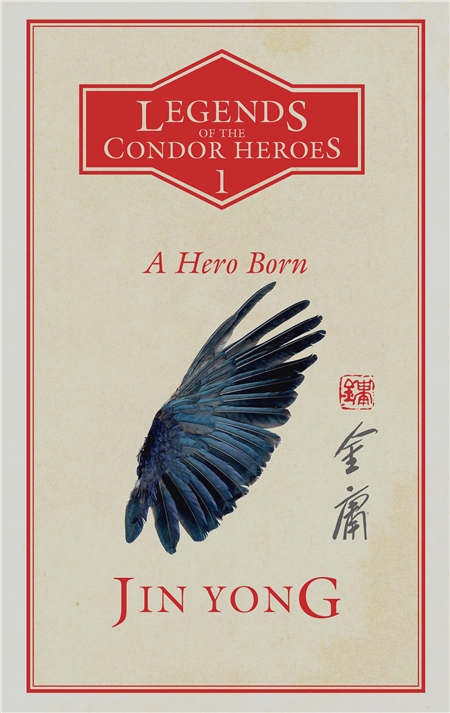
Condor trilogy: the "Lord of the Rings" of Chinese literature

Louis Cha's acclaimed trilogy to be translated into EnglishFrom Quartzy:
The world imagined by Chinese writer Jin Yong is one which celebrates loyalty, courage, and the triumph of the individual over a corrupt and authoritarian state—carried out by no less than heroes who fly through trees and deliver deadly blows to their enemies with a single finger.

Now his Condor Trilogy (1957),arguably the most celebrated of the 93-year-old writer’s works, is finally getting translated into English.

This trilogy was is set in 1205 in the Southern Song Dynasty of China, at a time when the Han Chinese population faced continuous attacks from the northern Jurchen Jin dynasty, as well as from Genghis Khan’s Mongols.

read more here @ Quartzy and @ China Daily
see more here @ youtube
read online here @ archive dot org


Three Chevrons Red by Paul R Davis

Three Chevrons Red: The Clares: a Marcher Dynasty in Wales, England and Ireland by Paul R Davis is a comprehensive study of the Clare family, a Marcher dynasty, owning lands in Wales, England and Ireland and becoming involved in the politics and wars of the Welsh border. From their origins in Normandy, they amassed great wealth and privileges becoming one of the richest and most powerful families in the Middle Ages.

Anne Davies reviews "Three Chevrons Red" for the Clare Ancient House Museum

read more about the de Clare family here


The Good People by Hannah Kent


Foreboding builds from the get-go of "The Good People," Hannah Kent's haunting historical novel about a rural Irish community gripped by sudden death and suspicion.
It's 1825, and the people in the hills near Killarney strike an uneasy balance between the sacred and the superstitious: rosary beads in one pocket and cold embers to ward off evil spirits in the other. When Martin Leahy drops dead at the crossroads where suicides are buried, neighbors are set on edge. The fact that his daughter died not long before and left a strange grandchild behind fans the fear of otherworldly interference.

Although "The Good People" is fiction, it faithfully represents the hold of ancient Celtic myths on generations of Irish. It also lays bare some hard truths about human nature and leaves you thinking about belief, suspicion and what happens to a community when fear takes hold.

read more here @ Pueblo Chieftain

Diary Lost in Translation

Raja Todar Mal's diary, considered one of the rarest among the 5 crore documents stored at the Bihar State Archives, rests unread because no current generation scholar can translate it.

"This diary of Todar Mal is actually on land records and settlement of Bhagalpur during the Mughal times. It was found lying in the record room of Bhagalpur and was transferred to us. It is in old Urdu and Persian and we have been unable to get it translated as we don't have any scholar of these languages with us," said archives director Vijay Kumar.


Vijay revealed that he had contacted a few scholars "to get the diary translated. They agreed to do so, but did not turn up. I showed it to a Muslim scholar in Patna City and he said that the diary was invaluable as it contained the names of localities of Bhagalpur over 400 years ago and information about landholdings".

read more here @ Telegraph India


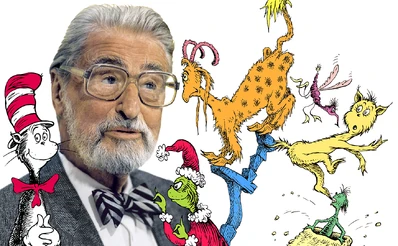
Why are children’s authors eccentric?


Image resultAs new parents and anyone who’s ever gone rummaging through their old childhood libraries quickly realises, much of the best literature for kids is bonkers. It all makes divine sense when you’re four or five or 10, but return as an adult to Alice’s Adventures in Wonderland or The Cat in the Hat, and what’s striking is that so much sublime whimsy and exuberant creativity could have been conjured up by our fellow grownups.

Then again, there’s a theory that children’s authors – the best of them, at any rate – never really grow up. Lewis Carroll famously – notoriously from today’s perspective – preferred playing games with children to adult conversation. Kenneth Grahame amassed a vast collection of toys – in his 20s. And Dodie Smith, a fascinating writer best known today for her children’s novel The Hundred and One Dalmatians, used to say she never felt quite grown up. (At under five feet tall and with a high-pitched, perpetually girlish voice, she perhaps had more excuse than most.)

read more here @ BBC - Culture
  • Kay Thompson, Eloise
  • Theodor Geisel, aka Dr Seuss,
  • EB White, Stuart Little and Charlotte’s Web
  • Kenneth Grahame, The Wind in the Willows
  • Margaret Wise Brown, The Runaway Bunny and Goodnight Moon
  • Dodie Smith, The Hundred & One Dalmatians