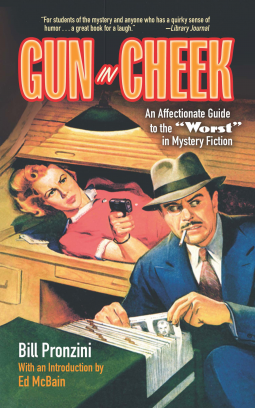
 Damn you Bill Pronzini! I was jotting down authors names before I reached the back and discovered and neatly listed bibliography. I had every intention of taking your advice to seek out these B-grade gems of the mystery fiction genre, after-all, many a B-grade film has, with time, become a cult classic.
I liked the way Bill uses his chapters to tackle the different aspects of the fictional mystery - the amateur detective, the police investigator, the private eye, the gentleman rogue, the evil oriental - as well as the spy story. We gain an insight into the publishing - and specifically Phoenix Press, who apparently published the majority of these gems (see page 91). There are comparisons between more popular characters with, often, their not so well known contemporaries and imitators.
Pronzini peppers each chapter with some of the best (??) of the writing of these featured authors:
"He keeps on waiting awhile longer. Then, at five o'clock, he gets up, locks the office door, and goes out (in that order)." "Tomorrow was another day." (Robert Twohy's "Slime"). Even some of our more well-known authors make the list (ie: Spillane, West, Basinsky, Brown, Leroux).
 The titles of some of these works border on the fantastical and highly imaginable (No Coffin For The Corpse, The Clue of the Leaning Chimney, The Face on the Cutting Room Floor, When Last I Died, No Luck With The Hanged Man) ; the men are invariably rugged, macho and mysoginistic; the women sport bazooka bras and ooze sex appeal; the dialogue is cliched; the villains suitably nefarious. They were quick reads - they were escapism. But don't be fooled - many of these B-graders were at the height of popular fiction during their day and were prolific in their writing - these were the authors that contributed to what we now refer to as "pulp fiction".
"The good mystery gets all the credit, all the attention .... But what about the bad mystery?" Well, Pronzini has certainly brought together the Good, the Bad, and the Ugly in such a way that you may look twice at some of the lesser gems. I know I have.
Review also posted @ Goodreads


