Showing posts with label food. Show all posts

Sunday, September 16, 2018

Inside a 17th-Century 'Barbarian' Cookbook From Japan


These day, treats including tempura, konpeitō hard candy, and fluffy castella cake are available in restaurants, convenience stores, and bakeries across Japan. It might seem hard to believe that these dishes, especially fried tempura, were once curiosities even to the Japanese. Early recipes for these things and more were compiled in a cookbook manuscript dating from the 17th century. It’s called the Nanban ryōrisho, or the “Southern Barbarians’ Cookbook.”

Who were the “southern barbarians?” According to Eric C. Rath, author of Food and Fantasy in Early Modern Japan, that was the term for the largely Portuguese Europeans who sailed to Japan beginning in the 16th century. As traders and missionaries, they brought along Christianity and Western technology. But they also brought their food.
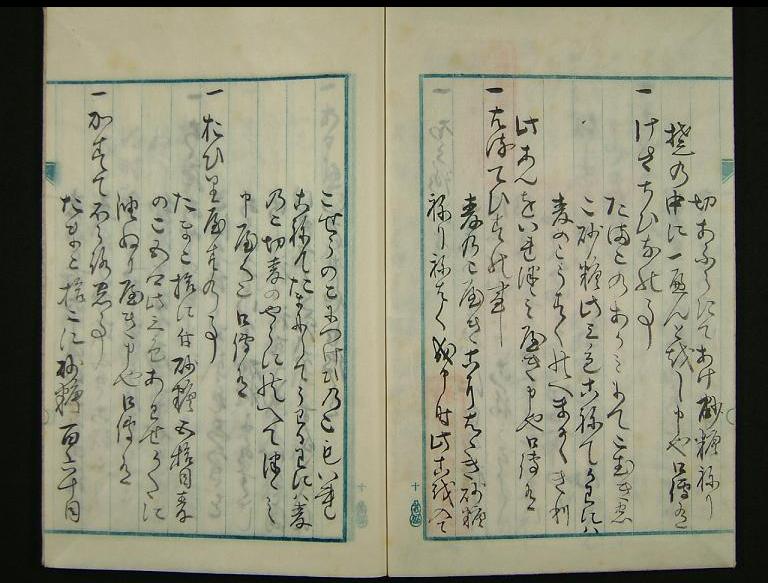


The author is unknown, though Rath writes that they were obviously very familiar with Iberian cuisine, perhaps even knowing Portuguese and Spanish people personally. A collection of 45 recipes, which Rath translates in his book, the Barbarian’s Cookbook long existed as a handful of handwritten manuscripts in Japanese libraries, only to be published by the 20th century. The recipes therein offer a glimpse into changing attitudes towards food in Japan at the time, and the development of the nanban cuisine still enjoyed today.

Front CoverThe other half of the Barbarian’s Cookbook contained savory dishes, notable for the eggs and meat they required. At the time, lingering dietary taboos over both existed in Japan for health and religious reasons. 

By the time the Barbarian’s Cookbook was written, Christianity had been outlawed, and most foreigners prohibited from Japan. But nanban cuisine lingered. The sweet and meaty treats in the Barbarian’s Cookbook “became increasingly popular over the course of the Edo period,” writes Rath. But even today, many nanban treats remain favorites.


Sunday, June 3, 2018

Ireland’s Green Larder by Margaret Hickey

From the Irish Times:

Ireland, wrote the Venerable Bede in the 8th century, “far surpasses Britain… The island abounds in milk and honey; nor is there any want of vines, fish, and fowl”. Not everyone has always shared Bede’s enthusiasm about Irish food; indeed we are often anxious that our fare pales in comparison to the great food traditions of our continental cousins.

Margaret Hickey’s beautifully written new crowdfunded book on Irish food gives the lie to such insecurity. Skillfully weaving divergent threads from literature, poetry, and historical observations into a “great tapestry of Irish food history”, Hickey shows that our “green and life-giving larder” is worth celebrating.

Hickey’s fascinating book shows that the history of our food is not just an antiquarian curiosity, but a window on the wider history of Ireland itself, “a story of what grows on her soil, the creatures that live on her hills and in her waters and the work of human hands, passing life on to the next generation”. In exploring that story, Hickey has produced an innovative book of great interest.

Saturday, June 17, 2017

Author tells history of seafood through 400 recipes

'It started with cod'

The Gloucester freelance writer [ Justin Demetri ], who doubles as the visitors service director at the Essex Shipbuilding Museum, already has to his credit a slew of small, self-published books on various elements of Cape Ann's history and life.

But as he spent the last year researching historic seafood recipes for his newly self-published book, "From Head to Tale: Historic Seafood Recipes Through the Ages," Demetri realized the project required a larger palette.

read more here @ Gloucester Times

Monday, June 12, 2017

Politics of Food in Medieval English Romance Literature

Throughout civilized history, posits Aaron Hostetter, humans have rendered the material world edible in order to define our lives.

Finding evidence of this age-old truth, Hostetter explores the politics of food practices of medieval English culture as illustrated in romance literature of the time in his new book, Political Appetites.

The Rutgers–Camden researcher affirms that the romance literature in England during the medieval period, conceived broadly from the ninth to the 15th centuries, shows how food and food practice reveal human aspirations, as well as an enduring struggle with the limits of human existence.

read more here @ Rutgers-Camden News

Saturday, June 25, 2016

Get medieval in the kitchen with new cookbook

Get medieval in the kitchen with new cookbook | TribLIVE
From exotic poultry dishes and smoking roasts to an abundance of seasonal fresh fruit, wine and cheeses, the period was no stranger to fine cuisine and extravagant feasts.
"Thyme and Place: Medieval Feasts and Recipes for the Modern Table” is a newly released cookbook that offers recipes inspired by traditional Medieval fare. The book, which includes 35 recipes ranging from Bacon Jam to Summer Harvest Wine, takes readers through a calendar of traditional medieval feasts, a history of each celebration and modernized recipes for dishes typically served for the occasion.


Sunday, November 2, 2014

November Additions To The Library

November is now here and with a lovely gift voucher from my online book shop, here are the additions to the Library for November:


The Borgias: A Hidden History by G.J. Meyer
The startling truth behind one of the most notorious dynasties in history is revealed in a remarkable new account by the acclaimed author of "The Tudors" and "A World Undone." 

Lucretia Borgia: An Exceptional and Notorious Woman of the Renaissance Papacy by Ferdinand Gregorovius
A legend of beauty and seduction The very name of Lucrezia Borgia remains, some 500 years after her time, enough to send a frisson of a thrill down the spine-particularly of men! The Lucrezia of legend has become an archetypal 'femme fatale'-beautiful, seductive and potentially deadly. 

Late Merovingian France: History and Hagiography, 640-720 edited & translated by Richard A. Gerberding
This collection of documents in translation brings together the seminal sources for the late Merovingian Frankish kingdom. 

The Welsh Kings: Warriors, Warlords and Princes by  K. L. Maund
When Edward I's troops forced the destruction of Dafydd ap Gruffudd in 1283 they brought to an end the line of truly independent native rulers in Wales that had endured throughout recorded history. In the early middle ages Wales was composed of a variety of independent kingdoms with varying degrees of power, influence and stability, each ruled by proud and obdurate lineages. 

Kingdom and People of Kent: Their History and Archaeology by Sue Harrington and Stuart Brookes
The Kingdom and People of Kent

Northumbria: The Lost Kingdom by Paul Gething and Edoardo Albert
Northumbria was one of the great kingdoms of Britain in the Dark Ages, enduring longer than the Roman Empire. Yet it has been all but forgotten. This book puts Northumbria back in its rightful place, at the heart of British history.

The Death of Kings: A Medical History of the Kings and Queens of England by Clifford Brewer
Distinguished surgeon Clifford Brewer T.D F.R.C.S. has made the death of kings the study of a life time, examining every act of violence and each unpleasant disease with a razor sharp eye for detail. 

The Gourmet Farmer Deli Book by Matthew Evans, Ross O'Meara and Nick Haddow
Matthew Evans brings us a beautifully photographed new book celebrating the way we used to cook food and how it used to taste.

Happy reading!