Perveen Mistry, the daughter of a respected Zoroastrian family, has just joined her father's law firm, becoming one of the first female lawyers in India. Armed with a legal education from Oxford, Perveen also has a tragic personal history that makes women's legal rights especially important to her.
Mistry Law has been appointed to execute the will of Mr. Omar Farid, a wealthy Muslim mill owner who has left three widows behind. But as Perveen examines the paperwork, she notices something strange: all three of the wives have signed over their full inheritance to a charity. What will they live on? Perveen is suspicious, especially since one of the widows has signed her form with an X—meaning she probably couldn't even read the document. The Farid widows live in full purdah—in strict seclusion, never leaving the women's quarters or speaking to any men. Are they being taken advantage of by an unscrupulous guardian? Perveen tries to investigate, and realizes her instincts were correct when tensions escalate to murder. Now it is her responsibility to figure out what really happened on Malabar Hill, and to ensure that no innocent women or children are in further danger. | 
 A Murder on Malabar Hill (also titled the Widows of Malabar Hill) is a murder mystery set in 1920s Bombay with a protagonist who, being the first practising woman lawyer in the city, is fighting the fight on two fronts — crime & gender discrimination.
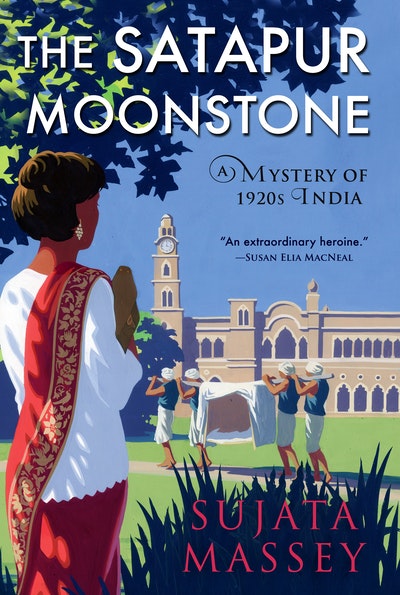 Next in the series is The Satapur Moonstone
 Columnist Pradeep Sebastian’s first novel, also purportedly India’s first bibliomystery (meaning a mystery involving the world of books), ‘The Book Hunters of Katpadi’ shows immense promise. Built around the peaceful setting of a Chennai-based store specialising in rare or antiquarian books called Biblio, and its amicable owner Neelambari Adigal (Neela) and her young associate Kayalveli Anbuchelvan (Kayal), this mystery has schools, children’s books, rare volumes, book collectors and sellers, book auctions and libraries galore.


