Saturday, March 31, 2018

What to make of Constance Markievicz? Three biographies reviewed


Sisters Against the Empire: Countess Constance Markievicz and Eva Gore-Booth, 1916-1917Sisters Against the Empire: Countess Constance Markievicz and Eva Gore-Booth, 1916-17 by Patrick Quigley. Rather than attempt a full study of both figures, who have been so extensively reappraised, Quigley focuses on the year that was the most intense phase of the sisters’ relationship (when Markievicz was imprisoned in Aylesbury).

Lindie Naughton’s Markievicz: A Most Outrageous Rebel is a poorly digested version of this scholarship (ie: the eight notable biographies of the Countess), with neither the historian’s commitment to detail nor the novelist’s sense of plot and character. She makes recourse to stereotypes that do a disservice to a popular readership that keeps pace with the latest in Irish history writing.

Anne Haverty’s biography, first published in 1988 as Constance Markievicz: An Independent Life is now reissued under the title Constance Markievicz: Irish Revolutionary . Although the reissue includes an updated bibliography, little of this work has made incursions into the narrative, but that seems inconsequential; Haverty’s book remains a classic in Irish biography and a rollicking good read.


Recalling Africa’s harrowing tale of enslavement

From The Herald:
In his book, “Slaves and Slavery”, published in 1998, the British writer Duncan Clarke defines slavery as “the reduction of fellow human beings to the legal status of chattels, allowing them to be bought and sold as goods”.

“The African slave trade, surely one of the most tragic and disturbing episodes in the history of mankind,” Clarke writes, “had its origins in the intervention of forces from the civilisations that developed in the regions of the Mediterranean sea – today’s Europe and the Middle East – into the arena of the more fragmented civilisations of sub-Saharan Africa.

In modern times, the popular image of African slavery springs from the vision of a tormented male suffering under the lash of unceasing labour on some “New World” sugar plantation.

Yet the real face of servitude finds its focus in the forced migration of millions of girls and young women across the Sahara and the Horn of Africa in to the institutions of Islamic concubinage. – New African magazine.


Brian Boru didn’t save Ireland from the Vikings

From the Irish Times:
A gorgeous new book, Dublin and the Viking World, introduces readers to the period when Dublin became Ireland’s first fully functioning town. Written by Prof Clarke, a director of the Medieval Trust (the parent body of Dublinia, the Viking and medieval museum near Christchurch, Dublin) and formerly a historian at UCD, Sheila Dooley who was curator and educational officer in Dublinia, and Dr Ruth Johnson, city archaeologist for Dublin City Council, it will be published just after Easter weekend’s first Viking festival, hosted by Dublinia.

The big surprise for us is that Brian Boru didn’t actually save Ireland from the Vikings, and the prevailing wisdom about the Battle of Clontarf is based on propaganda.

Dublin and the Viking World is handsomely illustrated and accessible, drawing on a tremendous amount of research. Clarke makes the point that it represents “the best possible attempt anyone can make to demonstrate the nature of a major Viking settlement anywhere in Europe”.


York in 50 Buildings by Andrew Graham

From York Press:

A new book tells the story of York in 50 Buildings, Stephen Lewis reports.


For Andrew, a former City of York Council development control officer turned self-employed architectural historian and urban designer, that made the challenge of putting together a book called York In 50 Buildings both easier, and more difficult.


Easier, because with so much history, and with buildings from so many periods to choose from, he was never going to struggle to find 50 York buildings that were worth writing about.


Harder, because he actually found it a real struggle restricting his choice to just 50.

‘Francis I’ Review: A Royal Renaissance

Image result for francis 1 leonie friedaHarper Collins:

Catherine de Medici’s father-in-law, King Francis of France, was the perfect Renaissance knight, the movement’s exemplar and its Gallic interpreter. An aesthete, diplomat par excellence, and contemporary of Machiavelli, Francis was the founder of modern France, whose sheer force of will and personality molded his kingdom into the first European superpower. Arguably the man who introduced the Renaissance to France, Francis was also the prototype Frenchman—a national identity was modeled on his character. So great was his stamp, that few countries even now are quite so robustly patriotic as is France. Yet as Leonie Frieda reveals, Francis did not always live up to his ideal; a man of grand passions and vision, he was also a flawed husband, father, lover, and king.

With access to private archives that have never been used in a study of Francis I, Frieda explores the life of a man who was the most human of the monarchs of the period—and yet, remains the most elusive.


The French king sent agents to Italy to find paintings for the royal collection, now the core of the Louvre museum. Other foreign initiatives went less well. John Steele Gordon reviews “Francis I” by Leonie Frieda.

When Francis I was born in 1494, no one thought he would become king of France. He was, after all, only a third cousin of the reigning king, Charles V III, who was just 24 years old and in good health. But Charles’s four children all died in or near infancy, and the king himself suddenly died in 1498. The throne then went to Louis XII, a cousin of Charles’s. Louis, 35 when he came to the throne, tried valiantly to sire a son and heir, even marrying a third wife just three months before his own death despite his rapidly declining health. But he failed in his mission, and his two daughters were debarred from the throne by law. Thus in 1515 it came about that Francis, at the age of 20, became king. As Leonie Frieda shows us in “Francis I: The Maker of Modern France,” a superb and vivid biography, he made the most of it.

This is a roistering biography of a priapic king, which entertainingly fails to make the case for his greatness, says Gerard DeGroot.

Thoroughgoing biography of the French ruler who allied with Islam in an effort to resist his Habsburg neighbors. Though a figure of major importance, Francis has been forgotten against better known contemporaries such as England’s Henry VIII. Frieda’s work helps restore him to history.

Was François I the first Renaissance king of France — or the last medieval one?


Friday, March 30, 2018

Review: The Price You Pay by Aidan Truhen

The Price You Pay
" ... I guess everyone's the morally conflicted hero of their own narrative am I right? .."

Jack Price is a cocaine dealer, targetted by an international syndicate of killers - the Seven Demons - and Jack's out for revenge - that's "... the price you pay ...".

The story is sassy, descriptive, mouthy, fast paced, punchy. Jack Price is a thoroughly despicable character - self- involved, egotistical, sociopathic, infallable, sardonic; creative and enterprising. There are just too many good one-liners in this story, to many LOl moments (I literally had tears) that you just have to read this. 

Not everyone is going to appreciate Truhen eloquent use of language or his lack to traditional punctuation (I myself have lamented this of other writers) - yet it works here - and works really well.

" ... coffee is the judge of a person .." - I love coffee, Jack loves coffee - Truhen nails it!


Saturday, March 24, 2018

Review: The Woman in the Window by AJ Finn

The Woman in the Window
For me, this is a homage to Hitchcock's "Rear Window" and "The Lady Vanishes" - a disturbed woman witnesses something - and no one around her believes it.  This is what initially drew me to this title.

Whilst this is a slow moving story initially, the "flashbacks" are used sparingly to illustrate certain points in the backstory of the main character, Dr Anna Fox. We descend into Anna's private hell as she struggles to discern what is real and what is imagined. To add to the complexity, Anna is suffering from agoraphobia after undergoing a personal tragedy.

I enjoyed the references to many well known classic movies - many of which I myself have watched - Anna and I have something in common, which I guess is what drew me to her.

The writing is suspenseful, intricate, absorbing - this is a real page turner that will one day itself become one of those classic noir crime stories. If Hitchcock were alive, he'd be adapting this for the big screen.


Monday, March 12, 2018

Review: Saxon's Bane by Geoffrey Gudgion

Saxon's Bane
Fergus Sheppard’s world changes forever the day his car crashes near the remote village of Allingley. Traumatised by his near-death experience, he returns to thank the villagers who rescued him, and stays to work at the local stables as he recovers from his injuries. He will discover a gentler pace of life, fall in love ¬ and be targeted for human sacrifice.

Clare Harvey’s life will never be the same either. The young archaeologist’s dream find ¬ the peat-preserved body of a Saxon warrior ¬ is giving her nightmares. She can tell that the warrior had been ritually murdered, and that the partial skeleton lying nearby is that of a young woman. And their tragic story is unfolding in her head every time she goes to sleep.

Fergus discovers that his crash is uncannily linked to the excavation, and that the smiling and beautiful countryside harbours some very dark secrets. As the pagan festival of Beltane approaches, and Clare’s investigation reveals the full horror of a Dark Age war crime, Fergus and Clare seem destined to share the Saxon couple’s bloody fate.


This is one of those stories when the reality of the main characters collide with something all-together unreal.

At the time Fergus is involved in a car accident outside of a small English village, archaeologist Clare is making a discovery of her lifetime. Fergus' return to the village is some sort of catharsis whilst visions of a past life of the Saxon warrior unearthed from the bog plague the dreams of Clare. As Beltane approaches, are Clare and Fergus doomed to relive the fate of the Dark Age couple?

The story immediately reminded me of "The Wicker Man" and "Children of the Corn". It is rich, evocative and descriptive, gripping and harrowing, as Gudgion weaves a tale shrouded in ancient folklore, superstition, dark fantasy and horror. The village of Allingley itself, with its diverse characters, conceals a deep, long hidden animosity - the menace of impending doom hovers in the air like a pall.

The story slowly builds, you are drawn deeper and deeper, until it reaches its apogee and the true horror is revealed.


Further Reading:
The Search for Anglo-Saxon Paganism by EG Stanley
Imagining the Anglo-Saxon Past by EG Stanley
Anglo-Saxon Paganism by David Wilson
Bog Bodies Uncovered by Miranda Aldhouse-Green
Bodies in the Bog and the Archaeological Imagination by Karin Sanders

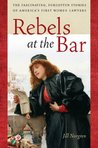
Review: Rebels at the Bar by Jill Norgren

Rebels at the Bar: The Fascinating, Forgotten Stories of America's First Women Lawyers
Rebels at the Bar: The Fascinating, Forgotten Stories of America's First Women Lawyers 

Jill Norgren recounts the life stories of a small group of nineteenth century women who were among the first female attorneys in the United States. Beginning in the late 1860s, these determined rebels pursued the radical ambition of entering the then all-male profession of law. They were motivated by a love of learning. They believed in fair play and equal opportunity. They desired recognition as professionals and the ability to earn a good living. 

Through a biographical approach, Norgren presents the common struggles of eight women first to train and to qualify as attorneys, then to practice their hard-won professional privilege. Their story is one of nerve, frustration, and courage. This first generation practiced civil and criminal law, solo and in partnership. The women wrote extensively and lobbied on the major issues of the day, but the professional opportunities open to them had limits. They never had the opportunity to wear the black robes of a judge. They were refused entry into the lucrative practices of corporate and railroad law. Although male lawyers filled legislatures and the Foreign Service, presidents refused to appoint these early women lawyers to diplomatic offices and the public refused to elect them to legislatures.

The struggle of women to practice law in the US from the 1860s onwards told through the eyes of eight women. These trailblazers of the early days of the 1860s to 1880s, were from different walks of life (that was both white and Christian).

The only criticism is that the stories become slightly repetitive - it would possibly have made for a better single story with the eight women featured as examples.


Further reading:
First 100 Years: Women in Law Timeline
US Supreme Court: History of Oral Advocacy