Showing posts with label french literature. Show all posts

Thursday, January 1, 2026

Review: The Reader's Room by Antoine Laurain

Synopsis: When the manuscript of a debut crime novel arrives at a Parisian publishing house, everyone in the readers’ room is convinced it’s something special. And the committee for France’s highest literary honour, the Prix Goncourt, agrees.

But when the shortlist is announced, there’s a problem for editor Violaine Lepage: she has no idea of the author’s identity. As the police begin to investigate a series of murders strangely reminiscent of those recounted in the book, Violaine is not the only one looking for answers. And, suffering memory blanks following an aeroplane accident, she’s beginning to wonder what role she might play in the story …

~ ~ ~

Laurain is fast becoming one of my favorite authors of fiction.

We are introduced to Violaine shortly after her hospitalisation following her accident.  As she recovers, she is alarmed to discover that her memory is not what it was ... little things are unfamiliar to her - she notes that her brain has forgotten her vices and sins.

But return to work Violaine does as a newly discovered crime novel and its mysterious author are about to make history, and possibly for all the wrong reasons.

Both the police and Violaine are in a race to discover the identity of the author - the police, to solve the crimes being perpetrated in a manner outlined in the novel, and Violaine, so she can present the author at a notable literary event!

Soon the indirect narrative style merges to become one and the mystery surrounding both the novel and the crimes is revealed.


If you have read Laurain's "French Windows", you will love this one. Laurain's books are not so much crime thrillers but gently unraveling mysteries that don't let you go - even after you have finished them. I have read a number now and cannot but recommend Laurain - take the plunge and explore this French author for yourselves.


Tuesday, July 15, 2025

Review: French Windows by Antoine Laurain

Synopsis: Nathalia, a young photographer, has been seeing a therapist. Having accidentally photographed a murder, she finds that she can no longer do her job. Instead, Doctor Faber suggests that she write about the neighbours she idly observes in the building across the street. But as these written snapshots become increasingly detailed, he starts to wonder how she can possibly know so much about them.

With each session, Doctor Faber and his mysterious patient will get closer and closer to the truth. But are the stories Nathalia submits each week as she claims...

Bestselling author Antoine Laurain serves up a dose of suspense and intrigue in Rear Window with a Parisian heart.

~ ~ ~

After having photographed a murder and unable to pursue her passion of photography, Nathalia seeks out a therapist. To reignite her passion, therapist (and our narrator) Faber suggests writing a little story on one of the occupants on each of the floors of the building she lives in. Nathalia herself admits that she "watches the people opposite" and "feels like an eye", and though detached from life, she is not so from the act of looking.

One by one, Nathalia brings/ delivers her stories to Faber, starting with Alice, the personal coach on the ground floor, to the hypnotist on the fifth floor. All the while, Faber wonders if the stories are complete fabrications or if there is an element of truth. Only as the reader progresses do they discover the truth behind the stories and a secret that Nathalia has been concealing.

The ending .... superb!  This has to be one of my favourites from this author.


Review: The Red Notebook by Antoine Laurain

Synopsis: In this bestselling novel, a bookseller pursues a mystery woman—known only through the jottings in her red notebook—through the streets of Paris.

Bookseller Laurent Letellier comes across an abandoned handbag on a Parisian street, and feels compelled to return it to its owner. Quickly ruling out the police station, which is always best avoided, he turns the contents out onto his kitchen table to see if they hold a clue. The bag contains no money, phone or contact information. But it does yield a small red notebook, full of handwritten thoughts and jottings that reveal someone Laurent would very much like to meet. From the lists of likes and dislikes, things noticed and things felt, emerges the portrait of a woman who might just be his soulmate.

But without even a name to go on, and only a few of her possessions to help him, how is he to find one woman in a city of millions? He’ll have to turn to his daughter, who helps him decode the possessions and sends him on a madcap journey around the French capital.

Meanwhile, in an anonymous hospital room, fragmentary thoughts float through the mind of a woman in a coma. She thinks she’s called Laure, and she has some strong opinions and painful memories – but will she ever wake up and get a fresh chance at life?

Soaked in Parisian atmosphere, this lovely, clever, funny novel is the perfect French holiday read!

~ ~ ~

The story is very simple - a bookseller finds an abandoned handbag in the street and decides to find and return it to its owner. He does so by inspecting and working with the items left in the handbag, including one red notebook. Along the way the reader discovers more about the bookseller and the owner of the bag - the question remains - will they ever meet?

A little bit stalkerish - quite possibly; but Laurain turns this narrative into a charming romantic mystery. A nice little read.

Saturday, September 21, 2019

The Real Traviata: The Song of Marie Duplessis by René Weis

The Real Traviata is the rags-to-riches story of a tragic young woman whose life inspired one of the most famous operas of all time, Verdi's masterpiece La traviata, as well as one of the most scandalous and successful French novels of the nineteenth century, La Dame aux Camelias, by Alexandre Dumas fils.


The woman at the centre of the story, Marie Duplessis, escaped from her life as an abused teenage girl in provincial Normandy, rising in an amazingly short space of time to the apex of fashionable life in nineteenth century Paris, where she was considered the queen of the Parisian courtesans. Her life was painfully short, but by sheer willpower, intelligence, talent, and stunning looks she attained such prominence in the French capital that ministers of the government and even members of the French royal family fell under her spell.

In the 1840s, she commanded the kind of 'paparazzi' attention that today we associate only with major royalty or the biggest Hollywood stars. Aside from the younger Dumas, her conquests included a host of writers and artists, including the greatest pianist of the century, Franz Liszt, with whom she once hoped to elope. When she died Theophile Gautier, one of the most important Parisian writers of the day, penned an obituary fit for a princess. Indeed, he boldly claimed that she had been a princess, notwithstanding her peasant origin and her distinctly demi-monde existence.

And although now largely forgotten, in the years immediately after her death, Marie's legend if anything grew in stature, with her immortalization in Verdi's La traviata, an opera in which the great Romantic composer tried to capture her essence in some of the most heart-wrenching and lyrical music ever composed.

The Girl Who Loved Camelliasread more 

Sunday, May 6, 2018

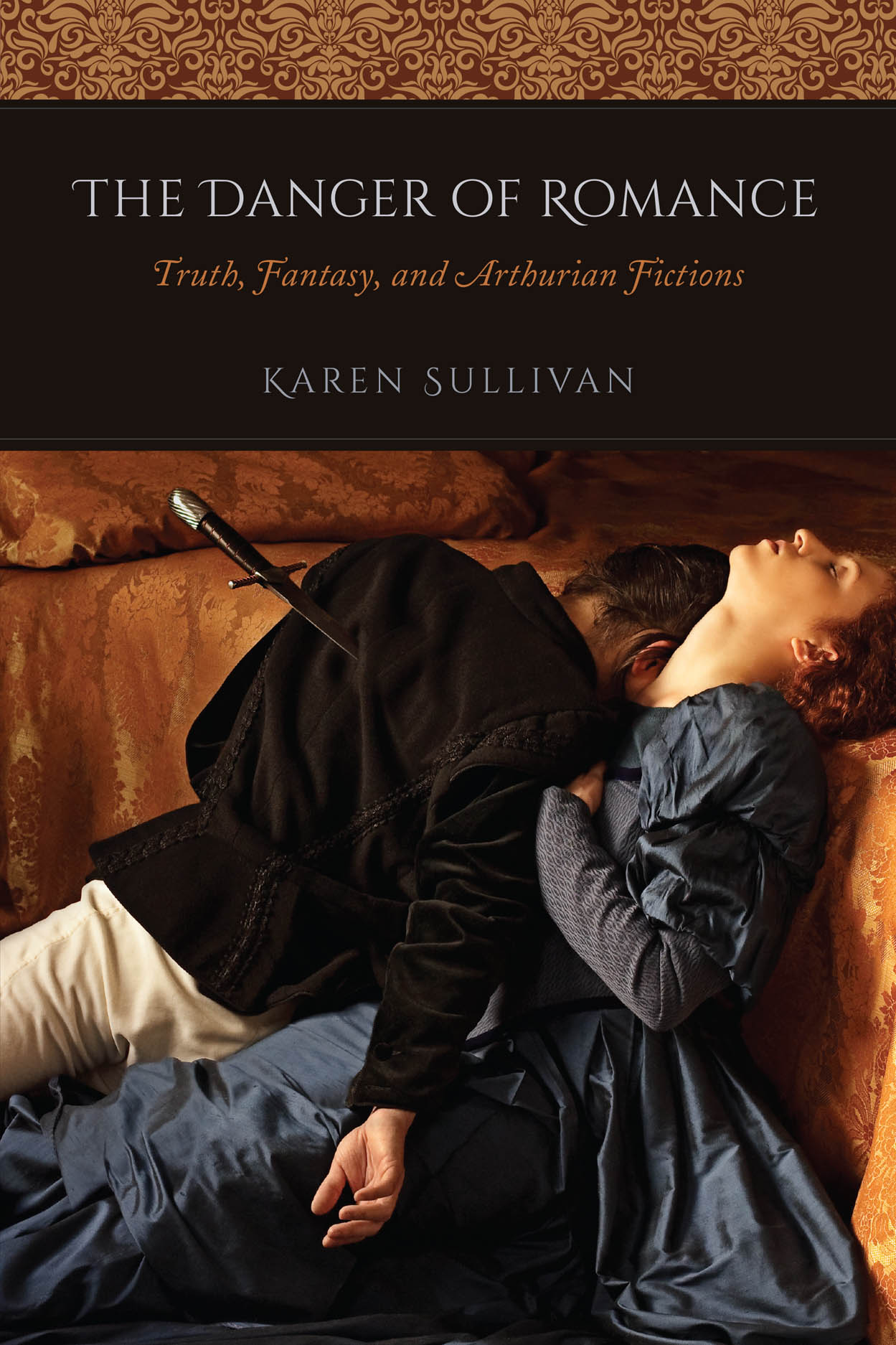
The Danger of Romance: Truth, Fantasy, and Arthurian Fictions

The Danger of RomanceIn this stimulating study of medieval French Arthurian romance (with a bit of Narnia and Harry Potter thrown in to broaden the appeal), Karen Sullivan asks some challenging questions about the truth claims of romantic fiction. Can romance, regularly dismissed by medieval and modern critics as dangerous escapism, give us access to truth? And, if so, what truths does it reveal?

The book’s argument is themed around the major characters of Arthurian romance, Merlin, Lancelot and Arthur, each of whom represents a challenge to established belief while offering their own versions of the truths of human experience.

Rich in argument and engagement, the book is less strong on the particular truths to which romance offers us a pathway, implying an outdated anti-theory along the lines of “a text can mean whatever you want it to mean”. The refusal to discuss romance in the context of “literary” and “popular” discourses, despite the choice of texts from both categories, starves the book of a meaningful analysis of how truth and reality are constructs produced for different audiences.