Showing posts with label irish republican army. Show all posts

Saturday, June 27, 2020

Review: The Irish War of Independence and Civil War edited by John Gibney

The Irish War of Independence and Civil War
Synopsis: In the aftermath of the First World War, a political revolution took place in what was then the United Kingdom. Such upheavals were common in postwar Europe, as new states came into being and new borders were forged. What made the revolution in the UK distinctive is that it took place within one of the victor powers, rather than any of their defeated enemies.

In the years after the Easter Rising of 1916 in Ireland, a new independence movement had emerged, and in 1918-19 the political party Sinn Fein and its paramilitary partner, the Irish Republican Army, began a political struggle and an armed uprising against British rule.

By 1922 the United Kingdom has lost a very substantial portion of its territory, as the Irish Free State came into being amidst a brutal Civil War. At the same time Ireland was partitioned and a new, unionist government was established in what was now Northern Ireland. These were outcomes that nobody could have predicted before 1914. In The Irish War of Independence and Civil War, experts on the subject explore the experience and consequences of the latter phases of the Irish revolution from a wide range of perspectives.


Despite the number of pages, this was a lengthy read for me as the subject matter explored some very singular events and subjects that are an extension of the Irish Civil War of the 1920s.

This is niche content covering off specialised areas within the remit of Irish history. If you have no background in this subject matter, you will find it hard going as the authors of this collection of essays assume a prior and intimate knowledge.

Gibney notes that "... experts on the subject explore the experience and consequences of the latter phases of the Irish revolution from a wide range of perspectives ..." and topics covered range from a look at the files of the RIC collated within Dublin Castle; the Black and Tans; flirtations with Bolshevism and Fascism; the murder of the Mayor of Cork and the burning of Cork City from the perspective of the Fire Brigade; the use and fate of informers; social issues like the postal strike, the moratorium of public amusements as a form of protest, and a cricket match; before finishing off with a look at the women of Cumann na MBan.

For those for whom this is a particular area of study, this will make a nice addition to your required reading.

Monday, September 30, 2019

Ex-IRA man's novel adds to intrigue over Northern Bank heist

From The Guardian

On 19 December 2004, masked raiders took £26.5m in cash from the vaults of Belfast’s Northern Bank, loaded it on to a truck and vanished into the night.

It was one of the most audacious heists in British criminal history, and it left an enduring riddle: did the IRA do it? Police on both sides of the Irish border suspected so, but the group denied any involvement. The robbers have not been caught and the investigation remains open.

Now a former IRA volunteer and convicted bank robber, Ricky O’Rawe, has added to the intrigue by writing a novel with echoes of the raid.

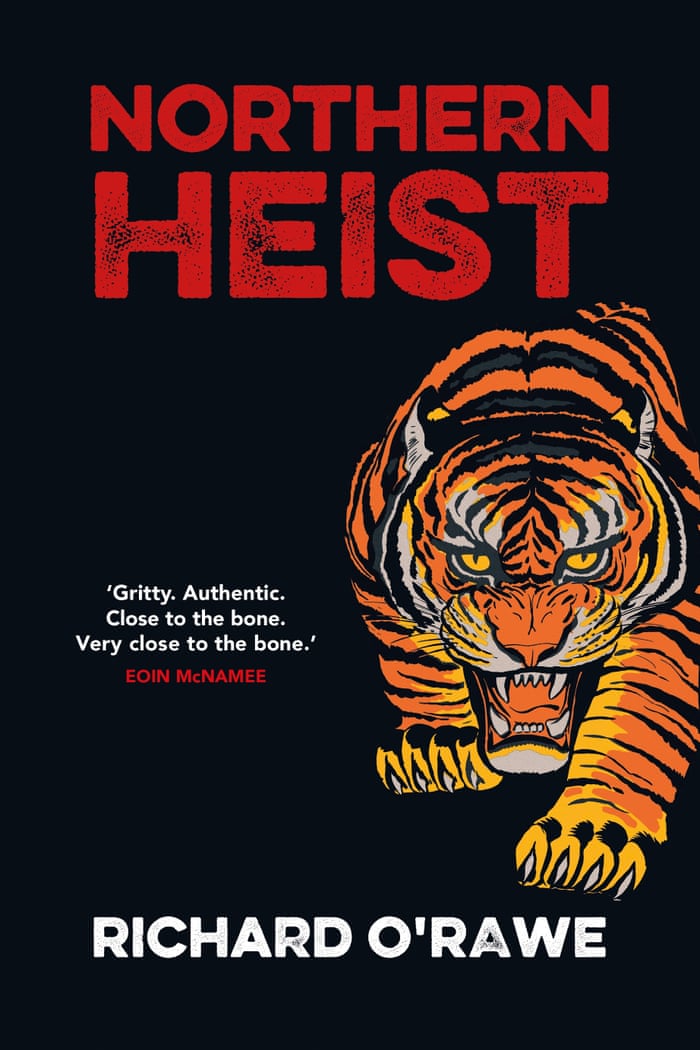
Northern Heist, published September 2018, is a rollicking, colourful account of the preparation and execution of a very similar robbery. The fictional one is committed by a Belfast criminal gang headed by a character named James “Ructions” O’Hare, a professional thief. The IRA is not involved in the robbery but demands a cut of the proceeds, leading to twists and double-crosses.


read more here @ The Guardian

Friday, December 28, 2018

My Life in the IRA by Mick Ryan

Review by Frank MacGabhann for the Irish Times


Image result for My Life in the IRA - The Border CampaignIf anyone believes that the IRA’s “Border campaign” of 1956 - 1962 was heroic, this is a must-read book. As Pádraig Yeates puts it in his perceptive introduction, this is a story of “suffering, hardship, frustration and constant disappointment”. He could have added rain, mud and freezing cold. Mick Ryan, from East Wall in Dublin left school at the age of 13 and joined the IRA at 18 just in time to participate in the Border campaign. Like many a young man of his generation, he dreamed of being in the GPO in 1916 with Pearse and Connolly and believed that their sacrifice, along with that of Tone, Emmett, Mitchell and others sustained his own. A vivid story-teller, Ryan describes in detail the tragicomic attacks with hopelessly antiquated weapons mounted against the northern state, punctuated by grateful stays at nationalist safe houses, with people gladly sharing what little food they had, sometimes only bread and tea. The book is also a poignant social history of Ireland in the 1940s and 1950s. 

see also synopsis @ Mercier Press
see book launch @ Youtube

Tuesday, December 25, 2018

Cathal Brugha and the plot to kill British ministers in House of Commons

Front CoverBorn to a Catholic mother and Protestant father in Dublin in 1874, Charles William St John Burgess's decision to join the Gaelic League in 1899 had a transformative effect on his life.

Although the wounds Brugha sustained during Easter week meant he was to walk with a limp for the rest of his life (he was killed during the Civil War), by the time of the conscription crisis of 1918 he was sufficiently recovered to head a team of IRA assassins to London. They planned to shoot the British government if they announced that they were going to begin conscripting Irishmen.

The cabinet assassination plan is rarely mentioned by historians; source material relating to it can be found in the Bureau of Military History archive, established to record the experiences of those who played a role in the events which brought about independence in the south.

He was killed in fighting in O’Connell Street during the civil war in July, 1922.

read more here
@ Independent (Ireland) - Cathal Brugha: A Very Complex Patriot
@ Ancient Order of Hibernians - Cathal Brugha
@ Easter 1916 - Cathal Brugha
@ Wikipedia - Cathal Brugha


Saturday, November 3, 2018

The Martin McGuinness I Knew by Jude Collins

Martin McGuinness: The Man I Knew
In 'Martin McGuinness, The Man I Knew', Jude Collins offers the reader a range of perspectives on a man who helped shape Ireland's recent history. Those who knew Martin McGuinness during his life talk frankly about him, what he did and said, what sort of man he was. Eileen Paisley speaks of the influence she believes her husband, Ian, had on him; former Assistant Chief Constable Peter Sheridan recounts how the Derry IRA targeted him as a Catholic RUC policeman; peace talks chairman Senator George Mitchell comments on the role he played in talks that led to the Good Friday Agreement; and Sinn Féin President Gerry Adams remembers the man who for so many years was his closest colleague. 


see also