Showing posts with label mary queen of scots. Show all posts

Saturday, February 27, 2021

Review: Mary Queen of Scots Secretary by Robert Stedall

Synopsis: Maitland was the most able politician and diplomat during the lifetime of Mary Queen of Scots. It was he who masterminded the Scottish Reformation by breaking the 'Auld Alliance' with France, which presaged Scotland's lasting union with England.

Although he gained English support to defeat French troops defending Mary's Scottish throne, he backed her return to Scotland, as the widowed Queen of France. His attempts to gain recognition for her as heir to the English crown were thwarted by her determined adherence to Catholicism.

After her remarriage, he spearheaded the plotting to bring down her objectionable husband, Lord Darnley, leading to his murder, after concluding that English and Scottish interests were best served by creating a Protestant regency for their son, Prince James. With encouragement from Cecil in England and the Protestant Lords in Scotland, he concocted evidence to implicate her in her husband's murder, resulting in her imprisonment and deposition from the Scottish throne.

Despite her escape to England, he remained personally loyal to her and attempted to conjure Scottish support for her restoration by backing her allies holding Edinburgh Castle on her behalf. When it fell in 1573, he resorted to suicide.


Maitland - who was he? what was his role in the government of Mary Queen of Scots? what was his role in Darnely's murder? did he bring about the downfall of Mary?

Maitland is a shadowy character, and I found myself often comparing him to Cecil, Elizabeth's right hand man - a man, I think, Maitland admired and wanted to emulate. However, he never did manage to maintain the consistency that Cecil did, and Scottish politics would not allow him to do so.

Those looking for a standard biography of this man may be slightly disappointed. He is more to be found in the shadows, working behind the scenes, often out of Scotland on diplomatic missions, so it difficult to assess just how influential he actually was.

I was interested in Stedall's take on Maitland is one of the instigators in Darnley's murder, one of those behind the infamous "casket letters" (of which I am no expert), and as a rather inconsistent supporter of Mary.

The reign of Mary is the focus - Maitalnd was - as the title suggests - a politician, a religious reform, and ultimately, a conspirator, before coming full circle as ardent supporter. With very little to go on, it becomes evident that Maitland would be seen in relation to the events of Mary's life and reign - a bit much like many women who lived off the pages that their more historically dominant husbands occupied.

Even with the benefit of hindsight, it is every difficult to judge and assess a person' motivations at that point in time; and even hindsight is often clouded by an author's bias, whether they be a contemporary or modern source. And as we have seen, it is also very easy to make facts support just about any theory.

But Stedall's book does give pause for thought - and I enjoy reading another author's perspective on events, especially when they diverge from mainstream consensus - I mean, who wants to read the same thing over and over again - you would only ever need to buy one book!

Yes, I would love to have had Maitland feature more prominently - but sometimes there is just not enough factual documentation for this to occur. It does however, shed light on the political and religious struggles within Scotland at the time of Mary's reign, which is often overlooked as her cousin, Elizabeth, takes the limelight nine times out of ten. But in the end he did achieve one thing - the succession of a Scottish monarch upon the English throne.


read more 
> The Memoirs of Secretary Maitland as contained in George Chalmer' second volume of the Life of Mary Queen of Scots (page 450)
> Maitland of Lethington by Sir John Skelton

Sunday, May 26, 2019

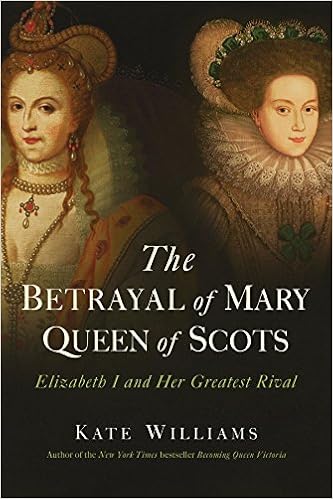
The Betrayal of Mary, Queen of Scots by Kate Williams

Image result for The Betrayal of Mary, Queen of ScotsElizabeth and Mary were cousins and queens, but eventually it became impossible for them to live together in the same world. This is the story of two women struggling for supremacy in a man’s world, when no one thought a woman could govern. They both had to negotiate with men—those who wanted their power and those who wanted their bodies—who were determined to best them. In their worlds, female friendship and alliances were unheard of, but for many years theirs was the only friendship that endured. They were as fascinated by each other as lovers; until they became enemies. Enemies so angry and broken that one of them had to die, and so Elizabeth ordered the execution of Mary. But first they were each other’s lone female friends in a violent man’s world. 

Their relationship was one of love, affection, jealousy, antipathy—and finally death. This book tells the story of Mary and Elizabeth as never before, focusing on their emotions and probing deeply into their intimate lives as women and queens. They loved each other, they hated each other—and in the end they could never escape each other.


Mary’s story has been often told, but it has been interpreted differently through the generations. While some earlier historians viewed the queen as complicit in her rape and subsequent marriage, Williams analyzes events with a modern perspective, incorporating what we now know about the trauma of sexual assault. The author also stresses how the two queens, unlike kings who governed autocratically, were consistently forced to relinquish some of their power. In framing Mary’s story as being one about “how we really think of women and their right to rule,” Williams hints at its ongoing resonance.


Sunday, June 3, 2018

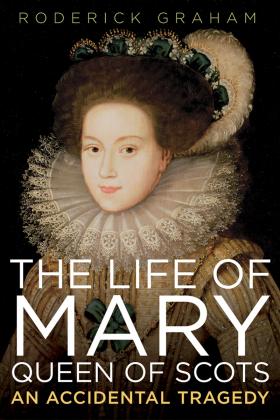
The Life of Mary: Queen of Scots by Roderick Graham


Mary, Queen of Scots lived during one of the most fascinating periods in history. Graham’s epic work paints a unique picture of this controversial woman, showing her to be neither a Catholic martyr nor murdering adulteress but a passive young woman caught up in the ruthless sea of sixteenth-century politics who lacked the shrewdness and empowerment of her contemporaries—Catherine de Medici, Diane de Poitiers and Elizabeth Tudor. Instead, she relied on her beauty and charm and allowed herself to be a victim of circumstance. When she did finally attempt to control her future, she set in motion the events that would lead her to the executioner’s block.


Thursday, October 22, 2009

Mary Queen of Scots

There have been literally hundreds of books dedicated to this Queen - some fact, some fiction - and others falling somewhere in between. So, a brief tale:

A Death:
Shrewsbury: ” … Madam you must die, you must die!…”

The executioner held up the severed head of the Queen of Scots for all to see — but horror as the hair separated from the head, and the head dropped to the floor. There was a stunned silence from the spectators — the Queen, once considered the most beautiful woman of her time, had lost her hair and vanity dictated the wearing of a wig.

The Dean of Peterborough stood over the corpse of the dead Queen and uttered the words all longed to hear: “So perish all the Queen’s enemies”.

The body of the dead Queen was stripped, in readiness to be received by the embalmers — but the dead Queen’s corpse held yet another surprise. Concealed within her skirts was a small terrier, which positioned itself betwixt the severed head and the body, and nothing could move it. It alone remained loyal to the Queen.

But the indignity of the execution of the Queen of Scots was not over. The execution block, her clothing and any other object which could be considered a relic was burned at Fotheringhay, which was in lock down.

It was not until approximately four in the afternoon that the Queen of Scots’ body was prepared for burial — but not the burial one would associate with a monarch. No — the Queen’s lead coffin was walled up within the precincts of Fotheringhay Castle. It was not until her son succeeded as James I of England, that the Queen was accorded a suitable and more Christian burial at Westminster Abbey.

A Life:
Mary was born 8 December 1542 at Linlithgow, Scotland, the daughter of James V of Scotland (d. 1542) and Mary of Guise (d. 1560). From the day of her birth, Mary was betrothed to the future Edward VI of England — the vetoing of this marriage led to war with England.

In the ensuing conflict, the Scots were defeated at Pinkie (10 September 1547) by forces of the Duke of Somerset. A French alliance was decided upon. Mary was sent to the French court aged 5 (1548), where she received a Catholic upbringing under her Guise uncles. Mary married the Dauphin Francis at Paris, France (24 April 1558). Her husband succeeded to the French throne as King Francis II (1559).

Mary became Queen of France but shortly after, Francis died (1560/1561). Mary was returned to Scotland (1561), and upon her arrival promptly proclaimed herself rightful Queen of England as the granddaughter of Henry VIII’s sister, Margaret Tudor.

However, during her absence, things had changed in Scotland, and Mary had to adapt to the anti-monarchical, anti-Catholic, anti-French elements that now dominated Scotland. Then Mary embarked upon an ill-considered marriage to her cousin Henry Stuart, Lord Darnley (29 July 1565) at Edinburgh, Scotland. Mary soon gave birth to a son, James VI (of Scotland) & I (of England) (1566).

The following year Mary was caught up in the scandal surrounding the murders of her Secretary David Riccio and her husband, Darnley (1567). From then on, Mary made mistake upon mistake. Soon after both deaths, Mary made a scandalous third marriage to James Hepburn, 4th Earl Bothwell (1567), who just happened to have been recently acquitted of Darnley’s murder. Mary claimed that this marriage was made under duress — but none were convinced. There was an immediate uprising of Scottish lords which resulted in military defeat for Mary at Carberry Hill and Langside (1568).

Mary fled Scotland for England and threw herself on the mercy of Elizabeth I, who kept her imprisoned in various strongholds. Following numerous intrigues to rescue her and place her on the throne of England, Mary was placed on trial (Oct. 1586). She was found guilty of treason and sentenced to death (25 October 1586).

After delaying for as long as possible, Elizabeth reluctantly signed Mary’s death warrant (1 February 1587) and Mary was executed at Fotheringhay (8 February 1587).

A Question of Legality:
Was the execution of a monarch of one country by a monarch of another lawful? Mary was initially brought to trial under the English Act of Association (1585) — which in the eyes of the English made Mary just as guilty as those who conspired against the Queen of England, either with or without her knowledge. Guilt by association — a phrase I am sure we have all heard of.

Mary herself said: ” … as Queen and Sovereign, I am aware of no fault or offence for which I have to render account to anyone …”

In fact, just how was it legal for a Queen of a foreign country to be tried for treason by a Queen whose subject she was not; in fact, how could one then execute this foreign sovereign?

The sovereignty of any monarch, at this period in time, was taken with all solemnity. Elizabeth I herself was fully aware of the implications — if Mary could be treated and punished like an ordinary subject, then what could Elizabeth herself expect should she venture beyond the English Channel? In fact, Mary could only be judged by her peers — and to this end, only Elizabeth filled this position — not the privy councilors or nobility.

The English jurists pondered over this question — if Mary committed treason, she should have been expelled from English soil. But in the end, the legal minds of England came up with a suitable solution. King Henry VIII claimed suzerainty over Scotland; thus, Mary was a subject of the English Queen and could be tried (and executed) for treason under English law.

As author Antonia Fraser wrote: “In the case of the trial of Mary Queen of Scots the traditional blindfold across the eyes of Justice was ruthlessly torn aside by English commissioners so that the desired verdict might be reached.”


A Selection of the Books:
Mary Queen of Scots by Antonia Fraser
Life of Mary Queen of Scots by Henry Glassford Bell
Memoirs of the Life of Mary Queen of Scots by Elizabeth Benger
Mary Queen of Scots Vindicated (3 Vols) by John Whitaker
Mary Queen of Scots by Carol Schaefer
Mary Queen of Scots & Her Accusors by John Hosack
Mary Queen of Scots: The True Life of Mary Stuart by John Guy
Mary Queen of Scots by Mary Queen of Scots by Susan Watkins & Mark Fiennes
Mary Queen of Scots: Politics, Passion & a Kingdom Lost by Jenny Wormald

Mary: Queen of Scotland & the Isles by Margaret George
Mary Queen of Scots: Queen Without A Country by Kathryn Lasky
Fatal Majesty: A Novel of Mary Queen of Scots by Reay Tannahill
The Other Queen by Philippa Gregory
Mary Queen of Scots by Sally Stepanek
Mary Queen of Scots: The Fair Devil of Scotland by Jean Plaidy

Mary Queen of Scots: An Historical Play by Thomas & William Francklin
The Albion Queens (or the Death of Mary Queen of Scots) a play by John Banks
Mary Queen of Scots (or the escape from Loch Leven) a play by William Henry Murray