 129,864,880. That’s the number of books in the world, according to an estimate by Google Books, which since its launch in 2005 has been trying to scan them all, convert them to searchable text using optical character recognition and then make them publicly available online. Although Google Books’ hopes have been slowed by wrangles over copyright and fair use, if it succeeds it could become the largest online body of human knowledge ever available.
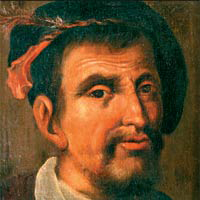
Half a millennium earlier in Seville, Spain, Hernando Colón (1488–1539) had the same ambitious aim: to create a library that would be universal in a way never before imagined because it would contain everything. And Colón really did try to collect everything: from precious manuscripts to books by unknown authors, from flimsy pamphlets to tavern posters, from weighty tomes to throwaway ephemera.
Colón’s bibliomania took him back and forth across Europe for three decades. According to Dr Edward Wilson-Lee, from Cambridge's Sidney Sussex College and the Faculty of English, he bought 700 books in Nuremburg over Christmas in 1521, before passing on to Mainz where he bought a thousand more in the course of a month. In a single year in 1530, he visited Rome, Bologna, Modena, Parma, Turin, Milan, Venice, Padua, Innsbruck, Augsburg, Constance, Basle, Fribourg, Cologne, Maastricht, Antwerp, Paris, Poitiers and Burgos, voraciously buying all he could lay his hands on.
Today, just over 3,000 books of Colón’s library remain. Until now, the life of this extraordinary man has largely escaped notice; it’s taken another revolution to grasp how visionary he was in recognising the power of tools to order the world of information.
read more from University of Cambridge


