Showing posts with label middle ages. Show all posts

Tuesday, March 12, 2024

Book review: Beatrice’s Last Smile: A New History of the Middle Ages - The Washington Post

Michael Dirda from The Washington Post reviews historian Mark Gregory Pegg’s book ‘Beatrice’s Last Smile’.


In “Beatrice’s Last Smile: A New History of the Middle Ages,” he [Mark Pegg] tracks these “fluctuations between the divine and the human by interweaving stories about men, women, and children living and dying between the third and the fifteenth centuries.” It’s quite a tapestry.

The book opens with the martyrdom of a 22-year-old Christian woman in 203 and ends in 1431 with the burning of Joan of Arc as a heretic. In between these two horrific events, Pegg — a professor of history at Washington University in St. Louis — relies on short biographies and dramatic anecdotes to illuminate, if only in strobe-light flashes, what many people still regard as the “Dark Ages,” a millennium of ignorance, confusion and all-encompassing religiosity.

See full review here @ The Washington Post


Monday, December 27, 2021

The VERY raunchy history of sex in the Middle Ages is revealed in a new book

From monks thought to have died from a lack of sex, to priests conjuring demons to lure women into bed, a new book offers fascinating glimpses into the history of sex in the Middle Ages.

Katherine Harvey's illuminating novel The Fires of Lust: Sex in the Middle Ages offers a peak into the bedrooms of ordinary mediaeval men and women living in western Europe.

Harvey is a London-based historian and author specialising in the medieval period and Honorary Research Fellow specialising in history, classics and archaeology at Birkbeck, University of London.

The book explains how the majority of ideas and attitudes towards sex and relationships were rooted in two dominant belief systems: Roman Catholic Christianity and Galenic medicine.

From women trying to reduce their breasts to look more virginal to drinking wine mixed with powdered hare testicles in a bid to conceive a son, the book reveals many astonishing practices.

As well as some surprises, like an emphasis on female pleasure when it came to reproduction, there are shocking anecdotes of brutal punishments for behaviour deemed immoral during the period.

read more here @ Daily Mail.

The Bright Ages: A New History of Medieval Europe by Matthew Gabriele & David Perry

A lively and magisterial popular history that refutes common misperceptions of the European Middle Ages, showing the beauty and communion that flourished alongside the dark brutality—a brilliant reflection of humanity itself.

The word “medieval” conjures images of the “Dark Ages”—centuries of ignorance, superstition, stasis, savagery, and poor hygiene. But the myth of darkness obscures the truth; this was a remarkable period in human history. The Bright Ages recasts the European Middle Ages for what it was, capturing this 1,000-year era in all its complexity and fundamental humanity, bringing to light both its beauty and its horrors.

The Bright Ages takes us through ten centuries and crisscrosses Europe and the Mediterranean, Asia and Africa, revisiting familiar people and events with new light cast upon them. We look with fresh eyes on the Fall of Rome, Charlemagne, the Vikings, the Crusades, and the Black Death, but also to the multi-religious experience of Iberia, the rise of Byzantium, and the genius of Hildegard and the power of queens. We begin under a blanket of golden stars constructed by an empress with Germanic, Roman, Spanish, Byzantine, and Christian bloodlines and end nearly 1,000 years later with the poet Dante—inspired by that same twinkling celestial canopy—writing an epic saga of heaven and hell that endures as a masterpiece of literature today. 

The Bright Ages reminds us just how permeable our manmade borders have always been and of what possible worlds the past has always made available to us. The Middle Ages may have been a world “lit only by fire” but it was one whose torches illuminated the magnificent rose windows of cathedrals, even as they stoked the pyres of accused heretics.

see also: Slate - Why our fantasy of a dark and bloody Middle Ages is so hard to shake.

Sunday, June 2, 2019

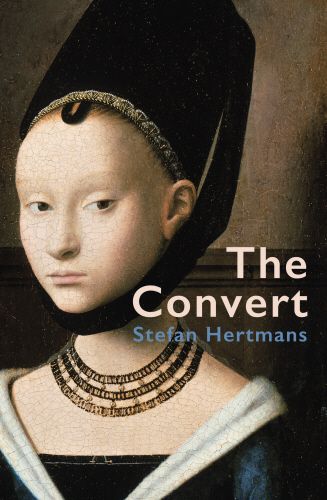
The Convert by Stefan Hertmans


The ConvertA brilliant reconstruction of an incredible journey across medieval Europe to Egypt, and an untold story of forbidden love.

In the small village in Provence where Stefan Hertmans has made his home, people have long spoken of an ancient pogrom and hidden treasure. Then, at the end of the nineteenth century, an extraordinary collection of Jewish documents was found in a synagogue in Cairo.

Hertmans has based The Convert on these historical sources, tracing the life of a young Christian noblewoman who abandoned everything for the love of a rabbi’s son. In this startlingly contemporary novel, Hertmans follows in her footsteps as the lovers flee through France together, pursued by crusading knights, and recounts her dazzling journey full of love and hardship, courage and hate, as she journeys on towards Jerusalem alone.

The Convert brings the chaos of the Middle Ages to life with boundless imagination and stylistic ingenuity, portraying the tragic love story of a woman in exile and a world in flux.

Saturday, November 24, 2018

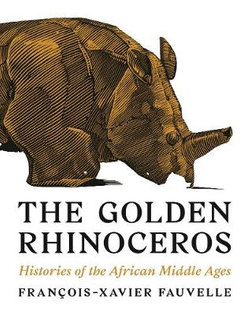
In the realms of gold: exploring Africa’s rich history


The Golden Rhinoceros is bursting with new worlds from Africa’s medieval past — a time when merchants began connecting a patchwork of ancient kingdoms, stretching from modern-day Morocco to South Africa, into wider networks of power, wealth, religion, goods and ideas. Fauvelle has created a collage of the continent from 34 different sources, each relating to trade and eloquently discussed in brief chapters. They are dots of light which, when combined, illuminate whole swathes of the dark continent, ranging from the coming of Islam in the western Sahara in the 7th century, to the 4,000 gold mines pockmarked across 14th-century Zimbabwe.


Book Seller Link: Angus & Robertson

Saturday, October 27, 2018

Royal Books and Holy Bones by Eamon Duffy


This tremendous read is a collection of essays published (and lectures given) in the past two decades, some revised for inclusion here. The book is given unity by grouping them under thematic headings, but the profounder unity of these studies lies in Duffy’s remark that “Christianity is a material religion.”

A great strength of the author’s work has always lain in his ability to put theology in its place in the practical realities of Christian living, especially during the Middle Ages and the Reformation.

This is a book for the general reader, spiced throughout with Duffy’s profound scholarly understanding of the giant subjects with which each essay grapples. There are robust challenges to the conclusions of some other modern scholars.

The book is not cluttered with footnotes; it is selectively referenced chapter by chapter at the end. The excellent illustrations are in colour.

Sunday, October 14, 2018

Women and the Book: A Symposium Preview


At the end of October, the University of London will host a one-day symposium called Women and the Book, noting that this year, the University of London celebrates the 150th anniversary of women’s first access to university education in Britain with the intake of eight women at Queen Mary College.

Therefore the symposium aims to explore the interaction of women and books in Britain from the Middle Ages to the present, from the time that the book left the printing house: as collectors, owners, readers, and mediators, whether curatorial (librarians) or literary (adapting and translating for new audiences).

The symposium will be held on October 26, from 9:30 am-6:45 pm, Court Room, First Floor, Senate House, University of London. And tickets can be booked online.

Sunday, September 30, 2018

Women in the Military Orders of the Crusades by Myra Miranda Bom

This study of the female members of the Order or Hospital of Saint John of Jerusalem in the High Middle Ages analyses their presence in the context of female monasticism and compares their position to the position of women in other religious military orders. Introducing questions of gender into the history of the military orders.


read also 


Saturday, May 26, 2018

Celebrating the Treatment of Women in Anglo-Saxon England

Article from author Lynda Telford @ History News Network:
What was the way of life for most ordinary women during the early Middle Ages in England? The answer is surprising. In Anglo-Saxon England – before the Norman Conquest in 1066 – men and women enjoyed relatively equal rights and social, cultural and religious conditions. Compare that situation with the changes brought by the Norman Conquest – a woman became a possession.   Over eight hundred years of hard struggle for women’s basic rights – and to get back the legal safeguards that Anglo-Saxon women took for granted!

Wednesday, February 22, 2017

Death in Medieval Europe

The essays by Rollo-Koster and other scholars explore the cultural effects of death and how it influenced everyday life, from mourning practices to commemorations. URI chatted with her recently about her research.

“Images of death abounded in the later Middle Ages, especially in the period after the Black Death in the mid-14th century,’’ says Rollo-Koster, a renowned medieval scholar. “It was part of life, ritualized and choreographed, unlike today, where it is hidden and closeted.”

Read more here @ URI Today (University of Rhode Island)