Showing posts with label jewish women. Show all posts

Sunday, December 24, 2023

Review: The Counterfeit Countess by Elzabeth White & Joanna Sliwa

Synopsis: The astonishing story of Dr. Josephine Janina Mehlberg—a Jewish mathematician who saved thousands of lives in Nazi-occupied Poland by masquerading as a Polish aristocrat—drawing on Mehlberg’s own unpublished memoir.

World War II and the Holocaust have given rise to many stories of resistance and rescue, but The Counterfeit Countess is unique. It tells the remarkable, unknown story of “Countess Janina Suchodolska,” a Jewish woman who rescued more than 10,000 Poles imprisoned by Poland’s Nazi occupiers.

Mehlberg operated in Lublin, Poland, headquarters of Aktion Reinhard, the SS operation that murdered 1.7 million Jews in occupied Poland. Using the identity papers of a Polish aristocrat, she worked as a welfare official while also serving in the Polish resistance. With guile, cajolery, and steely persistence, the “Countess” persuaded SS officials to release thousands of Poles from the Majdanek concentration camp. She won permission to deliver food and medicine—even decorated Christmas trees—for thousands more of the camp’s prisoners. At the same time, she personally smuggled supplies and messages to resistance fighters imprisoned at Majdanek, where 63,000 Jews were murdered in gas chambers and shooting pits. Incredibly, she eluded detection, and ultimately survived the war and emigrated to the US.

Drawing on the manuscript of Mehlberg’s own unpublished memoir, supplemented with prodigious research, Elizabeth White and Joanna Sliwa, professional historians and Holocaust experts, have uncovered the full story of this remarkable woman. They interweave Mehlberg’s sometimes harrowing personal testimony with broader historical narrative. Like The Light of Days , Schindler’s List , and Irena’s Children , The Counterfeit Countess is an unforgettable account of inspiring courage in the face of unspeakable cruelty.

~ ~ ~

The story of how one Jewish woman took on the Nazis, and came out the other side.

Much of what is written about Dr Josephine Mehlberg - aka Countess Janina Suchodolska - is based upon her own memoirs and what the authors could verify, as her story is without a doubt, fantastic. Here was this fearless Polish, Jewish woman who took on the persona of a Countess, worked for the Resistance in Poland, and then had the audacity and wherewithal to take on the might of the Nazis on behalf of the Jews held at the Majdanek concentration camp. And she survived it all!

"Janina" defied stereotypes - she was so concerned for the welfare of those at the concentration camp, that she took on this alter-ego of the Countess and literally badgered the officials into allowing her to feed the inmates and improve conditions. Along the way we learn of Janina's early life before the war and what became of her after it. A remarkable woman who observed instances of the human capacity to perform logically irreconcilable acts, and whose heroic achievements in the face of all this, became renowned long after they occurred, and set the standard for humanity. I am literally in awe of this woman.

Highly recommended reading - and one of my favourite reads for the year!

Saturday, October 24, 2020

Jewish Women and Their Salons by Emily Bilski & Emily Braun

From their debut in Berlin in the 1780s to their emergence in 1930s California, Jewish women’s salons served as welcoming havens where all classes and creeds could openly debate art, music, literature, and politics. This fascinating book is the first to explore the history of these salons where remarkable women of intellect resolved that neither gender nor religion would impede their ability to bring about social change.

Emily D. Bilski and Emily Braun examine the lives of more than a dozen Jewish salonières, charting the evolution of the salon over time and among cultures, in cities including Berlin, Vienna, Paris, London, New York, and Milan. They show how each woman uniquely adapted the salon to suit her own interests while maintaining the salon’s key characteristics of basic informality and a diversity of guests. 

Other distinguished contributors to the volume discuss in detail the Berlin salons of the 1800s; the salon in terms of Jewish acculturation and its relation to gender and music; and the relations of Marcel Proust, Oscar Wilde, and Gertrude Stein to the literary salon. 

The book is enriched with a lavish array of illustrations, including documentary photographs, paintings, drawings, prints, and decorative arts.

Monday, August 19, 2019

The Rabbi's Atheist Daughter by Bonnie S. Anderson

Cover for 

The Rabbis Atheist Daughter


Early feminist Ernestine Rose, more famous in her time than Elizabeth Cady Stanton or Susan B. Anthony, has been undeservedly forgotten. During the 1850s, Rose was an outstanding orator for women's rights in the United States who became known as "the Queen of the platform." Yet despite her successes and close friendships with other activists, she would gradually be erased from history for being too much of an outlier: a foreigner, a radical, and, of most concern to her peers and later historians, an atheist. 


In The Rabbi's Atheist Daughter, the most extensively researched account of Rose's life and career to date, Bonnie S. Anderson recovers the unique legacy of one of the nineteenth century's most prominent radical activists. Born the only child of a Polish rabbi, Ernestine Rose rejected religion at an early age, legally fought a betrothal to a man she did not want to marry, and left her family, Judaism, and Poland forever. After living in Berlin and Paris, she moved to London, where she became a follower of the manufacturer-turned-socialist Robert Owen. There she met her future husband, fellow Owenite William Rose, and together they emigrated to New York City in 1836.

In the U. S., Rose was a prominent leader at every national women's rights convention. She lectured in twenty-three of the thirty-one existing states, in favor of feminism and against slavery and religion. But the rise of anti-Semitism and religious fervor during the Civil War-coupled with rifts in the women's movement when black men, but not women, got the vote-effectively left Rose without a platform. Returning to England, she continued speaking, advocating for feminism, free thought, and pacifism. Although many radicals honored her work, her contributions to women's rights had been passed over by historians by the 1920s. Nearly a century later, The Rabbi's Atheist Daughter, an engaging, well-rounded portrait of one of the mothers of the American feminist movement, returns Ernestine Rose to her rightful place.

Sunday, June 2, 2019

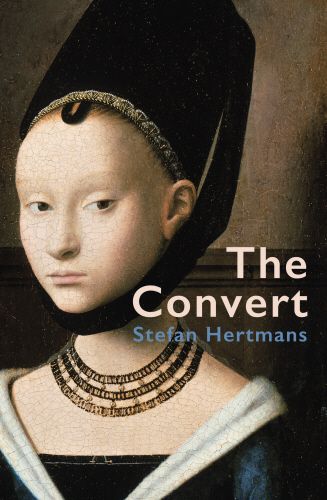
The Convert by Stefan Hertmans


The ConvertA brilliant reconstruction of an incredible journey across medieval Europe to Egypt, and an untold story of forbidden love.

In the small village in Provence where Stefan Hertmans has made his home, people have long spoken of an ancient pogrom and hidden treasure. Then, at the end of the nineteenth century, an extraordinary collection of Jewish documents was found in a synagogue in Cairo.

Hertmans has based The Convert on these historical sources, tracing the life of a young Christian noblewoman who abandoned everything for the love of a rabbi’s son. In this startlingly contemporary novel, Hertmans follows in her footsteps as the lovers flee through France together, pursued by crusading knights, and recounts her dazzling journey full of love and hardship, courage and hate, as she journeys on towards Jerusalem alone.

The Convert brings the chaos of the Middle Ages to life with boundless imagination and stylistic ingenuity, portraying the tragic love story of a woman in exile and a world in flux.

Thursday, December 29, 2016

Review: Ellin Carsta - The Draper's Daughter


For me, the tale started slowly, and at one stage I did consider leaving it there as there was no immediate connection with the subject and subject matter - but I persevered. 

The story, set in Cologne 1351, is of a remarkable young woman, who defies the conventions of the times by wanting to continue in her father's cloth trade. Family set backs, and a truly odious brother, ensure that the reader is constantly on the side of the underdog - in this case, our heroine Elizabeth.


What is remarkable was the depiction of Elizabeth's determination to overcome convention and stride out on her own - and author Ellin Carsta conveys this struggle well. However, being not over familiar with 14th Century Germany, and especially the pogroms against the Jews, a little (not a lot) more background would have assisted since this period is referenced.

The language is simple and not overly complex, and the author makes no attempt write in any Germanic dialect or accent, or use words a reader may not fully grasp (as other writers do and which nearly always comes off sounding phoney and contrived) - so the narrative flowed smoothly.

Overall, despite a slow start and thoughts to the contrary, I could not set the book aside until I reached its climatic conclusion.


Review @ Goodreads

Sunday, September 4, 2016

Les Parisiennes: The Women in WWII Paris

The women in WWII Paris who 'did what they had to' for survival | The Times of Israel
The testimony of Arlette Reiman, now Arlette Testyler, is just one of scores of agonizing stories, many of them Jewish, in a remarkable new book, “Les Parisiennes,” by the journalist and historian Anne Sebba. It seeks to recast wartime France — and, specifically, Paris — as a time when women were in the ascendant as never before.
“Paris was a feminine city,” says Sebba. Its men had either been called up and imprisoned or killed as France fell in 1940, or — if they were Jews — they had been deported to camps from which few returned. The only men in Paris were those too young or too old to serve, or they were the German occupiers.
So the women, as Sebba shows in a meticulously researched series of sweeping vignettes, were faced with the most difficult of choices.
The choices ranged from full-on collaboration — resulting, said Sebba, in the birth of between 100,000 and 200,000 Franco-German babies from illicit love affairs — to tiny compromises, such as buying black market food for children. And there was also out-and-out heroism, displayed by the women of Paris and the women of the SOE, or Special Operations Executive, parachuted into France from Britain, for extraordinarily dangerous missions that nearly always ended in capture, torture and death.


Read rest of article here at The Times of Israel