Showing posts with label virgin mary. Show all posts

Tuesday, February 12, 2019

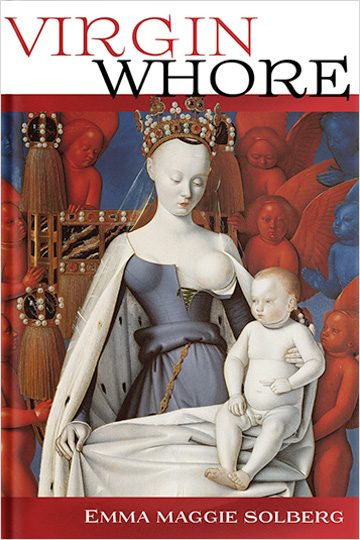
Virgin Whore - Emma Maggie Solberg


Virgin Whore
In Virgin Whore, Emma Maggie Solberg uncovers a surprisingly prevalent theme in late English medieval literature and culture: the celebration of the Virgin Mary’s sexuality. Although history is narrated as a progressive loss of innocence, the Madonna has grown purer with each passing century. Looking to a period before the idea of her purity and virginity had ossified, Solberg uncovers depictions and interpretations of Mary, discernible in jokes and insults, icons and rituals, prayers and revelations, allegories and typologies—and in late medieval vernacular biblical drama.

More unmistakable than any cultural artifact from late medieval England, these biblical plays do not exclusively interpret Mary and her virginity as fragile. In a collection of plays known as the N-Town manuscript, Mary is represented not only as virgin and mother but as virgin and promiscuous adulteress, dallying with the Trinity, the archangel Gabriel, and mortals in kaleidoscopic erotic combinations. Mary’s “virginity” signifies invulnerability rather than fragility, redemption rather than renunciation, and merciful license rather than ascetic discipline. Taking the ancient slander that Mary conceived Jesus in sin as cause for joyful laughter, the N-Town plays make a virtue of those accusations: through bawdy yet divine comedy, she redeems and exalts the crime.

By revealing the presence of this promiscuous Virgin in early English drama and late medieval literature and culture—in dirty jokes told by Boccaccio and Chaucer, Malory’s Arthurian romances, and the double entendres of the allegorical Mystic Hunt of the Unicorn—Solberg provides a new understanding of Marian traditions.

Monday, October 29, 2012

The Testament of Mary

From the Telegraph:

Colm Tóibín’s contentious life of the mother of Jesus is the latest novel, following Hilary Mantel’s ‘Bring Up the Bodies’, to reimagine history from the perspective of a famous figure. Allan Massie reflects on how novelists forge the past into fiction.


We know very little about Mary, the mother of Jesus. A dozen or so sentences in the Gospels; that’s all. Of course, we know what she has become, what the Churches and artists have made of her. We have all seen countless Madonnas and Child; it is one of the most familiar and moving images of Christian art. We are also familiar with the Pietà, the grieving mother holding the broken body of her crucified son. But Mary herself, the woman behind these images? What was she like? What did she feel? Did she believe that her son, Jesus, was divine, God’s son as well as hers?
The question is one from which, for obvious reasons, the Churches have preferred to turn away. It is also one for which there can be no sure answer. History does not supply us with the evidence. Faith may take its place, but faith may be questioned. Now the Irish novelist Colm Tóibín, cradle Catholic and lapsed Catholic, has written a novella, The Testament of Mary, her story in her own, imagined words. It is done sensitively and intelligently, though there will be some who think it should not have been done at all. I suppose that it would have been banned in the Republic if written in the years before scandal undermined the authority of the Church.