Showing posts with label womens history. Show all posts

Friday, February 7, 2025

Review: The Concentration Camp Brothel by Robert Sommer

Synopsis: In his seminal work, The Concentration Camp Brothel, Robert Sommer reveals the hidden horrors of sexual forced labor within the SS camp system, a subject long overshadowed and seldom acknowledged in the discourse on the Holocaust.

Through his rigorous examination of over 70 archives and poignant interviews with more than 30 survivors, including former visitors of camp brothels, Sommer paints a vivid and harrowing picture of the atrocities committed. This book is the first to offer a comprehensive exploration of the establishment, operation, and profound impact of brothels in Nazi concentration camps.

Sommer's research meticulously details the brothels' integration into the concentration camp system, their role in the Nazi exploitation of bodies for control and profit, and the complex reactions of the prisoner society to these establishments. He explores the desperate survival strategies employed by the women forced into sexual labor, and the chilling motivations of their exploiters.

The book also places the tragedy of camp brothels in the broader context of sexual violence under Nazi rule, making a critical connection between these acts of exploitation and the overall history of the Holocaust. This updated English edition incorporates new findings and perspectives since the original German publication in 2009, providing a more comprehensive understanding of the subject. The foreword by Annette F. Timm adds further context and contemporary analysis, enhancing the book's relevance and depth.

~ ~ ~

A confronting lost and ignored piece of Holocaust history. A forgotten voice given a hearing; its victims left physically and emotionally scarred, viewed as collaborators despite their own incarceration; so despised by their own that many refused to openly acknowledge this part of their lives. 

Using memoirs of those who would talk and other historical documents, this is a meticulous account of the brothels that were set up and operated, albeit for a short period of time, in Nazi concentration camps. These brothels were for the use of prisoners, not the guards or officers; mainly Ayran women were "employed" - women who had already been incarcerated for what was termed "anti-social behaviours"; the brothels were used as an "incentive" to increase the productivity of the imprisoned, forced labourers.

The stats at the end of the book are eye-opening - the youngest woman was seventeen, the oldest thirty-five.

It should be remembered that since the recognition of sex slavery in International Law (c. 2002), these victims are still ignored, uncompensated (as this was considered "voluntary"), outcast.

This is a well researched and confronting piece of history that - like its victims - deserves more recognition.


Monday, February 19, 2024

Review: Women of the Irish Rising by Michael Hogan

Synopsis: This is the story of the women who put their lives on the line for Irish freedom. They were not only the nurses, cooks, and couriers, but also gunrunners, sharpshooters, and organizers. Many who barely received mention in mainstream histories are fully revealed here both in their own words and by those who witnessed their incredible courage and leadership.

Over 250 women took part in the Irish Rising, more than 70 were imprisoned, and one was sentenced to death by the British. The struggle was initially betrayed by a conservative government which compromised their rights to equality, but women were finally vindicated in recent years.

Now the fight for distributive justice and the unity of the entire nation, original goals of the Easter Rising, have passed to the present generation.

~ ~ ~

This is exactly what it sets out to be - an easy to follow account of the women who were participants - combatants, auxiliaries, medics - in the events of the East Rising in Ireland in 1916. Hogan links these women directly with the events of the Rising as they played out. These women were active in their roles not just voices of support. And it should be noted that out of all the male leaders, it was only De Valera who refused to have women in his contingent.

The Easter Rising was an Irish republican insurrection against British government in Ireland, which began on Easter Monday, April 24, 1916, in Dublin. The uprising was planned to be nationwide in scope, but a series of mishaps led to its being confined to Dublin alone - the British had discovered the plans, leaders were arrested and planned action was called off. Following a forces surrender, Pearse and 14 other leaders of the rebellion were court-martialed and executed by British authorities in the weeks that followed. Though the uprising itself had been unpopular with most of the Irish people, these executions excited a wave of revulsion against the British authorities and turned the dead republican leaders into martyred heroes.

Of the 250 or so women who participated, 79 received sentences of imprisonment - and some of deportation.  Only one - Constance Markiewicz - received a court marital and death penalty (later commuted to imprisonment). The first fatality of the Irish Rising was a nurse - Margaret Keogh. And it was nurse Elizabeth O'Farrell who, under constant fire from the British, delivered the order to surrender to the Volunteers.

Of the women included by Hogan, some of the roles consisted of: gun-running, financial support, medical support, communications, military combatants, and training. The women in the 1916 Rising represented a cross-section of Irish society - single and married, from different religious denominations and social strata, and they included an actress, nurses, a doctor, a noblewoman, shop-assistants, seamstresses, feminists and pacifists.

The majority of the women were supporters and / or actively involved in the suffrage movement and of Cumann na mBan (Women's Guard), or were themselves members of the Irish Republican Brotherhood or the Irish Civilian Army.

Many documented their experiences during the Rising and beyond, and continued to be active in both the womens' suffrage movement and the struggle for a free Ireland. Notwithstanding their most active roles in the Rising, womens' rights were largely forgotten (despite promises to the contrary contained in the Proclamation). Their roles were severely restricted under Eamon de Valera (who as noted above, refused to have them in his contingent).

These women were deserving of more than just a mere footnote in the history books, and Hogan concludes with a further discussion on womens' rights, and the meaning of the Rising and the role of women which was - and still is - only imperfectly understood.

A valuable resource for further study and research for those with a deep interest in their particular period of history. Highly recommended reading - and a great addition to my own personal library.


Sunday, March 11, 2018

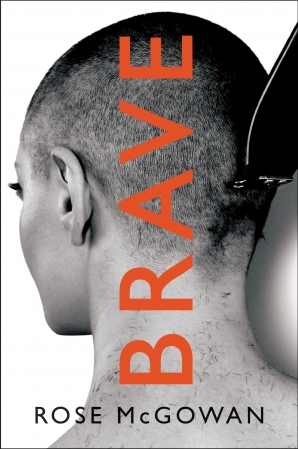
Brave by Rose McGowan


BRAVERose McGowan was born in one cult and came of age in another, more visible cult: Hollywood.

In a strange world where she was continually on display, stardom soon became a personal nightmare of constant exposure and sexualization. Rose escaped into the world of her mind, something she had done as a child, and into high-profile relationships. Every detail of her personal life became public, and the realities of an inherently sexist industry emerged with every script, role, public appearance, and magazine cover. The Hollywood machine packaged her as a sexualized bombshell, hijacking her image and identity and marketing them for profit.

Hollywood expected Rose to be silent and cooperative and to stay the path. Instead, she rebelled and asserted her true identity and voice. She reemerged unscripted, courageous, victorious, angry, smart, fierce, unapologetic, controversial, and real as f*ck.

BRAVE is her raw, honest, and poignant memoir/manifesto—a no-holds-barred, pull-no-punches account of the rise of a millennial icon, fearless activist, and unstoppable force for change who is determined to expose the truth about the entertainment industry, dismantle the concept of fame, shine a light on a multibillion-dollar business built on systemic misogyny, and empower people everywhere to wake up and be BRAVE.


read more here 


Saturday, December 16, 2017

Liza Mundy’s “Code Girls”

Code Girls: The Untold Story of the American Women Code Breakers of World War IIKathryn Smith reviews Liza Mundy's "Code Girls: The Untold Story of the American Women Code Breakers of World War II" for History News Network:


Even before the Japanese attack on Pearl Harbor on December 7, 1941, the U.S. Navy had realized its intelligence operation was woefully inadequate. The Navy needed code-breakers, what are more formally known as cryptanalysts, and it began recruiting them … at the elite women’s colleges of the Northeast.

After the attack, the need became even more pressing, and the U.S. Army jumped on board. Between them, the two services—which were so competitive one wonders at times who they considered the true enemy in World War II—recruited more than 10,000 women to work at its top-secret code-breaking operations in Washington, D.C. Their story is told for the first time by journalist Liza Mundy in Code Girls: The Untold Story of the American Women Code Breakers of World War II. Of the 20,000 code-breakers in both services, more than half were women.

Mundy’s book is a welcome addition to the ranks of recent books revealing the crucial supportive work of women in war and peace, including Denise Kiernan’s The Girls of Atomic City, about the women who worked on the Manhattan Project in Oak Ridge, Tennessee, and Margot Lee Shetterly’s Hidden Numbers, about the black women mathematicians at NASA.


read more here @ History News Network