Monday, December 30, 2019

Review: Women of the Third Reich: From Camp Guards to Combatants by Tim Heath

43972608Synopsis: The women of the Third Reich were a vital part in a complex and vilified system. What was their role within its administration, the concentration camps, and the Luftwaffe and militia units and how did it evolve in the way it did?

We hear from women who issued typewritten dictates from above through to those who operated telephones, radar systems, fought fires as the cities burned around them, drove concentration camp inmates to their deaths like cattle, fired Anti-Aircraft guns at Allied aircraft and entered the militias when faced with the impending destruction of what should have been a one thousand-year Reich.

Every testimony is unique, each person a victim of circumstance entwined within the thorns of an ideological obligation. Women of the Third Reich provides an intriguing, humorous, brutal, shocking and unrelenting narrative journey into the half lights of the hell of human consciousness - sometimes at its worst. 


So, whilst this era is not my usual period of study, I was fascinated by the premise. We read so much about life on the home-front in England or American during WWII, that I was curious to say the least, about what stories these women hold and would reveal. 

What author Tim Heath has done is provide a personalised, human face to a hated regime. We view this controversial period in history through the eyes of the young girls and women who lived through it, survived it, and were willing to talk about it. He states in his introduction that the answers to why these women and girls became "embroiled in the madness and horror of the Third Reich" would be found in the stories that followed - they are.

Its a compelling read. I wasn't sure what I was expecting when I picked up this tome - I guess more of a narrative from the author punctuated by examples collated from interviews - but it is the other way around for much of this work is the words and memories of the women themselves. And these words speak volumes. Take away the words "Hitler, SS, Nazi" and these girls' stories could have come from anywhere in war-torn Europe. In fact I made mention that some of the stories of the BDM (League of German Maidens) girls was very similar to what I had read in Yulia Zhukova's memoir "Girl with a Sniper Rifle" (Soviet perspective).

When Germany emerged from WWI, defeated, weakened and nationally humiliated by the terms of the Treaty of Versailles, which they as a nation considered an injustice, the country was ripe for the planting of the seeds of national socialism. This was the era in which many of the girls were born into and grew up in - their parents having lived through the horrors of war and the consequences of the imposed war reparations that followed. And what ultimately united them all - what they had left to cling to - was a sense of national pride - a word that today that is considered by so many in the West as politically incorrect and an unacceptable ideaology.

But for these girls this was all that they knew - and there were many hardline supporters of the regime up until the very end. However, like many who live under such a rigid, totalitarian regime (ie: Stalinist Russia, Communist China, Fascist Spain, or any other number of military dictatorships worldwide), to survive you toe the party line and keep your thoughts and feelings to the contrary to yourself - and there are many documented stories of those who did so out of fear of torture and death - for themselves and their families.

The definition of a military regime is as follows:
A military regime is a form of government wherein the political power resides with the armed forces. The military is the legitimate power-holding group that centralizes political and legal authority. Military regimes are generally held together by their egalitarian belief in equal political, economic, social, and civil rights for all people. Thus, military regimes emerge most often as products of political, economic, and societal crises to replace weak executives and governments. 

Back to the girls and their stories. What an eye-opener! Some of these left me lost for words - just sitting there, staring at the pages I had just read. How many readers just assume that these girls lived idyllic lives, completely oblivious to the world around them - I am sure there were some that did. But these women looked back on their lives and many recounted stories of verbal, physical and sexual abuse (at the hands of those who were supposed to revere them as paragons of Germanic virtue); of personal hardship and of surviving against all odds (scavenging for food, salvaging the dead from bombed out cities); of fighting for their country (especially in the final defense of Berlin); and in the years that followed (for it was the women who took on the initial role of rebuilding). 

The roles of the women was varied - though collated for us in the chapters: we are introduced to office and factory workers; women of the Red Cross; the women who took on a military role; and those that incurred the hatred of so many, the camp guards. Some of the stories are chilling to say the least, others are peppered with humour; all are personal and viewed through the eyes of those who lived through it all - they are, ".. a physical connection to the history ..". Many struggled post-war and found it hard to talk about this period, especially now with all the backlash and attitudes to acknowledging events in the past.

This isn't just a glorifcation of what once was nor a voyeuristic view of cruelty perpetuated at the hands of a few; it is the stories of women - mere girls at the time - and of how they lived and survived in a time many of us today were lucky not to have. And maybe, just maybe, when you come to the end, you shed a little tear for the loss of so much innocence.

The final word goes to Adelen Muller:
" .... an English soldier once asked me if I felt it was all worth it. I told him, 'These things are only worth it if you win the fight. If you are the loser it is never worth it' ..."
and to author Tim Heath:
".... There are few of us who will depart this earth with a completely clear conscious on how we have lived our lives. Our unhappy chapters are often conveniently suppressed, becoming mercifully blurred by time and overtaken by the happier events of our lives .... " 
and the Bible - The Gospel According to John:
'...  He that is without sin among you, let him first cast a stone at her .."


My Year In Books @ Goodreads

To see my year in books via Goodreads, click on the image below!


Thursday, December 26, 2019

Religious Warfare in Europe 1400-1536 by Norman Housley

Cover for 

Religious Warfare in Europe 1400-1536


Religious warfare has been a recurrent feature of European history. In this intelligent and readable study, the distinguished Crusade historian Norman Housley describes and analyses the principal expressions of holy war in the period from the Hussite wars to the first generation of the Reformation. The context was one of both challenge and expansion. The Ottoman Turks posed an unprecedented external threat to the 'Christian republic', while doctrinal dissent, constant warfare between states, and rebellion eroded it from within.

Professor Housley shows how in these circumstances the propensity to sanctify warfare took radically different forms. At times warfare between national communities was shaped by convictions of 'sacred patriotism', either in defending God-given native land or in the pursuit of messianic programmes abroad. Insurrectionary activity, especially when driven by apocalyptic expectations, was a second important type of religious war. In the 1420s and early 1430s the Hussites waged war successfully in defence of what they believed to be 'God's Law'. And some frontier communities depicted their struggle against non-believers as religious war by reference to crusading ideas and habits of thought. Professor Housley pinpoints what these conflicts had in common in the ways the combatants perceived their own role, their demonization of their opponents, and the ongoing critique of religious war in all its forms.

This is a major contribution to both Crusade history and the study of the Wars of Religion of the early modern period. Professor Housley explores the interaction between Crusade and religious war in the broader sense, and argues that the religious violence of the sixteenth and seventeenth centuries was organic, in the sense that it sprang from deeply rooted proclivities within European society.

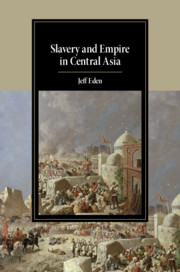
Slavery and Empire in Central Asia by Jeff Eden

Slavery and Empire in Central AsiaThe Central Asian slave trade swept hundreds of thousands of Iranians, Russians, and others into slavery during the eighteenth–nineteenth centuries. 

Drawing on eyewitness accounts, autobiographies, and newly-uncovered interviews with slaves, this book offers an unprecedented window into slaves' lives and a penetrating examination of human trafficking. 

Slavery strained Central Asia's relations with Russia, England, and Iran, and would serve as a major justification for the Russian conquest of this region in the 1860s–70s. Challenging the consensus that the Russian Empire abolished slavery with these conquests, Eden uses these documents to reveal that it was the slaves themselves who brought about their own emancipation by fomenting the largest slave uprising in the region's history.

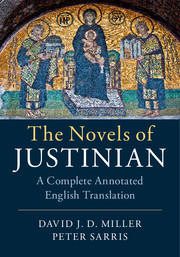
The Novels of Justinian - trans David J. D. Miller

The first complete English translation of the novels and associated texts based on the original Greek, with significant emendations to the standard edition.

The Novels of JustinianThe novels comprise a series of laws issued in the sixth century by the famous Emperor Justinian (r.527-65), along with a number of measures issued by his immediate successors on the throne of Constantinople. They reveal the evolution of Roman law at the end of antiquity and how imperial law was transmitted to both the Byzantine East and Latin West in the Early Middle Ages. 

Crucially, the texts cast fascinating light on how litigants of all social backgrounds sought to appropriate the law and turn it to their advantage, as well as on topics ranging from the changing status of women to the persecution of homosexuals, and from the spread of heresy to the economic impact of the first known outbreak of bubonic plague. This work represents the first English translation of the novels based on the original Greek, and comes with an extensive historical and legal commentary.

Tuesday, December 24, 2019

Emperor and Senators in the Reign of Constantius II by Muriel Moser

Emperor and Senators in the Reign of Constantius IIIn this book - Emperor and Senators in the Reign of Constantius II: Maintaining Imperial Rule Between Rome and Constantinople in the Fourth Century AD -  Muriel Moser investigates the relationship between the emperors Constantine I and his son Constantius II (AD 312–361) and the senators of Constantinople and Rome. She examines and contextualizes the integration of the social elites of Rome and the Eastern provinces into the imperial system and demonstrates their increased importance for the maintenance of imperial rule in response to political fragility and fragmentation. 

An in-depth analysis of senatorial careers and imperial legislation is combined with a detailed assessment of the political context - shared rule, the suppression of usurpations, Constantius' use of Constantine's memory. Using a wide range of literary, epigraphic, numismatic, and legal sources, some of which are as yet unpublished, this volume produces significant new readings of the history of the senates in Rome and Constantinople, of the construction of imperial rule and of historical change in Late Antiquity.

Monday, December 23, 2019

Michael Fassbender options Kevin Barry's Night Boat to Tangier | The Bookseller

43256597. sy475 Kevin Barry's Night Boat to Tangier (Canongate) will be adapted for the big screen by Hollywood actor Michael Fassbender.

Andrew Eaton of Turbine Studios and Conor McCaughan and Fassbender of DMC Films are jointly optioning the multiple-prize-winning Irish author's book for feature film adaptation.

Barry is adapting the novel for the screen himself. The deal was handled by Lesley Thorne of Aitken Alexander Associates, on behalf of Lucy Luck at C&W.

Longlisted for the Booker Prize, Night Boat to Tangier is one of the New York Times Book Review’s 10 Best Books of 2019. Published in June 2019, the synopsis reads: "It’s late one night at the Spanish port of Algeciras, and two fading Irish gangsters are waiting on the boat from Tangier. A lover has been lost, a daughter has gone missing, their world has come asunder—can it be put together again?"

Canongate called it a "novel drenched in sex and death and narcotics, in sudden violence and old magic. But above all, it is a book obsessed with the mysteries of love".

The history of giving books as gifts at Christmas

From The Independent: 
Christmas is coming, and gift-giving is at the forefront of many minds. The latest tech changes from year to year, as do the latest fashions. But the gift that never seems to go out of style? A book.

The publishing world is at its busiest in the months leading up to Christmas. In Iceland, there is even a name for this: jólabókaflóð (pronounced yo-la-bok-a-flot) or “Christmas book flood”. The term has also come to refer to the Icelandic custom of exchanging books on Christmas Eve. As a result, a substantial portion of annual hardback sales are during this period, and nearly 850 new titles were released in 2019’s Icelandic book flood alone.

Books provide psychological uplift and are also an expression of home decor

People were giving books as gifts even before words were ever put to paper. In one of his books of epigrams, the ancient Roman poet Martial recommended the works of famous Roman writers such as “Ovid’s Metamorphoses on parchment” (animal skin) and “Livy (the Roman historian) in a single volume” (appearing in a scroll, on papyrus, or on parchment) as presents for the December festival of Saturnalia. Martial’s recommendations also included book-related items including “a book-case” and “a wooden book-covering”.

read more here @ The Independent


The woman who gave away 1600 books for Xmas

From Newsroom in New Zealand:
Sonya Wilson hit on a Xmas good deed: donate new books to kids who don't have books.


I had the idea for #KiwiChristmasBooks at about three in the morning. I was lying awake in bed, trying to re-write a short story in my head — my university assignment that was supposed to be a work of great genius, but was languishing closer to great mediocrity — when I got to thinking about books. Good books. Those books from my childhood and the worlds they opened up for me, the experiences I had through those stories. The lessons I learned. The characters I met. The things they taught me about my fellow humans.

Books are so great, my genius creative brain thought, monosyllabically.

I’m going to buy books for my family for Christmas this year, I thought. And also, I’ll donate some books to kids who don’t have books. It would be my Christmas good deed.

And now, I thought, I shall go to sleep.

read more here @ Newsroom