Tuesday, June 30, 2020

Disrupt and Deny by Rory Cormac

Cover for 

Disrupt and Deny


British leaders use spies and Special Forces to interfere in the affairs of others discreetly and deniably. Since 1945, MI6 has spread misinformation designed to divide and discredit targets from the Middle East to Eastern Europe and Northern Ireland. It has instigated whispering campaigns and planted false evidence on officials working behind the Iron Curtain, tried to foment revolution in Albania, blown up ships to prevent the passage of refugees to Israel, and secretly funnelled aid to insurgents in Afghanistan and dissidents in Poland. MI6 has launched cultural and economic warfare against Iceland and Czechoslovakia. It has tried to instigate coups in Congo, Egypt, Syria, Saudi Arabia, Iran, and elsewhere. Through bribery and blackmail, Britain has rigged elections as colonies moved to independence. Britain has fought secret wars in Yemen, Indonesia, and Oman — and discreetly used Special Forces to eliminate enemies from colonial Malaya to Libya during the Arab Spring.

This is covert action: a vital, though controversial, tool of statecraft and perhaps the most sensitive of all government activity. If used wisely, it can play an important role in pursuing national interests in a dangerous world. If used poorly, it can cause political scandal — or worse.

In Disrupt and Deny, Rory Cormac tells the remarkable true story of Britain's secret scheming against its enemies, as well as its friends; of intrigue and manoeuvring within the darkest corridors of Whitehall, where officials fought to maintain control of this most sensitive and seductive work; and, above all, of Britain's attempt to use smoke and mirrors to mask decline. He reveals hitherto secret operations, the slush funds that paid for them, and the battles in Whitehall that shaped them.

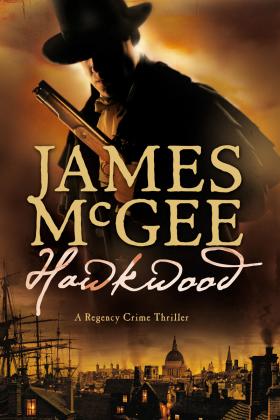
Hawkwood series by James McGee

McGee's historical novels are set during the Regency period, when Britain was at war with Napoleon. His hero, Matthew Hawkwood, is working as a Bow Street Runner, an early investigative officer working out of London's Bow Street Magistrates' Court. He is called upon to solve a number of civil crimes, including murder, body-snatching and highway robbery, but his previous military experience makes him ably suited to investigate issues of national security.


Hawkwood has a complicated back-story, which is touched upon at various stages of the novels. He once served as an officer in the 95th Rifles, but was cashiered after he killed a fellow officer in a duel. With Wellington's intervention, he was spared a court-martial, and joined the Spanish Guerrilleros, liaising with the British intelligence officer Colquhoun Grant. It is Grant's influence that enables Hawkwood to get a job at Bow Street on his return to England.

McGee's creation of Hawkwood's past was deliberate, as he wanted a hero who was "at home in both the military and criminal worlds". Many reviewers and readers have drawn similarities between Hawkwood and the author Bernard Cornwell's Sharpe, particularly as they both served in the Rifles. McGee admits this similarity was a concern for him, but giving Hawkwood a background in the Rifle Brigade was important to the plot. Much of the action within the novels is inspired by historical events. 


Hawkwood (also titled Ratcatcher):
The year is 1811, and Bow Street Runner Matthew Hawkwood is ordered by Chief Magistrate James Read to investigate the double murder of a coachman and a naval courier on the Kent Road.

Hawkwood initially wonders why Read is so concerned by this relatively mundane case, but before long, another body is discovered, and a higher agenda emerges—an attempt by the Emperor Napoleon to deliver a crushing military and psychological blow to Britain that could lead cause terror on the seas for years to come. . . .


Resurrectionist:
Hawkwood is back in the second adventure in the rollicking historical series featuring the enigmatic Bow Street Runner.

Resurrectionist (Matthew Hawkwood, #2)Death can be a lucrative business. But it’s the corpses the body-snatchers leave behind, horribly mutilated and nailed to a tree, which sets Bow Street Runner Matthew Hawkwood on their trail.

A new term at London’s anatomy schools stokes demand for fresh corpses, and the city’s "resurrection men" vie for control of the market. Their rivalry takes an ugly turn when a grave robber is brutally murdered and his body displayed as a warning to other gangs. To hunt down those responsible, Hawkwood must venture into London’s murkiest corners, where even more gruesome discoveries await him.

Nowhere, however, is as grim as Bedlam, notorious asylum for the insane and scene of another bizarre killing. Sent to investigate, Hawkwood finds himself pitted against his most formidable adversary yet, an obsessive genius hell-bent on advancing the cause of science at all costs.


Rapscallion:
Rapscallion (Matthew Hawkood, #3)
For a French prisoner of war, there is only one fate worse than the gallows: the hulks. Former man-o-wars, now converted to prison ships, their fearsome reputation guarantees a sentence served in dreadful conditions. Few survive. Escape, it’s said, is impossible. Yet reports persist of a sinister smuggling operation within this brutal world, and the Royal Navy is worried enough to send two of its officers to investigate.When they disappear without a trace, the Navy turns in desperation to Bow Street for help. It’s time to send in a man as dangerous as the prey. It’s time to send in Hawkwood.


Rebellion:
October 1812: Britain and France are still at war. France is engaged on two battle fronts - Spain and Russia - and her civilians are growing weary of the fight. Rebellion is brewing. Since Napoleon Bonaparte appointed himself as First Consul, there have been several attempts to either kill or overthrow him. All have failed, so far! 

Rebellion (Matthew Hawkwood, #4)Meanwhile in London, Bow Street Runner Matthew Hawkwood has been seconded to the foreign arm of the Secret Service. There, he meets the urbane Henry Brooke, who tells him he's to join a colleague in Paris on a special mission. Brooke's agent has come up with a daring plan and he needs Hawkwood's help to put it into action. If the plan is successful it could lead to a negotiated peace treaty between France and the allies. Failure would mean prison, torture and a meeting with the guillotine!


The Blooding:
The Blooding (Matthew Hawkwood, #5)1812: Matthew Hawkwood, soldier turned spy, is stranded behind enemy lines, in America, a country at war with Britain.Heading for the safety of the Canadian border, Hawkwood’s route takes him to Albany, where the chance sighting of a former comrade-in-arms—Major Douglas Lawrence—within a consignment of British prisoners stymies to his plans. For as the two men make their escape they uncover an American plot to invade Canada. If it is successful, the entire continent will be lost. The British authorities must be warned.

Pursued by a relentless enemy, Hawkwood and Lawrence set off across the snow-bound Adirondack Mountains; the land the Iroquois call ‘The Hunting Grounds’. But they are not alone.Buried deep in Hawkwood’s past is an old alliance – one that could save both their lives and help turn the tide of war…


The Reckoning:
London, 1813: Bow Street Runner Matthew Hawkwood is summoned to a burial ground and finds the corpse of a young woman, murdered and cast into an open grave.

The Reckoning (Matthew Hawkwood, #6)At first the death is deemed to be of little consequence. But when Chief Magistrate James Read receives a direct order from the Home Office to abandon the case, Hawkwood’s interest is piqued.

His hunt for the killer will lead him from London’s backstreets into the heart of a government determined to protect its secrets at all costs. Only Hawkwood’s contacts within the criminal underworld can now help.

As the truth behind the girl’s murder emerges, setting in motion a deadly chain of events, Hawkwood learns the true meaning of loyalty and that the enemy is much closer to home than he ever imagined



Court of Richard II and Bohemian Culture by Alfred Thomas

Bohemian culture exercised an important influence on the court of King Richard II, but it has been somewhat overlooked, with previous scholarship on its writers and artists generally confined to the role played by the French court of King Charles V and the Italian city states of Milan and Florence. 

This book aims to fill that gap. It argues that Richard's marriage to Anne of Bohemia, daughter of the Holy Roman Emperor Charles IV, one of the greatest rulers and patrons of the age, exposed England to the full extent of this international court culture. 

Ricardian writers, including Chaucer, Gower and the Gawain-poet, wrote in their native language not because they felt "English" in the modern national sense but because they aspired to be part of a burgeoning vernacular European culture stretching from Paris to Prague and from Brabant to Brandenburg; thus, one of the major periods of English literature can only be properly understood in relation to this larger European context.

A Plague of Informers by Rachel Weil

"A Plague of Informers" by Rachel WeilStories of plots, sham plots, and the citizen-informers who discovered them are at the center of Rachel Weil's compelling study of the turbulent decade following the Revolution of 1688. 

Most studies of the Glorious Revolution focus on its causes or long-term effects, but Weil instead zeroes in on the early years when the survival of the new regime was in doubt. 

By encouraging informers, imposing loyalty oaths, suspending habeas corpus, and delaying the long-promised reform of treason trial procedure, the Williamite regime protected itself from enemies and cemented its bonds with supporters, but also put its own credibility at risk.

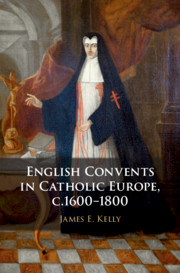
English Convents In Catholic Europe 1600 - 1800 by James E. Kelly

In 1598, the first English convent to be founded since the dissolution of the monasteries was established in Brussels, followed by a further twenty-one foundations, which all self-identified as English institutions in Catholic Europe. Around four thousand women entered these religious houses over the following two centuries. 

English Convents in Catholic Europe, c.1600–1800This book highlights the significance of the English convents as part of, and contributors to, national and European Catholic culture. Covering the whole exile period and making extensive use of rarely consulted archive material, James E. Kelly situates the English Catholic experience within the wider context of the Catholic Reformation and Catholic Europe. He thus transforms our understanding of the convents, stressing that they were not isolated but were, in fact, an integral part of the transnational Church which transcended national boundaries. 

The original and immersive structure takes the reader through the experience of being a nun, from entry into the convent, to day-to-day life in enclosure, how the enterprise was funded, as well as their wider place within the Catholic world.

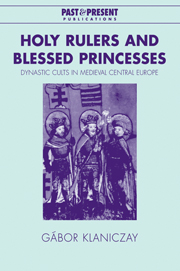
Holy Rulers and Blessed Princesses by Gábor Klaniczay

Holy Rulers and Blessed PrincessesMedieval dynasties frequently relied upon the cult of royal saints for legitimacy. After the early medieval emergence of this type of sainthood, in the central Middle Ages most royal dynasties had saints in their family: Edward the Confessor, Olaf, Canute, Louis IX, Charlemagne, the Emperor Henry II, and Wenceslas are some of the best-known examples. 

Within this context the saints of the Hungarian ruling dynasty - the Arpadians - constitute a remarkable sequence: St Stephen, St Emeric, St Ladislas, St Elizabeth, St Margaret and other central European blessed princesses, whose convents mirrored the Court of Heaven. 

This sequence of dynastic saints provide an example of the late medieval evolution of royal and dynastic sainthood. Building upon a series of case studies from Hungary and central Europe, Gábor Klaniczay proposes a synthesis of the multiple forms and transformations of royal and dynastic sainthood in medieval Europe.

Mediaeval Greece by Nicolas Cheetham

"Mediaeval Greece" by Nicolas CheethamThe history of Greece between the collapse of the Roman Empire and the birth of the modern Greek state is for most people an historical blank. Specialist studies are not lacking, but unlike the other Mediterranean lands that have been the subject of many recent books, there has been no general history of mediaeval Greece published in English since 1908. This book is an attempt to fill the gap.

The history of Greece in this period offers a long series of human dramas played out among clashes and contrasts between races, cultures, and religions; between Greeks and Slavs; between Frenchmen, Italians, Catalans, and Turks; between the Orthodox, the Catholic, and the Moslem faiths; between the old order and audacious intruders. Western knights jousted among the ruins of antiquity, and Venetian and Turkish galleys fought each other throughout the Aegean.

After an introductory account of the Dark Age invasions of Goths and Slavs and of the survival and reestablishment of the Greek identity under Byzantine rule, Nicolas Cheetham discusses the Frankish domination of Greece after the Fourth Crusade (1204) when Frenchmen and Italians divided Greece between them and set up rival feudal dynasties. The book describes how princes from Champagne, dukes from Burgundy, Catalan adventurers, and Florentine bankers ruled in the Peloponnese and at Athens, and how the Greeks led by Palaeologus and Cantacuzeno from Byzantium reconquered the country, only to lose it again to the Turks.

This book illuminates a long but hitherto little known period in the history of one of Europe’s most intensively studied countries.

New Book Digs Into the Political History of Potatoes

Rebecca Earle ..... food historian and professor at the University of Warwick has spent several years tracing the history of the potato from its early origins in the Andes to the commonly consumed starch that makes it onto kitchen tables around the world. 

In her latest book, Feeding the People: The Politics of the Potato, Earle explains the crop’s evolution to become today’s global staple, but also dives into how the vegetable became central to government dietary policy over the years. By tracing the history of the potato, Earle says we can understand how modern diets became what they are. 

read more here @ Modern Farmer

Sunday, June 28, 2020

Francine Hirsch - Soviet Contributions in Nuremberg Trials

For years, accounts of the Nuremberg Trials have relied on an America-centric view and have ignored the ways the Soviet Union helped create it. Francine Hirsch produces the first in-depth history of the trials with a sharp eye on the Soviet Union’s forgotten contributions.

Soviet Judgment at Nuremberg: A New History of the International Military Tribunal after World War II (Oxford University Press) includes research from previously unavailable sources to take a new look at Nuremberg. Hirsch offers a fuller picture of the ways politics and international law intertwine, and suggests that Soviet conceptions of postwar justice and war as seen at Nuremberg have found a permanent place in international law.

read more here @ Princeton Alumni Weekly