Sunday, December 15, 2013
History Extra - Book Reviews

December Additions To The Library
Dive into the macabre history of England and Old Europe in this treasure chest of historical punishments. In the pages of Medieval Punishments are punishments from a less enlightened period, creating a thoroughly researched historical document that sheds light on the evolution of society and how humans have maintained social order and addressed crime. Sunday, December 1, 2013
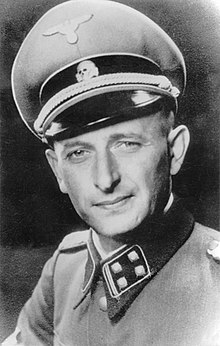
Review: Six Million Accusers - The Capture of Adolf Eichmann
Again, another fascinating book by author David Lawrence-Young. This time we are taken through the events that led up to the capture and trial of Adolf Eichmann, one of the leading SS Officers behind The Holocaust.
In the years after World War II, Eichmann, whose name had come up numerous times during the Nuremberg Trials, had become one of the most wanted Nazi war criminals. Unfortunately, for many years, no one knew where in the world Eichmann was hiding. Then, in 1957, the Mossad (the Israeli secret service) received a tip: Eichmann may be living in Buenos Aires, Argentina.
After several years of unsuccessful searches, Mossad received another tip: Eichmann was most likely living under the name of Ricardo Klement. This time, a team of secret Mossad agents was sent to Argentina to find Eichmann. On March 21, 1960, the agents had not only found Klement, they were certain he was the Eichmann they had been hunting for years.On May 11, 1960, the Mossad agents captured Eichmann while he was walking from a bus stop to his home. They then took Eichmann to a secret location until they were able to smuggle him out of Argentina nine days later.
Once in a while some great man becomes the symbol of the era in which he lived. Less often one man becomes the symbol of a quality of his era — of its good or evil, its reason or madness. Such a man is Adolf Eichmann, the Nazi, a symbol of the hatred and unspeakable hideousness of Hitler’s Germany.
- From History Today: Richard Cavendish describes how Adolf Eichmann was captured in Argentina on May 11th, 1960.
- From CNN: Mossad's hunt for the other Adolf: Spy agency's search for Eichmann revealed
- From Spiegel Online: The Long Road to Eichmann's Arrest: A Nazi War Criminal's Life in Argentina
- From The Guardian: Adolf Eichmann's capture, as told by the Mossad, in Israel exhibition
- From the Jewish Virtual Library: The Capture of Nazi Criminal Adolf Eichmann
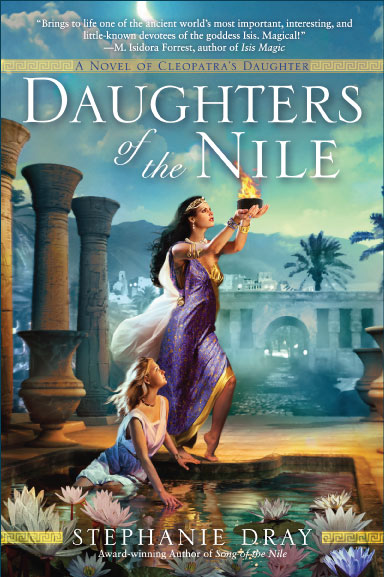
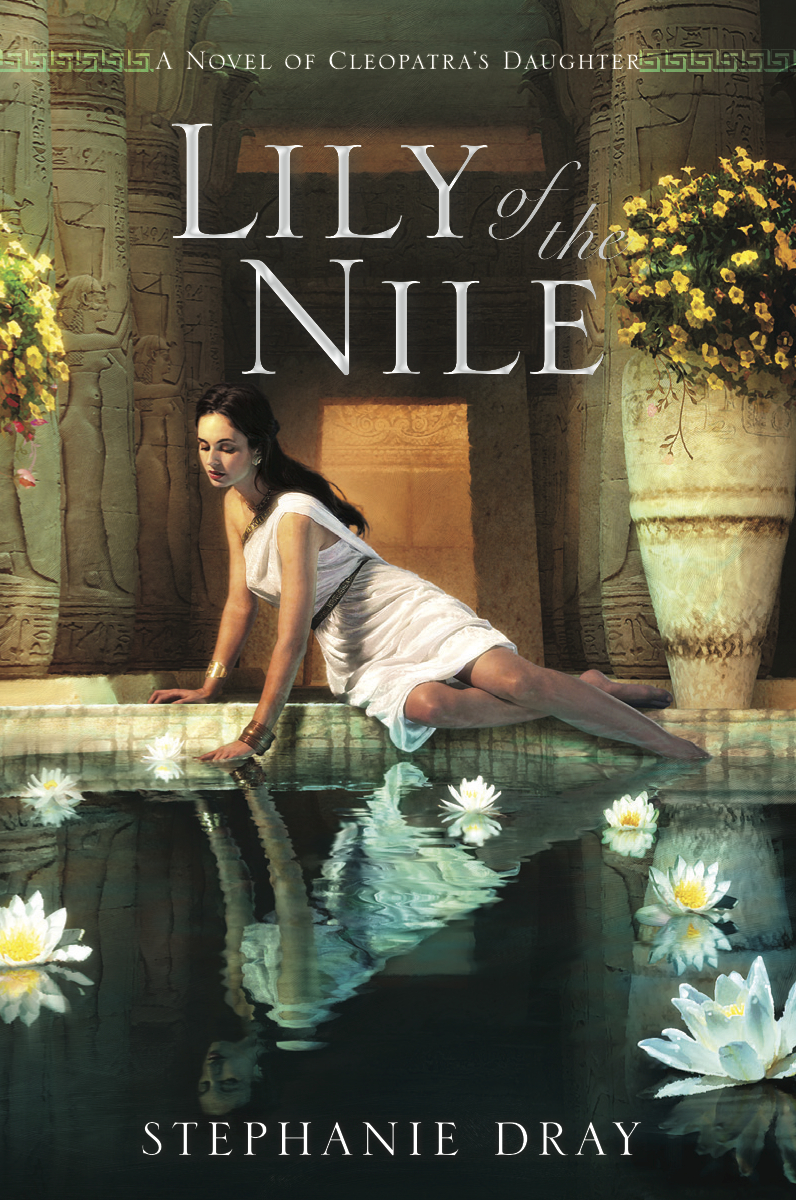
Stehanie Dray - Daughters of the Nile
From critically acclaimed historical fantasy author, Stephanie Dray comes the long-awaited new tale based on the true story of Cleopatra's daughter.
After years of abuse as the emperor’s captive in Rome, Cleopatra Selene has found a safe harbor. No longer the pitiful orphaned daughter of the despised Egyptian Whore, the twenty year old is now the most powerful queen in the empire, ruling over the kingdom of Mauretania—an exotic land of enchanting possibility where she intends to revive her dynasty. With her husband, King Juba II and the magic of Isis that is her birthright, Selene brings prosperity and peace to a kingdom thirsty for both. But when Augustus Caesar jealously demands that Selene’s children be given over to him to be fostered in Rome, she’s drawn back into the web of imperial plots and intrigues that she vowed to leave behind. Determined and resourceful, Selene must shield her loved ones from the emperor’s wrath, all while vying with ruthless rivals like King Herod. Can she find a way to overcome the threat to her marriage, her kingdom, her family, and her faith? Or will she be the last of her line?
Read the Reviews
"A stirring story of a proud, beautiful, intelligent woman whom a 21st century reader can empathize with. Dray's crisp, lush prose brings Selene and her world to life." ~RT Book Reviews
"The boldest, and most brilliant story arc Dray has penned..." ~Modge Podge Reviews
"If you love historical fiction and magical realism, these books are for you." ~A Bookish Affair
Read an Excerpt
Below me, six black Egyptian cobras dance on their tails, swaying. I watch their scaled hoods spread wide like the uraeus on the crown of Egypt. Even from this height, I'm paralyzed by the sight of the asps, their forked tongues flickering out between deadly fangs. I don't notice that I'm gripping the balustrade until my knuckles have gone white, all my effort concentrated upon not swooning and falling to my death. And I would swoon if I were not so filled with rage. Someone has arranged for this. Someone who knows what haunts me. Someone who wants to send me a message and make this occasion a moment of dread. My husband, the king must know it, for he calls down, "That's enough. We've seen enough of the snake charmer!" There is commotion below, some upset at having displeased us. Then Chryssa hisses, "Who could think it a good idea to honor the daughter of Cleopatra by coaxing asps from baskets of figs?" The story the world tells of my mother's suicide is that she cheated the emperor of his conquest by plunging her hand into a basket where a venomous serpent lay in wait. A legend only, some say, for the serpent was never found. But I was there. I brought her that basket. She was the one bitten but the poison lingers in my blood to this day. I can still remember the scent of figs in my nostrils, lush and sweet. The dark god Anubis was embroidered into the woven reeds of the basket, the weight of death heavy in my arms. I can still see my mother reach her hand into that basket, surrendering her life so that her children might go on without her. And I have gone on without her. I have survived too much to be terrorized by the emperor's agents or whoever else is responsible for this. If it is a message, a warning from my enemies, I have already allowed them too much of a victory by showing any reaction at all. So I adopt as serene a mask as possible. My daughter blinks her big blue eyes, seeing past my facade. "Are you frightened, Mother? They cannot bite us from there. The snakes are very far away." I get my legs under me, bitterness on my tongue. "Oh, but they're never far enough away."###
Available now in print and e-book!
Amazon | Barnes & Noble | iTunes | Kobo | Powells | IndieBound | Goodreads
Available now in print and e-book!
Amazon | Barnes & Noble | iTunes | Kobo | Powells | IndieBound | Goodreads
STEPHANIE DRAY is a bestselling, multi-published, award-winning author of historical women’s fiction and fantasy set in the ancient world. Her critically acclaimed historical series about Cleopatra’s daughter has been translated into more than six different languages, was nominated for a RITA Award and won the Golden Leaf. Her focus on Ptolemaic Egypt and Augustan Age Rome has given her a unique perspective on the consequences of Egypt's ancient clash with Rome, both in terms of the still-extant tensions between East and West as well as the worldwide decline of female-oriented religion. Before she wrote novels, Stephanie was a lawyer, a game designer, and a teacher. Now she uses the transformative power of magic realism to illuminate the stories of women in history and inspire the young women of today. She remains fascinated by all things Roman or Egyptian and has-to the consternation of her devoted husband-collected a house full of cats and ancient artifacts.
Saturday, November 23, 2013
Book Reviews By Others
Steeping us in the taste of seventh-century England's mead, the weight and warmth of its gorgeously woven and embroidered fabrics, and the myriad sights, sounds and scents of long ago, Seattle writer Nicola Griffith has created a marvel and a joy.
"Hild," the newest novel from this multiple award-winning author, takes place far from her works' previous settings: the future, an alien planet, or, in the case of her popular mystery series ("The Blue Place," "Stay," "Always"), contemporary Atlanta and Seattle. Historical fiction is new territory for Griffith. Yet through her seemingly effortless prose, the forts, farms, woods and battlefields of medieval Northumbria become deeply real to readers. Though never completely comfortable.
"Hild" is filled with matter-of-fact accounts of the life of the past. Some are disturbing: the routine prevalence of death in childbirth; the shocking brutality of combat wounds — guts on the ground, yellow fat and red bones disappearing in a welter of blood. Some are surprising challenges to our modern take on medieval history, such as the presence of black people in European trading towns and ecclesiastical missions.
"The Final Sacrament" brings to a close his trilogy about William Harley, loosely based on a real figure, who holds the post of Clarenceux King of Arms, the member of the College of Heralds charged with authenticating noble genealogies.
Clarenceux's previous adventures left him precariously trusted and protected by Lord Cecil, Elizabeth's Secretary of State. But on June 19, 1566, the situation changed, with the birth of a son (later James VI of Scotland and I of England) to Mary, Queen of Scots. His Catholic parents and Catholic baptism gave new hope to those who wished to overturn the Protestant Reformation. Things changed again eight months later with the murder of James's father, Lord Darnley. "The Final Sacrament" is set between the two dates, a point of dangerous instability.
If Sir Thomas More was ‘a man for all seasons,’ then the female equivalent was surely Elizabeth of York. Daughter of a Plantagenet king, wife of the king who founded the Tudor dynasty and mother of the larger-than-life King Henry VIII, this was the woman whose marriage ended the bitter Wars of the Roses.
Alison Weir’s comprehensive, compelling and very readable portrait of Elizabeth reveals not just her life and times but the woman behind the myth, the queen respected by her husband, adored by her son and revered by the nation.
Monday, November 11, 2013
November Additions To The Library
Monday, October 14, 2013
Review: The Enigmatic Caravaggio
![]() |
| Alessio Boni as Caravaggio |
Saturday, October 12, 2013
October Additions
This is the first account in English of the entire, forty year military career of one of the most powerful women of the Middle Ages. Challenging the boundaries between military and gender history, it explains how one famous noblewoman rose to the defense of the reforming papacy, defeated the Holy Roman Emperor and turned the tide of the first great war between Church and State.
Within every woman there is a wild and natural creature, a powerful force, filled with good instincts, passionate creativity, and ageless knowing. Her name is Wild Woman, but she is an endangered species. Though the gifts of wildish nature come to us at birth, society's attempt to "civilize" us into rigid roles has plundered this treasure, and muffled the deep, life-giving messages of our own souls. Without Wild Woman, we become over-domesticated, fearful, uncreative, trapped. Monday, October 7, 2013
Empress Dowager Cixi
Bel Mooney's review of Jung Chang's "Empress Dowager Cixi" from the Mail Online: