Showing posts with label blog tours. Show all posts

Thursday, March 3, 2022

Review: A Night of Flames by Matthew Harrfy

Synopsis: A wild land. A lethal fanatic. A violent revolt.

Northumbria, AD 794: Those who rule the seas, rule the land. None know the truth of this more than the Vikings. To compete with the sea-faring, violent raiders, the king of Northumbria orders the construction of his own longships under the command of oath-sworn Norseman, Runolf.

When the Northern sea wolves attack for the second year, the king sends cleric turned warrior, Hunlaf, on a mission across the Whale Road to persuade the king of Rogaland into an alliance. But Runolf and Hunlaf have other plans; old scores to settle, kin to seek out, and a heretical tome to find in the wild lands of the Norse.

Their voyage takes them into the centre of a violent uprising. A slave has broken free of his captors, and, with religious fervour, he is leading his fanatical followers on a rampage – burning all in his path.

Hunlaf must brave the Norse wilderness, and overcome deadly foes to stop this madman. To fail would see too many die...


This follows on from A Time For Swords, and we begin with Hunlaf - in old age - recounting his earlier years.

The motley group of warriors continue their quest - the search for the sacred book The Tree of Life, stolen in the Viking raid that set Hunlaf on the warrior path.  But there is an added urgency to their quest, as one of their own must also be found.

Harrfy follows the well-trodden path of the "Hero's Journey" - in "A Time For Swords" we had the departure, wherein young Hunlaf leaves his ordinary existence for adventure, accompanied by his mentor - companion, Runolf.  In this second of the series, we see Hunlaf undertake the initiation component, wherein during the course of his adventures he faces many trial and tribulations (or in this case, many battles) with the assistance of his loyal warband. Overcoming the enemy, there is the reward.

Harrfy's narrative is such that the reader finds themselves not only drawn into Hunlaf's world but posited into the warband itself. Again, Harrfy's extensive knowledge of this period comes to the fore.  The next instalment is eagerly awaited.


Sunday, February 27, 2022

Blog Tour: A Night of Flames - Matthew Harrfy

Join me at the Library on 3rd March when I review "A Night of Flames" by Matthew Harrfy


Thursday, November 11, 2021

Blog Tour - Gods of Rome

I am participating in the upcoming Blog Tour for "Gods of Rome" by Gordon Doherty & Simon Turney. "Gods of Rome" is the final part of the story of Constantine the Great and Maxentius.


Gods of Rome
For one to rule, the other must die.

312 AD is a year of horrific and brutal warfare. Constantine's northern army is a small force, plagued by religious rivalries, but seemingly unstoppable as they invade Maxentius' Italian heartlands. These relentless clashes, incidents of treachery and twists of fortune see Maxentius' armies driven back to Rome.

Constantine has his prize in sight, yet his army is diminished and on the verge of revolt. Maxentius meanwhile works to calm a restive and dissenting Roman populace. When the two forces clash in the Battle of the Milvian Bridge, there are factors at work beyond their control and soon they are left with carnage.

There is only one way Constantine and Maxentius' rivalry will end. With one on a bloodied sword and the other the sole ruler of Rome...

My review here >>> Gods of Rome


Masters of Rome
Their rivalry will change the world forever.

As competition for the imperial throne intensifies, Constantine and Maxentius realise their childhood friendship cannot last. Each man struggles to control their respective quadrant of empire, battered by currents of politics, religion and personal tragedy, threatened by barbarian forces and enemies within.

With their positions becoming at once stronger and more troubled, the strained threads of their friendship begin to unravel. Unfortunate words and misunderstandings finally sever their ties, leaving them as bitter opponents in the greatest game of all, with the throne of Rome the prize.

It is a matter that can only be settled by outright war..

My review here >>> Masters of Rome


Sons of Rome
Four Emperors. Two Friends. One Destiny.

As twilight descends on the 3rd century AD, the Roman Empire is but a shadow of its former self. Decades of usurping emperors, splinter kingdoms and savage wars have left the people beleaguered, the armies weary and the future uncertain. And into this chaos Emperor Diocletian steps, reforming the succession to allow for not one emperor to rule the world, but four.

Meanwhile, two boys share a chance meeting in the great city of Treverorum as Diocletian's dream is announced to the imperial court. Throughout the years that follow, they share heartbreak and glory as that dream sours and the empire endures an era of tyranny and dread. Their lives are inextricably linked, their destinies ever-converging as they rise through Rome's savage stations, to the zenith of empire. For Constantine and Maxentius, the purple robes beckon...

My review here >>> Sons of Rome

Monday, June 14, 2021

Review: The Serpent King by Tim Hodkinson

Sysnopsis:
AD936 
The fight for vengeance has no victors...
The great warrior, Einar Unnsson, wants revenge. His mother's assassin has stolen her severed head and Einar is hungry for his blood. Only one thing holds him back. He is a newly sworn in Wolf Coat, and must accompany them on their latest quest.

The Wolf Coats are a band of fearsome bloodthirsty warriors, who roam the seas, killing any enemies who get in their way. Now they're determined to destroy their biggest enemy, King Eirik, as he attempts to take the throne of Norway.

Yet, for Einar, the urge to return to Iceland is growing every day. Only there, in his homeland, can he avenge his mother and salve his grief. But what Einar doesn't know is that this is where an old enemy lurks, and his thirst for vengeance equals Einar's...


This is a bloody brilliant series! And can I say that when we ever get to the end, I will be starting from the beginning in a self-indulgent binge session.

So, what's happening in Europe and Scandinavia in 936AD. In Iceland, what is referred to as the "age of settlement" was coming to its conclusion. The Landnámabók (“Book of the Settlements”, written c. 13th century) records how the first set of law codes was presented to the Athling (assembly of free men) in around 930AD. Communities tended to be a form of self-government, though often in co-operation with other nearby settlements; the bloodfeud was being replaced by a system of fines; and Christianity was decades away from yet taking foot.

Norway was still in thrall to Eirik Bloodaxe but not for much longer. Eirik's half-brother Haakon, who had been fostered by King Athelstan, as part of an agreement made by his father King Harald Farhair, was being fitted out with with ships and men for an expedition against his half-brother. Eirik was on the back foot and looking for allies. And it is to Orkney that Eirik looks, and where Einar's greatest foe - his own father Thorfinn Skull-Splitter - resides.

But do not for one moment suppose that medieval politics was in any way, shape or form, clear cut. Rulers and their followers formed alliances as and when it was prudent to do so; loyalty was bought and sold across the Kingdoms of Northumbria, Scotland, Dublin, Man, and Norway; kings were raised up and brought down with unnerving regularity. These leaders were often larger than life characters, who, had their deeds not been so readily documented, may have passed unremarked from the pages of history. This was the time of heroes and sagas; great battles and adventures; of an old world fighting to hold back the ever encroaching tide of the new.

It is back into this muddy whirlpool of politics, religion, loyalty and revenge that we once again find our motely band of Wolf Coats, as old enemies return and new ones are sent forth to distract and delay them at every turn. As Einar muses:" ... all the vipers are here .... I am right in the middle of a snakepit ..." Einar himself is still seeking out those responsible for his mother's murder and his journey will ultimately come full circle. Though what awaits him at its ends is quite unexpected.

Hodkinson once again draws the unaware reader ever deeper into the tale (or saga if you will) - like quicksand, once you have taken your first tentative steps, the ground falls away from under your feet, and you are carried along - in this instance, at the author's whim.  

At the end of every book, I constantly find myself asking what more can there be - how can Hodkinson keep the reader spellbound - and yet he somehow manages it, channeling the skalds of old as the words flow from pen to paper, with nary a dull moment in between.  If you haven't yet taken the journey down the Whale Road, it is high time you did.


About the author
Tim Hodkinson was born in 1971 in Northern Ireland. He studied Medieval English and Old Norse Literature at University with a subsidiary in Medieval European History. He has been writing all his life and has a strong interest in the historical, the mystical and the mysterious. After spending several happy years living in New Hampshire, USA, he has now returned to life in Northern Ireland with his wife Trudy and three lovely daughters in a village called Moira.


Tim is currently working on a series of viking novels for Aries Fiction, an imprint of Head of Zeus.

Buy links:
Amazon: https://amzn.to/3oNubLI
Kobo: https://bit.ly/3wKzs9Z
Google Play: https://bit.ly/34edsYu
iBooks: https://apple.co/3ukCyzy

Follow Tim:
Twitter: @TimHodkinson

Follow Aries:
Twitter: @AriesFiction
Facebook: @AriesFiction
Website: www.headofzeus.com


Monday, March 8, 2021

Review: Masters of Rome by Gordon Doherty & Simon Turney

Synopsis: Their rivalry will change the world forever.

As competition for the imperial throne intensifies, Constantine and Maxentius realise their childhood friendship cannot last. Each man struggles to control their respective quadrant of empire, battered by currents of politics, religion and personal tragedy, threatened by barbarian forces and enemies within.

With their positions becoming at once stronger and more troubled, the strained threads of their friendship begin to unravel. Unfortunate words and misunderstandings finally sever their ties, leaving them as bitter opponents in the greatest game of all, with the throne of Rome the prize.

It is a matter that can only be settled by outright war...


Book 2 in this series of the epic battle between Constantine and Maxentius for supremacy in Rome continues where Sons of Rome left off - 308AD and continues up to 312AD. Each man's story is again narrated by a single author, with an alternating overall narrative so that we get a sense of what is happening to both concurrently.

No spoilers here as events are well known - however the journey taken to get there is as thrilling and fresh as if it happened yesterday. It is not an easy journey for either man - both face the constant struggle to maintain their positions, both within and without the Roman Empire as territories are won and lost; there is personal tragedy and a deterioration of their fragile friendship; and religious dissent is on the rise as the supporters of Christ demand more freedom of worship; and add into the mix, the rise of rival contenders.

Though the more I read - and for me Constantine was ever present in my mind - the more I felt an empathy towards Maxentius. I was more drawn to his plight than his nemesis, for many of his deeds and achievements have latterly gone unrecognised. Maybe it has something to do with the way we like to support the underdog against an obviously stronger, experienced opponent. Maybe, it is just my knowing the outcome that has drawn me closer to getting to know this man more.

The final showdown take's place in book 3 for ".... it is in battle that this will end for one ..."


The struggle between Constantine and Maxentius is the only Roman civil war to be depicted on a monument and can be seen in the relief sculptures on the Arch for Constantine.


Sunday, February 28, 2021

Blog Tour: Masters of Rome

I am again participating in the upcoming Blog Tour for the "Rise of Emperors" series by Gordon Doherty & Simon Turney. "Masters of Rome" is the second instalment in the series of the story of Constantine the Great and Maxentius and follows on from "Sons of Rome".


Whilst you are waiting for my review of "Masters of Rome", you can read about how the series came about and my review of Sons of Rome below:

> Review: Sons of Rome
> Blog Tour: Sons of Rome


Follow Simon
Twitter: @SJATurney
Instagram: @simonturney_aka_sjaturney
Website: http://simonturney.com/

Follow Gordon
Twitter: @GordonDoherty
Instagram: @gordon.doherty
Website: https://www.gordondoherty.co.uk/

Follow Aries
Twitter: @AriesFiction
Facebook: Aries Fiction
Website: http://www.headofzeus.com

Thursday, October 22, 2020

Blog Tour: Sons of Rome

Sons of Rome is the first book in the brand new Rise of Emperors series, an action-packed historical thriller set in the 3rd century AD. It follows the lives of two men whose destinies are inextricably linked after a chance meeting in the city of Treverorum in their youth. They must share glory and heartbreak along with the Roman empire itself as it endures an era of tyranny and dread.

But just how did two authors decide to bring two characters together - in the same book. Well, here's how it all came about from the authors themselves.


How it Happened by Gordon Doherty & Simon Turney

Gordon and Simon have been friends and co-conspirators for more than a decade. They first came into contact on a peer-review writing website, on which they both honed their debut Roman novels. By 2012 they were firm friends and arranged to meet up at the annual Festival of History at Kelmarsh. It so happened that this particular year, the heavens opened, appalling rains flooded the site and the festival was cancelled. This left Gordon and Simon, along with a number of other friends, far from home in Leicestershire and with no festival to visit.

Cue a weekend spent largely in the pub. And like many great (and many awful) ideas, the notion of writing a joint novel was born in those hours of carousing and historical discussion that weekend. Initially, all that arose was the idea that it could be done. At that point even the plot and characters had not been decided. It was a nice idea that seemed nicer with every beer…

Then, the festival over, they returned home. However, unlike many pub-born ideas, this one refused to let go, and the project continued to nag at both of them. Ideas came in flurries, and emails were exchanged. Simon was at the time specialising in Republican Rome, and Gordon in the Late Roman Empire – periods over four hundred years apart. How then to bring their skills and knowledge together? It was a conundrum at first, but gradually the clouds parted and the most perfect answer was revealed. 

The story of Constantine and Maxentius – two giants of history from the period that irreversibly reshaped the Roman world, bridging Simon’s era to Gordon’s – was perfect. Even better, they realised, each of them could take on the ‘voice’ of one protagonist, and tell the tale in alternating chapters. It all snowballed dramatically from there.


They arranged to meet up to discuss all their plans. That meeting occurred in Gilsland on Hadrian’s Wall in 2013, involving laptops, scribbled notepads, Roman tattoos, visits to ruins and… yes, beer. One of the biggest decisions they made concerned the narrative point of view. The tale, they decided, would only work when told in the first person. Though this limited the scenes to events that happened in the presence of the protagonists, the point of view allowed for a much greater depth of emotion and character understanding than in third person. At the end of that weekend, the outline of the ‘Rise of Emperors’ series was already taking shape.

Fuelled with the desire to write this fascinating tale and to create these two larger than life characters, Simon and Gordon returned home to their respective writing desks. The story began to take shape one chapter at a time from the deeply detailed plan formed at Hadrian’s Wall. The notion was simple. Gordon would write a chapter from Constantine’s point of view. Simon would then read Gordon’s chapter and pick up with the next sequence of events in the story, these ones recounted from Maxentius’s point of view. This way, they crafted a seamless tale, making the reader privy to the escalating and entangling troubles of both characters – a fly on the walls of Rome’s imperial palace and on the battlements of the northern forts. Moreover, it meant that tweaks could be made throughout to keep things in line. The fact that there were two pairs of eyes on every passage in the book meant hiccups could be caught and be ironed out rapidly.

Further meetups followed – at least twice a year – always with Roman ruins nearby for inspiration, always with new scribbled notebooks, straining laptops, and always… always, with beer. And each time, the plot of the trilogy became better focused, more polished and tighter. It felt like a lifetime achievement when in 2015 the first book Sons of Rome was finished, and yet that was but the start. Simon and Gordon had scratched the surface, taking two young princes and propelling them to power. But now Maxentius and Constantine were adults with a destiny, and two more books awaited to bring the series to a conclusion. That meant… another meetup. More notes. More ruins. More laptops. More beer!
The Rise of Emperors trilogy began as an enjoyable experiment to see whether such a method of working in conjunction was possible. An experiment that became an obsession, which became an epic.


Saturday, October 17, 2020

Blog Tour - Sons of Rome

I am participating in the upcoming Blog Tour for "Sons of Rome" by Gordon Doherty & Simon Turney. "Sons of Rome" is the first part of the story of Constantine the Great and Maxentius. Feel free to drop by my blog on the 22nd October to learn how this amazing story came about. 


In the meantime, my review can be found here: >>  Sons of Rome review.


Tuesday, March 24, 2020

Review: The Canary Keeper by Clare Carson

41730497Synopsis: In the grey mist of the early morning a body is dumped on the shore of the Thames by a boatman in a metal canoe. The city is soon alive with talk of the savage Esquimaux stalking Victorian London and an eye witness who claims the killer had an accomplice: a tall woman dressed in widow's weeds, with the telltale look of the degenerate Irish.

Branna 'Birdie' Quinn had no good reason to be by the river that morning, but she did not kill the man. She'd seen him first the day before, desperate to give her a message she refused to hear. And now the Filth will see her hang for his murder, just like her father.

To save her life, Birdie must trace the dead man's footsteps. Back onto the ship that carried him to his death, back to cold isles of Orkney that sheltered him, and up to the far north, a harsh and lawless land which holds more answers than she looks to find...


London
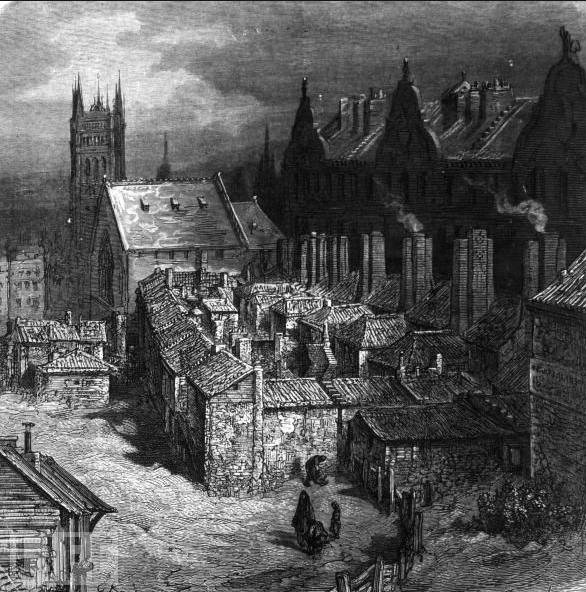
During the 19th century, London was the largest city in the world from about 1825, the world's largest port, and the heart of international finance and trade. The City was also the headquarters of most of Britain's shipping firms, trading houses, exchanges and commercial firms like railway companies and import houses. As one of the most industrialised cities, London was often cloaked in a heavy pall of smoke and pollution.

Related image
As the capital of a massive empire, London became a draw for immigrants from the colonies and poorer parts of Europe - it had a sizable Jewish community and a large Irish population made up of the many refugees from the Great Famine (1845-1849), who settled in an area known as "The Rookery". At one point, Irish immigrants made up about 20% of London's population. 

One component of our story centres around one of the oldest livery companies in London - The Worshipful Company of Skinners, an association of those engaged in the trade of skins and furs. In the present day the Company is an educational and charitable institution, supporting a number of schools. Livery companies are governed by a master and liverymen retain voting rights for the senior civic offices, such as the Lord Mayor, Sheriffs and City of London Corporation, its ancient municipal authority with extensive local government powers.

The Metropolitan Police
During the early 19th century, as London grew, it became evident that the locally maintained system of volunteer constables and "watchmen" was ineffective, both in detecting and preventing crime. Due to this, Royal Assent was given to the Metropolitan Police Act on 19 June 1829, placing the policing arrangements for the capital directly under the control of Sir Robert Peel. A new investigative force was formed as the "Detective Branch" in 1842. It took some time to establish the standards of discipline expected today from a police force - many were intoxicated whilst on duty, corruption was rife, and officers were physically assaulted.

Stromness
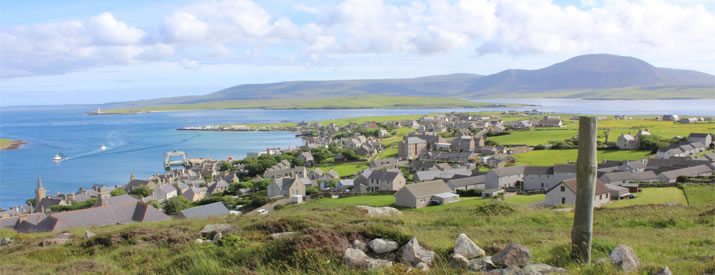
Situated in the southwestern part of Mainland Orkney, Stromness became important during the late seventeenth century when Great Britain was at war with France and shipping was forced to avoid the English Channel. Ships of the Hudson's Bay Company were regular visitors, as were whaling fleets. Large numbers of Orkneymen, many of whom came from the Stromness area, served as traders, explorers and seamen for both. 

Image result for stromnessBy the end of the 18th century, three-quarters of the Hudson's Bay Company's workforce in Canada was made up of Orkneymen. Trade continued to expand - with exports from Stromness including hides, feathers, fish (herring) and kelp. By 1841, Stromness had four inns, 34 public houses, a parish church, a post office, a library, three schools, a town hall, a museum and three banks.

Stromness also plays host to Skaill House, situated near the west coast of Mainland overlooking the Bay of Skaill and Skara Brae, and close to St Peter's Kirk. Not far from Skaill House, a Viking hoard was discovered in 1858 - considered one of the largest in Scotland.

John Rae
Image result for franklin's expedition
In 1854, Rae made contact with local Inuit, from whom he obtained much information about the fate of Franklin's lost naval expedition. His report to the Admiralty carried shocking and unwelcome evidence that cannibalism had been a last resort for some of the survivors. When it was leaked to the press, Franklin's widow Lady Jane Franklin was outraged and recruited many important supporters, among them Charles Dickens, who wrote several pamphlets condemning Rae for daring to suggest Royal Navy sailors would have resorted to cannibalism. In return, Rae argued that the Inuit (Esquimaux), whom Dickens viewed very negatively, are more likely to have killed the expedition's survivors. He was awarded prize money for finding evidence of the fate of Franklin's expedition.

Hudson's Bay Company
During its peak, the Company controlled the fur trade throughout much of the British-controlled North America. By the mid-19th century, the company evolved into a mercantile business selling a wide variety of products from furs to fine homewares. The Company functioned as the de facto government in parts of North America for nearly 200 years until the Company sold the land it owned (the entire Hudson Bay drainage basin, known as Rupert's Land) to Canada in 1869.


This is the world in which Carson sets her story with Birdie fleeing London for Stromness in search for a killer and to clear her name. There are many elements and layers to this story, and the author imbues Birdie with "the sight" which is particularly useful when linking past events (to which the reader has not been privy) with those events unfolding. It took me a little while to get into this story, and early on I was tempted to put it aside, but I am glad I persevered as the tale that unfolds is well-told (and well- researched), and gradually draws you ever deeper, from the gloomy narrow streets of London to the wilds of the Orkney Islands.

Sunday, March 15, 2020

Upcoming Blog Tour - The Canary Keeper

I am taking part in the upcoming blog tour for Clare Carson's "The Canary Keeper". And will post my review of the book on the appropriate date.  However, a brief synopsis of the novel follows below.


In the grey mist of the early morning a body is dumped on the shore of the Thames by a boatman in a metal canoe. The city is soon alive with talk of the savage Esquimaux stalking Victorian London and an eye witness who claims the killer had an accomplice: a tall woman dressed in widow’s weeds.

Branna ‘Birdie’ Quinn had no good reason to be by the river that morning, but she did not kill the man. She’d seen him first the day before, desperate to give her a message she refused to hear. But now the Filth will see her hang for this murder.

To save her life, Birdie must trace the dead man’s footsteps. Back onto the ship that carried him to his death, back to cold isles of Orkney that sheltered him, and up to the far north, a harsh and lawless land which holds more answers than she looks to find. 

Sunday, September 15, 2019

Blog Tour: Wicked By Design by Katy Moran

About the book 
1819: CORNWALL. 
Four women sit in the candlelit drawing-room at Nansmornow, an ancient Cornish manor house. The air is thick with unspoken suspicion and secret malice. As Hester Lamorna pours tea for her three guests, she has no idea one of them is about to rock her new marriage to its very foundations. 

ST PETERSBURG. 
Half a world away, Hester's impossible and charmismatic husband, Jack 'Crow' Crowlas, will be caught up in a chess game of sexual manipulation, played out across the sumptuous ballrooms of St Petersburg. All Hester and Crow hold most dear will be tested to the limit and beyond: their love for each other and their child, and for Crow, the loyalty of his only brother.


Here is an extract from the book:
Shouting to those of his men still on horseback, Crow called on them all to dismount. If he could not reach the Deliverance by sea, he must reach her from Carn Du itself: there was nothing to do but to send a rope-team into the water, himself at the fore. There was just a chance that men could be pulled from the water so close to the wreck, even if the gig could never reach them without also being smashed against the rocks with those waves rising like great whales. Whisking the coiled rope from his saddlebag, Crow slung it over his shoulder and sprinted to the narrow, winding path that led away from the beach and up towards the cliff-top, along to Carn Du itself. He snatched at handfuls of broom to steady himself, careless of the needles tearing into the palms of his hands. Once he reached the cliff-top, wind tearing at his face, his hair, he saw waves and spray smashing against the cliffs, against the rocks, and the spars of the Deliverance again, still sliding beneath the waves, with now only two figures clinging to them.
Run!’ Crow shouted at the men behind him. ‘With me, come on!’ And where in hell’s name were Castlereagh, Mulgrave, Vansittart or any of the others? Peers of the realm still asleep in bed, leaving servants and fishermen to save lives? Reaching the outcrop of Carn Du itself, the heap of vast grey rocks rearing up against a sodden sky, Crow tore off his coat and jacket and unshouldered the rope. He lashed it around his waist with swift expertise, leaving one long end for his men to belay him with, and the rest to throw. This he coiled for now, and slung over his shoulder. Looking again, there was but a single man still clinging to the yards of the Deliverance. Squinting through spray and rain, Crow saw that the survivor was not even a man, but a boy. If he climbed down the seaward face of Carn Du as far as he could, there was a chance he could toss the rope to him, and failing that to anyone still clinging to wreckage below even as it was flung at the rocks. Amid the thundering roar of the surf and the hideous crunch of wood against rock as the top spars of the Deliverance were smashed against granite by the force of the ocean, he shouted to Hughes to take up the belaying end of the line.

‘My lord,’ Hughes said, his face rigid with emotion, rain streaming down his dark skin from grizzled, short-cropped hair, ‘if you will permit me to speak? This is suicide. The waves are too high – you’ll be washed away yourself.’ 

Crow turned to his assembled servants and tenants, rain-soaked, hair splattered across their faces as they passed the rope from one man to the next. ‘What then must I do? Stand here on my own land and watch people die? Just for Christ’s sake don’t let go of the line.’

He ran light-footed to the great carn; he had climbed down it many times as a boy, clinging to fissures in the rock and leaping from narrow, algae-speckled ledges into the ocean twenty feet below, and he had clouted his young brother for doing the same too, but even then there had not been waves almost as high as the rock itself. Amid the roar of water and the groan of failing timber, Crow glanced over his shoulder as he climbed and saw the boy still clinging to a spar like kelp splattered against the upright timber of a jetty. What remained of the mast leaned at a heart-stopping angle. Wave-soaked, Crow clung to the rock, the rope taut above him, digging into the spare flesh of his midriff through his wet shirt. One boy out of a crew of seventy: was that really to be all? Another wave crashed into him, and he dug the fingers of one hand into a fissure in the rock, grasping a heaven-sent handful of sprouting marram grass with the other as he yelled over his shoulder at the boy, ‘Hold on.’ Crow could see now that he was really very young, perhaps only eight or nine, his face familiar – one of the many urchins one saw on the cobbled streets of St Erth. Crow knew in the same instant that the child was losing the will to hold on, that he was too cold, and too afraid, his face white and pinched with exhaustion and terror.

About the author 
Katy Moran is a Carnegie nominated author, she write high-octane Regency romance, which include, muskets, gunpowder, Cornwall and Russia. She writes that when she is inspired by a new place ‘Regency England, Cornwall, Russia, the ancient palace of Fontainebleau — I want to actually be there. I want to take you there too, in the company of complex characters that you will fall a little (or a lot) in love with on the way.’

Monday, June 24, 2019

Blog Tour - Tim Hodkinson - Odin's Game

Blog Post: Orkney and the Whale Road Chronicles -Tim Hodkinson

Image result for odin's gameMy generous host today set me the task of writing about why I chose Orkney as a setting for my new novel, Odin’s Game, and what my plans are for the rest of the series.


I’ve always found Orkney a fascinating place. Remote to modern, London-centric eyes but when the map is turned upside down and the clock rolled back by a few centuries, the islands lie at the centre of another ancient world, that of the Vikings. 

The name of the islands itself is ancient and the many Neolithic and other prehistoric sites remaining there point to the importance of Orkney in the Stone Age. Several of these sites also have direct links to a later Norse age of Orkney’s history. The stunning Ring of Brodgar, a Stone Age henge and stone circle that sits on a ness between two lochs has stones dates to the Neolithic era. Some of its stones bear Norse runic carvings and local tradition says the Norse used it for their own pagan rituals. Maeshowe, a prehistoric chambered cairnsunk in a mound thought to date back to 2700 BC, also has inscriptions carved by Norsemen who took shelter there one stormy night millennia afterwards.  This place inspired a scene in Odin’s Game which touches on the Orcadian folk belief in “Trows”, creatures whose name comes from the Norse Troll,but refers not to the gigantic creatures of Scandinavian folklore but to the local supernatural “little people” the Norse found when they arrived in Orkney. 

The Vikings arrived at a time in the Eight to Ninth centuries now lost in the mists of time.An Icelandic Saga from the later Middle Ages (13th Century) known as Orkneyinga Saga,relates their history. It’s a fascinating tale in which legendary characters with names like Kari,Snaer, Logi, Frosti and Nor(Storm, Snow, Flame, Frost and North) mix in a maelstrom with semi-historical figures like Sigurd the Stout, “Turf” Einar and Thorfinn Hausakljúfr,“the SkullSplitter”. Thorfinn now has a beer named after him and his nickname proved too irresistible for me not to include a character inspired by him, though I chose to translate kljúfras“cleaver” which is basically the same word. Kljúfr perfectly illustrates how Old Norse and Old English were sister languages, and modern English is a hybrid of the two. Similarly the belief in Trows/Trolls illustrate the compelling blend of Norse and indigenous (call is Scottish/Pictish/British what you will) culture that Orkney itself represents, and what drove me to use it as a setting.

In Norse times Orkney was centred on a vast trade route that went in an arc from Dublin in the West to Hedeby in Denmark in the East and even beyond, past Novgorod and south as far as Constantinople. Norse traders and adventurers plied these routes in their longships, a network of sea lanes that they referred to as “the Whale Roads”. 

Odin’s Game is the first book in a series called The Whale Road Chronicles. The story will follow Einar Thorfinnsson as he journeys across the Norse world, seeking to learn the truth about his family as he builds his power, skills and alliances so he can finally confront his ultimate enemy, the powerful and deadly Jarl Thorfinn of Orkney.

Odin’s Game is published by Aria Fiction and is available in ebook format from Amazon and through all the usual channels .

Tuesday, July 24, 2018

Blog Tour - Smile of the Wolf

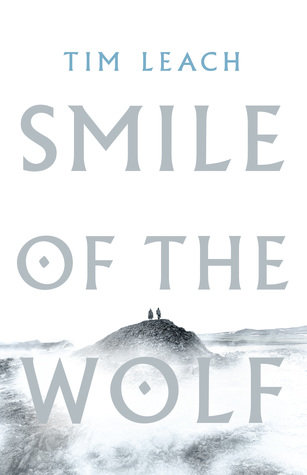
Smile of the Wolf by Tim LeachEleventh-century Iceland. One night in the darkness of winter, two friends set out on an adventure but end up killing a man. Kjaran, a traveling poet who trades songs for food and shelter, and Gunnar, a feared warrior, must make a choice: conceal the deed or confess to the crime and pay the blood price to the family. But their decision leads to a brutal feud: one man is outlawed, free to be killed by anyone without consequence; the other remorselessly hunted by the dead man's kin. Set in a world of ice and snow, this is an epic story of exile and revenge, of duels and betrayals, and two friends struggling to survive in a desolate landscape, where honor is the only code that men abide by.

See my review here @ Goodreads
A well told story of a blood-feud in Iceland, written in the stylings of the medieval Icelandic Sagas.


Our narrator, Kjaran the Landless, a poet, a skald, a wandering minstrel, does what he does best, he tells us - the reader - the story of how he became involved in a bitter feud, and the fatal consequences of all those touched by it. To tell you more, would be to spoil the story, and like all good Viking-age poets, Kjaran must weave his tale at his own pace, revealing little by little, but never out-staying his welcome.


read excerpt here 
The feud began in winter, when a dead man rose from the earth. In the distant lands where men worship the White Christ, I have heard that a ghost is not such a dangerous thing. They are creatures of no substance, who may wail and howl but cannot hurt a man. But in my country, the people are warriors even in death. Our ghosts are not shadow and air, but walking flesh. They wield their weapons with as much strength as they did in life, and more bravely, for they have nothing left to fear. And so, when we heard that Hrapp Osmundsson had crawled from his grave and begun to wander his lands at night, no man in the Salmon River Valley would leave his house after dark without a good blade at his side and a shield on his arm.


In life, Hrapp had been the terror of his neighbours, ever covetous for their lands, their women, their blood. When the winter fever came on him and he knew he was soon to die, he commanded his wife to bury him upright beneath the doorway of his house, so that he could watch over his lands even in death.

Soon enough, the stories spread throughout the dale. Thord the Sly had gone to check on his sheep at night and been set upon by a dead man carrying an axe. Erik Haroldsson, a braver man, had grappled with the creature when it came for him, but was sent running for his life with the heavy tread of the ghost behind him.

No man sought to buy the farm from Hrapp’s widow. Indeed, there was talk amongst the neighbours of selling their own lands and moving on elsewhere, though there were few farmlands so prized in all of Iceland as those in the Salmon River Valley.

For all that was spoken of the ghost, I thought it mere winter talk at first, one of those foolish tales spun to pass the long cold months of near-permanent night, when men do little but huddle round their fires and drink mead, sing songs, tell stories and wait for the sun to return. I am a collector of such tales, yet I tell only the ones I know to be true – or half-true at least. This ghost story held little interest for me.