Showing posts with label 10th century. Show all posts

Monday, November 24, 2025

Review: Lotharingia by Lara Byrne

Synopsis: Against the backdrop of the Investiture Controversy, a young woman is forging her own special destiny.

AD 1062. One day warrior Countess Matilde will rule like a man, and inherit her mother's mysterious relics, but she cannot escape the marriage arranged for her.

When her enigmatic overlord King Heinrich rescues her from her abusive husband, friendship blossoms into forbidden love. But her personal journey has only just begun.

A medieval tale of love, political intrigue, and relic hunting.

~ ~ ~

A fictional account of the early life of Matilda of Canossa, a formidable women who stood up for what she believed in, in the face of opposition from more powerful political players. And that is where my interest started and stopped.

By the author's own words, the plot is entirely fictitious and is her own creative attempt to tie up "historical" loose ends, to provide both herself and the reader a semblance of a satisfactory explanation / conclusion to historical events that actually presented none and to fill in gaps in the historical chronology.

Unfortunately, it read more like a medieval Dan Brown novel than what could have been a more considered and structured historical novel of a woman at the centre of one of the most important political and religious events of not only her time but of our own.

To throw in relic hunting and an undocumented illicit love affair in order to explain things or tie up loose ends is really doing your subject a great disservice - and just didn't work on so many levels.

I will be labeling this one as alternate historical fiction - as that is what it represents, especially for those of us who have actually taken the time to get to know Matilda and invest in her story a little more seriously. I won't be pursuing the second in this series.

If you are truly interest in Matilda, then invest in "The Military Leadership of Matilda of Canossa 1046-1115" by David J. Hay or even "Tuscan Countess: The Life and Extraordinary Times of Matilda of Canossa" by Michele K. Spike

Monday, February 19, 2024

Review: For The Want Of Silver by Michael E Wills

Synopsis: A novel based on the true story of a Viking raider who, over 30 years, acquired a fortune in English silver.

In the churchyard of the village of Orkesta, just north of the city of Stockholm, there are two eleventh century rune stones. One of them, in a few brief words, tells the world of the extraordinary achievements of Ulf of Borresta, who lived nearby. During a long career as a Viking raider, he became extremely rich on the proceeds of extortion: Danegeld. The carved runes mention the names of real Norse historical figures with whom he ravaged the English countryside. These names can be dated and the vicious raids and bloody battles where the Danegelds were won, identified.

~ ~ ~

Historical fiction account of Ulf of Borresta, a real historical viking who "lived and fought to satisfy the want of silver". We begin with the aged Ulf reflecting on his youth and the events that lead him to where he currently is.

The narration covers Ulf's youth and his adventures as part of the armies invading England in the 10th century.

Much more can be read about Ulf here @ Wikipedia

This for me was a quick and easy read, which I personally thought was perfect for a young adult reading market. It is a stand alone read - and was was pleasing to see an "unknown" historical figure being given a new lease on life.


Thursday, February 8, 2024

Review: The Royal Women Who Made England by MJ Porter

Synopsis: Throughout the tenth century, England, as it would be recognised today, formed. No longer many Saxon kingdoms, but rather, just England. Yet, this development masks much in the century in which the Viking raiders were seemingly driven from England’s shores by Alfred, his children and grandchildren, only to return during the reign of his great, great-grandson, the much-maligned Æthelred II.

Not one but two kings would be murdered, others would die at a young age, and a child would be named king on four occasions. Two kings would never marry, and a third would be forcefully divorced from his wife. Yet, the development towards ‘England’ did not stop. At no point did it truly fracture back into its constituent parts. Who then ensured this stability? To whom did the witan turn when kings died, and children were raised to the kingship?

The royal woman of the House of Wessex came into prominence during the century, perhaps the most well-known being Æthelflæd, daughter of King Alfred. Perhaps the most maligned being Ælfthryth (Elfrida), accused of murdering her stepson to clear the path to the kingdom for her son, Æthelred II, but there were many more women, rich and powerful in their own right, where their names and landholdings can be traced in the scant historical record.

Using contemporary source material, The Royal Women Who Made England can be plucked from the obscurity that has seen their names and deeds lost, even within a generation of their own lives.

~ ~ ~

MJ Porter brings to life some of the many royal women who inhabited 10th Century Anglo Saxon England. An the author of a number of historical fiction books set in this era, it should come as no surprise that this tome should be the germination of much of that self-same research.

"The Royal Women Who Made England" covers are number of areas such as royal brides, religious women, and women who have married into the royal family from areas both within and without England. There is a handy group of resources from family trees to wills and charters, and the women covered off stem from King Alfred unto Aethelred II.

However ..... it it the set up, the structure, of the tome that has me at odds. We begin with a brief history of the period and a list of royal women covered off by the Prosopography of Anglo-Saxon England (PASE) database. Then the succeeding chapters diversify, providing biographies of the leading ladies of the period. There is a chapter dedicated to legal documents to and from these women, before concluding with a further set of biographical information of these women.

So my bug-bears with this book:
  • the multiple uses of the following phrases: must have, probably, believed, often said, possibly, it appears,might have, the suggestions, potentially;
  • the disjointed repetitiveness of the biographical information provided (especially for someone coming into this green)

A suggested structure may have looked like:
  • introduction into the period covering off a short who's who of notable (men) connected to each woman followed by a purely biographical dictionary of the women (which might have eliminated the repeated biographical information provided in the relevant chapter then again at the end)
And then this final comment from Porter, who says that in writing this tome and presenting the lives of these women, she has "... drawn on my imagination when considering what their part might have been, for not to do so, would make it impossible to realise them as real people ...". I'm sorry, what??? Are you writing fact or fiction?? Are you using fiction to prop up fact?? What are you telling me - the reader - about this tome? I am left rather gobsmacked.

To put it bluntly, it is no easy task to place any of these women (with a few exceptions) at the forefront of Anglo Saxons politics, and certainly not in any firm role that would have shaped the destiny of England. Their role as wives, mothers, daughters, patrons, religious, was no different from many women of royal ruling houses - either before, after or contemporary. As I have said previously, its all well and good to bring forth a tome on a notable person, but to ascribe to them more than their due is being disingenuous to the reader.

As with a number of other books on notable women from this particular publisher, the author pool appears to be drawn from the blog-o-sphere and the presentation of the tomes in question reads like a collation of related blog posts, cobbled together with the sheerest thread of commonality. And it is disappointing that this book may well find its way into that same grouping. It is disappointing that this may be my last from this publisher.

Sunday, May 22, 2022

Review: The Bear's Blade by Tim Hodkinson

Synopsis: How do you defeat the undefeatable?

935 AD, Norway. Recovering from horrendous injuries, Einar finds himself unable to fight. He is not strong enough to defeat his rival, Eirik, who has seized Orkney despite Einar being the rightful Jarl.

Eirik's men soon raid the Norwegian coast, led by a warrior called the Bear. Cruel and ferocious, the Bear possesses a legendary blade – one that gives him a skill in battle that cannot be matched. Such an extraordinary sword could be key to Einar's plans – but first he and the Wolf Coats must contend with the Bear himself.

Caught between old foes and new ones, Einar must use all his wits to survive. But is a man who cannot wield a sword capable of being a true Viking warrior?


Book Five in the Whale Road Series ... and it doesn't disappoint. Wounded from a dual with his father, and unable to defeat his rival and nemisis, Einar realises that the ".. powers of chaos are loose ...". Separated from the Wolf Coats, Einar must heal and adapt in the face of Viking onslaughts that gives rise to a new terror - The Bear!.

Einar soon realises that this mighty warrior wields a sword more powerful than the Wolf Coats own Ulfberht sword - and to discover the secret of this powerful weapon, Einar must become a cuckoo in the nest of the Bear! Meanwhile, Eirik Bloodaxe is still a thorn in the side of the Wolf Coats - and vice versa. Eirik's queen Gunnhild will stop at nothing to see her husband secure on the throne of Orkney even if this means performing a sacred ritual and sacrifice.

Once again, the tension mounts with the increase in action, as our motley band of warriors hurtle towards their inevitable confrontation with Eirik - will they prevail, will Einar resume the path of the warrior? All we know for sure is that the Wolf Coats will live to fight another day .... afterall, it's hard to keep a good band of warriors down!


Monday, November 29, 2021

Review: The Challenges of King by KM Ashman

Synopsis: The fight for England began long before 1066…

AD 1045. Godwin of Wessex, one of the most powerful earls in the country, prepares for the marriage of his daughter to King Edward of England. The mood is jubilant, his family’s relationship with the Crown secured through matrimony. But one man seeks to undermine him at every opportunity.

French-born Bishop of London, Robert of Jumièges, has the ear of the king. As a trusted adviser, his position is one of power and privilege, and he wields it to gain ever-greater influence over the English Crown for his kinsmen in Normandy, at Godwin’s expense.

As the bishop’s control increases, the king’s relationship with the House of Godwin frays until, eventually, it breaks down completely. With civil war looming, Godwin fights to pull England back from the brink. But with the king under Norman influence, it could be too little, too late.

The Challenges of a King is the first book in a thrilling new series from K. M. Ashman exploring the politics, promises and intrigue that led three men to contest the throne in 1066, and to the final successful invasion of England. Perfect for fans of Conn Iggulden and Bernard Cornwell.


"Challenges of a King", the first in a forthcoming series is set in England during the 1040s and 1050s when Edward the Confessor was King,  details the rise and fall of the family of Godwin, Earl of Wessex.

The House of Godwin came into prominence under King Canute, when they emerged from obscurity to remain in the limelight and as part of the political machinery of Anglo-Saxon England until the reign of Edward the Confessor. The two eldest sons of Godwin, Sweyn and Harold, were also elevated to earldoms.


The narrative alternates between Edward and the Godwins, and gives us a sense that Edward was in control of his own destiny and of the political machinations that would ultimately lead up to the events at Hastings as we know them. One cannot but side with the Godwins against Edward's Norman advisers, who were attempting to divert the succession away from the Anglo-Saxon dynasts.

Whilst the action is predominantly confined to the halls of power, we get a true sense of the impending drama that is about to unfold. Looking forward to the next in the series.


Monday, June 14, 2021

Review: The Serpent King by Tim Hodkinson

Sysnopsis:
AD936 
The fight for vengeance has no victors...
The great warrior, Einar Unnsson, wants revenge. His mother's assassin has stolen her severed head and Einar is hungry for his blood. Only one thing holds him back. He is a newly sworn in Wolf Coat, and must accompany them on their latest quest.

The Wolf Coats are a band of fearsome bloodthirsty warriors, who roam the seas, killing any enemies who get in their way. Now they're determined to destroy their biggest enemy, King Eirik, as he attempts to take the throne of Norway.

Yet, for Einar, the urge to return to Iceland is growing every day. Only there, in his homeland, can he avenge his mother and salve his grief. But what Einar doesn't know is that this is where an old enemy lurks, and his thirst for vengeance equals Einar's...


This is a bloody brilliant series! And can I say that when we ever get to the end, I will be starting from the beginning in a self-indulgent binge session.

So, what's happening in Europe and Scandinavia in 936AD. In Iceland, what is referred to as the "age of settlement" was coming to its conclusion. The Landnámabók (“Book of the Settlements”, written c. 13th century) records how the first set of law codes was presented to the Athling (assembly of free men) in around 930AD. Communities tended to be a form of self-government, though often in co-operation with other nearby settlements; the bloodfeud was being replaced by a system of fines; and Christianity was decades away from yet taking foot.

Norway was still in thrall to Eirik Bloodaxe but not for much longer. Eirik's half-brother Haakon, who had been fostered by King Athelstan, as part of an agreement made by his father King Harald Farhair, was being fitted out with with ships and men for an expedition against his half-brother. Eirik was on the back foot and looking for allies. And it is to Orkney that Eirik looks, and where Einar's greatest foe - his own father Thorfinn Skull-Splitter - resides.

But do not for one moment suppose that medieval politics was in any way, shape or form, clear cut. Rulers and their followers formed alliances as and when it was prudent to do so; loyalty was bought and sold across the Kingdoms of Northumbria, Scotland, Dublin, Man, and Norway; kings were raised up and brought down with unnerving regularity. These leaders were often larger than life characters, who, had their deeds not been so readily documented, may have passed unremarked from the pages of history. This was the time of heroes and sagas; great battles and adventures; of an old world fighting to hold back the ever encroaching tide of the new.

It is back into this muddy whirlpool of politics, religion, loyalty and revenge that we once again find our motely band of Wolf Coats, as old enemies return and new ones are sent forth to distract and delay them at every turn. As Einar muses:" ... all the vipers are here .... I am right in the middle of a snakepit ..." Einar himself is still seeking out those responsible for his mother's murder and his journey will ultimately come full circle. Though what awaits him at its ends is quite unexpected.

Hodkinson once again draws the unaware reader ever deeper into the tale (or saga if you will) - like quicksand, once you have taken your first tentative steps, the ground falls away from under your feet, and you are carried along - in this instance, at the author's whim.  

At the end of every book, I constantly find myself asking what more can there be - how can Hodkinson keep the reader spellbound - and yet he somehow manages it, channeling the skalds of old as the words flow from pen to paper, with nary a dull moment in between.  If you haven't yet taken the journey down the Whale Road, it is high time you did.


About the author
Tim Hodkinson was born in 1971 in Northern Ireland. He studied Medieval English and Old Norse Literature at University with a subsidiary in Medieval European History. He has been writing all his life and has a strong interest in the historical, the mystical and the mysterious. After spending several happy years living in New Hampshire, USA, he has now returned to life in Northern Ireland with his wife Trudy and three lovely daughters in a village called Moira.


Tim is currently working on a series of viking novels for Aries Fiction, an imprint of Head of Zeus.

Buy links:
Amazon: https://amzn.to/3oNubLI
Kobo: https://bit.ly/3wKzs9Z
Google Play: https://bit.ly/34edsYu
iBooks: https://apple.co/3ukCyzy

Follow Tim:
Twitter: @TimHodkinson

Follow Aries:
Twitter: @AriesFiction
Facebook: @AriesFiction
Website: www.headofzeus.com


Friday, December 18, 2020

Review: The Viking Woman of Birka by David K Mullaly

Synopsis: Asa was a young woman who avenged a personal assault, was forced to become a warrior and leader during her family’s travels, and ultimately became responsible for defending Birka, one of the great Viking trade centers. This actual Norse woman made her mark during a violent time.

A Viking burial found on the Swedish island of Birka, identified as Bj.581, contained what was recently identified as the remains of a woman warrior and leader. What was found there confirmed that she was female and presented herself as such. Testing also suggested that she traveled a lot when she was young. What we cannot know for sure is how she grew into the role which typically was filled by men in the Norse culture.

This story is a riveting but plausible reconstruction of her life during a turbulent time in European and human history. It provides a realistic context based on our limited knowledge of the period, and creates a sequence of events which could have led to her becoming the extraordinary woman that she surely came to be.

Fans of the fiction of Bernard Cornwell, Robert Low, and James L. Nelson will appreciate this historical novel. Mullaly’s first two novels deal with a later period of Viking history.


Warrior Bj:581
In 2017, a research paper made waves by claiming that the remains of a supposed professional warrior found in a 10th-century grave in Birka, Sweden, could be female. The remains, originally unearthed in the 1880s by archaeologist Hjalmar Stolpe, had been long presumed to be those of a male warrior, due to their burial with weapons and other status symbols (a bag of gaming pieces (possibly to represent military command) and two horses, one bridled for riding). In the 1970s, an anatomical analysis of the bones suggested that they belonged to a female, and a 2016 analysis suggested the same thing (see: The Birka Warrior : the material culture of a martial society by Charlotte Hedenstierna-Jonson). 


Credit: Drawing by Þórhallur Þráinsson
Copyright Antiquity Publications Ltd

Despite (or in spite of) the intense scrutiny that this discovery was subjected to, genetic analysis in 2017 confirmed the warrior was indeed biologically female. Up until this point, the warrior interpretation was never challenged until the deceased was revealed to be a woman, the researchers noted. However, as one great (fictional) detective was wont to say: “When you have eliminated the impossible, whatever remains, however improbable, must be the truth?

And in fact, our lady from Birka is not the only known female warrior, as attested by the find of a grave in Solor, Norway (source: Viking Shield Maiden). 


About Birka
In the mid-700’s, a city was born on Björkö in Lake Mälaren named Birka, a location, which is commonly called Sweden’s first town. It is believed that it was the Swedish King who took the initiative to form the city as part of a desire to control the trade in northern Scandinavia, both politically and economically.

The Swedish King himself was living a few kilometers away , at a place called Hovgården on Adelsö. At that time it was the King’s duty to keep order in the city and protect it from being looted. - at the time of our story, this was King Ring, who was in turn succeeded by his sons Eric and Emund. He is also a bit of a shady character in that not much is know about him except from the sparse writings of Adam of Breman.

In its early medieval day, Birka was a thriving city and Sweden’s most important place for trade throughout northern Europe. The city had a perfect location because it was not only centrally located, but also well protected in the Baltic Sea. There is strong archaeological evidence to support the evidence of Birka's importance as a mercantile city. However, after only a few hundred years of existence, the settlement was abandoned. No one knows exactly why Birka, but it is posited that this was based either on political decisions or that Birka lost its strategic and easily accessible location through the land rise - no maritime access, no trade.


The author covers off some fascinating (and well researched) themes throughout the novel, including the focus on trade, for which the Vikings were also noted. In this instance, it is the journey to legendary Micklagard, that large and wealthy city, know today as Constantinople or Istanbul. The journey there was fraught with challenges and danger, which our characters experience. We also have the introduction of another great trading city, that of Dublin or as it would have been known, Dubh Linn the history of which is remarkable in it own telling.

Dubh Linn was - for our purposes - under the control of one Olaf Guthfrithson, who having succeeded his father as King of Dublin in 934,  a few years later allied with Constantine II of Scotland in an attempt to reclaim the Kingdom of Northumbria. The forces of Olaf and Constantine were defeated by the English led by Æthelstan at the legendary Battle of Brunanburh in 937.


What can I say about "The Viking Woman of Birka" by David Mullaly except that I literally could not put it down! It demands to be read in one sitting. Like Lagertha, Asa - the warrior woman of Birka - provides a different and unique look at the role of women in the Viking world, one which challenges the norms of both Viking society and our own. David certainly knows his stuff as his previous books will attest, and this well researched fictional account of the warrior found in Bj:581 certainly does her justice. 

Highly recommended.


Read more here @
Cambridge Journals - Viking warrior women? Reassessing Birka chamber grave Bj.581
Wiley Online Library - A female Viking warrior confirmed by genomics

Monday, August 31, 2020

Review: The Wolf Hunt by Tim Hodkinson

The Wolf Hunt: A fast-paced, action-packed historical fiction novel (The Whale Road Chronicles Book 3)Synopsis: When you can't protect everyone, who will you save?

AD 935. Einar Unnsson is destined to be great. He has already defeated the men sent to kill him by his father, Jarl Thorfinn, the 'Skull Cleaver'. Einar has a gift that makes him lethal in battle, a gift he needs now more than ever.

Jarl Thorfinn is set on vengeance. Einar's mother, Unn, was once Thorfinn's favourite bedslave and when she escaped, it was a humiliation he never forgot. Whilst he attempts to supplant the Irish throne, Thorfinn sends his Galdr Man to Iceland on an assassination mission.

Unaware that his mother's life is on the line, Einar spends his exile with the Wolf Coats, a band of fearsome, bloodthirsty warriors. Convinced the fates have turned against them, the Wolf Coats embark on a wild journey, desperate to lift the curse. Yet no amount of Wolf Coats, curse remedies or even Einar's special gifts will help, if Einar can't use them to save Unn's life...


OMG!  "A fast-paced, action-packed historical fiction novel" is an under-statement!  This is yet another page-turning adventure featuring our rag-tag bunch of warriors as they constantly jump out of the frying pan and into the oven before making a final last stand worthy of "The Magnificent Seven" or "Zulu".

Úlfhéðnar
Author, Tim Hodkinson weaves his spell so intricately that you are drawn in before you know it - and pages and hours have passed in no time at all. The story is so compelling that the reader finds themselves as part of this warband as they traverse 10th century Norway on their quest for revenge and redemption. 

Norway is under the reign of Eirik Bloodaxe, whose brothers are intent on raising rebellion - it is a bloody power struggle where the prize is the throne. Add to this, the battle for religious supremacy between the prevailing pagansim of the Vikings and the new religion - Christianity.

This third chapter must be read following the other two - Odin's Game and The Raven Banner -in order - as many of the characters and events referenced will flow more easily for the reader. I do hope that Tim will continue this saga of his own as this is a series worth investing in!

I would suggest tacking down the existing Sagas - they make for fascinating reading! A good starting point is the Viking Society for Northern Research.


Saturday, June 27, 2020

Review: The Raven Banner by Tim Hodkinson

The Raven Banner (The Whale Road Chronicles, #2)Synopsis: Iceland, AD 950: a young man must leave his homeland to forge his destiny, and find his father...

Einar Unnsson is destined to be a great Icelandic warrior. He has already defeated the men sent to kill him by his notorious father, Jarl Thorfinn, the 'Skull Cleaver' of Orkney. He has a gift that makes him lethal in battle. Yet he has cast it all off to be a bard.

When three men attack him, Einar's poetry provides little protection. Luckily, the skilled archer and Norse-Irish princess Affreca saves him. She'd assumed Einar had left to raise an army, challenge Thorfinn and seize the Jarldom of Orkney. Now she's determined to set him back onto his rightful path.

Einar soon finds himself entangled on Affreca's own mission. She's seeking the Raven Banner for King Eirik. Legend has it that the banner is imbued with powerful magic. That it was a gift from the Norse God Odin and any army that marches behind it will be victorious. The quest sets events in motion that are beyond Einar's control.


This is the thrilling follow-up to Odin's Game, and it does not disappoint!

Einar, Affreca and the Wolf Coats go in search of the mythical Raven Banner but fall foul of powerful enemies. We are all just taft pieces on the gameboard of the Gods." - and they certainly are as the embark on one adventure after the next.

But the journey is far from complete  ...... Einar's quest continues with The Wolf Hunt!

Friday, October 4, 2019

Ottonian Queenship - Simon MacLean

Cover for 

Ottonian Queenship


This is the first major study in English of the queens of the Ottonian dynasty (919-1024). The Ottonians were a family from Saxony who are often regarded as the founders of the medieval German kingdom. They were the most successful of all the dynasties to emerge from the wreckage of the pan-European Carolingian Empire after it disintegrated in 888, ruling as kings and emperors in Germany and Italy and exerting indirect hegemony in France and in Eastern Europe. 

It has long been noted by historians that Ottonian queens were peculiarly powerful - indeed, among the most powerful of the entire Middle Ages. Their reputations, particularly those of the empresses Theophanu (d.991) and Adelheid (d.999) have been commemorated for a thousand years in art, literature, and opera. But while the exceptional status of the Ottonian queens is well appreciated, it has not been fully explained. Ottonian Queenship offers an original interpretation of Ottonian queenship through a study of the sources for the dynasty's six queens, and seeks to explain it as a phenomenon with a beginning, middle, and end. 

The argument is that Ottonian queenship has to be understood as a feature in a broader historical landscape, and that its history is intimately connected with the unfolding story of the royal dynasty as a whole. Simon MacLean therefore interprets the spectacular status of Ottonian royal women not as a matter of extraordinary individual personalities, but as a distinctive product of the post-Carolingian era in which the certainties of the ninth century were breaking down amidst overlapping struggles for elite family power, royal legitimacy, and territory. Queenship provides a thread which takes us through the complicated story of a crucial century in Europe's creation, and helps explain how new ideas of order were constructed from the debris of the past.

Wednesday, September 25, 2019

Edward the Elder and the Making of England by Harriet Harvey Wood

Edward the Elder and the Making of England by [Harvey Wood, Harriet]
Three men have been credited with being the first king of England – Alfred the Great, his son Edward the Elder and Edward’s son and Alfred’s grandson, Athelstan. It is an undoubted fact that, were it not for the work of Alfred, there might never have been the possibility of an English kingdom in the sense that we now understand it.


It is also true that Athelstan was the first explicitly to rule over an English kingdom in roughly its present shape and extent. What, then, was the contribution of Edward to the evolution of what his son was to inherit? As a child, he saw his father at the lowest point of his fortunes; as a boy, he grew up under the constant threat of further Danish invasion.

Edward came to adulthood in the knowledge that it was his responsibility to safeguard his country. By his death, he was undoubtedly the most powerful and respected ruler, not only in England but in western Europe, and he achieved this through both martial and legislative prowess. Edward built on his father’s work but he immeasurably expanded it, and the chroniclers who wrote in the centuries which immediately followed his death remembered him as ‘greatly excelling his father in extent of power’.

Edward the Elder succeeded Alfred as king of the Anglo-Saxons; he died as king of the English. And yet virtually nothing has been written about him. Until now.  While biographies of Alfred and studies of the achievements of Athelstan pour from the press, Edward is forgotten. Yet he was the first ruler to leave behind him the possibility of a united England, a country in which men thought of themselves as English, speaking a language which all would have described as English, which had never existed in quite this form before.

Anyone looking to fully understand and appreciate the making of medieval England must look to understand and appreciate Edward the Elder and his reign.

Sunday, July 14, 2019

The Formation of the English Kingdom in the Tenth Century by George Molyneaux

Cover for 

The Formation of the English Kingdom in the Tenth Century


The central argument of The Formation of the English Kingdom in the Tenth Century is that the English kingdom which existed at the time of the Norman Conquest was defined by the geographical parameters of a set of administrative reforms implemented in the mid- to late tenth century, and not by a vision of English unity going back to Alfred the Great (871-899).


In the first half of the tenth century, successive members of the Cerdicing dynasty established a loose domination over the other great potentates in Britain. They were celebrated as kings of the whole island, but even in their Wessex heartlands they probably had few means to regulate routinely the conduct of the general populace. 

Detailed analysis of coins, shires, hundreds, and wapentakes suggests that it was only around the time of Edgar (957/9-975) that the Cerdicing kings developed the relatively standardised administrative apparatus of the so-called 'Anglo-Saxon state'. This substantially increased their ability to impinge upon the lives of ordinary people living between the Channel and the Tees, and served to mark that area off from the rest of the island. The resultant cleft undermined the idea of a pan-British realm, and demarcated the early English kingdom as a distinct and coherent political unit.

In this volume, George Molyneaux places the formation of the English kingdom in a European perspective, and challenges the notion that its development was exceptional: the Cerdicings were only one of several ruling dynasties around the fringes of the former Carolingian Empire for which the late ninth, tenth, and eleventh centuries were a time of territorial expansion and consolidation.


Monday, June 24, 2019

Blog Tour - Tim Hodkinson - Odin's Game

Blog Post: Orkney and the Whale Road Chronicles -Tim Hodkinson

Image result for odin's gameMy generous host today set me the task of writing about why I chose Orkney as a setting for my new novel, Odin’s Game, and what my plans are for the rest of the series.


I’ve always found Orkney a fascinating place. Remote to modern, London-centric eyes but when the map is turned upside down and the clock rolled back by a few centuries, the islands lie at the centre of another ancient world, that of the Vikings. 

The name of the islands itself is ancient and the many Neolithic and other prehistoric sites remaining there point to the importance of Orkney in the Stone Age. Several of these sites also have direct links to a later Norse age of Orkney’s history. The stunning Ring of Brodgar, a Stone Age henge and stone circle that sits on a ness between two lochs has stones dates to the Neolithic era. Some of its stones bear Norse runic carvings and local tradition says the Norse used it for their own pagan rituals. Maeshowe, a prehistoric chambered cairnsunk in a mound thought to date back to 2700 BC, also has inscriptions carved by Norsemen who took shelter there one stormy night millennia afterwards.  This place inspired a scene in Odin’s Game which touches on the Orcadian folk belief in “Trows”, creatures whose name comes from the Norse Troll,but refers not to the gigantic creatures of Scandinavian folklore but to the local supernatural “little people” the Norse found when they arrived in Orkney. 

The Vikings arrived at a time in the Eight to Ninth centuries now lost in the mists of time.An Icelandic Saga from the later Middle Ages (13th Century) known as Orkneyinga Saga,relates their history. It’s a fascinating tale in which legendary characters with names like Kari,Snaer, Logi, Frosti and Nor(Storm, Snow, Flame, Frost and North) mix in a maelstrom with semi-historical figures like Sigurd the Stout, “Turf” Einar and Thorfinn Hausakljúfr,“the SkullSplitter”. Thorfinn now has a beer named after him and his nickname proved too irresistible for me not to include a character inspired by him, though I chose to translate kljúfras“cleaver” which is basically the same word. Kljúfr perfectly illustrates how Old Norse and Old English were sister languages, and modern English is a hybrid of the two. Similarly the belief in Trows/Trolls illustrate the compelling blend of Norse and indigenous (call is Scottish/Pictish/British what you will) culture that Orkney itself represents, and what drove me to use it as a setting.

In Norse times Orkney was centred on a vast trade route that went in an arc from Dublin in the West to Hedeby in Denmark in the East and even beyond, past Novgorod and south as far as Constantinople. Norse traders and adventurers plied these routes in their longships, a network of sea lanes that they referred to as “the Whale Roads”. 

Odin’s Game is the first book in a series called The Whale Road Chronicles. The story will follow Einar Thorfinnsson as he journeys across the Norse world, seeking to learn the truth about his family as he builds his power, skills and alliances so he can finally confront his ultimate enemy, the powerful and deadly Jarl Thorfinn of Orkney.

Odin’s Game is published by Aria Fiction and is available in ebook format from Amazon and through all the usual channels .

Saturday, March 30, 2019

Review: Odin's Game by Tim Hodkinson

Orkney, 931: A young woman flees her home to secure a life for her unborn child. Eighteen years later, a witch foretells that she must lose him once more. The subject of a Viking prophecy, it is Einar's destiny to leave Iceland and fight his father – of whom only only one will survive. As the clouds of war gather, he will fight unimaginable foes, forge new friendships, and discover what it truly means to be a warrior. Not everyone will survive, but who will conquer all?

Image result for thorfinn skull splitterI was immediately drawn to the first two words - Orkney 931. Finally some new historical fiction set in the 10th century, and littered with actual historical characters that were, themselves, larger than life. In the Scandinavian world, this was a period rife with political turmoil, with, at times, murderous power struggles between nations and families; it was an age of exploration and settlement as the Scandinavian world spreads out over northern Europe - to Greenland, Iceland, Scotland, Kiev; it was an age where old Gods were being replaced by one God, though in some instances it was hardly a smooth and voluntary process.

Into this we are introduced to Unn Kjartinsdottir, a woman who fled her home and now must send her only son, Einar, out into the Viking world to face his fate. This tale is styled in the manner of your typical hero's quest - a young man come of age must go out in the world, seek his true identity, battle with heroes against villains, or with villains against others, and return home. However, in this instance, this is also a saga steeped in fact and history, that takes us on a journey that is far from straight forward - the Viking world was as combative as it was poetic.

The story begins in Iceland - a land settled by those fleeing persecution or tyranny in the Norse Kingdom. As a fledgling nation populated mainly by farmers, the land is "ruled by The Law not Kings" with the Icelandic Free State coming into being in 930 with the establishment of the Althing (parliament). Its is about this time that Icelandic historians began to document the nation's history in books commonly referred to as the Sagas of Icelanders. Another topic discussed in detail is religion. The Norse Gods were still powerful influences in everyday life, whilst Christianity was still in its infancy. It wasn't until many decades after our story does the nation - as a whole - convert to Christianity (through an act of parliament). In fact new research has suggested that the eruption of the volcano Eldgjá in 939, may have been viewed as an apocalytic omen, signalling the end of the old Gods and the arrival of a new God as laid out in the "Vǫluspá" . 

Among the cast of wonderfully crafted dramatis personae, we are, as I mentioned, introduced to such real life extraordinary characters as Thorfinn "skull-splitter" Jarl of Orkney, Eric "blood-axe"; Gurthfrith, King of Dublin, each worthy of a tome of their own: 

Thorfinn "skull-splitter": the Heimskringla of Icelandic historian Snorri Sturluson, and the anonymous compiler of the Orkneyinga Saga, write that Thorfinn was the most powerful of all the earls of Orkney. He is said to have been earl for seventy-five years and ruler of nine earldoms in Scotland, of the Hebrides, and of part of Ireland. A sizable part of the account in the Orkneyinga Saga concerns his wars with a "King of Scots" named Karl Hundason whose identity is very uncertain.

Eric "blood-axe": Eric was the son of Norwegian King Harald Fairhair. According to the colourful Icelandic sagas he began his Viking career aged 12. On one expedition he met and married a witch called Gunnhild, the daughter of the king of Denmark. The sagas paint Bloodaxe – a name they gave to Eric – as a barbarian, a murderous tyrant whose savagery was shocking even by Viking standards. Contemporary evidence, mainly from the Anglo-Saxon chronicles, is less vivid.

Image result for vikings in icelandGuthfrith of Dublin: a Viking leader who ruled Dublin and briefly Viking Northumbria in the early 10th century. How he came to rule Dublin is often a matter of debate. He may initially have been a de facto ruler in his kinsman's stead, before heading to Northumbria to take control there. Six months later, after being ejected from Northumbria, he returns to Dublin, where he reigns and continues his wars against the Vikings of Limerick until his death a few years later.

This was a world I was familiar with, having read many of the Scandinavian Sagas - a must if you are looking to delve deeper into this era. The tale that Hodkinson weaves in the Skaldic tradition is a page-turner - a gripping action adventure like the sagas of old; and once finished, you just want to go back and read it all over again.  In fact the scene is set for more adventures.


read more here

Sunday, January 20, 2019

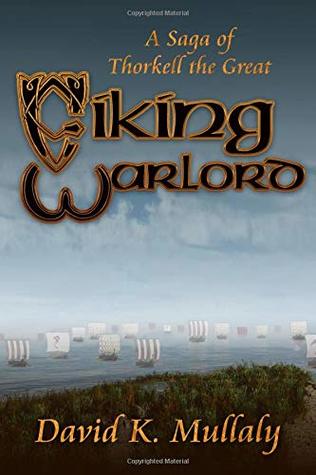
Review: Viking Warlord - A Saga of Thorkell the Great by David Mullaly

Some stories are meant to be both savoured and devoured - this is one of them.

42142226The late Anglo-Saxon period of English history which saw the rise of the - for want of a better word - Danish invasions, was a period I was fascinated in, with my own library containing a number of tomes on the subject matter.     Like David, I too was fascinated by Thorkell the Tall (the Great, the High), being inclined as I am to the more obscure historical characters, and those with a less than pristine reputation - the supporting cast.  To put him in context, he is the Danish William Marshall.  Indeed, this is another example of where the facts are far more interesting.

The tale takes place in both the 10th and 11th centuries, when England was under the rule of Aethelred II (also known as the Unready) and paying what is known as the Danegeld to keep the maruading Danish host, first under Harold Bluetooth and then his son Sweyn Forkbeard, at bay.  From Skane (part of the then Danish empire), came Thorkell, who proved himself as a warrior in such a way that he became one of the leaders of the Danes on their raids.

The Anglo-Saxon Chronicle (hereafter ASC) records the arrival at Sandwich 1st  August 1009 of an "immense hostile host", one manuscript specifying "to which we gave the name of Thurkil´s host", which invaded Kent, the Isle of Wight, Sussex, Hampshire and Berkshire, before returning to Kent to take up "winter-quarters on the Thames" and the following year invading East Anglia and other parts of England, culminating in the kidnap and murder of Ælfheah Archbishop of Canterbury.

Florence of Worcester records that "Danicus comes Turkillus" invaded England with a fleet, dated to 1009 from the context, and that other fleets led by "duces Hemingus et Eglafus" landed in August at "Tenedland" [Thanet] after which the invaders joined forces to devastate Kent, the Isle of Wight, Sussex and Southampton, and establish themselves in the Thames valley for the winter.

William of Malmesbury says that "Turkill the Dane, who had been the chief cause of the archbishop´s murder, had settled in England and held the East Angles under subjection" and that he "sent messengers to Suane [Sweyn Forkbeard] king of Denmark inviting him to come to England".

As the contemporary chronicles record, Thorkell spent three years successfully raiding with his brother Hemming, until they were eventually "bought off" for the considerable amount of £48,000 (1012). In the end, this army were hired as mercenaries by Aethelred II to protect him from an impending invasion. Joining him in the defence of London was another character - Olaf Haraldsson (later St Olaf of Norway). Many of these larger than life characters that wander across the pages were in fact real.
Related image
The Anglo-Saxon Chronicle records the invasion of England led by Sweyn King of Denmark in 1013, stating that the invaders "went east to London" where "the citizens would not submit…because King Æthelred was inside and Thurkil with him".

When Sweyn invades, Aethelred is forced to flee to Normandy; but Sweyn's victory is shortlived as he dies "... a death with no honour ..." Following this period we see Thorkell rejoin the retinue of Cnut. How and why this occurred is open to speculation but having been Cnut's foster father and also a valuable warrior, Cnut may have been content (for the moment) to welcome Thorkell back into the fold.  How and why aside, Thorkell defected back to join Cnut's invasion fleet in August 1015 and fought with the Danes at Ashington [Assandun] in October 1016.

William of Malmesbury records that Cnut King of England divided the kingdom into four parts "he himself took the West Saxons, Edric [Streona] the Mercians, Turkill the East Angles, Iric [Erik Haakonsson] the Northumbrians". Simeon of Durham records that King Cnut granted East Anglia to "earl Turkill" in 1017 whilst the ASC (1017) records that when dividing the kingdom, "East Anglia for Thurkyll".

It is only after Cnut takes power that his true character is revealled - his cruelty grows - "... gaining a kingdom can change a man .  And he wasn't finished ..." - it was not just with the family of his predecessor that Cnut turned his attentions but to his own supporters " ...for it is dangerous for a leader to owe someone more than he can give ...." (we now know where Henry VIII took his playbook from). As the body count rises, Thorkell's comrade Eric Haakonsson is reflective " .... conflicting loyalties can bleed us dry ...".

It is probable that the king appointed Thorkell regent of England in 1019, during his absence in Denmark, he was afterall, the most prominent of Cnut's magnates and his name featured prominently on charters of the period; however, there was an obvious falling out as William of Malmesbury wries that "in process of time…Turkill and Iric were driven out of the kingdom and sought their native land" - the ASC (1021) "This year, King Knute, at Martinmas, outlawed Earl Thurkyll.." Florence of Worcester records that King Canute expelled "Turkillum…comitem cum uxore sua Edgitha" from England 11th November, dated to 1021.  

All we really know is that Eadric was executed within a year of Cnut's accession (According to the Encomium Emmae, Cnut ordered Eric to "pay this man what we owe him" and he chopped off his head with his axe); Thorkell was outlawed and returns to Skane (c.1021), and that Erik fades from the pages, presumed dead, though his lands don't pass to his successor till 1033. According to the Norse sources Erik died of a hemorrhage after having a medieval medicine either just before or just after a pilgrimage to Rome (no sources mention exile). Could it be a purging of the old guard, could Cnut have perceived Thorkell as a real threat - a rival - for power in England, and as such removed him.

Related imageThe ASC  adds in a later passage that the Thorkell and Cnut entered a pact of reconciliation (1023) under which Thorkell would govern Denmark, keeping each other's sons as hostages: ".. He committed Denmark and his son to the care of Thurkyll ...".  Thorkell remained regent for about three years, being replaced by Ulf, Knud's brother-in-law.  So what happens next after c. 1025 / 1026 - we can only presume he returned to Skane; however there is this interesting passage in the ASC for the year 1039:  "... The Welsh slew Edwin, brother of Leofric, and Thurkil and Elfget, and many good men with them..." - if this were the case, Thorkell would have been in his 60s - if this is our Thorkell at all ..... and the question remains, what was he doing in the Mercian army attacking Rhyd y Groes (near Welshpool).


What David has done is gathered together a plethora of resources from which to craft a compelling and invigorating story of Thorkell in the skaldic tradition. In Scandinavia a skald was " ... a composer and reciter of poems honouring heroes and their deeds .." Their oft-times lengthy verses commemorated kings and others, and celebrated their many deeds of daring-do; and over time, their position at court become more prominent as they became the oral recorders of their own history.

And so Thorkell's story unravels in front of a renown skald, Eyolf (composor the Bandadrápa - the deeds of Eiríkr Hákonarson), whom he has summoned to appear before him so that he might recount his story and have it re-told far and wide - for Thorkell is now an aged warrior, battle-hardened, who has witnessed (and done) much. He now fears that if his story is not told, he will be forgotten by all but his own kin.

As the chapters progress, Thorkell's story is spun and teased out before a captive audience - his family, neighbours, and we the reader. As always, each night's telling is left with the proverbial cliff-hanger, a dispersal of wisdom, or running commentary (a bit akin to today's modern television serials). David neatly wraps up Thorkell's story so that we are given a possible outcome to his final years.

What I found most refreshing was that unlike some historical novels, this one was not loaded up with local vernacular and colloquisms and period dialect used by numerous authors of historical fiction to add authenticity, but which so often encumbers and destroys a story unnecessarily. I get that characters come from different areas, but I want to spend my time enjoying a novel not trying work out what they are saying. Thankfully not an issue here - the structure flowed seamlessly.

As Thorkell himself says: " ... most of our lives are what happens between one fight and the next ..."


I am looking forward to reading Eadric and the Wolves - the story of Eadric of Mercia, who features in Thorkell's story.
Seen as a villain by many during his lifetime and after, he is surrounded by people who casually employ treachery, and institutions that consistently act in bad faith. In this thoroughly researched novel, David Mullaly tells a story that challenges the traditional narrative about Eadric.  Appearances can be profoundly deceiving. Loyalty in the defense of evil is no virtue, and what may look like betrayal could be the only good option for a brave leader.


Notes:
There was no standardised spelling of names and places names; scribes tended to write phonetically, and hence there names recorded in the various chronicles of the times can look completely different (ie: Knud Kvud, Cnut, Canute).

There was more than one copy of the Anglo Saxon Chronicle - and once copied and dispersed, each was independently updated (hence some inconsistencies with dates / names / events).

Further reading:
The Saga of the Jomsvikings trans Lee M. Hollander
An Onslaught of Spears: The Danish Conquest of England by Jeffrey James
The Saga of the Jomsvikings trans NF Blake

Sunday, October 28, 2018

Review: Kin by Snorri Kristjansson

Kin (Helga Finnsdottir #1)
Historical crime / mystery set in 10th century Iceland.

The family of Unnthorn Reginsson have gathered at the family homestead - there are all the usual family rivalries and petty jealousies that could easily be found in a more modern setting, say in Midsomer or St Mary Mead. But positing this in remote and wild Iceland makes for an interesting read.

At the heart of the story is promise of long hidden buried treasure, and as the clan gather, the posturing begins and the tension slowly builds - sometimes, painstakingly so. This is where the scene is set, the characters are introduced and brought together. It is not until nearly half-way through that the murder is committed.

Enter the two main characters - Helga, the adoptive daughter of Unnthor, and Hildigunnur, Unnthor's wife. Whilst Helga is intent on solving the mystery and saving the man-boy before the family seek vengeance (blood price), Hildigunnur provides a more calming figure in the face of a rising body count.

Being familiar with the history and the style of the Icelandic and other Sagas enabled me to easily gain a better sense of the period and the characters the author was presenting to us.

suggested further reading:
> The Sagas of the Icelanders by Jane Smiley
>  Medieval Iceland: Society, Sagas, and Power by Jesse L Bycock
>  Saga: A Novel of Medieval Iceland by Jeff Janoda

Saturday, August 18, 2018

Review: The Vikings - From Odin to Christ by Martyn and Hannah Whittock

Synopsis: The popular image of the Vikings is of tall red-headed men, raping and pillaging their way around the coast of Europe, stopping only to ransack monasteries and burn longships. But the violent Vikings of the 8th century became the pious Christians of the 11th century, who gave gold crosses to Christian churches and in whose areas of rule pagan idols were destroyed and churches were built.

So how did this radical transformation happen, and why? What difference did it make to the Vikings, and to those around them, and what is their legacy today? This book takes a "global" look at this key period in Viking history, exploring all the major areas of Viking settlement. Written to be an accessible and engaging overview for the general reader.


For me, this was a highly informative journey into the transformation of the "pagan" Viking into the acceptable "christian" that is well annotated and referenced, and makes use of the voices of the Vikings themselves, through their sagas, to provide context. The authors explore the conversion of the Viking peoples and how and why this religious transformation took place.  What is interesting is the differing views on what constituted conversion, where the roots of conversion eminated from, and the how each conversion event was unique. 

The authors make clever use of their chapters to sort out and compartmentalise the history of the conversion of each group or nation, making it more accessible to the reader.  We take a look at who were the Vikings of the pre-christian world, and compare that with our modern perception of them. We look at how different forms of Christianity were the driving forces behind the conversions - German, Irish, British and Greek missionaries each had their sphere of influence and success.

First up is the raids on Anglo Saxon England, Ireland, Frisia and the Frankish Empire.  Were these raids a serious threat to the already established Christian religions - for following these attacks was a serious collapse in pastoral care throughout into which the pagan religions filled the vacuum.

To the subject at hand - we now get down to the chapters that are the most interesting, and I will give a brief summary of each, starting with Chapter 4 -"The Cross and the Hammer" - the Vikings in northern England, the dominance of pagan rule, and of co-existance and assimilation.

Chapter 5 find us in 8th Century Ireland, with the inability of local leaders to unite and form a cohesive front against the Viking attacks and the establishment of permanent bases - at least not until the Battle of Clontarf.  The foundation of Normandy is covered in Chapter 6, with the transition of conversion taking a mere century, and the development of Church reform under these newly christianised leaders gained prominance.

Now we get to the main Viking nations: Chapter 7 covers the conversion process in 10th Century Denmark under the leadership of of Harold Bluetooth, despite earlier missions two centuries prior; and also clarifies some of the misnomers of the reign of both Svein Forkbeard and Cnut.  Chapter 8 takes us to Norway, whose missionary kings - the Olafs - lead the fight against pagan resistance.  The use of burials as an indicator of the level of the reaches of conversion, and the connection between conversion and the expansion of royal power is also discussed. 

Sweden and the arrival of the German missionaries in the 9th Century is covered in Chapter 9.  This conversion took much longer as this area was not so politically unified as its neighbours.  Unity and royal power increased at the same rate as the conversion, and was more or less complete with the incorporation of Finland by 13th Century.

Chapter 10 deals with the spread of the Vikings in the east, namely through the Byzantine Empire, the Baltic, the establishment of the kingdom of Rus, the reach of trade as far as Baghdad, and of course, the hero Harald Hardrada.  The colonisation and conversion of the North Atlantic Viking outposts of Iceland, Greenland, and the Faroe Islands in Chapter 11 quite naturally leads into the the voyages of the Greenlanders to Vinland in the 11th Century, and the first American Christians.

Back we head to Anglo Saxon England, and the reign of the first Viking Kings, Svein of Denmark and his son Cnut the Great, under who, as a loyal son the the Chruch, actively suppressed paganism.  The obliteration of Pictish culture under the Vikings in the islands to the north and the west (Hebrides, Orkneys, Shetland, et el), and the missions from Germany and Ireland, forms one of our final chapters.  It is assimilation, expansion, trade, spread of ideas, and the unity of political power in the mid 12th century that finally ended the "Viking Age".

This is truly a remarkable journey of the Christianisation of the Scandinavian world that really kicked off in the late 9th century and lasted for a period of three hundred years.