Showing posts with label royal women. Show all posts

Sunday, October 26, 2025

Review: The Formidable Women who Shaped Medieval Europe by Susan Abernethy

Synopsis: The formation of the Burgundian Empire by the four Valois Dukes of Burgundy would not have happened without the formidable royal and aristocratic women in their lives. These women, the wives, daughters, nieces, granddaughters and great-granddaughters, were vigorously engaged in the administration of the Burgundian empire, acting as governors and regents, making appointments, securing and making strategic marriages, raising taxes, negotiating treaties, engaging in cultural, religious and political patronage, giving birth to heirs and aiding in the military endeavours of their husbands. The history of these women involves numerous countries in Europe, including England, Scotland, France, Brittany, the Low Countries, Italy, Spain, the Holy Roman Empire, and many others.

Some of these women lived in luxurious comfort, and others were bullied and badgered into turning over some or all of their patrimony, allowing these all-powerful men to build an influential and powerful new state comprised of a numerous and varied collection of territories in Western Europe that existed from the late fourteenth century until the early sixteenth century.

We will meet women who were the daughters of kings, emperors, dukes and counts and even a queen regnant and a saint. The Valois dukes fully entrusted their wives with ruling in their stead while away fighting military and political wars. They used a deliberate policy of making marriages for their daughters and other female relatives into the many houses of Europe for political and territorial gains. In the end, the last Valois duke, Charles the Bold, put in motion a marriage for his daughter Mary, which would eventually bring about the end of the mighty Burgundian state, allowing it to be ruled by the House of Habsburg and absorbed into the Holy Roman Empire.

~ ~ ~

Of all the recent books out of the Pen & Sword stable, this one was one of the more palatable tomes I have read in some time. Having read and currently own, a number of texts mentioned as references sources, the subject matter was not unfamiliar to me.

I like that the book was broken down into the reigns of the four main dukes - each of whose biography by Richard Vaughan is referenced. Following a history on the region / dukedom of Burgundy, including the four main incumbents, we begin to be introduced into the women of the ducal families - those born into it, those that married into it, and those on the very periphery of it. With family trees and references at the end of each stand-alone biography, it is very readable and singular in its layout, which reflects the fact that Abernethy is one of the many bloggers turned author carried by this publisher.

When there is very little to flesh out the character, the author does revert to detailing what is known but also drawing in the males within the sphere to "bulk it out" - it is unfortunately what I have found in the many tomes I have read from this publisher (don't get me started on the titles which are pure pie in the sky).

However, what the modern reader should bear in mind that for many chroniclers and authors of the period, the lives of women, especially when it came to documenting them, was not given much credence. There were some that defied the odds to have their voices heard but these a few and far between which makes it tricky for an author - in some instances - to provide much in the way of detail that does not include the goings-on of males around her, especially when they affect or contribute to events in the lives of these women.  

The experiences of the women in this tome can be reflected in the lives of their contemporaries in other corners of the globe - they are - unfortunately - not unique when money, power, land, and titles were at stake in an era dominated by powerful men who let nothing get in the way of their own personal enrichment.  Women often found themselves the victims and pawns on the political chessboard, but we must not discount those who were able to rise above and make their mark - though few and far between, both they and their sisters who had a supporting cast role are still deserving of our attention.

Kudos to Abernethy for tackling the dukedom of Burgundy. Having read her very informative and well researched blog posts one can understand that this is an area of great interest and one in which she is keen to share with a greater audience.

Monday, April 28, 2025

The Queens and Royal Women of Sweden c. 970–1330

Synopsis: This is the first major piece of scholarship to provide an overview of the lives of Sweden’s earliest documented queens, together with some of their most influential female relatives, who lived between 970 and 1330.

Spanning a period over 350 years, approximately 40 biographies are included from the semi-legendary Viking queen Sigrid Storråda to Duchess Ingeborg of Norway, the first female de jure and de facto ruler of Sweden. 

Rather than merely summarising previous research, this study offers new perspectives on the evolution of queenship in medieval Sweden. It tracks the different religious, political, and socio-economic trends which defined and shaped the office of queen and identifies three main phases of development which led to royal women’s economic and political emancipation by the mid-fourteenth century. 

The study’s main strength lies in its close reading and novel interpretation of the surviving primary sources, enabling readers to understand the importance of these women and wider themes such as state formation, Christianisation, and international politics.

The Queens and Royal Women of Sweden, c. 970–1330 is of interest to scholars of queenship and gender studies, medieval historians in general, those with an interest in ecclesiastical history, and anyone studying medieval Scandinavia.


Thursday, February 8, 2024

Review: The Royal Women Who Made England by MJ Porter

Synopsis: Throughout the tenth century, England, as it would be recognised today, formed. No longer many Saxon kingdoms, but rather, just England. Yet, this development masks much in the century in which the Viking raiders were seemingly driven from England’s shores by Alfred, his children and grandchildren, only to return during the reign of his great, great-grandson, the much-maligned Æthelred II.

Not one but two kings would be murdered, others would die at a young age, and a child would be named king on four occasions. Two kings would never marry, and a third would be forcefully divorced from his wife. Yet, the development towards ‘England’ did not stop. At no point did it truly fracture back into its constituent parts. Who then ensured this stability? To whom did the witan turn when kings died, and children were raised to the kingship?

The royal woman of the House of Wessex came into prominence during the century, perhaps the most well-known being Æthelflæd, daughter of King Alfred. Perhaps the most maligned being Ælfthryth (Elfrida), accused of murdering her stepson to clear the path to the kingdom for her son, Æthelred II, but there were many more women, rich and powerful in their own right, where their names and landholdings can be traced in the scant historical record.

Using contemporary source material, The Royal Women Who Made England can be plucked from the obscurity that has seen their names and deeds lost, even within a generation of their own lives.

~ ~ ~

MJ Porter brings to life some of the many royal women who inhabited 10th Century Anglo Saxon England. An the author of a number of historical fiction books set in this era, it should come as no surprise that this tome should be the germination of much of that self-same research.

"The Royal Women Who Made England" covers are number of areas such as royal brides, religious women, and women who have married into the royal family from areas both within and without England. There is a handy group of resources from family trees to wills and charters, and the women covered off stem from King Alfred unto Aethelred II.

However ..... it it the set up, the structure, of the tome that has me at odds. We begin with a brief history of the period and a list of royal women covered off by the Prosopography of Anglo-Saxon England (PASE) database. Then the succeeding chapters diversify, providing biographies of the leading ladies of the period. There is a chapter dedicated to legal documents to and from these women, before concluding with a further set of biographical information of these women.

So my bug-bears with this book:
  • the multiple uses of the following phrases: must have, probably, believed, often said, possibly, it appears,might have, the suggestions, potentially;
  • the disjointed repetitiveness of the biographical information provided (especially for someone coming into this green)

A suggested structure may have looked like:
  • introduction into the period covering off a short who's who of notable (men) connected to each woman followed by a purely biographical dictionary of the women (which might have eliminated the repeated biographical information provided in the relevant chapter then again at the end)
And then this final comment from Porter, who says that in writing this tome and presenting the lives of these women, she has "... drawn on my imagination when considering what their part might have been, for not to do so, would make it impossible to realise them as real people ...". I'm sorry, what??? Are you writing fact or fiction?? Are you using fiction to prop up fact?? What are you telling me - the reader - about this tome? I am left rather gobsmacked.

To put it bluntly, it is no easy task to place any of these women (with a few exceptions) at the forefront of Anglo Saxons politics, and certainly not in any firm role that would have shaped the destiny of England. Their role as wives, mothers, daughters, patrons, religious, was no different from many women of royal ruling houses - either before, after or contemporary. As I have said previously, its all well and good to bring forth a tome on a notable person, but to ascribe to them more than their due is being disingenuous to the reader.

As with a number of other books on notable women from this particular publisher, the author pool appears to be drawn from the blog-o-sphere and the presentation of the tomes in question reads like a collation of related blog posts, cobbled together with the sheerest thread of commonality. And it is disappointing that this book may well find its way into that same grouping. It is disappointing that this may be my last from this publisher.

Saturday, December 23, 2023

Royal Witches by Gemma Hollman

The stories of four royal women, their lives intertwined by family and bound by persecution, unravel the history of witchcraft in fifteenth-century England.

Until the mass hysteria of the seventeenth century, accusations of witchcraft in England were rare. However, four royal women, related in family and in court ties— Joan of Navarre, Eleanor Cobham, Jacquetta of Luxembourg and Elizabeth Woodville —were accused of practicing witchcraft in order to kill or influence the king.

Some of these women may have turned to the “dark arts” in order to divine the future or obtain healing potions, but the purpose of the accusations was purely political. Despite their status, these women were vulnerable because of their gender, as the men around them moved them like pawns for political gains.

In Royal Witches, Gemma Hollman explores the lives and the cases of these so-called witches, placing them in the historical context of fifteenth-century England, a setting rife with political upheaval and war. In a time when the line between science and magic was blurred, these trials offer a tantalizing insight into how malicious magic would be used and would later cause such mass hysteria in centuries to come.

Saturday, August 21, 2021

W H Allen lands Ramirez's 'vivid and evocative' look at medieval women

W H Allen has landed the "remarkable" Femina: A New History of the Middle Ages by Oxford University lecturer and BBC historian Janina Ramirez.

Out in March 2022 and based on 10 years of research, Femina will bring "remarkable medieval women to the fore and offer the first comprehensive look at why they were written out of history". Ramirez will create a "vivid and evocative" picture of the lives of the women who influenced medieval society, including Aethelflaed, Margery Kempe and King Jadwiga, as well as individuals discovered more recently, like the Loftus Princess and the Cathar spies. It promises to ultimately reveal "how and why these remarkable people were removed from our collective memories, and highlight the misconceptions that have underpinned our historical narratives".

Lucy Oates, commissioning editor, acquired UK and Commonwealth rights from Rosemary Scoular at United Agents. She said: "The Middle Ages are seen as a bloodthirsty time of Vikings, saints and kings: a patriarchal society that oppressed and excluded women. But by digging a little deeper into the truth, drawing on evidence from all disciplines, we can see that the ‘dark’ ages were anything but. Janina has such an enthusiasm for her subject, and as a visual historian brings the past to life with creativity and passion. I’m absolutely delighted to be publishing her at W H Allen."

Ramirez added: "This book is not simply about introducing you to women from history who are inspiring. It's about seeing the past and our relationship with it differently. It's about understanding how our access to history has been curated and manipulated, and how our perceptions can change going forward.

read more here from The Bookseller


Thursday, September 26, 2019

The Correspondence of Elizabeth Stuart, Queen of Bohemia - Nadine Akkerman

The Correspondence of Elizabeth Stuart is the first complete edition of the letters of Elizabeth Stuart (1596-1662), Electress Palatine of the Rhine and Queen of Bohemia, daughter of King James I of England and Anna of Denmark.


Volume I covers Elizabeth's life as princess and consort in the years between 1603 and 1631. It includes letters exchanged with her brother, Henry Frederick, the courtship letters of Frederick V, Elector Palatine, and Elizabeth's experiences of both marital and court life in Heidelberg, especially her struggle with Germanic culture and her arguments with both her husband and mother-in-law over rights of precedence. From 1619 her letters become increasingly political as she begs her father, the Duke of Buckingham, and others for assistance in the desperate struggle for the Crown of Bohemia. Deposed in 1620, Elizabeth spends her time in exile devising ploys to gain further financial, moral, and military support from statesmen and military leaders such as Sir Dudley Carleton, the 'Mad Halberstadter' Christian of Brunswick, Count Ernest of Mansfeld, King Christian IV of Denmark, and Bethlen Gabor, Prince of Transylvania, behaviour increasingly in defiance of her father's wishes and demands.

Elizabeth's letters evidence her slow transformation from political ingenue to independent stateswoman, a position cemented as her husband fell victim to the war they had precipitated. The diplomatic writing skills she developed in this period were to become her only weapon for securing both the inheritance of her many children and her own position as a key religious, political, and cultural figure in early-modern Europe.


Sunday, September 8, 2019

Women in Antiquity - Oxford University Press

Oxford University Press has released a number of interesting books in the Women of Antiquity series. Here are a few that interested me personally:


Cover for 9780195379129Galla Placidia: The Last Roman Empress by Hagith Sivan
This new biography of Galla (c.390 - 450) is organized according to her changing roles as bride, widow, bereaved mother, queen and empress. It examines her relations with men in power, her achievements as a politician, her skills at establishing power bases and political alliances, and her efficiency at accomplishing her desired goals. (side note: I have this one myself!)

Theodora: Actress, Empress, Saint by David Potter
Potter penetrates the highly biased accounts of Theodora found in the writings of her contemporaries and takes advantage of the latest research on early Byzantium to craft a modern, well-rounded, and engaging narrative of Theodora's life. 

Zenobia: Shooting Star of Palmyra by Nathanael Andrade
This book situates Zenobia in the social, economic, cultural, and material context of her Palmyra. By doing so, it aims to shed greater light on the experiences of Zenobia and Palmyrene women like her at various stages of their lives. Not limiting itself to the political aspects of her governance, it contemplates what inscriptions and material culture at Palmyra enable us to know about women and the practice of gender there, and thus the world that Zenobia navigated

Boudicca: Warrior Woman of Roman Britain by Caitlin C. Gillespie
Introduces readers to the life and literary importance of Boudica through juxtaposing her different literary characterizations with those of other women and rebel leaders. This study focuses on our earliest literary evidence, the accounts of Tacitus and Cassius Dio, and investigates their narratives alongside material evidence of late Iron Age and early Roman Britain.

Cover for 9780195365528Arsinoe of Egypt & Macedon by Elizabeth Donnelly Carney
First ever biography (in english) of Arsinoë II (c. 316-c.270 BCE), daughter of the founder of the Ptolemaic dynasty. Although Arsinoë was the pivotal figure in the eventual evolution of regnal power for Ptolemaic women --and despite a considerable body of recent scholarship across many fields relevant to her life-- there has been no up-to-date biography in English of her life.

Berenice II and the Golden Age of Ptolemaic Egypt by Dee L. Clayman
First ever biography (in english) of Berenice II (c. 264-221 BCE), daughter of King Magas of Cyrene and wife of Ptolemy III Euergetes. which offers a portrait of a woman who had access to the cultural riches of both Greece and Egypt and who navigated her way carefully through the opportunities and dangers they presented, ultimately using them to accrue unprecedented honors that were all but equal to those of the king.

Cleopatra by Duane W Roller
First comprehensive biography of Cleopatra VII, queen of Egypt to draw solely from the source material from the Greco-Roman period: literary sources, Egyptian documents (Cleopatra's own writings), and representations in art and coinage produced while she was alive.

Cleaoptra's Daughter and Other Royal Women of the Augustan Era by Duane W Roller
The first detailed study of a number of royal women who were major players in the world of the latter first century BC and the early part of the following century. In addition to Cleopatra Selene (daughter of Cleoptra VII), other women of note included in this book are Pythodoris of Pontos, Salome of Judaea, Glaphyra of Cappadocia, Dynamis of Bosporos, Abe of Olbe, and Mousa of Parthia.

Clodia Metelli: The Tribune's Sister by Marilyn B. Skinner
First full-length biography of Clodia Metelli widow of the consul Metellus Celer in any language. As the eldest sister of the populist demagogue P. Clodius Pulcher, she used her wealth and position to advance her brother's political goals. For that she was brutally reviled by Clodius' enemy, the orator M. Tullius Cicero.

Faustina I and II: Imperial Women of the Golden Age by Barbara M. Levick
Cover for 9780195379419Provides an learned introduction to the lives of these two important classical women of the Roman Empire - Faustina the Elder (c. 97-140) and her daughter Faustina II (c. 130-175).  The book traces Faustina I's formation of her family's heritage amid a new empire through to Faustina II's enhancement of that legacy, focusing especially on the younger Faustina's deep involvement in palace politics and her possible role in the revolt of Avidius Cassius in 175.

Sabina Augusta: An Imperial Journey by T Corey Brennan
Sabina Augusta (ca. 85-ca. 137), wife of the emperor Hadrian (reigned 117-38), accumulated more public honors in Rome and the provinces than any imperial woman had enjoyed since the first empress, Augustus' wife Livia. Indeed, Sabina is the first woman whose image features on a regular and continuous series of coins minted at Rome. She was the most travelled and visible empress to date. Hadrian also deified his wife upon her death.

Turia: A Roman Woman's Civil War by Josiah Osgood
In this book, Josiah Osgood reconstructs the life of Turia, more fully than it has been before by bringing in alongside the eulogy stories of other Roman women who also contributed to their families' survival while working to end civil war. He shows how the wife's story sheds rare light on the more hidden problems of everyday life for Romans, including a high number of childless marriages. This unique narrative is more than a biography of one woman: it is a portrait of a vivid period in Roman history and a tribute to married love 

Eurydice and the Birth of Macedonian Power by Elizabeth Donnelly Carney
Examines Eurydice - the wife of Amyntas III, the mother of Philip II, and two other short-lived kings of Macedonia, and grandmother of Alexander the Great. This study examines the nature of her public role as well as the factors that contributed to its expansion and to the expanding power of Macedonia.

Cover for 9780190210038Hypatia The Life and Legend of an Ancient Philosopher by Edward J. Watts
First full English-language scholarly treatment of Hypatia in over 25 years which takes advantage of new techniques for reading ancient letter collections and philosophical and mathematical commentaries.  Watts uncovers a number of previously unnoticed early modern sources and uses them to speak at length about Hypatia's modern legacy. 

Perpetua:  Athlete of God by Barbara K. Gold
Perpetua was an early Christian martyr who died in Roman Carthage in 203 CE. This book will investigate and try to make sense of all aspects of Perpetua's life, death, and circumstances: her family and life in Carthage, Christians and Romans in Carthage and in the Roman empire in this period, the comparisons of martyrs to athletes, the influence of these martyr tales upon the Acts of the Apostles and the Greek novel, the reactions of later church fathers like Augustine to her story and her popularity, and the gendering of this text.

Monica: An Ordinary Saint by Gillian Clark
This tome seeks to illuminate Monica (mother of St Augustine) in the context of the societal expectations and burdens that shaped her and all ordinary women. Weighing Augustine's discussion of his mother against other evidence of women's lives in late antiquity, Clark achieves portraits both of Monica individually, and of the many women like her.

Monday, July 22, 2019

Royal Misses: Lost and Found

From Hindustan Times

It’s widely agreed that the French queen, Marie Antoinette, died early because she had too many frocks at a time of social unrest . History places her the way she was: her contribution to France was in lace and ruffles. In India, on the other hand, many women who made significant history, have just been projected as domestic goddesses; their exercise of political power considered overreach, or been simply sidelined.

Nur Jahan,Mughal harem,Mughal princesses
Authors, policy influencers, patrons of artists, wedding planners, in other words, alliance makers, city builders among Timurid women have, for instance, been lumped under ‘Mughal women’ in our textbooks after ‘Mughal art and architecture’ have got their due. That is, 214 years of varied achievements by women, overwritten by blocks of marble.

Women writers have recently been looking at the past with new glasses. They are examining the role women have played in the power structures of the day and are questioning the grand narrative of empire building as being the only story worth telling. In non-fiction, Ruby Lal’s Empress: The Astonishing Reign of Nur Jahan, Ira Mukhoty’s The Daughters of the Sun, Archana Garodia Gupta’s The Women Who Ruled India: Leaders, Warriors, Icons, Parvati Sharma’s Jahangir, Deepa Agarwal and Tahmina Aziz Ayub’s book, The Begum, on Ra’ana Liaquat Ali Khan, Pakistan’s first First Lady who was born Indian, all fall in this category..

In fiction, two upcoming titles, Subhadra Sen Gupta’s Mahal, and Amita Kanekar’s Pride of Lions, have prominent women figures with the Mughal era as backdrop. The latter is a thrilling story of an unlikely revolt. A group of peasants led by women fight the might of Aurangzeb’s rule. Who would not want to be drawn into that world?

read more here @ Hindustan Times


Friday, July 19, 2019

Review: Forgotten Royal Women by Erin Lawless

Forgotten Royal Women: The King and I
For me - nothing new. I have read extensively on this subject matter and have come across all those mentioned - so an hour later I was finished.

However - for someone just dipping their toe, this will make the perfect starting point. The women featured are not the "big ticket names" one would readily associate with this topic - which makes a refreshing change. The stories are your typical vignettes and aren't mean to be anything more, which enabled author Erin Lawless to cover quite a number of women associated with the thrones of England, Scotland and Wales - no Ireland ..... maybe that's in the next edition.

Overall, the content was spot on; the style was easy and not overly bogged down with facts and figures, which can sometimes be off-putting for someone just starting out; and most of the major career / life high (and low) points were covered.

As I said, recommended as a starting point. And as to no bibliography - well, just what do you include or exclude. Go out in search of these women and their counterparts - explore all available resources and don't be limited to one authors' sources!


Monday, June 10, 2019

Queen Anne: Patroness of Arts by James Anderson Winn

As the last Stuart monarch, Queen Anne (1665-1714) received the education thought proper for a princess, reading plays and poetry in English and French while learning dancing, singing, acting, drawing, and instrumental music. As an adult, she played the guitar and the harpsichord, danced regularly, and took a connoisseur's interest in all the arts. 


Cover for 

Queen Anne


In this comprehensive interdisciplinary biography, James Winn tells the story of Anne's life in new breadth and detail, and in unprecedented cultural context. Winn shows how poets, painters, and musicians used the works they made for Anne to send overt and covert political messages to the queen, the court, the church, and Parliament. Their works also illustrates the pathos of Anne's personal life: the loss of her mother when she was six, her troubled relations with her father and her sister, James II and Mary II, and her own doomed efforts to produce an heir. Her eighteen pregnancies produced only one child who lived past infancy; his death at the age of eleven, mourned by poets, was a blow from which Anne never fully recovered. Her close friendship with Sarah, Duchess of Marlborough, a topic of scabrous ballads and fictions, ended in bitter discord; the death of her husband in 1708 left her emotionally isolated; and the wrangling among her chief ministers hastened her death.

Richly illustrated with visual and musical examples, Queen Anne draws on works by a wide array of artists - among them composer George Frideric Handel, the poet Alexander Pope, the painter Godfrey Kneller, and the architect Christopher Wren - to shed new light on Anne's life and reign. This is the definitive biography of Queen Anne.

Sunday, May 26, 2019

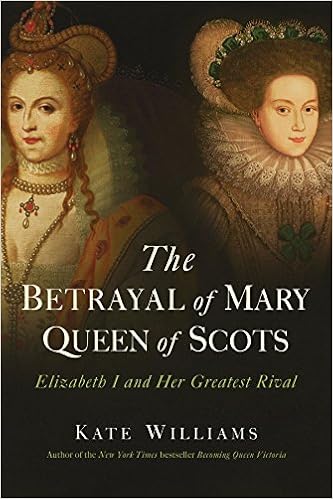
The Betrayal of Mary, Queen of Scots by Kate Williams

Image result for The Betrayal of Mary, Queen of ScotsElizabeth and Mary were cousins and queens, but eventually it became impossible for them to live together in the same world. This is the story of two women struggling for supremacy in a man’s world, when no one thought a woman could govern. They both had to negotiate with men—those who wanted their power and those who wanted their bodies—who were determined to best them. In their worlds, female friendship and alliances were unheard of, but for many years theirs was the only friendship that endured. They were as fascinated by each other as lovers; until they became enemies. Enemies so angry and broken that one of them had to die, and so Elizabeth ordered the execution of Mary. But first they were each other’s lone female friends in a violent man’s world. 

Their relationship was one of love, affection, jealousy, antipathy—and finally death. This book tells the story of Mary and Elizabeth as never before, focusing on their emotions and probing deeply into their intimate lives as women and queens. They loved each other, they hated each other—and in the end they could never escape each other.


Mary’s story has been often told, but it has been interpreted differently through the generations. While some earlier historians viewed the queen as complicit in her rape and subsequent marriage, Williams analyzes events with a modern perspective, incorporating what we now know about the trauma of sexual assault. The author also stresses how the two queens, unlike kings who governed autocratically, were consistently forced to relinquish some of their power. In framing Mary’s story as being one about “how we really think of women and their right to rule,” Williams hints at its ongoing resonance.


Saturday, November 3, 2018

Olive: Princess of Cumberland - A Royal Scandal by Miles Macnair

This is the gripping story of a truly remarkable woman who claimed in her later life to be a legitimate niece of King George III, by his brother Henry Duke of Cumberland. It is a tale of seduction and corruption, of artists and courtiers, State secrets and court-cases, 'Special Agents' and inconvenient children who were never quite certain who their parents had been. 

Who was Olive Wilmot? The result of four years research and based largely on letters and documents never published before, this book unravels the mysteries of her scandalous life and, in the last chapter, offers some solutions to enigmas that have intrigued historians for nearly 200 years. 

see also: 
Hansard Entry for 14th July 1820 - Petition of Olive Wilmot
Olivia Serres - wikipedia


Sunday, June 3, 2018

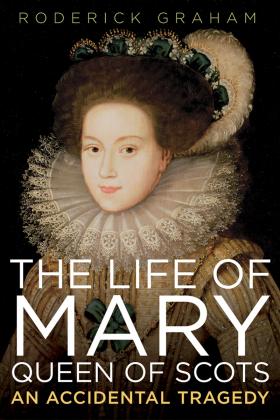
The Life of Mary: Queen of Scots by Roderick Graham


Mary, Queen of Scots lived during one of the most fascinating periods in history. Graham’s epic work paints a unique picture of this controversial woman, showing her to be neither a Catholic martyr nor murdering adulteress but a passive young woman caught up in the ruthless sea of sixteenth-century politics who lacked the shrewdness and empowerment of her contemporaries—Catherine de Medici, Diane de Poitiers and Elizabeth Tudor. Instead, she relied on her beauty and charm and allowed herself to be a victim of circumstance. When she did finally attempt to control her future, she set in motion the events that would lead her to the executioner’s block.