Showing posts with label 17th century. Show all posts

Monday, October 27, 2025

Review: Rebellion by Philip Yorke

Synopsis: It is 1643.  The bloody English Civil War has been raging for almost a year and Parliament is facing defeat.  
In desperation, it orders army officer, Francis Hacker, to spearhead an audacious plot to bring down the tyrant, King Charles.  Courageous and loyal, Hacker is drawn into a deadly deceit that could cost him everything he holds most dear…


~ ~ ~

Historical fiction with grit as the true drama and horrors of the English Civil War are brought to life in the pages of Yorke's book.

During 1642 - 1643, the King and his supporters will still on the political chessboard, pitching battles along the length and breadth of the country against Cromwell's Parliamentarians. Battles were fought and won and lost on both sides, and the futility is well depicted. It is the human loss that is tragically represented- friends and family, once allies, now foes; religious and political beliefs held steadfast by some, and picked up and cast away with indifference by others; and the family drama of loss and grief. Yorke portrays the times in all their grisly glory.

This is the first in a series featuring Parliamentarian soldier Francis Hacker, a man driven by the convictions he upholds - both personal, political and religious. An outstanding historical novel that touches on this divisive period on English history. Looking forward to book two - Redemption.

Note: read in 2020 / reviewed added 2025

Monday, October 6, 2025

Review: Cromwell's Spy by Dennis Sewell

Synopsis: A vivid biography of the elusive George Downing, a Puritan from colonial Massachusetts who became Oliver Cromwell's chief spy and a key figure in the Restoration.Downing Street is synonymous with political power, perhaps only second to Pennsylvania Avenue. But for the builder behind one of the world's most famous streets—George Downing—it was a mere retirement project.

Throughout his storied life, Downing would be a soldier, a politician, a diplomat, and a spy. He came of age as a pioneer in colonial Massachusetts, graduated from Harvard, crossed the Atlantic to sign up for the English Civil War and fast became Oliver Cromwell’s chief of military intelligence. He was one of a close group of now-forgotten Americans in Cromwell’s circle who exerted enormous influence upon English political life during their Civil War.

Throughout his life, Downing was always at the center of events, engaging with the most illustrious men and women of his times. His uncle was the governor of Massachusetts; his cousin the governor of Connecticut. In England, his patrons were Oliver Cromwell and King Charles II. The famous diarist, Samuel Pepys, was his clerk; the great poet, John Milton, prepared his letters and dispatches. William of Orange was godfather to his son; his next-door neighbor was Queen Elizabeth of Bohemia; and when Downing finally built his street, his surveyor was Sir Christopher Wren, architect of St Paul’s Cathedral.

He would leave his mark on American soil as well. He played a key role in the founding of New York by helping to wrest Manhattan and Long Island from the Dutch. Yet he remains one of the most elusive figures of his age. In Dennis Sewell's rich and vivid Cromwell's Spymaster, Downing emerges as the extraordinary, enigmatic, and endlessly fascinating anti-hero of his own life story.

~ ~ ~

After finishing this biography by Dennis Sewell, I still felt as if Downing was as elusive as ever, and I fear much of his "intelligence" work has gone and will continue to go undiscovered. It is his reputation - as a spy, a diplomat, a turncoat, a raconteur, an double agent - that has  foreshadowed all else.  But I feel that I have learned more about this man than I previously had, and have come to an understanding of his character and career.

George Downing was a man who was socially and politically connected to people - on both sides of the Atlantic - who mattered. He was politically active, initially as a preacher, before learning the art of deception and ambiguity from Oliver Cromwell himself. Downing was no fool - he was adroit, astute, with his own network of spies and agents, and was often referred to as both "an intelligencer and seducer" (c.1650).

His early political career was in Scotland however he took no part in the trial or execution of King Charles I of England, despite being on Cromwell's staff. He became increasingly concerned with foreign affairs and national security, finding himself as Ambassador in the Netherlands, where he was said to be "... burgling, bribing and blackmailing his way across the Low Countries..." which were a hot-bed of Royalist activity and home to a number of significant members of the royal house of Stuart.

His reputation was far from clean - he was an active participant in the trafficking of war prisoners to the Americas and nor was he above a little appropriation of the property of Royalists for himself. In the political vacuum that followed the death of Cromwell, Downing used his connections to intercede with the new King, Charles II. He was forgiven his misdemeanors, rewarded and even took on the role of hunter of the regicides.

Downing did well for himself in the US colonies - mercantilism became his new religion; and whilst he may have lost royal support due to abandoning his post during war, he was an active (and wealthy) parliamentarian.

As mentioned, it would be Downing's reputation - as a morally heinous, hypocritical scoundrel and turncoat - that would outlive his achievements. However, it should be remembered that Downing really was no better nor worse than his contemporaries and his actions should be judged only in light of the events and mores of his time - not ours!

Having finding myself reading more about the Interregnum under Cromwell and the hunt for the regicides of Charles I, this biography by Sewell landed at a most appropriate time. 

I would highly recommend indulging in this biography of an elusive and contradictory character, which does much to restore some of the dignity and acknowledge the sheer strength of political survivalism of this intriguing man.

Saturday, July 19, 2025

History Play - Marlowe Lives?

Rodney Bolt's book is not an attempt to prove that, rather than dying at 29 in a tavern brawl, Christopher Marlowe staged his own death, fled to Europe, and went on to write the work attributed to Shakespeare. Instead, it takes that as the starting point for a playful and brilliantly written "fake biography" of Marlowe, which turns out to be a life of the Bard as well. 

Using real historical sources (as well as the occasional red herring) plus a generous dose of speculation, Bolt paints a rich and rollicking picture of Elizabethan life. As we accompany Marlowe into the halls of academia, the society of the popular English players traveling Europe, and the dangerous underworld of Elizabethan espionage, a fascinating and almost plausible life story emerges, along with a startlingly fresh look at the plays and poetry we know as Shakespeare's. 

Tapping into centuries of speculation about the man behind the work, about whom so few facts are known for sure, Rodney Bolt slyly winds the lives of two beloved playwrights into one.

Saturday, February 8, 2025

Review: A Poisoner's Tale by Cathryn Kemp

Synopsis: The legendary figure of notorious seventeenth-century Italian poisoner Giulia Tofana, thought to be the first female serial killer in history, is brought to life in this feminist retelling.

Palermo 1632: Giulia is thirteen when she learns her mother greatest secret: Teofania makes an undetectable, slow-acting, lethal poison—Acqua Tofana—which she uses to free the broken and abused women of Palermo. Now Teofania wants to pass her recipe on to her daughter, and Giulia soon realizes that in a time when women have no voice, justice is sometimes best served in a cup of wine or broth.

Rome, 1656: Years later, within the alleys and shadows of the Eternal City, Giulia forms her own circle of female poisoners, who work together under the guise of an apothecary shop to sell poison to women in need.

But even in a time of plague, when death looms over the city, it doesn’t go unnoticed that the men of Rome are starting to fall like flies. And with the newly elected pope determined to rid the city of witches and heretics, Giulia is more vulnerable than ever. How far is she willing to go to continue her mother’s legacy?

Weaving together the stories of the women Giulia helped, the men she killed, and those who wanted her dead, this is a tale of magic, secrets, vengeance, and sin in the back streets of Rome—and, ultimately, a fight for power.

~ ~ ~

This is a fictional account of 17th century poisoner, Guila Teofania, whose mother was a former courtesan and whose step-father was an abusive, predatory man with links to the Inquisition. Guila sold a poison called Aqua Tofana (supposedly invented by Thofania d'Adamo, who may have been Giulia's mother) to women who wanted to murder their abusive husbands.

The story is narrated in the first person by Guila and then as the tale progresses, alternates with that of Fabio Chigi, Pope Alexander VII (although I found this to be unnecessary, he could have, like the character of Bracchi, remained in the third person narrative).

Whilst the historical Guila Tofana's life and that of her (step)daughter and women's circle is shrouded in mystery, Kemp combines the myths and truths to weave a narrative that is at times compelling and frustrating. 

By frustrating I mean the characters, who despite being on the radar of the Inquisition - and especially Inquisitor Stefano Bracchi - do nothing to conceal their activities and in fact draw further attention to themselves - which for me boils down to stupidity or egotism (author's prerogative and the reader is the proverbial fly on the wall).

The tale is well constructed - whatever the reality - and the reader will get a sense of life in Renaissance Italy.  Life for the majority of women was beyond their control - they were ruled by their fathers, their husbands, their male relative and the Church.

Modern readers may have a hard time understanding the motives behind the many women that sought out the poisoners.  In the book "The Black Widows of the Eternal City: The True Story of Rome's Most Infamous Poisoners", by Graig Monson, therein lies the story of Girolama Spana, the alleged daughter of Guila. One of the women to utilise the services of the poisoners - Caterina Nucci - is brought before the Inquisition for questioning after two husband's met similar fates:


Women who sought out their own destiny were often treated with suspicion and branded as witches, and Kemp's book gives the reader a first hand glance at this. There is all the drama of the chase and hunt for these women by Bracchi, and the very real threat of the Inquisition and exposure and death.

For a debut novel, this is quite good - and I did enjoy reading this tale of a group of notorious female poisoners!


Friday, February 7, 2025

Review: Captain Kidd by Samuel Marquis

Synopsis: The breakneck adventure of war, romance, politics, and betrayal, where noble gentleman privateer William Kidd becomes a scapegoat, and Crown and crew sink to unfathomable depths to brand him pirate enemy #1.

Captain William Kidd stands as one of the most notorious “pirate” outlaws ever, but his notorious legend is tainted by a bed of lies. Captain Kidd has captivated imaginations for over three hundred years and inspired many stories about pirates, but was he really a criminal? Just how many ships did he plunder, how many men did he force to walk the plank, and how many throats did he slit? Or is the truth more inconvenient, that he was a buccaneer’s worst nightmare, a revered pirate hunter turned fall guy for scheming politicians?

In Captain Kidd, his ninth-great-grandson, writer Samuel Marquis, reveals the real story. Kidd was an English-American privateer and leading New York husband and father, dubbed “trusty and well-beloved” by the King of England himself and described by historians as a “worthy, honest-hearted, steadfast, much-enduring sailor” who was the “victim of a deliberate travesty of justice.” With honors far more esteemed than the menacing Blackbeard or any other sea rover at the turn of the seventeenth century, how can Kidd be considered both gentleman and pirate, both hero and villain?

Marquis’ biography clears the foggy haze of five centuries of legend and British propaganda to illuminate the seafaring adventurer and civic leader. He scrupulously recreates Kidd’s perilous world of explosive naval warfare, the daring integrity he exemplified as a pirate hunter, and the political scandal that entangled Kidd in British-American history, rocking the New World and the Old and threatening England’s valuable trade with India.

Captain Kidd is both thrilling and tragic. Behind the legend is a real man woven into the tapestry of early America, rendering him a unique colonial hero and scapegoat, whose life story was fascinating, exciting, bizarre, and heartrending.

~ ~ ~

Kidd was " ... hanged for doing so, whilst so many who did infinitely worse that he died in their beds in the odor of sanctity ... "

This is undoubtedly a well researched tome by the subject's ancestor, demonstrating to the reader the many facets of Captain Kidd's character, in an era of grey and blurred lines.

Marquis documents Kidd's career as a highly successful privateer, commissioned to protect English interests in North America and the West Indies, through to his fateful final voyage where he failed to find many targets, lost much of his crew and faced threats of mutiny. By the late 17th Century, the political climate in England had turned against him, and he was ultimately betrayed by his backer Bellomont, Governor of New York (and his own crew), and was denounced as a pirate.

The bulk of the narrative then focuses on Kidd's arrest and trial, with the author offering his personal opinion on Kidd towards the end of the book, before delving into the legend, the legacy and long-lost loot.

Overall, a worthy tome.

Wednesday, January 1, 2025

Review: Sicilian Avengers by Luigi Natoli

Synopsis: A thrilling Sicilian saga about the legendary secret sect purported to be forerunners of the Mafia, translated into English for the first time.

Emerging from the dark streets and subterranean caves of Palermo, the Beati Paoli, masked and hooded, mete out their own form of justice to counter the unfettered power and privilege wielded by the aristocracy. For the voiceless, weak, and oppressed, the Beati Paoli are defenders and heroes.

Reminiscent of a Dumas novel, Sicilian Avengers is a vibrant, atmospheric fresco of early eighteenth-century Palermo. Onto the stage of the ancient city, Blasco da Castiglione, a bold, brash, orphan adventurer, arrives on a quest to discover his origins and seek his destiny. But this fearless, swashbuckling D’Artagnan-esque hero unwittingly gets caught up in a devious and murderous succession plot involving a powerful noble family.

When the Beati Paoli hear about this plot to usurp a rightful inheritance, they spring into action. Their shadowy machinations entangle the charismatic Blasco, who crosses paths with a cast of characters that test his loyalty and resolve in the pursuit of his true identity.

The historical accuracy of the novel is complemented by the most meticulous description of Sicily’s capital city ever written. Action-packed and laced with intrigue and chivalrous duels, Sicilian Avengers is a tale of love and hatred, friendship and betrayal, suffering and retribution.

~ ~ ~

The novel is set in Sicily over a period of about 20 years: 1698 - 1718, when Sicily was under both Spanish and Savoyard rule. Sicily at this time was recovering from an outbreak of plague, a serious earthquake, and frequent attacks from the Barbary pirates.

Sicilian Avengers is the story of the conflict between the evil, greedy and ambitious Don Raimondo Albamonte, a Sicilian aristocrat, and the Beati Paoli, a secret, oft times violent, organization committed to punish Don Raimondo for his various crimes.  A battle of good versus evil.  It is also a family saga with the main protagonist, Blasco de Castiglione, following the standard pathway of the "hero's journey", when events and family truths come full circle.

Reader be warned: this is a lengthy tome, combining two books, both well over 500 pages each. This definitely has to be read as a physical book due to both its size and the cast of characters. The writing style may not be to everyone's tastes - the descriptions are detailed and plentiful. No-one can deny that this novel is not well researched.  I do think it would be more enjoyable to the modern reader with a little bit of diplomatic editing to reduce the size whilst maintaining the overall context. 

Sunday, December 22, 2024

Review: Tudor Executions by Helene Harrison

Synopsis: The Tudors as a dynasty executed many people, both high and low. But the nobility were the ones consistently involved in treason, either deliberately or unconsciously. Exploring the long sixteenth century under each of the Tudor monarchs gives a sense of how and why so many were executed for what was considered the worst possible crime and how the definition of treason changed over the period.

This book examines how and why Tudor nobles like Edward Stafford, 3rd Duke of Buckingham; Queen Consort Anne Boleyn; Henry Howard, Earl of Surrey; and Robert Devereux, 2nd Earl of Essex, fell into the trap of treason and ended up on the block under the executioner’s axe. Treason and the Tudor nobility seem to go hand in hand as, by the end of the sixteenth century and the advent of the Stuart dynasty, no dukes remained in England. How did this happen and why?

~ ~ ~

Rather good insight into the Tudor paranoia over the usurpation ..... I mean succession. And as the reader continues on their grisly journey, they will discover how closely related to each other were both monarch and executed noble, as well as noble to noble.

Harrison begins with Edward Plantagenet, Earl of Warwick (ex. 1499) and completed her list with Robert Devereaux, Earl of Essex (ex. 1601) - spanning the reigns of Henry VII to Elizabeth I. All those "victims" contained within the pages of this tome are already known - so no new surprises. 

The narrative is not cumbersome, the research is obvious without being overbearing, the tome is easily readable, and dare I say it, entertaining.

One definitely for the Tudor history buffs!

Thursday, February 8, 2024

Review: The Bastard Prince of Versailles by Will Bashor

Synopsis: A historical novel inspired by real events, The Bastard Prince of Versailles, narrates the escapades of a misborn "prince" during the reign of Louis XIV in seventeenth-century France.

Louis de Bourbon wasn't a real prince-even though his father was King Louis XIV. The illegitimate son of the King and his mistress, Louise de La Vallière, young Louis has been kept far from the court's eyes until summoned to bid adieu to his mother. To atone for her adultery, she joins a convent, abandoning Louis to an uncertain future. When Louis is humiliated by his father for his role in a secret gay society, he struggles to redeem himself through heroism and self-sacrifice in the king's army on the battlefield.

~ ~ ~

The fictional account of the very short life of Louis, Count of Vermandois, son of King Louis XIV of France and his mistress, Louise de Valliere.

The synopsis covers it all really - Louis' short life from his birth to his ultimate sexual corruption by the Chevalier de Lorraine in revenge of some slight done unto him by the King, to his exile and death (1683).

During the reign of Louis XIV homosexuality was punishable with death.  However, it was, in reality - at least at the French Court -  difficult to pursue such deviates when the King’s own brother was a noted invert, beneath contempt but above the law. As most marriages in the aristocracy were arrangements of property, French society condoned concubinage; nearly every man who could afford it had a mistress; men plumed themselves on their liaisons almost as much as on their battles; a woman felt desolate if no man but her husband pursued her; and some faithless husbands winked at their wives’ infidelities.

This is the world into which the pretty, young and naive young Louis was thrust once Louis XIV decided his offspring would be better educated and monitored at Versailles.

At times, the narrative feels overly long and rambling, however, this is a fair reconstruction of Louis' young life.  Those with an interest in French history and the court of the Sun King will find this enjoyable.

Wednesday, February 7, 2024

Review: The Promise of Plague Wolves by Coy Hall

Synopsis: AUSTRIA. 1686.

Two plagues rage in the countryside. One plague is smallpox, a torturous disease that ravages the body, turning homes into tombs.

The other ailment is more mysterious, a scourge of occult origin, a plague that ravages the mind and consumes the soul.

Here the deepest horrors are made manifest. Here the dead walk the shadowed wood. Here a spirit and its brood of changelings emerge from the earth to feed. Into this malefic maelstrom enters Dorin Toth, famed occultist and investigator.

Accompanied by his faithful greyhound, Vinegar Tom, Toth must find the source of the eldritch epidemic.

Will Toth and Tom prevail against the blights that they uncover? Or will the dark storm of ghosts consume them?

~ ~ ~

Despite the premise, I did not find myself engaged in the narrative. I am not really a fan of supernatural fiction but thought I would give it a go as it's set within an historical fiction context. I did not finish this, though I am sure there are others who will more fully engage with this tome, the narrative and characters, and its author.

Monday, December 25, 2023

Review: The Pirate's Wife by Daphne Palmer Geanacopoulos

Synopsis: The dramatic and deliciously swashbuckling story of Sarah Kidd, the wife of the famous pirate Captain Kidd, charting her transformation from New York socialite to international outlaw during the Golden Age of Piracy. Captain Kidd was one of the most notorious pirates to ever prowl the seas. But few know that Kidd had an accomplice, a behind-the-scenes player who enabled his plundering and helped him outpace his enemies.

That accomplice was his wife, Sarah Kidd, a well-to-do woman whose extraordinary life is a lesson in reinvention and resourcefulness. Twice widowed by twenty-one and operating within the strictures of polite society in seventeenth- and eighteenth-century New York, Sarah secretly aided and abetted her husband, fighting alongside him against his accusers. More remarkable still was that Sarah not only survived the tragedy wrought by her infamous husband’s deeds, but went on to live a successful and productive life as one of New York’s most prominent citizens.

Marshaling in newly discovered primary-source documents from archives in London, New York and Boston, historian and journalist Daphne Palmer Geanacopoulos reconstructs the extraordinary life of Sarah Kidd, uncovering a rare example of the kind of life that pirate wives lived during the Golden Age of Piracy. A compelling tale of love, treasure, motherhood and survival, this landmark work of narrative nonfiction weaves together the personal and the epic in a sweeping historical story of romance and adventure.

~ ~ ~

I will preface my review by saying that I actually thought it was an historical fiction account of Sarah Kidd dressed up as a biography, not an actual biography.

It was an interesting read to get to "know" Sarah Kidd - details of her life before, during and after Kidd will be of interest. And hers is a story of survival and of a woman stepping beyond the social norms of her day to carve out her own destiny.

Having said that, there was much that could have been left out, including the almost mind-numbing account of Kidd's return, arrest and trial, which felt like it took up half the book due to the excessive amount of detail. I get that, based upon her surname, her time with the notorious pirate would be the drawcard - I mean, who would read a biography of some woman named Sarah: Cox, Oort or Rousby (her other married names)?

For me, as I mentioned, I thought it was a work of fiction - that just how it read. And maybe, it might have worked better as such.

Saturday, December 23, 2023

Cromwell's Spy by Dennis Sewell

A vivid biography of the elusive George Downing, a Puritan from colonial Massachusetts who became Oliver Cromwell's chief spy and a key figure in the Restoration.

Downing Street is synonymous with political power, perhaps only second to Pennsylvania Avenue. But for the builder behind one of the world's most famous streets—George Downing—it was a mere retirement project.

Throughout his storied life, Downing would be a soldier, a politician, a diplomat, and a spy. He came of age as a pioneer in colonial Massachusetts, graduated from Harvard, crossed the Atlantic to sign up for the English Civil War and fast became Oliver Cromwell’s chief of military intelligence. He was one of a close group of now-forgotten Americans in Cromwell’s circle who exerted enormous influence upon English political life during their Civil War.

Throughout his life, Downing was always at the center of events, engaging with the most illustrious men and women of his times. His uncle was the governor of Massachusetts; his cousin the governor of Connecticut. In England, his patrons were Oliver Cromwell and King Charles II. The famous diarist, Samuel Pepys, was his clerk; the great poet, John Milton, prepared his letters and dispatches. William of Orange was godfather to his son; his next-door neighbor was Queen Elizabeth of Bohemia; and when Downing finally built his street, his surveyor was Sir Christopher Wren, architect of St Paul’s Cathedral.

He would leave his mark on American soil as well. He played a key role in the founding of New York by helping to wrest Manhattan and Long Island from the Dutch. Yet he remains one of the most elusive figures of his age. In Dennis Sewell's rich and vivid Cromwell's Spymaster, Downing emerges as the extraordinary, enigmatic, and endlessly fascinating anti-hero of his own life story.

Tuesday, December 28, 2021

Review: Anatomy of a Heretic by David Mark

Synopsis: Two assassins go head-to-head on the open seas in this gripping new historical adventure from Sunday Times bestselling author David Mark.

London, 1628: Nicolaes de Pelgrom, assassin and devoted servant of George Villiers, will do whatever his master asks of him – even if that means enduring the perilous voyage to the Indies to exact a grieving widow's revenge.

Making that same journey is Jeronimus Cornelisz, a conniving apothecary determined to escape the backstreets of Amsterdam and become rich beyond imagination. Hired by a criminal mastermind to escort precious cargo to the Indies, he will kill anyone who stands in his way.

When these assassins clash, so too do their missions. One cannot succeed without killing the other. In this deadly game, who will triumph and who will die? And are they even the only players?


"London," observes George Villiers, Duke of Buckingham, is "... a great midden filled with the shit and piss of liars, cowards and self-serving malcontents..."

And it is into this squalor and filth that we find Nicolaes de Pelgrom, sitting in a cell in the notorious Marshalsea Prison, lamenting the loss of one Dr Lambe, whom he had been unable to protect from being torn to pieces by an angry and violent mob. Although most Marshalsea prisoners were debtors, the prison was second in importance only to the Tower of London; and from the 14th century onwards, it housed a variety of prisoners, including men accused of crimes at sea and political figures charged with sedition .

However Nicolaes is no ordinary prisoner - he is not only a ward and servant of the Duke of Buckingham, but also his spy and assassin; an orphan raised up from humble beginnings in Holland and educated by the Duke, who took him into his household. Service to the Duke comes at a price - Nicolaes must don the disguise of a Dutch sailor - Wiebbe Hayes - and find a place aboard the Batavia, a ship bound for the East Indies. There he will perform the role of assassin for a grieving widow - Mariam Towerson - by hunting down those responsible for the execution of her husband, Gabriel, a merchant of the English East India Company, at Amboyna (1623).

But it is not all smooth sailing, for there is one among the crew and passengers that will create an atmosphere of fear and mistrust. This is the apothecary, Jeronimus Cornelisz, who is described as pinched face, with fishscale skin; he is willowy, pale and malignant. A religious fanatic with a god-complex and member of a secret brotherhood, Cornelisz too must flee, and he seeks a place on the Batavia, ostensibly to guard a treasure, but with the idea of providing for himself a new life with new found riches. With an almost pathological need to be revered, Cornelisz uses his subtle influence on members of the crew to aid in the fulfillment of his plans. Cornelisz is not a random character plucked from their air - he is a real person, who life is explored and brought to life again throughout the pages of this book.

Other, real-life historical characters that have found their way into the narrative include Commander Francisco Pelsaert, a veteran of the Dutch East India Company and who left us with a journal of his days aboard "The Batavia".  Then there was the Skipper and Second-in-Command, Ariaen Jaconbz, whom it was speculated knew Pelsaert previously and that there was some animosity between the two men. Then there is our additional narrator, Lucretia Jansdochter, who was a passenger aboard the ship, and whose letters to her husband, provide additional context and supplement the alternating narrative of the main protagonists.

Author David Mark makes ample use of the "good versus evil" scenario between the main characters of Nicolaes and Jeronimus, which only serves to amplify the ever increasing tension that exists on the already claustrophobic environment that is "The Batavia". 


Sea travel during the 1600s was long and often unpleasant, conditions aboard were cramped and seasickness was rife. The journey itself, from the Netherlands to Java, was expected to take some one hundred and seventy days - nearly half a year!. Whatever fresh food stock on board was eaten first as this would turn rancid if left for long. A sailor of the early 17th century could expect cramped conditions, disease, poor food and pay, and bad weather. The ship's officers kept strict discipline on board, flogging was the most common form of punishment.  Sailors slept wherever they could find a vacant place on decks or cargo.  Cabins and bunks were provided for officers, but sailors often slept on the deck in the bow, or below in bad weather.  Passengers too had to ensure the same conditions as the crew, with the lucky few possibly have a cabin, oft times shared with others - the expectation of privacy was non-existent.

The cramped and miserable conditions, and rigorous and brutal punishments metered out to the crew were a breeding ground for discontent, which often led to outright mutiny. Many noted captains - from Bligh to Magellan to Hudson to Pigot - faced a mutinous crew on their voyages of either discovery or warfare.

And thus it was that on 4th of June, 1629, a flagship of the Dutch East India Company (VOC), the Batavia, was wrecked upon Morning Reef on its maiden voyage, near Beacon Island, a rocky outcrop in the northern part of the Houtman Abrolhos Islands, around 37 miles (60 kilometers) off the coast of Western Australian.

SL NSW - Ongeluckige voyagie, 1645, by Francisco Pelsaert
State Library of NSW
Ongeluckige voyagie, 1645, by Francisco Pelsaert

What followed was a gruesome story of mass murder, torture, and rape. In all, some 115 people died following the shipwreck, many of whom were murdered violently. Beacon Island now bears the nickname “Batavia’s Graveyard” or “Murder Island.”


For those interested in reading more about the history of "The Batavia", see below:

State Library of New South Wales - Murder & Mutiny
Western Australian Museum - Batavia's History
The History Collection - The Shipwreck of The Batavia
National Museum Australia - The Wreck of The Batavia
Australian Maritime Museum - Barbarism & Brutality
ABC News (Australia) - Batavia Shipwreck
National Geographic - Batavia Graveyard
The Monthly - Bring Up The Bodies
Australian Government (Heritage) - Batavia Shipwreck Site


Further reading:
Batavia - Peter FitzSimons
The Wreck of The Batavia - Simon Leyes
Batavia's Graveyard - Mike Dash


Tuesday, October 20, 2020

Review: Charles I's Executioners by James Hobson

Charles I's Executioners: Civil War, Regicide and the Republic
Synopsis: On an icy winter's day in January 1649, a unique event in English history took place on a scaffold outside of Whitehall: Charles I, King of England, was executed. The king had been held to account and the Divine Right of Kings disregarded. Regicide, a once-unfathomable act, formed the basis of the Commonwealth's new dawn.

The killers of the king were soldiers, lawyers, Puritans, Republicans and some simply opportunists, all brought together under one infamous banner. While the events surrounding Charles I and Cromwell are well-trodden, the lives of the other fifty-eight men - their backgrounds, ideals and motives - has been sorely neglected.

Their stories are a powerful tale of revenge and a clash of beliefs; their fates determined by that one decision. When Charles II was restored he enacted a deadly wave of retribution against the men who had secured his father's fate. Some of the regicides pleaded for mercy, many went into hiding or fled abroad; others stoically awaited their sentence. This is their shocking story: the ideals that united them, and the decision that unmade them.


The Stuart period of history hasn't really been within my history purview - I know enough about it but have not really researched further indepth, preferring to focus instead on the traditional medieval period. Having said that, I love historical fiction, and with no real time boundaries, I have found myself wandering into the realm of the Stuarts over the past year or so. 

The regicides of Charles I featured in a number of historical fiction accounts of the period, and I became familiar with a few of the names - but not all, and certainly not their fates. So, after picking up a copy of Charles Spenser's "Killers of the King" I took the plunge, and was so pleased to be then able to read Hobson's account.


This is a more simplified version - it is not strictly a biography of the nearly 135 participants in the trial and execution of King Charles I of England, nor does it go into any great detail about the English Civil War (it is assumed that the reader has some fore-knowledge). What Hobson has done instead is present a series of themed vignettes of the 59 who actually signed the warrant of execution for King Charles I of England.

What I discovered was incredibly interesting. The men came mostly from the gentry class; their motivations varied from personal, political, economic, and religious; not all were active to the same capacity; not all were guilty to the same degrees; not all did it for "honourable" reasons. I also learnt that where their signatures were placed on the document was in no way indicative of their importance. The vignettes are not overly detailed - they cover off each individual's family background, motivation, career (pre and post execution) and their fate after the restoration of the English monarchy under Charles II.

Unless you are a keen student of the period, many of names will be very unfamiliar - and even Hobson questions why some were included on the list of those to be executed for treason when some who were more active participants got off scott free. What cannot be taken away from these men - of whom only nine suffered to be hanged, drawn and quartered - was that they all died well, believing in and in some cases, becoming martyrs, for their cause.

If you are looking to add to your knowledge for the English Civil War and the Restoration, you could do no better than to add this book to your recommended reading list. There are many small snippets that have intrigued me and now require further investigation.


further reading:
Killers of the King by Charles Spencer
The King's Revenge by Don Jordan
The Lives of the English Regicides by Mark Noble
The Regicides & the Execution of Charles I by Jason Peacey
A Coffin for King Charles by CV Wedgwood

Tuesday, October 6, 2020

Turns Out, Elizabethan Playwright and Poet Laureate Ben Jonson was a Murderer

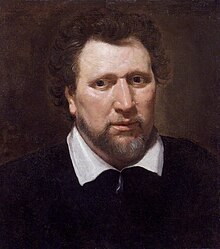
Ben Jonson (c. 1617), by Abraham Blyenberch; oil on canvas painting at the National Portrait Gallery, LondonFrom CrimeReads:
Turns out, Ben Jonson, the renowned Elizabethan playwright and the first poet laureate of England, was a murderer.

On September 22nd, 1598, when he was an (angry) young man of twenty-six, Jonson, a former bricklayer, encountered a young actor named Gabriel Spencer. Jonson was not yet an established playwright, having had his play Every Man in his Humour only very recently debuted at the prominent Curtain Theater (which would later be moved and rebuilt as the Globe). The two men found themselves embroiled in a conflict, which the courts maintained that Jonson started. They ruled this despite Spencer’s violent history; he had previously killed a young boy when the boy had threatened to throw a candlestick at him. Then again, Jonson also had a violent history; in his own accounts he mentions that before the Spencer affair, he had killed someone while abroad in the Low Countries, simply for sport? (Though he was not arrested for it.)

But Spencer and Jonson began a duel, during which he stabbed Spencer with his sword, killing him instantly. Jonson was arrested and thrown into Newgate Prison (where he panicked and converted to Catholicism from a visiting priest, which was also a felony at England in this point in history).

Jonson was arraigned on October 6th, and confessed to the crime of manslaughter, for which crime he would be hanged. But then he did something extremely calculated; he called upon an obscure legal precedent.


read more here @ CrimeReads and his works @ Project Gutenberg

Sunday, June 21, 2020

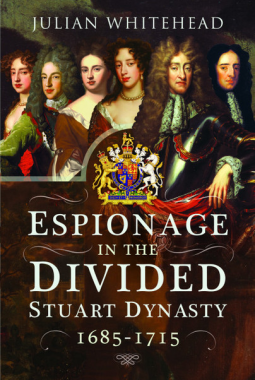
Review: Espionage in the Divided Stuart Dynasty 1685 - 1715 by Julian Whitehead

Synopsis: King James II was the Catholic king of a Protestant nation, but he had inherited a secure crown and was able to put down the rebellion by his nephew the Duke of Monmouth. In just over three years James had been deserted by those he loved and trusted and had to flee to France in exile. His throne was seized by his son-in-law and daughter, and when they died, his younger daughter succeeded. For James it was a personal tragedy of King Lear proportions; for most of his subjects it was a ‘Glorious Revolution’ that saved his kingdoms from Popery.

Over the next hundred years James or his descendants would attempt to win back the crown with French support and conspiring with British Jacobites and Tories. In Espionage in the Divided Stuart Dynasty Julian Whitehead charts the inner workings of government intelligence during this unstable period, where it was by no means a forgone conclusion that James or his heirs would never regain the throne. It throws light on the murky world of spies and double agents at a time of intensive intrigue and betrayal, with many politicians and peers trying to keep a foot in both camps. It was especially important in such circumstances for a monarch to receive good intelligence about the many intrigues, but could those providing the intelligence be trusted?


This is another one of those books which has me conflicted. On the one hand, it is an engrossing tale of the reign of James II of England and the subsequent quest for the throne after he fled in the face of growing religious opposition and the invasion by invitation of William of Orange - "... the overriding issue that was to fracture both family and nation was religion ..". And for someone dipping their toes into this period, it is a highly useful and informative resource.

On the other it purports to be a look at the role of espionage during this particular period in English history - which leads to more conflict as I find this component to be - at times - somewhat overshadowed by the first (ie: the history).

As my reading "career" has progressed, I have surpassed the general histories and am looking for more niche subjects. I guess what I was hoping for was more on the espionage side of things rather than a history of the Jacobites for I think to pick up this tome based on title alone one already assumes some understanding of events. I wanted to know more about the methods - the modus operandi, the people involved, the problems they faced - a bit more along the lines of Michael Smith's "Anatomy of a Spy" wherein each chapter highlights a particular theme with examples given to illustrate.


James II of England
England in the 17th and 18th centuries faced a very fluid, very dangerous and incredibly complex situation of threats from France, Scotland, the Netherlands, the Papacy, and Spain. Here was a country that was outnumbered and surrounded by its much more powerful continental European rivals. Into this mix was added the overt religious and domestic political factions, and finally the Jacobites

As Paul Fritz notes in The Anti-Jacobite Intelligence System of the English Ministers, 1715–1715 - "Their earlier experiences of attempted plots, near assassinations, foreign aid, open rebellion, and the inability to gauge the movement's strength, created in the ministers between 1715 and 1745 an almost pathological fear of a Stuart restoration - Jacobites must be hunted out, their secrets penetrated, their plans squashed. The best evidence of this pre-occupation of the government with fear of a Stuart restoration lies in an examination of its methods of securing intelligence through the post office, the employment of spies, and personal interviews [interrogations] with the Jacobites themselves."

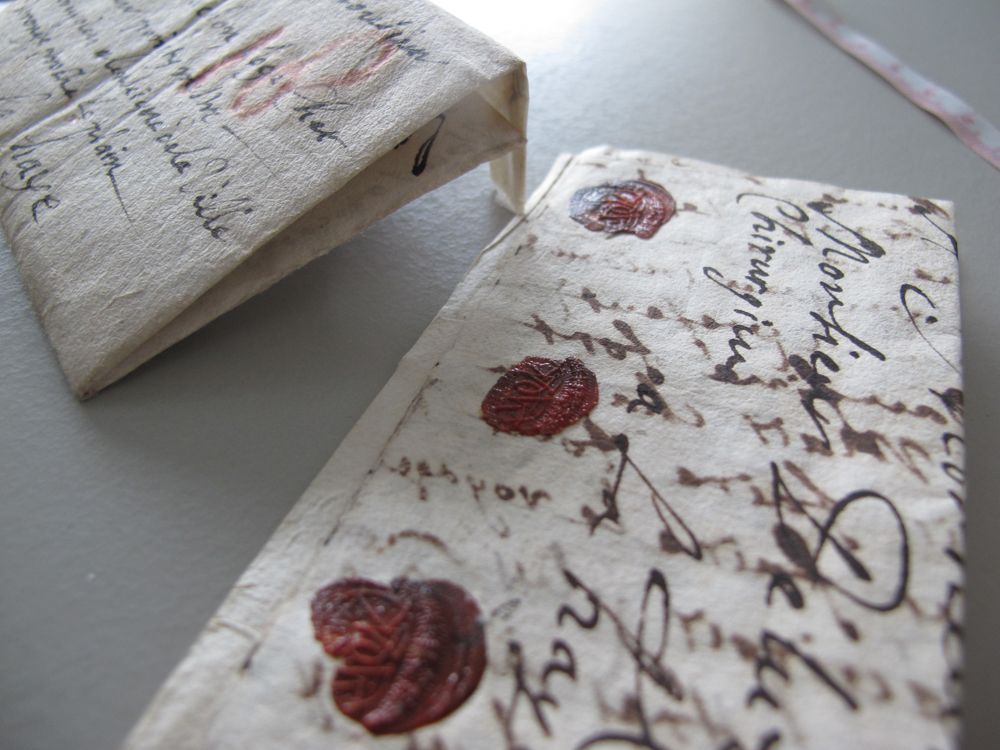
So, to deal with this myriad of problems, England like its European counterparts, set up elaborate intelligence gathering systems. It relied heavily on intercepted mail and dispatches. A few agents in the postal system could intercept likely correspondence and have it deciphered, copied and forwarded to the intended receiver. And here a real gem of information stands out - Cromwell's "machines of intelligence".  What were these machines that could "open, copy and seal letters" that were rebuilt by John Wildman when he was in charge of the Post Office but later destroyed when he was suspected of disloyalty. I wanted to know more but alack and alas nothing more was forthcoming. Moving on, once the information was in hand, analysts (set up in the cabinet noir or black chamber) tried to interpret diplomatic policies and intentions of states. 

Information dispersal via propaganda and disinformation was another favoured tool - "... because just as governments developed their arcana imperii, or secrets of state, outside in the world a new landscape of media thronged with reams of printed newspapers, pamphlets and books, while in coffee houses political gossip and whispered knowledge flourished – of politicians, but also of the state’s secret affairs ...". In addition, the threat of Jacobitism triggered a new period of military map making with the state urgently requiring details on fortifications, landscapes, roads and rebels - a theme that was not touched upon.

Photos: Treasure Trove of Unopened 17th-Century Letters | Live Science
Sealed Letters
Active agents or spies were also used, especially to estimate military and naval strength and associated activities. These agents, spies and informers were recruited from all aspects of society - diplomats, military, religious, refugees, defectors, fellow exiles, prisoners and captives, local government officials, professional agents provocateur. What I personally gained from this was that espionage was personal - adherence was to religion, nation, monarch but aboveall, to self preservation. Informants transferred their allegiance to whomever paid the most - "... there was money to be had for information ..." - or could offer them the best deal, usually reward or preferment, life and liberty. Lack of opportunity or advancement led some informants to play both sides of the fence. Towards the end of the period under discussion, it is noted that intelligence was "... dominated by adventurers motivated by self-interest and money and thus untrustworthy and often double agents ...". 

Jacobite Rebellion. Several Jacobite uprisings took place in the period 1688-1745
Jacobites
The methods used by the Jacobites, French, Dutch and English were not dissimilar - some were more effective in the collection, collation and usage of intel gathered than others. For as Hugh Douglas, author of Jacobite Spy Wars: Moles, Rogues and Treachery, notes, "... the final betrayal of the Stuart cause had not come about through a mistress's pillow talk: they had finally been shafted by one of their own needy Highland chiefs.."


Further reading:
A history of espionage in early-modern Britain, 1598-1715 by Alan Marshall (publication pending)

The Secret Service under Charles II and James II by James Walker

The Stuart Court in Exile and the Jacobites edited by Eveline Cruickshanks and Edward Corp

The Stuart Secret Army: The Hidden History of the English Jacobites by Evelyn Lord


Sunday, May 3, 2020

Books: Medieval Spain

The Unconquered Knight: A Chronicle of the Deeds of Don Pero Niño, Count of Buelna by Gutierre Diaz de Gamez
The heroic exploits of the 15th-century Count of Buelna, including tournament glories, knightly romance and the bitter hardships of life on campaign.

Gutierre Diaz de Gamez entered the service of Pero Niño, count of Buelna, in 1402, when they were both about 23, and served as head of his military household for nearly fifty years. He began a chronicle of his master's deeds in about 1431, and it is this eyewitness account of the life of a knight, both in war and peace, which is translated here. 

It is written in praise of his master, but beneath the veneer of hero-worship a good deal of the reality of a knight's existence shows through: even in the prologue, Diaz de Gamez gives a bitter picture of the hardships of a military campaign: 'Knights who are at the wars eat their bread in sorrow; their ease in weariness and sweat... Mouldy bread or biscuit, meat cooked or uncooked, water from a pond or a butt, poor sleep with their armour still on their backs, the enemy an arrow-shot off...' On the other hand, he can evoke the glories of a tournament, in which his master excelled, and his triumphs as a military commander both by sea and land. It is a story full of colour, adventure and romance, and one which deserves its place in the chronicles of chivalry.


The Duke of Alba by Henry Kamen
"The Duke of Alba" by Henry KamenFerdinand Alvarez de Toledo, the third duke of Alba (1507–82), is known to history as “the butcher of Flanders.” The general who carried out Philip II’s repressive policies in the Netherlands, he was responsible for the massacre of thousands of men, women, and children, considering it better to lay waste an entire country than leave it in the hands of heretics. Alba came to represent for contemporaries as well as for future generations the unacceptable face of Spanish imperialism.

In this intriguing re-evaluation, Henry Kamen narrates the duke’s personal history, looking beyond the conventional image to reveal motives and to explain rather than simply to condemn. Kamen examines the early years of Alba’s life, his travels over the whole of Europe, and the complex military and political career that made him Spain’s leading general of the imperial age. Drawing on the duke’s rich and expressive surviving correspondence, Kamen explores Alba’s beliefs and considers his infamous actions within the contexts of his time and of the monarchs—Emperor Charles V and King Philip II of Spain—whom he served.


Phillip II by Henry Kamen
"Philip of Spain" by Henry KamenPhilip II of Spain—ruler of the most extensive empire the world had ever known—has been viewed in a harsh and negative light since his death in 1598. Identified with repression, bigotry, and fanaticism by his enemies, he has been judged more by the political events of his reign than by his person. This book, published four hundred years after Philip's death, is the first full-scale biography of the king. Placing him within the social, cultural, religious, and regional context of his times, it presents a startling new picture of his character and reign.

Drawing on Philip's unpublished correspondence and on many other archival sources, Henry Kamen reveals much about Philip the youth, the man, the husband, the father, the frequently troubled Christian, and the king. Kamen finds that Philip was a cosmopolitan prince whose extensive experience of northern Europe broadened his cultural imagination and tastes, whose staunchly conservative ideas were far from being illiberal and fanatical, whose religious attitudes led him to accept a practical coexistence with Protestants and Jews, and whose support for Las Casas and other defenders of the Indians in America helped determine government policy. Shedding completely new light on most aspects of Philip's private life and, in consequence, on his public actions, the book is the definitive portrayal of Philip II.


Commander of the Armada: The Seventh Duke of Medina Sidonia by Peter Pierson
"Commander of the Armada" by Peter PiersonThe seventh Duke of Medina Sidonia is best known as the man who led to defeat the Spanish Armada of 1588. This book by Peter Pierson is the first complete biography in any language of this important figure. Based on previously inaccessible documents from the Medina Sidonia archives, it offers fascinating material on sixteenth-century Spain and new and exciting details about the armada campaign.

Pierson begins by describing the Duke’s youth and his close ties to the court of Philip II. He discusses the Duke’s lifelong involvement with the shipping that navigated the treasure route from Spain to the Indies, his significant role in Philip’s successful quest for the Portuguese Crown, and his appointment as Captain General of the Ocean-Sea. Spain’s war with England dominates the central chapters of the book. Pierson relates how Medina Sidonia embargoed ships and recruited men for the armada, the largest fleet yet concentrated in early modern Europe, and he analyzes Philip’s choice of the Duke to command the armada. 

Pierson provides a radical reinterpretation of the armada campaign, and with the aid of ten superb maps and diagrams he reconstructs the positions of the two navies, the number and names of ships, and their movements from the fleet’s departure for England to the surviving vessel’s arrival home. Pierson continues with Medina Sidonia’s life after the armada campaign and discusses his second appearance on the world stage, as the unsuccessful defender of Cádiz against a major Anglo-Dutch attack in 1596. 


"The Count-Duke of Olivares" by J. H. ElliottThe Count-Duke of Olivares: The Statesman in an Age of Decline by JH Elliott
A masterful biography of Don Gaspar de Guzmán, Count Duke of Olivares—righthand advisor to Spain’s Philip IV, archrival of Cardinal Richelieu, and a central figure in seventeenth-century Europe. Written by the eminent historian J. H. Elliott and based on many original sources, this elegant book is a landmark in the study of a man and an age.


The Catalan Rule of the Templars: A Critical Edition and English Translation from Barcelona, Archivo de la Corona de Aragón, `Cartas Reales', MS 3344 translated by J.M. Upton-Ward
The Catalan Rule of the Templars: A Critical Edition and English Translation from Barcelona, Archivo de la Corona de Arag�n, `cartas Reales', MS 3344The Knights Templar, part monastic order, part military force, lived by a firm code, or rule, which exists in differing versions. This Spanish version is a follow-up to J.M. Upton-Ward's highly successful edition of the French Rule. 

The introduction to this Catalan Rule, Barcelona Archivo de la Corona de Aragón, Cartes Reales, MS 3344, discusses the content, language and dating of the manuscript. It also provides background information derived from the French Rule (which the reader may require for a fuller appreciation of the text - see author note below) on the circumstances of the Knights Templar.

There is a brief description of the provincial organisation of the Order with particular reference to the houses in Aragon, where it is most likely that the manuscript was used; a summary of clauses; and a concordance with de Curzon's 1886 edition of the French Rule. Compared to de Curzon's edition, the Barcelona text is incomplete, but it contains important clauses not found in other manuscripts. 

A partial transcription claiming to represent all the clauses without equivalents in de Curzon's edition was published in 1889, but it omitted several clauses now published here for the first time. 

Footnotes to the English translation elucidate the text; give biographical information on the named officers of the Order where possible; and indicate significant differences compared with the French Rule.


The Victors and the Vanquished: Christians and Muslims of Catalonia and Aragon, 1050–1300 by Brian A Catlos
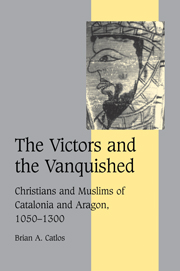
The Victors and the VanquishedThis is a revisionary study of Muslims living under Christian rule during the Spanish 'reconquest'. It looks beyond the obvious religious distinctions and delves into the subtleties of identity in the thirteenth-century Crown of Aragon, uncovering a social dynamic in which sectarian differences comprise only one of the many factors in the causal complex of political, economic and cultural reactions. 

Beginning with the final stage of independent Muslim rule in the Ebro valley region, the book traces the transformation of Islamic society into mudéjar society under Christian domination. This was a case of social evolution in which Muslims, far from being passive victims of foreign colonisation, took an active part in shaping their institutions and experiences as subjects of the Infidel. Using a diverse range of methodological approaches, this book challenges widely held assumptions concerning Christian-Muslim relations in the Middle Ages, and minority-majority relations in general.


Wednesday, April 8, 2020

Review: Killing Beauties by Pete Langman

Killing Beauties by [Pete Langman]Synopsis: England, 1655. Following the brutal civil wars the country swelters under a cloud of paranoia, suspicion and the burgeoning threat of rebellion. With the fragile peace being won by Cromwell’s ever-efficient Secretary of State John Thurloe, the exiled king Charles Stuart sends two spies on a dangerous mission to wrest back the initiative. These spies are different, however: they are women. Their task? To turn Parliament’s spymaster into their unwitting  accomplice.  Killing Beauties is a dark tale of subterfuge, jealousy and betrayal.


Some Background:
The setting for this historical novel is England, 1655. It is the time of what was known as "the Protectorate" when England was governed not by the monarchy, but by Parliament under Oliver Cromwell (r. 1653 - 1658) and then his son Richard, (r. 1658 - 1659). King Charles I had been executed in 1649 at the culmination of the civil war that had raged throughout England, Scotland and Ireland since 1642; and his son and successor, Charles II, was languishing in The Hague (the Netherlands). With him in exile were many nobles and political heavyweights, including one Edward Hyde, 1st Earl of Clarendon.

Whilst in exile, Charles and his councillors were in constant contact with supporters in England. The use of spies, letter locking, concealed messages, secret signals was on constant use by both parties. Many spies were exposed, imprisoned, tortured and often executed.  Most spies were men.


Espionage in 17th Century England:
The rise of espionage or spying services could be traced to the Catholic and Protestant conflicts of the 16th and 17th centuries in Europe. In England, there was both a fear of a Catholic invasion and attempt to take the English throne as well as a desire to shape events in Europe, particularly in the Netherlands. Under the reign of Elizabeth I (1558-1603), one of the first official spymasters in English history arose in the figure of Francis Walsingham, who was also the Secretary of State for Elizabeth I. Another key person was William Cecil.

After the English Civil war in the 1650s, Oliver Cromwell realized there needed to be greater control of the postal service, which became the primary way in which many plots were orchestrated. Thus, the Post Office, under John Thurloe, increased letter surveillance to help uncover plots against Cromwell. This development by Thurloe also included the earliest known usage of mathematicians as dedicated, state-sponsored code breakers, where Thurloe employed mathematicians from Oxford, such as John Wallis, to decipher conspiracies.

While the state increased its efforts in trying to infiltrate various groups, including Catholics and potential conspirators, the state attempted to mislead in some news so as to help disrupt potential threats and ability to organize for hostile groups - this was a form of "fake news" - instigated by the state to control the flow of information. The press, at times, could be used as a coded messaging system to conspirators. Writer and poet John Dryden later noted: “Plots, true or false, are necessary things, To raise up commonwealths, and ruin kings”.

One of the most common the methods used was letters.  These innocuous pieces of correspondence could be filled with ciphers or codes that were written invisible ink.  The ones delivered through official postal channels contained either false or largely superficial information.

Women were able to gather information unnoticed because they were not believed to be politically active. In fact, playwrights, nurses, ladies-in-waiting, nuns, postmistresses, and women in other professions and positions operated as spies during this period. This means that they secretly obtained information from the enemy either out of political or religious convictions, or to obtain money or power. Their secret communications were couched in innocent domestic terms, but were encoded with references to high politics and dangerous enterprises. Unlike men, these women were not restricted by codes of chivalry and honour. Sometimes they worked alone, but there is substantial evidence to suggest involvement in secret spy networks.  While male spies would be hanged if caught, female spies would be punished with a short stay in the Tower of London.


The Sealed Knot:
The Sealed Knot was a secret organisation dedicated to the restoration of the Monarchy. The group was commissioned by King Charles II between November 1653 and February 1654 from his exile in Paris for the purpose of coordinating underground Royalist activity in England and preparing for a general uprising against the Protectorate. Strangely enough, Edward Hyde was not one of the original founding members.

The Sealed Knot made ten attempts between 1652 and 1659 to bring about the Restoration. Major uprisings were ultimately ineffective, partly because of an abundance of caution, but not least due to the treachery of Sir Richard Willis (a double agent), who was feeding information to Cromwell's spymaster John Thurloe from at least 1656, for reasons which remain unknown. In 1659 Willis was denounced to the future King Charles II by Thurloe’s secretary, Samuel Morland, who accused him of plotting, with Thurloe and Cromwell, to lure Charles and his brothers to return to England under false pretences (to meet followers in Sussex) and then assassinate them (see: The Life of John Thurloe, Esq).


Dramatis Personae:
Susan Hyde: Was the sister of Edward Hyde, 1st Earl of Clarendon.  She worked for the Sealed Knot, the Royalist secret society determined to put the Stuarts back on the throne. She went by the name of Mrs Edwards, and sometimes Mistress St Barbe, Mistress Simburbe or Mr Gotherintone. When the Royalists lost the war, they did not give up the fight. Hyde's sister ran the London end of operations, communicating with the Stuart court in exile via an apothecary-clearing house in the Old Bailey.

Killing Beauties by Pete Langman: UnboundIn September 1656 a London apothecary, Anthony Hinton, was arrested on suspicion of using his premises beside the Old Bailey as a clearing house for letters on their way to exiled Royalists on the Continent. Interrogated by Cromwell’s own intelligence officers, Hinton quickly confessed his guilt and gave up the names of a number of spies with ties to the Sealed Knot, one of the Royalist secret societies operating in England during the Commonwealth. His list included Susan Hyde, the sister of Sir Edward Hyde, one of Charles II’s closest advisers. Hinton claimed that she had been sending useful information to fellow Royalists for more than four years, using a variety of ciphers and codenames.

Hinton’s claims were true. Hyde’s last letter, written in September 1656, warned Charles II that there was a leak in the network. She suspected that a double agent was at work. So there was: Sir Robert Honywood, master of the household to Charles II’s aunt Elizabeth of Bohemia, was spying for Cromwell. But it was Hinton’s evidence that was Hyde’s undoing. Some weeks after his confession (see: the State Papers of John Thurloe by John Thurloe),  three officers arrived at the house in Wiltshire where she was staying. despite her status as a gentlewoman, they ransacked her chamber, searched her for incriminating papers and carted her off to be examined in London, where she was so frightened by her interrogators that she had a mental breakdown. She died in prison at Lambeth a few days later and was soon forgotten. Even her brother, the great chronicler of the Civil Wars, made no mention in his writings of her contribution to the war effort. Broken and overlooked, she disappeared from history. Her brother Edward, the royalist exile and historian of the Great Rebellion, made no mention of her in his History or Memoirs.

John Thurloe: was a secretary to the council of state in Protectorate England and spymaster for Oliver Cromwell. Upon Oliver Cromwell's assuming the protectorship in December 1653 Thurloe became Secretary of State under him. In February 1654 he was made one of the masters of the upper bench of the society of Lincoln's–inn. In August 1655. he "had the care and charge of the postage, both foreign and inland, committed to him by the protector", Cromwell. 

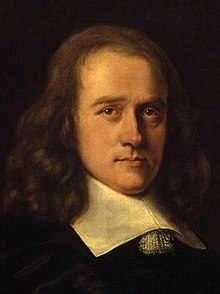
John Thurloe from NPG detail.jpgThurloe was efficient and thorough in carrying out his duties. He was able to keep Cromwell fully informed of the plans of foreign governments through his system of "intelligencers" and agents, and through detailed correspondence with ambassadors abroad. Among those in his employ were the Dutch diplomat and historian Lieuwe van Aitzema, the mathematician John Wallis, who established a code-breaking department, and diplomat and mathematician Samuel Morland, who served as Thurloe's assistant. 

Always apparently one step ahead of his enemies, Thurloe established a formidable reputation as a spymaster, particularly after his agents  (including Henry Manning, who would later be unmasked and executed) infiltrated Charles II's court in exile and he secured the services of the Royalist Sir Richard Willys as an informant. Thurloe's service broke the Sealed Knot, a secret society of Royalists and uncovered various other plots against the Protectorate. (see also: Codes & Cyphers of Thuloe's Agents).


Diana Jennings: was a shadier character, described as a coney-catcher (thief or con-woman).  I could find nothing on this elusive woman or her activities as an agent for the Sealed Knot, which is not surprising since much of the work of these women went undocumented.


My Review:
I really enjoyed this.  Whilst predominately a work of fiction, there is a strong sense of in-depth research that has gone into the story, which only makes the reader want to discover more (which I did).

The two main characters of Susan and Diana were polar opposites.  Susan is complex, serious and dedicated to the task ahead, even though she knows it could very well end in her death. Whilst Diana on the other hand, seems reckless, adventurous, daring, and willing to take a gamble and gain a reputation in the meantime.  I was pleased to see a mention of Jane Whorwood, an intelligencer for Charles I. The character of Molly did not really do much for me as I felt she was just a page filler whilst Diana was "off screen" so to speak.

Invisible but ever-present: female spies in the 17th century ...I loved the use of actual historical details in the espionage component - letter locking, invisible ink, codes and cyphers, and the use of disguises and some questionable cross-dressing on the part of Diana.  The creation of a "Sisterhood" that was the sole domain of the female intelligencers was done quite well - I am sure that there were some in existance which those in key roles (like Diana and Susan) communicating with various other groups (ie: the Sealed Knot).

However, it was the character of John Thurloe that intrigued me the most to the point that it was with him that my empathy sat - he comes across as vulnerable, tortured, even somewhat likeable, an anti-hero if you will.  Thurloe is deserving of his own novel I think.

All in all, this was for me a good read and I happily went off discovering more.


further reading:
Royalist Agents, Conspirators and Spies: Their Role in the British Civil Wars, 1640-1660 by Geoffrey Smith
Invisible Agents: Women and Espionage in Seventeenth-Century Britain by Nadine Akkerman
Royalist Conspiracy in England 1649-60 by David Underdown
Cromwell's master spy; a study of John Thurloe. by Daisy Lucie Hobman