Showing posts with label 11th century. Show all posts

Sunday, June 25, 2023

Review: Matilda II The Forgotten Queen by Joanna Arman

Synopsis: The wife of King Henry I and the mother of the Empress Maud is a woman and a Queen forgotten to history. She is frequently conflated with her daughter or her mother-in-law. She was born the daughter of the King of Scotland and an Anglo-Saxon princess. Her name was Edith, but her name was changed to Matilda at the time of her marriage.

The Queen who united the line of William the Conqueror with the House of Wessex lived during an age marked by transition and turbulence. She married Henry in the first year of the 12th century and for the eighteen years of her rule aided him in reforming the administrative and legal system due to her knowledge of languages and legal tradition. Together she and her husband founded a series of churches and arranged a marriage for their daughter to the Holy Roman Emperor. Matilda was a woman of letters to corresponded with Kings, Popes, and prelates, and was respected by them all.

Matilda’s greatest legacy was she united two dynasties and gave the Angevin Kings the legitimacy they needed so much. It was through her that the Empress Matilda and Henry II were able to claim the throne. She was the progenitor of the Plantagenet Kings, but the war and conflict which followed the death of her son William led to a negative stereotyping by Medieval Chroniclers. Although they saw her as pious, they said she was a runaway nun and her marriage to Henry was cursed.

This book provides a much-needed re-evaluation of Edith/Matilda’s role and place in the history of the Queens of England.

~ ~ ~

I'll begin with a quote from the book: "... much of what we know about her is an idealised and carefully considered version of events written by people who had a specific view of gender norms and social role ...". In other words, much of what we know about early medieval women - their lives and roles - is based upon the stereotypical views of the predominantly male clerics who were writing at the time. 

In fact for this particular monarch, records on her activities are rather scarce, and much of what we do know is centred around her family, her husband, and her children. Her lineage, her education and piety were notable - she was the unifying link between the Anglo Saxon House of Wessex and Normandy.

Beginning with fourteen pages of who's who, Arman then sets out to trace Matilda's ancestry and her links to the religious foundations of Romsey and Wilton. We are treated to the history of the period, briefly under Williams I & II, the conflict between Church and Crown, and the succession of Henry I. Diversions to the Crusades and Henry I's early political career overshadow any real gleamings we have of Matilda.

However, Arman soon gets around to Matilda's family, her siblings Mary and David, her own children Matilda and William, and Henry's brood of illegitimate children. Matilda's patronage of scholarship, her pious building projects and relationships with clerics are also touched upon. In reality, much of Matilda's life was overshadowed by political events pertaining to her husband, even her time in the political spotlight as regent for Henry I was brief. She did not live to see death of her only son William in the White Ship disaster of 1120, not the succession wars of her daughter Matilda and her nephew Stephen.

I am hoping that prior to final print, a good editor will be going over this - there were numerous errors with dates and names that need attending to. I myself was not a fan of the layout of the book - it really is a very basic introductory work, and in fact much of the content could be readily found on the internet. Kudos for subject matter. However, to say that this work "provides a much-needed re-evaluation of Edith/Matilda’s role" I think is slightly ambitious.

Friday, February 24, 2023

Review: Assassin in the Abbey by EH Walter

Synopsis: An assassin and an assassin catcher play a game of cat and mouse at the coronation of William I on Christmas day 1066.

~~~

A very short story of a mere few pages, set in the aftermath of the Norman victory at Hastings in 1066. William of Normandy is about to be crowned King of England, however, not all see this as a welcome event and one in particular will set out to ensure this does not happen. But William has taken precautions. And our "assassin catcher" narrates the scenes before us, the reader. Who will succeed - the cat or the mouse?


Sunday, April 17, 2022

Review: The Normans by Judith Green

Synopsis: A bold new history of the rise and expansion of the Norman Dynasty across Europe from Byzantium to England.

In the eleventh century the climate was improving, population was growing, and people were on the move. The Norman dynasty ranged across Europe, led by men who achieved lasting fame like William the Conqueror and Robert Guiscard. These figures cultivated an image of unstoppable Norman success and their victories make for a great story, but how much of it is true?

In this insightful history, Judith Green challenges old certainties and explores the reality of Norman life across the continent. There were many soldiers of fortune, but their successes were down to timing, good luck, and ruthless leadership. Green shows the Normans’ profound impact, from drastic change in England to laying the foundations for unification in Sicily, to their contribution to the First Crusade. Going beyond the familiar, she looks at personal dynastic relationships and the important part women played in what at first sight seems a resolutely masculine world.


I will preface this review by saying - reader beware.! This is not a casual and cursory look at the Normans that will appeal to the general masses; it is a more focused narrative that assumes that you - the reader - have done your due diligence and a sufficient enough grasp of the topic at hand to absorb the information contained therein.

The focus of Green's book is the Normans and their activities as related to a specific time period - the 11th Century - and is narrowed down to particular theatres of war - England, Normandy, Byzantium, Sicily & Southern Italy, Antioch & the Holy Land. It is also a look at how contemporary writers and chroniclers viewed them as well as their own perceptions of self.

Green begins with a look at the various contemporary writers and chroniclers in England (Malmesbury, Worcester, Huntingdon, Monmouth), Normandy (Dudo William of Jumieges, Vitalis, Wace), Southern Italy & Sicily (Malatera, William of Apulia, Amatus of Montecassin), and of course the Crusades (Ralph of Caen). This list is by no means complete as there are a number of others included as well. In this chapter Green also explores the relationships between subject matter and author, the issues of patronage, potential audience and the accessibility of sources.

We next move to Normandy for a look at the structure of Norman society, its emergence, the outward persona of warrior class, and the internal struggles within for dominance. This leads into the next chapter "swords for hire" and a look at the role of Normans as mercenaries throughout Europe and the Baltic. Here Green notes that 11th Century Europe was swarming with armed men who for for wealth, land and prestige. So what made this particular group that much more successful than others - this is what is explored. Green includes a number of prominent families in her narrative, as well as some much lesser ones (which are the ones I am always on the look out for).

Moving south, we explore the activities and personalities of the Normans in Southern Italy and Sicily from their earliest arrival as armed pilgrims to the arrival of Robert Guiscard and the legitimisation of the new kingdom and its conquests. A brief side visit to Byzantium is also covered off for this will have an impact of future relationships.  This is one of my favourite periods of Norman History (and dominates my personal library).

Doubling back, Green takes us to one of the more well know of the Norman conquests - England in 1066. This was no gentle take-over but one that would see years of resistance and rebellion, and the invasions of neighbouring nations of Scotland, Wales and Ireland. This period would also see the creation of the Domesday Book - a survey every shire in England, and some parts of Wales, to list all holdings and calculate the dues owed to William.

And then to our final field of activity - The Crusades and the establishment of the Norman Principality of Antioch. Green provides an assessment of the various Norman leaders (Bohemond, Tancred, Robert of Normandy), their motives for embarking on this great military and religious endeavour, their successes and their failures.


The remaining chapters encompasses a more rounded view of the Normans, covering such topics as government and power, settlement and conquest, church and state, culture and construction. And it is this lasting legacy that Green concludes with, wherein she notes that they were - in essence - "... ruthless opportunists [who] were able to change the political history of Europe ...". But this is merely one one part of who the Normans were - for they were also exceptional strategists, inventive, progressive, militaristic, pious, opportunistic, ruthless - and utterly compelling and unforgettable.

This is definitely one for my own library shelves, and my own personal collection of Norman literature.

Monday, November 29, 2021

Review: The Challenges of King by KM Ashman

Synopsis: The fight for England began long before 1066…

AD 1045. Godwin of Wessex, one of the most powerful earls in the country, prepares for the marriage of his daughter to King Edward of England. The mood is jubilant, his family’s relationship with the Crown secured through matrimony. But one man seeks to undermine him at every opportunity.

French-born Bishop of London, Robert of Jumièges, has the ear of the king. As a trusted adviser, his position is one of power and privilege, and he wields it to gain ever-greater influence over the English Crown for his kinsmen in Normandy, at Godwin’s expense.

As the bishop’s control increases, the king’s relationship with the House of Godwin frays until, eventually, it breaks down completely. With civil war looming, Godwin fights to pull England back from the brink. But with the king under Norman influence, it could be too little, too late.

The Challenges of a King is the first book in a thrilling new series from K. M. Ashman exploring the politics, promises and intrigue that led three men to contest the throne in 1066, and to the final successful invasion of England. Perfect for fans of Conn Iggulden and Bernard Cornwell.


"Challenges of a King", the first in a forthcoming series is set in England during the 1040s and 1050s when Edward the Confessor was King,  details the rise and fall of the family of Godwin, Earl of Wessex.

The House of Godwin came into prominence under King Canute, when they emerged from obscurity to remain in the limelight and as part of the political machinery of Anglo-Saxon England until the reign of Edward the Confessor. The two eldest sons of Godwin, Sweyn and Harold, were also elevated to earldoms.


The narrative alternates between Edward and the Godwins, and gives us a sense that Edward was in control of his own destiny and of the political machinations that would ultimately lead up to the events at Hastings as we know them. One cannot but side with the Godwins against Edward's Norman advisers, who were attempting to divert the succession away from the Anglo-Saxon dynasts.

Whilst the action is predominantly confined to the halls of power, we get a true sense of the impending drama that is about to unfold. Looking forward to the next in the series.


Sunday, October 3, 2021

Review: Royal Mysteries: The Medieval Period by Timothy Venning

Synopsis: Royal murder mysteries never fail to intrigue readers and TV viewers. Here are some of the most haunting and even horrific episodes from the middle ages, based on latest historical research and historiography, and authentic and rare sources, including archaeology and DNA evidence, uncovering wonderful tales of pathos, tragedy, suffering and romance. This is history for specialists and general readers - and sceptics - given the intense media coverage, including TV, and interest in exciting and accessible popular history. The famous and also less well-known mysteries, which may be new to readers, surrounding British Royalty, are included from around the 11th to the 15th centuries.

The murder mysteries show personal and individual tragedy but are also a vehicle for historical analysis. William II - William Rufus - was he murdered or killed accidentally by a 'stray arrow', allowing brother Henry to seize the throne, or was it God's punishment for William's irreligious living and persecution of the church? Or was Edward II murdered at the instigation of Queen Isabella - 'she-wolf of France' - and her lover, Roger Mortimer. who assumed the throne? Did he survive to live peaceably in Italy? Richard II resembled Edward II, as a rather inadequate figure, and was deposed by his rival, Henry IV. Did he die, and if so, was it murder or suicide? Was Edward IV a bigamist? Mystery, if not murder, but wrapped in dynastic rivalry and sex scandal, and usurpation of the throne. The 'Princes in the Tower' and who who killed them if anyone? A beguiling mystery for over 500 years with their usurping uncle Richard III's guilt contested by 'Ricardians'.


I was eager to read this one as I have a number of Tim's books already on my library shelf - and who doesn't love a good mystery. 

The mysteries being explored were not unknown to me - in fact I explored one of these mysteries myself in greater depth (death of William II) and the controversy surrounding the "Princes" still captures my imagination even today, after much reading on the matter.

Venning takes each mystery, provides some historical background and context, examines the contemporary accounts, looks at all the players before asking the age old question - cui bono? Who stands, or stood, to gain, and so might have been responsible for it or precipitated the actions of a third party?

Venning directs the readers attention to the existence of "fake news" in medieval times wherein the writer or chronicler is playing to their own agenda and contemporary audience, and as such must be viewed as a potential unreliable source.  In fact, as the reader and student of history will know, no source is completely without bias - just because it was written at the time does not necessarily mean it is the most accurate account.  Venning even comments that history is but "... a hall of mirrors with distorted reflections .."

Moving on to the mysteries themselves and what we have learned.  Well not much really.  I was rather disappointed to find that there was no real conclusion one way or the other - no definitive proofs. Venning does not take any particular stance - he explores all aspects of each mystery and just presents us with all the information, evidence and accounts, and leaves it up to the reader to discern what they will from it.

Whilst I will assume (whether rightly or wrongly) that this book is for the consumption of popularist history, I did find the narrative to be rather long-winded, repetitive, and definitely non-linear. I would suggest some fore-knowledge of the subject matter at hand would be appropriate. Overall, I liked it and would probably pick this up again - at a later date.


Also By Author:
- Royal Mysteries: The Anglo-Saxons and Early Britain
- The King Arthur Mysteries: Arthur's Britain and Early Medieval World


Saturday, September 4, 2021

The Challenges of a King (The Road to Hastings Book 1) by KM Ashman

The fight for England began long before 1066…

AD 1045. Godwin of Wessex, one of the most powerful earls in the country, prepares for the marriage of his daughter to King Edward of England. The mood is jubilant, his family’s relationship with the Crown secured through matrimony. But one man seeks to undermine him at every opportunity.

French-born Bishop of London, Robert of Jumièges, has the ear of the king. As a trusted adviser, his position is one of power and privilege, and he wields it to gain ever-greater influence over the English Crown for his kinsmen in Normandy, at Godwin’s expense.

As the bishop’s control increases, the king’s relationship with the House of Godwin frays until, eventually, it breaks down completely. With civil war looming, Godwin fights to pull England back from the brink. But with the king under Norman influence, it could be too little, too late.

The Challenges of a King is the first book in a thrilling new series from K. M. Ashman exploring the politics, promises and intrigue that led three men to contest the throne in 1066, and to the final successful invasion of England. Perfect for fans of Conn Iggulden and Bernard Cornwell.

Friday, August 20, 2021

Review: Oath Bound by Richard Cullen

Synopsis: First in an action-packed historical series featuring Danish warrior Styrkar, and his journey through the Battle of Hastings and the violence of the Norman Conquest.

The champion of a dead king has nothing left to lose... And nothing more to fear.

England, 1066: Styrkar the Dane stumbles wounded and delirious from the corpse-strewn battlefield of Senlac Hill, the Battle of Hastings still fresh in his mind. He has watched his king butchered at the hands of foreign knights, seen his countrymen defeated in battle, and he will not stop until there is a reckoning.

Styrkar embarks on a bloody quest to avenge his dead master, becoming an outlaw in the wilds and earning a fearsome reputation. When a Breton knight seeks to track down this fugitive and make his own name, he can little envisage the task he has set himself. For Styrkar, the Red Wolf, last surviving housecarl to King Harold Godwinson, will carve the story of his vengeance in Frankish flesh... or die in the attempt.


Young Styrkar, the victim of Norse raiders, finds himself a slave not once but twice over, his final master being Harold Godwinsson - or King Harold II, the last Anglo-Saxon King of England. Following the defeat of Harold at Senlac, Styrkar vows to avenge the death of Harold on the Normans, becoming a figure of myth and terror - a boogeyman,preying on the unsuspecting and inspiring fear and dread in all. But there is one on his trail, one who seeks to capture, in the name of personal glory.

Styrkar's story is broken into four manageable parts: his life up to the sighting of the Normans; the invasion, battle and defeat of Harold; his vengeance against the Normans, and the cat and mouse battle with his nemesis.

We begin to get a feel for the character of Styrkar as the novel progresses, with the themes of loyalty and revenge ably explored. The author provides an atmospheric realism that will draw the reader into events that left their mark on the English landscape.

For those with an interest in the 11th century, this will make a nice detour and is only the beginning of a new series. Fans of Harrfy, Cornwell, and Hosker.

Looking forward to seeing how the series progresses.


Tuesday, December 8, 2020

Review: The Battle of Hastings by Jim Bradbury

The Battle of Hastings: The Fall of the Anglo-Saxons and the Rise of the NormansSynopsis: The effects of the Battle of Hastings were deeply felt at the time, causing a lasting shift in British cultural identity and national pride. Jim Bradbury explores the full military background of the battle and investigates both what actually happened on that fateful day in 1066 and the role that the battle plays in the British national myth.

The Battle of Hastings starts by looking at the Normans-who they were, where they came from-and the career of William the Conqueror before 1066. Next, the narrative turns to the Saxons in England, and to Harold Godwineson, successor to Edward the Confessor, and his attempts to create unity in the divided kingdom. This provides the background to an examination of the military development of the two sides up to 1066, detailing differences in tactics, arms, and armor.

The core of the book is a move-by-move reconstruction of the battle itself, including the advance planning, the site, the composition of the two armies, and the use of archers, feigned retreats, and the death of Harold Godwineson.

In looking at the consequences of the battle, Jim Bradbury deals with the conquest of England and the ongoing resistance to the Normans. The effects of the conquest are also seen in the creation of castles and developments in feudalism, and in links with Normandy that revealed themselves particularly in church appointments.

This is the first time a military historian has attempted to make accessible to the general reader all that is known about the Battle of Hastings and to present as detailed a reconstruction as is possible. 


I have a couple of Jim Bradbury's books already - The Capetians: Kings of France 987-1328 and Stephen and Matilda: The Civil War of 1139-53 - so it was not hard for me to pick up this soon to be released new edition of his book, originally published back in 1998.

The synopsis really does cover off the narrative quite well so I won't go over that again. Suffice to say that much of the social and political scene of both pre-Conquest Normandy and Anglo-Saxon England is covered off; the composition of both armies discussed; and the sources for the battle analysed before we reach a very detailed chapter on the battle itself. Bradbury follows up with a look at the aftermath and consequences of the Norman victory for the people and nation of England.

I personally find his writing style to be clear and clean, the narrative consistent, whilst providing readers with a balanced understanding of events through the use of contemporary evidence. I would suggest that this would be a very good starting point for those just beginning their own journey into the Norman Conquest period - those of us who have read extensively on this subject may feel like they are experiencing deja vu.  However, I believe a keen student will always read widely on their chosen field - you never know what little nuggets may be thrown up.

What the reader will appreciate is the inclusion of maps and diagrams, and the accompanying genealogical trees of the main familial lines under discussion.

A great starting point which covers things off succinctly, whilst leaving the reader with some great resources to follow up on for their own journey.


Tuesday, November 3, 2020

Review: 1066 - A Guide to the Battles and the Campaigns by Livingston & DeVries

Synopsis: The Battle of Hastings, fought on 14 October 1066, changed the course of English history. This most famous moment of the Norman Conquest was recorded in graphic detail in the threads of the Bayeux Tapestry, providing a priceless glimpse into a brutal conflict.

In this fresh look at the battle and its surrounding campaigns, leading medieval military historians Michael Livingston and Kelly DeVries combine the imagery of the tapestry with the latest modern investigative research to reveal the story of Hastings as it has never been told and guide visitors around the battlefield today.

This absorbing new account of the battle will be fascinating reading for anyone keen to find out what really happened in 1066: the journeys by which Harold Godwinson and William of Normandy came to the battlefield, and the latest reconstructions of the course of the fighting on that momentous day. It is also a practical, easy-to-use guide for visitors to the sites associated with the conquest as well as the Hastings battlefield itself.


This is a well researched and easy to read entry into the period immediately before, during and after the Norman Invasion of England in 1066.

Written so that even someone with no knowledge of events can follow, Livingston and DeVries provide ample information without overwhelming the reader with a vast amount of research. What they do provide is an analysis of the events, battles and key players, whilst using separate text boxes for other key subject matters (ie: weapons, armies, tactics, etc). Each chapter includes or is finished with what the authors term as a "tour" of places and structures pivotal to the events.

The narrative is written simply yet informatively, utilising known chroniclers, the sagas, archaeological evidence, photos and maps to gently guide the reader. An extensive reading list concludes.

Definitely a book to be considered as a primer or introductory text for the Norman Invasion of 1066.


Saturday, August 15, 2020

Review: English Collusion & the Norman Conquest by Arthur C Wright

English Collusion and the Norman Conquest
Synopsis: The reality of war, in any period, is its totality. Warfare affects everyone in a society. Here, for the first time, is a comprehensive analysis of eleventh century warfare as exposed in the record of the Norman Conquest of England. King William I experienced a lifetime of conflict on and off so many battlefields.

In English Collusion and the Norman Conquest, Arthur Wright's second book on the Norman Conquest, he argues that this monarch has received an undeserved reputation bestowed on him by clerics ignorant alike of warfare, politics, economics and of the secular world, men writing half a century after events reported to them by doubtful sources. How much of this popular legend was actually created by an avaricious Church?

Was he just a lucky, brutal soldier, or was he instead a gifted English King who could meld cultures and talents? This is a tale of blood, deceit, ambition and power politics which pieces together the self-interested distortion of events, brutalizing conflict and superb strategic acumen by using and analyzing contemporary evidence the like of which is not to be found elsewhere in Europe.

By 1072 King William should have been secure upon the English throne, so what went wrong? How did a Norman Duke and a few thousand mercenaries take and hold such a wealthy and populous Kingdom? Even in the 'Harrowing of the North', which probably saw the death of tens of thousands, who was really to blame and why did it happen? 


Definition of collusion: the secret or illegal cooperation or conspiracy in order to deceive others.


I chose this book for two reasons: one being that I have a huge interest in this period and as such I am more than familiar with the events (before, during and after), the main players and the various pro and anti sentiments; and secondly, I had read the author's previous work - Decoding the Bayeux Tapestry.

To say that I was a little baffled would be an under-statement. What I thought I would be getting was an in-depth study on the type of aid William received from the English Anglo-Saxons or anyone else in his efforts to mount and maintain what is known today as the Norman Conquest. 

What I feel I actually got was something quite different. This is essentially a work on the feudalism and nationhood and its varying interpretations and applications; a commentary on the character of William (including his military acumen); and  detailed account of the invasion and the economy.  It was - for me - also accompanied by a headache! 

As someone who has read extensively on this subject, and considers herself to have a rather developed vocabulary, I found myself confused as to the points being made and constantly reaching for the dictionary or google word search to understand what was actually being said. In the past, based on sentence structure alone, I could usually work out what an unfamiliar word or phrase meant. In addition, I felt the tone to be rather condescending; the commentary often rambling, confusing and glib, peppered with conjecture and speculation; and a prevalent disdain for any previous research conducted by past historians. 

The chapter "Overview" pretty much summed up the tome - but I was at a loss as to why it was marked as chapter 10 (at page 140) - this should have been at the front and could easily have replaced all the previous chapters.

Let me save you all the time and provide you with a summary:
.... the Normans are not super-heroes; English resistance to William was a fantasy; all rebellion boils down to money; no-one at this time swore an oath of loyalty to a King but only to his immediate lord; the was no such thing as feudalism or nationhood; and unity came down to taxation ...

What was very disappointing was that there was no real discussion as to the exact nature of this "collusion" by the local populace to the invasion, nor were there any real examples given in support. I mean, this is why I requested the title in the first place - I have enough background to want to narrow down and explore specific and diverse subject matters that tie in with the main theme.  I wanted to know who did the colluding, how they did it, what was their motivation for doing so, and what were the results and consequences, not only for themselves but for the country as a whole. 

Wright states that much of his conclusions are based upon his own research which is set apart from the "speculated history in the accepted history books". In fact, from what I can ascertain in the notes section, a great deal of the sources quoted are the author's own. I am all for looking at different angles and proposing contradictory opinions on subject matters, but it does need to not only be well-argued but well-sourced. Convince me, present me with a plausable alternative, plant a seed that will lead me off to explore and research further!

I am not sure who the target audience is for this particular book, but it is certainly not for those just dipping their toes into this specific period and set of events, or even someone with a modicum of knowledge.  In fact, I would be very interested in the opinions of others with regards to this work.


Saturday, June 27, 2020

Review: Anna Komnene and the Alexiad by Loulia Kolovou

Anna Komnene and the Alexiad: The Byzantine Princess and the First CrusadeSynopsis: Anna Komnene is one of the most curious figures in the history of an intriguing empire. A woman of extraordinary education and intellect, she was the only Byzantine female historian and one of the first and foremost historians in medieval Europe. Yet few people know of her and her extraordinary story. Subsequent historians and scholars have skewed the picture of Anna as an intellectual princess and powerful author. She has been largely viewed as an angry, bitter old woman, who greedily wanted a throne that did not belong to her. Accusations of conspiracy and attempted murder were hurled at her and as punishment for her 'transgressions' she was to live the last days of her life in exile. It was during her time in a convent, where she was not a nun, that she composed the Alexiad, the history of the First Crusade and the Byzantine Emperor, Alexios I Komnenos (1081-1118), her father.

This book aims to present Anna Komnene - the fascinating woman, pioneer intellectual, and charismaticc author - to the general public. Drawing on the latest academic research to reconstruct Anna's life, personality and work, it moves away from the myth of Anna the conspirator and 'power-hungry woman' which has been unfairly built around her over centuries of misrepresentation. It places Anna Komnene in the context of her own time: the ancient Greek colony and medieval Eastern Roman empire, known as Byzantium, with the magnificent city of Constantinople at its heart. At the forefront of an epic clash between East and West, this was a world renowned for its dazzling wealth, mystery and power games. It was also known for a vigorous intellectual renaissance centuries before its western counterpart. This was a world with Anna Komnene directly at the centre. 


Whilst a little prior knowledge would be suggested, it is not necessary. Anyone with an interest in Byzantium, female historians, notable women, will find this to be a welcome addition to their own libraries.

Kolovou discusses Anna's family (important in the scheme of things), her birth, childhood, education, marriage - all though in the context of her father's reign as Emperor. Throughout, Kovolou uses many sources (including Anna's own words), not just those previously favoured by Western writers, to give a more rounded picture of Anna. Kovolou also addresses ambiguous passages or prior critiques of The Alexiad, and sets them up in the context that they were not only originally written but also according to Anna's own education and scholastic reading. Yes there were times when the author mentioned "more of that later" - only to indicate that the current discussion would not be derailed by going off topic midway through to pick up on something that would be presented in more detail - and in context - later on the book.

Most readers of The Alexiad will pick up this tome for Anna's detail on the First Crusade - and as has been mentioned, it is the only Greek source available. I myself was tempted on more than one occasion to pick up my copy of The Alexiad and read it in conjunction with Kovolou's work - indeed, the author says at the end that it is her hope that the reader will do just that!

With a glossary of terms, maps, family trees a timeline for Anna herself, and an easy narrative, the reader will have no trouble following the story of this remarkable woman and her creation - The Alexiad.


Friday, June 26, 2020

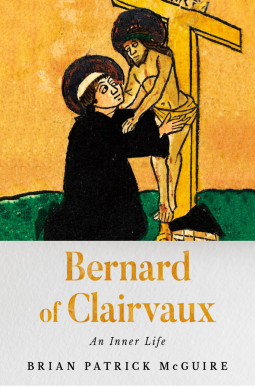
Review: Bernard of Clairvaux - An Inner Life by Brian Patrick McGuire

Synopsis: In this intimate portrait of one of the most consequential men of the Middle Ages, Brian Patrick McGuire delves into the life of Saint Bernard of Clairvaux to offer a refreshing interpretation that finds within this grand historical figure a deeply spiritual human being who longed for the reflective quietude of the monastery even as he helped shape the destiny of a church and a continent. Heresy and crusade, politics and papacies, theology and disputation shaped this astonishing man's life, and McGuire presents it all in a deeply informed and clear-eyed biography.

Following Bernard from his birth in 1090 in Burgundy to his death in 1153 at the abbey he had founded four decades earlier, McGuire reveals a life teeming with both momentous events and spiritual contemplation, from his central roles in the first great medieval reformation of the Church and the Second Crusade, which he came to regret, to the crafting of his books, sermons, and letters. We see what brought Bernard to monastic life, how he founded Clairvaux Abbey, established a network of Cistercian monasteries across Europe, and intervened on behalf of his brethren monks and abbots, as well as in heresy trials, affairs of state, and the papal schism of 1130.

By reevaluating Bernard's life and legacy through his own words and those of the people closest to him, this intimate account reveals how this often challenging saint saw himself and conveyed his convictions to those around him. Above all, McGuire depicts Saint Bernard of Clairvaux in a new light, as a man guided by Christian revelation and open to the achievements of the human spirit.


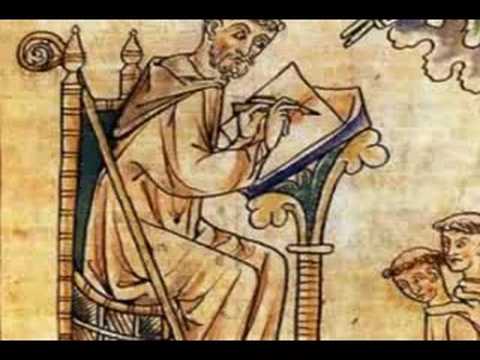
Saint Bernard The great Saint Bernard of Clairvaux ... | Bernard ...Bernard of Clairvaux was and is a complicated historical figure - a contradiction, an enigma, a politician, a saint; humble yet arrogant, proud, egotistical; passive yet domineering; retiring yet forthright and downright interfering. 

McGuire tells us that he seeks " ... to find Bernard as a man, monk, abbot, political figure and central actor in Christian Europe ...".  He successfully dispels some of the myths surrounding Bernard, whilst discussing the interpretation of the earlier sources and how they came to be adopted in later biographies.  McGuire uses Bernard's own writings to "... cast light on the way Bernard understood himself and the world around him ...".

For me personally, I was interested in Bernard's involvement in the papal schism, the Crusades, and his dealings with the Knights Templar and King Roger II of Sicily.  Despite repeated entreaties to return to his humble life within the Cistercian Order, Bernard still managed to insinuate himself upon the international political stage whenever the opportunity presented - in fact he comes across as being quite offended if he was not being consulted by princes, kings and popes!

McGuire mentions that Bernard "... worked to define orthodox belief and at the same time responded for the most part generously to the churchmen and others who turned to him for counsel and assistance ..."

There is no doubting the global influence and magnetism of Bernard, and McGuire provides a readily accessible study of this great man - though with the following proviso - he sees "... no reason to whitewash Bernard to make him politically correct for our age ...".  And rightly so, for Bernard was not of our age and we not of his.

St. Bernard of Clairvaux - Saints & Angels - Catholic Online
Towards the end of the book McGuire takes our certain themes and expounds upon them - themes such as: sources used; prior biographies written; Second Crusade and the Knights Templar; Bernard's relationships with Peter Abelard, Stephen Harding (Abbot of Citeaux) and Peter the Venerable (Abbot of Cluny); his sermons.

For those wishing to learn more and add to their own studies of Bernard, McGuire's book is definitely one to read.

Sunday, May 10, 2020

Books: The Crusades

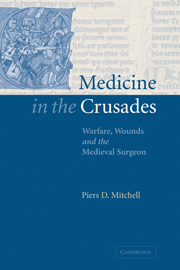
Medicine in the Crusades: Warfare, Wounds and the Medieval Surgeon by Piers D. Mitchell
Medicine in the CrusadesThis is the first book to be published on any aspect of medicine in the crusades. It will be of interest not only to scholars of the crusades specifically, but also to scholars of medieval Europe, the Byzantine world and the Islamic world. Focusing on injuries and their surgical treatment, Piers D. Mitchell considers medical practitioners, hospitals on battlefields and in towns, torture and mutilation, emergency and planned surgical procedures, bloodletting, analgesia and anesthesia. He provides an assessment of the exchange of medical knowledge that took place between East and West in the crusades, and of the medical negligence legislation for which the kingdom of Jerusalem was famous. The book presents a radical reassessment of many outdated misconceptions concerning medicine in the crusades and the Frankish states of the Latin East.


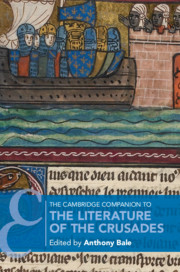
The Cambridge Companion to the Literature of the Crusades edited by Anthony Bale
The Cambridge Companion to the Literature of the CrusadesHow were the Crusades, and the crusaders, narrated, described, and romanticised by the various communities that experienced or remembered them? This Companion provides a critical overview of the diverse and multilingual literary output connected with crusading over the last millennium, from the first writings which sought to understand and report on what was happening, to contemporary medievalism, in which crusading is a potent image of holy war and jihad. The chapters show the enduring legacy of the crusaders' imagery, from the chansons de geste to Walter Scott, from Charlemagne to Orlando Bloom. Whilst the crusaders' hold on Jerusalem was relatively short-lived, the desire for Jerusalem has had a long afterlife in many cultural contexts and media.


The Tunis Crusade of 1270: A Mediterranean History by Michael Lower
Cover for 

The Tunis Crusade of 1270Why did the last of the major European campaigns to reclaim Jerusalem end in an attack on Tunis, a peaceful North African port city thousands of miles from the Holy Land? In the first book-length study of the campaign in English, Michael Lower tells the story of how the classic era of crusading came to such an unexpected end. Unfolding against a backdrop of conflict and collaboration that extended from England to Inner Asia, the Tunis Crusade entangled people from every corner of the Mediterranean world. Within this expansive geographical playing field, the ambitions of four powerful Mediterranean dynasts would collide. While the slave-boy-turned-sultan Baybars of Egypt and the saint-king Louis IX of France waged a bitter battle for Syria, al-Mustansir of Tunis and Louis's younger brother Charles of Anjou struggled for control of the Sicilian Straits. When the conflicts over Syria and Sicily became intertwined in the late 1260s, the Tunis Crusade was the shocking result.

While the history of the crusades is often told only from the crusaders' perspective, in The Tunis Crusade of 1270, Lower brings Arabic and European-language sources together to offer a panoramic view of these complex multilateral conflicts. Standing at the intersection of two established bodies of scholarship - European History and Near Eastern Studies - this volume contributes to both by opening up a new conversation about the place of crusading in medieval Mediterranean culture.


Crusading in the Fifteenth Century: Message and Impact by Norman Housley
This collection of essays by European and American scholars addresses the changing nature and appeal of crusading during the period which extended from the battle of Nicopolis in 1396 to the battle of Mohács in 1526. Contributors focus on two key aspects of the subject. One is developments in the crusading message and the language in which it was framed. These were brought about partly by the appearance of new enemies, above all the Ottoman Turks, and partly by shifting religious values and innovative currents of thought within Catholic Europe. The other aspect is the wide range of responses which the papacy's repeated calls to holy war encountered in a Christian community which was increasingly heterogeneous in character. This collection represents a substantial contribution to the study of the Later Crusades and of Renaissance Europe.


The Siege of Acre, 1189-1191 Saladin, Richard the Lionheart, and the Battle That Decided the Third Crusade by John D Hosler
"The Siege of Acre, 1189-1191" by John D. HoslerThe first comprehensive history of the most decisive military campaign of the Third Crusade and one of the longest wartime sieges of the Middle Ages.

The two-year-long siege of Acre (1189–1191) was the most significant military engagement of the Third Crusade, attracting armies from across Europe, Syria, Mesopotamia, Egypt, and the Maghreb. Drawing on a balanced selection of Christian and Muslim sources, historian John D. Hosler has written the first book-length account of this hard-won victory for the Crusaders, when England’s Richard the Lionheart and King Philip Augustus of France joined forces to defeat the Egyptian Sultan Saladin. Hosler’s lively and engrossing narrative integrates military, political, and religious themes and developments, offers new perspectives on the generals, and provides a full analysis of the tactical, strategic, organizational, and technological aspects on both sides of the conflict. It is the epic story of a monumental confrontation that was the centerpiece of a Holy War in which many thousands fought and died in the name of Christ or Allah.


The Crusader Armies 1099–1187 by Steve Tibble
"The Crusader Armies" by Steve TibbleA major new history of the Crusades that illuminates the strength and sophistication of the Western and Muslim armies.

During the Crusades, the Western and Muslim armies developed various highly sophisticated strategies of both attack and defense, which evolved during the course of the battles. In this ambitious new work, Steve Tibble draws on a wide range of Muslim texts and archaeological evidence as well as more commonly cited Western sources to analyze the respective armies’ strategy, adaptation, evolution, and cultural diversity and show just how sophisticated the Crusader armies were even by today’s standards.

In the first comprehensive account of the subject in sixty years, Tibble takes a fresh approach to Templars, Hospitallers, and other key Orders and makes the controversial proposition that the Crusades were driven as much by sedentary versus nomadic tribal concerns as by religious conflict. This fluently written, broad-ranging narrative provides a crucial missing piece in the study of the West’s attempts to colonize the Middle East during the Middle Ages.


The Crusader States and their Neighbours: A Military History, 1099-1187 by Nicholas Morton
Cover for 

The Crusader States and their NeighboursThe Crusader States and their Neighbours explores the military history of the Medieval Near East, piecing together the fault-lines of conflict which entangled this much-contested region. This was an area where ethnic, religious, dynastic, and commercial interests collided and the causes of war could be numerous. Conflicts persisted for decades and were fought out between many groups including Kurds, Turks, Armenians, Arabs, and the crusaders themselves. Nicholas Morton recreates this world, exploring how each faction sought to advance its own interests by any means possible, adapting its warcraft to better respond to the threats posed by their rivals. Strategies and tactics employed by the pastoral societies of the Central Asian Steppe were pitted against the armies of the agricultural societies of Western Christendom, Byzantium, and the Islamic World, galvanising commanders to adapt their practices in response to their foes. Today, we are generally encouraged to think of this era as a time of religious conflict, and yet this vastly over-simplifies a complex region where violence could take place for many reasons and peoples of different faiths could easily find themselves fighting side-by-side.


Accursed Tower:The Crusaders' Last Battle for the Holy Land by Roger Crowley
"Accursed Tower" by Roger CrowleyThe city of Acre, powerfully fortified and richly provisioned, was the last crusader stronghold. When it fell in 1291, two hundred years of Christian crusading in the Holy Land came to a bloody end. With his customary narrative brilliance and immediacy, Roger Crowley chronicles the tumultuous and violent attack on Acre, the heaviest bombardment before the age of gunpowder, which left this once great Mediterranean city a crumbling ruin.

The ‘Accursed Tower’ was the focal point of this siege. As the last garrison of the Crusader defences, it came to symbolise the disintegration of the old world and the rise of a new era of Islamic jihad. Crowley’s narrative is based on forensic research, drawing heavily on little known first hand sources, both Christian and Arabic. This is a fast-paced and gripping account of a pivotal moment in world history.


Crusading Spirituality in the Holy Land and Iberia, c.1095-c.1187 by William J. Purkis
Crusading Spirituality In The Holy Land And Iberia, C.1095 C.1187For much of the twelfth century the ideals and activities of crusaders were often described in language more normally associated with a monastic rather than a military vocation; like those who took religious vows, crusaders were repeatedly depicted as being driven by a desire to imitate Christ and to live according to the values of the primitive Church.

This book argues that the significance of these descriptions has yet to be fully appreciated, and suggests that the origins and early development of crusading should be studied within the context of the "reformation" of professed religious life in the twelfth century, whose leading figures (such as St Bernard of Clairvaux) advocated the pursuit of devotional undertakings that were modelled on the lives of Christ and his apostles. It also considers topics such as the importance of pilgrimage to early crusading ideology and the relationship between the spirituality of crusading and the activities of the Military Orders, offering a revisionist assessment of how crusading ideas adapted and evolved when introduced to the Iberian peninsula in c.1120. In so doing, the book situates crusading within a broader context of changes in the religious culture of the medieval West.


Crusading and Pilgrimage in the Norman World edited by Kathryn Hurlock & Paul Oldfield
Crusading and Pilgrimage in the Norman WorldThe reputation of the Normans is rooted in warfare, faith and mobility. They were simultaneously famed as warriors, noted for their religious devotion, and celebrated as fearless travellers. In the Middle Ages few activities offered a better conduit to combine warfare, religiosity, and movement than crusading and pilgrimage. However, while scholarship is abundant on many facets of the Norman world, it is a surprise that the Norman relationship with crusading and pilgrimage, so central in many ways to Norman identity, has hitherto not received extensive treatment.

The collection here seeks to fill this gap. It aims to identify what was unique or different about the Normans and their relationship with crusading and pilgrimage, as well as how and why crusade and pilgrimage were important to the Normans. Particular focus is given to Norman participation in the First Crusade, to Norman interaction in later crusading initiatives, to the significance of pilgrimage in diverse parts of the Norman world, and finally to the ways in which crusading and pilgrimage were recorded in Norman narrative. Ultimately, this volume aims to assess, in some cases to confirm, and in others to revise the established paradigm of the Normans as crusaders par excellence and as opportunists who used religion to serve other agendas.


Sunday, May 3, 2020

Books: Medieval Spain

The Unconquered Knight: A Chronicle of the Deeds of Don Pero Niño, Count of Buelna by Gutierre Diaz de Gamez
The heroic exploits of the 15th-century Count of Buelna, including tournament glories, knightly romance and the bitter hardships of life on campaign.

Gutierre Diaz de Gamez entered the service of Pero Niño, count of Buelna, in 1402, when they were both about 23, and served as head of his military household for nearly fifty years. He began a chronicle of his master's deeds in about 1431, and it is this eyewitness account of the life of a knight, both in war and peace, which is translated here. 

It is written in praise of his master, but beneath the veneer of hero-worship a good deal of the reality of a knight's existence shows through: even in the prologue, Diaz de Gamez gives a bitter picture of the hardships of a military campaign: 'Knights who are at the wars eat their bread in sorrow; their ease in weariness and sweat... Mouldy bread or biscuit, meat cooked or uncooked, water from a pond or a butt, poor sleep with their armour still on their backs, the enemy an arrow-shot off...' On the other hand, he can evoke the glories of a tournament, in which his master excelled, and his triumphs as a military commander both by sea and land. It is a story full of colour, adventure and romance, and one which deserves its place in the chronicles of chivalry.


The Duke of Alba by Henry Kamen
"The Duke of Alba" by Henry KamenFerdinand Alvarez de Toledo, the third duke of Alba (1507–82), is known to history as “the butcher of Flanders.” The general who carried out Philip II’s repressive policies in the Netherlands, he was responsible for the massacre of thousands of men, women, and children, considering it better to lay waste an entire country than leave it in the hands of heretics. Alba came to represent for contemporaries as well as for future generations the unacceptable face of Spanish imperialism.

In this intriguing re-evaluation, Henry Kamen narrates the duke’s personal history, looking beyond the conventional image to reveal motives and to explain rather than simply to condemn. Kamen examines the early years of Alba’s life, his travels over the whole of Europe, and the complex military and political career that made him Spain’s leading general of the imperial age. Drawing on the duke’s rich and expressive surviving correspondence, Kamen explores Alba’s beliefs and considers his infamous actions within the contexts of his time and of the monarchs—Emperor Charles V and King Philip II of Spain—whom he served.


Phillip II by Henry Kamen
"Philip of Spain" by Henry KamenPhilip II of Spain—ruler of the most extensive empire the world had ever known—has been viewed in a harsh and negative light since his death in 1598. Identified with repression, bigotry, and fanaticism by his enemies, he has been judged more by the political events of his reign than by his person. This book, published four hundred years after Philip's death, is the first full-scale biography of the king. Placing him within the social, cultural, religious, and regional context of his times, it presents a startling new picture of his character and reign.

Drawing on Philip's unpublished correspondence and on many other archival sources, Henry Kamen reveals much about Philip the youth, the man, the husband, the father, the frequently troubled Christian, and the king. Kamen finds that Philip was a cosmopolitan prince whose extensive experience of northern Europe broadened his cultural imagination and tastes, whose staunchly conservative ideas were far from being illiberal and fanatical, whose religious attitudes led him to accept a practical coexistence with Protestants and Jews, and whose support for Las Casas and other defenders of the Indians in America helped determine government policy. Shedding completely new light on most aspects of Philip's private life and, in consequence, on his public actions, the book is the definitive portrayal of Philip II.


Commander of the Armada: The Seventh Duke of Medina Sidonia by Peter Pierson
"Commander of the Armada" by Peter PiersonThe seventh Duke of Medina Sidonia is best known as the man who led to defeat the Spanish Armada of 1588. This book by Peter Pierson is the first complete biography in any language of this important figure. Based on previously inaccessible documents from the Medina Sidonia archives, it offers fascinating material on sixteenth-century Spain and new and exciting details about the armada campaign.

Pierson begins by describing the Duke’s youth and his close ties to the court of Philip II. He discusses the Duke’s lifelong involvement with the shipping that navigated the treasure route from Spain to the Indies, his significant role in Philip’s successful quest for the Portuguese Crown, and his appointment as Captain General of the Ocean-Sea. Spain’s war with England dominates the central chapters of the book. Pierson relates how Medina Sidonia embargoed ships and recruited men for the armada, the largest fleet yet concentrated in early modern Europe, and he analyzes Philip’s choice of the Duke to command the armada. 

Pierson provides a radical reinterpretation of the armada campaign, and with the aid of ten superb maps and diagrams he reconstructs the positions of the two navies, the number and names of ships, and their movements from the fleet’s departure for England to the surviving vessel’s arrival home. Pierson continues with Medina Sidonia’s life after the armada campaign and discusses his second appearance on the world stage, as the unsuccessful defender of Cádiz against a major Anglo-Dutch attack in 1596. 


"The Count-Duke of Olivares" by J. H. ElliottThe Count-Duke of Olivares: The Statesman in an Age of Decline by JH Elliott
A masterful biography of Don Gaspar de Guzmán, Count Duke of Olivares—righthand advisor to Spain’s Philip IV, archrival of Cardinal Richelieu, and a central figure in seventeenth-century Europe. Written by the eminent historian J. H. Elliott and based on many original sources, this elegant book is a landmark in the study of a man and an age.


The Catalan Rule of the Templars: A Critical Edition and English Translation from Barcelona, Archivo de la Corona de Aragón, `Cartas Reales', MS 3344 translated by J.M. Upton-Ward
The Catalan Rule of the Templars: A Critical Edition and English Translation from Barcelona, Archivo de la Corona de Arag�n, `cartas Reales', MS 3344The Knights Templar, part monastic order, part military force, lived by a firm code, or rule, which exists in differing versions. This Spanish version is a follow-up to J.M. Upton-Ward's highly successful edition of the French Rule. 

The introduction to this Catalan Rule, Barcelona Archivo de la Corona de Aragón, Cartes Reales, MS 3344, discusses the content, language and dating of the manuscript. It also provides background information derived from the French Rule (which the reader may require for a fuller appreciation of the text - see author note below) on the circumstances of the Knights Templar.

There is a brief description of the provincial organisation of the Order with particular reference to the houses in Aragon, where it is most likely that the manuscript was used; a summary of clauses; and a concordance with de Curzon's 1886 edition of the French Rule. Compared to de Curzon's edition, the Barcelona text is incomplete, but it contains important clauses not found in other manuscripts. 

A partial transcription claiming to represent all the clauses without equivalents in de Curzon's edition was published in 1889, but it omitted several clauses now published here for the first time. 

Footnotes to the English translation elucidate the text; give biographical information on the named officers of the Order where possible; and indicate significant differences compared with the French Rule.


The Victors and the Vanquished: Christians and Muslims of Catalonia and Aragon, 1050–1300 by Brian A Catlos
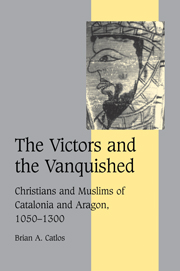
The Victors and the VanquishedThis is a revisionary study of Muslims living under Christian rule during the Spanish 'reconquest'. It looks beyond the obvious religious distinctions and delves into the subtleties of identity in the thirteenth-century Crown of Aragon, uncovering a social dynamic in which sectarian differences comprise only one of the many factors in the causal complex of political, economic and cultural reactions. 

Beginning with the final stage of independent Muslim rule in the Ebro valley region, the book traces the transformation of Islamic society into mudéjar society under Christian domination. This was a case of social evolution in which Muslims, far from being passive victims of foreign colonisation, took an active part in shaping their institutions and experiences as subjects of the Infidel. Using a diverse range of methodological approaches, this book challenges widely held assumptions concerning Christian-Muslim relations in the Middle Ages, and minority-majority relations in general.