Showing posts with label papacy. Show all posts

Monday, November 24, 2025

Review: Lotharingia by Lara Byrne

Synopsis: Against the backdrop of the Investiture Controversy, a young woman is forging her own special destiny.

AD 1062. One day warrior Countess Matilde will rule like a man, and inherit her mother's mysterious relics, but she cannot escape the marriage arranged for her.

When her enigmatic overlord King Heinrich rescues her from her abusive husband, friendship blossoms into forbidden love. But her personal journey has only just begun.

A medieval tale of love, political intrigue, and relic hunting.

~ ~ ~

A fictional account of the early life of Matilda of Canossa, a formidable women who stood up for what she believed in, in the face of opposition from more powerful political players. And that is where my interest started and stopped.

By the author's own words, the plot is entirely fictitious and is her own creative attempt to tie up "historical" loose ends, to provide both herself and the reader a semblance of a satisfactory explanation / conclusion to historical events that actually presented none and to fill in gaps in the historical chronology.

Unfortunately, it read more like a medieval Dan Brown novel than what could have been a more considered and structured historical novel of a woman at the centre of one of the most important political and religious events of not only her time but of our own.

To throw in relic hunting and an undocumented illicit love affair in order to explain things or tie up loose ends is really doing your subject a great disservice - and just didn't work on so many levels.

I will be labeling this one as alternate historical fiction - as that is what it represents, especially for those of us who have actually taken the time to get to know Matilda and invest in her story a little more seriously. I won't be pursuing the second in this series.

If you are truly interest in Matilda, then invest in "The Military Leadership of Matilda of Canossa 1046-1115" by David J. Hay or even "Tuscan Countess: The Life and Extraordinary Times of Matilda of Canossa" by Michele K. Spike

Sunday, April 13, 2025

Review: Something Wicked by John F Myslinski

Synopsis: Something Wicked plunges readers into a labyrinth of corruption, organized crime, and religious intrigue at the heart of the Catholic Church. When Father Dan Lanaham - newly elected Superior General of the Jesuits - stumbles upon a series of bombings, murdered nuns, and unsettling ties to the Vatican Bank, he realizes the danger lurking beneath Rome's hallowed corridors is far more sinister than anyone dares admit.

Determined to uncover who ordered the Jerusalem bombing and why, Dan teams up with unlikely allies ranging from Mossad agents to secretive hackers-even a terrorist whose motives are murkier than they seem. At every turn, he battles shadowy Mafia connections, extremist plots, and twisted ambitions vying for control of the papacy. As the ailing Pope struggles to bring Dan into the Church's innermost council, a shocking global conspiracy unravels, threatening both faith and the lives of those closest to Dan.

Brimming with moral complexity, high-stakes subterfuge, and characters torn between devotion and ambition, Something Wicked will keep you on the edge of your seat. In a world where evil wears a saint's robes and redemption hinges on secrets best left buried, Father Dan's quest for the truth may cost him everything-including his soul.

~ ~ ~

This type of book was certainly down my alley - yet this was not.

I am not sure if it was how the narrative was delivered, the over abundant cast of characters, the multitude and complexity of themes, I just could not get into this - despite my most ardent desire to immerse myself in this tome, I found myself flagging with every chapter.

Quite possibly I need to re-revisit this in a physical format.

Thursday, February 6, 2025

Review: The Pope's Butcher by Joseph C Gioconda

Synopsis: A new novel inspired by the true historical account of one man and his penchant for murder and misogyny in the medieval Roman Catholic Church is being released.

A story that has never been released to the public, The Pope's Butcher recounts the life of Father Heinrich Institoris, the Grand Inquisitor, a visionary man driven to cleanse the world of Eve's original sin by eradicating any woman he suspects of witchcraft. As Inquisition courts bloom across Europe, he vows to leave no stone unturned, no hovel unexamined, and no woman alive, in his search of his own perverse version of justice.

At a time when women had no power or voice, only one man seeks to stop him. The reader follows the life of Sebastian, a young seminarian who was abandoned as a child but carries with him an innate sense of morality that drives him to stand up for even the most vulnerable victims against his own Church. Will such a humble man be able to stop this powerful murderer, a killer even the Pope admires?

This astonishing account of religion, witchcraft and the occult in the Middle Ages reminds us that violence against women is as old as civilization itself and we must understand the events of the past, so we never repeat them.

~ ~ ~

I was expecting something a bit different and as a result found no connection to the narrative nor the characters.

On the one hand we have the character of the witch-hunter and Grand Inquisitor, Fra Heinrich Institoris, a perverse and perverted man, whose mission is to eradicate witches and women he deems are witches. This is definitely a man worthy of further exploration, even if in a fictionalised account - but we are left with only a rudimentaty glance.

Then we have the naive, unworldly Sebastian, who is sent off on what is deemed to be a mission of such importance - to gather as much information as he can about witches and any heretical texts and report back to Heinrich. Quite frankly - Sebastian and his storyline was - for me - pure fantasy - it just didn't ring true for a supposed fictionalised account of actual historic events. Was Sebastian surplus to stock - probably, as I found myself wondering if he was really necessary at all, just there to pad out the word count and "make discoveries" (ie: display the author's research).

When this narrative finally gets to the point, we discover that this is the foundation story for the infamous "Malleus Maleficarum" or "Hammer of Witches" - and the narrative might have been put to better use by instead focusing more on the character of the tome's author, Heinrich Kramer or Heinrich Institor and just plain ditching the woeful character of Sebastian.

Overall, this just didn't cut it for me - I did read it through to the end but was disappointed I didn't set it aside sooner.

Monday, August 31, 2020

Review: The Cellars of Notre Dame by Barbara Frale

The Cellars of Notre DameSynopsis: Paris, 1298. Disguised as an outlaw, a personage of the highest rank sneaks through the cellars of Notre Dame. The maze of secret tunnels hides a laboratory. Here, occult studies are conducted under the guidance of the renowned scientist, Arnaldo da Villanova. Studies which remain a secret.

Rome, 1301. Denounced for impiety by mysterious informers in Paris, Villanova seeks refuge in Italy and becomes Pope Boniface VIII's personal physician. Yet Villanova knows a secret, one capable of discrediting and overthrowing the French monarchy. He's not safe. It's clear someone wants to silence him forever.  Will he pay the price for the secret he keeps with his life?


Two things attracted me to this book - the subject matter and the author, whose book on the Templars I had read in the past.

Medieval politics is a difficult path to navigate at the best of times. Throw in some papal discord, political and religious machinations, mysterious cabals, superstition, rumour and inuendo, and two political giants in Philip the Fair of France and Pope Boniface VIII (described as two pillars holding up the world), and you have the makings of a very good historical fiction thriller. 

Barely four years into his papal reign, Boniface VIII often involved himself in the foreign affairs of many nations, including in France, Sicily, Italy and Scotland. These chronic and oft unwelcome interventions were the cause of many bitter quarrels. France, at this time, was a war with England over Gascony, and Philip was constantly putting his hands into the coffers to fund these military actions. It was Philip's taxing of the clergy that also brought him into conflict with the papacy.

Frale is a noted historian and paleographer at the Vatican Secret Archives, and her previous works have been in the non-fiction genre. This is her first novel as far as I am aware. The amount of research that has gone into this book is (at times, painfully) evident.

I would strongly suggest that having some interest in this particular period would be a good thing as there are a plethora of characters (real and fictional) that walk across the pages; some add to the story, others are not so critical, leaving me wondering if they were necessary in the first place (mayhap a short list of essential characters at the very start might have been an idea).

The character of Arnoldo de Villanova intrigued me greatly. Was he real or one of those fictional characters that are there to drive the storyline. But no,Arnoldo is real and his exile is documented. I was pleased to see another side to Philip's chief minister, Guillaume de Nogaret. There are many more real-life characters worthy of further research. Truly a cast that would make Cecil B deMille envious.

In additional, there are also a number of themes running through the narrative - some evident; others not so; and these are not cleared up until towards the end. At times, the reader could be left wondering which narrative it is that they should be following and what should be discarded. Much of what is covered off here sets the scene of some more well known historical events that were to tragically play out in the years to come.

" ... you cannot escape the past .... 
 the past always returns and sets before us 
the mistakes we have made ..."

Despite this being an area of interest for me (ie: medieval history and politics), the dearth of information provided sometimes felt oppressive - at page 50 I felt like I was at page 500! So I will stress that this undertaking is not for the faint-hearted.

However, once you get past all of this, the story itself posits a rather  interesting premise, which will have some rushing to their history books or google in search of answers. I will most likely be reading this again.

Friday, June 26, 2020

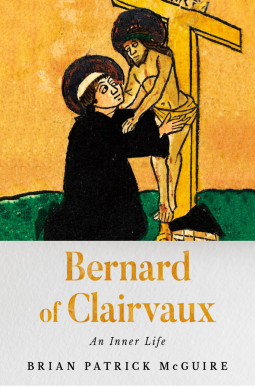
Review: Bernard of Clairvaux - An Inner Life by Brian Patrick McGuire

Synopsis: In this intimate portrait of one of the most consequential men of the Middle Ages, Brian Patrick McGuire delves into the life of Saint Bernard of Clairvaux to offer a refreshing interpretation that finds within this grand historical figure a deeply spiritual human being who longed for the reflective quietude of the monastery even as he helped shape the destiny of a church and a continent. Heresy and crusade, politics and papacies, theology and disputation shaped this astonishing man's life, and McGuire presents it all in a deeply informed and clear-eyed biography.

Following Bernard from his birth in 1090 in Burgundy to his death in 1153 at the abbey he had founded four decades earlier, McGuire reveals a life teeming with both momentous events and spiritual contemplation, from his central roles in the first great medieval reformation of the Church and the Second Crusade, which he came to regret, to the crafting of his books, sermons, and letters. We see what brought Bernard to monastic life, how he founded Clairvaux Abbey, established a network of Cistercian monasteries across Europe, and intervened on behalf of his brethren monks and abbots, as well as in heresy trials, affairs of state, and the papal schism of 1130.

By reevaluating Bernard's life and legacy through his own words and those of the people closest to him, this intimate account reveals how this often challenging saint saw himself and conveyed his convictions to those around him. Above all, McGuire depicts Saint Bernard of Clairvaux in a new light, as a man guided by Christian revelation and open to the achievements of the human spirit.


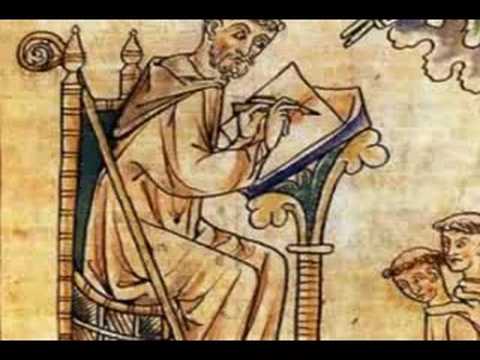
Saint Bernard The great Saint Bernard of Clairvaux ... | Bernard ...Bernard of Clairvaux was and is a complicated historical figure - a contradiction, an enigma, a politician, a saint; humble yet arrogant, proud, egotistical; passive yet domineering; retiring yet forthright and downright interfering. 

McGuire tells us that he seeks " ... to find Bernard as a man, monk, abbot, political figure and central actor in Christian Europe ...".  He successfully dispels some of the myths surrounding Bernard, whilst discussing the interpretation of the earlier sources and how they came to be adopted in later biographies.  McGuire uses Bernard's own writings to "... cast light on the way Bernard understood himself and the world around him ...".

For me personally, I was interested in Bernard's involvement in the papal schism, the Crusades, and his dealings with the Knights Templar and King Roger II of Sicily.  Despite repeated entreaties to return to his humble life within the Cistercian Order, Bernard still managed to insinuate himself upon the international political stage whenever the opportunity presented - in fact he comes across as being quite offended if he was not being consulted by princes, kings and popes!

McGuire mentions that Bernard "... worked to define orthodox belief and at the same time responded for the most part generously to the churchmen and others who turned to him for counsel and assistance ..."

There is no doubting the global influence and magnetism of Bernard, and McGuire provides a readily accessible study of this great man - though with the following proviso - he sees "... no reason to whitewash Bernard to make him politically correct for our age ...".  And rightly so, for Bernard was not of our age and we not of his.

St. Bernard of Clairvaux - Saints & Angels - Catholic Online
Towards the end of the book McGuire takes our certain themes and expounds upon them - themes such as: sources used; prior biographies written; Second Crusade and the Knights Templar; Bernard's relationships with Peter Abelard, Stephen Harding (Abbot of Citeaux) and Peter the Venerable (Abbot of Cluny); his sermons.

For those wishing to learn more and add to their own studies of Bernard, McGuire's book is definitely one to read.

Monday, September 23, 2019

Fallen Order: Intrigue, Heresy, and Scandal in the Rome of Galileo and Caravaggio by Karen Liebreich

Fallen Order: Intrigue, Heresy, and Scandal in the Rome of Galileo and Caravaggio by [Liebreich, Karen]
From @ Amazon.com

Catholic hierarchies protecting paedophile priests is a scandal as old as time, and one that has plagued the Church since the 1600s.  In 1643, after a failure by the Church hierarchy to deal with child abuse scandals amongst their members, a group of priests took control of the Order of the Clerics Regular of the Pious Schools.  It would be anachronistic to call this group a paedophile ring, but it is nevertheless true that a man accused of abusing the boys in his care was promoted to universal superior of a Catholic teaching order, supported by a small group of like-minded priests, and with the full complicity of the Inquisition and the pope himself.

This is the world that Karen Liebreich uncovers; one of ancient, deeply disturbing and intensely secretive shames that was endorsed by Joseph Calasanz, the founder of The Order of the Pious Schools.  It was at these private schools, run by the Piarist order of priests, that some of the most famous children in history were educated and vast contributions to science, art and culture were also overseen by heads of the Church.

Yet investigations into child-molestation and the relentless brutality of priests were frequently quashed – countless children who were the recipients of abuse and psychological violence were silenced.  Great lengths were taken to protect the reputation of the Church as rivalry, bribes, conspiracy, evil and pressure from the Vatican continued to mount amongst the priests.

Liebreich brilliantly depicts the dangerous politics of the Church in seventeenth-century Rome, revealing previously hidden and immensely sobering information she uncovered during her intense historical research.


Saturday, August 17, 2019

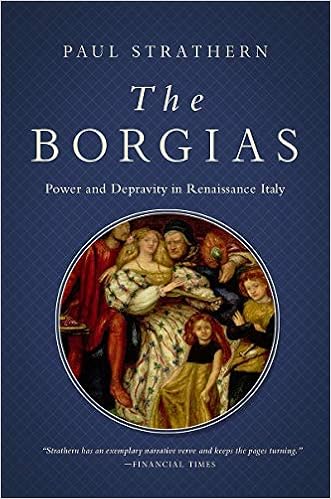
The Borgias by Paul Strathern

The Borgia family have become a byword for evil. Corruption, incest, ruthless megalomania, avarice and vicious cruelty―all have been associated with their name. And yet, paradoxically, this family lived when the Renaissance was coming into its full flowering in Italy. Examples of infamy flourished alongside some of the finest art produced in western history. 


This is but one of several paradoxes associated with the Borgia family. For the family which produced corrupt popes, depraved princes and poisoners, would also produce a saint. These paradoxes which so characterize the Borgias have seldom been examined in great detail. Previously history has tended to condemn, or attempt in part to exonerate, this remarkable family. Yet in order to understand the Borgias, much more is needed than evidence for and against. The Borgias must be related to their time, together with the world which enabled them to flourish. Within this context the Renaissance itself takes on a very different aspect. Was the corruption part of the creation, or vice versa? Would one have been possible without the other? 


One of the author’s great strengths has always been his ability to keep the many assorted players from confusing readers, and that holds true in his latest.  Strathern’s smooth narrative and comprehensive insight bring the Borgias to life for scholars and amateurs alike.

Saturday, November 3, 2018

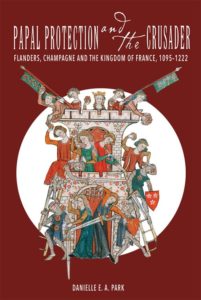
Papal Protection and the Crusader: Flanders, Champagne, and the Kingdom of France. 1095-1222 by Danielle Park

Synopsis:

On taking the cross, crusaders received a diverse set of privileges designed to appeal to both spiritual and more temporal concerns. Among these was the papal protection granted to them and extended over their families and possessions at home.

This book is the first full length investigation of this protection. It begins by examining the privilege from its inception in around 1095, and its development and consolidation through to 1222. It then moves on to illustrate how this privilege operated in practice through the appointments of regency governments and close communication with both the papacy and local ecclesiastical officials, centring on the rich crusading evidence from Flanders, Champagne and the Kingdom of France. While the protection privilege has been seen as unwieldy and over ambitious, close analysis of particular cases and individuals reveals that not only were regents well aware of their privileged status, but that the papacy could directly intervene when its protection was contravened. 


On the whole, though, Park argues that the crusade regents did an effective job in upholding the rights of the absentee rulers and that this was recognised when the boss returned- for instance very few of their deeds required re-authentification. The job was eased by what look like conscious attempts to clear the books of outstanding issues before the would-be crusader departed. Park also hints that the constraints of crusade regencies may have been a stimulus for developments in bureaucratic governance.

She has undoubtedly identified an important part of what one might define as the backstage mechanics underlying heroic or ghastly deeds in the Holy Land. Hopefully she may in future widen her focus to consider the fate of those unable to call on the services of Ivanhoe to protect their rights.

Monday, March 9, 2015

Review: Gerald Posner: God's Bankers

"God’s Bankers has it all: a rare exposé and an astounding saga marked by poisoned business titans, murdered prosecutors, mysterious deaths of private investigators, and questionable suicides; a carnival of characters from Popes and cardinals, financiers and mobsters, kings and prime ministers ..."

So with that I was eagerly anticipating a journey into the underbelly of Vatican politics and double-dealing from the time of Peter to our current Pope Francis. However, the early years were briefly touched upon until we reach the reign of Gregory XVI (1831 - 1846) when the cash-strapped Church was looking for ways to boost their coffers. Thus, the age of lay-financiers, prelates and shady businessmen begins with the Church taking uncertain steps into the world of investment and money-lending. From the reign of Leo XIII the Vatican Bank steps tentatively onto the world stage whilst headed by a select group of financial outsiders, steering the Bank through revolutionary Italy, the stock-market crash and the creation of the Papal State - the Vatican City. It is in the 20th century that the Vatican Bank takes a rather interesting stance on Germany during the 1930s and 1940s - the Vatican has spread its investments thought Fascist Italy and Germany, and is at odds with itself over preserving financial independence and fighting communism or speaking out against documented atrocities. We then move forward through the years of assisting war criminals to the influx of dubious Italian and Sicilian businessmen into the banking hierarchy, and support for fledgling anti-communist movements worldwide. 

This a is lengthy tome - with copious notes. It is not a light read - and the reader may find themselves re-reading past chapters.