Showing posts with label 16th century. Show all posts

Thursday, January 1, 2026

Review: Uncrowned Queen by Nicola Tallis

Synopsis: The first comprehensive biography in three decades on Margaret Beaufort, the mother of the Tudor Dynasty.

In 1485, Henry VII became the first Tudor king of England. His victory owed much to his mother, Lady Margaret Beaufort. Over decades and across countries, Margaret had schemed to install her son on the throne and end the War of the Roses. Margaret's extraordinarily close relationship with Henry, coupled with her role in political and ceremonial affairs, ensured that she was treated -- and behaved -- as a queen in all but name. Against a lavish backdrop of pageantry and ambition, court intrigue and war, historian Nicola Tallis illuminates how a dynamic, brilliant woman orchestrated the rise of the Tudors.

~ ~ ~

Well .... no. Not the first comprehensive biography - but certainly one of a few including the recent works by Lauren Johnson and Elizabeth Norton.

Tallis provides the reader with a very accessible biography of a woman who put aside her ego and loyalty to play the long game - that was putting her son Henry on the throne of England.

Much of Margaret's life is covered: her childhood, marriages, birth of her only child; in addition to a history of events of her time leading up to the coronation of Henry as Henry VII. Tallis focuses on the cultural, social and religious aspects of Margaret's life, including he role as patron to both educational and religious establishments, and her role as counsellor and confidante of her son Henry.

There is nothing new here that has not been covered off in previous biographies and histories but as mentioned, it accessible to the lay reader.

Monday, November 10, 2025

Review: The Ruffler's Child by John Pilkington

Synopsis: Introducing Thomas Finbow – falconer to Sir Robert Vicary and Lady Margaret of Petbury, Berkshire. He keeps his mind sharp and his body primed as he goes about his duties with the diligent confidence of one who once served Queen and country.

When Nathaniel Pickering, Lady Margaret’s older brother is found murdered, Thomas takes her away to London, in search of gryfalcons. Lady Margaret being a keen lover of the sport of falconry herself, Thomas hopes it will help distract his mistress from her grief, however once they reach the city it becomes apparent that much bigger things are at play – and the murder of Master Pickering was just the beginning…

Thomas's astute mind is unable to ignore the clues, and in uncovering some dark secrets, he places himself - and his mistress - in grave danger. Now a target himself, Thomas must face some of London's most notorious criminals, in a battle of both brain and brawn.

~ ~ ~

For some reason, I had thought I had come across this series prior to now - and realised that it was published some twenty years ago and there are seven books in the series - The Ruffler's Child being the first.

Widowed Thomas Finbow, a former solder, is falconer to a local lordly couple. The death of the lady's brother sets both Thomas and Lady Margaret off to London to see what brother Nathaniel may have left behind by way of clues to why he was killed.

Thomas remains behind to investigate, following leads,discovering long-hidden secrets, that result in many a misfortune for our gallant falconer. Along the way, we learn a little about the Dutch community that settled in London at this time - which I found most enlightening.

England in the 1580s was a period of rising internal (see Mary Queen of Scots) and international political tension, particularly with Spain. In addition, the government - headed by Queen Elizabeth I and her Council - dealt with religious tensions from both Catholics and radical Puritans, while managing the economy which was benefiting from new Atlantic trade routes but facing financial strains from war.

Pilkington immerses the reader to the underbelly of London in the 1580s which included a mix of licensed and unlicensed establishments like taverns, alehouses, and brothels, alongside organized crime and povertyLondon was home to what we would now refer to as organised crime - "dissolute, loose and insolent people" harbored in various disorderly houses, including gambling dens, brothels, and illicit taverns.

During this period, there was a growing Dutch community in England consisting primarily of Protestant refugees fleeing religious persecution in the Spanish-controlled Netherlands. These "strangers" formed distinct communities, established their own churches, and contributed to the English economy through new industries like silk and lace weaving. While generally welcomed for their skills, they faced some social friction with the local English population - this is also touched upon. 

This then is the social and political landscape into which the reader is drawn. Events build to the dramatic climax wherein the secret and the identity of the "ruffler's child" is revealed - and the connection to Lady Margaret's family is established.

A good first novel, not an overly long read but one which is nicely paced out to keep the narrative and action perpetually flowing. Looking forward to investing in the rest of the series.


Review: Edward IV's Fatal Legacy by Hazel Pierce

Synopsis: One of the most overlooked families of the early modern period, the Courtenays played a critical role, and their story of love and loss, loyalty and betrayal, survival and ruin is played out at the courts of four Tudor monarchs.

Katharine, Countess of Devon, was Edward IV's daughter. Her first proposed marriage would have made her Queen of Spain, but she was declared a bastard on the accession of her uncle Richard III. Legitimated under Henry VII, she eventually married Sir William Courtenay, heir to the earldom of Devon. Her closeness to her sister, Queen Elizabeth of York, did not prevent the sudden arrest of her husband in 1502. Whilst earning the regard of her royal brother-in-law, Henry VII, she walked a knife edge until the accession of her nephew, Henry VIII. As a widow, he granted her the lands of the earldom of Devon for life, making her one of the wealthiest female magnates in England.

Her death in 1527 spared her the tragedies which befell her family in the 1530s. Her son Henry, Marquis of Exeter, was first cousin to Henry VIII, with whom he enjoyed a close relationship until the king’s decision to repudiate his queen changed everything. Henry’s marriage to Gertrude Blount, one of the most neglected women of the Tudor period, was one of affection and respect. During the 1530s, she was at the centre of a group opposed to Henry VIII’s repudiation of Catherine of Aragon, passing on information provided by her husband and a small circle of trusted friends to the imperial ambassador, Chapuys. When her husband was arrested in 1538, he, along with others, was executed; only she survived.

Imprisoned in the Tower with her twelve-year-old son, Edward, she was later released while Edward remained incarcerated until the accession of Mary I. Upon his release, many believed he would marry the queen, but instead, he died in exile from suspected poisoning after surviving several assassination attempts by imperial agents. This study of the Courtenay family follows their lives and fortunes from 1479-1558.

~ ~ ~

Let me begin by saying I, personally, consider the title (and cover art) to be misleading (would strongly suggest changing - I can even suggest a few alternates that would actually represent the contents), as it really does a dis-service to the family at the forefront of this tome.

Secondly, whilst the author has demonstrated the wealth of research done, the data dump is frustrating - all your research does not need to be included!! There is the usual P&S author style of writing about others not entirely central to the title or subject at hand (refer data dump above); lots of summations, and rather contradictorily so, lots of detail (again, a good editor should have trimmed this back).

Thirdly, whilst kudos for subject matter, once again let down by presentation style. Initially not overly impressed one third way in. I wearily persevered.

What I did like was primarily the subject matter - the rise and fall of the Courtenays under the Tudors (which is the title I would have gone for). The first part is focused on Katherine Plantagenet - the daughter of King Edward IV, she was a Courtenay by marriage only. Spoiler alert: as her husband died young, there is much focus on Katherine who lived a long life (for folks of her time). Therein point two applies - although there is much to be learned about Katherine and William during the reign of Henry Tudor (her brother-in-law) - who both she and William did manage to outlive.

The second part looks at the exceedingly tumultuous lives of Katherine's son Henry and his wife Gertrude - whom I found the most annoying yet fascinating woman who managed to keep her head during the reign of Henry VIII - how, is a miracle for she was a headstrong, scheming woman! However, she did manage to find herself confined to the Tower, as did her son for her sins.

The son, Edward, is the subject of part three - a young man, heavily influenced by others, who paid a heavy price for his father's loyalty to his friends - imprisonment during his youth. Upon his release, he made up for lost time - a bit like the child popstars of today who are keen to shake off the kiddie-pop image for a more adult one. Unfortunately for Edward, this was his undoing and led to his exile.

There is much to be learned about this family, primarily the English / Devon branch of the family.  There are many branches (or tentacles) that sprouted from this illustrious family tree, and they had their historical and political moments, which should have been summarised not detailed.

I have not come across another biography of this family prior to now so have nothing really to compare it to. It is not for the feint hearted as there is - as I mentioned - a lot of detail. Whilst I was initially not overly impressed, I did come away with a deeper appreciation of the Courtenay family and their place in Tudor history (though I still say less is best!).

If Tudor history is your penchant, then you will definitely want to include this one to your reading list - but take your time - do not rush through it - and probably ditch the audio and e-book versions for a physical copy.


Following this, I did a bit of a google search for any further histories on this family - see below:
  • The Shadow of the White Rose: Edward Courtenay, Earl of Devon, 1526-1556 by James D. Taylor
  • Boconnoc: The History of a Cornish Estate by Catherine Lorigan
  • Memorials of the West, Historical and Descriptive, Volume 44 by W. H. Hamilton Rogers
  • Children of England: The Heirs of King Henry VIII 1547-1558 by Alison Weir (for Edward Courtenay)

Saturday, July 19, 2025

History Play - Marlowe Lives?

Rodney Bolt's book is not an attempt to prove that, rather than dying at 29 in a tavern brawl, Christopher Marlowe staged his own death, fled to Europe, and went on to write the work attributed to Shakespeare. Instead, it takes that as the starting point for a playful and brilliantly written "fake biography" of Marlowe, which turns out to be a life of the Bard as well. 

Using real historical sources (as well as the occasional red herring) plus a generous dose of speculation, Bolt paints a rich and rollicking picture of Elizabethan life. As we accompany Marlowe into the halls of academia, the society of the popular English players traveling Europe, and the dangerous underworld of Elizabethan espionage, a fascinating and almost plausible life story emerges, along with a startlingly fresh look at the plays and poetry we know as Shakespeare's. 

Tapping into centuries of speculation about the man behind the work, about whom so few facts are known for sure, Rodney Bolt slyly winds the lives of two beloved playwrights into one.

Sunday, April 20, 2025

Review: Arden by GD Harper

Synopsis: Alice Arden, idealistic and wealthy beauty, burnt at the stake for killing her husband, the former mayor of Faversham in Kent. But was she really the one responsible for the most scandalous murder of the sixteenth century?

William Shakespeare, England’s greatest playwright, born thirteen years after Alice’s execution. Why does his first-ever play, written about this murder, not bear his name?

This is a story of two people – one reviled, one revered – whose fates become linked in a tale of corruption, collusion and conspiracy. Based on historical documents and recently published academic research, Arden unveils shocking new evidence about the murder of Thomas Arden and reveals, for the first time, a remarkable new theory about Shakespeare’s early years.

~ ~ ~

The premise of this historical fiction tome was the lure for me - the delivery left me a little undecided with regards as to how I felt about the narrative as a whole - but persevere I did.

This tale of murder is told in the first person by both of our primary characters - William Shakespeare and Alice Arden - their stories separated in time by some fifty years with Alice's story taking place from the early 1530s and Shakespeare's from the 1580s.

We already know (or should do if we have picked up this tome) that Alice's rise and falls end with her being burnt at the stake for her involvement in her husband's murder.  This was the fate for wives at the time as it was considered treason for a wife to kill her husband.  Wifely insubordination must be neutralised and contained; scrutiny and proper regulation of the household was vital to the preservation of domestic order. Tudor society too was dominated by what Alice herself refer's to as "narrow-prying neighbours" where the public and private activities of individuals was open to observation and interference by the greater community.

We also know that this crime is the focal point for exploring the possibility the Shakespeare himself wrote as his first-ever play, based on the fate of Alice, with whom he may have been related to through his own mother. The play existed - it was written and presented and the reader can find a copy for themselves online (see links below).  Harper posits that quite possibly this theme such that the Bard was unable to ascribe his name to it - it was that much of a career-ending political hot-potato.

For me, the journey from beginning to end was itself a little arduous and didn't really pick up until Alice's lover re-appears in her life. Harper does a decent job of exploring through the Shakespeare narrative, of whether Alice was a naive tool of her lover Mosby or a willing participant, who used her husband's own greed to get what she wanted.

I found the author's note at the end the most informative, and if crimes set in Tudor England are of interest, then definitely pick up this historical fiction tome.


Further reading:
The English Broadside Ballad Archive - the Complaint & Lamentation of Mistress Arden
The Newgate Calendar - Alice Arden of Feversham
Chambers' Book of Days - Entry for November 23rd
Project Gutenberg - Arden of Feversham

Wednesday, January 1, 2025

Review: The Queen's Lies by Oliver Clements

Synopsis: While working on a powerful new weapon for England, the country’s first secret agent John Dee finds himself threatened from all sides. First, his secret plans are stolen, then his son is kidnapped by a vengeful enemy from his past. At the same time, Dee’s wife, Jane, is sent by Queen Elizabeth I to console her cousin, Mary, Queen of Scots, as court advisors attempt to try her for treason.

But Jane suspects her assignment is much more than a visit from a sympathetic cousin. Is it possible that Elizabeth sent her to speed Mary to her death without the public trial that she knows will forever define the limits of royal power? Together, John and Jane begin to feel genuine sympathy for the Scottish queen and work to finish his invention, protect their son, and save Mary from the scaffold. But can they do that while remaining loyal to the English crown?

~ ~ ~

Fourth book in the series and honestly thought that as I started with book three, there may be some continuity for me.

Unfortunately, the second time around, I wasn't a fan. I guess I found the narrative a bit too fanciful and not truly believable, despite the fact that John Dee was mixed up in some unbelievable things!

As I previously mentioned, I have read much historical fiction set in Elizabethan England, with the focus on her notorious spy network, with characters such as Marlowe and Shakespeare, Walsingham and Cecil; as well as non-fiction on the subject to hand. And whilst this tome had all the essential elements: Elizabethan espionage, treason, rivalry, secret codes, notable nobles - jumping in the middle of a series can detract from anyone's reading pleasure.

The short paragraphs keep the story flowing and a cursory idea of the period in question is always a bonus for the reader delving into something new. There is a curious plot twist at the end which I did enjoy - and definitely kudos for taking on the character of John Dee as the main protagonist. Start at the beginning to ensure greater enjoyment of the work at hand.

Sunday, December 22, 2024

Review: Tudor Executions by Helene Harrison

Synopsis: The Tudors as a dynasty executed many people, both high and low. But the nobility were the ones consistently involved in treason, either deliberately or unconsciously. Exploring the long sixteenth century under each of the Tudor monarchs gives a sense of how and why so many were executed for what was considered the worst possible crime and how the definition of treason changed over the period.

This book examines how and why Tudor nobles like Edward Stafford, 3rd Duke of Buckingham; Queen Consort Anne Boleyn; Henry Howard, Earl of Surrey; and Robert Devereux, 2nd Earl of Essex, fell into the trap of treason and ended up on the block under the executioner’s axe. Treason and the Tudor nobility seem to go hand in hand as, by the end of the sixteenth century and the advent of the Stuart dynasty, no dukes remained in England. How did this happen and why?

~ ~ ~

Rather good insight into the Tudor paranoia over the usurpation ..... I mean succession. And as the reader continues on their grisly journey, they will discover how closely related to each other were both monarch and executed noble, as well as noble to noble.

Harrison begins with Edward Plantagenet, Earl of Warwick (ex. 1499) and completed her list with Robert Devereaux, Earl of Essex (ex. 1601) - spanning the reigns of Henry VII to Elizabeth I. All those "victims" contained within the pages of this tome are already known - so no new surprises. 

The narrative is not cumbersome, the research is obvious without being overbearing, the tome is easily readable, and dare I say it, entertaining.

One definitely for the Tudor history buffs!

Sunday, May 29, 2022

Blood, Fire & Gold by Estelle Paranque

A fascinating joint biography of Elizabeth I and Catherine de' Medici, which explores how their complex 30-year relationship redefined the course of history.

Sixteenth-century Europe was a hostile world dominated by court politics and patriarchal structures, and yet against all odds, two women rose to power: Elizabeth I and Catherine de' Medici.

One a Virgin Queen who ruled her kingdom alone, and the other a clandestine leader who shaped the dynasties of Europe through her children. Much has been written about these two iconic women but nothing has been said of their complicated relationship—thirty years of friendship, competition and conflict that would change the face of Europe.

This is a story of two remarkable visionaries. It is also a tale of ceaseless calculation, of love and rivalry, of war and wisdom—and of female power in a male world. Shining new light on their legendary kingdoms Blood, Fire and Gold provides a new way of looking at two of history's most powerful women, and how they shaped each other as profoundly as they shaped the course of history. This is a lively and meticulously researched book that moves cleverly from the intimate details of female lives to the big power struggles of Europe during the period.

Saturday, April 16, 2022

Review: Daughters of the North by Jennifer Morag Henderson

Synopsis: Mary, Queen of Scots’ marriage to the Earl of Bothwell is notorious. Less known is Bothwell’s first wife, Jean Gordon, who extricated herself from their marriage and survived the intrigue of the Queen’s court.

Daughters of the North reframes this turbulent period in history by focusing on Jean, who became Countess of Sutherland. Follow her from the intrigues of Mary’s court to the blood feuds and clan battles of the Far North of Scotland, from her place as the daughter of the ‘King of the North’ to her disastrous union with the infamous Earl of Bothwell – and her lasting legacy to the Earldom of Sutherland.


Whilst the focus of the reign of Mary Queen of Scots has quite naturally been on the lady in question, her reign, intrigues, and ultimate downfall, very few of those who were present have actually been the focus of their own dedicated narrative. In Daughters of the North, Henderson "reframes" or "shifts the focus" of the Stuart Queen's narrative to the north of Scotland - a place where we find her contemporary and possible rival, Jean Gordon.

Jean's life is detailed in two parts - the first focusing on her childhood and her time at the court of Mary Stuart (c. 1545 - 1576); and the second dedicated to her own sphere of influence amongst her family and the new political power base of the regency of the infant King James (c. 1576 - 1617).

What many may not realise is that, for better or worse, the Gordon family held the delicate balance of power in Scotland in their hands.  This was not fully realised and appreciated until after the family's downfall which created a power vacuum and a deadly rivalry for political control. The young Jean had not only witnessed the deaths of her father and brother, but the loss of her home and the ignominy of being in service to the one person responsible - Mary Stuart. Like many women of not only her own age but of that before, Jean was forced to abandon the man she loved to marry one she disliked for political reasons.

We then delve deeper into Jean's marriages - all three of them - her family life, and the role of both herself and her husband in the North and at the court of King James VI of Scotland (later I of England). Through it all, Jean clung tightly to her religion, which was at odds with the nation, and gathered many enemies along the way - the Gordons devoutly refused to convert from Catholicism.


Jean was rather a unique figure - by the later 16th century, women had begun to have agency within the local economy and were able to wield some influence in their own circles. For Jean - the circle was always the family, and those linked by blood or marriage, were drawn and held tightly within. Even in her 70s, Jean was still seen as a person who had the potential to be influential, someone powerful who needed to be controlled, as she had a strong belief in what was due to her family and  actively and steadfastly promoted her family interests.

Aged in her 80s when she died, Jean had outlived all her brothers and sisters, all three of her husbands, four of her children, two queens, and one king. As matriarch of the Gordon family, she was the glue that held it all together, and on her passing, it collapsed in a heap around the remaining family members.

Henderson brings her extensive research to the fore in crafting a highly readable narrative around a woman who lived during a tumultuous time in Scottish history. The reader will be amazed and in awe of this incredible woman, who story was deserving of being told in its own right.

Further reading:


Friday, April 2, 2021

Review: The Killer of the Princes in the Tower by MJ Trow

Synopsis: The disappearance of two boys during the summer of 1483 has never been satisfactorily explained. They were Edward, Prince of Wales, nearly thirteen at the time, and his brother, Richard of York, nearly ten. With their father, Edward IV, dying suddenly at forty, both boys had been catapulted into the spotlight of fifteenth-century politics, which was at once bloody and unpredictable.

Thanks to the work of the hack 'historians' who wrote for Henry VII, the first Tudor, generations grew up believing that the boys were murdered and that the guilty party was their wicked uncle, Richard, Duke of Gloucester. Richard crowned himself King of England in July 1483, at which time the boys were effectively prisoners in the Tower of London.  After that, there was no further sign of them.

Over the past 500 years, three men in particular have been accused of the boys' murders - Richard of Gloucester; Henry Tudor, Earl of Richmond; and Henry Stafford, Duke of Buckingham. The evidence against them would not stand up in a court of law today, but the court of history is much less demanding and most fingers remain pointed squarely at Richard of Gloucester.

This book takes a different approach, the first to follow this particular line of enquiry. It is written as a police procedural, weighing up the historical evidence without being shackled to a particular 'camp'. The supposition has always been made that the boys were murdered for political reasons. But what if that is incorrect? What if they died for other reasons entirely? What if their killer had nothing to gain politically from their deaths at all?  And, even more fascinatingly, what if the princes in the Tower were not the only victims?

And that there, readers, is the hook that will send you down the proverbial rabbit hole.

I came to this from reading Trow's earlier book on Richard III - Richard III in the North - this tome, however, covers the mystery of the princes in the tower. Using the time honoured technique of analysing means, motive and opportunity, Trow posits the question - qui bono? Who benefits?

Trow sets forth his case utilising methods familiar to anyone who has watched or read a police procedural, court room drama or forensic investigation. As the with any suspicious death, he looks at those closest to the victims - the most obvious suspects (Richard III and Henry VII), some lesser suspects (the adherents, the family) before putting forth one who he considers highly likely and almost unanimously overlooked suspect. A person who had the holy trinity of means, motive and opportunity - a person who quite literally - if it was them - got away with murder, and possibly others. In fact, someone I myself had not even considered!

I found this to be a most compelling read - it covers off the period of the Wars of the Roses, the reigns of Edward IV and Richard III, Bosworth, and the succession of Henry VII, the mystery of the princes and the pretenders rather succinctly without bogging the reader down in a mire of dry information overload (or information dump). There is enough here for even the most casual reader to follow without having to take a crash course in medieval history.

Whether you agree or disagree with Trow's conclusions, this makes for some thought-provoking reading - who knows, maybe there is another unconsidered suspect lurking in the shadows that no-one has considered ... after five centuries, nothing is conclusive but nor should it be dismissed for not following the two "standard" lines of thought.

Definitely one for my own library!

Saturday, February 27, 2021

Review: Mary Queen of Scots Secretary by Robert Stedall

Synopsis: Maitland was the most able politician and diplomat during the lifetime of Mary Queen of Scots. It was he who masterminded the Scottish Reformation by breaking the 'Auld Alliance' with France, which presaged Scotland's lasting union with England.

Although he gained English support to defeat French troops defending Mary's Scottish throne, he backed her return to Scotland, as the widowed Queen of France. His attempts to gain recognition for her as heir to the English crown were thwarted by her determined adherence to Catholicism.

After her remarriage, he spearheaded the plotting to bring down her objectionable husband, Lord Darnley, leading to his murder, after concluding that English and Scottish interests were best served by creating a Protestant regency for their son, Prince James. With encouragement from Cecil in England and the Protestant Lords in Scotland, he concocted evidence to implicate her in her husband's murder, resulting in her imprisonment and deposition from the Scottish throne.

Despite her escape to England, he remained personally loyal to her and attempted to conjure Scottish support for her restoration by backing her allies holding Edinburgh Castle on her behalf. When it fell in 1573, he resorted to suicide.


Maitland - who was he? what was his role in the government of Mary Queen of Scots? what was his role in Darnely's murder? did he bring about the downfall of Mary?

Maitland is a shadowy character, and I found myself often comparing him to Cecil, Elizabeth's right hand man - a man, I think, Maitland admired and wanted to emulate. However, he never did manage to maintain the consistency that Cecil did, and Scottish politics would not allow him to do so.

Those looking for a standard biography of this man may be slightly disappointed. He is more to be found in the shadows, working behind the scenes, often out of Scotland on diplomatic missions, so it difficult to assess just how influential he actually was.

I was interested in Stedall's take on Maitland is one of the instigators in Darnley's murder, one of those behind the infamous "casket letters" (of which I am no expert), and as a rather inconsistent supporter of Mary.

The reign of Mary is the focus - Maitalnd was - as the title suggests - a politician, a religious reform, and ultimately, a conspirator, before coming full circle as ardent supporter. With very little to go on, it becomes evident that Maitland would be seen in relation to the events of Mary's life and reign - a bit much like many women who lived off the pages that their more historically dominant husbands occupied.

Even with the benefit of hindsight, it is every difficult to judge and assess a person' motivations at that point in time; and even hindsight is often clouded by an author's bias, whether they be a contemporary or modern source. And as we have seen, it is also very easy to make facts support just about any theory.

But Stedall's book does give pause for thought - and I enjoy reading another author's perspective on events, especially when they diverge from mainstream consensus - I mean, who wants to read the same thing over and over again - you would only ever need to buy one book!

Yes, I would love to have had Maitland feature more prominently - but sometimes there is just not enough factual documentation for this to occur. It does however, shed light on the political and religious struggles within Scotland at the time of Mary's reign, which is often overlooked as her cousin, Elizabeth, takes the limelight nine times out of ten. But in the end he did achieve one thing - the succession of a Scottish monarch upon the English throne.


read more 
> The Memoirs of Secretary Maitland as contained in George Chalmer' second volume of the Life of Mary Queen of Scots (page 450)
> Maitland of Lethington by Sir John Skelton

Wednesday, February 17, 2021

Gresham’s Law: The Life and World of Queen Elizabeth I’s Banker by John Guy

When the Anglican divine John William Burgon published his classic two-volume biography of Sir Thomas Gresham (1519-1579) in 1839, he introduced his readers to a character – government banker, founder of the Royal Exchange, putative proponent of “Gresham’s law” – who had lived a life of “unsullied honour and integrity”. 

For Burgon, Gresham was among the most illustrious ancestors “of which our metropolis can boast” – not just owing to “the skill with which he contrived to control the exchange with foreign countries”, thereby laying “the foundations of England’s commercial greatness”, but also because his qualities spoke of an upstanding friend, associate, husband, father. When Gresham died, he deserved to be remembered as a “true patriot, beloved in private life and honoured in his public station”.

Burgon’s remarks are emblematic of the 19th-century view of Gresham as an honourable and self-made man: Queen Victoria’s recorder considered him an “eminent citizen and chief benefactor of his kind”. And such depictions are not without merit. But as the historian John Guy argues in this assiduously researched new account of Gresham’s life: “Something subtler is needed.” Accordingly, Guy has consulted several “large caches of often entirely virgin sources” in order to offer a reassessment of Gresham’s professional undertakings and “a fuller investigation of Gresham’s private life than anything attempted before”. It is an enterprise from which he does not emerge well.

read more here @ The Guardian and Amazon

Tuesday, October 6, 2020

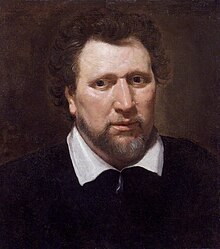
Turns Out, Elizabethan Playwright and Poet Laureate Ben Jonson was a Murderer

Ben Jonson (c. 1617), by Abraham Blyenberch; oil on canvas painting at the National Portrait Gallery, LondonFrom CrimeReads:
Turns out, Ben Jonson, the renowned Elizabethan playwright and the first poet laureate of England, was a murderer.

On September 22nd, 1598, when he was an (angry) young man of twenty-six, Jonson, a former bricklayer, encountered a young actor named Gabriel Spencer. Jonson was not yet an established playwright, having had his play Every Man in his Humour only very recently debuted at the prominent Curtain Theater (which would later be moved and rebuilt as the Globe). The two men found themselves embroiled in a conflict, which the courts maintained that Jonson started. They ruled this despite Spencer’s violent history; he had previously killed a young boy when the boy had threatened to throw a candlestick at him. Then again, Jonson also had a violent history; in his own accounts he mentions that before the Spencer affair, he had killed someone while abroad in the Low Countries, simply for sport? (Though he was not arrested for it.)

But Spencer and Jonson began a duel, during which he stabbed Spencer with his sword, killing him instantly. Jonson was arrested and thrown into Newgate Prison (where he panicked and converted to Catholicism from a visiting priest, which was also a felony at England in this point in history).

Jonson was arraigned on October 6th, and confessed to the crime of manslaughter, for which crime he would be hanged. But then he did something extremely calculated; he called upon an obscure legal precedent.


read more here @ CrimeReads and his works @ Project Gutenberg

Sunday, October 4, 2020

Review: The Murder of Edward VI by David Snow

The Murder of Edward VI
Synopsis: We all know the story of Henry VIII, the man who created a religious schism for the sake of divorce. A man desperate for a son he had six wives. Henry VIII had only one son in his life, Edward VI, and this is his story...

Edward ascended to the throne of England at just nine years old and became the last male of the House of Tudor, dying at the young age of fifteen under somewhat dubious circumstances. Was it poison or tuberculous? Was Edward’s half-sister, Bloody Mary, the murderer?

In The Murder of Edward VI, readers follow castle intrigue through the eyes of Richard Barton, a fictional protagonist who takes part in the events of the period. What starts as a story of King Henry’s desperate efforts to obtain a healthy male heir ends in murders.


The premise is the murder of Edward VI, son and heir of Henry VIII of England, with events being recounted by one Sir Richard Barton, a confidant of Henry.


After suffering a number of illnesses, in January 1553 Edward became seriously ill with fever, progressive weakness, and shortness of breath. He was troubled by a persistent cough, his legs swelled so severely that he had to lie on his back. He became increasingly worse and died in July 1553. At his autopsy, two large “putrefied ulcers” were found in his lungs. His physicians declared that he had died of consumption, which has been interpreted as tuberculosis. The truth is we will never know for sure whether it was tuberculosis or not. But we do know it was a long, painful and excruciating death.

This is a fictional work and one in which the author has admittedly taken many liberties with the facts. It is speculative history, positing an alternate or plausable scenario for an historical event that may have been shrouded in a bit of mystery. Sometimes it works - sometimes it doesn't. Unfortunately, this didn't.

The plot - the alleged murder of Edward VI - was a good start. However, it was in the execution (pardon the pun) of the storytelling that I think a good idea became quite lost. We begin with the imprisoned Barton retelling the tale of how he came to be in this predicament to William Cecil, Chief Minister of Elizabeth I. 

" ... years of confinement have made it difficult .. to distinguish between that which is real and that which is imagined, or even to correctly recall events in the sequence of time in which they occurred ... "

The first line of the synopsis says "we all know the story". Unfortunately, we spend far too much time in the court / reign of Henry VIII laboriously retelling this known story before we get anyway near the murder plot (page 357 out of 408). I am fairly certain that the narrative of the preceding thirteen chapters could have been condensed and then the final chapters expanded to reveal more of the "plot" and courtly intrigue.


The detailed accounts of the fictional Barton's time in Calais, in Rome sparring with Pope Clement VII, and as a witness to the political skirmishes between Henry and his chief ministers could and should have been seriously condensed. A simple couple of chapters of background and then get into it from the birth of Edward. This period, where the plot against Edward by Mary was to be manifested, should have been given more page time - and here the "castle intrigue through the eyes of Richard Barton" should really have started to take shape and formalise. It was claimed that upon his succession, Edward kept a diary which upon reading, "... portrays him as cold, unfeeling and uncompromising – a dangerous blend of traits that might have hardened into tyranny if he had lived ..." (source: History Extra).  But Edward's reign, including his relationship with his sisters Mary and Elizabeth, is merely glossed over until he is presented to us on his deathbed.

In addition, I did not feel that the Marta narrative necessary, nor did I find the Catherine / Mary narrative convincing. Then we skip over the succession of Lady Jane Grey - which was okay - and then onto Mary's quest for the throne. Just what our narrator - who passes himself off as a loyal supporter of Henry and Edward - was doing at this time in unknown until he comes before an "angry, aggressive, bitter" Mary, and ends up in the tower. 

Back to the present, Barton finally tells Cecil what exactly it was that he knew of Edward's death. Barton laments "... she got all of use, just as she promised her mother she would, everyone who had ever harmed her mother or stood between Mary and the throne was dead .."

I just really did not bond with Barton - I didn't find him a credible character, and could not understand why he - and not one of the many other confidants of Henry VIII - would be included in the cabal of Henry, Cramner and Wolsey, especially concerning the activities of the Star Chamber. Even Cecil doubts Barton's character and involvement! I wasn't a fan of the structure of the narrative which really let down what could have been a more engaging story.

Those who liked the TV Series, "The Tudors" and are fine with a generous amount of artistic license may like this - but I would suggest doing so with a very open mind. For the purists, maybe not.

Saturday, September 12, 2020

Review: The Cromwell Enigma by Derek Wilson

The Cromwell EnigmaSynopsis: July 1540. The courts of Europe are stunned to hear that Henry VIII has executed his all-powerful minister, Thomas Cromwell.

Poet and classicist Nicholas Bourbon is sent from the cultured court of Queen Marguerite of Navarre to investigate. Thrust into a turbulent world of religious, political and personal rivalries, his travels take him far and wide. He endures perils at sea, incarceration in a monastic prison and poisonous intrigue in the Tudor court. 

Yet this retiring scholar cannot abandon a quest which steadily becomes an obsession, drawing him ever deeper into the beliefs and motivations of his mysterious quarry.  Only after facing many hazards does he discover the astonishing secret that unlocks the Cromwell enigma.


The synopsis pretty much covers it story-wise.  And this reminded me of what I refer to as "in the footsteps of" - wherein an author attempts to walk in the footsteps of their chosen subject to discover more about them and takes the reader along their journey. Usually this type of book is non-fiction, but I find that it works just as well in a fictional format - as it does in this instance.

Utilising the real-life character of Nicholas Bourbon, the reader is taken on a quest to discover the missing years of Thomas Cromwell (or Tom Crom as he is often referred to) in order to understand the man he became at the time of his execution (no spoilers here - just the facts). I really do love the use of other real historical characters to give some authenticity to the plot.

So, who are our main characters:  firstly we have our narrator, Nicholas Bourbonwho was a noted court poet, as well as tutor to Jeanne d'Albret, daughter of Marguerite Queen of Navarre, as well as (in this instance) her ambassador. Whilst we learn of Nicholas' past throughout his mission - and his dealing with the English Court of Henry VII - very little is known about his final years.  As such, Wilson creates a possible scenario for Bourbon's final years.

Whilst not appearing in the physical sense, Thomas Cromwell, King Henry VII's most trusted advisor, Lord Privy Seal, and the architect of the Dissolution of the Monasteries, looms larger than life throughout.  What has always interested people is Cromwell's rise to power from humble beginnings, and those years he spent in Italy early on.  And this is what Wilson explores through the use of Nicholas Bourbon, as almost a detective type figure.  However, not everyone welcomes Bourbon's investigation and some are keen not to follow in Cromwell's footsteps to the executioner's block by voicing their opinions.

Although no exactly nail biting, white knuckle edge-of-your-seat drama, there is action aplenty to keep the reader entertained as we draw ever closer to Cromwell's secret. The narrative is peppered with extracts from documents and correspondence of the day, adding to the authenticity of the tale.

As Nicholas is given to say: " ... like a squirrel worrying a nut, I was possessed by the need to find a kernel of truth written within the shell of conflicting information ..."

Definitely one for historical fiction and Tudor fiction readers.


Tuesday, August 11, 2020

Review: The Borgia's Spy by Andrea Frediani

The Borgias' Spy: An unputdownable, gripping thriller
Synopsis: 1497. Pope Alexander VI Borgia is perfecting his plans for the control of Italy when a heinous crime deprives him of one of the people dearest to him. All of Rome is mobilised to discover the perpetrator but a strange series of coincidences means famous court painter Pinturicchio finds himself on the front line.

To shed light on a murder that has cut the papacy to the quick, Pinturicchio is assisted by the city's most established artists, from Michelangelo Buonarroti and Filippino Lippi to Piermatteo d'Amelia and Perugino. The Borgias have so many enemies that the list of suspects grows by the day, but a masked man may be the key witness to the crime – or even its perpetrator...

Andrea Frediani brings one of the most famous cold cases in history to life in this thrilling tale of intrigue and deceit set in Renaissance Rome.


I love both fiction and non-fiction books featuring the Borgias - so I was looking forward to this story set around the time of the murder of Giovanni (Juan) Borgia.

It was a fascinating take on the mysterious and unsolved murder of Giovanni - there will be no spoilers here. Creative use of the artists of the day to contribute to the narrative for the search of those responsible. This also provided the reader with a glimpse at the intrigue and corruption that was prevalent at the Papal Court (and not just under the Borgias).

The thing that irritated me the most was that my edition needed serious editing / formatting - you finish one sentence in one place only to start the next sentence somewhere else with an entirely different character - it was very annoying and required the need to re-read paragraphs to ensure you knew where you were in the storyline. My edition also had some passages highlighted.

If these formatting issues are dealt with, this will make for a very good read. There is also an authors's note at the end that will be of interest to readers.

Review: The Wolves of Venice by Alex Connor

The Wolves of Venice
Synopsis: Venice, 16th century. The staggering wealth of Venice contrasts the brutal lives of those in the ghetto. Opportunistic merchants arrive to make their fortune. Deception, malice and perversion thrive, leading to the emergence of a dark society: The Wolves of Venice.

Drawn into the Wolves' plots are the innocents – including Marco Gianetti, assistant to Tintoretto; Ira Tabat, a Jewish merchant; Giorgio Gabal, an artist's apprentice; and Giovanni Spoletto, the doomed castrato – all manipulated by the likes of Pietro Aretino, the courtesan Tita Boldini and the spy Adamo Baptista.

The lives of these characters criss-cross one another. Their destinies intermingle in a Venice corrupted by spies lingering in the shadows, working for paymasters that change allegiance with the wind. As the betrayals, murders and tragedies continue, will anyone be able to bring the Wolves of Venice to justice?


Unfortunately, whilst I did eventually finish this and I have a number of Alex Connor's other books, I was not a fan of this particular book.

The story / plot takes much too long to get going, and the characters that walk across our pages too numerous that one wonders where they fit in - if at all. I found no empathy at all with any of the characters and the action taking place ignited no spark within me and I was left feeling unfulfilled. Upon reaching the end, finally, only to discover that this was not a stand alone book but one in a series.

I will not be pursuing any more in the series.

Sunday, May 17, 2020

Review: Kit Marlowe series by MJ Trow

Kit (Christopher) Marlowe, Elizabethan playwright, intelligencer for Queen Elizabeth I, man-about-town.  In this series, MJ Trow has Marlowe in the role of investigator, commencing from this days at Cambridge right up until the final reckoning.

Elizabethan England:
In short, this period in history has been referred to as the golden age. There was the stability of a reigning monarch which contributed to economic prosperity and empirical expansion and also saw the defeat of the Spanish Armada and the flourishing of the arts, especially the theatre. 

In Elizabethan England, the "theatre became a place where people went to see, not dramatised lectures on good behaviour, but a reflection of their own spirit and day-to-day interests. They wanted to laugh and to cry – to be moved, not by divine reflection, but by human beings doing good and bad things just as they did – loving and murdering, stealing, cheating, acting sacrificially, getting into trouble and behaving nobly: in short, being human like themselves." (source: No Sweat Shakespeare).  In public or in private, these plays also provided an opportunity for a carefully crafted piece of pseudo-political propaganda - which could find an unlucky playwright secreted in the Tower.

With this series, what we get is an entree into this world of Elizabethan  theatre and the notable playwrights of the day which include one fledgling Will Shaxsper (aka Shakespeare), Robert Greene, Thomas Kyd,and Ben Johnson.  We also get a look behind the scenes at the goings-on at the various theatres including The Rose.


However, there was a darker side to Elizabethan England in that religious persecution was rife, and plots, conspiracies and rebellions against the crown were frequent. Under Sir Francis Walsingham, a dedicated spy network was established. "England’s first great experiment in government-backed spying network brought down a queen and perhaps a playwright, saw kidnappings, executions and murders. The fact that Queen Elizabeth reigned for 44 years—and died naturally in her sleep—is evidence of its success." (source History)


So, to the books in the Kit Marlowe series, please see below; and find a link to my review of those that I have read following.


Dark Entry
Dark Entry (Kit Marlowe, #1)First in the thrilling new Kit Marlowe historical mystery series - Cambridge, 1583. About to graduate from Corpus Christi, the young Christopher Marlowe spends his days studying and his nights carousing with old friends. But when one of them is discovered lying dead in his King’s College room, mouth open in a silent scream, Marlowe refuses to accept the official verdict of suicide. Calling on the help of his mentor, Sir Roger Manwood, Justice of the Peace, and the queen’s magus, Dr John Dee, a poison expert, Marlowe sets out to prove that his friend was murdered.

my review of Dark Entry


Silent Court
Silent Court (Kit Marlowe, #2)Second in the thrilling new Kit Marlowe historical mystery series - November, 1583. Desperate not to let the Netherlands fall into the hands of Catholic Spain, the Queen’s spymaster orders Cambridge scholar and novice spy Christopher Marlowe to go there to assist its beleaguered leader, William the Silent. However, travelling in disguise as part of a troupe of Egyptian players, Marlowe encounters trouble even before he leaves England. When the players make a detour to perform at the home of Dr John Dee, one of their tricks ends in tragedy – and an arrest for murder . . .


Witch Hammer
Witch Hammer (Kit Marlowe, #3)Christopher Marlowe investigates a possible act of witchcraft in the third of this intriguing historical mystery series. - July, 1585. Desperate to pursue his chosen career as a professional playwright, the young Christopher Marlowe abandons his Cambridge studies to join Lord Strange’s men, a group of travelling players. En route to perform at Oxford, the players are rehearsing amongst the famous Rollright Stones on the Warwickshire border when they are rudely interrupted by the discovery of the corpse of actor-manager Ned Sledd. Is it an act of witchcraft, a human sacrifice to mark the festival of Lammastide? Or is there a more personal reason? Kit Marlowe determines to find out.


Scorpions' Nest
Scorpions' Nest (Kit Marlowe, #4)Christopher Marlowe investigates a school for exiled Catholic priests in the fourth of this intriguing historical mystery series. October, 1586. Sir Francis Walsingham has despatched Kit Marlowe to the English College in Rheims where he suspects the Catholic traitor Matthew Baxter is hiding. Infiltrating the College undercover, Marlowe learns that the community has been rocked by a series of unexplained and violent deaths. With the help of master codebreaker Thomas Phelippes, can Christopher Marlowe unearth a murderer, track down a traitor and extract himself from the scorpions’ nest without being fatally stung?


Crimson Rose
Crimson Rose (Kit Marlowe, #5)March, 1587. Christopher Marlowe’s play Tamburlaine, with the incomparable Ned Alleyn in the title role, has opened at the Rose Theatre, and a new era on the London stage is born. Yet the play is almost shut down on its opening night. For a member of the audience, Eleanor Merchant, lies dead, hit by a musket ball fired from the stage. The man with his finger on the trigger? A bit-part player named Will Shakespeare. Convinced of Shakespeare’s innocence, Marlowe determines to find out what really happened. When a second body is found floating in the River Thames, it becomes clear that Eleanor Merchant’s death was no accident, and that something deeper and darker is afoot. And why is the Queen’s spymaster, Sir Francis Walsingham, taking a close personal interest in the case?


Traitor's Storm
Traitor's Storm (Kit Marlowe, #6)May, 1588. With Elizabeth I s court rocked by stories of an imminent invasion and one of his key undercover agents missing, Sir Francis Walsingham despatches Kit Marlowe to the Isle of Wight off the south coast: the first line of defence against the approaching Spanish Armada. Lodging at Carisbrooke Castle with the Isle of Wight s Governor, Sir George Carey, Marlowe finds the Islanders a strange and suspicious lot, with their own peculiar customs and dialect. But is there reason to doubt their loyalty to the Crown? And is the Island really haunted, as some believe? Of one thing Marlowe is certain: it s no ghost behind the series of violent and inexplicable deaths which plague the region. But will he have time to uncover the truth and expose the killer before the might of the Armada descends?


Secret World
Secret World (Kit Marlowe, #7)Christopher Marlowe tackles his most baffling case yet. June, 1589. Now a feted poet and playwright, Kit Marlowe is visiting his family in Canterbury. But it's not the happy homecoming he had hoped for. A long-standing family friend has been found dead in her bed, killed by several blows to the head. Convinced that the wrong person has been found guilty of the crime, Marlowe determines to uncover the truth. What did the dead woman mean when she spoke of 'owning the whole world'? If Marlowe could discover what she had in her possession, he would be one step closer to catching her killer. And why is the Queen's spymaster, Sir Francis Walsingham, taking such an interest in the investigation?


All Hallows' Eve: A Kit Marlowe Short StoryAll Hallows Eve
"'Tell me a story, Kit...'"
It's All Hallows' Eve and Kit Marlowe's evening is disrupted by the call of an ethereal voice, requesting a tale for the haunted night. From the depths of his creative mind comes the tale of ghostly horrors and unearthly cries which rattles even the most supernatural of beings...


Eleventh Hour
Eleventh Hour (Kit Marlowe, #8)April, 1590. The queen's spymaster, Sir Francis Walsingham, is dead, leaving a dangerous power vacuum. His former right hand man, Nicholas Faunt, believes he was poisoned and has ordered Kit Marlowe to discover who killed him. To find the answers, Marlowe must consult the leading scientists and thinkers in the country. But as he questions the members of the so-called School of Night, the playwright-turned-spy becomes convinced that at least one of them is hiding a deadly secret. If he is to outwit the most inquiring minds in Europe and unmask the killer within, Marlowe must devise an impossibly ingenious plan.

my review of Eleventh Hour


Queen's Progress
Queen's Progress (Kit Marlowe, #9)May, 1591. When Queen Elizabeth decides to embark on a Royal Progress, visiting some of the grandest homes in England, her new spymaster, Sir Robert Cecil, sends Kit Marlowe on ahead, to ensure all goes smoothly. But Marlowe’s reconnaissance mission is dogged by disaster: at Farnham Hall, a body is hurled from the battlements; at Cowdray Castle, a mock tournament ends in near tragedy; at Petworth, a body is discovered in the master bedroom, shot dead. By the time he reaches Chichester, Marlowe fears the worst. Are the incidents linked? Is there a conspiracy to sabotage the Queen’s Progress? Who is pulling the strings – and why? To uncover the truth, Marlowe must come up with a fiendishly clever plan.

my review of Queen's Progress


Black Death
As plague stalks the streets of 16th century London, Christopher Marlowe is drawn into a baffling murder investigation where nothing is as it first appears.

September, 1592. “Kit, I know we have never been friends, but you are the only man in London to whom I can write. Someone is trying to kill me”.  

Christopher Marlowe had never liked Robert Greene when he was alive. But when the former Cambridge scholar is found dead in a cheap London boarding house, shortly after sending Kit a desperate letter, Marlowe feels duty bound to find out who killed him – and why.

What secrets did Robert Greene take with him to the grave? And why is the Queen’s spymaster, Sir Robert Cecil, taking such a keen interest in the case? As plague stalks the streets of London and the stage manager of the Rose Theatre disappears without trace just days before the opening of Marlowe’s new play, the playwright-sleuth finds himself in the midst of a baffling murder investigation – where nothing is as it first appears.

my review of Black Death


The Reckoning
The inaugural performance of Christopher Marlowe's controversial new play is marred by sudden, violent death in this lively 16th century mystery. December, 1592. England is entering dangerous waters as thoughts turn to the question of the ageing Queen Elizabeth's successor. Christopher Marlowe meanwhile is leading a troupe of the Lord Chamberlain's Men on tour with a controversial new play.

Marlowe expects his latest play, Edward II, to ruffle feathers. What he doesn't expect is it to lead to is sudden, violent death. The morning the tour is due to begin, the newest member of the cast is found stabbed to death in the local brothel. And when a second murder, and then a third, disrupt rehearsals for the inaugural performance in the Great Hall at Scudbury Manor, it becomes clear that someone is determined to prevent this play from being performed – at any cost. But who ... and why?

my review of The Reckoning
I loved this latest installment in the Kit Marlowe series so much so that I did not want this to end, and as I realised where this was going, I slowed my reading to tease it out to the very end. All the old crew are back: Will Shaxsper, Burghley, Cecil, Nicholas Faunt, Tom Sledd, Ned Alleyn, Ingram Frizer, Robert Poley and Nicholas Skerries. Marlowe's path will lead him, ultimately, to a tavern in Deptford where he will meet his final reckoning. Fans of Marlowe will know what awaits the Muses' Darling.


more on Marlowe
- Roy Kendall: Christopher Marlowe and Richard Baines: Journeys Through the Elizabethan Underground
- Jstor: The Truth About Elizabethan Playwrights
- Jstor: The Death of Christopher Marlowe