Showing posts with label scottish history. Show all posts

Friday, July 18, 2025

Review: Women in the Scottish Wars of Independence by Beth Reid

Synopsis: The Scottish Wars of Independence are often celebrated for the heroic deeds of men, but behind the scenes, noblewomen played an equally pivotal role in shaping the nation’s fate. In Women in the Scottish Wars of Independence, Beth Reid brings to life the stories of these remarkable women, from royalty to influential landowners, whose contributions to Scotland’s turbulent history have long been overlooked.

From noblewomen like Isabella MacDuff, Agnes Randolph, and Agnes Comyn—who made kings, defended castles, and led conspiracies—to royal women who influenced key decisions and defined dynasties, this book paints a vivid picture of resilience, strategy, and courage. Through chronicles, royal charters, and material culture, Reid uncovers how these women navigated war and politics, revealing their critical yet underappreciated roles in shaping the outcomes of the Wars of Independence.

Focusing on noblewomen rather than ordinary lives, this book offers a fresh perspective on a male-dominated narrative, shedding light on the influential partnerships and actions of women who stood at the heart of Scotland's history. With meticulous research and compelling storytelling, Women in the Scottish Wars of Independence is essential reading for history enthusiasts eager to explore the often-untold contributions of Scotland’s noblewomen during one of its most formative periods.

~ ~ ~

On the one hand, Reid's book is a very detailed history of the period commonly known as the Scottish Wars of Independence - the era dominating the political landscape of Scotland from the death of the little Maid of Norway to the Treaty of Berwick which formally ended the wars and secured the release of King David II of Scotland from English captivity.

On the other hand, it is an attempt to give to a small cohort of women a more visual role on the political chessboard than they may have previously been given.

To the first, Reid provides an ample study of the succession, sovereignty and overlordship of Scotland during this period. The internal political factionalism, dynastic ambitions and prevalent warfare was dominated by men. Reid states her intent to provide a renewed focus on experience and perceptions of real people, particularly women; and this this tome will provide an accessible "correction to the wider understanding of 13th and 14th century Scottish women in warfare". However, the evidence is sparse and Reid relies on a wider context and a fair bit of speculation as to what may or may not have occurred.

Reid then collates her chosen subjects into three categories: politics, warfare and captivity. Under "politics" the focus in on the rise of the Bruce women; under "warfare" the focus is on the likes of Agnes Randolph and her ilk, who defended their castles against enemy armies; whilst "captivity" focuses on the humiliating and isolating fate of primarily the Bruce women after the defeat of Robert (kudos for exploring and and expanding on this in particular).

My issue, as with many other tomes of this style, is when an author attempts to ascribe to their given subject much more than is their due, particularly when "evidence" is lacking. 

To summarise: the women featured have not been overlooked - there is ample documentation both on the internet and in print - and what his been provided herein can easily be found via both if that is what you are looking for - I could put my hand on a number of books in my own library to support this. Secondly, I would question whether all these women had "critical roles in shaping the outcomes" - one or two or three perhaps, or is Reid possibly referring to this "critical role" in the context of dynastic political marriages. Thirdly, and unfortunately, I - personally - found no "fresh perspective on a male dominated narrative" - because that is essentially what it was - a period dominated by men and their actions on both the political and military fields. Yes, there were a number of women who stood out for their deeds and actions - however, we can find many examples among their historical counterparts both on the Continent and on home soil, both before and after their own times.  These are not singularly exceptional or unique only to the Scottish Wars. Again, these actions must be put in context to both the politics of the period and of personae dramatis in whose orbits they circled.

To give the author, Beth Reid, their dues, the book is well researched, providing a good background and context of the politics of the day; it accessible (conversational even) to the lay reader, thus not a dry, academic tome; and provides a good launching pad for further research. A well-read historical researcher will not find anything new.

Saturday, April 16, 2022

Review: Daughters of the North by Jennifer Morag Henderson

Synopsis: Mary, Queen of Scots’ marriage to the Earl of Bothwell is notorious. Less known is Bothwell’s first wife, Jean Gordon, who extricated herself from their marriage and survived the intrigue of the Queen’s court.

Daughters of the North reframes this turbulent period in history by focusing on Jean, who became Countess of Sutherland. Follow her from the intrigues of Mary’s court to the blood feuds and clan battles of the Far North of Scotland, from her place as the daughter of the ‘King of the North’ to her disastrous union with the infamous Earl of Bothwell – and her lasting legacy to the Earldom of Sutherland.


Whilst the focus of the reign of Mary Queen of Scots has quite naturally been on the lady in question, her reign, intrigues, and ultimate downfall, very few of those who were present have actually been the focus of their own dedicated narrative. In Daughters of the North, Henderson "reframes" or "shifts the focus" of the Stuart Queen's narrative to the north of Scotland - a place where we find her contemporary and possible rival, Jean Gordon.

Jean's life is detailed in two parts - the first focusing on her childhood and her time at the court of Mary Stuart (c. 1545 - 1576); and the second dedicated to her own sphere of influence amongst her family and the new political power base of the regency of the infant King James (c. 1576 - 1617).

What many may not realise is that, for better or worse, the Gordon family held the delicate balance of power in Scotland in their hands.  This was not fully realised and appreciated until after the family's downfall which created a power vacuum and a deadly rivalry for political control. The young Jean had not only witnessed the deaths of her father and brother, but the loss of her home and the ignominy of being in service to the one person responsible - Mary Stuart. Like many women of not only her own age but of that before, Jean was forced to abandon the man she loved to marry one she disliked for political reasons.

We then delve deeper into Jean's marriages - all three of them - her family life, and the role of both herself and her husband in the North and at the court of King James VI of Scotland (later I of England). Through it all, Jean clung tightly to her religion, which was at odds with the nation, and gathered many enemies along the way - the Gordons devoutly refused to convert from Catholicism.


Jean was rather a unique figure - by the later 16th century, women had begun to have agency within the local economy and were able to wield some influence in their own circles. For Jean - the circle was always the family, and those linked by blood or marriage, were drawn and held tightly within. Even in her 70s, Jean was still seen as a person who had the potential to be influential, someone powerful who needed to be controlled, as she had a strong belief in what was due to her family and  actively and steadfastly promoted her family interests.

Aged in her 80s when she died, Jean had outlived all her brothers and sisters, all three of her husbands, four of her children, two queens, and one king. As matriarch of the Gordon family, she was the glue that held it all together, and on her passing, it collapsed in a heap around the remaining family members.

Henderson brings her extensive research to the fore in crafting a highly readable narrative around a woman who lived during a tumultuous time in Scottish history. The reader will be amazed and in awe of this incredible woman, who story was deserving of being told in its own right.

Further reading:


Saturday, February 27, 2021

Review: Mary Queen of Scots Secretary by Robert Stedall

Synopsis: Maitland was the most able politician and diplomat during the lifetime of Mary Queen of Scots. It was he who masterminded the Scottish Reformation by breaking the 'Auld Alliance' with France, which presaged Scotland's lasting union with England.

Although he gained English support to defeat French troops defending Mary's Scottish throne, he backed her return to Scotland, as the widowed Queen of France. His attempts to gain recognition for her as heir to the English crown were thwarted by her determined adherence to Catholicism.

After her remarriage, he spearheaded the plotting to bring down her objectionable husband, Lord Darnley, leading to his murder, after concluding that English and Scottish interests were best served by creating a Protestant regency for their son, Prince James. With encouragement from Cecil in England and the Protestant Lords in Scotland, he concocted evidence to implicate her in her husband's murder, resulting in her imprisonment and deposition from the Scottish throne.

Despite her escape to England, he remained personally loyal to her and attempted to conjure Scottish support for her restoration by backing her allies holding Edinburgh Castle on her behalf. When it fell in 1573, he resorted to suicide.


Maitland - who was he? what was his role in the government of Mary Queen of Scots? what was his role in Darnely's murder? did he bring about the downfall of Mary?

Maitland is a shadowy character, and I found myself often comparing him to Cecil, Elizabeth's right hand man - a man, I think, Maitland admired and wanted to emulate. However, he never did manage to maintain the consistency that Cecil did, and Scottish politics would not allow him to do so.

Those looking for a standard biography of this man may be slightly disappointed. He is more to be found in the shadows, working behind the scenes, often out of Scotland on diplomatic missions, so it difficult to assess just how influential he actually was.

I was interested in Stedall's take on Maitland is one of the instigators in Darnley's murder, one of those behind the infamous "casket letters" (of which I am no expert), and as a rather inconsistent supporter of Mary.

The reign of Mary is the focus - Maitalnd was - as the title suggests - a politician, a religious reform, and ultimately, a conspirator, before coming full circle as ardent supporter. With very little to go on, it becomes evident that Maitland would be seen in relation to the events of Mary's life and reign - a bit much like many women who lived off the pages that their more historically dominant husbands occupied.

Even with the benefit of hindsight, it is every difficult to judge and assess a person' motivations at that point in time; and even hindsight is often clouded by an author's bias, whether they be a contemporary or modern source. And as we have seen, it is also very easy to make facts support just about any theory.

But Stedall's book does give pause for thought - and I enjoy reading another author's perspective on events, especially when they diverge from mainstream consensus - I mean, who wants to read the same thing over and over again - you would only ever need to buy one book!

Yes, I would love to have had Maitland feature more prominently - but sometimes there is just not enough factual documentation for this to occur. It does however, shed light on the political and religious struggles within Scotland at the time of Mary's reign, which is often overlooked as her cousin, Elizabeth, takes the limelight nine times out of ten. But in the end he did achieve one thing - the succession of a Scottish monarch upon the English throne.


read more 
> The Memoirs of Secretary Maitland as contained in George Chalmer' second volume of the Life of Mary Queen of Scots (page 450)
> Maitland of Lethington by Sir John Skelton

Saturday, October 17, 2020

Review: The Highland Battles by Chris Peers

The Highland Battles: Warfare on Scotland's Northern Frontier in the Early Middle Ages
Synopsis: The wars fought in Scotland's northern and western highlands between the ninth and fourteenth centuries were a key stage in the military history of the region, yet they have rarely been studied in-depth before. Out of this confused and turbulent period came the more settled and familiar history of the region. The Highlands and islands were controlled by the kings of Norway or by Norse or Norse-Celtic warlords, who not only resisted Scottish royal authority but on occasion seemed likely to overthrow it.

Chris Peers explores the international background to many of these conflicts which had consequences for Scotland's relations with England, Ireland and continental Europe. At the same time he considers to what extent the fighting methods of the time survived into the post-medieval period. 


I think this book will send me off to become even further immersed in Scottish history. And whilst I considered myself sufficiently well read on this particular topic, there was still plenty to be learned. 

The battles themselves were detailed and included the events leading up to each particular battle, the engagement itself, and the aftermath. Not all were fought on land, some were on the water - which is not something that I feel many readers would be familiar with nor would the use of what is termed "guerilla warfare" which was one of the key components leading up to the battle known as the Field of Mam Garvia. Not all battles had an obvious outcome - oft times the victor did not live long enough to enjoy the spoils of war. Indeed, with regards to Tankerness, Peers comments that "... few of the participants were destined to die peacefully ...".

The structure of the armies, weapons and equipment is covered off fairly early on - to save repetition - as there is a lot of detail here. Use of archaeological evidence contemporary chronicles and the sagas add colour to the naval and land battles detailed within. It was rather an eye-opener to discover that the battle of Clairdon c.1198 was considered to be the " ... last full scale Viking battle fought on British soil ..." Peers also provides details at the end of each chapter for visiting the each of the battle sites or alludes to a probable site when the location is not as clear cut as we would like it to be.

As the synopsis states: "... The Highlands and islands were controlled by the kings of Norway or by Norse or Norse-Celtic warlords, who not only resisted Scottish royal authority but on occasion seemed likely to overthrow it ...". The participants belonged to the dynasties of Orkney, Man, Scotland and Norway and their offshoots. It was interesting to discover just how close those familial ties were amongst this group of protagonists, and often the feud carried on for a number of generations on both sides, especially between the Earls of Orkney and the Kings of Scotland, and the Kings of Norway and the Earls of Orkney.

The names of many of the protagonists were known to me: Thorfinn, Sigurd, Macbeth, Somerled, Alexander, Malcolm, Haakon. I myself have a number of biographies on the notable characters but Peers book ties them all in to the locations where they were dominant and shows the interaction and interpersonal relationships between them all. 

I was pleasantly surprised at the role of women with regards to the battle of Tankerness (c.1136). "Hell hath no fury like a woman scorned" comes readily to mind. Though in the Sagas we often read about women taking on the role of avenger or ensuring that any slight is revenged, so their role should not be discounted.

The reader will appreciate the map of battle sites, the appendices which list the kings of Scotland, Norway, the Isles and Man, and the Earls of Orkney. Each chapter also included the name of the battle, date and location, and the protagonists involved - and the outcome (though how it leads there is not so clear cut).

The Highland Battles is a well presented, well researched book, featuring seven lesser known military events in Scottish history from the 9th to 13th century which the reader will find rewarding. Definitely one for the Scottish history shelf of my library! 


Wednesday, October 2, 2019

Culloden by Murray Pittock

Cover for 

Culloden
The battle of Culloden lasted less than an hour. The forces involved on both sides were small, even by the standards of the day. And it is arguable that the ultimate fate of the 1745 Jacobite uprising had in fact been sealed ever since the Jacobite retreat from Derby several months before.


But for all this, Culloden is a battle with great significance in British history. It was the last pitched battle on the soil of the British Isles to be fought with regular troops on both sides. It came to stand for the final defeat of the Jacobite cause. And it was the last domestic contestation of the Act of Union of 1707, the resolution of which propelled Great Britain to be the dominant world power for the next 150 years.

If the battle itself was short, its aftermath was brutal - with the depredations of the Duke of Cumberland followed by a campaign to suppress the clan system and the Highland way of life. And its afterlife in the centuries since has been a fascinating one, pitting British Whig triumphalism against a growing romantic memorialization of the Jacobite cause.

On both sides there has long been a tendency to regard the battle as a dramatic clash, between Highlander and Lowlander, Celt and Saxon, Catholic and Protestant, the old and the new. Yet, as this account of the battle and its long cultural afterlife suggests, while viewing Culloden in such a way might be rhetorically compelling, it is not necessarily good history.

Monday, June 10, 2019

Books: The Black Douglas

Sir James Douglas (also known as Good Sir James and the Black Douglas) (c. 1286 – 25 August 1330) was a Scottish knight and feudal lord. He was one of the chief commanders during the Wars of Scottish Independence. He is famed for being tasked to take the casket with the heart of Robert the Bruce to Jerusalem for burial.


Here is just a selection of books about Sir James and The Douglas Clan.

The Spider and the Stone: A Novel of Scotland's Black Douglas by Glen Craney
Here is the story of the remarkable events following the execution of William Wallace of Braveheart fame. Set during the Bruce wars of independence, The Spider and the Stone is the unforgettable saga of the star-crossed love, religious intrigue, fierce friendship in arms, and heroic sacrifice that preserved Scotland's freedom during its time of greatest peril. 

The Black Douglas Trilogy by JR Tomlin
Image result for books black douglases
The year is 1300. James Douglas is a Scottish youth sent to France by his noble father to escape being taken hostage by the English. When word comes that his father has died in the Tower of London, he is hurled into the war between Scotland and England. Catapulted into an intrigue of rival factions and clashing armies that threatens Scotland, his own lands, and his life, he joins the newly crowned Robert the Bruce in a desperate, seemingly hopeless struggle. Thus begins a story of bravery and determination that has echoed through the ages. (A Kingdom's Cost; Countenance of War; Not For Glory)

James the Good: The Black Douglas by David R Ross
Sir James the Good, one of the finest soldiers Scotland ever produced, is sometimes better known by the name given to him by the English - the 'Black Douglas'. He terrified the northern shires of England throughout the reign of King Robert the Bruce and the Wars of Independence. When Robert the Bruce died Sir James, as his champion, was entrusted with his heart which he carried on the Crusades. David R Ross brings history alive as he tells the story of Sir James' life. Ross' research found him retracing Sir James' journey to the Holy Land and rediscovering battle grounds, providing a personal view of history. With a refreshing look at the subject, and featuring all new information and research, interesting maps, battleplans and photographs, this book will make Scottish history accessible and understandable for the casual reader, while delighting history buffs.

A Douglas! A Douglas! by P M Kane
An inspiring novel based on the true story of Sir James Douglas, a gallant and fearless Scottish knight of medieval times, who devoted his entire life to the freedom and liberty of his nation. His life was one of constant warfare in a lawless land, a life where brother fought with brother, family with family and nation with nation. These were times when the strong ruled the land and the weak were forced to submit or face instant death. He sought out the one common enemy and became obsessed with its destruction. He lived and died for his cause. He gave up his life while fulfilling the dying wish of his beloved King. His final mission was to carry the brave heart of King Robert the Bruce into battle. His enemies called him 'The Black Douglas.' His nation remembers him as, the Good Sir James Douglas.

Image result for books black douglasesAnd a little later .....

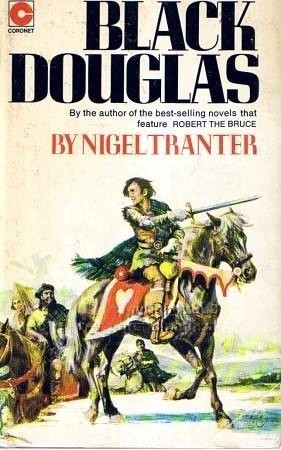
The Black Douglas by Nigel Tranter

The turbulent tale of the 15th century feud between the Douglas family and the Stewarts during the reign of James II King of Scots.  It was almost inevitable that in the 15th century the new Scots royal house of Stewart would have to come to a reckoning with the great house of Douglas.  Young Will Douglas, the eight earl, was born to vast power, influence - and trouble. And with the boy-king James II on an uneasy throne, and scoundrels ruling Scotland, the death of Will's father plunged him suddenly into a world where might prevailed and the end justified the means.

further reading:
* The History of the House and Race of Douglas and Angus by David Hume
* History of the Black Douglas, with an account of the battle of Otterburn by Sir James Douglas
* The Black Douglas by IM Davis
* The Broken Cross: A Legend of Douglas, with Chronicles of the Black Douglases as an Appendix by Herbert Reid
* Black Douglas by John Brown
* The Black Douglases: War and Lordship in Late Medieval Scotland, 1300-1455 by Michael Brown


for more on Sir James Douglas


Sunday, June 2, 2019

New book highlights how the Picts were the early Kings in the North

A new book has shown how the Picts were once the major power throughout the north of Scotland.

These early Scots were a significant political and cultural force in the first millennium. But much of their work has vanished or been covered over as centuries have passed, leaving them as often shadowy figures from the realms of ancient history.

Now two Aberdeen University experts, Gordon Noble and Nicholas Evans, have highlighted the influence of the Picts on every aspect of Scottish society through their work ‘The King in the North’.

The book reveals hitherto unknown elite settlements and a major silver hoard and explains the importance of the Pictish symbols found in many places across the north and north-east, from the Rhynie Man to the ‘ghostly’ outlines of a barrow cemetery at Hill of Boyndie.

The book is illustrated with a series of stunning images, some from the air, which explain why archaeologists believe this is an exciting time to be working on the history of Pictland or Pictavia.

Mr Evans added: “The King in the North is the result of the work of many archaeologists and historians, and countless members of the public whose interest and support has been crucial in supporting and producing the advances which we explain in this book.

read more @ Press and Journal

note: not to be confused with "The King in the North" by Max Adams

Sunday, May 26, 2019

The Debatable Land by Graham Robb


Graham Robb: The Debatable LandThe Debatable Land was an independent territory which used to exist between Scotland and England. It is the oldest detectable territorial division in Great Britain. At the height of its notoriety, it was the bloodiest region in the country, and preoccupied the monarchs and parliaments of England, Scotland, and France. After most of its population was slaughtered or deported, it became the last part of Great Britain to be conquered and brought under the control of a state. Today, it has vanished from the map and no one knows exactly where and what it was.

When Graham Robb moved to a lonely house on the very edge of England, he discovered that the river which almost surrounded his new home had once marked the Debatable Land's southern boundary. Under the powerful spell of curiosity, Robb began a journey - on foot, by bicycle and into the past - that would uncover lost towns and roads, shed new light on the Dark Age, reveal the truth about this maligned patch of land, and lead to more than one discovery of major historical significance.

For the first time - and with all of his customary charm, wit and literary grace - Graham Robb, prize-winning author of The Discovery of France, has written about his native country. The Debatable Land is an epic and energetic book that takes us from 2016 back to an age when neither England nor Scotland could be imagined to reveal a crucial, missing piece in the puzzle of British history.


read reviews here


Saturday, May 25, 2019

The Last Highlander by Sarah Fraser

The Last Highlander: Scotland’s Most Notorious Clan Chief, Rebel & Double Agent by [Fraser, Sarah]The Last Highlander: Scotland’s Most Notorious Clan Chief, Rebel & Double Agent by Sarah Fraser is a great non-fiction adventure about Scotland’s most notorious clan chief.


Simon Fraser, Lord Lovat, was the last of the great Scottish chiefs – and the last nobleman executed for treason. Determined to seek his fortune with the exiled Jacobite king in France, Fraser acted as a spy for both the Stuarts and the Hanoverians; claimed to be both Protestant and Roman Catholic.

In July 1745, Bonnie Prince Charlie launched his last attempt to seize back the throne, supported by Fraser and his clans. They were defeated at Culloden. Fraser was found hiding in a tree.

This swashbuckling spy story recreates an extraordinary period of history in its retelling of Fraser’s life. He is surely one of Scotland’s most notorious and romantic figures, a cunning and ambitious soldier who died a martyr for his country and an independent Scotland.


It had me at: "His execution was a public holiday"


Sunday, May 5, 2019

Review: The King's Assassin: The Fatal Affair of George Villiers and James I by Benjamin Woolley

The King's Assassin: The Fatal Affair of George Villiers and James I
Synopsis: ... new historical scholarship suggests that a deadly combination of hubris and vulnerability did indeed drive Villiers to kill the man who made him. It may have been by accident – the application of a quack remedy while the king was weakened by a malarial attack. But there is compelling evidence that Villiers, overcome by ambition and frustrated by James’s passive approach to government, poisoned him.

For me, this was more a biography of George Villiers, Duke of Buckingham than the solving (or positing a reasonable scenario) of a cold case.

It is the tale of the rise of Villiers who was "... just another provencial turning up in his country weeds .." that caught the attention of the James (and also his current favourite, Carr) whilst he was on progress. He was put forth (by a conspiracy of nobles and the Queen) as a foil to Carr's hold over the King. His rise was swift and his supporters (ie: patrons) assumed he would do their bidding - but they had misjudged both Villiers and his family.

His family life, marriage, and political adventures and rewards are duly covered off before we get the the chapters that actually start to deal with the death of James and the allegations against Villiers. There was, as the author noted, "an abundance of suspicion, little evidence" except for a delirious outburst from James "... will you murder me ..." as he lay on his sickbed. Villiers was in charge of James' treatment and had control over who had access to the ailing King - so the accusation of "poison" was sure to surface, even more so as Villiers was consolidating his hold of James' heir, Charles.

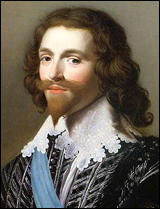
Image result for george villiersEven so, evidence for an indictment was being collaborated a year following James' death. When Villiers himself become ill in that same period, rumours of "poison" reared their ugly heads - but it was at the hands of an assassin that Villiers met his fate.

I was really hoping for more of a cold case style of work than a biography on Villiers, which though essential, dominated when it should have been the entree only. As one reviewer put it "...the author asserts that compelling evidence exists to suggest that Villiers, overcome by ambition and frustrated by James's passive approach to government, poisoned him. Although the book is informed by primary evidence from the likes of pamphlets and letters, the author does not reveal the precise contents of this “compelling evidence.” (Padraig Lawlor, Purdow University)

see also:
The Murder of King James I by Alastair Bellamy and Thomas Cogswell
The Assassin by Ronald Blythe (fiction)


Saturday, April 13, 2019

Dance If Ye Can: A Dictionary of Scottish Battles by Malcolm Archibald

Dance If Ye Can: A Dictionary of Scottish Battles by [Archibald, Malcolm]Dance If Ye Can is an introduction to the huge variety of battles fought in Scotland, or fought by the Scots in the nearly nine hundred years when they were an independent nation.


The first part of the book serves as an introduction to Scottish history, while the second section portrays the Scottish soldier throughout history. Part three gives an alphabetical guide and brief notes of the many hundred battles, skirmishes and sieges that pepper the history of Scotland.

Unlike most battle books, Dance If Ye Can does not concentrate solely on the well-known battles. Rather, it gives space to many of the near-forgotten skirmishes and clan battles, as well as the more famous encounters such as Bannockburn and Culloden. 

The earliest battles concern the Roman invasion of 83 AD, while the last was the German attack on the Royal Navy in the Firth of Forth in 1939. In between are mentions of the wars against the Norse and the English, with various civil wars and disturbances, the Jacobite Risings and the clan wars of the Borders and Highlands.

The final section is a timeline of Scottish history that brings the book to the post-devolution period in the twenty-first century.

Sunday, March 10, 2019

Review: The Afterlife of King James IV by Keith John Coleman

The Afterlife of King James IV: Otherworld Legends of the Scottish King
To be honest this really was just not for me. Whilst the premise of exploring the mythology surrounding James IV of Scotland was what drew me to this book, the delivery failed to hold my attention. I felt that it was at times repeatative, convoluted, and disorganised. It assumes a prior knowledge of both Scottish and royal history (which I have); however, I guess I was expecting something a little more chronologically presented - dealing with specific themes (birth, life, death, afterlife) individually rather than collectively. I am sure others will like this - just not for me and I left it unfinished.


Thursday, December 27, 2018

Review - Margaret Tudor - Two Lives

I have now read two recent and separate accounts of the life of Margaret Tudor, Queen of Scots, Princess of England - the "other Tudor Princess".

The first, about a year ago, was by Sarah-Beth Watkins - Margaret Tudor, Queen of Scots: The Life of King Henry VIII’s Sister - and the second, just recently, by Melanie Clegg - Margaret Tudor: The Life of Henry VIII's Sister.

Margaret Tudor, Queen of Scots - Sarah-Beth Watkins
I would view this as an entry level biography, which gives us a glimpse into her early life as a Tudor princess; her struggles as Queen of Scotland and then as regent for her young son, James V; her failed marriages; constant political struggles between England & Scotland; and ultimately, her fight to ensure her son gained his inheritance.

These were turbulent times and would be even more so for an inexperienced young woman thrust upon the political scene, viewed with suspicion by both her new country and the land she left behind.

Watkins concludes with a wrap of the fate of her children and her legacy - which resulted in the marriage of Mary Queen of Scots to her cousin, Henry Stuart, Lord Darnley, thus uniting the two lines of descent from her.

It is a small tome - which no doubt could have been bulked out with descriptions of people and places, her wardrobe and a history of the times, but we would still not get anything of Margaret herself - so I am glad this was not done.  In the end, Margaret's life is spent in the shadows of the men in her life: father, husband, brother, son.


Margaret Tudor by Melanie Clegg
This time we begin with the accession of Henry VII, Margaret's father, to the throne of England, before moving onto Margaret's childhood and betrothal aged 7yo to the 23yo James IV of Scotland. In this tome, we are treated to a more indepth study of the Tudor court and household as a whole - and how certain events touched upon Margaret - so there is a lot on her siblings.

What did become evident, was how very similar the events surrounding her own betrothal and marriage mirrored those of her sister-in-law Katherine of Aragon: the haggling over dowry, the delays, the on again / off again political manouevring from both James IV and Henry VII; and later, the pregnancies, miscarriages, and loss of babies, whilst surrounded by her husband's litter of illegitimate offspring.

Once in Scotland, Margaret's troubles did not end - the constant animosity between her husband and her brother, both wanting her loyalty, whilst simultaneously being viewed with suspicion and distrust.  Following the death of James at Flodden (1513), Margaret, barely 23yo, finds herself ill-equipped to deal with the pressure and political intricacies required to fend off both internal rivals and her own brother during the regency of her infant son, James V.  A disastrous foray into an ill-conceived second marriage did not make for easy bedfellows of the Scottish nobility.  And even when able to shake off the shackles of this failed marriage, and seeing her son finally consecrated as King, she embarks on a third marriage, which pretty much ends up like the previous.

What this tome does do is gives us the young Margaret - petulant, fond of getting her own way, desirous of being the centre of attention, and casting her into a role where she is merely a powerless  figurehead.  Her struggles for recognition as was her due as Dowager Queen show that a woman's lot, no matter what her status, can be a hard one: one bad marriage can result in the loss of status, income, children, where you are left literally begging for support whilst ignored by both your own family and adoptive country, leaving you alone and embittered, casting around for allies that do not always her you interests at heart.
I think that is what the reader will take away most from this - that the grass is not always greener on the other side, and the fairy tale of being princess and queen does in reality, not always have a happy ending.


Both tomes are well written and well researched, and are recommended as a good entree into the world of one of the lesser documented of the Tudor princesses.


More on Margaret:
Queen Margaret Tudor: The Story of a Courageous But Forgotten Monarch by Stuart McCabe
Margaret Tudor, Queen of Scots by Patricia Hill Buchanan
The Rose and the Thorn: The Lives of Mary and Margaret Tudor by Nancy Lenz Harvey
The Thistle and the Rose - The Sisters of Henry VIII by Hester W. Chapman

Tuesday, December 25, 2018

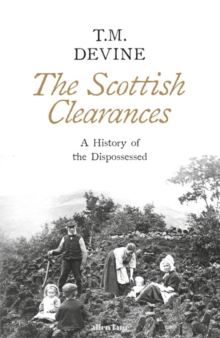
The Scottish Clearances by TM Devine - a review

The name of the book, The Scottish Clearances: A History of the Dispossessed, 1600-1900, highlights Sir Tom Devine’s central premise that what occurred was a deliberate and nationwide process that affected lowland areas as much, arguably more so, than the Highlands. At the heart of the narrative is an evidentially robust but also often grim and very human story of how Scotland was transformed from the rural society of old to the largely urban nation we know today. The end of traditional Highland life is here, warts and all, but crucially so too is the far less well-known story of the demise of an entire class of lowland folk, the cottars.


Ewen MacAskill's review at The Guardian:
In this book, he chronicles land ownership, the clan system and shifting attitudes towards Highlanders, from heroic soldiers to lazy aborigines. But this is a serious book, which includes a large section on dispossession in the Borders – intended to put what happened in the Highlands and Islands into perspective.


read more here
@ The Scotsman - The Highland Clearances
@ Wikipedia - The Highland Clearances
@ The Herald - review


Sunday, October 14, 2018

The Scottish Clearances: A History of the Dispossessed, 1600‑1900 by TM Devine

The Scottish Clearances : A History of the Dispossessed, 1600-1900, Hardback BookThe Highland Clearances are modern Scotland’s foundational tragic story. More than the Jacobite rebellions, or the story of the Scottish regiments, more than the Enlightenment, more than the medieval wars of independence, they have established Scotland’s identity: that of an oppressed, misunderstood people unto whom great evil was done.


The clearances, which stretch back to the 1760s, but were at their height from 1815 to the 1850s, have their own poems, novels, songs and iconography.


A definitive new history of the terrible process by which much of Scotland was 'cleared' of many inhabitants, written by Scotland's foremost living historian.


read more here


Sunday, June 3, 2018

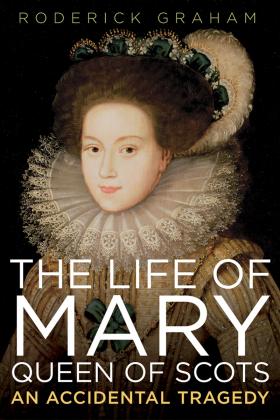
The Life of Mary: Queen of Scots by Roderick Graham


Mary, Queen of Scots lived during one of the most fascinating periods in history. Graham’s epic work paints a unique picture of this controversial woman, showing her to be neither a Catholic martyr nor murdering adulteress but a passive young woman caught up in the ruthless sea of sixteenth-century politics who lacked the shrewdness and empowerment of her contemporaries—Catherine de Medici, Diane de Poitiers and Elizabeth Tudor. Instead, she relied on her beauty and charm and allowed herself to be a victim of circumstance. When she did finally attempt to control her future, she set in motion the events that would lead her to the executioner’s block.


Saturday, May 12, 2018

Quines by Gerda Stevenson celebrates the women of Scotland

From The National:

Image result for quinesThe book features portraits in poetry, most in English, a third in Scots, which tell the story of 57 individual women and a football team – the 11 Scottish women who beat England 3-0 in Edinburgh in May, 1881, the first recorded international women’s match, while the second game a few days later in Glasgow was abandoned when male protestors ran on to the pitch.


“I used many sources of information,” explained Stevenson, “especially the Biographical Dictionary of Scottish Women which is a fantastic resource, and googling, and talking to people, and buying second-hand books about these women, many of which are out of print. It’s not that they were written out of history, it’s just that were never written in.”

National columnist Lesley Riddoch’s verdict is straightforward: “Quines is a vivid explosion of thought, description and bold opinion, clothing Scots history at last with the myriad contribution of its women. This is a wonderful, life-affirming book.”


Sunday, January 14, 2018

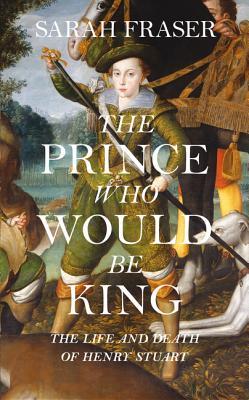
Review: The Prince Who Would Be King by Sarah Fraser

35007705Author Sarah Fraser achieves her aim in bringing to the forefront the life and character of Prince Henry Frederick Stuart (d.1612).

Henry Stuart was literally, for some time, the "forgotten prince", overshadowed by his more well-known younger brother Charles I of England, who succeeded to the English throne due to the untimely death of Prince Henry, who was his elder brother.

Fraser uses what available research there is to give us a glimpse into the private and political life of a young prince who people believed would be key to the unification of the Scottish and English crowns, even more so than his father James VI & I.  What we discover is a child, torn from his mother's arms at birth (and later becoming one of her fiercest advocates); a young man who never really knew his younger siblings until much later in his young life; was fought over by warring political factions for their own gain; and was growing in political influence himself as he grew older - he was not an impotent political player as we would assume, have many forays into the political stage.  We gain a valuable insight into the politics at play, first at the Scottish then English royal courts; we witness the factionalism, both political and religious; we read of scandal, intrigue, political alliances, and courtly machinations.

This is well researched and easy to read.  I found myself comparing the life of this prince to that of Prince Arthur, son of Henry VIII - two promising lives cut tragically short, leaving us not knowing  what men these young princes may have become.

Sunday, December 31, 2017

Author - Antonia Senior

When the book "Tyrant's Shadow" by Antonia Senior came up in my email feed, I confess I was curious. The English Civil War period (1640s) was not really my "go to" area of study. True, I did know a bit about the times, but it was a period I couldn't say I truly immersed myself in.

English Civil Wars - the short version (courtesy of wikipedia):
The English Civil War (1642–1651) was a series of armed conflicts and political machinations between Parliamentarians ("Roundheads") and Royalists ("Cavaliers") over, principally, the manner of England's government. The overall outcome of the war was threefold: the trial and execution of Charles I (1649); the exile of his son, Charles II (1651); and the replacement of English monarchy with, at first, the Commonwealth of England (1649–1653) and then the Protectorate under the personal rule of Oliver Cromwell (1653–1658) and subsequently his son Richard (1658–1659). 

And, really, the only book I had read recently on the subject was "The King's Smuggler" by John Fox (review here @ Melisende's Library).


So to the books at hand:
Treason's Daughter:
London, 1640. Fifteen-year-old Henrietta Challoner dreams of adventure, of a life lived at the gallop, of the opportunities afforded to her brothers, Ned and Sam. She cannot know how devastatingly real these dreams will become, as the country slides towards vicious civil war...

The crisis threatens to tear Henrietta's family apart. As religious and political tensions spill into the streets, they all must decide what comes first - their family, their country or their desires. But while she strives to maintain the peace at home, Henrietta becomes embroiled in a deeper plot: to hand London over to the King.

The Tyrant's Shadow:
England, 1652: since Charles I's execution the land has remained untethered, the people longing for change. When Patience Johnson meets preacher Sidrach Simmonds, she believes her destiny is to become his wife and help him spread the Lord's word. Simmonds sees things quite differently.

Patience's brother Will has been bestowed the job of lawyer to Oliver Cromwell. Tasked with aiding England's most powerful man, he must try to overcome his grief after the loss of his wife. Then Sam Challoner, Will's brother-in-law, returns unannounced after years in exile, forcing Will and Patience to question their loyalties: one to a ruler, the other, a spouse. Who do they choose to save? Themselves, their loved ones or their country...
read more here @ Historia Magazine

However, after a bit more digging, I discovered Antonio had also written a book on Somerled, King of the Isles. Having read Nigel Tranter's 1983 fictional account "Lord of the Isles" and John Marsden's "Somerled - And the Emergence of Gaelic Scotland", I am quite looking forward to reading this account of a fascinating "real-life" character.

The Winter Isles:
In twelfth-century Scotland, far removed from the courtly manners of the Lowland, the Winter Isles are riven by vicious warfare, plots and battles.

Into this hard, seafaring life is born a boy called Somerled. The son of an ageing chieftain, Somerled must prove his own worth as a warrior. He will rise to lead his men into battle and claim the title of Lord of the Isles - but what must he sacrifice to secure the glory of his name?

The Winter Isles is an astonishingly vivid recreation of the savage dynastic battles of medieval Scotland: an authentic, emotional, powerful read.


read interview with Antonia Senior @ Historia Magazine

Monday, June 26, 2017

When the Western Isles were the Southern Isles

The Vikings in Lewis’ was published by Nottingham University’s Centre for The Study of The Viking Age (2014)

The Lewis Chessmen are among the most iconic images of both the Isle of Lewis itself and the Norse heritage of the whole of the British Isles.
The Vikings in Lewis’ follows three main strands of evidence to illuminate the cultural context in which the Chessmen came to be on Lewis, and their legacy into the present: archaeological finds from the Scandinavian settlements on Lewis; the influence of the Old Norse language on place names; and material from Old Norse sagas and poetry that makes mention of Lewis, the Hebrides or Hebrideans.


read more here @ Stornoway Gazette