Showing posts with label social history. Show all posts

Wednesday, January 1, 2025

Review: Britain's Greatest Detective by Nell Darby

Synopsis: From his offices at Basinghall Street in the City of London, Henry Slater presided over Britain's best-known private detective agency, king of all he surveyed. In the late Victorian era, and into the twentieth century, his name was synonymous with the Golden Age of private detection; he was a truly modern operator, utilising the press and technology, and creating innovative publicity campaigns to keep his agency in the public eye.

One of the key skills of the private detective was the ability to make friends - to infiltrate the lives of individuals, and to get them to trust them with their secrets. Slater, however, would make one mistake: to befriend the wrong person and to entrust them with his secrets. When that friendship ended, competition in the private detective world would lead to a trial so infamous that Winston Churchill himself came to watch proceedings play out at the Old Bailey. The trial would destroy Henry Slater's career, and expose his real identity.

This is the first in-depth study of private detective work in nineteenth and early twentieth century Britain, looking at the 'Golden Age' of private detectives and the work they did. It provides a fascinating look at the type of person who became a private detective, the people who wanted to be their clients - and the crimes that could be committed along the way. This book sheds new light on this profession, building on the author's previous work on female private detectives in order to enable the reader to gain a better understanding of a job that people of all classes desired to do. But it is also about the career of one man. Sherlock Holmes may have been the most famous fictional private detective, but Henry Slater was, for twenty years, the real star of the private detective world.

~ ~ ~

This book does what is sets out to do - gives the reader an entree into the world of the early private detectives, the people drawn to this type of work, the methods used, and the cases they were typically involved in. Anchoring this tome is the character of Henry Slater - the self proclaimed "greatest detective" of his time.

Darby notes that it was with the passing of the Matrimonial Causes Act 1857 that gave rise to the private detective as courts required evidence of matrimonial misdeeds in order to grant a divorce. This was primarily the type of work available for the private detective, especially one with no connection to the police department.

It is against this that Darby focuses on the case that brought down Slater and his agency - the Pollard divorce case - and highlighted the underhanded dealings that went on to secure the evidence (ie: honey trap, payment of witnesses). None of this would have come to light had Slater not spurned the friendship of one of his employees - Francis Stevens - ".. a man who would do anything to get revenge ..." - including setting up a rival agency and using others to bring about Slater's downfall.

The proceeding court case against Slater and his employees is followed in detail, always referring back to the original Pollard divorce case and methodology used in gaining the required evidence.

Darby follows through to not only the conclusion of the case against Slater et al, but also what followed afterwards for the main players in this drama. Did they get off or were all incarcerated? What happened to the Pollards?

At times the construction of the narrative was a little annoying as it tended to go back and forward in the timeline, but overall it was quite easy to follow. The research that went into this tome is very evident, a times a little dry but never uninteresting.

Definitely one for those interested in the detective agencies that were the UK equivalent of Pinkertons in the 19th and 20th centuries.

Saturday, April 16, 2022

Review: Women in the Medieval Court by Rebecca Holdorph

Synopsis: While the courts of medieval Europe ate up tales of knights in shining armor and damsels in distress, the reality for the elite women who inhabited those courts could be very different. Medieval society might expect the noblewomen who decorated its courts to play the role of Queen Guinevere, but many of these women had very different ideas.

In a society dominated by men, women who stood out from the crowd could experience great success - and greater failure. Great queens, who sometimes ruled in their own right, fought wars and forged empires. Noblewomen acted behind the scenes to change the course of politics. Far from cloistered off from the world, powerful abbesses played the role of kingmaker. And concubines had a role to play as well, both as political actors and as mothers of children who might change a country's destiny. They experienced tremendous success and dramatic downfalls.

Meet women from across medieval Europe, from a Danish queen who waged political war to form a Scandinavian empire, to a Tuscan countess who joined her troops on the battlefield. Whether they wielded power in battle, from a convent or throne room, or even in the bedchamber, these women were far from damsels in distress.


Holdorph's book is divided into four sections - noblewomen, consorts, reigning queens and concubines - and she peppers her narrative with the biographical details of a number of historical women.

In Section One - Noblewomen - Holdorph undertakes a chronological look at the lives of these women from childhood to motherhood, widowhood, remarriage and political life. The details for the section are lifted from the lives of Matilda of Tuscany, Anna Comnena, Marie de France, Alice de Lacy and Cecily Neville.

Section Two - Consorts - looks at queenship from the process of selecting a suitable candidate, potential alliances, the role of king's wife and mother of the heir, to the role of queen on both the domestic and international political field. In this instance, Holdorph looks at Anne and Eupraxia of Kiev, Eleanor of Castile, Maria de Luna, Isabeau of Bavaria and Margaret of Anjou.

Reigning Queens are covered in Section Three, where the importance of behaviour and reputation are explored, in addition to the problems of marriage and the right to rule. Historical subjects used as the examples for this section include Urraca and Berenguela of Castile, Joanna of Naples, Margaret of Denmark, Caterina Cornaro, with a few others dotted throughout.

Finally we reach Section Four - Concubines. Here Holdorph discusses the definitions of marriage for context, whilst looking at the role and status of the mistress. This section also explores the "good" and "bad" mistress, and the ultimate price that many had to pay - the author notes that the death rate for mistresses was unnaturally high! Some of featured ladies include Agnes Sorel, Katherine Swynford, Alice Perrers, and Ines de Castro.

Holdorph finally concludes that regardless of status and social position, men still had the upper hand when it came to control over women and their lives, that marriage was an important part of a woman's life, and that there is very limited information on medieval women with which to craft a truly detailed narrative.

What I did conclude from reading this work was there was nothing new for me personally - I didn't take away anything from this. All examples were already well known to me, as I have studied the lives of many of these women and have read extensively in this area.  There were many times I wanted to give up on this book, however, the hope that I might find some nugget worthy of my time kept me going.  There was no pot of gold at the end of the rainbow.

Secondly and most notably, the cast of characters is very Eurocentric - there were no examples from the history annals of Asia, Africa, or Eurasia - and the women selected were decidedly Christian in religion, with no Hindu, Muslim, Shinto or other religion being included.

Another thing that annoyed me the most was the use of names or rather a strange variant of name - if you are going to introduce your reading public to lesser known historical figures, then stick with the common usage of their names, or you will lose your reader that much more sooner.

I will say this, however, Holdorph's book could be considered more of a primer for someone just cutting their teeth on this subject - however, there are many other worthy tomes out there that have covered this subject matter of much more effectively and efficiently.


Saturday, August 21, 2021

All Made Up by Rae Nudson

A fascinating journey through history and culture, examining how makeup affects self-empowerment, how people have used it to define (and defy) their roles in society, and why we all need to care.

There is a history and a cultural significance that comes with wearing cat-eye-inspired liner or a bold red lip, one that many women feel to this day, even if we don’t realize exactly why. Increasingly, people of all genders are wrestling with what it means to be a woman living in a patriarchy, and part of that is how looking like a woman—whatever that means—affects people’s real lives.

Through the stories of famous women like Cleopatra, Empress Wu, Madam C. J. Walker, Elizabeth Taylor, and Marsha P. Johnson, Rae Nudson unpacks makeup’s cultural impact—including how it can be used to shape a personal or cultural narrative, how often beauty standards align with whiteness, how and when it can be used for safety, and its function in the workplace, to name a few examples.

Every woman has had to make a very personal choice about her relationship with makeup, and consciously or unconsciously, every woman knows that the choice is never entirely hers to make. This book also holds space for complicating factors, especially the ways that beauty standards differ across race, class, and culture. Engaging and informative, All Made Up will expand the discussion around what it means to participate in creating your own self-image.

Sunday, June 13, 2021

‘It’s infuriating and shocking’: how medicine has failed women over time

Hippocrates, the founder of modern medicine, believed that women were controlled by their uteruses. The father of modern gynecology, James Marion Sims, in the mid-19th century experimented on enslaved black women without anesthesia, convinced that they felt less pain than white women. (Until its removal in 2018, his statue stood in New York’s Central Park for over a century.) Doctors claimed that women’s suffrage would cause injury to women’s fragile bodies and diminished minds. Such examples cast an abhorrent pall over “first, do no harm”.

The history of medicine is every bit as social and cultural as it is scientific, and male dominance is cemented in its foundations. But even the author Elinor Cleghorn, who spent the past year immersed in the history of women’s relationship to medicine, was surprised by “just how conscious and insidious it was”, she told the Guardian. “Biological theories about female bodies were used to reinforce and uphold constraining social ideas about women.”

Cleghorn’s new book, Unwell Women, enumerates a litany of ways in which women’s bodies and minds have been misunderstood and misdiagnosed through history. From the wandering womb of ancient Greece (the idea that a displaced uterus caused many of women’s illnesses) and the witch trials in medieval Europe, through the dawn of hysteria, to modern myths around menstruation, she lays bare the unbelievable and sometimes horrific treatment of women for millennia in the name of medicine.


read more here @ The Guardian

Sunday, April 4, 2021

Review: The Monarch by John Jennings

Synopsis: Fisherman, publican, father - his influence reaches throughout North East England. Meet Jerry Compton. a friendly man, a just man, a reasonable man. The fairest of his profession.

The Monarch, a modern masterpiece, is a searing portrayal of 1990s Northumberland, England and the North of Ireland. It is also the intimate story of the Swaddle family, at once drawn together and ripped apart by its unique position at the core of Northumbrian society in the aftermath of the Miners' Strike, Ireland's Troubles and industrial and agricultural decline. Throw in a young Irish woman and her young family for good measure to further expose the regions' issues whilst hopefully choosing a path to success and enlightenment. Will they succeed and embrace the coming century, or will they succumb to the negative fatalism so typical of many of their forbears.

Marrying traditional English and North Eastern dialects with a free and elaborate style, the author employs realism and streams of consciousness to portray North East England and Ireland in a way that resonates with audiences today and far beyond.


A family saga set in the north of England, with patriarch Jeremy Compton at its centre. A story filled with humour and heartache; a social narrative of an area that suffered significantly from both industrial and agricultural decline; a story of survival in spite of it all, not necessarily a pretty story with the usual hearts and flowers happy ending.

I think if you are a bit of a fan of "Eastenders" or "Coronation Street", then this one is definitely for you.


Monday, March 22, 2021

Review: A Place To Hide by David Salner

 Synopsis


Wow! what a story! 1920s New York was not familiar to me and as a result, this story has led me rather astray as I delve into the many events mentioned throughout (see further reading below).

This is truly an evocative narrative about a parolee on the run, who finds acceptance within a community that is completely alien to him, whilst reminding us that in the great scheme of things, all men are equal.  For under the river, in the close confines of the tunnel they are excavating, these "sandhogs" find a comradeship known only to those who work in similarly dangerous occupation - it is one that surpasses the issue of race and religion - for theirs is a world defined by trust, reliance and mateship.

Bill takes us back to events that have led him to New York City in the 1920s - a city that "teemed with secrets" and where a man might seek sanctuary and find for himself a new life.  There were quite a few "on the edge of my seat" moments when you truly do hope that Bill finds the answers he seeks and hope that the price he pays will not be too high.  

The very real issues - dealing with employment, race & social conditions - are touched upon in a way that put me in mind of the only other author I had read that had sufficiently made "the reader participate in the actuality" of the story as it unfolded (if I might quote Steinbeck himself).  This Salner accomplishes with a truly engaging commentary of early twentieth century America society.


Further reading:


Wednesday, October 28, 2020

Childhood, Youth and Religious Minorities in Early Modern Europe by Tali Berner

This edited collection examines different aspects of the experience and significance of childhood, youth and family relations in minority religious groups in north-west Europe in the late medieval, Reformation and post-Reformation era. It aims to take a comparative approach, including chapters on Protestant, Catholic and Jewish communities. 

The chapters are organised into themed sections, on 'Childhood, religious practice and minority status', 'Family and responses to persecution', and 'Religious division and the family: co-operation and conflict'. 

Contributors to the volume consider issues such as religious conversion, the impact of persecution on childhood and family life, emotion and affectivity, the role of childhood and memory, state intervention in children's religious upbringing, the impact of confessionally mixed marriages, persecution and co-existence. Some chapters focus on one confessional group, whilst others make comparisons between them.

Saturday, August 3, 2019

Review: The Legitimacy of Bastards by Helen Matthews

43972540"The Legitimacy of Bastards" is the first book to consider the individuals who had illegitimate children, the ways in which they provided for them and attitudes towards both the parents and the bastard children. It also highlights important differences between the views of illegitimacy taken by the Church and by the English law.


Heads up - this work does not deal with royal bastards if that is what you are looking for - the main focus is on the legalities of bastards among the aristocratic and gentry, with a heavy focus on inheritance and social standing.

Matthews' book is broken down into manageable chapters dealing with the legal complexities defining what constitutes (or not) marriage under both canon and common law, which in itself then sets up the definition and status of those born out of wedlock.

After providing a case study of the de Warenne family to put things into context, we proceed to what is defined as sexual misconduct - adultery, adulterers, society's view of them and their offspring, but more importantly, how the child was viewed within the context of the family. The next chapters cover inheritance, social status and opportunity. Finally, we are told, the shift in attitude towards bastards developed in the fifteenth century as pedigree and genealogy became more and more important, and sometimes these by-blows were simply written out of the family tree. And with the heralding of religious change and the rise of puritanism in the sixteenth century, attitudes again changed.

Matthews cites many examples in her book - but don't worry if you start to lose track of them all as she provides the readers with a concise list at the end, neatly cross-referenced with the chapter in which they are discussed. Having extensively read myself, a fair number of names were familiar - but it never occurred to me to delve deeper into both the social and legal complexities of bastardy in the medieval period. Most of what we know of bastards in this period tends to be attached to our reading and study of royalty, whose attitudes to bastards was very different to those on society's lower rungs.

This is a well researched tome - the mind boggles at the number of resources consulted, and this reader in particular is glad that the leg-work has already been done. I can see this as a valuable resource in itself for those interested in medieval family and law; but also for those who dabbled in historical fiction, you may also want to add this to your reference shelf, as it will certainly aid in adding a touch of realism and authenticity to some storylines.  I still have this book sitting on my desk as I type as I am not quite ready to consign it to the book shelves just yet.

Sunday, May 26, 2019

Bride Ales and Penny Weddings by R. A. Houston


Cover for 

Bride Ales and Penny Weddings


Some of the poorest regions of historic Britain had some of its most vibrant festivities. Between the sixteenth and nineteenth centuries, the peoples of northern England, Lowland Scotland, and Wales used extensive celebrations at events such as marriage, along with reciprocal exchange of gifts, to emote a sense of belonging to their locality. Bride Ales and Penny Weddings looks at regionally distinctive practices of giving and receiving wedding gifts, in order to understand social networks and community attitudes.

Examining a wide variety of sources over four centuries, the volume examines contributory weddings, where guests paid for their own entertainment and gave money to the couple, to suggest a new view of the societies of 'middle Britain', and re-interpret social and cultural change across Britain. These regions were not old fashioned, as is commonly assumed, but differently fashioned, possessing social priorities that set them apart both from the south of England and from 'the Celtic fringe'. 

This volume is about informal communities of people whose aim was maintaining and enhancing social cohesion through sociability and reciprocity. Communities relied on negotiation, compromise, and agreement, to create and re-create consensus around more-or-less shared values, expressed in traditions of hospitality and generosity. Ranging across issues of trust and neighbourliness, recreation and leisure, eating and drinking, order and authority, personal lives and public attitudes, R. A. Houston explores many areas of interest not only to social historians, but also literary scholars of the British Isles.


Beyond the harem: ways to be a woman during the Ottoman Empire


Ottoman women shopped. They didn’t just shop; they also ran businesses, owned property and, on occasion, stormed buildings to stage protest meetings. Not only did they flirt and dance – and infuriate their husbands with demands for the latest fashions – but they exerted genuine political and economic power. And they did all this much more visibly than is often assumed.

A new volume of essays looks afresh at women’s lives during the 600 years of the Ottoman empire. The book challenges the stereotypes of female lives confined to the harem and hamam – and reveals how women were surprisingly visible in public spaces.

In Ottoman Women in Public Space, a group of scholars of the Middle East and the Islamic world turn their attention to a neglected topic: what life was actually like for women at the height of an empire that lasted for 600 years (right up until the turn of the 20th century) and, at its most powerful, stretched eastwards from present-day Hungary, southwards to the religious centre of Mecca, and westwards around the southern Mediterranean to the bustling port of Algiers. 

Using a wealth of primary sources and covering the entire Ottoman period, Ottoman Women in Public Space challenges the traditional view that sees Ottoman women as a largely silent element of society, restricted to the home and not seen beyond the walls of the house or the public bath. Instead, taking women in a variety of roles, as economic and political actors, prostitutes, flirts and slaves, the book argues that women were active participants in the public space, visible, present and an essential element in the everyday, public life of the empire. 

Ottoman Women in Public Space thus offers a vibrant and dynamic understanding of Ottoman history.


read more here @ University of Cambridge

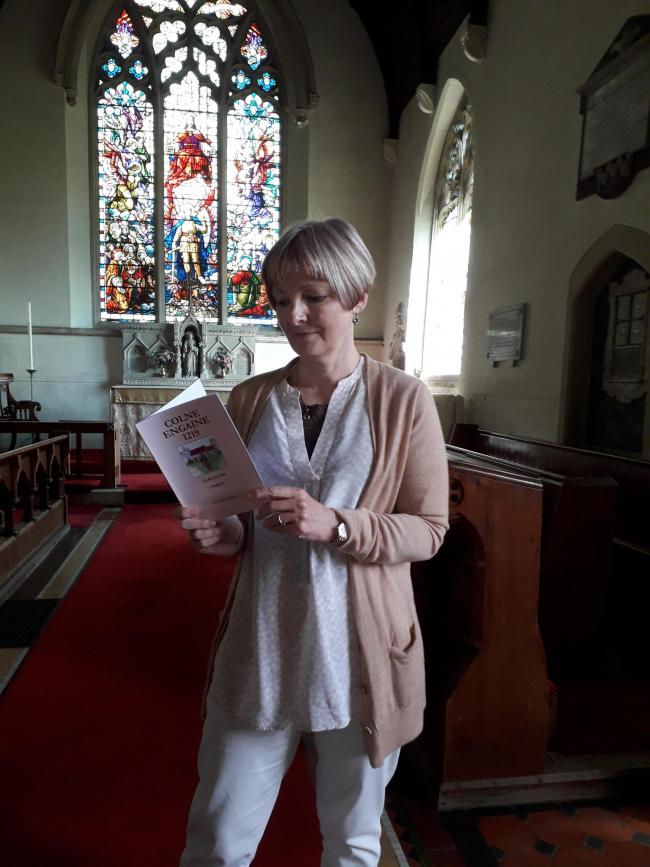
Medieval author Cate Gunn explores Colne Engaine's 800 years of history


An author has released a book about the beginnings of a village near Halstead, in celebration of its forthcoming anniversary.

Medieval author explores history of village in new bookDr Cate Gunn is a popular medievalist writer who specialises in ancient origins and religious literature.

Her latest offering centres on the history of Colne Engaine. Published by Millrind Press, Colne Engaine 1219 explores the historic village’s early lifestyle and environment, while also investigating the origins of the compact community’s name.

Cate has lived in Colne Engaine for more than 30 years, and has written the 90-page book to celebrate the village’s approaching 800th anniversary, its first rector and the establishment of its parish.

She said: “The book describes what a small village in northern Essex would have been like in the early 13th century and shows how traces of that ancient village are still apparent.

read more here @ Halstead Gazette


Saturday, May 25, 2019

The Language and Literature of Chastity


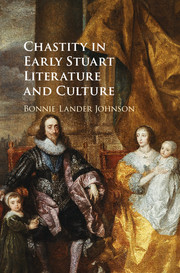
Chastity in Early Stuart Literature and CultureIn her book Chastity in Early Stuart Literature and Culture, Dr Bonnie Lander Johnson (Faculty of English) describes how chastity became a cult that was as much embodied by the ceremonies and performances of the court as it was espoused by the anti-court Puritan writers working in the new world of popular print. Lander Johnson writes that chastity, as an important Christian virtue, was “one of the key conceptual frameworks through which individual men and women understood their relationship to their own bodies, to their community, to the wider Christian world and to God”. But “the same virtue that could protect the body from infection and a marriage from dissolution could eventually help to topple a government and undo a King”.

Lander Johnson has written her first book in order to look in depth at chastity as a theme running through the life of the royal court, and the circles of power around it, in the first half of the 17th century – as seen through the literature of William Shakespeare, John Milton and a number of lesser known poets and playwrights, including John Ford. It is a scholarly book, aimed at an academic readership, but it touches on universal human preoccupations – how we see ourselves, how we want to be seen, how we curate our own image through private and public performance. 

read more here @ University of Cambridge


Sunday, May 19, 2019

Supporting London's Bastard Children

Cambridge historian uncovers new evidence of 18th and 19th century London's 'Child Support Agency'.

Image result for Unmarried Motherhood in the Metropolis: 1700-1850A new book, Unmarried Motherhood in the Metropolis: 1700-1850, by Cambridge historian Dr Samantha Williams, reveals, using London’s few surviving ‘bastardy books’, how the parishes of Lambeth, Southwark and Chelsea pursued the fathers of illegitimate babies, and the lengths some errant fathers went to in order to escape not only their moral and financial obligations, but the clutches of parish constables and the feared houses of correction. 

"Bastardy books must have existed in many parishes, but very few now survive from the hundreds of parishes in and around London – at a time when illegitimacy was very high. "The numbers of illegitimate children goes up and up after the Restoration from 1650-1850. Of all first births, half were pregnant brides and a quarter were illegitimate.

"Unwed women and their children were the casualties of a metropolitan sexual culture and a frequently unsympathetic welfare system. 

"They faced very significant difficulties in their pregnancies, during childbirth and in raising their children, not least in the difficulties many women encountered in terms of gaining financial support from the fathers of their children."


read more here @ University of Cambridge

Sunday, March 31, 2019

Threads of Life review: Clare Hunter embroiders a unique history


Threads of Life by Clare Hunter.Threads of Life should not be mistaken for a docile, meandering read about the joys of sewing. On the contrary, you can expect insightful, moving and thrilling stories, as Scottish-born textile artist and curator Clare Hunter singles out textiles with historical importance and pulls them into tight focus by pairing each one with a theme such as power, captivity, identity, loss and protest.

Hunter captures the sentiment perfectly: "Sewing is a way to mark our existence on cloth: patterning out place in the world, voicing our identity, sharing something of ourselves with others and leaving an indelible evidence of our presence in stitches held fast by our touch."


Tuesday, February 12, 2019

The Merryland books and other medieval 'obscene' materials have been digitised for archive

Many libraries and such institutions have kept some material from public viewing because their content were considered obscene or too sexual. However many institutions agreed to have these collections digitised for the Archives of Sexuality & Gender, Part III: Sex and Sexuality, Sixteenth to Twentieth Centuries.


The British Library's Dirtiest Books Have Been Digitized | Smart ...

Archives of Sexuality & Gender is a series of old documents pertaining to gender and sexuality which have been collected for further study. According to their website, this "collection brings together approximately 1.5 million pages of primary sources on social, political, health, and legal issues impacting LGBTQ communities around the world. The first part was on LGBTQ history and culture Since 1940; the second part provided insight into underrepresented and often excluded communities; and third part includes materials from 1600-1940 and focuses on "fertility and sexual practice; prostitution, religion and sexuality; the medical and legal construction of sexualities and the rise of sexology." according to their press release. The newly digtised material was published in it's third section.

read more here @ Times of India

Friday, December 28, 2018

My Life in the IRA by Mick Ryan

Review by Frank MacGabhann for the Irish Times


Image result for My Life in the IRA - The Border CampaignIf anyone believes that the IRA’s “Border campaign” of 1956 - 1962 was heroic, this is a must-read book. As Pádraig Yeates puts it in his perceptive introduction, this is a story of “suffering, hardship, frustration and constant disappointment”. He could have added rain, mud and freezing cold. Mick Ryan, from East Wall in Dublin left school at the age of 13 and joined the IRA at 18 just in time to participate in the Border campaign. Like many a young man of his generation, he dreamed of being in the GPO in 1916 with Pearse and Connolly and believed that their sacrifice, along with that of Tone, Emmett, Mitchell and others sustained his own. A vivid story-teller, Ryan describes in detail the tragicomic attacks with hopelessly antiquated weapons mounted against the northern state, punctuated by grateful stays at nationalist safe houses, with people gladly sharing what little food they had, sometimes only bread and tea. The book is also a poignant social history of Ireland in the 1940s and 1950s. 

see also synopsis @ Mercier Press
see book launch @ Youtube

Tuesday, December 25, 2018

The Scottish Clearances by TM Devine - a review

The name of the book, The Scottish Clearances: A History of the Dispossessed, 1600-1900, highlights Sir Tom Devine’s central premise that what occurred was a deliberate and nationwide process that affected lowland areas as much, arguably more so, than the Highlands. At the heart of the narrative is an evidentially robust but also often grim and very human story of how Scotland was transformed from the rural society of old to the largely urban nation we know today. The end of traditional Highland life is here, warts and all, but crucially so too is the far less well-known story of the demise of an entire class of lowland folk, the cottars.


Ewen MacAskill's review at The Guardian:
In this book, he chronicles land ownership, the clan system and shifting attitudes towards Highlanders, from heroic soldiers to lazy aborigines. But this is a serious book, which includes a large section on dispossession in the Borders – intended to put what happened in the Highlands and Islands into perspective.


read more here
@ The Scotsman - The Highland Clearances
@ Wikipedia - The Highland Clearances
@ The Herald - review


Saturday, November 24, 2018

The Free Port of Livorno by Corey Tazzara


In the twilight of the Renaissance, the grand duke of Tuscany--a scion of the fabled Medici family of bankers--invited foreign merchants, artisans, and ship captains to settle in his port city of Livorno. The town quickly became one of the most bustling port cities in the Mediterranean, presenting a rich tableau of officials, merchants, mariners, and slaves. Nobody could have predicted in 1600 that their activities would contribute a chapter in the history of free trade. Yet by the late seventeenth century, the grand duke's invitation had evolved into a general program of hospitality towards foreign visitors, the liberal treatment of goods, and a model for the elimination of customs duties. Livorno was the earliest and most successful example of a free port in Europe. The story of Livorno shows the seeds of liberalism emerging, not from the studies of philosophers such as Adam Smith, but out of the nexus between commerce, politics, and identity in the early modern Mediterranean.

read more here @ OUP Blog


Friday, September 28, 2018

People in the Room by Norah Lange

From The Guardian:

A 17-year-old girl spends her days by her window, watching the house opposite in an affluent part of Buenos Aires. She is transfixed by a room where three women sit, the “pale clover” of their faces barely perceptible in the dim light. The unnamed narrator compiles a list of things they could be, or be made to be, in her imagination: spinsters, criminals, “wayward women”, “three governesses, with little joy in their lives” or “simply … three women who liked to pass the time in their drawing room”.

One day she intercepts an unsigned telegram addressed to the objects of her obsession. How does she guess the sender is a man? Why does she hate him straight away? As she spies on his visit to the room, her feelings – resulting, perhaps, from the fear of the unknown, of intimacy – strengthen: “Even though I knew I would hate him, I hated him even more when I saw him lean gently towards them.” Then a shared moment of beauty changes it all, “and it seemed as long as I was still young, nothing so complete or perfect could ever happen again”.

Born in 1905 in Buenos Aires, Norah Lange entered the Argentinian literary scene early, first as a poet; later, her novels and a childhood memoir became part of the Spanish-language canon. As César Aira says in his introduction to this first English translation of her work, she once told an interviewer that People in the Room had been inspired by the portrait of the three Brontë sisters painted by their brother, his own image erased from the canvas. Combining painterly qualities with poetic imagery, Lange’s prose is rich in metaphor, self-absorbed and, at its best, darkly irresistible.

read more here @ The Guardian and @ The Irish Times

'The Shape of Ruins,' by Juan Gabriel Vásquez

On the afternoon of April 9, 1948, an assassin drew a pistol on a downtown Bogota street and took the life of Jorge Eliécer Gaitán, a charismatic, populist political icon who was one of the great South American orators of his time.

An enraged mob quickly formed, chasing down the presumed killer, a stonemason named Juan Roa Sierra, and yanking him into the street where he was pummeled to death. Hundreds, or by some estimates thousands, died in the riots that followed, a searing moment in Colombian history dubbed “El Bogotazo” that ushered in an era of extraordinary violence known as “La Violencia.”

read rest of review by Manuel Roig-Franzia @ Washington Post