Showing posts with label american history. Show all posts

Tuesday, October 28, 2025

Review: Frank's Bear Cave by Glenn Harvey

Synopsis:
The second decade of the 20th Century was a period of great transition, especially with the beginning of WWI in 1917. The war accelerated the industrial revolution and took an estimated forty million lives. The 1918 Spanish Flu pandemic decreased the world population by upwards of another fifty million.

The United States probably experienced more changes during that brief era than in any period since. The Nineteenth Amendment gave women the right to vote and serve on juries. Prohibition gave rise to the moonshine industry and associated gang activity. Automobiles were coming onto the scene. Yet, farmers and timbermen were using centuries-old horse-drawn technology. There was increasing demand for farm produce by the expanding population of mill workers who kept the factories humming. Likewise, the virgin forests of the northeastern U.S. were providing the lumber needed for new homes in the cities and mill towns.

People coped with the 1918 influenza pandemic and industrial accidents without health insurance or welfare assistance outside their family, friends, churches, and local social institutions. The introductory chapters provide the early 1900s, rural setting, through the experiences of one family. As all of the individuals cited are deceased, this content is based on both written and verbal memories passed down through the family, verified to the extent possible by public records. The complete 1921-22, "Trial Book" of over 1000 pages, tells the story of the murder trial.

At 1:00 am, April 3, 1921, an intruder in Frank Harvey’s Butler County, Pennsylvania, farmhouse opened a life-changing chapter in his life. The murder he witnessed led to a sensational trial, “The Commonwealth vs. Henry A. Blakeley." The resultant testimony, motions, and appeals dominated local news from April 1921 through Blakeley’s execution in October 1922.

The murder trial is told verbatim through selections from the original typewritten trial manuscript. More than seventy witnesses from many walks of life provide us with vivid images of the day and times through their unredacted words, slang, and local expressions. Witnesses for the prosecution left little doubt that the defendant was profane, mean-spirited, mentally unstable, and guilty of murder.

A verdict of first-degree murder was an automatic death sentence in Pennsylvania in 1921. Thus, the defendant’s attorneys pulled out all stops trying to convince the jury and the Pennsylvania Supreme Court that the murder was not first-degree. They failed, as the Supreme Court upheld the lower court's sentence. Nonetheless, the wide range of defense witnesses provided fascinating testimony. The defendant’s attorneys called more than forty witnesses, including the defendant’s children, local drunks, and distinguished physicians, to prove the witness was acting in self-defense or was unaware of his actions due to intoxication, insanity, or being in an epileptic coma.

In the end, his body was unclaimed by the family and Henry Blakeley was interned in the prison cemetery. He left behind photographs that he had taken for his friends and a final letter that prison officials refused to release due to its extremely vile language.

~ ~ ~

Begin with the family and local history leading up to the fateful events, which are interspersed with occasional fictional chapters to give colour to events are recollected by family members.

With regards to the criminal trial, Harvey states that he has presented the testimony in a different order than the actual trial: 


Harvey presents the details of the trial through the reproduction of the original transcripts which literally encompasses nearly seventy-five percent of the tome. We finish with the accused's execution and a footnote on Blakeley's final, vile missive, wherein "... he vulgarly assails those who had anything to do with the trial ..."

Harvey finishes with a comparison of times then and now and laments that things really have not changed.

A great source for local historians who get a very of life in early 20th century Pennsylvania, as well as the court proceedings in a capital trial.  Definitely one for true crime aficionados.


Sunday, April 20, 2025

Review: Agents of Change by Christine Hillsberg

Synopsis: The timely and revelatory exploration of the pioneering women who changed the insulated world of international espionage—from the barrier-crashing challenges of the 1960s to the present day reckoning—told through the eyes of a former intelligence operative herself.

Through exclusive interviews with current and former female CIA officers, many of whom have never spoken publicly, Agents of Change tells an enthralling and, at times, disturbing story set against the backdrop of the evolving women’s movement. It was the 1960s, a “secretarial” era, when women first gained a foothold and pushed against the one-dimensional, pop-culture trope of the sexy Cold War Bond Girl. Underestimated but undaunted, they fought their way, decade-by-decade, through adversity to the top of the spy game.

~ ~ ~

"... there is no crying in espionage ..."

From the 1960s through to our current decade, women have endured misogyny and sexism in the workplace, as well as both racial and gender discrimination - the agencies of the secret services are no different nor are they immune. The documented behaviour towards women by men in Hillsberg's book could apply to women anywhere - except in these instances, the women run the risk of exposure, imprisonment and death - all for serving for the greater good of their nation. 

Hillsberg documents across seven decades, the internal and external threats the women battled, with a more narrower focus on the barriers being put up to their advancement - oft times by their own gender - setting all this in context against the modern-day "Bond" franchise.

"Agents of Change" looks at the numerous milestones these women achieved across the decades, from working as secretaries and clerks, to going out in the field of covert ops, to becoming departmental heads. All the while having to walk the fine line of work-life balance that their male counterparts did not. As Hillsberg notes: "... spying was still very much a man's world ..." and some of the stories presented highlight that fact - detailing the prevalence of sexual harassment and unwelcome advances including those from both colleagues, and external agents and operatives, slut-shaming, aggression, and the constant deflection of the barrage of rumour and inuendo when advancement does come their way. Hillsberg also sadly notes, that women in the Agency did not feel able to support other women due to potential repercussions for themselves and their own careers - this is still prevalent today - women can be their own worst enemy.

As the decades roll on, Hillsberg concentrates her focus a small number of prominent women and the challenges they faced - married women were often forced to give up their careers for their families, but also in order to ensure the career advancement of their husbands. For many, they elevated themselves above societal and cultural norms to work in a field where threats to personal safety could be a daily occurrence. Hillsberg documents that for some, the inevitable toll on their mental health and personal lives and those of their families, was too much and they left the Service, a number taking on prominent roles the the government and business sectors.

This is an eye-opening chronicle of the struggles women faced in the Agency, written by one who had the insider's take on what these women experienced. There are still many more untold stories, but as the synopsis notes, this is a ".... long overdue tribute to the survivors....".

In conjunction with this book, I also recommend reading "Secret Servants of the Crown" by Claire Hubbard-Hall, which looks at the role of women in the British Secret Services.

Monday, December 25, 2023

Review: The Pirate's Wife by Daphne Palmer Geanacopoulos

Synopsis: The dramatic and deliciously swashbuckling story of Sarah Kidd, the wife of the famous pirate Captain Kidd, charting her transformation from New York socialite to international outlaw during the Golden Age of Piracy. Captain Kidd was one of the most notorious pirates to ever prowl the seas. But few know that Kidd had an accomplice, a behind-the-scenes player who enabled his plundering and helped him outpace his enemies.

That accomplice was his wife, Sarah Kidd, a well-to-do woman whose extraordinary life is a lesson in reinvention and resourcefulness. Twice widowed by twenty-one and operating within the strictures of polite society in seventeenth- and eighteenth-century New York, Sarah secretly aided and abetted her husband, fighting alongside him against his accusers. More remarkable still was that Sarah not only survived the tragedy wrought by her infamous husband’s deeds, but went on to live a successful and productive life as one of New York’s most prominent citizens.

Marshaling in newly discovered primary-source documents from archives in London, New York and Boston, historian and journalist Daphne Palmer Geanacopoulos reconstructs the extraordinary life of Sarah Kidd, uncovering a rare example of the kind of life that pirate wives lived during the Golden Age of Piracy. A compelling tale of love, treasure, motherhood and survival, this landmark work of narrative nonfiction weaves together the personal and the epic in a sweeping historical story of romance and adventure.

~ ~ ~

I will preface my review by saying that I actually thought it was an historical fiction account of Sarah Kidd dressed up as a biography, not an actual biography.

It was an interesting read to get to "know" Sarah Kidd - details of her life before, during and after Kidd will be of interest. And hers is a story of survival and of a woman stepping beyond the social norms of her day to carve out her own destiny.

Having said that, there was much that could have been left out, including the almost mind-numbing account of Kidd's return, arrest and trial, which felt like it took up half the book due to the excessive amount of detail. I get that, based upon her surname, her time with the notorious pirate would be the drawcard - I mean, who would read a biography of some woman named Sarah: Cox, Oort or Rousby (her other married names)?

For me, as I mentioned, I thought it was a work of fiction - that just how it read. And maybe, it might have worked better as such.

Saturday, December 23, 2023

Cromwell's Spy by Dennis Sewell

A vivid biography of the elusive George Downing, a Puritan from colonial Massachusetts who became Oliver Cromwell's chief spy and a key figure in the Restoration.

Downing Street is synonymous with political power, perhaps only second to Pennsylvania Avenue. But for the builder behind one of the world's most famous streets—George Downing—it was a mere retirement project.

Throughout his storied life, Downing would be a soldier, a politician, a diplomat, and a spy. He came of age as a pioneer in colonial Massachusetts, graduated from Harvard, crossed the Atlantic to sign up for the English Civil War and fast became Oliver Cromwell’s chief of military intelligence. He was one of a close group of now-forgotten Americans in Cromwell’s circle who exerted enormous influence upon English political life during their Civil War.

Throughout his life, Downing was always at the center of events, engaging with the most illustrious men and women of his times. His uncle was the governor of Massachusetts; his cousin the governor of Connecticut. In England, his patrons were Oliver Cromwell and King Charles II. The famous diarist, Samuel Pepys, was his clerk; the great poet, John Milton, prepared his letters and dispatches. William of Orange was godfather to his son; his next-door neighbor was Queen Elizabeth of Bohemia; and when Downing finally built his street, his surveyor was Sir Christopher Wren, architect of St Paul’s Cathedral.

He would leave his mark on American soil as well. He played a key role in the founding of New York by helping to wrest Manhattan and Long Island from the Dutch. Yet he remains one of the most elusive figures of his age. In Dennis Sewell's rich and vivid Cromwell's Spymaster, Downing emerges as the extraordinary, enigmatic, and endlessly fascinating anti-hero of his own life story.

Sunday, August 4, 2019

First Ladies by Betty Boyd Caroli

Cover for 

First Ladies


Betty Boyd Caroli's engrossing and informative First Ladies: The Ever Changing Role, from Martha Washington to Melania Trump is both a captivating read and an essential resource for anyone interested in the role of America's First Ladies. Caroli observes the role as it has shifted and evolved from ceremonial backdrop to substantive world figure. This expanded and updated fifth edition presents Caroli's keen political analysis and astute observations of recent developments in First Lady history, including Melania Trump's reluctance to take on the mantle and former First Lady Hilary Clinton's recent run for president. Caroli here contributes a new preface and updated chapters.

Covering all forty-five women from Martha Washington to Melania and Ivanka Trump and including the daughters, daughters-in-law, and sisters of presidents who served as First Ladies, Caroli explores each woman's background, marriage, and accomplishments and failures in office. This remarkable lot included Abigail Adams, whose "remember the ladies" became a twentieth-century feminist refrain; Jane Pierce, who prayed her husband would lose the election; Helen Taft, who insisted on living in the White House, although her husband would have preferred a judgeship; Eleanor Roosevelt, who epitomized the politically involved First Lady; and Pat Nixon, who perfected what some have called "the robot image." They ranged in age from early 20s to late 60s; some received superb educations for their time, while others had little or no schooling. Including the courageous and adventurous, the ambitious, and the reserved, these women often did not fit the traditional expectations of a presidential helpmate. 

First Ladies is an engaging portrait of how each First Lady changed the role and how the role changed in response to American culture. These women left remarkably complete records, and their stories offer us a window through which to view not only this particular sorority of women, but also the role of American woman in general.

Saturday, April 13, 2019

The Secret Life of CIA Spymaster James Jesus Angleton


If you asked the average American to name a CIA agent, he or she would probably go blank. One might list one of the Watergate burglars: E. Howard Hunt, James McCord or Gordon Liddy. A few new junkies might be able to name the current CIA Director, Dan Coats or his predecessor, Mike Pompeo (now secretary of state). 

Almost no one, however, would be able to identify James Jesus Angleton, despite his key role as leader of the agency’s head of counter-intelligence (CI) operations during the height of the Cold War. Angleton had a profound impact on the agency’s operating procedures during its formative years. A fervent anti-Communist, he was obsessed by the KGB and (he falsely believed) its constant attempts to plant agents in the CIA. Operating without hard evidence, he wrongly accused many CIA colleagues of disloyalty and ruined dozens of careers. 

The Ghost, a new biography of Angleton by Jefferson Morley, a Washington journalist, provides an intriguing look at this powerful, enigmatic Cold Warrior. He earned the nickname “the Ghost” because he was rarely seen outside his high-security office, yet had a major impact on the agency’s strategy and tactics. 

read more from James Thornton Harris @ History News Network

Saturday, November 17, 2018

Review: Handsome Johnny by Lee Server

Synopsis:

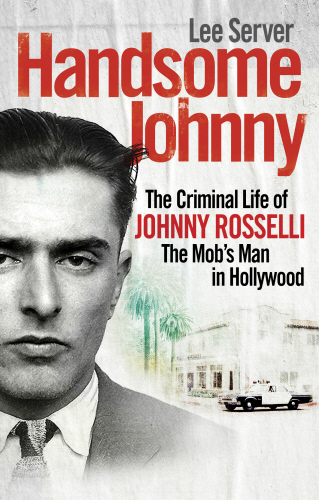
Handsome Johnny
A singular figure in the annals of the American underworld, Johnny Rosselli’s career flourished for an extraordinary fifty years, from the bloody years of bootlegging .... to the modern era of organized crime as a dominant corporate power. The Mob’s “Man in Hollywood,” Johnny Rosselli introduced big-time crime to the movie industry, corrupting unions and robbing moguls in the biggest extortion plot in history. A man of great allure and glamour, Rosselli befriended many of the biggest names in the movie capital ....  seduced some of its greatest female stars .... and produced two of the best film noirs of the 1940s.

Following years in federal prison, Rosselli began a new venture, overseeing the birth and heyday of Las Vegas. Working for new Chicago boss Sam Giancana, he became the gambling mecca’s behind-the-scenes boss, running the town from his suites and poolside ..... enjoying the Rat Pack nightlife with pals Frank Sinatra and Dean Martin. In the 1960s, Rosselli became the central figure in a bizarre plot involving the Kennedy White House, the CIA, and an attempt to assassinate Fidel Castro. Based upon years of research, written with compelling style and vivid detail, Handsome Johnny is the great telling of an amazing tale.

A smile can get you far, but a smile with a gun can get you further. - Al Capone

Now I was intrigued. Having read Martin Short's "Crime Inc" many times, I could not for the life of me remember coming across Johnny Rosselli's name in any context. In fact, I picked up the book again to ensure that I hadn't missed it - I hadn't - he's not listed or mentioned.

So who was this shadowy figure? From Server's well-researched and vivid biography, Rosselli is hardly camera shy, being involved in some of the biggest Mob activities from the 1920s to the 1960s. Server does well to tease out the little that is known about Rosselli's life, particularly his early life in Boston, which he himself endeavoured to keep secret - changing his name to ensure that it was. He moved in notable crime circles with the likes of Capone, Siegel, Lansky, Luciano, Giancana; produced two Hollywood films; was a mover and shaker in the early Las Vegas casino era of the 1940s & 1950s, where he hob-nobbed with the likes of Hollywood's Rat Pack, aspiring politicians and dodgy union bosses.

Yet nearly everything about Rosselli was cloaked in mystery; that is, until the FBI had him in their crossfire, and his wheeling and dealing was revealed, via a snitch. This investigation by the FBI opened up old wounds and long kept secrets, and eventually involved the CIA. Even in death, another mystery; why was Rosselli killed (or rubbed out) and by who - the Mob, the FBI, the CIA? Theories still abound.

Quite frankly, you can't make this stuff up - even if it does read like fiction. Rosselli lived through some of the most fascinating events and decades in history: the Roaring Twenties, Prohibition, the Great Depression, the Second World War, McCathyism, JFK and the Cuban Missile Crisis.

Server's research stands him in good stead in bringing to the fore a man who had his finger in many pies - and yet, Rosselli still somehow manages to remains an enigma.  If the Mob history is your genre, then add this to the shelves of your library.


Further Reading: 
All American Mafioso: The Johnny Rosselli Story by Charles Rappleye & Ed Becker
The FBI Records: The Vault - John (Handsome Johnny) Roselli
New York Times - Mafia Said To Have Slain Rosselli
The Harold Weisburg Archive - Obituary of Johnny Rosselli
Wikipedia - John Roselli
Break Shot Blog - Johnny Rosselli

See also my review @ Book Browse

Sunday, August 19, 2018

Eva Palmer, the American who reinvented herself as an ancient Greek goddess


Eva Palmer (1874–1952) was arguably one of the most inspiring and fascinating women of the 20th century, described as both brilliant and gorgeous with floor-length auburn hair.

The American free-thinker, director, performer and creative was widely known as a fashion icon of her time inspired by the ancient Greeks. She was also the beloved wife of seminal Greek poet Angelos Sikelianos with whom she envisioned the Delphic Festivals revival. She had recounted this story herself in her memoirs, but her own story has never been told in detail. Now professor Artemis Leontis has written the first biography of a woman mostly known through the publication of her love letters to her husband. The book, titled ‘A life in ruins’, is expected to come out in February 2019 through Princeton University Press.

read more here


further reading:
Upward Panic: The Autobiography of Eva Palmer-Sikelianos
Eva Palmer Sikelianos: A Life in Ruins by Artemis Leontis

Saturday, May 26, 2018

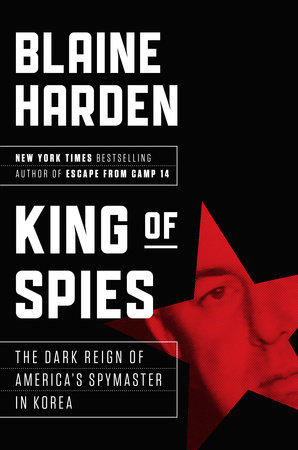
"King of Spies: The Dark Reign of America's Spymaster in Korea"

Image result for king of spies blaine hardinPatrick McEachern reviews King of Spies by Blaine Hardin for 38 North:

Blaine Harden has written another captivating narrative on Korea, this time telling the story of an American military intelligence operative, Donald Nichols, who lived and worked in South Korea for eleven years before, during and after the Korean War. The book’s teaser promises a spy story with the intrigue of a great novel or film plus the added benefit of being a true story. Through a series of interviews, Freedom of Information Act requests on Nichols’ official performance files, legal proceedings for criminal conduct and obscure autobiography, Harden separates the tall tales from the facts to create a compelling story of a relatively unknown individual’s tortured participation in the American involvement in this critical period on the Korean Peninsula.

No one is better placed to write this story than Blaine Harden. A New York Times best-selling author, Harden is a master of his craft. He knows Korea well, and his research has produced a treasure trove of information for a compelling personal account of a significant and virtually unknown American in the Korean War. King of Spies is a page-turner that is difficult to put down, and I imagine many readers will finish it in one sitting.

Saturday, May 19, 2018

See What I Have Done by Sarah Schmidt


32508637Lizzie Borden's grizzly tale is hardly the obvious story for a librarian from regional Victoria to retell as a debut novel - but Sarah Schmidt makes a suitably chilling job of rendering the last days of Andrew Borden and his wife Abby.

Covering the period leading up to the murders and the weeks that follow, the story is narrated from four different points of view. Volatile and spoilt Lizzie veers from sweet compliance to shrieking tyrant and is the prime suspect; sister Emma away from the house at the time of the murder has plenty of reasons to be jealous of her sister; the housemaid Bridget is unnerved by the residents of the Borden house and wants to leave but Mrs Borden has found her savings and is withholding them from her. Benjamin is a thug hired to frighten Mr Borden, with Lizzie's doting uncle paying the fee. The household is plagued by unease, vermin, illness and bad feeling.


read about Lizzie Borden here               
@ Wikipedia - Lizzie Borden
@ Famous Trials
@ Smithsonian Magazine
@ All Things Interesting
@ The Telegraph
@ American Heritage
read more reviews here
@ The Guardian
@ The New York Times
@ The Australian
@ Sydney Morning Herald


Sunday, May 13, 2018

Author examines issues of race in 'Down the River'

Few mystery writers can examine issues of race — how it divides and binds people — as clearly and unflinchingly as Walter Mosley, who returns to this theme in his stand-alone novel "Down the River Unto the Sea."

Examining how discrimination and prejudice affects African-Americans is right in Mosley's wheelhouse. The author doesn't miss a beat weaving this into the gritty plot of "Down the River Unto the Sea."

While the plot soars, King doesn't land as completely formed. Mosley's Easy Rawlins ruled "Devil in a Blue Dress" from the first page; Leonid McGill, Fearless Jones and Socrates Fortlow were also memorable. King needs a bit more sculpting before he reaches the level of Mosley's other characters.


Synopsis:
35173689Joe King Oliver was one of the NYPD’s finest investigators, until, dispatched to arrest a well-heeled car thief, he is framed for assault by his enemies within the NYPD, a charge which lands him in solitary at Rikers Island. A decade later, King is a private detective, running his agency with the help of his teenage daughter, Aja-Denise. Broken by the brutality he suffered and committed in equal measure while behind bars, his work and his daughter are the only light in his solitary life. When he receives a card in the mail from the woman who admits she was paid to frame him those years ago, King realizes that he has no choice but to take his own case: figuring out who on the force wanted him disposed of—and why.

Running in parallel with King’s own quest for justice is the case of Frankie Figures, a Black radical journalist accused of killing two on-duty police officers—officers Figures discovered had been abusing their badges to traffic in drugs and women within the city’s poorest neighborhoods.  Joined by Melquarth Frost, a brilliant sociopath, our hero must beat dirty cops and dirtier bankers, craven lawyers, and above all keep his daughter far from the underworld in which he works. All the while, two lives hang in the balance: Frankie Figures’, and King’s own.

read more here 

Monday, April 30, 2018

Review: Gunpowder Girls by Tanya Anderson

Gunpowder Girls: The True Stories of Three Civil War Tragedies
The US Civil War is not my forte - so apart from a couple of books, this, for me was a good and unique introduction into both Union & Confederate women.

Author Tanya Anderson was looking to focus on the role of women in the Civil War but was looking for a point of difference - In "Gunpowder Girls" she has achieved that in exploring briefly the role of women and young girls working in the arsenals - making the gun cartridges. But again, the author further narrows her purview to focus on three separate tragedies, all within a two years time frame, all of which had heavy losses of life, mainly women and young girls.

Covering three tragedies - at the Allegheny Arsenal, the Confederate States Laboratory and the Washington Arsenal, Anderson gives us a glimpse into the dangerous working conditions of these often poor, single immigrant women, and how a freak accident or ill-thought out action can have tragic consequences.

The clincher for me was that despite the investigations that followed, and other accidents (both before and after), nothing was really done to improve the working conditions and protect this vulnerable group. Even more alarming was that the families of these women received no form of compensation, except that which was often raised by their own communities or work colleagues.

This was well written and researched, with a good selection of location maps and images, and descriptions to give life to the times and working conditions of those who working in the arsenals.


Sunday, March 11, 2018

Killers of the Flower Moon: Oil, Money, Murder and Birth of the FBI

Killers of the Flower Moon - book cover.jpgKillers of the Flower Moon: The Osage Murders and the Birth of the FBI by David McGrann investigates a series of murders of wealthy Osage people that took place in Osage County, Oklahoma in the early 1920s—after big oil deposits were discovered beneath their land. Officially, the count of the murdered full-blood wealthy Osage native Americans reaches at least 20, but Grann suspects that hundreds more may have been killed because of their ties to oil. The book reports cattleman William Hale as the mastermind standing behind the murders and presents detailed evidence.


In the 1890s, the Osage had been decanted from homelands in Kansas into seemingly barren wastes in Oklahoma. The discovery of ­hydrocarbons beneath, however, shortly made them the richest people per capita in the world, occupying, as Grann puts it, America’s first ‘‘underground reservation’’.

After the oil-drilling came the gold-digging: soon enough, everyone wanted a piece of the Osage action. Conmen moved in to rip them off; lawmakers set to screwing them down; marrying an Osage provided access to an enviable lifestyle. A 30-year-old woman from Oregon wrote the tribe offering her hand: ‘‘Will you please tell the richest Indian you know of, and he will find me as good and true as any human being can be.’’

Not everyone was so ingenuous. If misfortune should befall an Osage partner, potential rewards multiplied. The official death toll of the ‘‘Reign of Terror’’ is something in the order of 60. Unofficially, Grann suggests, it is incalculable. A staff writer for The New Yorker, he concentrates on only one of a host of conspiracies, an investigation of the vendetta against the family of one Mollie Burkhart, engineered by cowboy turned ‘‘high-class gentleman’’ Bill Hale, who was at first, ironically, perceived as a sympathiser with the Osage.


read more here 


Saturday, February 10, 2018

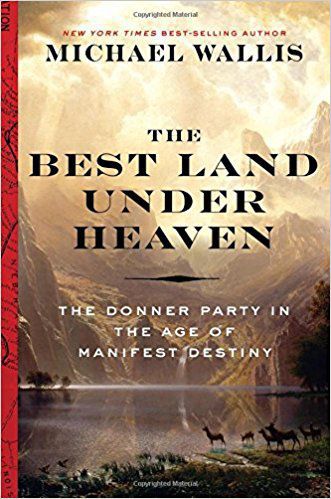
Donner Party, and gruesome details, re-examined in book

Wild West historian Michael Wallis goes into a gruesome piece of that territory’s history with “The Best Land Under Heaven,” subtitled “The Donner Party in the Age of Manifest Destiny.”

More than 80 settlers were in the group when the snow blocked travel. More than 30 died in the Sierras before four rescue operations could get to them.
“What made the Donner Party so distinctive was that this group of people had originally set out to civilize what they saw as a barbaric land. The acts of survival cannibalism refigured their story with a cruel twist — the civilizers themselves became savages.”

Sunday, June 25, 2017

Review: Seized by the Sun

Of the 38 Women Airforce Service Pilots (WASPs) confirmed or presumed dead
World War II, only one—Gertrude “Tommy” Tompkins—is still missing.
On October 26, 1944, the 32-year-old fighter plane pilot lifted off 
from Mines Field in Los Angeles. She was never seen again.

Seized by the Sun: The Life and Disappearance of World War II Pilot Gertrude Tompkins by James W Ure is part of the "Women of Action" series.

This is a good introduction into the lives of the women of WASP. The focus of this work is on one woman in particular - Gertrude "Tommy" Tompkins (1912 - 1944). It is more of a memoir than a factual history, and we are treated to stories from Gertrude's early life (childhood and family), schooling, travels and marriage prior to her joining WASP (Women Airforce Service Pilots) at its very inception.

Then the book details Gertrude's "career" with WASP - her training, her female comrades, the flying, all the while reminding us - the reader - that these were dangerous times, and many of the female pilots were killed in the commission of their duties - 38 documented losses.

And then we come to Gertrude's final flight - what did happen that day is not fully known; some details are very sketchy; her state of mind was unknown; and even today, theories abound. 

As I mentioned, it is not a factual history of WASP, its pilots, nor a traditional biography. It is a simply written memoir for the curious reader. 

Review also @ Goodreads
See also: 


The Wars of the Roosevelts: The Ruthless Rise of America's Greatest Political Family

The Roosevelts - one of America's most prominent political families - descended from Dutch immigrants, intermarrying with local well-heeled colonial families, and whose members have included two United States Presidents, a First Lady, and various merchants, politicians, inventors, clergymen, artists, and socialites. 
...... this is an absorbing, well-written and very important book for both scholars and general readers—solidly grounded in “letters, diaries, datebooks, telegrams, court records, FBI reports and contemporary newspaper accounts.” But, as author William J. Mann makes clear, the larger story of the Roosevelts has been “masterfully chronicled” many times. “Rather,” he insists, “my goal is to tell a story that has been embedded, entwined, in some ways hidden in plain sight,” within the history of politics and public policy. The rivalry of the Roosevelt dynasties, he acknowledges, is well-documented; “What’s been less acknowledged is the fact that the battles went far deeper and were more personal,” impacting the lives of “parents, children, siblings, and spouses” in what amounted to “a family at war.”
read review by Sheldon M Stern here @ History News Network

See Also:


Saturday, April 29, 2017

New Book Examines Military Legal Expansion In World War I

A new book by University of New Mexico School of Law Professor Joshua E. Kastenberg is the first published history to explore the military legal expansions of Major General Enoch Crowder, Judge Advocate General of the U.S. Army. Kastenberg also examines the development of the laws of war and the changing nature of civil-military relations.


“To Raise and Discipline an Army: Major General Enoch Crowder, the Judge Advocate General’s Office, and the Realignment of Civil and Military Relations in World War I,” has been released by the Northern Illinois University Press and is available from various book stores, including Amazon.

The book was reviewed by Fred L. Borch, regimental historian and archivist, US Army Judge Advocate General’s Corps, who comments, “No book has ever told the story behind this remarkable expansion of military legal talent. Kastenberg shows that the influential work of army lawyers significantly altered civil-military relations in the US. He should be commended for his exhaustive use of primary sources.”


Friday, February 24, 2017

White Cargo - Story of Irish Slaves


Thousands of Irish people were subjected to years of abuse and cruelty after being sold as slaves during the 17th and 18th centuries. That is the claim made by London based historians and authors Don Jordan and Michael Walsh.

The two men have written a book, White Cargo, which says that one of the darkest periods in Irish history may have been swept under the carpet for centuries. The book details how thousands of Irish men, women and children were shipped across the Atlantic Ocean to the Caribbean and America to work as labourers during the 17th and 18th centuries.


Read More Here @ Irish History