Showing posts with label world war 1. Show all posts

Sunday, November 23, 2025

Review: Rogue Agent by James Crossland

Synopsis: The thrilling biography of Robert Bruce Lockhart, Britain's 'Agent' in Moscow

Sir Robert Bruce Lockhart (1887–1970) was an impressive figure: a diplomat, intelligence agent, conspirator, journalist and propagandist who played a key role in both world wars. He was a man who charmed his way into the confidences of everyone from Leon Trotsky to Anthony Eden. A man whom the influential press baron Lord Beaverbook claimed ‘could well have been prime minister’. And yet Lockhart died almost forgotten and near destitute, a Scottish footnote in the pages of history.

Rogue Agent is the first biography of this gifted yet habitually flawed maverick. It chronicles his many exploits, from his time as Britain’s ‘Agent’ in Moscow, and his role in a plot to bring down the communist regime, to leading the Political Warfare Executive, a secret body responsible for disinformation and propaganda in the Second World War.

Exploring Lockhart’s unorthodox thinking and contributions to the development of psychological warfare as well as his hedonistic lifestyle, late nights and many affairs that left him in a state of perpetual debt, Rogue Agent tells the thrilling story of this unconventional war hero.

~ ~ ~

I was familiar with events in Russia both leading up to and following the removal of the Tsar and the installation of the Bolsheviks. However, not as much as I thought I did.

Crossland provides the reader with what seems to be akin to a "boys own adventure" but is - in reality - something far from fiction. Lockhart is an intriguing yet elusive character, a man at odds with himself, a man somewhat ahead of the political game, but one who contributed to his own downfall - a victim of his own story.

Here was a man, aged 31yo, who was given a brief by the British Foreign Office, and had it impressed upon him to undertake and ensure its success "by whatever means" - then he was unleashed into the storm. Left to his own devices, Lockhart cavorted, womanized, drank and plotted to the point that any crucial information forwarded from him was considered suspect. He ignored all the signs that would eventually lead to his own capture and imprisonment, but was lucky in that he left nothing behind to incriminate himself.

Returning to Britain upon his release, and after various jobs for the Foreign Office, he eventually found himself in the political warfare executive (WWII propaganda department).  When the war was over, so too Lockhart's career effectively came to a close. He chose writing as a means to dig his way out of his perpetual cycle of debt, producing a number of works, many of which touched upon his own life experiences.

Crossland has managed to strip back the myth and ambiguity, to reveal a little more of the real man - a man full of human foibles, whose adventures seem larger than life, but one with the sheer audacity to stand face to face with Bolshevik Russia and walk away to tell the tale. Excellent read.

Sunday, October 12, 2025

The Remembered Soldier

An extraordinary love story and a captivating novel about the power of memory and imagination.

Flanders 1922. After serving as a soldier in the Great War, Noon Merckem has lost his memory and lives in a psychiatric asylum. Countless women, responding to a newspaper ad, visit him there in the hope of finding their spouse who vanished in battle. One day a woman, Julienne, appears and recognizes Noon as her husband, the photographer Amand Coppens, and takes him home against medical advice. But their miraculous reunion doesn't turn out the way that Julienne wants her envious friends to believe. Only gradually do the two grow close, and Amand's biography is pieced together on the basis of Julienne's stories about him. But how can he be certain that she's telling the truth? 

In The Remembered Soldier, Anjet Daanje immerses us in the psyche of a war-traumatized man who has lost his identity. When Amand comes to doubt Julienne's word, the reader is caught up in a riveting spiral of confusion that only the greatest of literature can achieve.

Friday, October 11, 2019

Review: The Anatomy of a Spy by Michael Smith

46779497. sy475
Synopsis: Why do people put their lives at risk to collect intelligence? How do intelligence services ensure that the agents they recruit do their bidding and don't betray them? What makes the perfect spy? Drawing on interviews with active and former British, American, Russian, European, and Asian intelligence officers and agents, Michael Smith creates a layered portrait of why spies spy, what motivates them, and what makes them effective.

Love, sex, money, patriotism, risk, adventure, revenge, compulsion, doing the right thing— focusing on the motivations, The Anatomy of a Spy presents a wealth of spy stories, some previously unknown and some famous, from the very human angle of the agents themselves. The accounts of actual spying extend from ancient history to the present, and from running agents inside the Islamic State and al-Qaeda to the recent Russian active measures campaigns and operations to influence votes in the UK, European Union, and United States, penetrating as far as Trump Tower if not the White House.


This is a history of espionage and betrayal, peppered with real stories, predominantly from the 20th century.  Whilst outlining the difference between a spy and an agent, this book explores the motives for espionage under seven main headings, all of which cross over into each other. So why do spies spy: sex, money, tribal loyalty, revenge, control, ideology, compromise, ego, patriotism, adventure or just the right thing to do.

In summary -
(1) Sexual Relationships: the use of the honey trap, sexual coersion and blackmail.
(2) Money: contraband as currency, no loyalty when selling to the highest bidder, the need for money; unreliable method of recruiting and obtaining information.
(3) Patriotism: doing something for the good of your country, use of civilians (expats or business folk), undermining from within to bring down the rival regime (trojan horse), or the recruitment of citizens of occupied territories.
(4) Adventure: risk takers, egotists, fantasists, psychopaths, self obsession, wounded pride.
(5) Revenge: losers in a civil war, death of a loved one, exiled emigre population, anger at the ruling regime.
(6) Right Thing To Do: ideology, moral duty, belief, feeling of belonging, support for the underdog.
(7) Unwitting Agents: exertion of influence, covert use of someone without their knowledge, tactics of deception and confusion, cybercrime, whistle-blowing.

Some of these larger than life characters I was familiar with from prior reading - though not in such detail as provided here. Fleming is well featured as is that near-fictional Reilley Ace of Spies. None of these fantastical schemes would get past HR today and you are often left wondering how so many of them actually succeeded.

I was particularly interested in wartime espionage and the Cold War, as we moved further closer to our own time, my interest waned a little - but that was just me as I found the "old school" spycraft was more interesting - the human element rather than the current, modern day cybercrime and whistle-blowing (spying from a distance).

If this is your genre, it's well worth the read. 


Sunday, September 8, 2019

Veiled Warriors by Christine E. Hallett

Cover for 

Veiled Warriors


Caring for the wounded of the First World War was tough and challenging work, demanding extensive knowledge, technical skill, and high levels of commitment.

Although allied nurses were admired in their own time for their altruism and courage, their image was distorted by the lens of popular mythology. They came to be seen as self-sacrificing heroines, romantic foils to the male combatant and doctors' handmaidens, rather than being appreciated as trained professionals performing significant work in their own right.

Christine Hallett challenges these myths to reveal the true story of allied nursing in the First World War - one which is both more complex and more absorbing. Drawing upon evidence from archives across the world, Veiled Warriors offers a compelling account of nurses' wartime experiences and a clear appraisal of their work and its contribution to the allied cause between 1914 and 1918, on both the Western and the Eastern Fronts.

Nurses believed they were involved in a multi-layered battle. Primarily, they were fighting for the lives of their patients on the 'second battlefield' of casualty clearing stations, transports, and military hospitals. Beyond this, they were an integral component of the allied military machine, putting their own lives at risk in field hospitals close to the front lines, on board hospital ships vulnerable to enemy submarine attack, and in base hospitals subject to heavy bombardment.

As working women in a sometimes hostile, chauvinistic world, allied nurses were also fighting to gain recognition for their profession and political rights for their sex. For them, military nursing might help to win not only the war itself, but also a more powerful voice for women in the post-war world.

Sunday, July 7, 2019

Review: The Woman Who Fought An Empire by Gregory J Wallance

Synopsis:
Though she lived only to twenty-seven, Sarah Aaronsohn led a remarkable life. The Woman Who Fought an Empire tells the improbable but true odyssey of a bold young woman--the daughter of Romanian-born Jewish settlers in Palestine--who became the daring leader of a Middle East spy ring. 

Following the outbreak of World War I, Sarah learned that her brother Aaron had formed Nili, an anti-Turkish spy ring, to aid the British in their war against the Ottomans. Sarah, who had witnessed the atrocities of the Armenian genocide by the Turks, believed that only the defeat of the Ottoman Empire could save the Palestinian Jews from a similar fate. Sarah joined Nili, eventually rising to become the organization's leader. Operating behind enemy lines, she and her spies furnished vital information to British intelligence in Cairo about the Turkish military forces until she was caught and tortured by the Turks in the fall of 1917. To protect her secrets, Sarah got hold of a gun and shot herself. 


What we know about both military and espionage events in the Middle East during WWI I strongly suspect comes mainly from the stories of the exploits of Lawrence of Arabia and what became known as the Great Arab Revolt. This chapter in the history of Palestine I think has been largely overlooked in general, though no doubt is more familiar to purists - and I include myself in the former, which was why I was drawn to this book in the first place.

It is easy to turn the spotlight onto Sarah as " ... the concept that a spy ring might be led by a woman was still beyond the Turks' thinking ..". Indeed if we compare to the later exploits in France during WWII, though active members, most of the spy rings / resistance cells were managed / led by men. And her death itself, both tragic and heroic, certainly draws one to her like a moth to the flame - it was alleged that one Turkish officer said “She is worth a hundred men.”.

Wallance's use of letters from Sarah, her family, friends and inner circle to punctuate her story is important in giving the reader access to these lives and also into the thoughts of those who were on the spot. As eye-witness accounts, they are an invaluable component not only of Sarah's story but of that of the Nili spy ring itself. I can only thank the author for providing a much needed list of the main characters upfront and not as an appendix. So much easier to get a grasp of who was who and how they were related to each other as the story progresses.

Equally important in the storytelling is events post-WWI - and the local Jewish populations' thoughts on this period. I was quietly surprised that even up to the creation of the State of Israel in the 1940s, there was still no official recognition and that the spies themselves were regarded as "reckless and irresponsible by much of the Jewish community of Palestine". Even Srodes in his book writes that the achivements of Nili had been whitewashed out of history by those ".. who did not want to share credit with her .." for the events leading to the foundation of the Jewish State, and that with the deaths of those involved, "the family’s legacy was easily manipulated". Rehabiliation of the spy ring only came about in the late 1960s - 1970s (during the wars between the Yasser Arafat's PLO and Israel) when Israel was at its nadir and the need for the mythical leader of the Jewish resistance was at its strongest.

Meticulously researched, Wallance brings to life the events of the time, the lives of Sarah and her family, the exploits of the Nili spies, and, of course, of Sarah herself. In doing so, Wallance reveals to us the reader, the real human element. Sarah saw horrible things being done but instead of quietly looking the other way and keeping her head down, she stepped forward and made a difference.

Sarah, in one of her final letters, writes: " .. I have a large role in the work here, and if we have to endanger ourselves, my dear one, I think not of it. The work is dear and holy to me ...."

further reading
Spies in Palestine: Love, Betrayal, and the Heroic Life of Sarah Aaronsohn by James Srodes
A Spy for Freedom: The Story of Sarah Aaronsohn by Ida Cowen and Irene Gunther
Return of the Spies - Yemima Hovov

Saturday, April 6, 2019

Behind the Lawrence Legend - Philip Walker

From Oxford University Press:
CoverT. E. Lawrence became world-famous as 'Lawrence of Arabia', after helping Sherif Hussein of Mecca gain independence from Turkey during the Arab Revolt of 1916-18. His achievements, however, would have been impossible without the unsung efforts of a forgotten band of fellow officers and spies. This groundbreaking account by Philip Walker interweaves the compelling stories of Colonel Cyril Wilson and a colourful supporting cast with the narrative of Lawrence and the desert campaign. These men's lost tales provide a remarkable and fresh perspective on Lawrence and the Arab Revolt.

While Lawrence and others blew up trains in the desert, Wilson and his men carried out their shadowy intelligence and diplomatic work. His deputies rooted out anti-British jihadists who were trying to sabotage the revolt. Meanwhile, Lieutenant Lionel Gray, a cipher officer, provided a gateway into unknown aspects of the revolt through his previously unpublished photographs and eyewitness writings. Wilson's crucial influence underpinned all these missions and steadied the revolt on a number of occasions when it could have collapsed. Without Wilson and his circle there would have been no 'Lawrence of Arabia'.

Yet Wilson's band mostly fell through the cracks of history into obscurity. "Behind the Lawrence Legend" reveals their vital impact and puts Lawrence's efforts into context, thus helping to set the record straight for one of the most beguiling and iconic characters of the twentieth century.

Friday, January 4, 2019

Review: Dancing the Death Drill by Fred Khumalo

Dancing the Death Drill by [Khumalo, Fred]
France 1958 - mild-mannered waiter Jean-Jacques Henri kills two people in full view of other patrons. He doesn't run but stays to await his fate. Journalist Thierry Bousquet thinks there is more to the story, especially when he tracks down the artist Jerry Moloto - who claims there may be extenuating circumstances to consider. What is revealed is that Jean-Jacques Henri is really, one Pitso Motaung, a South African, with a story to tell.

Author Fred Khumalo recounts our fictional character's life as a youth of mixed-race growing up in South African at the turn of the century. His father is off fighting against the British in the Anglo-Boer War, whilst his mother, the granddaughter of a local chieftain, died when he was but a child of 10, leaving him to literally fend for himself. Only when aged 16yo, and more to escape the conflicting cultural aspects of his childhood, did Pitso join the war effort when he enlisted in the 5th Battalion (South African Native Labour Corps) in Cape Town. 

Khumalo writes:
The First World War broke out in 1914. By 1916 it had reached a stalemate. The Allies were desperate for more manpower. Thus the Imperial government sent out a clarion call to its subjects in all colonies, which included the Union of South Africa, still a colony and its citizens subjects of King George V.
When the call reached South African shores, many black men stood up and said they were ready to serve. But white South Africans suddenly complained that arming blacks to fight against whites would set a bad precedent. There was a growing fear that this would break down what was then called the “colour bar”. The recruitment of people of colour (which also included Indians) would embolden the black man to demand true equality with the white man in South Africa once the war was over, a thought too ghastly to contemplate.
It was then agreed that the blacks would not be armed. They would be part of a labour contingent supplying services such as: wood-collecting, water-carrying, laundry, the loading and cleaning of mechanical transport, camp sanitation and cleaning. Thus was the South African Native Labour Contingent born.  (Source: New African Magazine)

This is then was the world of Pitso Motaung - and how he found himself aboard the SS Mendi.  Khumalo continues: 
The men on the ship came from a wide range of social backgrounds – some of them were peasants, yet others were traditional chiefs, men of the cloth, and educated men, graduates of the famous Lovedale College, which, in later life, would produce the likes of Nelson Mandela and other illustrious African leaders. 

Tragedy of the SS Mendi: 
On 16 February 1917, after its last night in Cape Town, the SS Mendi sailed towards the port of Le Havre, in France via Plymouth, England. Onboard were 33 crew members and a contingent of the South African Native Labour Corps (SANLC), composed of 805 black soldiers, 5 white officers, and 17 petty officers. They were heading to France to contribute to the Allies World War I efforts. In the early morning of 21 February 1917, while crossing the English Channel, the SS Mendi was hit by a merchant vessel, the Darro, south of Isle of Wight. The SS Mendi sank in only 20 minutes. The Darro was sailing at full speed in dense fog without any light signals. Six-hundred-and-sixteen people died. Among them, 607 black soldiers. Only some of the bodies were found, those that were recovered were buried where they were found.  The larger ship initially did not stop to help the SS Mendi and its beleaguered, drowning passengers and crew. They would ultimately be rescued by their escort, the British destroyer H.M.S. Brisk, which provided protection from German U-boats and mines.

So now to the title of the book: dancing the death drill. This phrase how now entered the annals of legend. Khumalo continues:
According to oral accounts from the survivors, as the ship was sinking, their chaplain Reverend Isaac Wauchope Dyobha ordered the men, many of whom were frightened to jump overboard, to stand in formation as they had been taught on joining the army. He raised his arms aloft and cried out in a loud voice:
“Be quiet and calm, my countrymen. What is happening now is what you came to do…you are going to die, but that is what you came to do. Brothers, we are drilling the death drill. I, a Xhosa, say you are my brothers…. Swazis, Pondos, Basotho, so let us die like brothers. We are the sons of Africa. Raise your war-cries, brothers, for though they made us leave our assegais in the kraal. Our voices are left with our bodies.”
And so the men stamped their feet on the floor as they twisted and gyrated in a macabre Death Dance as it was Christened by oral historians. 
In a moment of defiance, maybe of death itself, these men were said to have marched as one, showing their willingness to die as warriors, proud of their African heritage. 

Back to our story. Pitso Motaung is one of the few survivors to be rescued, taken to France and deployed to the native labour camp. There is an inquest.  On August 8, 1917, a British court found Darro’s master, Henry W Stump, guilty of having travelled at a dangerously high speed in thick fog, and of having failed to ensure that his ship emitted the necessary fog sound signals. Stump must have heaved a huge sigh of relief when his licence was suspended for a only year.  History has since recorded that Stump did receive a report that he had collided with the ship which was transporting native troops aboard, and that it was sinking, but he chose sail full steam ahead.

In our story, whilst the captain of the SS Darro is held to account, another escapes justice ..... What happens next is Pitso flees after a violent altercation, and ultimately finds refuge in Paris (1918), marries, fathers a son, get a job as a waiter, meets the artist Jerry Moloto, and ultimately - and fatefully - encounters two enemies from his past.

As for the actual survivors of the disaster, for the most part, they were treated ingloriously. In the months before the Mendi left port, South Africa’s black leaders had actively supported the government’s recruitment campaign; many had signed up for the labor contingent themselves, hoping that their participation would help them argue for equal rights once the war was over. Instead, when they returned, their work was barely acknowledged, much less rewarded. Not one member of the contingent, not even survivors of the Mendi, got so much as a ribbon or a medal. They weren’t paid pensions, nor did they receive promised grants of land or cattle. 

While the Mendi was not the only labour corps transport to be lost at sea, in the total of South Africa's war dead of 9 500, the disaster was the second worst single loss after the attrition of Delville Wood six months earlier.

There is no evidence from survivors' accounts of the death drill, or of Dyobha's speech. In fact one eye-witness, boilermaker Jacob Malti said:
“As it sank it made a great hollow and many men were not far from it,” he later wrote. “By the time the water covered that empty space, many had gone down with it.” 
And yet Dyobha's speech has become central to understanding the indelible meaning of the tragedy – the fraternal bond, the willing sacrifice, the claim to history.


The Mythos
One of Karl Marx’s most repeated quotes is that history repeats itself “the first time as a tragedy, the second time as farce”. Like history, the interpretation of history also gets repeated, first as myth – and then in service of the political agenda of those in power.  According to Albert Grundlingh, professor in history at Stellenbosch University, in his book, War and Society: Participation and Remembrance – South African black and coloured troops in the First World War, 1914-1918:
“Until the 1980s, the sinking of the SS Mendi was commemorated regularly,” said Grundlingh in an interview with the Mail & Guardian. “But then black participation in the war was regarded with suspicion. Those black people who had participated were seen as sellouts. However, in the 1990s the ANC rediscovered the Mendi with a vengeance. And it became a symbol of heroism for the ANC. 
Grundlingh also emphatically states that mythologising is a common occurrence in all wars and in all countries. (Source Mail & Guardian)


This is a fascinating lost episode of history, thankfully not told from a European point of view. Whilst the book itself is not solely about the tragedy of the SS Mendi, it is used as part of the backstory of the main character of Pitso Motaung. However, having said that, it could quite easily have been so. If you condensed the first fourteen chapters, what you would have would make for a plausible historical mystery. 

On a final note, for me, this story has somewhat eerily similar overtones to that of the RMS Titanic - a ship in distress, a captain who did nothing, a lack of lifeboats, a tragic loss of life.


read more here 


Sunday, May 20, 2018

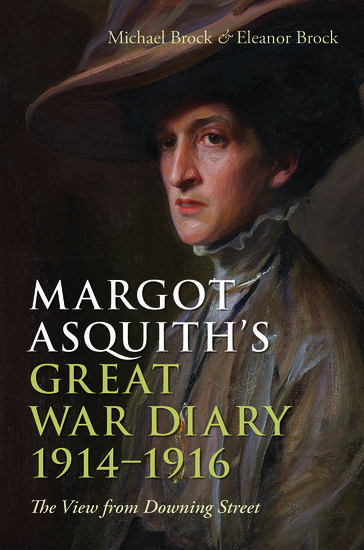
Margot Asquith's Great War Diary


Margot Asquith was the opinionated and irrepressible wife of Herbert Henry Asquith, the Liberal Prime Minister who led Britain into war on 4 August 1914. With the airs, if not the lineage, of an aristocrat, Margot knew everyone, and spoke as if she knew everything, and with her sharp tongue and strong views could be a political asset, or a liability, almost in the same breath. 


Her Great War Diary is by turns revealing and insightful, funny and poignant, and it offers a remarkable view of events from her vantage point in 10 Downing Street. The diary opens with Margot witnessing the scene in the House of Commons, as the political crisis over Irish Home Rule began to be eclipsed by the even greater crisis of the threat of a European war, in which Britain might become involved…

Sunday, March 11, 2018

Women Surgeons of World War I


Focusing on four women surgeons who made their way to war. Agnes Bennett and Lilian Cooper worked for the Scottish Women's Hospitals near the Serbian front. Conditions were incredibly harsh but both women acquitted themselves well. They returned to successful careers in New Zealand and Australia respectively.

Lilian Cooper was also our first female FRACS. Feminist Phoebe Chapple went to France in 1917 and while attached to the Queen Mary's Auxiliary Army Corps, was one of a handful of women to win the Military Medal. Vera Scantlebury was 28 when she arrived at the Endell St Military Hospital in London. Her diaries (held by the University of Melbourne Archives) record the evolution of a young and inexperienced doctor to a competent surgeon. Vera Scantlebury (Brown) was later fêted for her pioneering work in infant welfare.

Wednesday, December 27, 2017

Review - The Bandy Papers by Donald Jack


Bart Bandy is the anti-hero who seems to always come up trumps in this first volume of his wartime exploits. I kept imaging Bart in the visage of Rik Mayall's "Lord Flashheart" from the "Blackadder" series, with the naive innocence of Inspector Gadget.

Bandy's memoirs begin with his early years in Canada, then onto the battlefields of France during WWI, and then to his career in the Royal Flying Corps.

It is a humourous and witty tale written in the style of a "boys own adventure".  And finding out that the author served in the RAF in WWII, makes me wonder if this is slightly auto-biographical.  A ripping good yarn.

For fans of - "Flashman", "Biggles", and "Inspector Clouseau" or maybe even, "Inspector Gadget".  I could maybe also add for those you (like me) enjoyed Spike Milligan's books of his wartime exploits.

Link to full series here @ Farrago Books and @ Wikipedia

Saturday, December 23, 2017

Flora Sandes, the only British woman who served as a soldier during WWI

From the Vintage News:
Flora Sandes was the only British woman who served as a soldier during the WWI; she was an officer of the Royal Serbian Army. It all began when she traveled the Kingdom of Serbia as a St. John Ambulance volunteer.

In sight of the tragedy of the war happening there, Sandes enrolled in the Serbian army, and very soon she got promoted to the rank of Sergeant Major. After the war, she got the rank of Captain and was decorated with seven medals.


Author, Alan Burgess, has written a fascinating account of Flora Sandes "The Lovely Sergeant". I have a hardback copy of the 1964 edition, which I have treasured since a youngester.

You can "borrow" an online copy here @ Internet Archive


Saturday, April 29, 2017

New Book Examines Military Legal Expansion In World War I

A new book by University of New Mexico School of Law Professor Joshua E. Kastenberg is the first published history to explore the military legal expansions of Major General Enoch Crowder, Judge Advocate General of the U.S. Army. Kastenberg also examines the development of the laws of war and the changing nature of civil-military relations.


“To Raise and Discipline an Army: Major General Enoch Crowder, the Judge Advocate General’s Office, and the Realignment of Civil and Military Relations in World War I,” has been released by the Northern Illinois University Press and is available from various book stores, including Amazon.

The book was reviewed by Fred L. Borch, regimental historian and archivist, US Army Judge Advocate General’s Corps, who comments, “No book has ever told the story behind this remarkable expansion of military legal talent. Kastenberg shows that the influential work of army lawyers significantly altered civil-military relations in the US. He should be commended for his exhaustive use of primary sources.”


African Kaiser by Robert Gaudi

Anyone interested in 20th-century culture is bound to spend some time thinking about World War I. Yet while most of us are aware of the horrors of trench combat and the thousands lying dead in Flanders fields where poppies blow, what about the war outside Europe? What about German East Africa? 

Still, the war in Africa was more than a sideshow. A brilliant guerrilla strategist, Paul von Lettow-Vorbeck forged his fanatically loyal Schutztruppe — a small colonial infantry consisting of largely black soldiers — into “a highly efficient fighting force, aggressive and completely self-supporting,” and one that was “the first racially integrated army in modern history.” As von Lettow bluntly said, “Here in Africa we are all equal. The better man will always outwit the inferior and the color of his skin does not matter.” These words were not mere lip service, either: His actions show that he genuinely believed them.

Read Michael Dirda's full review at the Washington Post and see more reviews on Amazon


Tuesday, July 17, 2012

Most Beautiful Princess - Grand Duchess Elizaveta Feodorovna

Christina Croft talks about "Most Beautiful Princess – A Novel Based on the life of Grand Duchess Elizabeth of Russia".

In the early hours of the morning 18th July 1918, two carts left the small Siberian town of Alapaevsk and followed the Sinyachikhenskaya road to a disused mine. There, soldiers alighting from the carts, ordered eight blindfolded prisoners - six men and two women - to walk forwards and, striking their heads with rifle butts, forced them one after another into the waterlogged shaft. Having hurled hand grenades after them into the pit, the soldiers assumed their task was complete and were about to leave when to their amazement the sound of singing echoed from beneath the ground. From a ledge nineteen metres below a woman was singing the Russian Orthodox hymn: ‘Lord Save Your People.’

Some weeks later as the First World War drew to its bloody conclusion across Europe, battles still raged for control of revolutionary Russia. With the arrival of the White Army in Alapaevsk, the bodies were recovered from the mine: five grand dukes, a companion, and two middle-aged nuns. By the side of the incorrupt body of one of the nuns lay an unexploded grenade, on her breast an icon of Christ.

How did a fairy-tale princess, granddaughter of Queen Victoria, cousin of Kaiser Wilhelm II and King George V, and sister-in-law of two Russian Tsars come to so terrible an end? ‘Ravishingly beautiful’, ‘saintly’, ‘enigmatic’, revered as a saint by the poor of Moscow, what drove the Lutheran daughter of Princess Alice to turn her into the Russian Imperial Grand Duchess Elizaveta Feodorovna, then ‘Matushka’ mother of the poor, and finally Holy Imperial Martyr Saint Elizabeth? Why did the gentle Elizabeth of Hesse-Darmstadt, described by one her admirers as ‘the most beautiful creature of God I have ever seen’, die of infected wounds and starvation in a mineshaft in Siberia?

These were some of the questions which prompted me to write: Most Beautiful Princess – A novel based on the life of Grand Duchess Elizabeth of Russia (link: http://www.amazon.com/Most-Beautiful-Princess-Elizabeth-ebook/dp/B004JXVVQG/ref=pd_rhf_dp_p_t_1 ), whose life was so remarkable that it amazes me that so few people have even heard of her.

At the age of nineteen, ‘Ella’ married Grand Duke Serge Alexandrovich, a younger brother of Tsar Alexander III. From the moment she arrived in Russia, she became the object of both adulation and gossip, as rumours of her unhappy marriage and the alleged cruelty of her husband swept across Europe, even to the ears of her doting grandmother, Queen Victoria. Highly-strung, domineering and obsessed with order, Serge’s strong reactionary views had made him many enemies in Russia, and Ella’s absolute submission to his whims led to speculation that he treated her as little more than a glamorous ornament. The fact that the couple remained childless suggested that the marriage remained unconsummated, and increasingly salacious stories spread through Russia and beyond. For twenty years Ella endured the slanders and, following her conversion to Orthodoxy, found comfort in the practice of her religion, her devotion to charitable causes, and her overriding determination to bring to bring about the marriage of her younger sister, Alix, to the future Tsar Nicholas II. Despite immense opposition from both families – and especially from Queen Victoria - Ella ardently believed that this marriage was meant to be and promised Nicholas that she ‘move heaven and earth’ to bring Alix to Russia. For six years she argued and cajoled and when at last the engagement was announced, she could take pleasure in the knowledge that she had virtually single-handedly engineered the match...which, sadly, was to lead to such tragedy in 1918.
In 1905, in the wake of the disastrous Russo-Japanese War, discontent spread through Russia bringing the country to the verge of a revolution, which would claim the life of Ella’s husband, by then the Governor General of Moscow. One afternoon as Ella was working on a Red Cross project in the Kremlin, she heard the sound of an explosion outside and knew at once that something had happened to Serge. Running out into the snow she discovered her husband literally blown to pieces and, though the guards tried to hold her back, she gathered the remnants of his body in her own hands and had what was left of him taken to a nearby monastery. After spending the night in prayer, she visited the prison where his assassin was being held captive, to assure him of her forgiveness and to find out what had driven him to commit such a crime. From then on, Ella’s life changed dramatically. After twenty years of stagnation in a glittering palace, she gave away literally all she possessed – her palaces, furs, cars, even her wedding ring – and, purchasing a piece of land in the poorest district of Moscow, built a hospital, orphanage and convent where she trained as nurse and personally treated the most abject of patients. Wandering at night through the slums and backstreets, she gathered the orphans and child prostitutes and provided them with a home. Her schemes for the improvement of housing for students and young workers and her tireless efforts on behalf of the poor soon led the Muscovites to revere her as a saint. Wherever she went crowds gathered to ask for her blessing and to kiss the hem of her garment as she passed, but, while she won the hearts of the poor, the rich could only gaze askance in horror. To the aristocracy her way of life was a scandal, demeaning to the Imperial Family; and further divisions arose between Ella and her sister, Alix, due to Ella’s opposition to the Tsarina’s guide and friend, Rasputin.The First World War brought further heartache for Ella and Alix. Though both worked indefatigably for the Russian wounded, they could not hide their German origins and were accused of spying for the enemy. Spat at or even stoned in the street, Ella continued her work with the poor, while desperately pleading with Alix to part with Rasputin whose constant presence was bringing the dynasty to disaster. Alix refused to listen to the warnings and in one bitter scene, told Ella to leave the palace. They would never meet again.
In the early months of the Revolution, the Communists were so impressed by Ella’s care for the poor that she was allowed to continue her work unimpeded but the Bolsheviks seized power in 1918, the days of the Romanovs were numbered. Ella’s cousin and former suitor, Kaiser Wilhelm pleaded with her to escape to Germany before it was too late, but she refused to abandon her orphans. At Easter 1918, she was arrested and taken to Siberia where, the day after the massacre of the Tsar and his family, she was murdered.

Several weeks after her death, when the bodies were recovered from the mine, Ella’s alone remained incorrupt. Even a year later when the coffins were transported to China, Ella’s body remained intact. In 1921 her elder sister, Victoria (grandmother of the present Duke of Edinburgh), had her body taken to the Orthodox Church on the Mount of Olives in Jerusalem from where many miracles have been reported. Sixty years later, she was canonised by the Russian Orthodox Church and her statue now stands above the West Door of Westminster Abbey with those of other 20th century martyrs.

‘Most Beautiful Princess’ - based on my earlier biography of Ella, which was short listed for the Biographers’ Club Award in 2004 – is available in paperback and in Kindle, Nook and Apple format.

Please visit Christina at: