Showing posts with label literature. Show all posts

Monday, October 6, 2025

Review: A Danger to the Minds of Young Girls by Adam Morgan

Synopsis: The definitive biography of overlooked queer icon Margaret C. Anderson, whose fight to publish James Joyce’s Ulysses led to her arrest and trial for obscenity. Perfect for fans of The Editor and The Book-Makers.

Already under fire for publishing the literary avant-garde into a world not ready for it, Margaret C. Anderson’s cutting-edge magazine The Little Review was a bastion of progressive politics and boundary-pushing writing from then-unknowns like T.S. Eliot, Ezra Pound, William Butler Yeats, and Djuna Barnes. And as its publisher, Anderson was a target. From Chicago to New York and Paris, this fearless agitator helmed a woman-led publication that pushed American culture forward and challenged the sensibilities of early 20th century Americans dismayed by its salacious writing and advocacy for supposed extremism like women’s suffrage, access to birth control, and LBGTQ rights.

But then it went too far. In 1921, Anderson found herself on trial and labeled “a danger to the minds of young girls” by a government seeking to shut her down. Guilty of having serialized James Joyce’s masterpiece Ulysses in her magazine, Anderson was now not just a publisher but also a scapegoat for regressives seeking to impose their will on a world on the brink of modernization.

Author, journalist, and literary critic Adam Morgan brings Anderson and her journal to life anew in A Danger to the Minds of Young Girls, capturing a moment of cultural acceleration and backlash all too familiar today while shining light on an unsung heroine of American arts and letters. Bringing a fresh eye to a woman and a movement misunderstood in their time, this biography highlights a feminist counterculture that audaciously pushed for more during a time of extreme social conservatism and changed the face of American literature and culture forever.

~ ~ ~

It is a decent rather than definitive biography of a woman, who happened to be a lesbian, who ran her own publishing company, who employ other women, and who took on the "established" publishing world by serialising Joyce's "Ulyssses" much to the chagrin of the New York Society for the Suppression of Vice. It would be for this alone, that Margaret would be demonised and arrested for obscenity - resulting in her standing trial in 1921 with co-publisher, Jane Heap.

Morgan's book takes us through Margaret's earlier life - childhood, her self-emancipation from her parents, her work in non-traditional roles, including reviewing books, before establishing her own publishing company - and all the trials and errors associated with each decision and action. 

Then the obscenity trial is covered - rather too briefly for my liking - before we travel with Margaret out of the USA and onto Continental Europe where her life is a little sketchy at best. Powering through the 1930s in rather jumbled narrative - quite possibly due to the number of people introduced and the required explanations as to their associations / connections  - we jump to the final years of Margaret's life.

For a woman at the forefront of a major publishing controversy, I felt this fell a little flat. Whether this was due to a lack of sources or access to sources, I cannot tell but I was looking for slightly more than a wikipedia entry, especially with regards to the trial component.  

Look, overall, it is a great introduction to a woman whose lasting legacy was the promotion of "serious literature" in an era and to a society marked by conservative moral and literary tastes.

Wednesday, January 1, 2025

Review: Sicilian Avengers by Luigi Natoli

Synopsis: A thrilling Sicilian saga about the legendary secret sect purported to be forerunners of the Mafia, translated into English for the first time.

Emerging from the dark streets and subterranean caves of Palermo, the Beati Paoli, masked and hooded, mete out their own form of justice to counter the unfettered power and privilege wielded by the aristocracy. For the voiceless, weak, and oppressed, the Beati Paoli are defenders and heroes.

Reminiscent of a Dumas novel, Sicilian Avengers is a vibrant, atmospheric fresco of early eighteenth-century Palermo. Onto the stage of the ancient city, Blasco da Castiglione, a bold, brash, orphan adventurer, arrives on a quest to discover his origins and seek his destiny. But this fearless, swashbuckling D’Artagnan-esque hero unwittingly gets caught up in a devious and murderous succession plot involving a powerful noble family.

When the Beati Paoli hear about this plot to usurp a rightful inheritance, they spring into action. Their shadowy machinations entangle the charismatic Blasco, who crosses paths with a cast of characters that test his loyalty and resolve in the pursuit of his true identity.

The historical accuracy of the novel is complemented by the most meticulous description of Sicily’s capital city ever written. Action-packed and laced with intrigue and chivalrous duels, Sicilian Avengers is a tale of love and hatred, friendship and betrayal, suffering and retribution.

~ ~ ~

The novel is set in Sicily over a period of about 20 years: 1698 - 1718, when Sicily was under both Spanish and Savoyard rule. Sicily at this time was recovering from an outbreak of plague, a serious earthquake, and frequent attacks from the Barbary pirates.

Sicilian Avengers is the story of the conflict between the evil, greedy and ambitious Don Raimondo Albamonte, a Sicilian aristocrat, and the Beati Paoli, a secret, oft times violent, organization committed to punish Don Raimondo for his various crimes.  A battle of good versus evil.  It is also a family saga with the main protagonist, Blasco de Castiglione, following the standard pathway of the "hero's journey", when events and family truths come full circle.

Reader be warned: this is a lengthy tome, combining two books, both well over 500 pages each. This definitely has to be read as a physical book due to both its size and the cast of characters. The writing style may not be to everyone's tastes - the descriptions are detailed and plentiful. No-one can deny that this novel is not well researched.  I do think it would be more enjoyable to the modern reader with a little bit of diplomatic editing to reduce the size whilst maintaining the overall context. 

Tuesday, September 7, 2021

Professors in America and the U.K. fight back against the cancelation of Geoffrey Chaucer

Academics in both America and the United Kingdom have recently taken actions to prevent Geoffrey Chaucer, the “father of English literature,” from being labeled a rapist, racist and anti-Semite.

In late July, Cambridge University medieval and renaissance English Professor Jill Mann resigned from her position on the board of the Chaucer Review, an academic journal specializing in the work of “The Canterbury Tales” author.

The journal had published an essay called “New Feminist Approaches to Chaucer” in which authors Samantha Katz Seal and Nicole Sidhu argued it is time for feminists “to move past Chaucer” because: “He is a rapist, a racist, an anti-Semite; he speaks for a world in which the privileges of the male, the Christian, the wealthy, and the white are perceived to be an inalienable aspect of human existence.”

The authors also provide evidence that Chaucer himself was a rapist, relaying on a 14th century legal document in which a woman named Cecily Chaumpaigne accused Chaucer from a crime known as “De raptu meo.”

Other scholars have argued the word “raptus” could refer to an “abduction” and point out the legal document actually showed Chaumpaigne releasing Chaucer from any legal obligation related to the claim.

Nonetheless, Katz Seal, a professor of English and women’s studies at the University of New Hampshire and Sidhu, an English professor at Eastern Carolina University, argue feminists “should identify” with Chaumpaigne and not Chaucer.

But Mann objected to the negative characterization of both Chaucer the man and his work.

“To approach Chaucer with this mind-set is to substitute a grotesque caricature for the humane values that distinguish him from many other writers of his time, and that students, in my experience, are quite capable of appreciating,” Mann wrote in a letter to the Times Literary Supplement.

It wasn’t the first time Chaucer had been attacked in British academia. Earlier this year, the University of Leicester announced a plan to remove Chaucer from the English curriculum, replacing him with a “selection of employability modules” and a “chronological literary history” determined by the school’s administrators.

The announcement was made after the school vowed to “decolonize” its curriculum.

Meanwhile, in the U.S., Texas A&M English Professor Jennifer Wollock has argued that Chaucer “was no raunchy proponent of bro culture,” but a “daring and ingenious defender of women and the innocent.”

“I believe the movement to cancel Chaucer has been bamboozled by his tradecraft – his consummate skill as a master of disguise,” Wollock wrote in an essay for The Conversation in July.

Wollock, who has researched Chaucer for decades, argues his works are fiction, and he should not be punished for accurately representing unsavory characters.

“Readers often assume Chaucer’s characters were a reflection of the writer’s own attitude because he is such a convincing role player,” writes Wollock. “Chaucer’s career in the English secret service trained him as an observer, analyst, diplomat and master at concealing his own views.”

Rather than being a sexual predator, she notes her research has found Chaucer “supported women’s right to choose their own mates and the human desire for freedom from enslavement, coercion, verbal abuse, political tyranny, judicial corruption and sexual trafficking.”

Wollock notes that Chaucer salutes the heroism of Jews in an early poem called “The House of Fame.” And she defends Chaucer in the Chaumpaigne episode, noting few authors have ever been more outspoken about man’s inhumanity to women.

“It is bizarre that one of the strongest and earliest writers in English literature to speak out against rape and support women and the downtrodden should be pilloried and threatened with cancellation,” she writes.

Neither Mann nor Wollock responded to requests for comment by The College Fix. Sidhu objected to the charge she is trying to “cancel” Chaucer.

“It is a strange kind of ‘cancel culture’ that produces an entire issue on the writer we are supposedly cancelling,” Sidhu wrote about the edition of the Chaucer Review in which her essay with Katz Seal appeared. “Not to mention that Sam has written an entire book on Chaucer, is writing another one and I have a book chapter and several articles devoted to him.”

“We love Chaucer’s writing but you don’t need to be dishonest about his personal life or his racial politics to think he is brilliant or want to study or write about him,” Sidhu wrote.

“In terms of cancelling, it seems to me that the person who resigns from an editorial board because she doesn’t like something she reads is far more an example of cancel culture than two scholars noting the nuances involved in thinking about the work and life of one of our greatest writers,” she said of Mann’s resignation.

Sunday, August 22, 2021

Review: Powers & Thrones by Dan Jones

Synopsis: Dan Jones's epic new history tells nothing less than the story of how the world we know today came to be built. It is a thousand-year adventure that moves from the ruins of the once-mighty city of Rome, sacked by barbarians in AD 410, to the first contacts between the old and new worlds in the sixteenth century. It shows how, from a state of crisis and collapse, the West was rebuilt and came to dominate the entire globe. The book identifies three key themes that underpinned the success of the West: commerce, conquest and Christianity.

Across 16 chapters, blending Dan Jones' trademark gripping narrative style with authoritative analysis, Powers and Thrones shows how, at each stage in this story, successive western powers thrived by attracting – or stealing – the most valuable resources, ideas and people from the rest of the world. It casts new light on iconic locations – Rome, Paris, Venice, Constantinople – and it features some of history's most famous and notorious men and women.

This is a book written about – and for – an age of profound change, and it asks the biggest questions about the West both then and now. Where did we come from? What made us? Where do we go from here?


It should come as no surprise that Jones has decided to take on 1000 years of history and condense it into one tome.

To be perfectly blunt, I can take or leave Jones as an author - its nothing personal. I've read his books and find them entertaining enough, but to be honest he is not one of my "go to" authors - I don't go all "fan girl" when I see his books.

Having said that, this is quite a good, well-rounded read, that will appeal to the masses. It is broken down into four parts, and four sub topics, that flow in a linear timeline. The focus encompasses both Roman Empires (East & West), Europe and the UK. Its only when discussing the Arabs and Mongols does Jones veer from a predominantly Euro-centric narrative.

To give you an idea of what is in store for the reader, I have provided a little summary - each chapter and part can be read as a "stand alone" .

Part I - 470 - 750.
Its four sub catergories are:
Romans - the Roman Empire (social, military, culture and religion) with a focus on Britain and its invaders
Barbarians - Goths, Vandals, Visigoths, Huns, et el
Byzantines - predominantly Justinian and Theodora
Arabs - invasions and their conflict in the Mediterranean (Greeks and Franks)

Part II - 750 - 1215
Franks - Merovingians and Carolingians, focusing on Charlemange up the fracturing of the kingdom
Monks - looking mainly at the Christianity of the monks, pilgrimage sites
Knights - rather self explanatory, with good detail on El Cid, and the chivalric romances
Crusades - covers from the First to the decline, circa Emperor Frederick III

Part III 1215 - 1347
Mongols - their push westward, biographies on notable leaders including Tamerlane
Merchants - Venice and Genoa feature, with the emphasis on trade routes, banking, the rise of the Republics, and of course, Marco Polo and Dick Whittington
Scholars - rise of the universities, translations of Arabic sources, the insular nature of the church scholars, Isidore of Seville
Builders -Edward I's castle building in Wales, cathedrals, fortified cities

Part IV 1347 - 1527
Survivors - plague, little ice age, economic reform and rebellion, reign of Richard II of England
Renewers - Joan of Arc, Jan van Eyck, Leonardo da Vinci, the Medici, the Renaissance, Chaucer, Dante, Petrarch
Navigators - siege of Constantinople, medieval voyager to India, Africa and the Americas, and the explorers such as Henry the Navigator, Magellan, Columbus, and the Conquistadors
Protestants - papal schism, reformation, Martin Luther, Henry VIII, Charles V

So, you can pick and choose areas of interest, which makes the one thousand year history over seven hundred plus pages seem not that daunting.

The aim here is to entertain and inform, and Jones does this remarkably well; and there is - of course - plenty of notes and references for the avid history buff to go exploring further on their own.

I would recommend this to anyone looking for a slightly different take on the history narrative - and for all fans of Jones!

Saturday, December 12, 2020

Fife professor's project to write first history of medieval Scots literature a 'dream come true'

A university professor from Fife is to write the first full-length history of medieval Scots literature as it developed in the then-independent kingdom of Scotland more than 600 years ago.

Professor Rhiannon Purdie, of the School of English at St Andrews University, has described the opportunity as “the dream come true” after being one of three academics to receive major research fellowships totalling almost £320,000 from the Leverhulme Trust.


The two-year appointment allow the professor to write the first concise history on the subject.

It will also involve her teaming up with Scottish Qualifications Authority (SQA) to reintroduce Older Scots poetry to the Higher and Advanced Higher English curriculum, in a project informally dubbed ‘Older Scots for Modern Scots’.

read more here @ The Courier

Saturday, October 24, 2020

Jewish Women and Their Salons by Emily Bilski & Emily Braun

From their debut in Berlin in the 1780s to their emergence in 1930s California, Jewish women’s salons served as welcoming havens where all classes and creeds could openly debate art, music, literature, and politics. This fascinating book is the first to explore the history of these salons where remarkable women of intellect resolved that neither gender nor religion would impede their ability to bring about social change.

Emily D. Bilski and Emily Braun examine the lives of more than a dozen Jewish salonières, charting the evolution of the salon over time and among cultures, in cities including Berlin, Vienna, Paris, London, New York, and Milan. They show how each woman uniquely adapted the salon to suit her own interests while maintaining the salon’s key characteristics of basic informality and a diversity of guests. 

Other distinguished contributors to the volume discuss in detail the Berlin salons of the 1800s; the salon in terms of Jewish acculturation and its relation to gender and music; and the relations of Marcel Proust, Oscar Wilde, and Gertrude Stein to the literary salon. 

The book is enriched with a lavish array of illustrations, including documentary photographs, paintings, drawings, prints, and decorative arts.

Sunday, November 17, 2019

Denmark, Iceland at odds over priceless medieval manuscripts

They recount tales of Viking raids, Norse history, kings and gods: a priceless collection of medieval manuscripts, bequeathed by an Icelandic scholar to the University of Copenhagen in the 18th century, that Iceland now wants back.

UNESCO, the U.N. cultural organization, has called them “the single most important collection of early Scandinavian manuscripts in existence,” with the earliest one dating from the 12th century.

Some of the texts — known as the Arnamagnaean Collection — have already been returned to Reykjavik, but 1,400 documents are still locked away in Copenhagen.


The jewel of the collection is an almost complete early 15th century copy of “Heimskringla” — the best known of the Old Norse kings’ sagas, originally written in the 13th century by Icelandic poet and historian Snorri Sturluson.

Unlike many Icelandic medieval manuscripts, which have few decorative flourishes, this version of the Heimskringla is richly illustrated with intricate red lettering on each page.

read more here @ The Japan Times

Sunday, October 27, 2019

It All Depends on 31 Syllables: A study of the power of Japan's medieval waka

Imagine if your social stature and your livelihood were dependent on your ability to write poetry and refer to the work of other poets. If there were poetry competitions among the elite that decided one’s worthiness. Or if the entire direction of a nation could be changed via 31 syllables.


Japanese waka, a 31-syllable precursor to haiku, held just this kind of sway for several centuries. Its role in a power play between two imperial factions is at the heart of Kendra Strand’s current book project, An Unfamiliar Place: Poetry, Landscape, and Power in Medieval Japanese Travel Writing. Strand (Asian & Slavic Languages & Literatures, CLAS) is an Obermann Fellow-in-Residence this fall who is focused on three men who were writing between 1350 and 1375 in the Nanbokuchō era: Sōkyū, Nijō Yoshimoto, and Ashikaga Yoshiakira. A Buddhist priest, a statesman, and a shōgun, respectively, these men knew each other and alluded to one another in their writing.


Saturday, May 25, 2019

Fantasy adventures of early-modern Walter Mitty


The fictitious adventures of a 17th century con artist, who fooled London society for years with his made-up travellers’ tales, were put on public display at St John’s College, Cambridge five years previous.

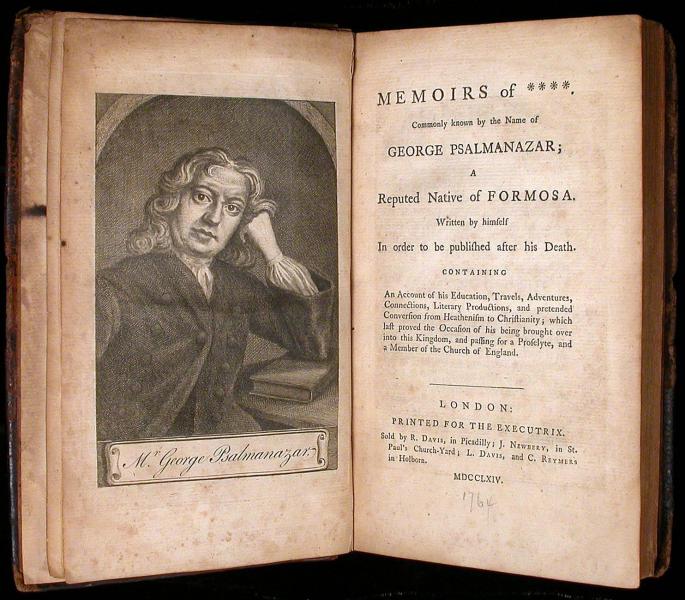
The 1704 work, The History of Formosa, describes in great detail the culture, language and customs of the island nation of Formosa, modern-day Taiwan. The book was supposedly written by a native of Formosa who was brought to Europe by Jesuit missionaries, but all is not as it seems.

The catch is that the author, who called himself ‘George Psalmanazar’, was actually a white, blond-haired Frenchman who had never left Europe. Every detail of Formosan life that the book describes is completely made up. Psalmanazar was a fantasist who, like an early Walter Mitty, spent his life in a world of his own imagination. His hoax was so successful that to this day, we still don’t know his real name.

To modern readers, Psalmanazar’s stories seem far-fetched but they successfully fooled an English audience with little or no experience of other cultures and a view of the world that saw foreign people as primitive and savage. Psalmanazar’s book was an unqualified success. 

Even today, we still know very little about who Psalmanazar really was, because his posthumously-published autobiography deliberately obscures the details. 

In his final years, he wrote a frank confession with instructions in his will for it to be published after his death in 1763. This account, entitled Memoirs of XXX, Commonly known by the name of George Psalmanazar, a reputed native of Formosa.

Saturday, November 10, 2018

Guide to the Classics: The Icelandic Saga


Icelanders love books, both reading and writing them, and in recent years, translations of contemporary Icelandic literature have made it into bookshops and literary pages abroad in increasing numbers.

“Saga” is an Icelandic word that means “something said, a narrative.” Originally, the term is likely to have been applied to stories that were probably formed and transmitted orally. Later, they came to be recorded in writing, in handwritten manuscripts, many of which survive to the present day, though a good number have perished over the past 500 years or so.

Sagas of kings are historical biographies of the kings of Norway (and to a lesser extent, of Denmark) from prehistoric times into the 14th century.

The most widely accessible at present are probably the most recent Penguin translations, which are new editions of a five-volume series originally published in Iceland in 1997 as “The Complete Sagas of Icelanders.” 

My personal favourite compilation is Jane Smiley's "Sagas of the Icelanders

Saturday, December 23, 2017

Touché: The Duel in Literature

In Touché: The Duel in Literature, Dr John Leigh explores expositions of duelling in three centuries of writing. The first ever book devoted exclusively to the depiction of duelling in fiction, drama and poetry, Touché is pan-European in its scope and scholarly in its unpacking of contests that range from the comic stand-offs between Sir Lucius O’Trigger and Captain Jack Absolute in Sheridan’s The Rivals to the elegantly orchestrated cut and thrust of Dumas’s musketeers.

The sheer theatricality of the duel makes it an irresistible literary device, whether to demonstrate a gentleman’s valour in facing down a rogue or to mock the posturing of a foolish buck. The richness of the drama lies in the stage directions: the count-down to the allotted hour, the scene at dawn or dusk, the pacing out of the exact distance between opponents, the checking of weapons, and the sobbing of bystanders. The deeper fascination, for the reader, is with the process by which words become deeds and the freedom of the nobleman is enmeshed in an utterly inexorable, irrevocable process.


read more here 

Sunday, October 1, 2017

The Battle of Clontarf - Ireland’s Troy?

New research suggests that the standard account of the Battle of Clontarf - Cogadh Gáedhel re Gallaibh (“The War Of The Irish Against The Foreigners”) – was partly a literary history borrowed from a classic tale of the Trojan Wars.

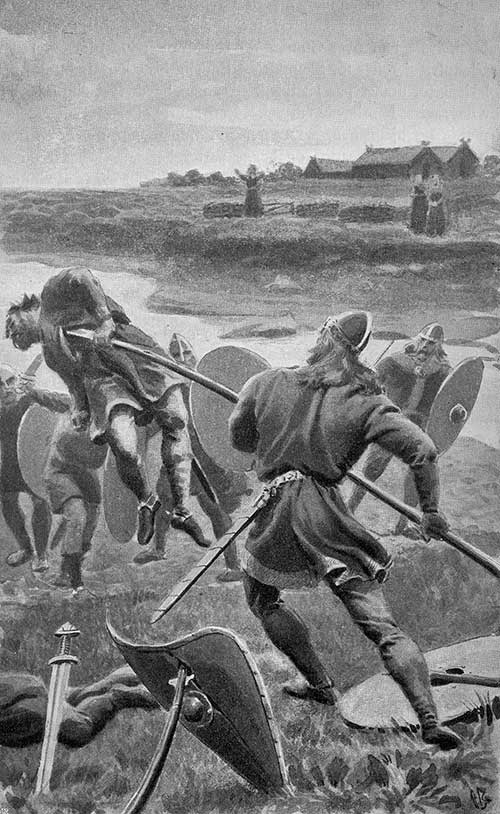
In Classical Literature and Learning in Medieval Irish Narrative edited by Ralph O'Connor, a chapter by Maire Ni Mhaonaigh - The metaphorical Hector': the literary portrayal of Murchad mac Bríain - relooks at the historical accounts of the Battle of Contarf, the legendary battle between the Irish and the Vikings in 1014.
Through a close study of the text, Dr Ní Mhaonaigh found that the imagery, terminology and ideas draw inspiration from a range of earlier sources – in particular Togail Troí (The Destruction of Troy), an eleventh-century translation of a fifth-century account of the battle for Troy.
In popular history, the battle has been characterised as an epic and violent clash between the army of the Christian Irish High King, Brian Boru, and a combined force led by the rebel king of the territory of Leinster, Máel Mórda, and Sitric, leader of the Dublin-based Vikings. The disputed outcome saw the Vikings beaten off, but at huge cost. Brian himself was killed, and became an iconic figure and Irish martyr.
“Academics have long accepted that Cogadh couldn’t be taken as reliable evidence but that hasn’t stopped some of them from continuing to draw on it to portray the encounter. What this research shows is that its account of the battle was crafted, at least in part, to create a version of events that was the equivalent of Troy. This was more than a literary flourish, it was a work of a superb, sophisticated and learned author.”
read more here @ University of Cambridge


From the tenth century onwards, Irish scholars adapted Latin epics and legendary histories into the Irish language, including the Imtheachta Aeniasa, the earliest known adaptation of Virgil's Aeneid into any European vernacular; Togail Troí, a grand epic reworking of the decidedly prosaic history of the fall of Troy attributed to Dares Phrygius; and, at the other extreme, the remarkable Merugud Uilixis meic Leirtis, a fable-like retelling of Ulysses's homecoming boiled down to a few hundred lines of lapidary prose.


Monday, June 12, 2017

Politics of Food in Medieval English Romance Literature

Throughout civilized history, posits Aaron Hostetter, humans have rendered the material world edible in order to define our lives.

Finding evidence of this age-old truth, Hostetter explores the politics of food practices of medieval English culture as illustrated in romance literature of the time in his new book, Political Appetites.

The Rutgers–Camden researcher affirms that the romance literature in England during the medieval period, conceived broadly from the ninth to the 15th centuries, shows how food and food practice reveal human aspirations, as well as an enduring struggle with the limits of human existence.

read more here @ Rutgers-Camden News

Sunday, May 28, 2017

The Eyre Affair by Jasper Fforde

Fforde started out in the film industry from age 20, working his way up to cameraman. He is said to have received a total of 76 rejection letters before his debut The Eyre Affair, a literary detective story was published in 2001 when he was 40 years old. 
In Jasper Fforde's Great Britain, circa 1985, time travel is routine, cloning is a reality (dodos are the resurrected pet of choice), and literature is taken very, very seriously. England is a virtual police state where an aunt can get lost (literally) in a Wordsworth poem and forging Byronic verse is a punishable offense. All this is business as usual for Thursday Next, renowned Special Operative in literary detection. But when someone begins kidnapping characters from works of literature and plucks Jane Eyre from the pages of Brontë's novel, Thursday is faced with the challenge of her career. Fforde's ingenious fantasy-enhanced by a Web site that re-creates the world of the novel--unites intrigue with English literature in a delightfully witty mix.

Thanks to Bustle for this tip off as they listed it in their "9 books to read if your drawn to delightfully weird characters" list"

Jasper Fforde writes weird characters almost exclusively (even when he's borrowing from the rest of the literary canon). Thursday Next herself is a literary detective with a pet dodo. Her father is a time traveler. Her friends and enemies range from reanimated neanderthals to talking gorillas to Hamlet. If you're looking for a whole gang of "out there" characters, the Thursday Next series should be high on your list.

Read more here 
@ the Guardian - interview with Jasper Fforde
@ the Independent
@ wikipedia - Thursday Next


Tuesday, May 10, 2016

The Most Successful Literary Hoaxes in History

Whether or not you enjoy a good hoax depends on your perspective; put simply, if you’re the victim, you probably won’t be amused. But, as they say, time heals all wounds, and a truly worthy hoax can be appreciated for its genius once enough time has passed. Here are eight literary hoaxes that were so successful, you simply have to admire them.
Blog post by Jeffrey Somers

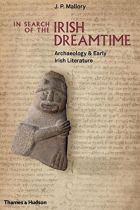
In Search of the Irish Dreamtime: Archaeology and Early Irish Literature

JP Mallory describes this book as a companion to his The Origins of the Irish, from 2013, in which he sketched the emergence in the early medieval period of a people who were recognisably Irish. In that book he briefly examined the legendary history of Ireland as written down in early-medieval times by clerical scholars who prized the vernacular traditions of poetry, myth and legend and gave them an honoured place side by side with the Latin learning of the church.

Review by Michael Ryan in The Irish Times

Tuesday, September 22, 2015

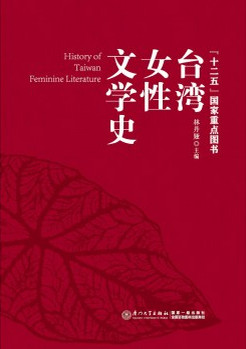
History of Taiwan Feminine Literature

A new book, which maps out the historical lineage of Taiwan women's literature spanning from ancient times to the early 21st century, was launched at the 11th Cross-Strait Book Fair held in Xiamen, a coastal city in southeast China's Fujian Province, on September 12.
The book titled "History of Taiwan Feminine Literature", consists of nearly a million characters. It deftly portrays the origin, development and evolution of the distinctive South Asian literary arena.
Publishing insiders recognize that the book is the first on the Chinese mainland to feature such a long time span of Taiwanese literature studies, filling a notable gap in the history of Chinese literature, and of women's literature worldwide.