Showing posts with label jewish history. Show all posts

Saturday, October 24, 2020

Review: The Secret Diaries of Juan Luis Vives by Tim Darcy Ellis

Synopsis: It is 1522, The Spanish Netherlands, Juan Luis Vives, a renowned academic, has fled Spain to avoid the fires of the Inquisition, yet even here he is not safe. When England's Sir Thomas More offers him the role of tutor to Mary, daughter of Catherine of Aragon and Henry VIII, he eagerly accepts.While publicly navigating life as a 'New Christian,' Vives is quickly drawn into the secretive and dangerous world of London's Jewish community. With a foot in each world, he is torn between the love of two women.

Inside the Tudor court, the king and queen separately seek Vives's assistance to support their opposed demands. He must betray one to help the other, knowing his decision could cost him his life. Whom will he choose? Will his wily skills allow him to manipulate them both? Not only his survival but that of his family and his entire people hang in the balance.


But first, a little background ....

The Jews In England:
There were individual Jews living in England in Roman and Anglo-Saxon times (80-1066 A.D.), but not an organized community. When William the Conqueror arrived in England in 1066, he encouraged Jewish merchants and artisans from northern France to move to England. One of the oldest Jewish communities in England was in Oxford, where Jews had begun to settle as early as 1075. Jews still faced persecution and were not fully protected by the Crown. They were still the targets of attacks on themselves, their businesses, their communities. The 13th century witness rampant anti-semitism. 

By 1290 the inevitable happened when Edward I - who had found an alternative source of finance in the Italian merchants known as the "pope's usurers" - banished the Jews from England. England was the first European country to do so but in the following centuries France, Spain, Portugal and others would follow suit.

A small number remained, either by converting to Christianity or concealing their identity and religion. These converts were know as crypto-Christian or marranos. It was documented from Inquisition records that many still (secretly) practised their beliefs. The problem with the records of English Jewish converts to Christianity from the pre-Expulsion period is that their "former" Jewish names were rarely, if ever, recorded. A census of Oxford Jewish converts from the year 1247 survives and, typically, records only their new "Christian" names without any reference to their previous lifelong Jewish identity.

Small communities of Spanish and Portuguese conversos in London and Bristol were tolerated by both Henry VIII and Edward VI. Many were required to reside in the Domus Conversorum, or "House of Converts". Interestingly, Registers of the inmates of the London Domus Conversoruum from 1331 to 1608 survive, but only list forty eight Jewish individuals (38 men and 10 women) - over this entire period of 277 years.


Fast forward a couple of hundred years and we find Jews prominent at the Tudor and Elizabethan courts. Many of the foreign musicians at this time, notably the Lupos and Bassanos, were most probably also originally or covertly Jewish, brought over from Italy. Others might be found teaching Hebrew at Oxford and Cambridge, or helping Bodley with the Hebrew catalogue at the University Library. In fact, Henry VIII openly welcomed Jewish Hebrew scholars who he hoped would help him find the Biblical loophole through which he could extricate himself from his marital complications. (see Henry VIII & the Oxford Hebraists by Rabbi Eli, Oxford University Chabad Society)

Years later, in the reign of Queen Elizabeth I, a converso, Hector Nunes was celebrated for being the first to give warning of he impending Spanish Armada.  And shortly after, a prominant Jew and converso, Roderigo Lopez, Elizabeth I’s personal physician, was tortured, then drawn and quartered in 1594 for allegedly conspiring to poison the Queen. As a result, many Jews fled to the Low Countries, often disguised as Catholics.

While the overwhelming majority of Elizabethans had never knowingly met a Jew, by the end of the 16th century, interactions between Jews and English were becoming more frequent, especially abroad, in Morocco and Turkey as well as in Antwerp, Amsterdam and Venice, where Jewish communities were flourishing. These encounters gradually called into question many of the stereotypes that had prevailed in an England largely free of Jews for 300 years.

So, for more than 300 years no Jew, officially, existed in the country. It was not until Charles I was beheaded that the Jews felt safe to return. In 1655, the position of Jews in England was transformed when Rabbi Menasseh ben Israel of Amsterdam delivered his famous petition to the Council of State, requesting their readmission. Oliver Cromwell supported the petition and established that no actual law forbade readmission, thus paving the way for Jews to return to the country, a gradula process which took many years.


Jews In The Low Countries (Belgium, Flanders, the Netherlands)
In the 13th and 14th centuries, Jews settled in the Low Countries after being expelled from England and France, where they were received and permitted to settle, providing services, paying taxes and under the protection of the law. 

After the initial persecutions of the 14th century, another wave of immigration to Belgium came in the 15th century from Spain and Portugal, fleeing the Spanish Inquisition with Antwerp hosting the largest community. Whilst many Jews still remained in the Iberian peninsula under constant suspicion and fear of denunciation, practicing either their new religion in public and Judaism in secret, or both, the newly independent and tolerant Dutch provinces of the Low Countries provided more favourable conditions for observant Jews to establish a community, and to practice their religion openly. They also brought navigation knowledge and techniques from Portugal, which enabled the Netherlands to start competing in overseas trade with the Spanish and Portuguese colonies.


Juan Luis Vives (1493–1540) was a Spanish humanist and educational theorist who strong opposition to scholasticism made his one of the most influential advocates of humanistic learning in the early sixteenth century. After fleeing his native Valencia in the facing of the Spanish Inquisition (where his family, who converted from Judaisim to Christinaity, suffered greatly), he ended up in Paris where he was immersed in the learning offered there. Settling in Bruges (1514), he was introduced to Erasmus and appointed as tutor to the Flemish nobleman William of Croy. Vives lived in Louvain and taught at the Collegium Trilingue. From 1523 to 1528, Vives divided his time between England, which he visited on six occasions, and Bruges, where he married Margarita Valldaura in 1524. 

In England he attended the court of Henry VIII and Catherine of Aragon, and was tutor to their daughter, Mary. He also held a lectureship at Corpus Christi College, Oxford, and associated with English humanists such as Thomas Linacre and Thomas More (though to what extent this intimate familial relationship was I am unsure). In 1528 he lost the favor of Henry VIII when he supported Catherine of Aragon in the matter of the divorce. He was placed under house arrest for a time, before being allowed to return to Bruges. The last twelve years of Vives’ life were his most productive, and it was in this period that he published several of the works for which he is best known today. 

Juan Luis Vives was a towering figure of the Renaissance, a man of immense learning, integrity, and originality, yet he still remains very little known, even to the scholarly world. His conception of Christianity was developed in a posthumous and influential treatise De veritate fidei Christianae. Among Vives’s last works was a handbook of private prayers intended for the laity.


This is the period we as readers are interested in - Vives time in Bruges, Louvain and England - the period in which he wrote his diaries, and of his ongoing battles with his personal and religious identities - he was the son of coversos and was born into Christianity - wherein he spent much time trying to reconcile these two facets of his identity, both privately and publicly.  Vives is portrayed as a tortured soul, pouring out his religious frustrations onto the pages of his (not so secret) diary.  He is a deeply flawed man, walking a political tightrope who is clearly out of his depth, and somewhat naive in his approach to the machinations of those around him.  The reader is also left wondering whether Vives is mourning not only the loss of his family (at the hands of the Inquisition) but also his religious identity - is he a Jew or Christian?


This is a fascinating and well researched work into a man who I would not hesitate to say is barely known.  Though a work of fiction, author Tim Darcy Ellis peppers the diary pages with real historical figures and events, giving that authenticity that readers love.  I would have liked to have known more about Vives actions in England toward bringing about an open Jewish settlement, however I am guessing documentation on this aspect is few and far between.  Overall, an enjoyable read on a less known figure.


read more here:
- Letters of Juan Luis Vivies at the Bodleian
- Juan Luis Vives on Poor Relief
- Chapter 2. A short history of the Conversos from The Long Journey of Gracia Mendes by Marianna D. Birnbaum
- Interfaith Encounters between Jews and Christians in the Early Modern Period and Beyond by Daniel Jütte

Monday, June 10, 2019

Yankel's Tavern: Jews, Liquor, and Life in the Kingdom of Poland by Glenn Dynner

In nineteenth-century Eastern Europe, the Jewish-run tavern was often the center of leisure, hospitality, business, and even religious festivities. This unusual situation came about because the nobles who owned taverns throughout the formerly Polish lands believed that only Jews were sober enough to run taverns profitably, a belief so ingrained as to endure even the rise of Hasidisms robust drinking culture. As liquor became the regions boom industry, Jewish tavern keepers became integral to both local economies and local social life, presiding over Christian celebrations and dispensing advice, medical remedies and loans. 


W. Grabowski, After a Quart of Vodka, (1883). Courtesy of Professor Hillel Levine.

Nevertheless, reformers and government officials, blaming Jewish tavern keepers for epidemic peasant drunkenness, sought to drive Jews out of the liquor trade. Their efforts were particularly intense and sustained in the Kingdom of Poland, a semi-autonomous province of the Russian empire that was often treated as a laboratory for social and political change. Historians have assumed that this spelled the end of the Polish Jewish liquor trade. However, newly discovered archival sources demonstrate that many nobles helped their Jewish tavern keepers evade fees, bans and expulsions by installing Christians as fronts for their taverns. The result a vast underground Jewish liquor trade reflects an impressive level of local Polish-Jewish co-existence that contrasts with the more familiar story of anti-Semitism and violence. 

By tapping into sources that reveal the lives of everyday Jews and Christians in the Kingdom of Poland, Yankels Tavern transforms our understanding of the region during the tumultuous period of Polish uprisings and Jewish mystical revival.

Monday, July 2, 2018

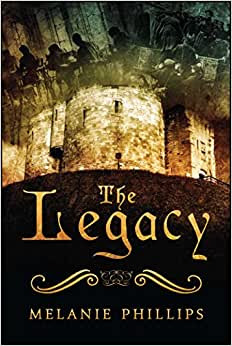
The Legacy by Melanie Phillips

From NY Blueprint:
A TV producer, the Holocaust, and an ancient Jewish manuscript collide in the latest book from British journalist Melanie Phillips, "The Legacy". As her first work of fiction, Phillips, 67, found it a particularly engaging challenge that pushed her methods of both research and writing to new heights. She explores everything from grieving, to the habits of medieval Jewry.

Some years previously, I had come across someone who had stumbled upon a medieval manuscript and that experience had lodged in my mind. I also read a book which related a particularly shocking story about Holocaust Europe and which made an enormous impression on me. Once I had written my own “medieval manuscript” for the novel, the rest of the story, including the mystery that it represents and the attempt to unravel it, gradually fell into place.
read entire interview here @ NY Blueprint


Sunday, May 6, 2018

Towards Tolerance: Christian Appeals to Jews in the Middle Ages

The notion of a “persecuting society” has achieved an unwarranted acceptance among many medievalists, who now merely assume that raw hatred, hunger for power and the creation of a homogenous society was at the core of the Church’s treatment of nonbelievers — pagans, Muslims and, most problematically, Jews — rather than any sincere concern for the salvation of souls.

Edmund Mazza, a professor of history at Azusa Pacific University in Los Angeles, attempts to refocus current scholarly assumptions about the Jewish-Christian dynamic in The Scholastics and the Jews: Coexistence, Conversion and the Medieval Origins of Tolerance.

Mazza’s book is a fine work of scholarship examining key figures and texts on the road toward religious tolerance in the Middle Ages. It’s a valuable step toward reorienting this dialogue away from crude, ahistorical anti-Catholic polemic and toward something more fact-based, which is why it’s so jarring to find a political preface almost scuttling the project on the first page. 

Mazza’s goal is not a whitewashing of Christian misdeeds against the Jews, but an unfolding of the more complex interactions — social, political, pastoral and theological — of the Christians and unbelievers in the Middle Ages.

Thursday, May 18, 2017

Books: Holocaust History

From History News Network, comes two books tackling controversial characters from modern history.

The Devil's Diary
New York Times bestselling author Robert K. Wittman is the author of The Devil’s Diary: Alfred Rosenberg and the Stolen Secrets of the Third Reich. As an FBI agent and then a private consultant specialized in recovering artifacts of historic significance, he first learned of the diary his new book is about in 2001, when the chief archivist for the U.S. Holocaust Memorial Museum contacted him to say that someone was trying to sell it for upwards of a million dollars. 
The diary is as significant an artifact as any that Henry or I had found in our careers. It is a priceless historical artifact, and at a time when fewer and fewer witnesses to the Holocaust survive to tell their stories, it is a powerful reminder of the cataclysmic perils of a hateful and misguided ideology like Alfred Rosenberg’s.
read more here @ History News Network

The Pharmacist of Auschwitz?
Interview with author Patricia Posner whose book The Pharmacist of Auschwitz? details the life of Victor Capesius, the Nazi who was the chief pharmacist and co-worker of Dr Josef Mengele at Auschwitz.
Capesius, on the other hand, is typical of many SS officers who were involved in terrible crimes at Auschwitz but sailed under the radar for a long time. He was one of the small cogs that allowed the Nazi killing machinery to work so efficiently.  Capesius is the quintessential ordinary man who becomes capable of extraordinary crimes, the concept that historian Hannah Arendt coined as the “banality of evil.”
read interview here @ History News Network

Saturday, September 17, 2016

Jewish life in ancient Afghanistan and Persia

Ynetnews Jewish Scene - Rare documents shed light on Jewish life in ancient Afghanistan and Persia
A rare collection of 250 documents from the 11th to the 15th century was purchased by the National Library and reveals for the first time the main trade routes of the Silk Road, which stretched from the Far East to Europe. The collection, dubbed the Second Afghan Genizah, was found several years ago in caves in the city of Bamyan in central Afghanistan. The find is considered an ancient and rare treasure from which scholars can learn much about life in ancient Jewish and Muslim communities in Persia and Afghanistan before the Mongol conquest.
Most of the texts were written by Jewish and Muslim merchants who lived in the period preceding the destruction the Mongol armies wreaked from 1258-1260, when they were led by the grandson of Genghis Khan.

Read article here at Ynet News

Thursday, September 15, 2016

Who Really Wrote the Book of Job?

Who Really Wrote the Book of Job? - Jewish World - Haaretz - Israel News Haaretz.com
The Book of Job is quite possibly the strangest book in the Hebrew Bible, and is notoriously difficult to date.
In essence, Job is an essay on the problem of evil. The book starts with God and Satan discussing Job, a “perfect and upright” man who “feared God and eschewed evil” (1:1). Satan tells God that Job is only virtuous because he is well off; were he to suffer, he would surely “curse thee to thy face” (1:11). God accepts the challenge and gives Satan permission to destroy Job’s life.
Since the story lacks any historical context and no historic individuals are mentioned, it is very hard to date.
There's a snag, though. The language in Job is unlike any other found in the Bible, or outside it. True, the book is written in Hebrew, but it is very strange Hebrew indeed. It has more unique words than any other book of the Hebrew Bible. The language is archaic, which would indicate that it was very ancient: but it is also heavily influenced by Aramaic, which would make it relatively late.
Read more: Haaretz News