Showing posts with label 13th century. Show all posts

Friday, July 18, 2025

Review: Women in the Scottish Wars of Independence by Beth Reid

Synopsis: The Scottish Wars of Independence are often celebrated for the heroic deeds of men, but behind the scenes, noblewomen played an equally pivotal role in shaping the nation’s fate. In Women in the Scottish Wars of Independence, Beth Reid brings to life the stories of these remarkable women, from royalty to influential landowners, whose contributions to Scotland’s turbulent history have long been overlooked.

From noblewomen like Isabella MacDuff, Agnes Randolph, and Agnes Comyn—who made kings, defended castles, and led conspiracies—to royal women who influenced key decisions and defined dynasties, this book paints a vivid picture of resilience, strategy, and courage. Through chronicles, royal charters, and material culture, Reid uncovers how these women navigated war and politics, revealing their critical yet underappreciated roles in shaping the outcomes of the Wars of Independence.

Focusing on noblewomen rather than ordinary lives, this book offers a fresh perspective on a male-dominated narrative, shedding light on the influential partnerships and actions of women who stood at the heart of Scotland's history. With meticulous research and compelling storytelling, Women in the Scottish Wars of Independence is essential reading for history enthusiasts eager to explore the often-untold contributions of Scotland’s noblewomen during one of its most formative periods.

~ ~ ~

On the one hand, Reid's book is a very detailed history of the period commonly known as the Scottish Wars of Independence - the era dominating the political landscape of Scotland from the death of the little Maid of Norway to the Treaty of Berwick which formally ended the wars and secured the release of King David II of Scotland from English captivity.

On the other hand, it is an attempt to give to a small cohort of women a more visual role on the political chessboard than they may have previously been given.

To the first, Reid provides an ample study of the succession, sovereignty and overlordship of Scotland during this period. The internal political factionalism, dynastic ambitions and prevalent warfare was dominated by men. Reid states her intent to provide a renewed focus on experience and perceptions of real people, particularly women; and this this tome will provide an accessible "correction to the wider understanding of 13th and 14th century Scottish women in warfare". However, the evidence is sparse and Reid relies on a wider context and a fair bit of speculation as to what may or may not have occurred.

Reid then collates her chosen subjects into three categories: politics, warfare and captivity. Under "politics" the focus in on the rise of the Bruce women; under "warfare" the focus is on the likes of Agnes Randolph and her ilk, who defended their castles against enemy armies; whilst "captivity" focuses on the humiliating and isolating fate of primarily the Bruce women after the defeat of Robert (kudos for exploring and and expanding on this in particular).

My issue, as with many other tomes of this style, is when an author attempts to ascribe to their given subject much more than is their due, particularly when "evidence" is lacking. 

To summarise: the women featured have not been overlooked - there is ample documentation both on the internet and in print - and what his been provided herein can easily be found via both if that is what you are looking for - I could put my hand on a number of books in my own library to support this. Secondly, I would question whether all these women had "critical roles in shaping the outcomes" - one or two or three perhaps, or is Reid possibly referring to this "critical role" in the context of dynastic political marriages. Thirdly, and unfortunately, I - personally - found no "fresh perspective on a male dominated narrative" - because that is essentially what it was - a period dominated by men and their actions on both the political and military fields. Yes, there were a number of women who stood out for their deeds and actions - however, we can find many examples among their historical counterparts both on the Continent and on home soil, both before and after their own times.  These are not singularly exceptional or unique only to the Scottish Wars. Again, these actions must be put in context to both the politics of the period and of personae dramatis in whose orbits they circled.

To give the author, Beth Reid, their dues, the book is well researched, providing a good background and context of the politics of the day; it accessible (conversational even) to the lay reader, thus not a dry, academic tome; and provides a good launching pad for further research. A well-read historical researcher will not find anything new.

Saturday, February 10, 2024

Review: Peter of Savoy by John Marshall

Synopsis: 
Where did the story that ended with the great Edwardian castles of north Wales begin? How was it that hundreds of men from Savoy built castles in north Wales? Whose stylised statue sits outside the Savoy Hotel in London on the site of his former palace? Whose castle of Pevensey endured successfully the longest English siege? Why does much of Switzerland speak French to this day? Why do we find elements of the Magna Carta in the Statutes of Savoy? Who was one of the greatest figures of the thirteenth century? Peter of Savoy, known to chroniclers of his homeland as
The Little Charlemagne.

Peter of Savoy came to England as the uncle of Queen Alianor de Provence, the consort of King Henry III. He quickly found favour as one of Henry’s closest advisers and noblemen. Peter was in effect Queen Alianor’s right-hand man in England, her protector, and subsequently the protector of Lord Edward, the future King Edward I. He played a key role in Henry’s military and diplomatic efforts to recover his ancestral lands in France which culminated in the 1259 Treaty of Paris. This rapprochement between the Capetians and Plantagenets might have warded off the Hundred Years War, but it was not to be.

Nonetheless, the nineteenth-century monks of Savoy thought it his greatest accomplishment. Peter played a key role in the Second Baronial War which engulfed Henry’s reign, at first siding with Simon de Montfort but then changing sides as the reform movement veered toward xenophobia. Returning to Savoy he laid the foundations for the County of Savoy to become a powerful Duchy which in turn almost became a country before it was dismembered by Switzerland, Italy and France. His historical reputation suffered at the hands of English chroniclers keen to eulogise the Montfortian regime. This work is an attempt to discover the real Peter of Savoy.

~ ~ ~

It get five stars as it ticked all the boxes for me - it achieves what it sets out - to discover the real Peter of Savoy.

And why five starts - it is a biography about a man who was at the forefront of European politics in the 13th century; it is a biography that provided additional information from what I had already read; it is a biography that provided a more balanced view of an historical figure; and it is a biography that I would be more than happy to have on the shelves of my own library (and will be - adding it to my own library, that is). Definitely one for those with an understanding of period and the major players, but also one for those looking for that little bit more.

Marshall does extraordinarily well to bring to life the character and person that was Peter of Savoy. Marshall notes that in reference to the Savoyards and their attachment to the royal family, that "... in assessing 13th century international affairs, we must think of them as family first and foremost ...". For that was how monarchs ruled - they tended to surround themselves not only with capable military and political minds, but with family, whose loyalty to them and them alone, was rarely doubted. And in Peter of Savoy and his family, Henry III, King of England, found a staunch ally who guarded the monarchy through the later tumultuous years of his reign. Peter was a pragmatist, who led a life with one foot in England and the other in Savoy; who was driven by the protection of his family and its interests in the Plantagenet dynasty. His niece was - afterall - Queen of England - but he was more than that - though depending on the political camp you were in, he was both praised and vilified.

Marshall begins with Savoy - and Peter's (or Pierre) antecedents, the foundation of the County, and its early links to England. In Savoy, Marshall advises, succession is never so simple and there was constant inter-family strife over inheritance from both sides of Peter's family - those in Savoy and those in Geneva.

Then the focus then turns to four sisters, the daughters of Raymond Berenguer V, Count of Provence. Briefly, these are: Margaret (m. King Louis IX of France); Eleanor (m. King Henry III of England); Sancha (m. Richard, King of the Romans, and brother of Henry III); and finally, Beatrice (m. Charles I, King of Sicily). And mentioned above - family was key in the world of international politics (he was uncle to all four women) - and these marriages, as with others, would play their part.

Peter found himself at the English court, where his appointments were viewed with some suspicion - nepotism was alive and well in 13th century England. However, Peter was a very capable administrator who was well rewarded - how else was he able to manage the affairs of both England and Savoy! But his main aim was to build a familial network around both Henry III, but more importantly, around his niece Eleanor and her son, Edward (later King Edward I of England). 

Henry's reign was far from popular: there were failed military forays (designed to reclaim lost Continental lands); there were the attempts to place his brother on the Imperial throne and his second son on the throne of Sicily; there were rebellions in Gascony; and there were efforts to remove the influence at court of "foreigners".  This period in English history would also be known for the Barons' Wars, and the rise and fall of the King's brother-in-law, Simon de Montfort.

The latter part of Peter's life would see him back in Savoy, consolidating his European lands, taking on the Habsburgs, settling disputes and ensuring the family succession. He was a key player on the international political scene; he was a reformer, a visionary, a statesman and diplomat, and a peacemaker.

I could literally wax lyrical about this book till the cows come home - but for those with an interest in 13th century European politics, this is a must have biography.

I would recommend reading this in conjunction with Marshall's book: Welsh Castle Builders

Sunday, June 25, 2023

Review: The Night of the Wolf by Cassandra Clark

Synopsis: The ruthless reign of Henry IV and the clerical tyranny of Archbishop Arundel keep Brother Chandler and his friends under constant threat in this gripping medieval mystery featuring friar-sleuth Rodric Chandler.

Chester, 1400. Riding for his life, with a copy of Chaucer's heretical Canterbury Tales in his possession, friar-sleuth Brother Chandler is ambushed on the road and wakes up in a stranger's house.

Is his 'rescuer', wool merchant John Willoughby, friend . . . or foe? Willoughby declares that he, like Chandler, has renounced the self-crowned King Henry IV and will help Chandler get his dangerous belongings to safety. He seems trustworthy, but Chandler knows that if he's caught by the King's merciless censors together with the Tales, he'll be burned at the stake.

But then Willoughby's young wife perishes in a terrible accident at their house - or so it seems . . . Willoughby asks Chandler to help investigate if it was indeed an accident or if someone had a hidden agenda.

All Chandler wants to do is find safe haven for Chaucer's Tales and return to London, but he accepts the case. Little does he know that it will lead to secrets being uncovered which will put not only Chandler but also those around him in unimaginable peril.

~ ~ ~

"The Night of the Wolf" follows on directly from the two preceding Brother Chandler books. Richard II is dead; Henry IV is king; Chaucer is missing presumed dead; Chandler is a wanted man, in possession of Chaucer's only works.

For those that are interested, Chaucer's "Canterbury Tales" (which were unfinished at the time of his death) were considered to be controversial at the time as they criticized the clergy and called attention to all the hypocrisy, thievery, abuse of power, lying, and self-enrichment characteristic of the clergy. His ties with the Lollards lead to his books being considered heretical.


Clark really does give the reader a sense of how things were at the start of the reign of Henry IV: the claims of Richard II's supporters that he still lived, threats from the Welsh under Owain Glyn Dwr, crisis after crisis following his seizure of the throne, burning of heretics, fear and paranoia. 

However, there is no real inkling that the actual background to this story-line is based upon the mysterious disappearance of Chaucer! The story instead focuses on the secondary mystery of the murder of a merchant's wife. For me, this is not up to the standard of the first two - it dragged on a bit, and the side narratives of the "Mattie" character were surplus to stock - again!  Unfortunately for me there is too much hithering and dithering.  We constantly moving back and forth between London and Chester for this secondary investigation, which for Chandler, being such a wanted man in possession of a precious cargo, is surely the last thing he should be doing. 

Look, I will interested to see how the next in the series pans out, but I am not breaking down doors to do so.

Sunday, January 30, 2022

Review: Siciliana by Carlo Treviso


Synopsis: A family torn apart by conflict. An uprising of deadly magnitude. A nation altered forever. Inspired by actual events, "Siciliana" is the harrowing tale of a young woman’s courage in the face of unthinkable turmoil.

In 1282 AD, the Kingdom of Sicily is under the rule of a tyrannical French king and subject to his brutal Angevin army. Daily acts of violence and persecution are commonplace in a once-prosperous realm.

For twenty-year-old Aetna Vespiri, daughter of a revered Sicilian knight, survival has become second nature. As a child, she witnessed the destruction of her family’s vineyard by Angevin soldiers and spent the next decade learning the tenets of stiletto blade combat.

Years later in Palermo, as the evening bells toll for Vespers, Aetna fends off a nefarious sergeant and sparks an uprising against the Angevin occupation. Now, standing at the forefront of an accelerating people’s rebellion, Aetna finds herself fighting not only for a nation she believes in but also for the meaning of family. In her darkest hour, this dauntless Sicilian woman steps out of obscurity and into the pages of history. The legend of "Siciliana" is born.

Set amid bustling Arab markets and brooding Norman fortresses, "Siciliana" will envelop readers in the sights, sounds, and dangers lurking around every corner of medieval Sicily.


The Sicilian Vespers (vespiri siciliani) was a successful rebellion on the island of Sicily that broke out at Easter 1282 against the rule of the French-born king Charles I, who had ruled the Kingdom of Sicily since 1266.

The island of Sicily had been part of the Kingdom of Sicily, which had encompassed the southern Italian peninsula since the early 12th century, when Roger II of Sicily defeated the Italian mainland barons and was elected king by the pope. His reign had been inherited by Frederick II of Sicily, whose son Manfred would be ousted by the French invasion of Charles I of Anjou. The French rule soon assumed a repressive and ferocious nature.

On Easter Monday (30 March) 1282, at the Church of the Holy Spirit just outside Palermo, at evening prayer (vespers), a Frenchman harassed a Sicilian woman. Accounts differ as to what the harassment entailed, who the woman was, and who the Frenchman was. Fed up with years of oppression, insolence and brutality, the cry went up - "moranu li Francis" - death to the French!.  This single event led to the massacre of four  thousand French men and women within twenty four hours, and possibly as many as thirteen thousand over the course of the next six weeks. The government of Charles lost control of the island - and the War of the Sicilian Vespers was underway.

The Chronica of the Catalan mercenary Ramon Muntaner (d.1336) recounts the rebellion of the peoples of Sicily wherein he notes that "... all Sicily rebelled against King Charles and they killed all the Frenchmen they could find ..". Although a contemporary of the times, he too ascribes no one single person as the catalyst for the events whose "... efficiency and ruthlessness frightened monarchs far beyond Naples and Rome ..." according to renowned author Louis Mendola.

Instead Treviso, in this fictional account, has given the rebellion a voice and a focal point - a woman - as most accounts lay the reasons for the massacre of the French firmly in the camp of outrages committed against a woman or women leaving Church during the holy week of Easter. The continuance of the initial rebellion, however, has since been credited to one Alaimo da Lentini, a former supporter of the Angevan presence in Sicily and now ally of the Aragonese.

Treviso begins by recounting Siciliana's beginnings and thus the events that led her to champion the people and led the rebellion. This was no easy task - and there was much opposition to the rebels, including from the Sicilian nobility and the Church, whose current favoured position was under threat. Once we return to 1282, the countdown to the Vespers begins in earnest as we go behind the scenes to various places and locales within the city of Palermo, watching and waiting as the tinderbox is about to be lit.

Treviso provides an engaging and at times, fraught narrative, as the players on the chessboard are being slowly and carefully positioned for the impending finale.

As an avid student of Sicilian history, I welcomed this fictional account of one of many a major turning point the history of this island nation.


Sunday, October 3, 2021

Review: Royal Mysteries: The Medieval Period by Timothy Venning

Synopsis: Royal murder mysteries never fail to intrigue readers and TV viewers. Here are some of the most haunting and even horrific episodes from the middle ages, based on latest historical research and historiography, and authentic and rare sources, including archaeology and DNA evidence, uncovering wonderful tales of pathos, tragedy, suffering and romance. This is history for specialists and general readers - and sceptics - given the intense media coverage, including TV, and interest in exciting and accessible popular history. The famous and also less well-known mysteries, which may be new to readers, surrounding British Royalty, are included from around the 11th to the 15th centuries.

The murder mysteries show personal and individual tragedy but are also a vehicle for historical analysis. William II - William Rufus - was he murdered or killed accidentally by a 'stray arrow', allowing brother Henry to seize the throne, or was it God's punishment for William's irreligious living and persecution of the church? Or was Edward II murdered at the instigation of Queen Isabella - 'she-wolf of France' - and her lover, Roger Mortimer. who assumed the throne? Did he survive to live peaceably in Italy? Richard II resembled Edward II, as a rather inadequate figure, and was deposed by his rival, Henry IV. Did he die, and if so, was it murder or suicide? Was Edward IV a bigamist? Mystery, if not murder, but wrapped in dynastic rivalry and sex scandal, and usurpation of the throne. The 'Princes in the Tower' and who who killed them if anyone? A beguiling mystery for over 500 years with their usurping uncle Richard III's guilt contested by 'Ricardians'.


I was eager to read this one as I have a number of Tim's books already on my library shelf - and who doesn't love a good mystery. 

The mysteries being explored were not unknown to me - in fact I explored one of these mysteries myself in greater depth (death of William II) and the controversy surrounding the "Princes" still captures my imagination even today, after much reading on the matter.

Venning takes each mystery, provides some historical background and context, examines the contemporary accounts, looks at all the players before asking the age old question - cui bono? Who stands, or stood, to gain, and so might have been responsible for it or precipitated the actions of a third party?

Venning directs the readers attention to the existence of "fake news" in medieval times wherein the writer or chronicler is playing to their own agenda and contemporary audience, and as such must be viewed as a potential unreliable source.  In fact, as the reader and student of history will know, no source is completely without bias - just because it was written at the time does not necessarily mean it is the most accurate account.  Venning even comments that history is but "... a hall of mirrors with distorted reflections .."

Moving on to the mysteries themselves and what we have learned.  Well not much really.  I was rather disappointed to find that there was no real conclusion one way or the other - no definitive proofs. Venning does not take any particular stance - he explores all aspects of each mystery and just presents us with all the information, evidence and accounts, and leaves it up to the reader to discern what they will from it.

Whilst I will assume (whether rightly or wrongly) that this book is for the consumption of popularist history, I did find the narrative to be rather long-winded, repetitive, and definitely non-linear. I would suggest some fore-knowledge of the subject matter at hand would be appropriate. Overall, I liked it and would probably pick this up again - at a later date.


Also By Author:
- Royal Mysteries: The Anglo-Saxons and Early Britain
- The King Arthur Mysteries: Arthur's Britain and Early Medieval World


Review: The Two Isabellas of King John by Kristen McQuinn

Synopsis: King John of England was married to two women: Isabella of Gloucester and Isabelle of Angouleme. The two women were central to shaping John and his reign, each in her own way molding the king and each other over their lives. Little is known about Isabella of Gloucester and she has largely become an historical footnote; Isabelle of Angouleme has a reputation as a witch and poisoner. However, both were products of their time, victims and pawns of the powerful men whose voices overwrote the experiences of women. By examining these two very different women through a modern feminist lens, The Two Isabellas offers new insight into one of England's lesser-known queens and a different interpretation of one of its least popular kings.

In The Two Isabellas of King John, Kristen McQuinn offers new and intriguing insights into two of England's important yet little understood queen-consorts, the wives of King John. Taking a feminist light, McQuinn brightly shines it on both England's least well-known consort, Isabella of Gloucester, his first wife, and one of its least popular, Isabelle of Angouleme, his child bride.


Firstly I am troubled by the use of phrases such as "feminist light" and "feminist lens" - quite frankly what does this mean. I grew up in the era where "women's lib" and "feminism" were concepts and movements that touched on every area of a woman's experiences — politics, work, family, equality and sexuality. These hard won victories are currently being enjoyed by latter generations, so to bandy such phrases about today, puts me a little on edge. Don't get me wrong, I am all for looking at historical characters and events in a new light, but why does the work of a female author looking at a female character need to be labelled "feminist". And what is a "modern feminist lens" - how is it different from the views of the numerous female authors who blazed a trail beforehand.

Secondly, I really take umbrage at the following phrase: " ... offers new insight into one of England's lesser-known queens and a different interpretation of one of its least popular kings .." Quite frankly what does this actually mean - what new insight because - for me - there was no new insight, no shining light on two lesser known queens, no new interpretation on the view of John's reign.  Lately the number of history books using the phrases "new information" and "new insights" that have actually delivered on this I could count on one hand (excluding my thumb).

And so, sixty-five pages down, there was nothing remotely resembling anything close to a biography or life story for either women - just a lot of "academic" twaddle, assumptions and educated guesses with the occasional mention of either or both. A lot of "concepts" being explored but not a lot substance on either woman so far. In fact, I was ready to chuck the whole thing in there and then. But I persevered through dry and boring monotone, page after page, on the role of women, queens and mothers, childhood and childbirth, fashion, trade, architecture and education, with little to endear this reader and nothing this reader had not discovered in other tomes previously written, many of which stand as the pre-eminent works not only of their own times but even now.

A couple of phrases I did pick up on - but again I have said them so often myself - is that the lives of medieval women - regardless of social status - was typically viewed through the agency of the men in their lives - their fathers and other male kin, their husbands, and finally their sons. McQuinn does acknowledge that "... the roles of women, even queens, most often fell with the private family-orientated realm, and thus outside the purview of most chroniclers .."  Hence, with very little information on either woman to use and turn into a singular biography, we are left looking at both their lives in relation to their marriage to the same man - King John of England. Darren Baker in his work "The Two Eleanors of Henry III" (read my review here) presented something similar and managed to pull it off slightly better than McQuinn has done.

The only time we really get a sense of the presence of either woman is from about page 80 to about 120 - a mere forty pages - the bulk of which is dedicated to Isabella of Angouleme, John's second wife - his first wife, Isabella of Gloucester hardly features at all. And here, the same information can be found in any number of tomes already published on both John and the era in question.

And yet, again, accordingly to the blurb: "The two women were central to shaping John and his reign, each in her own way molding the king and each other over their lives." I am sorry, but I must have been reading a completely different book. Based upon the fact the McQuinn constantly tells us that there is a distinct lack of knowledge on either woman, that they themselves left no personal accounts, and that contemporary accounts show neither woman in a positive light, how can one make the sweeping statement that they were "central to shaping John and his reign".  In fact, the underlying message I got from all of this was the laying of blame for John's behaviour firmly at the feet of both women, which is more in line with a misogynist viewpoint than a feminist one. 

Overall, I came away from this less than impressed.  I skimmed through the final chapter (on the portrayal of both in fiction) and headed straight for the sources - no surprises there for me - and some of those listed I found myself questioning the usage of but that's just my humble opinion.

For me, this was just another in a long line of tomes being churned out by this publisher that all promise the same thing - and funnily enough, deliver it - and that thing being delivered is not much at all.  Would I recommend this - no I wouldn't - not for the generalist reader nor the specialist reader.

I can hear the tut-tutting already. Am I being too harsh, surely there were some redeeming features.  Well, the only redeeming feature is that the author is to be applauded for taking on this task in the first place.  I do know how hard it is to craft a decent tome around a subject matter where there is little or no information - but please don't provide me with something that you can't deliver on.  If there is nothing on your chosen subject - acknowledge and move on!  I personally would much prefer a smaller volume than pages of padding.


Saturday, August 7, 2021

Review: Crusaders and Revolutionaries: De Montfort by Darren Baker

Synopsis: One of the families that dominated the thirteenth century were the de Montforts. They arose in France, in a hamlet close to Paris, and grew to prominence under the crusading fervour of that time, taking them from leadership in the Albigensian wars to lordships around the Mediterranean. They marry into the English aristocracy, join the crusade to the Holy Land, then another crusade in the south of France against the Cathars.The controversial stewardship of Simon de Montfort (V) in that conflict is explored in depth. It is his son Simon de Montfort (VI) who is perhaps best known. His rebellion against Henry III of England ultimately establishes the first parliamentary state in Europe.

The decline of the family begins with Simon’s defeat and death at Evesham in 1265. Initially they revive their fortunes under the new king of Sicily, but they scandalise Europe with a vengeful political murder. By this time it is the twilight of the crusades era and the remaining de Montforts either perish or are expelled. Eleanor de Montfort, the last Princess of Wales, dies in childbirth and her daughter is raised as a nun.


I had been drawn to the de Montforts many years ago, long before this book was quite possibly conceived, so was immediately attracted to the fact that the focus of this was on the family themselves, particularly as pertaining to the remnants of the family post Evesham.

The de Montforts appeared on the political scene during the crusading era, and were, for all intents and purposes, enthusiastic in their support. This did not necessarily mean that they were always in agreeance with motivations of those pulling the strings, however, it may help us to understand the religious fervour of later generations.

They were a family with their collective fingers in many political pies - their ties with other notable and powerful families as well as the crowns of both England and France, I feel, had been long forgotten until now as Baker weaves all the threads together into one tome. The de Montforts' connections - socially, politically and familially - often saw them at odds with each other, despite the fact that they were an extremely tight-knit family collective - and Baker demonstrates this well.

There is ample research done of the early de Montforts but the focus will always be on father and son - Simon V and Simon VI - whose exploits have come down to us over the many years, and are explored in depth here as well. But as I mentioned earlier, for me, it was the latter de Montforts that I was particularly interested in, and was able to glean a few snippets to enhance my knowledge. And readers will be interested in the role of the de Montfort women, who were no shrinking violets.

The de Montforts ended how they began, in obscurity. But whilst in the ascendant, they were the Icarus of their generation - flying that little bit too close to the sun. This is one tome that I will definitely be adding to my own library.

Sunday, June 13, 2021

Edward I and the Governance of England, 1272–1307 by Caroline Burt

This important exploration of the reign of Edward I – one of England's most lionised, feared and successful monarchs – presents his kingship in a radical new light. 

Through detailed case studies of Shropshire, Warwickshire and Kent, Caroline Burt examines how Edward's governance at a national level was reflected in different localities. She employs novel methodology to measure levels of disorder and the effects of government action, and uncovers a remarkably sophisticated approach to governance. 

This study combines an empirical examination of government with an understanding of developing political ideas and ideological motivation, and contributes towards a greater understanding of the development of local government and politics in England in the thirteenth and fourteenth centuries. Edward emerges as a king with a coherent set of ideas about the governance of his realm, both intellectually and practically, whose achievements were even more remarkable than has previously been recognised.

The Brus Family in England and Scotland 1100-1295 by Ruth Blakely

Robert de Brus, the "conquisitor of Cleveland, Hartness and Annandale", who came into England among the followers of Henry I, was also a close companion and mentor of David I, king of Scots. The lands he acquired from bothkings were divided between his sons, from whom two lines descended: the lords of Skelton, influential Northerners who played an active part during the baronial troubles in the reigns of John and Henry III, and the prominent cross-Border lords of Annandale, co-heirs of the substantial Chester and Huntingdon estates and progenitors of King Robert Bruce.

This study takes a fresh approach to the Brus family by assessing the achievements of the two lines in parallel while examining the extent of their power and the development of their lordships; it highlights the inter-relations between the barons of England and Scotland during two hundred years of comparative peace between the kingdoms. Of additional interest is the appendix of an extensive handlist of charters of the Brus family of both lines. It will be a welcome addition to the existing body of works on English baronial families and on Anglo-Scottish cross-Border lords of the twelfth and thirteenth centuries.

Saturday, April 10, 2021

Merchant Crusaders in the Aegean, 1291-1352 by Mike Carr

The period from the fall of Acre until the end of the Crusade of Smyrna signified a dramatic shift in crusade impetus, as expeditions to liberate the Holy Land were superseded by those aimed at reducing the maritime power of the Turks in the Aegean. With this shift came a change in participation, as the members of the merchant republics of Venice and Genoa, together with the Frankish states in the Aegean, began slowly to replace the chivalry of western Europe as the most suitable leaders of a crusade. This resulted in a subtle alteration in how the papacy aimed to justify a crusade and encourage involvement from the merchant crusaders who were vital for its success.

Drawing on a wealth of previously unexplored sources, including those related to crusading and also those recording trade between Christians and Muslims in the eastern Mediterranean, this book analyses the changing Latin perceptions of the Greeks and Turks during the period, the nature of the military response to the threat posed by the Turks in the Aegean and the relationship between the papacy and the merchant crusaders. In its investigation of the complex interplay between mercantile objectives and crusading ideals, it sheds revealing insights into the complexities of crusading in the later Middle Ages.

Sunday, December 20, 2020

Review: the Rise and Fall of a Medieval Family: The Despensers by Kathryn Warner

Synopsis: The Despensers were a baronial English family who rose to great prominence in the reign of Edward II (1307-27) when Hugh Despenser the Younger became the king's chamberlain, favourite and perhaps lover. He and his father Hugh the Elder wielded great influence, and Hugh the Younger's greed and tyranny brought down a king for the first time in English history and almost destroyed his own family. 
Rise and Fall tells the story of the ups and downs of this fascinating family from the thirteenth to the fifteenth centuries, when three Despenser lords were beheaded and two fell in battle. We begin with Hugh the Justiciar, who died rebelling against King Henry III and his son in 1265, and end with Thomas Despenser, summarily beheaded in 1400 after attempting to free a deposed Richard II, and Thomas's posthumous daughter Isabella, a countess twice over and the grandmother of Richard III's queen.

From the medieval version of Prime Ministers to the (possible) lovers of monarchs, the aristocratic Despenser family wielded great power in medieval England. Drawing on the popular intrigue and infamy of the Despenser clan, Kathryn Warner's book traces the lives of the most notorious, powerful and influential members of this patrician family over a 200 year span.


This for me is a hard review to write and I have literally left it unwritten for sometime after reading this book.

On the one hand, writing about one of England's most despised medieval families, in a favourable light, but still warts and all, is no simple task. Documenting the families' politically activities over a mere 200 years again is no walk in the park.

What I took away from this book was that the Despencers were always closely connected with the reigning royal family of the day - and they maintained their support of the royal line through thick and thin. They did not shy away from political or military service, and gladly served their monarch. The Despencers were also, I think a rather closely knit familial group - for the most part, barring a few renegade members from lesser branches. They supported each other - they had each others' backs. And they accumulated wealth - great wealth, some of it centralised in the hands of a few, but from my understanding, even the lesser branches were doing much better than some of the more powerful nobles of the day.

This is obviously a very well researched and documented book - Warner is noted for her focus on the reign of Edward II and all that which is associated with it. And she is at ease her with her subject matter. Which brings up my next point.

For me, this felt like a genealogical dump. So much was focused on who married who, who inherited what, who took what from whom, that the narrative of the "rise and fall" was somewhat lost - its thin threads are in there but they are quite fragile. In fact, after looking at some of the reviews, I was worried I was the only one who felt the story was lost amid the overwhelming amount of genealogical data. 

When composing this review, what I did, in essence, was put myself in the shoes of someone who was maybe just starting out their own journey of discovery of the era. I imagine them looking at the spine of the book on the shelf, picking up the book, admiring the cover, reading the blurb, maybe reading the intro. What worries me is if they skip the intro and dive right in to be confronted by page after page of whom begat whom (which I can get chapter and verse from Genesis). Then, the book is quietly returned to the shelf and passed by for something more user-friendly.

Writing a two hundred year history of an important family and binding it all together with the contemporaneous events is no slight feat. It is hard to know what to include but more importantly, what to exclude. Just because you have all of this information to hand, doesn't mean it has to be included. Whilst the book does include family trees and a list of who's who for each chapter, I think the focus should have been more concentrated on those (few) who were responsible for the rise and the ultimate fall of this great family.  Afterall, in the great scheme of things, political power and influence was only held by a few. I just wanted a bit more meat on the bone - a bit more of an analysis of events and the impact of the actions undertaken by certain members.  

Alternately, it could have be written in two parts - maybe the first part concentrating on the political history, and then the second part on the more detailed genealogical discussion (for the purist). Anyone is is avidly interested in this period and has done their due diligence will certainly pick this up for their own collection. 

Wednesday, December 2, 2020

Review: Cathedral by Ben Hopkins

Cathedral

Synopsis: A thoroughly immersive read and a remarkable feat of imagination, Cathedral tells a sweeping story about obsession, mysticism, art, and earthly desire in gripping prose. It deftly combines historical fiction and a tale of adventure and intrigue.

At the center of this story is the Cathedral. Its design and construction in the 12th and 13th centuries in the town of Hagenburg unites a vast array of unforgettable characters whose fortunes are inseparable from the shifting political factions and economic interests vying for supremacy. Around this narrative center, Ben Hopkins has constructed his own monumental edifice, a novel that is rich with the vicissitudes of mercantilism, politics, religion, and human enterprise.


Ben Hopkins' "Cathedral" is definitely one for readers of The Pillars of the Earth and Cathedral of the Sea, both of which I have and love, so it's a no-brainer that this tome will be joining them on my book shelves. Like those two tomes mentioned, Hopkins' "Cathedral" has a carefully constructed and engaging narrative, a mix of first and third person, of the citizens of Hagenberg and is told against the backdrop of the construction of the city's Cathedral, their lives intersecting across the pages as the years progress. And like the two aforementioned tomes, "Cathedral" may also be worthy of a mini-series of its own

Hopkins' "Cathedral" deftly taps into the psyche of the people associated with its construction - the masters, the guilds, the merchants, the Church, the nobles, whilst exploring the complexity of the mores and prejudices, the political and religious discord of the time. Many of the cathedral workforce was itinerant, moving from one job to another, and so new social elements or social / religious groups would be introduced into these often small, insular communities. 

When I read historical fiction I love to know if events were based on real people, places and events - and to that end I go in search of the "back story". I am now going to touch on some of the themes within the narrative that fascinated me. 


Medieval Cathedral Building 
The building of monumental cathedrals in the middle ages was a reflection of faith and the channel for much of the creative energy of medieval European society. As cathedrals took decades, and often even centuries to complete, few people who worked on them expected to see them finished during their lifetimes. Being involved in the construction of a cathedral, even as the building patron, required a willingness to be part of a process that was larger than oneself. As architectural technology developed further, greater expanses of glass became possible. This led to stained glass becoming an important decorative medium in religious buildings

The most obvious starting point was for an architect to be found who would design a cathedral. An architect would also know who were the best master craftsmen to employ – and many highly skilled men were needed. Each master of his own trade ran a workshop for his own particular trade - these were skilled men and they would not do any labouring – unskilled labourers who lived near to where a cathedral was being built would do this. Many of the skilled workers relied on other trades to keep them at work.

It was typically the Cathedral Chapter that determined how much money could be spent on what. It was the Chapter that would decide on the final design of the cathedral – and it was the Chapter that would instruct the architect on just what they wanted. The cost of these buildings was vast – but the money to pay for these huge buildings came from the people via the many payments they had to make to the Roman Catholic Church in Medieval times.


Holy Roman Empire & Habsburgs
Alsace and Strasbourg have been the object of rival claims by France and Germany up until the very recent past and have experienced multiple changes of possession. Alsace experienced great prosperity during the 12th and 13th centuries under Hohenstaufen emperors. Frederick I set up Alsace as a province to be ruled by ministeriales, a non-noble class of civil servants. The idea was that such men would be more tractable and less likely to alienate the fief from the crown out of their own greed. The province had a single provincial court and a central administration. The Holy Roman Emperor Frederick II designated the Bishop of Strasbourg to administer Alsace, but the authority of the bishop was challenged by Count Rudolf of Habsburg, who received his rights from Frederick II's son Conrad IV. 


Cathedral of Hagenberg or Strasbourg
Unlike the actual city of Hagenberg (located in Austria), our fictional city is located along the Rhine, and - to my mind anyway - the fictional Cathedral of Our Lady of Hagenberg seems to have much in common with the Strasbourg's Notre Dame Cathedral (or Cathedral of Our Lady). 

The Cathedral of Strasbourg was founded in 1015 on the remains of a previous cathedral. This wooden structure burnt down in 1176-177 and was replaced by a new, Gothic stone building was being built from 1220. Its construction was financed by the free city of Strasbourg , a rich merchant and financial republic. It is also one of two contemporary structures that made use of architectural drawings.

Strasbourg began to grow to become the most populous and commercially important town in the region. Until 1200, the development was limited to the island, which was covered with a grid of narrow streets and lanes.  As the economy flourished, the original medieval city began expanding. 

France and Germany had a long history of "warrior bishops". These bishops in medieval Germany were born into aristocratic or knightly families which prided themselves upon their proficiency in war­fare. It appears that Hopkins tapped into this as inspiration for one of the components of his nove1.  The city of Strasburg rose in defence of its rights against the new bishop, Walter of Hohengeroldseck (r. 1260 - 1263), in 1261. Benjamin Arnold as written a fascinating piece on this phenomenon entitled "German Bishops and their Military Retinues in the Medieval Empire" as has Nicholas Friend in his thesis entitled "Holy Warriors and Bellicose Bishops: The Church and Warfare in Early Medieval Germany".  After this long struggle, its citizens gained the status of a free imperial city in 1262. 


Church & Inquisition in Germany
In 13th cent Germany & France, the Inquisition was alive and well. Their focus was on the Waldensians and Albigensians or Cathars. Conrad of Marpurg, Inquisitor General over Germany sought them out with impugnity in the 1230s, after Pope Gregory IX began to commission Dominicans and Franciscans in Germany, France,Spain and Italy as delegated judges tasked with the prosecution of heresy in 1231.

The bishops were, by default, responsible for the purity of faith in their dioceses. The de-cretal Ad abolendam of Lucius III (1184) ordered that bishops and archbishops, acting either in their own person or through their archdeacon, should conduct an inquiry once or twice a year within those parishes in which any form of heresy had begun to circulate, If there was an indication of heresy, the suspects were to be called to the bishop or to the archdeacon to exculpate themselves through oath. Those who might defy oath-taking,fail to exculpate themselves, or relapse into heresy after purgation, were to be judged by the bishop and handed over to the secular arm. (source: Bishops and the inquisition of heresy in late medieval Germany by Reima Välimäki in Dominus Episcopus Medieval Bishops between Diocese and Court).


Cathars
The Cathars were largely local, Western European/Latin Christian phenomena, springing up in the Rhineland cities (particularly Cologne) in the mid-12th century, northern France around the same time, and particularly the Languedoc—and the northern Italian cities in the mid-late 12th century. 

The Inquisition was established in 1233 to uproot the remaining Cathars. Repentant lay believers were punished, but their lives were spared as long as they did not relapse. Having recanted, they were obliged to sew yellow crosses onto their outdoor clothing and to live apart from other Catholics, at least for a while. Those Cathars who refused to recant or relapsed were hanged, or burnt at the stake. Hunted by the Inquisition and deserted by the once supportive nobles of their districts, the Cathars became elusive, scattered fugitives. 

In the Languedoc and northern Italy, the Cathars attained their greatest popularity, surviving in the Languedoc, in much reduced form, up to around 1325 and in the Italian cities until the Inquisitions of the 14th century finally extirpated them.


Medieval Jewish Community
Into our small fictional community, many arrive looking for work - as do our main characters of Rettich and Emmle Schaffer. The arrival of new transient groups also exposes the community to new thoughts and ideas - and different religious beliefs (see above for the Cathars). 

Early on we are introduced to the resident Jewish population, and the role assigned to them by the dictates of the day - finance. Because pre-modern Christianity did not permit money-lending for interest and because Jews generally could not own land, they played a vital role as money-lenders and traders.  As European commerce grew in the late Middle Ages, some Jews became prominent in trade, banking, and moneylending, and Jews’ economic and cultural successes tended to arouse the envy of the populace.

Jews were denied citizenship and its rights, barred from holding posts in government and the military, and excluded from membership in guilds and the professions.  However, where they were permitted to participate in the larger society or were merely tolerated, Jews thrived. 

The history of the Jews in Alsace is assumed to dates back to around the year 1000. Although Jewish life in Alsace was often disrupted by outbreaks of pogroms, at least during the Middle Ages, and reined in by harsh restrictions on business and movement, it has had a continuous existence ever since it was first recorded. The city-dwelling Jews of the Middle Ages, lived in walled-up, segregated ghetto districts, which naturally aroused suspicion. Jews were subsequently forbidden to settle in the town and were reminded every evening at 10 o'clock by a Cathedral bell and a municipal herald blowing the "Grüselhorn" to leave. 

The outbreak of plague became the trigger for Black Death persecutions. in 1349, Jews of Alsace were wrongfully accused of poisoning the wells with plague. On February 14, Saint Valentine's day, several hundred Jews were massacred during the Strasbourg pogrom - either burned at the stake, or rounded up in synagogues and private houses that were then set aflame. This mass slaughter of German Jews saw them flee in large numbers to Poland. You can read more about this in "Jews in the Medieval German Kingdom" by Alfred Haverkamp


The Characters
The medieval bishops of Hagenberg are, to my mind, based on the medieval Bishops of Strasbourg, specifically: Berthold I von Teck (r.1223 – 1244); Heinrich III von Stahleck (r.1243 - 1260); Walter von Geroldseck (r. 1260 - 1263) - see above; and Heinrich IV von Geroldseck (r. 1263 – 1273).  I am also thinking that one Arnold von Uissigheim (ex. 1336), a medieval German highwayman, bandit, and renegade knight, is possibly the basis of the character of the Count von Schwanenstein.  Baron von Kronthal is surely named from the area located twenty-one kilometres west of Strasbourg. And could the cathedral architect Achim von Esinbach be based on Erwin von Steinbach, architect of the Cathedral of Strasbourg master mason and architect (1277-1318)?  


Throughout Hopkins' complex narrative of political and religious discord, the fictional characters develop as the story and the cathedral building progresses. All are linked by money which sees personal ambitions and fortunes rise and fall, as the city of Hagenberg expands and becomes possibly a distorted image of that which originally aspired to be.


Verdict: Immense, immersive, imaginative, indelible, impressive.


Thursday, September 3, 2020

Review: Joan, Lady of Wales: Power and Politics of King John's Daughter by Danna R Messer

Joan, Lady of Wales: Power and Politics of King John's Daughter
Synopsis: The history of women in medieval Wales before the English conquest of 1282 is one largely shrouded in mystery. For the Age of Princes, an era defined by ever-increased threats of foreign hegemony, internal dynastic strife and constant warfare, the comings and goings of women are little noted in sources. This misfortune touches even the most well-known royal woman of the time, Joan of England (d. 1237), the wife of Llywelyn the Great of Gwynedd, illegitimate daughter of King John and half-sister to Henry III. With evidence of her hand in thwarting a full scale English invasion of Wales to a notorious scandal that ended with the public execution of her supposed lover by her husband and her own imprisonment, Joan's is a known, but little-told or understood story defined by family turmoil, divided loyalties and political intrigue.

From the time her hand was promised in marriage as the result of the first Welsh-English alliance in 1201 to the end of her life, Joan's place in the political wranglings between England and the Welsh kingdom of Gwynedd was a fundamental one. As the first woman to be designated Lady of Wales, her role as one a political diplomat in early thirteenth-century Anglo-Welsh relations was instrumental. This first-ever account of Siwan, as she was known to the Welsh, interweaves the details of her life and relationships with a gendered re-assessment of Anglo-Welsh politics by highlighting her involvement in affairs, discussing events in which she may well have been involved but have gone unrecorded and her overall deployment of royal female agency. 


This was a difficult review for me not due to the content but how to formulate my many and varied thoughts on this book as they are at odds with each other.

On the one hand, this is a detailed study on the role of royal / noble women of the Welsh ruling houses (the titles are interchangeable) during the late 12th and early 13th centuries. To illustrate her points, the author's chosen subject is Joan, daughter of John of England, one of the predominant women at this time. Messer provides us with a well researched and thought out argument for her choice of Joan's mother, which she utilises throughout the narrative.

A number of chapters cross over with each other as certain themes are discussed, and at times we jump forward and backwards in the timeline so that there is no strict chronological order to things. A number of other notable women are also used to provide examples of their influence in the areas of hospitality, patronage, marriage, and some times, in the changing of prevailing attitudes and customs - most of these women have some connection of Joan.

What I am at odds with is the documentation used to support the theory that Joan played a dominant political role in Wales at this period. Messer acknowledges that ".. invisibility in sources doesn't naturally preclude invisibility in life ..". It also doesn't preclude an active political role. There is quite a bit of "it is likely" and "it is possible"and to conclude that Joan may have been one of the "unnamed" persons who may or may not have been awarded safe conduct to attend meetings without factual evidence does not make it fact. Alternatively, to assume that the granting of land and property to Joan and Llwellyn is payment for Joan's role as political negotiator or "peace weaver" would be to make fact out of supposition and assumptions, and to insert her into the narrative that may not be hers to own, and ponder the possibilities.

I have no doubt that Joan may have played an important political role as wife of the reigning prince, however, I would like to have seen some more supporting documentation from the multiple sources used - an image of a document, a translation of a text, a pipe role entry. To tell us that "... simply because details are non-existent does not mean .. Joan did not parley behind the scenes as she was so wont to do on many occasions ..". That is a rather bland and empty statement to put forth as a solidly researched argument.

In fact, as Messer admits, there is only one case that we actually know that Joan had a hand in it - the rest remains a matter of "contextualisation". And so Joan, like many women of her era are left to ".. languish in the shadows of the feats, tragedies and majesties of the powerful men .." in their lives, and that Joan's life has and will remain a mystery.

Look, this is a decent work on the role of women in Wales - maybe that should have been the focus, using what is known of Joan and the many other notable women, to provide a discussion on the different areas where women did have a documented involvement in society and politics.

Monday, August 31, 2020

Review: The Cellars of Notre Dame by Barbara Frale

The Cellars of Notre DameSynopsis: Paris, 1298. Disguised as an outlaw, a personage of the highest rank sneaks through the cellars of Notre Dame. The maze of secret tunnels hides a laboratory. Here, occult studies are conducted under the guidance of the renowned scientist, Arnaldo da Villanova. Studies which remain a secret.

Rome, 1301. Denounced for impiety by mysterious informers in Paris, Villanova seeks refuge in Italy and becomes Pope Boniface VIII's personal physician. Yet Villanova knows a secret, one capable of discrediting and overthrowing the French monarchy. He's not safe. It's clear someone wants to silence him forever.  Will he pay the price for the secret he keeps with his life?


Two things attracted me to this book - the subject matter and the author, whose book on the Templars I had read in the past.

Medieval politics is a difficult path to navigate at the best of times. Throw in some papal discord, political and religious machinations, mysterious cabals, superstition, rumour and inuendo, and two political giants in Philip the Fair of France and Pope Boniface VIII (described as two pillars holding up the world), and you have the makings of a very good historical fiction thriller. 

Barely four years into his papal reign, Boniface VIII often involved himself in the foreign affairs of many nations, including in France, Sicily, Italy and Scotland. These chronic and oft unwelcome interventions were the cause of many bitter quarrels. France, at this time, was a war with England over Gascony, and Philip was constantly putting his hands into the coffers to fund these military actions. It was Philip's taxing of the clergy that also brought him into conflict with the papacy.

Frale is a noted historian and paleographer at the Vatican Secret Archives, and her previous works have been in the non-fiction genre. This is her first novel as far as I am aware. The amount of research that has gone into this book is (at times, painfully) evident.

I would strongly suggest that having some interest in this particular period would be a good thing as there are a plethora of characters (real and fictional) that walk across the pages; some add to the story, others are not so critical, leaving me wondering if they were necessary in the first place (mayhap a short list of essential characters at the very start might have been an idea).

The character of Arnoldo de Villanova intrigued me greatly. Was he real or one of those fictional characters that are there to drive the storyline. But no,Arnoldo is real and his exile is documented. I was pleased to see another side to Philip's chief minister, Guillaume de Nogaret. There are many more real-life characters worthy of further research. Truly a cast that would make Cecil B deMille envious.

In additional, there are also a number of themes running through the narrative - some evident; others not so; and these are not cleared up until towards the end. At times, the reader could be left wondering which narrative it is that they should be following and what should be discarded. Much of what is covered off here sets the scene of some more well known historical events that were to tragically play out in the years to come.

" ... you cannot escape the past .... 
 the past always returns and sets before us 
the mistakes we have made ..."

Despite this being an area of interest for me (ie: medieval history and politics), the dearth of information provided sometimes felt oppressive - at page 50 I felt like I was at page 500! So I will stress that this undertaking is not for the faint-hearted.

However, once you get past all of this, the story itself posits a rather  interesting premise, which will have some rushing to their history books or google in search of answers. I will most likely be reading this again.

Sunday, June 14, 2020

Baronial Reform and Revolution in England 1258-1267 ed. Adrian Jobson

England During the Barons' War, 1258-1267: The First English Revolution?The years between 1258 and 67 comprise one of the most influential periods in the Middle Ages in England. This turbulent decade witnessed a bitter power struggle between King Henry III and his barons over who should control the government of the realm. Before England eventually descended into civil war, a significant proportion of the baronage had attempted to transform its governance by imposing on the crown a programme of legislative and administrative reform far more radical and wide-ranging than Magna Carta in 1215. 

Constituting a critical stage in the development of parliament, the reformist movement would remain unsurpassed in its radicalism until the upheavals of the seventeenth century. Simon de Montfort, the baronial champion, became the first leader of a political movement to seize power and govern in the king's name.


The essays collected here offer the most recent research into and ideas on this pivotal period. Several contributions focus upon the roles played in the political struggle by particular sections of thirteenth-century society, including the Midland knights and their political allegiances, aristocratic women, and the merchant elite in London. 

The events themselves constitute the second major theme of this volume, with subjects such as the secret revolution of 1258, Henry III's recovery of power in 1261, and the little studied maritime theatre during the civil wars of 1263-7 being considered.


Sunday, May 10, 2020

Books: The Crusades

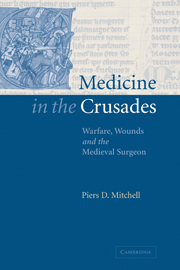
Medicine in the Crusades: Warfare, Wounds and the Medieval Surgeon by Piers D. Mitchell
Medicine in the CrusadesThis is the first book to be published on any aspect of medicine in the crusades. It will be of interest not only to scholars of the crusades specifically, but also to scholars of medieval Europe, the Byzantine world and the Islamic world. Focusing on injuries and their surgical treatment, Piers D. Mitchell considers medical practitioners, hospitals on battlefields and in towns, torture and mutilation, emergency and planned surgical procedures, bloodletting, analgesia and anesthesia. He provides an assessment of the exchange of medical knowledge that took place between East and West in the crusades, and of the medical negligence legislation for which the kingdom of Jerusalem was famous. The book presents a radical reassessment of many outdated misconceptions concerning medicine in the crusades and the Frankish states of the Latin East.


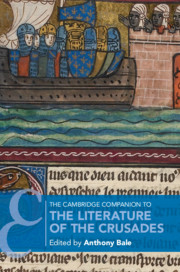
The Cambridge Companion to the Literature of the Crusades edited by Anthony Bale
The Cambridge Companion to the Literature of the CrusadesHow were the Crusades, and the crusaders, narrated, described, and romanticised by the various communities that experienced or remembered them? This Companion provides a critical overview of the diverse and multilingual literary output connected with crusading over the last millennium, from the first writings which sought to understand and report on what was happening, to contemporary medievalism, in which crusading is a potent image of holy war and jihad. The chapters show the enduring legacy of the crusaders' imagery, from the chansons de geste to Walter Scott, from Charlemagne to Orlando Bloom. Whilst the crusaders' hold on Jerusalem was relatively short-lived, the desire for Jerusalem has had a long afterlife in many cultural contexts and media.


The Tunis Crusade of 1270: A Mediterranean History by Michael Lower
Cover for 

The Tunis Crusade of 1270Why did the last of the major European campaigns to reclaim Jerusalem end in an attack on Tunis, a peaceful North African port city thousands of miles from the Holy Land? In the first book-length study of the campaign in English, Michael Lower tells the story of how the classic era of crusading came to such an unexpected end. Unfolding against a backdrop of conflict and collaboration that extended from England to Inner Asia, the Tunis Crusade entangled people from every corner of the Mediterranean world. Within this expansive geographical playing field, the ambitions of four powerful Mediterranean dynasts would collide. While the slave-boy-turned-sultan Baybars of Egypt and the saint-king Louis IX of France waged a bitter battle for Syria, al-Mustansir of Tunis and Louis's younger brother Charles of Anjou struggled for control of the Sicilian Straits. When the conflicts over Syria and Sicily became intertwined in the late 1260s, the Tunis Crusade was the shocking result.

While the history of the crusades is often told only from the crusaders' perspective, in The Tunis Crusade of 1270, Lower brings Arabic and European-language sources together to offer a panoramic view of these complex multilateral conflicts. Standing at the intersection of two established bodies of scholarship - European History and Near Eastern Studies - this volume contributes to both by opening up a new conversation about the place of crusading in medieval Mediterranean culture.


Crusading in the Fifteenth Century: Message and Impact by Norman Housley
This collection of essays by European and American scholars addresses the changing nature and appeal of crusading during the period which extended from the battle of Nicopolis in 1396 to the battle of Mohács in 1526. Contributors focus on two key aspects of the subject. One is developments in the crusading message and the language in which it was framed. These were brought about partly by the appearance of new enemies, above all the Ottoman Turks, and partly by shifting religious values and innovative currents of thought within Catholic Europe. The other aspect is the wide range of responses which the papacy's repeated calls to holy war encountered in a Christian community which was increasingly heterogeneous in character. This collection represents a substantial contribution to the study of the Later Crusades and of Renaissance Europe.


The Siege of Acre, 1189-1191 Saladin, Richard the Lionheart, and the Battle That Decided the Third Crusade by John D Hosler
"The Siege of Acre, 1189-1191" by John D. HoslerThe first comprehensive history of the most decisive military campaign of the Third Crusade and one of the longest wartime sieges of the Middle Ages.

The two-year-long siege of Acre (1189–1191) was the most significant military engagement of the Third Crusade, attracting armies from across Europe, Syria, Mesopotamia, Egypt, and the Maghreb. Drawing on a balanced selection of Christian and Muslim sources, historian John D. Hosler has written the first book-length account of this hard-won victory for the Crusaders, when England’s Richard the Lionheart and King Philip Augustus of France joined forces to defeat the Egyptian Sultan Saladin. Hosler’s lively and engrossing narrative integrates military, political, and religious themes and developments, offers new perspectives on the generals, and provides a full analysis of the tactical, strategic, organizational, and technological aspects on both sides of the conflict. It is the epic story of a monumental confrontation that was the centerpiece of a Holy War in which many thousands fought and died in the name of Christ or Allah.


The Crusader Armies 1099–1187 by Steve Tibble
"The Crusader Armies" by Steve TibbleA major new history of the Crusades that illuminates the strength and sophistication of the Western and Muslim armies.

During the Crusades, the Western and Muslim armies developed various highly sophisticated strategies of both attack and defense, which evolved during the course of the battles. In this ambitious new work, Steve Tibble draws on a wide range of Muslim texts and archaeological evidence as well as more commonly cited Western sources to analyze the respective armies’ strategy, adaptation, evolution, and cultural diversity and show just how sophisticated the Crusader armies were even by today’s standards.

In the first comprehensive account of the subject in sixty years, Tibble takes a fresh approach to Templars, Hospitallers, and other key Orders and makes the controversial proposition that the Crusades were driven as much by sedentary versus nomadic tribal concerns as by religious conflict. This fluently written, broad-ranging narrative provides a crucial missing piece in the study of the West’s attempts to colonize the Middle East during the Middle Ages.


The Crusader States and their Neighbours: A Military History, 1099-1187 by Nicholas Morton
Cover for 

The Crusader States and their NeighboursThe Crusader States and their Neighbours explores the military history of the Medieval Near East, piecing together the fault-lines of conflict which entangled this much-contested region. This was an area where ethnic, religious, dynastic, and commercial interests collided and the causes of war could be numerous. Conflicts persisted for decades and were fought out between many groups including Kurds, Turks, Armenians, Arabs, and the crusaders themselves. Nicholas Morton recreates this world, exploring how each faction sought to advance its own interests by any means possible, adapting its warcraft to better respond to the threats posed by their rivals. Strategies and tactics employed by the pastoral societies of the Central Asian Steppe were pitted against the armies of the agricultural societies of Western Christendom, Byzantium, and the Islamic World, galvanising commanders to adapt their practices in response to their foes. Today, we are generally encouraged to think of this era as a time of religious conflict, and yet this vastly over-simplifies a complex region where violence could take place for many reasons and peoples of different faiths could easily find themselves fighting side-by-side.


Accursed Tower:The Crusaders' Last Battle for the Holy Land by Roger Crowley
"Accursed Tower" by Roger CrowleyThe city of Acre, powerfully fortified and richly provisioned, was the last crusader stronghold. When it fell in 1291, two hundred years of Christian crusading in the Holy Land came to a bloody end. With his customary narrative brilliance and immediacy, Roger Crowley chronicles the tumultuous and violent attack on Acre, the heaviest bombardment before the age of gunpowder, which left this once great Mediterranean city a crumbling ruin.

The ‘Accursed Tower’ was the focal point of this siege. As the last garrison of the Crusader defences, it came to symbolise the disintegration of the old world and the rise of a new era of Islamic jihad. Crowley’s narrative is based on forensic research, drawing heavily on little known first hand sources, both Christian and Arabic. This is a fast-paced and gripping account of a pivotal moment in world history.


Crusading Spirituality in the Holy Land and Iberia, c.1095-c.1187 by William J. Purkis
Crusading Spirituality In The Holy Land And Iberia, C.1095 C.1187For much of the twelfth century the ideals and activities of crusaders were often described in language more normally associated with a monastic rather than a military vocation; like those who took religious vows, crusaders were repeatedly depicted as being driven by a desire to imitate Christ and to live according to the values of the primitive Church.

This book argues that the significance of these descriptions has yet to be fully appreciated, and suggests that the origins and early development of crusading should be studied within the context of the "reformation" of professed religious life in the twelfth century, whose leading figures (such as St Bernard of Clairvaux) advocated the pursuit of devotional undertakings that were modelled on the lives of Christ and his apostles. It also considers topics such as the importance of pilgrimage to early crusading ideology and the relationship between the spirituality of crusading and the activities of the Military Orders, offering a revisionist assessment of how crusading ideas adapted and evolved when introduced to the Iberian peninsula in c.1120. In so doing, the book situates crusading within a broader context of changes in the religious culture of the medieval West.


Crusading and Pilgrimage in the Norman World edited by Kathryn Hurlock & Paul Oldfield
Crusading and Pilgrimage in the Norman WorldThe reputation of the Normans is rooted in warfare, faith and mobility. They were simultaneously famed as warriors, noted for their religious devotion, and celebrated as fearless travellers. In the Middle Ages few activities offered a better conduit to combine warfare, religiosity, and movement than crusading and pilgrimage. However, while scholarship is abundant on many facets of the Norman world, it is a surprise that the Norman relationship with crusading and pilgrimage, so central in many ways to Norman identity, has hitherto not received extensive treatment.

The collection here seeks to fill this gap. It aims to identify what was unique or different about the Normans and their relationship with crusading and pilgrimage, as well as how and why crusade and pilgrimage were important to the Normans. Particular focus is given to Norman participation in the First Crusade, to Norman interaction in later crusading initiatives, to the significance of pilgrimage in diverse parts of the Norman world, and finally to the ways in which crusading and pilgrimage were recorded in Norman narrative. Ultimately, this volume aims to assess, in some cases to confirm, and in others to revise the established paradigm of the Normans as crusaders par excellence and as opportunists who used religion to serve other agendas.