Showing posts with label 12th century. Show all posts

Monday, October 6, 2025

Review: Feast for the Ravens by Sarah Hawkswood

Synopsis: Worcestershire, September 1145. A Templar knight is found dead in the Forest of Wyre, clutching a bloodstained document naming a traitor. Undersheriff Hugh Bradecote, Serjeant Catchpoll, and Underserjeant Walkelin must uncover whether the killing was personal, political, or the work of outlaws. They are surprised to find that the locals believe the killer to be the Raven Woman, a mythical shape-shifter said to haunt the woods. Then the knight is identified as Ivo de Mitton, who fled the shire many years ago, presumed guilty of the foul murder of his kin.

As the trio dig through legend and lies, they must determine the truth and bring a cunning killer to justice.

~ ~ ~

This is book thirteen in the Bradecote and Catchpoll series, again, with the setting for this latest in firmly during the time of The Anarchy, and the city of Worcestor in 1145.

Bradecote, Undersherrif of Worcester, along with his serjeant, Catchpoll and underserjeant, Walkelin, are sent to investigate the murder of a Knight Templar, amid rumour and susperstition that he was killed by the Raven Women - "hrafm wif".

The murder has its roots in the past - and our trio must untangle these in order to solve the mystery set firmly in their present. Hawkswood again brings the themes of legend and logic, past and present, norman and saxon, into the narrative to deftly weave an entrancing narrative - or rather ".. knots within knots within knots ...".

Highly recommend starting at the beginning of the series as this will provide a much easier introduction into the characters, the setting, the history, though there is enough within this tome to let the reader get the feel for what has transpired before if they are jumping straight into this one.

See my review of book seven: Wolf at the Door

Monday, July 3, 2023

The White Ship by Nicholas Salaman

Based on a true story, this tale of passion and revenge brings the past to life. Normandy in 1118 is a hotbed of malcontent barons kept in fragile order by Henry I, King of England and Duke of Normandy. Fresh from early years in a monastery, Berthold - the bastard son of one of these barons - meets Juliana, a countess and daughter of the King. He falls in love, or lust (he isn’t sure), but sees that his chance could come with work in her small court. Soon, though, he finds himself caught up in a ruthless feud between Juliana and her father. Juliana's daughters are offered as hostages for a strategic castle, and even love is not enough to allay a tragedy that will change the course of history.

For all fans of historical fiction and especially readers of Ken Follett's The Pillars of the Earth 

Sunday, June 25, 2023

Review: Royal Bastards of Twelfth Century England by James Turner

Synopsis: The many storied monarchs of twelfth century England lived, fought, loved, and died surrounded by their illegitimate relatives. While their many contributions have too often been overlooked, these illegitimate sons, daughters and siblings occupied crucial positions within the edifice of royal authority, serving their legitimate relatives as proxies and lieutenants. In addition to occupying roles and offices at the center of royal administration, Anglo-Norman and Angevin royal bastards, exiled to the fringes of family identity by a twist of fate, provided the kings of England with military and political support from amidst the aristocratic affinities into which they were embedded. Rather than merely inert pieces on the dynastic game board or passive conduits of royal association, these men and women were engaged participants in contemporary politics, proactively cultivating and shaping the thrones’ relationship with its principal subjects.

This book, the first full length study dedicated to the subject, examines the seminal conflicts and changing shape of the royal dynasty during a period of turbulent and formative development in the nature and institutions royal government through the rarely before accessed perspective of the reigning monarchs’ illegitimate family members and deputies. More than that this study aims, as far as possible, to illuminate and bring to life the lives, triumphs and tragedies of these fascinating half-forgotten personages. The victims of a rapid and profound demographic and social change which drastically recontextualized their position with royal family identity and aristocratic society, the bastards of the English royal family found new methods to survive and thrive.

~ ~ ~

The focus of this scholarly work is primarily on Henry I, a monarch noted for his numerous illegitimate offspring. It is a look at the role these offspring played in the greater scheme of the political aspirations of their sire. Key take-aways included the "high level of loyalty" each displayed toward the legitimate royal family, their inclusion within the family circle, and their assessment on an individual basis.

Turner begins with the concept of illegitimacy based upon changes to Church doctrine and coda, and Church reform at the time of William I of Normandy - William the Bastard.

We move onto Henry I - his birth, life as linked to his many mistresses and the resultant offspring, and the antecedents of his most well known bastard, Robert Earl of Gloucester. Turner remarks that Henry I's "... relationships follow the pattern of his itinerant lifestyle both before and after claiming the throne ...".  Historian Chris Given-Wilson wrote: "It might be permissible to wonder how it was that Henry I managed to keep track of all his illegitimate children, but there is no doubt that he did so". 

The use of illegitimate children to further political designs was not unusual among medieval kings, but the number of Henry I of England’s offspring was remarkable, even by contemporary standards.

Whilst assessing Henry I's political policy, Turner notes that .... "by pursuing liaisons with member of regional and often partially non-Norman familial networks, Henry I was, in a limited sense, extending his own influence into these localities by drawing such families into alignment with his own interests from the often unreliable and fractious top tier of Anglo-Norman magnates ...".  Turner again states that Henry I then married off his mistresses into Anglo-Norman families "... engaged in royal service to further build influence and personal affinities within lower aristocracy ...".

Turner thus assesses the role of the royal bastards as a familial resource that could be used for political gain and the protection of lands / borders and the expansion of family identity on both a local and international political chess-board. Turner then looks at the acceptance of royal bastards among the royal entourage using the disaster of the White Ship in 1120 as an example of their inclusion rather than exclusion. 

Turner then diverts our attention to Henry I's only legitimate daughter, Matilda, and his succession plan, whilst again looking at Robert Earl of Gloucester, more noted of all his illegitimate offspring, before looking at another bastard, Reginald of Cornwall in the context of the historical period known as The Anarchy.

Turner draws the reader further a-field to Europe as a whole, wherein he he alerts us to ...... that ".. rulership in 12th Century Europe was predicated almost entirely upon familial connections and personal relationships .." and that the "... position of the illegitimate offspring was dependent upon the political and dynastic context of their legitimate relatives and their implied advancement of familial interests..". 

This all dovetails nicely as our narrative is now directed towards Henry II and his own illegitimate offspring.  Again, a comparison between Henry I and II and their usage of their illegitimate offspring to further their own political ambitions is undertaken.

In the case of Henry II, we are treated to a review of the historical and political importance of Henry II's half-brother Hamelin de Warrenne, and Henry's own illegitimate offspring in Geoffrey Plantagenet and William Longspee.

Whilst the period of time being covered is rather narrow, Turner draws the reader to key points - bastards were accepted and used to promote the political interests of their sire, they were often more loyal than their legitimate siblings, and bastardy was no impediment to advancement.

Background knowledge would be an advantage as this isn't a chronologically presented of every single illegitimate royal offspring extant in 12th Century England, It is also heavily focused on the bastard sons, who were in a much better position to promote the political message of their monarch parent. Overall, I would recommend picking up this book for a more indepth look at the political decision making processes of Henrys I and II as applied to their illegitimate offspring and their greater political aspirations.


Sunday, May 22, 2022

Review: A Taste For Killing by Sarah Hawkswood

Synopsis: January, 1145. Godfrey Bowyer, the best but least likeable bow maker in Worcester, dies an agonising death by poisoning. Although similarly struck down after the same meal, his wife Blanche survives. The number of people who could have administered the poison should mean a very short investigation for the Sheriff’s men, Hugh Bradecote and Serjeant Catchpoll, but perhaps someone was pulling the strings, and that widens the net considerably. Could it be the cast-out younger brother or perhaps Orderic the Bailiff, whose wife may have had to endure Godfrey's attentions? Could it even be the wife herself?

With Bradecote eager to return to his manor and worried about his wife’s impending confinement, and Underserjeant Walkelin trying to get his mother to accept his choice of bride, there are distractions aplenty, though Serjeant Catchpoll will not let them get in the way of solving this case.


For a bit of background to the time of the narrative, please read my reviews of Wolf at the Door and River of Sins. Both amply cover off the period in English history known as The Anarchy and give a little background into the three main characters - Bradecote, Under-Sherrif; Catchpoll, his Serjeat; and the young journeyman, Wakelin. This time, we are back in the city of Worcester. During the Anarchy (1135–1153) rival factions of King Stephen and the Empress Matilda contested the kingdom and Worcestershire proved to be a key battleground. The first attack on Worcester itself occurred in late 1139 when an Angevin army from Gloucestershire assaulted the city. After an attempt to take the castle on the south side of the city, the Gloucester forces entered from the north, looting and burning. Worcester became a base for Stephen's forces for a period, before joining the Empress's faction. The King naturally retaliated.

Now to our victim - Godfrey Bowyer - a much disliked, though very capable bow maker. The skill was in great demand especially during this period of constant warfare, where professional bowyers produced thousands of bows required for that country's military. These bowyers could reportedly make an English longbow in as little as two hours.

Bowyers required specialized training to become an expert in bow making. This was usually done under the supervision of an expert in the field. Most bowyers had their own workshops in which they could store their tools and work in progress. Bowyers used different types of wood to craft bows and arrows. Amongst the most popular were yew, ash, wych elm, and hawthorn. The ideal bow should be able to store as much energy as possible when drawing it back, and then have it redirected to the arrow when releasing.

In a household filled with animosity and secrets, it is hardly surprising that the head of the household is found poisoned, while its mistress suffers the consequences, though not fatally.  Who in this day and age, would be brave enough to strike against their master - was it a member of his own household, some other, or another's agent? This was a period where the violent rebellion of servants against their masters (and wives against their husbands) was a serious concern, enough to warrant death by hanging (for men) and death by burning (for women). Much of the investigation centres around the household, the family and others whose interactions have brought them to the attention of our investigators. One question remains till the very end .... Who is Blanche Bowyer really?

Against this backdrop, our trio have their own concerns - Bradecote's wife is expecting their child, young Walkelin is dreading informing his mother on his choice of bride, and Catchpoll is feeling the slow creeping hand of age.

Again, much research has gone into the narrative to ensure the reader gets a good fell for the times and the long process of criminal investigations, which is at times, rudimentary, relying of quick-eyed officials and knowledgable locals, especially in a time when social connections, social and financial position, and a person or family's good name counted for much in the community, and in the assumption of guilt or innocence.


Sunday, October 3, 2021

Review: Royal Mysteries: The Medieval Period by Timothy Venning

Synopsis: Royal murder mysteries never fail to intrigue readers and TV viewers. Here are some of the most haunting and even horrific episodes from the middle ages, based on latest historical research and historiography, and authentic and rare sources, including archaeology and DNA evidence, uncovering wonderful tales of pathos, tragedy, suffering and romance. This is history for specialists and general readers - and sceptics - given the intense media coverage, including TV, and interest in exciting and accessible popular history. The famous and also less well-known mysteries, which may be new to readers, surrounding British Royalty, are included from around the 11th to the 15th centuries.

The murder mysteries show personal and individual tragedy but are also a vehicle for historical analysis. William II - William Rufus - was he murdered or killed accidentally by a 'stray arrow', allowing brother Henry to seize the throne, or was it God's punishment for William's irreligious living and persecution of the church? Or was Edward II murdered at the instigation of Queen Isabella - 'she-wolf of France' - and her lover, Roger Mortimer. who assumed the throne? Did he survive to live peaceably in Italy? Richard II resembled Edward II, as a rather inadequate figure, and was deposed by his rival, Henry IV. Did he die, and if so, was it murder or suicide? Was Edward IV a bigamist? Mystery, if not murder, but wrapped in dynastic rivalry and sex scandal, and usurpation of the throne. The 'Princes in the Tower' and who who killed them if anyone? A beguiling mystery for over 500 years with their usurping uncle Richard III's guilt contested by 'Ricardians'.


I was eager to read this one as I have a number of Tim's books already on my library shelf - and who doesn't love a good mystery. 

The mysteries being explored were not unknown to me - in fact I explored one of these mysteries myself in greater depth (death of William II) and the controversy surrounding the "Princes" still captures my imagination even today, after much reading on the matter.

Venning takes each mystery, provides some historical background and context, examines the contemporary accounts, looks at all the players before asking the age old question - cui bono? Who stands, or stood, to gain, and so might have been responsible for it or precipitated the actions of a third party?

Venning directs the readers attention to the existence of "fake news" in medieval times wherein the writer or chronicler is playing to their own agenda and contemporary audience, and as such must be viewed as a potential unreliable source.  In fact, as the reader and student of history will know, no source is completely without bias - just because it was written at the time does not necessarily mean it is the most accurate account.  Venning even comments that history is but "... a hall of mirrors with distorted reflections .."

Moving on to the mysteries themselves and what we have learned.  Well not much really.  I was rather disappointed to find that there was no real conclusion one way or the other - no definitive proofs. Venning does not take any particular stance - he explores all aspects of each mystery and just presents us with all the information, evidence and accounts, and leaves it up to the reader to discern what they will from it.

Whilst I will assume (whether rightly or wrongly) that this book is for the consumption of popularist history, I did find the narrative to be rather long-winded, repetitive, and definitely non-linear. I would suggest some fore-knowledge of the subject matter at hand would be appropriate. Overall, I liked it and would probably pick this up again - at a later date.


Also By Author:
- Royal Mysteries: The Anglo-Saxons and Early Britain
- The King Arthur Mysteries: Arthur's Britain and Early Medieval World


Review: The Two Isabellas of King John by Kristen McQuinn

Synopsis: King John of England was married to two women: Isabella of Gloucester and Isabelle of Angouleme. The two women were central to shaping John and his reign, each in her own way molding the king and each other over their lives. Little is known about Isabella of Gloucester and she has largely become an historical footnote; Isabelle of Angouleme has a reputation as a witch and poisoner. However, both were products of their time, victims and pawns of the powerful men whose voices overwrote the experiences of women. By examining these two very different women through a modern feminist lens, The Two Isabellas offers new insight into one of England's lesser-known queens and a different interpretation of one of its least popular kings.

In The Two Isabellas of King John, Kristen McQuinn offers new and intriguing insights into two of England's important yet little understood queen-consorts, the wives of King John. Taking a feminist light, McQuinn brightly shines it on both England's least well-known consort, Isabella of Gloucester, his first wife, and one of its least popular, Isabelle of Angouleme, his child bride.


Firstly I am troubled by the use of phrases such as "feminist light" and "feminist lens" - quite frankly what does this mean. I grew up in the era where "women's lib" and "feminism" were concepts and movements that touched on every area of a woman's experiences — politics, work, family, equality and sexuality. These hard won victories are currently being enjoyed by latter generations, so to bandy such phrases about today, puts me a little on edge. Don't get me wrong, I am all for looking at historical characters and events in a new light, but why does the work of a female author looking at a female character need to be labelled "feminist". And what is a "modern feminist lens" - how is it different from the views of the numerous female authors who blazed a trail beforehand.

Secondly, I really take umbrage at the following phrase: " ... offers new insight into one of England's lesser-known queens and a different interpretation of one of its least popular kings .." Quite frankly what does this actually mean - what new insight because - for me - there was no new insight, no shining light on two lesser known queens, no new interpretation on the view of John's reign.  Lately the number of history books using the phrases "new information" and "new insights" that have actually delivered on this I could count on one hand (excluding my thumb).

And so, sixty-five pages down, there was nothing remotely resembling anything close to a biography or life story for either women - just a lot of "academic" twaddle, assumptions and educated guesses with the occasional mention of either or both. A lot of "concepts" being explored but not a lot substance on either woman so far. In fact, I was ready to chuck the whole thing in there and then. But I persevered through dry and boring monotone, page after page, on the role of women, queens and mothers, childhood and childbirth, fashion, trade, architecture and education, with little to endear this reader and nothing this reader had not discovered in other tomes previously written, many of which stand as the pre-eminent works not only of their own times but even now.

A couple of phrases I did pick up on - but again I have said them so often myself - is that the lives of medieval women - regardless of social status - was typically viewed through the agency of the men in their lives - their fathers and other male kin, their husbands, and finally their sons. McQuinn does acknowledge that "... the roles of women, even queens, most often fell with the private family-orientated realm, and thus outside the purview of most chroniclers .."  Hence, with very little information on either woman to use and turn into a singular biography, we are left looking at both their lives in relation to their marriage to the same man - King John of England. Darren Baker in his work "The Two Eleanors of Henry III" (read my review here) presented something similar and managed to pull it off slightly better than McQuinn has done.

The only time we really get a sense of the presence of either woman is from about page 80 to about 120 - a mere forty pages - the bulk of which is dedicated to Isabella of Angouleme, John's second wife - his first wife, Isabella of Gloucester hardly features at all. And here, the same information can be found in any number of tomes already published on both John and the era in question.

And yet, again, accordingly to the blurb: "The two women were central to shaping John and his reign, each in her own way molding the king and each other over their lives." I am sorry, but I must have been reading a completely different book. Based upon the fact the McQuinn constantly tells us that there is a distinct lack of knowledge on either woman, that they themselves left no personal accounts, and that contemporary accounts show neither woman in a positive light, how can one make the sweeping statement that they were "central to shaping John and his reign".  In fact, the underlying message I got from all of this was the laying of blame for John's behaviour firmly at the feet of both women, which is more in line with a misogynist viewpoint than a feminist one. 

Overall, I came away from this less than impressed.  I skimmed through the final chapter (on the portrayal of both in fiction) and headed straight for the sources - no surprises there for me - and some of those listed I found myself questioning the usage of but that's just my humble opinion.

For me, this was just another in a long line of tomes being churned out by this publisher that all promise the same thing - and funnily enough, deliver it - and that thing being delivered is not much at all.  Would I recommend this - no I wouldn't - not for the generalist reader nor the specialist reader.

I can hear the tut-tutting already. Am I being too harsh, surely there were some redeeming features.  Well, the only redeeming feature is that the author is to be applauded for taking on this task in the first place.  I do know how hard it is to craft a decent tome around a subject matter where there is little or no information - but please don't provide me with something that you can't deliver on.  If there is nothing on your chosen subject - acknowledge and move on!  I personally would much prefer a smaller volume than pages of padding.


Wednesday, August 25, 2021

Review: Wolf at the Door by Sarah Hawkswood

Synopsis: All Hallow’s Eve, 1144.
The savaged body of Durand Wuduweard, the solitary and unpopular keeper of the King’s Forest of Feckenham, is discovered beside his hearth, his corpse rendered barely identifiable by sharp teeth.

Whispers of a wolf on the prowl grow louder and Sheriff William de Beauchamp’s men, Hugh Bradecote and Serjeant Catchpoll, are tasked with cutting through the clamour. They must uncover who killed Durand and why while beset by superstitious villagers, raids upon manors and further grim deaths. Out of the shadows of the forest, where will the wolf’s fangs strike next?


As per my review on River of Sins, book seven in the Bradecote and Catchpoll series, the setting for this latest in firmly during the time of The Anarchy.

This time we are transported back to the medieval village of Feckenham. A village has been situated at Feckenham since the 9th century, and has been known by various names, including Feccheham (11th century), Fekkeham, Fekeham (12th century).

In the Middle Ages, Feckenham stood in the middle of the ancient Royal Forest of Feckenham, and was the administrative centre for this substantial royal forest covering much of Worcestershire.  The forest was used by the Kings of England who had a lodge in the park of Feckenham Manor (current structure dates from the 16th century).

The forest's titular head was the keeper, whose role was essentially honorary. Under the keeper were verderers who were the main enforcers of forest law, investigating infractions and trespasses; and then there were the Woodwards (wardens) who guarded royal timber rights and venison.  These appointments  were often viewed in light of communal status and be of considerable prestige and preferment; and at times a source of jealously and rivalry.

Forest Law was especially harsh and a cause of considerable grievance. You can read more about these laws here at Early English Laws

The town of Worcester, having survived attacks, fire, ransoms, owed its loyalty to the King, Stephen, and his representative, the Sheriff of Worcester.  At this point in time, the Sheriff was one William de Beauchamp, who inherited the title from his father Walter de Beauchamp. This Walter had been granted the right to hunt wolves and foxes in the royal forests of Worcestershire by Henry I; it is also said that he probably held the office of royal forester for Worcestershire as well as sheriff. Historians Judith Green and C. Warren Hollister both favour this, and that the son, William, succeeded to these title upon Walter's death c.1130-1133.

The word sheriff comes down to us from the Old English term for  a royal official (or shire reeve), who was responsible for keeping the peace throughout a shire or county on behalf of the king. Shrieval judicial and administrative activities were broad - one of the main responsibilities was the annual collection of taxes for the Exchequer. He presided over the county courts, but was not per se judge and the requirement for judical competence was rather vague. The sheriff generally carried out the King’s orders, with an armed county posse if necessary. He could be ordered to carry out particular investigations. He had authority to raise the "hue and cry" for the pursuit of thieves and other criminals. The hue and cry was a form of posse, in which once the shout was sounded that a crime such as robbery, theft, assault, or murder was committed; all that heard it were obligated and bound by honor to join the pursuit until the scoundrel was captured or the reeve called off the search.

For the purposes of our novel, justice has been delegated to the Undersheriff of Worcestershire, Hugh Bradecote, his gruff and worldly assistant Serjeant Catchpoll, and Catchpoll’s protege, Walkelin. Our trio are sent out to investigate the death of the local woodward, however, this presents no easy task as there is talk of wolves, or more specifically, werewolves. The word werewolf comes from the Old English word werwulf, a compound of wer "man" and wulf "wolf". Werewolves were mentioned in a number of medieval law codes, including that of King Canute (r.1016 - 1035), whose Ecclesiastical Ordinances inform us that the codes aim to ensure that “…the madly audacious werewolf do not too widely devastate, nor bite too many of the spiritual flock.’ There was widespread belief in these creatures throughout northern Europe so this was not just a localised belief at this particular time.


With the Middle Ages being an age of uncertainty and an overall lack of knowledge in the very world that surrounded the people living in this time, superstitions became apart of everyday life and could even be considered routine. While today many of the fears of the people of the Middle Ages which were the root cause of superstition are considered non-realistic and just completely ridiculous, the fear that these people felt strongly impacted their lives and the societies in which they lived. For our investigators,  reality is cloaked in superstition, and to solve this crime, they must strip away the unreal and present the actual to a community living in terror of the unknown.

All of the above aspects are woven together in a highly engaging tale; with the characters holding their own across the narrative.  The reader gets a real feel for the period and its peoples, as they struggle not only with their daily lives but in reconciling what  their beliefs and the opposing reality presents.

A series worthy of investing in.

Read More


Saturday, August 21, 2021

The Suda - The Byzantine Encyclopedia Written in the Year 1100

The Suda, the massive tome written by a Byzantine scholar around the year 1100, was one of the world’s first encyclopedias and lexicons.

Created as both a syllabary of the Greek language and an overview of events in the known world up until that time, it is a benchmark in scholarship of the Medieval period.

The Suda, or Souda (Σοῦδα,) was formerly attributed to an author called Soudas or Souidas.

It is an encyclopedic lexicon, written in Greek, with a staggering 30,000 entries, many drawing from ancient sources that have since been lost, and often derived from medieval Christian compilers. The derivation of the word “Suda” is from the Byzantine Greek word souda, meaning “fortress” or “stronghold,” with the alternate name, Suidas, stemming from an error made by Eustathius, who mistook the title for the author’s name.

read more here @ the Greek Reporter

Sunday, June 13, 2021

The Brus Family in England and Scotland 1100-1295 by Ruth Blakely

Robert de Brus, the "conquisitor of Cleveland, Hartness and Annandale", who came into England among the followers of Henry I, was also a close companion and mentor of David I, king of Scots. The lands he acquired from bothkings were divided between his sons, from whom two lines descended: the lords of Skelton, influential Northerners who played an active part during the baronial troubles in the reigns of John and Henry III, and the prominent cross-Border lords of Annandale, co-heirs of the substantial Chester and Huntingdon estates and progenitors of King Robert Bruce.

This study takes a fresh approach to the Brus family by assessing the achievements of the two lines in parallel while examining the extent of their power and the development of their lordships; it highlights the inter-relations between the barons of England and Scotland during two hundred years of comparative peace between the kingdoms. Of additional interest is the appendix of an extensive handlist of charters of the Brus family of both lines. It will be a welcome addition to the existing body of works on English baronial families and on Anglo-Scottish cross-Border lords of the twelfth and thirteenth centuries.

Wednesday, February 17, 2021

The Valley Beyond: A Daughter's Bond by TS Nichols

TS Nichols, a passionate writer with an interest in medieval history who is currently retired and resides in New Jersey, has completed his most recent book “The Valley Beyond: A Daughter’s Bond”: a page-turning novel about a young girl of noble descent who deals with the plot against her life and other provocative events that involve her wealth and status.

Nichols writes, “Lucia is an active child whose curiosity and behavior tend to get her into trouble. At the age of thirteen, she inherits the Condado of Segoia from the presumed death of her father, Don Fernando, who perished while on a crusade to the Holy Land. In addition, she inherits several titles and a vast amount of wealth from her mother, Lady Margaret, who dies while giving birth to Lucia. Her wealth is coveted by Don Raimundo Ortega Diaz, the Conde of Donato. He needs Lucia’s wealth to raise an army to take the throne of Castile in order to plunder the vast riches that lie to the south in Al-Andalus, the home of the Moors. He plots her demise to obtain her wealth.

Set against the backdrop of the ongoing war against the Moors in late twelfth-century Spain, Lucia is challenged by her lack of maturity, assassination attempts, her love for her dearest friend Isabella, befriending a Moor, a love interest with a French knight, and the ongoing questions concerning her deceased mother. These questions lead her to Pomeroi, her duchy in France, only if she can survive her travels beyond the Pyrenees.”

Published by Fulton Books, TS Nichols’s book shares a tantalizing journey of an inexperienced young noblewoman as she struggles to balance and survive in her newfound position following the tragedies in her life.

This book will take the readers to an era filled with royalty, politics, and wars that defined a young noblewoman’s character and purpose amid such turmoil.

Press Release Service by Newswire.com

The Book in the Cathedral by Christopher de Hamel

On Christmas Day 1170, Thomas Becket delivered a sermon to a packed chapter house at Canterbury. His theme was the death of one his predecessors as archbishop, St Alphege, hacked to death by the Danes in the early 11th century – the only martyr in the role so far. “There will soon be another,” Becket declared. Four days later, a quartet of knights arrived drunk, on a perceived mission from the king, and dashed the archbishop’s brains across the cathedral floor. It is easy to see how, knowing his time was up, Becket might identify with Alphege. In The Book in the Cathedral, however, Christopher de Hamel argues that the two had something more tangible in common: an elaborately jewelled psalter – a book of psalms – once owned by Alphege and later treasured by Becket.


On the final page, a 16th-century inscription – deemed spurious by previous scholars – links the book to two archbishops: Becket and “N”. The Book in the Cathedral is an exercise in bibliographic detective work, identifying “N” and overturning the judgment of earlier cataloguers. De Hamel – author of the wonderful Meetings With Remarkable Manuscripts – shows us all the tools of the bibliographer’s trade: dating handwriting, identifying pigments, noting the rust marks left by nails from a now-lost ornate binding. This is done with a lightness that belies De Hamel’s pre-eminence as a manuscript scholar – the telling is brisk, with a light foxing of anecdote, even as the evidence is rigorously lined up.


read more here @ The Guardian

Sunday, February 7, 2021

Review: River of Sins by Sarah Hawkwood

Synopsis: July 1144. Ricolde, ‘the finest whore in Worcester’, is found butchered on an island a few miles up the River Severn. How did she get there, who killed her, and why? Uncovering details of her life and her past reveal a woman with hidden depths and hidden miseries which are fundamental to the answers, but time has cast a thick veil over the killer’s identity. The lord Sheriff’s men have a trail that went cold over two decades ago, and evidence that contradicts itself. In a place Catchpoll knows inside out, he finds things new even to him, and then the case becomes personal.


This is book seven of in the Bradecote and Catchpoll series; and funny thing is, I think I have read the first one, but GR says apparently not. The characters seem so familiar to me as does the storyline of book one.

I enjoyed it - I love a good historical "whodunnit" and the author takes us on the same meandering path as the Severn River. The time is set during what came to be known as "The Anarchy", when Empress Maud and King Stephen fought for the throne of England in the 12th Century.

In 1144, however, the drama had been playing our for over ten years - with one side then the other gaining the upper hand.  Stephen was still King of England, though Empress Maud's banner was now being taken up by both her husband, Geoffrey of Anjou, and her eldest son, Henry Plantagenet.  Things were reaching an impasse.  The city of Worcester itself had suffered a series of attacks, held by Count Waleran of Meulan for the king, the city lay dangerously close to the powerbase of Gloucester, held for Empress Maud by her half brother Robert.  From its position, the city also had command of the nearest bridge crossing from Oxford, where the King was based.  As such, the attack five years previous saw part of the city destroyed by fire and its citizens held for ransom.

This is the backdrop against which the author weaves her story.  There is plenty of investigating, clue following, suspect interviewing - for the methods of investigation were not as scientifically exacting as they are today. And public perception of a person's character held (and carried) more weight than whether a person was innocent or not.

If you like the Cadfael series, you will take to this one - I will most likely go back and read them from the start as there are references to previous events and characters.


Tuesday, November 3, 2020

Review: The White Ship by Charles Spencer

Synopsis: The sinking of the White Ship is one of the greatest disasters in English history. Here, Sunday Times bestselling author Charles Spencer tells the real story behind the legend to show how one cataclysmic shipwreck changed England’s course.

In 1120, the White Ship was known as the fastest ship afloat. When it sank sailing from Normandy to England it was carrying aboard the only legitimate heir to King Henry I, William of Ætheling. The raucous, arrogant young prince had made a party of the voyage, carousing with his companions and pushing wine into the eager hands of the crew. It was the middle of the night when the drunken helmsman rammed the ship into rocks.

The next day only one of the three hundred who had boarded the ship was alive to describe the horrors of the slow shipwreck. William, the face of England’s future had drowned along with scores of the social elite. The royal line severed and with no obvious heir to the crown, a civil war of untold violence erupted. Known fittingly as ‘The Anarchy’, this game of thrones saw families turned in on each other, with English barons, rebellious Welsh leaders and Scottish invaders all playing a part in the bloody, desperate scrum for power.

One incredible shipwreck and two decades of violent uncertainty; England’s course had changed forever. 


Spencer uses the White Ship itself as an anchor for the story of one of the most tragic events in English history - in fact Spencer writes, "... there as not a part of Henry's Anglo-Norman realm that remained shielded from the impact of the catastrophe ...".

In this tale, Spencer takes you the reader on a tour of the timeline of events from William the Conqueror leading up to the tragedy at sea, and the repercussions for the English throne beyond this.

His narrative is casual, almost conversational, as if he were giving you a conducted tour of Althorp. Yet this same narrative, with the gentle resonance of Spencer's voice, is concise, informative not dry or stuffy. For me, this is well-worn ground - however, I at no time found my attention waivering only eagerly looking forward to the build up to the disaster and to the fate of England, left without a legitimate male heir for the concept of a woman ruling in the 12th century was anathema in both England and Normandy. Spencer takes us through an abridged version of what became known as "The Anarchy" finishing up with the settlement of succession onto Henry Plantagenet.

Spencer finishes with this rather poignant quote from William of Malmesbury "... no ship that ever sailed brought England such disaster ..."

Highly recommended and one I will be adding to my shelves (upon which I already have two of Spencer's books - Killers of the King and To Catch A King).


Further reading:
The Anarchy by Teresa Cole
The Anarchy of King Stephen's Reign edited by Edmund King
King Stephen & The Anarchy by Chris Peers
Stephen & Matilda's Civil War by Matthew Lewis
Matilda: Empress, Queen, Warrior by Catherine Hanley
Stephen & Matilda by Jim Bradbury
The Normans by David Crouch
Henry I by Judith Green
King Stephen's Reign by Graeme White & Paul Dalton

The White Ship by Nicholas Salaman (fictional account)

Thursday, September 3, 2020

Review: Joan, Lady of Wales: Power and Politics of King John's Daughter by Danna R Messer

Joan, Lady of Wales: Power and Politics of King John's Daughter
Synopsis: The history of women in medieval Wales before the English conquest of 1282 is one largely shrouded in mystery. For the Age of Princes, an era defined by ever-increased threats of foreign hegemony, internal dynastic strife and constant warfare, the comings and goings of women are little noted in sources. This misfortune touches even the most well-known royal woman of the time, Joan of England (d. 1237), the wife of Llywelyn the Great of Gwynedd, illegitimate daughter of King John and half-sister to Henry III. With evidence of her hand in thwarting a full scale English invasion of Wales to a notorious scandal that ended with the public execution of her supposed lover by her husband and her own imprisonment, Joan's is a known, but little-told or understood story defined by family turmoil, divided loyalties and political intrigue.

From the time her hand was promised in marriage as the result of the first Welsh-English alliance in 1201 to the end of her life, Joan's place in the political wranglings between England and the Welsh kingdom of Gwynedd was a fundamental one. As the first woman to be designated Lady of Wales, her role as one a political diplomat in early thirteenth-century Anglo-Welsh relations was instrumental. This first-ever account of Siwan, as she was known to the Welsh, interweaves the details of her life and relationships with a gendered re-assessment of Anglo-Welsh politics by highlighting her involvement in affairs, discussing events in which she may well have been involved but have gone unrecorded and her overall deployment of royal female agency. 


This was a difficult review for me not due to the content but how to formulate my many and varied thoughts on this book as they are at odds with each other.

On the one hand, this is a detailed study on the role of royal / noble women of the Welsh ruling houses (the titles are interchangeable) during the late 12th and early 13th centuries. To illustrate her points, the author's chosen subject is Joan, daughter of John of England, one of the predominant women at this time. Messer provides us with a well researched and thought out argument for her choice of Joan's mother, which she utilises throughout the narrative.

A number of chapters cross over with each other as certain themes are discussed, and at times we jump forward and backwards in the timeline so that there is no strict chronological order to things. A number of other notable women are also used to provide examples of their influence in the areas of hospitality, patronage, marriage, and some times, in the changing of prevailing attitudes and customs - most of these women have some connection of Joan.

What I am at odds with is the documentation used to support the theory that Joan played a dominant political role in Wales at this period. Messer acknowledges that ".. invisibility in sources doesn't naturally preclude invisibility in life ..". It also doesn't preclude an active political role. There is quite a bit of "it is likely" and "it is possible"and to conclude that Joan may have been one of the "unnamed" persons who may or may not have been awarded safe conduct to attend meetings without factual evidence does not make it fact. Alternatively, to assume that the granting of land and property to Joan and Llwellyn is payment for Joan's role as political negotiator or "peace weaver" would be to make fact out of supposition and assumptions, and to insert her into the narrative that may not be hers to own, and ponder the possibilities.

I have no doubt that Joan may have played an important political role as wife of the reigning prince, however, I would like to have seen some more supporting documentation from the multiple sources used - an image of a document, a translation of a text, a pipe role entry. To tell us that "... simply because details are non-existent does not mean .. Joan did not parley behind the scenes as she was so wont to do on many occasions ..". That is a rather bland and empty statement to put forth as a solidly researched argument.

In fact, as Messer admits, there is only one case that we actually know that Joan had a hand in it - the rest remains a matter of "contextualisation". And so Joan, like many women of her era are left to ".. languish in the shadows of the feats, tragedies and majesties of the powerful men .." in their lives, and that Joan's life has and will remain a mystery.

Look, this is a decent work on the role of women in Wales - maybe that should have been the focus, using what is known of Joan and the many other notable women, to provide a discussion on the different areas where women did have a documented involvement in society and politics.

Saturday, June 27, 2020

Review: Anna Komnene and the Alexiad by Loulia Kolovou

Anna Komnene and the Alexiad: The Byzantine Princess and the First CrusadeSynopsis: Anna Komnene is one of the most curious figures in the history of an intriguing empire. A woman of extraordinary education and intellect, she was the only Byzantine female historian and one of the first and foremost historians in medieval Europe. Yet few people know of her and her extraordinary story. Subsequent historians and scholars have skewed the picture of Anna as an intellectual princess and powerful author. She has been largely viewed as an angry, bitter old woman, who greedily wanted a throne that did not belong to her. Accusations of conspiracy and attempted murder were hurled at her and as punishment for her 'transgressions' she was to live the last days of her life in exile. It was during her time in a convent, where she was not a nun, that she composed the Alexiad, the history of the First Crusade and the Byzantine Emperor, Alexios I Komnenos (1081-1118), her father.

This book aims to present Anna Komnene - the fascinating woman, pioneer intellectual, and charismaticc author - to the general public. Drawing on the latest academic research to reconstruct Anna's life, personality and work, it moves away from the myth of Anna the conspirator and 'power-hungry woman' which has been unfairly built around her over centuries of misrepresentation. It places Anna Komnene in the context of her own time: the ancient Greek colony and medieval Eastern Roman empire, known as Byzantium, with the magnificent city of Constantinople at its heart. At the forefront of an epic clash between East and West, this was a world renowned for its dazzling wealth, mystery and power games. It was also known for a vigorous intellectual renaissance centuries before its western counterpart. This was a world with Anna Komnene directly at the centre. 


Whilst a little prior knowledge would be suggested, it is not necessary. Anyone with an interest in Byzantium, female historians, notable women, will find this to be a welcome addition to their own libraries.

Kolovou discusses Anna's family (important in the scheme of things), her birth, childhood, education, marriage - all though in the context of her father's reign as Emperor. Throughout, Kovolou uses many sources (including Anna's own words), not just those previously favoured by Western writers, to give a more rounded picture of Anna. Kovolou also addresses ambiguous passages or prior critiques of The Alexiad, and sets them up in the context that they were not only originally written but also according to Anna's own education and scholastic reading. Yes there were times when the author mentioned "more of that later" - only to indicate that the current discussion would not be derailed by going off topic midway through to pick up on something that would be presented in more detail - and in context - later on the book.

Most readers of The Alexiad will pick up this tome for Anna's detail on the First Crusade - and as has been mentioned, it is the only Greek source available. I myself was tempted on more than one occasion to pick up my copy of The Alexiad and read it in conjunction with Kovolou's work - indeed, the author says at the end that it is her hope that the reader will do just that!

With a glossary of terms, maps, family trees a timeline for Anna herself, and an easy narrative, the reader will have no trouble following the story of this remarkable woman and her creation - The Alexiad.


Friday, June 26, 2020

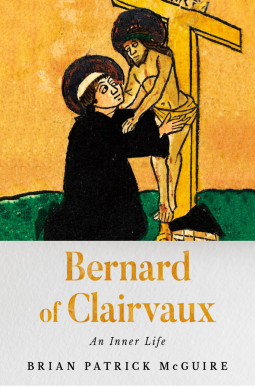
Review: Bernard of Clairvaux - An Inner Life by Brian Patrick McGuire

Synopsis: In this intimate portrait of one of the most consequential men of the Middle Ages, Brian Patrick McGuire delves into the life of Saint Bernard of Clairvaux to offer a refreshing interpretation that finds within this grand historical figure a deeply spiritual human being who longed for the reflective quietude of the monastery even as he helped shape the destiny of a church and a continent. Heresy and crusade, politics and papacies, theology and disputation shaped this astonishing man's life, and McGuire presents it all in a deeply informed and clear-eyed biography.

Following Bernard from his birth in 1090 in Burgundy to his death in 1153 at the abbey he had founded four decades earlier, McGuire reveals a life teeming with both momentous events and spiritual contemplation, from his central roles in the first great medieval reformation of the Church and the Second Crusade, which he came to regret, to the crafting of his books, sermons, and letters. We see what brought Bernard to monastic life, how he founded Clairvaux Abbey, established a network of Cistercian monasteries across Europe, and intervened on behalf of his brethren monks and abbots, as well as in heresy trials, affairs of state, and the papal schism of 1130.

By reevaluating Bernard's life and legacy through his own words and those of the people closest to him, this intimate account reveals how this often challenging saint saw himself and conveyed his convictions to those around him. Above all, McGuire depicts Saint Bernard of Clairvaux in a new light, as a man guided by Christian revelation and open to the achievements of the human spirit.


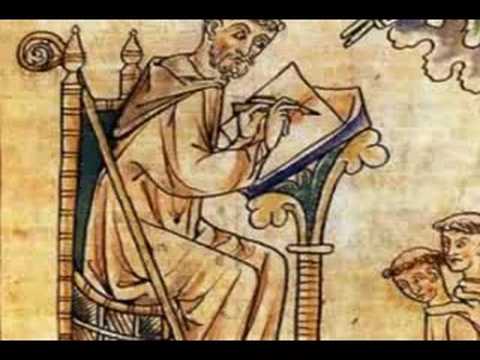
Saint Bernard The great Saint Bernard of Clairvaux ... | Bernard ...Bernard of Clairvaux was and is a complicated historical figure - a contradiction, an enigma, a politician, a saint; humble yet arrogant, proud, egotistical; passive yet domineering; retiring yet forthright and downright interfering. 

McGuire tells us that he seeks " ... to find Bernard as a man, monk, abbot, political figure and central actor in Christian Europe ...".  He successfully dispels some of the myths surrounding Bernard, whilst discussing the interpretation of the earlier sources and how they came to be adopted in later biographies.  McGuire uses Bernard's own writings to "... cast light on the way Bernard understood himself and the world around him ...".

For me personally, I was interested in Bernard's involvement in the papal schism, the Crusades, and his dealings with the Knights Templar and King Roger II of Sicily.  Despite repeated entreaties to return to his humble life within the Cistercian Order, Bernard still managed to insinuate himself upon the international political stage whenever the opportunity presented - in fact he comes across as being quite offended if he was not being consulted by princes, kings and popes!

McGuire mentions that Bernard "... worked to define orthodox belief and at the same time responded for the most part generously to the churchmen and others who turned to him for counsel and assistance ..."

There is no doubting the global influence and magnetism of Bernard, and McGuire provides a readily accessible study of this great man - though with the following proviso - he sees "... no reason to whitewash Bernard to make him politically correct for our age ...".  And rightly so, for Bernard was not of our age and we not of his.

St. Bernard of Clairvaux - Saints & Angels - Catholic Online
Towards the end of the book McGuire takes our certain themes and expounds upon them - themes such as: sources used; prior biographies written; Second Crusade and the Knights Templar; Bernard's relationships with Peter Abelard, Stephen Harding (Abbot of Citeaux) and Peter the Venerable (Abbot of Cluny); his sermons.

For those wishing to learn more and add to their own studies of Bernard, McGuire's book is definitely one to read.

Sunday, May 10, 2020

Books: The Crusades

Medicine in the Crusades: Warfare, Wounds and the Medieval Surgeon by Piers D. Mitchell
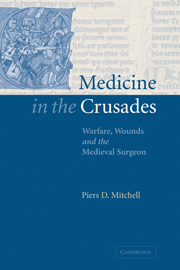
Medicine in the CrusadesThis is the first book to be published on any aspect of medicine in the crusades. It will be of interest not only to scholars of the crusades specifically, but also to scholars of medieval Europe, the Byzantine world and the Islamic world. Focusing on injuries and their surgical treatment, Piers D. Mitchell considers medical practitioners, hospitals on battlefields and in towns, torture and mutilation, emergency and planned surgical procedures, bloodletting, analgesia and anesthesia. He provides an assessment of the exchange of medical knowledge that took place between East and West in the crusades, and of the medical negligence legislation for which the kingdom of Jerusalem was famous. The book presents a radical reassessment of many outdated misconceptions concerning medicine in the crusades and the Frankish states of the Latin East.


The Cambridge Companion to the Literature of the Crusades edited by Anthony Bale
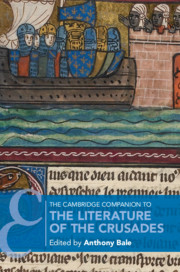
The Cambridge Companion to the Literature of the CrusadesHow were the Crusades, and the crusaders, narrated, described, and romanticised by the various communities that experienced or remembered them? This Companion provides a critical overview of the diverse and multilingual literary output connected with crusading over the last millennium, from the first writings which sought to understand and report on what was happening, to contemporary medievalism, in which crusading is a potent image of holy war and jihad. The chapters show the enduring legacy of the crusaders' imagery, from the chansons de geste to Walter Scott, from Charlemagne to Orlando Bloom. Whilst the crusaders' hold on Jerusalem was relatively short-lived, the desire for Jerusalem has had a long afterlife in many cultural contexts and media.


The Tunis Crusade of 1270: A Mediterranean History by Michael Lower
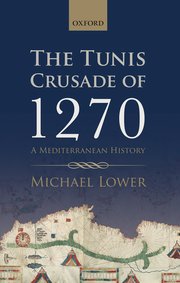
Cover for 

The Tunis Crusade of 1270Why did the last of the major European campaigns to reclaim Jerusalem end in an attack on Tunis, a peaceful North African port city thousands of miles from the Holy Land? In the first book-length study of the campaign in English, Michael Lower tells the story of how the classic era of crusading came to such an unexpected end. Unfolding against a backdrop of conflict and collaboration that extended from England to Inner Asia, the Tunis Crusade entangled people from every corner of the Mediterranean world. Within this expansive geographical playing field, the ambitions of four powerful Mediterranean dynasts would collide. While the slave-boy-turned-sultan Baybars of Egypt and the saint-king Louis IX of France waged a bitter battle for Syria, al-Mustansir of Tunis and Louis's younger brother Charles of Anjou struggled for control of the Sicilian Straits. When the conflicts over Syria and Sicily became intertwined in the late 1260s, the Tunis Crusade was the shocking result.

While the history of the crusades is often told only from the crusaders' perspective, in The Tunis Crusade of 1270, Lower brings Arabic and European-language sources together to offer a panoramic view of these complex multilateral conflicts. Standing at the intersection of two established bodies of scholarship - European History and Near Eastern Studies - this volume contributes to both by opening up a new conversation about the place of crusading in medieval Mediterranean culture.


Crusading in the Fifteenth Century: Message and Impact by Norman Housley
This collection of essays by European and American scholars addresses the changing nature and appeal of crusading during the period which extended from the battle of Nicopolis in 1396 to the battle of Mohács in 1526. Contributors focus on two key aspects of the subject. One is developments in the crusading message and the language in which it was framed. These were brought about partly by the appearance of new enemies, above all the Ottoman Turks, and partly by shifting religious values and innovative currents of thought within Catholic Europe. The other aspect is the wide range of responses which the papacy's repeated calls to holy war encountered in a Christian community which was increasingly heterogeneous in character. This collection represents a substantial contribution to the study of the Later Crusades and of Renaissance Europe.


The Siege of Acre, 1189-1191 Saladin, Richard the Lionheart, and the Battle That Decided the Third Crusade by John D Hosler
"The Siege of Acre, 1189-1191" by John D. HoslerThe first comprehensive history of the most decisive military campaign of the Third Crusade and one of the longest wartime sieges of the Middle Ages.

The two-year-long siege of Acre (1189–1191) was the most significant military engagement of the Third Crusade, attracting armies from across Europe, Syria, Mesopotamia, Egypt, and the Maghreb. Drawing on a balanced selection of Christian and Muslim sources, historian John D. Hosler has written the first book-length account of this hard-won victory for the Crusaders, when England’s Richard the Lionheart and King Philip Augustus of France joined forces to defeat the Egyptian Sultan Saladin. Hosler’s lively and engrossing narrative integrates military, political, and religious themes and developments, offers new perspectives on the generals, and provides a full analysis of the tactical, strategic, organizational, and technological aspects on both sides of the conflict. It is the epic story of a monumental confrontation that was the centerpiece of a Holy War in which many thousands fought and died in the name of Christ or Allah.


The Crusader Armies 1099–1187 by Steve Tibble
"The Crusader Armies" by Steve TibbleA major new history of the Crusades that illuminates the strength and sophistication of the Western and Muslim armies.

During the Crusades, the Western and Muslim armies developed various highly sophisticated strategies of both attack and defense, which evolved during the course of the battles. In this ambitious new work, Steve Tibble draws on a wide range of Muslim texts and archaeological evidence as well as more commonly cited Western sources to analyze the respective armies’ strategy, adaptation, evolution, and cultural diversity and show just how sophisticated the Crusader armies were even by today’s standards.

In the first comprehensive account of the subject in sixty years, Tibble takes a fresh approach to Templars, Hospitallers, and other key Orders and makes the controversial proposition that the Crusades were driven as much by sedentary versus nomadic tribal concerns as by religious conflict. This fluently written, broad-ranging narrative provides a crucial missing piece in the study of the West’s attempts to colonize the Middle East during the Middle Ages.


The Crusader States and their Neighbours: A Military History, 1099-1187 by Nicholas Morton
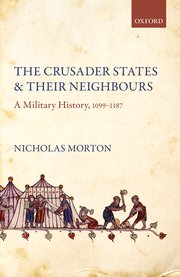
Cover for 

The Crusader States and their NeighboursThe Crusader States and their Neighbours explores the military history of the Medieval Near East, piecing together the fault-lines of conflict which entangled this much-contested region. This was an area where ethnic, religious, dynastic, and commercial interests collided and the causes of war could be numerous. Conflicts persisted for decades and were fought out between many groups including Kurds, Turks, Armenians, Arabs, and the crusaders themselves. Nicholas Morton recreates this world, exploring how each faction sought to advance its own interests by any means possible, adapting its warcraft to better respond to the threats posed by their rivals. Strategies and tactics employed by the pastoral societies of the Central Asian Steppe were pitted against the armies of the agricultural societies of Western Christendom, Byzantium, and the Islamic World, galvanising commanders to adapt their practices in response to their foes. Today, we are generally encouraged to think of this era as a time of religious conflict, and yet this vastly over-simplifies a complex region where violence could take place for many reasons and peoples of different faiths could easily find themselves fighting side-by-side.


Accursed Tower:The Crusaders' Last Battle for the Holy Land by Roger Crowley
"Accursed Tower" by Roger CrowleyThe city of Acre, powerfully fortified and richly provisioned, was the last crusader stronghold. When it fell in 1291, two hundred years of Christian crusading in the Holy Land came to a bloody end. With his customary narrative brilliance and immediacy, Roger Crowley chronicles the tumultuous and violent attack on Acre, the heaviest bombardment before the age of gunpowder, which left this once great Mediterranean city a crumbling ruin.

The ‘Accursed Tower’ was the focal point of this siege. As the last garrison of the Crusader defences, it came to symbolise the disintegration of the old world and the rise of a new era of Islamic jihad. Crowley’s narrative is based on forensic research, drawing heavily on little known first hand sources, both Christian and Arabic. This is a fast-paced and gripping account of a pivotal moment in world history.


Crusading Spirituality in the Holy Land and Iberia, c.1095-c.1187 by William J. Purkis
Crusading Spirituality In The Holy Land And Iberia, C.1095 C.1187For much of the twelfth century the ideals and activities of crusaders were often described in language more normally associated with a monastic rather than a military vocation; like those who took religious vows, crusaders were repeatedly depicted as being driven by a desire to imitate Christ and to live according to the values of the primitive Church.

This book argues that the significance of these descriptions has yet to be fully appreciated, and suggests that the origins and early development of crusading should be studied within the context of the "reformation" of professed religious life in the twelfth century, whose leading figures (such as St Bernard of Clairvaux) advocated the pursuit of devotional undertakings that were modelled on the lives of Christ and his apostles. It also considers topics such as the importance of pilgrimage to early crusading ideology and the relationship between the spirituality of crusading and the activities of the Military Orders, offering a revisionist assessment of how crusading ideas adapted and evolved when introduced to the Iberian peninsula in c.1120. In so doing, the book situates crusading within a broader context of changes in the religious culture of the medieval West.


Crusading and Pilgrimage in the Norman World edited by Kathryn Hurlock & Paul Oldfield
Crusading and Pilgrimage in the Norman WorldThe reputation of the Normans is rooted in warfare, faith and mobility. They were simultaneously famed as warriors, noted for their religious devotion, and celebrated as fearless travellers. In the Middle Ages few activities offered a better conduit to combine warfare, religiosity, and movement than crusading and pilgrimage. However, while scholarship is abundant on many facets of the Norman world, it is a surprise that the Norman relationship with crusading and pilgrimage, so central in many ways to Norman identity, has hitherto not received extensive treatment.

The collection here seeks to fill this gap. It aims to identify what was unique or different about the Normans and their relationship with crusading and pilgrimage, as well as how and why crusade and pilgrimage were important to the Normans. Particular focus is given to Norman participation in the First Crusade, to Norman interaction in later crusading initiatives, to the significance of pilgrimage in diverse parts of the Norman world, and finally to the ways in which crusading and pilgrimage were recorded in Norman narrative. Ultimately, this volume aims to assess, in some cases to confirm, and in others to revise the established paradigm of the Normans as crusaders par excellence and as opportunists who used religion to serve other agendas.