Showing posts with label saints. Show all posts

Wednesday, February 17, 2021

The Book in the Cathedral by Christopher de Hamel

On Christmas Day 1170, Thomas Becket delivered a sermon to a packed chapter house at Canterbury. His theme was the death of one his predecessors as archbishop, St Alphege, hacked to death by the Danes in the early 11th century – the only martyr in the role so far. “There will soon be another,” Becket declared. Four days later, a quartet of knights arrived drunk, on a perceived mission from the king, and dashed the archbishop’s brains across the cathedral floor. It is easy to see how, knowing his time was up, Becket might identify with Alphege. In The Book in the Cathedral, however, Christopher de Hamel argues that the two had something more tangible in common: an elaborately jewelled psalter – a book of psalms – once owned by Alphege and later treasured by Becket.


On the final page, a 16th-century inscription – deemed spurious by previous scholars – links the book to two archbishops: Becket and “N”. The Book in the Cathedral is an exercise in bibliographic detective work, identifying “N” and overturning the judgment of earlier cataloguers. De Hamel – author of the wonderful Meetings With Remarkable Manuscripts – shows us all the tools of the bibliographer’s trade: dating handwriting, identifying pigments, noting the rust marks left by nails from a now-lost ornate binding. This is done with a lightness that belies De Hamel’s pre-eminence as a manuscript scholar – the telling is brisk, with a light foxing of anecdote, even as the evidence is rigorously lined up.


read more here @ The Guardian

Friday, June 26, 2020

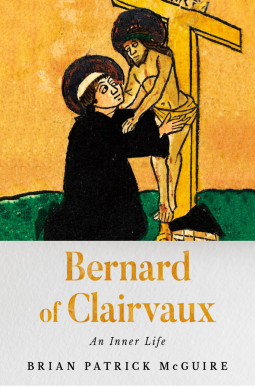
Review: Bernard of Clairvaux - An Inner Life by Brian Patrick McGuire

Synopsis: In this intimate portrait of one of the most consequential men of the Middle Ages, Brian Patrick McGuire delves into the life of Saint Bernard of Clairvaux to offer a refreshing interpretation that finds within this grand historical figure a deeply spiritual human being who longed for the reflective quietude of the monastery even as he helped shape the destiny of a church and a continent. Heresy and crusade, politics and papacies, theology and disputation shaped this astonishing man's life, and McGuire presents it all in a deeply informed and clear-eyed biography.

Following Bernard from his birth in 1090 in Burgundy to his death in 1153 at the abbey he had founded four decades earlier, McGuire reveals a life teeming with both momentous events and spiritual contemplation, from his central roles in the first great medieval reformation of the Church and the Second Crusade, which he came to regret, to the crafting of his books, sermons, and letters. We see what brought Bernard to monastic life, how he founded Clairvaux Abbey, established a network of Cistercian monasteries across Europe, and intervened on behalf of his brethren monks and abbots, as well as in heresy trials, affairs of state, and the papal schism of 1130.

By reevaluating Bernard's life and legacy through his own words and those of the people closest to him, this intimate account reveals how this often challenging saint saw himself and conveyed his convictions to those around him. Above all, McGuire depicts Saint Bernard of Clairvaux in a new light, as a man guided by Christian revelation and open to the achievements of the human spirit.


Saint Bernard The great Saint Bernard of Clairvaux ... | Bernard ...Bernard of Clairvaux was and is a complicated historical figure - a contradiction, an enigma, a politician, a saint; humble yet arrogant, proud, egotistical; passive yet domineering; retiring yet forthright and downright interfering. 

McGuire tells us that he seeks " ... to find Bernard as a man, monk, abbot, political figure and central actor in Christian Europe ...".  He successfully dispels some of the myths surrounding Bernard, whilst discussing the interpretation of the earlier sources and how they came to be adopted in later biographies.  McGuire uses Bernard's own writings to "... cast light on the way Bernard understood himself and the world around him ...".

For me personally, I was interested in Bernard's involvement in the papal schism, the Crusades, and his dealings with the Knights Templar and King Roger II of Sicily.  Despite repeated entreaties to return to his humble life within the Cistercian Order, Bernard still managed to insinuate himself upon the international political stage whenever the opportunity presented - in fact he comes across as being quite offended if he was not being consulted by princes, kings and popes!

McGuire mentions that Bernard "... worked to define orthodox belief and at the same time responded for the most part generously to the churchmen and others who turned to him for counsel and assistance ..."

There is no doubting the global influence and magnetism of Bernard, and McGuire provides a readily accessible study of this great man - though with the following proviso - he sees "... no reason to whitewash Bernard to make him politically correct for our age ...".  And rightly so, for Bernard was not of our age and we not of his.

St. Bernard of Clairvaux - Saints & Angels - Catholic Online
Towards the end of the book McGuire takes our certain themes and expounds upon them - themes such as: sources used; prior biographies written; Second Crusade and the Knights Templar; Bernard's relationships with Peter Abelard, Stephen Harding (Abbot of Citeaux) and Peter the Venerable (Abbot of Cluny); his sermons.

For those wishing to learn more and add to their own studies of Bernard, McGuire's book is definitely one to read.

Sunday, September 8, 2019

Women in Antiquity - Oxford University Press

Oxford University Press has released a number of interesting books in the Women of Antiquity series. Here are a few that interested me personally:


Cover for 9780195379129Galla Placidia: The Last Roman Empress by Hagith Sivan
This new biography of Galla (c.390 - 450) is organized according to her changing roles as bride, widow, bereaved mother, queen and empress. It examines her relations with men in power, her achievements as a politician, her skills at establishing power bases and political alliances, and her efficiency at accomplishing her desired goals. (side note: I have this one myself!)

Theodora: Actress, Empress, Saint by David Potter
Potter penetrates the highly biased accounts of Theodora found in the writings of her contemporaries and takes advantage of the latest research on early Byzantium to craft a modern, well-rounded, and engaging narrative of Theodora's life. 

Zenobia: Shooting Star of Palmyra by Nathanael Andrade
This book situates Zenobia in the social, economic, cultural, and material context of her Palmyra. By doing so, it aims to shed greater light on the experiences of Zenobia and Palmyrene women like her at various stages of their lives. Not limiting itself to the political aspects of her governance, it contemplates what inscriptions and material culture at Palmyra enable us to know about women and the practice of gender there, and thus the world that Zenobia navigated

Boudicca: Warrior Woman of Roman Britain by Caitlin C. Gillespie
Introduces readers to the life and literary importance of Boudica through juxtaposing her different literary characterizations with those of other women and rebel leaders. This study focuses on our earliest literary evidence, the accounts of Tacitus and Cassius Dio, and investigates their narratives alongside material evidence of late Iron Age and early Roman Britain.

Cover for 9780195365528Arsinoe of Egypt & Macedon by Elizabeth Donnelly Carney
First ever biography (in english) of Arsinoƫ II (c. 316-c.270 BCE), daughter of the founder of the Ptolemaic dynasty. Although Arsinoƫ was the pivotal figure in the eventual evolution of regnal power for Ptolemaic women --and despite a considerable body of recent scholarship across many fields relevant to her life-- there has been no up-to-date biography in English of her life.

Berenice II and the Golden Age of Ptolemaic Egypt by Dee L. Clayman
First ever biography (in english) of Berenice II (c. 264-221 BCE), daughter of King Magas of Cyrene and wife of Ptolemy III Euergetes. which offers a portrait of a woman who had access to the cultural riches of both Greece and Egypt and who navigated her way carefully through the opportunities and dangers they presented, ultimately using them to accrue unprecedented honors that were all but equal to those of the king.

Cleopatra by Duane W Roller
First comprehensive biography of Cleopatra VII, queen of Egypt to draw solely from the source material from the Greco-Roman period: literary sources, Egyptian documents (Cleopatra's own writings), and representations in art and coinage produced while she was alive.

Cleaoptra's Daughter and Other Royal Women of the Augustan Era by Duane W Roller
The first detailed study of a number of royal women who were major players in the world of the latter first century BC and the early part of the following century. In addition to Cleopatra Selene (daughter of Cleoptra VII), other women of note included in this book are Pythodoris of Pontos, Salome of Judaea, Glaphyra of Cappadocia, Dynamis of Bosporos, Abe of Olbe, and Mousa of Parthia.

Clodia Metelli: The Tribune's Sister by Marilyn B. Skinner
First full-length biography of Clodia Metelli widow of the consul Metellus Celer in any language. As the eldest sister of the populist demagogue P. Clodius Pulcher, she used her wealth and position to advance her brother's political goals. For that she was brutally reviled by Clodius' enemy, the orator M. Tullius Cicero.

Faustina I and II: Imperial Women of the Golden Age by Barbara M. Levick
Cover for 9780195379419Provides an learned introduction to the lives of these two important classical women of the Roman Empire - Faustina the Elder (c. 97-140) and her daughter Faustina II (c. 130-175).  The book traces Faustina I's formation of her family's heritage amid a new empire through to Faustina II's enhancement of that legacy, focusing especially on the younger Faustina's deep involvement in palace politics and her possible role in the revolt of Avidius Cassius in 175.

Sabina Augusta: An Imperial Journey by T Corey Brennan
Sabina Augusta (ca. 85-ca. 137), wife of the emperor Hadrian (reigned 117-38), accumulated more public honors in Rome and the provinces than any imperial woman had enjoyed since the first empress, Augustus' wife Livia. Indeed, Sabina is the first woman whose image features on a regular and continuous series of coins minted at Rome. She was the most travelled and visible empress to date. Hadrian also deified his wife upon her death.

Turia: A Roman Woman's Civil War by Josiah Osgood
In this book, Josiah Osgood reconstructs the life of Turia, more fully than it has been before by bringing in alongside the eulogy stories of other Roman women who also contributed to their families' survival while working to end civil war. He shows how the wife's story sheds rare light on the more hidden problems of everyday life for Romans, including a high number of childless marriages. This unique narrative is more than a biography of one woman: it is a portrait of a vivid period in Roman history and a tribute to married love 

Eurydice and the Birth of Macedonian Power by Elizabeth Donnelly Carney
Examines Eurydice - the wife of Amyntas III, the mother of Philip II, and two other short-lived kings of Macedonia, and grandmother of Alexander the Great. This study examines the nature of her public role as well as the factors that contributed to its expansion and to the expanding power of Macedonia.

Cover for 9780190210038Hypatia The Life and Legend of an Ancient Philosopher by Edward J. Watts
First full English-language scholarly treatment of Hypatia in over 25 years which takes advantage of new techniques for reading ancient letter collections and philosophical and mathematical commentaries.  Watts uncovers a number of previously unnoticed early modern sources and uses them to speak at length about Hypatia's modern legacy. 

Perpetua:  Athlete of God by Barbara K. Gold
Perpetua was an early Christian martyr who died in Roman Carthage in 203 CE. This book will investigate and try to make sense of all aspects of Perpetua's life, death, and circumstances: her family and life in Carthage, Christians and Romans in Carthage and in the Roman empire in this period, the comparisons of martyrs to athletes, the influence of these martyr tales upon the Acts of the Apostles and the Greek novel, the reactions of later church fathers like Augustine to her story and her popularity, and the gendering of this text.

Monica: An Ordinary Saint by Gillian Clark
This tome seeks to illuminate Monica (mother of St Augustine) in the context of the societal expectations and burdens that shaped her and all ordinary women. Weighing Augustine's discussion of his mother against other evidence of women's lives in late antiquity, Clark achieves portraits both of Monica individually, and of the many women like her.

Sunday, June 2, 2019

Review: Cuthbert of Farne by Katharine Tiernan

Northumbria - 7th Century: The Anglo-Saxon kingdom of Northumbria was originally two kingdoms: Bernicia in the north and Deira in the south. These two countries were often in conflict before their eventual semi-permanent unification in 654. While violent conflicts between Bernicia and Deira played a significant part in determining which line ultimately gained supremacy in Northumbria, marriage alliances also helped bind these two territories together. During his reign, King Oswiu presided over the Synod of Whitby, a religious meeting designed to reconcile religious differences between Roman (new) and Celtic (old) Catholicism, in which he eventually backed the Roman beliefs, thereby bringing Northumbria in line with Southern England and Western Europe. It must be remembered that this kingdom had only converted to christianity in 627 - a mere 37 years prior to Whitby!

43911047
Cuthbert grew up in or around Old Melrose Abbey, a daughter-house of Lindisfarne. He had decided to become a monk after seeing a vision on the night in 651 that St Aidan, the founder of Lindisfarne, died, but he seems to have seen some military service first. He was quickly made guest-master at the new monastery at Ripon, soon after 655, but had to return with Eata of Hexham to Melrose when Wilfrid was given the monastery instead. About 662 he was made prior at Melrose, went on a mission to Pictland (663), was appointed prior to Lindisfarne (665) before retiring to become a hermit (676). Following Wilfred's downfall in 684 he was made bishop of Lindisfarne, but by late 686 he resigned and again returned to his hermitage (on Inner Farne) as he felt he was about to die, although he was probably only in his early 50s (c.687). 


Tiernan's novel follows the story of Cuthbert fairly closely and is interspersed with stories of the Northumbrian royal family as well as Cuthbert's rival, Wilfred, and of the holy abbess and royal virgin Elfleda, the daughter of Oswiu of Northumbria, who succeeded St Hilda as abbess of Whitby (680). For those readers unfamiliar with Anglo-Saxon history, this may be a challenge - it was a period of intense political and religious turmoil. I myself found it a bit confusing as the author decided to change the names of the main historical characters, which I personally felt was unnecessary.

Overall, this is still a good introductory novel for those with a fledgling interest in Anglo-Saxon religion and politics, as well as one on one of the most important religious figure of northern England, whose life spanned the transitional period from paganism to Christianity and whose cult is still active today. For as Bede himself says: "but even when the servant of Christ was dead and buried, the miracles which he worked whilst alive did not cease."

Note: 
An early anonymous Life of Cuthbert was written about 700, but the discovery of Cuthbert's uncorrupted body gave a new impetus to the cult, and Bede used the earlier Life to write his own verse Life, around 716, and a longer, prose Life around 721. 

Katharine on Cuthbert
Beshara Magazine - The Red Sail
Beshara Magazine - St Cuthbert of Farne
Place of Repose: A Tale of St Cuthbert’s Last Journey 


Read more on Cuthbert
St. Cuthbert, His Cult and His Community to AD 1200 edited by Gerald Bonner, David W. Rollason, & Clare Stancliffe
St. Cuthbert: His Life and Cult in Medieval Durham by Dominic Marner
Two Lives of St. Cuthbert edited by Bertram Colgrave
Life and Miracles of St. Cuthbert by Venerable Bede


Thursday, June 15, 2017

Review: The Pilgrim by Davis Bunn

Abandoned by her husband and in danger because of her faith, Empress Helena embarks on a perilous pilgrimage from Caesarea to Judea. Although she encounters friends and foes alike in her travels, miracles follow her. Join her as she wins hearts for God and discovers the true cross of Christ!

Empress Helena was a woman who life would forever be linked with the Holy Land and the Crucifixion, in the sense that she reputedly discovered the True Cross.

Helena's life had humble, if not slightly seedy beginnings as one of her father's "supplementary amenities" at his drinking establishment in Bithyna (Asia Minor). She married well - Constantius, a man on the make under Emperor Aurelian - how they met is speculative. However, she was a "first wife" - when abandoned (c.289) in favour of a younger woman who provided the basis for a politically advantageous - though short-lived - marriage for her former husband, who by now had risen to the rank of Emperor (dc.306). 

With the enthronement of her son Constantine as Emperor (306), Helena returns to imperial court life - but there can only be one Imperial First Lady, and Helena had a distinct dislike for her daughter-in-law Fausta - the daughter of Maximus, whose stepdaughter Theodora, stole her husband so many years ago.

With the new religion of Christianity now the "official" court religion, Helena embarks upon a pilgrimage to Jerusalem (326 - 328) - she is by now a passionate convert to Christianity, and her pilgrimage is ostensibly a tour of the principal shrines. And yet, whilst in the Holy Land, Helena was said to have unearthed the True Cross, part of which she sent back to her son - the Emperor Constantine - in Rome, along with other relics of the Passion. Her finds were endorse by her son, who order the construction of a church to house them - the Church of the Holy Sepulchre in Jerusalem.

Helena's was, in fact, one of the first recorded Christian pilgrimages - and I guess you could say she was also one of the first documented archaeologists. 

So, knowing so much, I was looking forward to reading Bunn's novel on Helena. Its short - less than 200 pages - but it certainly packs a lot into those pages. Helena's story is spell-binding - you are captivated by her courage, you endure her hardships and struggles, and celebrate her triumphs. A reader can easily posit themselves in Helena's shoes (or rather, sandals). The reader never loses interest - and Helena's story, courtesy of Davis Bunn's, still resonates long after it is finished.  I read this back in August 2015 - and the story is as fresh in my mind today as if I had just set it aside.


Monday, October 12, 2015

Timeless tale of a medieval saint


A novel about the life of a 15th-century Russian monk might sound an unlikely bestseller, but Eugene Vodolazkin’s extraordinary tale Lavrus became a literary sensation, won Russia’s Big Book award in 2013, and was shortlisted for numerous other prizes. This fall it’s published in English.

So what is the appeal? Vodolazkin’s spiritual odyssey transcends history, fusing archaism and slang to convey the idea that “time is a sort of misunderstanding.” Towards the end, the eponymous hero “Laurus”, a medieval doctor, holy fool, pilgrim and - finally - hermit, is leaning on an old pine tree. The ants are swarming over the bark and through the monk’s beard, embodying the idea that he has almost become part of the forest he lives in. The image is typical of Vodolazkin’s poetic vision.