Showing posts with label simon de montfort. Show all posts

Saturday, August 7, 2021

Review: Crusaders and Revolutionaries: De Montfort by Darren Baker

Synopsis: One of the families that dominated the thirteenth century were the de Montforts. They arose in France, in a hamlet close to Paris, and grew to prominence under the crusading fervour of that time, taking them from leadership in the Albigensian wars to lordships around the Mediterranean. They marry into the English aristocracy, join the crusade to the Holy Land, then another crusade in the south of France against the Cathars.The controversial stewardship of Simon de Montfort (V) in that conflict is explored in depth. It is his son Simon de Montfort (VI) who is perhaps best known. His rebellion against Henry III of England ultimately establishes the first parliamentary state in Europe.

The decline of the family begins with Simon’s defeat and death at Evesham in 1265. Initially they revive their fortunes under the new king of Sicily, but they scandalise Europe with a vengeful political murder. By this time it is the twilight of the crusades era and the remaining de Montforts either perish or are expelled. Eleanor de Montfort, the last Princess of Wales, dies in childbirth and her daughter is raised as a nun.


I had been drawn to the de Montforts many years ago, long before this book was quite possibly conceived, so was immediately attracted to the fact that the focus of this was on the family themselves, particularly as pertaining to the remnants of the family post Evesham.

The de Montforts appeared on the political scene during the crusading era, and were, for all intents and purposes, enthusiastic in their support. This did not necessarily mean that they were always in agreeance with motivations of those pulling the strings, however, it may help us to understand the religious fervour of later generations.

They were a family with their collective fingers in many political pies - their ties with other notable and powerful families as well as the crowns of both England and France, I feel, had been long forgotten until now as Baker weaves all the threads together into one tome. The de Montforts' connections - socially, politically and familially - often saw them at odds with each other, despite the fact that they were an extremely tight-knit family collective - and Baker demonstrates this well.

There is ample research done of the early de Montforts but the focus will always be on father and son - Simon V and Simon VI - whose exploits have come down to us over the many years, and are explored in depth here as well. But as I mentioned earlier, for me, it was the latter de Montforts that I was particularly interested in, and was able to glean a few snippets to enhance my knowledge. And readers will be interested in the role of the de Montfort women, who were no shrinking violets.

The de Montforts ended how they began, in obscurity. But whilst in the ascendant, they were the Icarus of their generation - flying that little bit too close to the sun. This is one tome that I will definitely be adding to my own library.

Thursday, October 3, 2019

Simon V of Montfort and Baronial Government, 1195-1218 by G.E.M. Lippiatt

Cover for 

Simon V of Montfort and Baronial Government, 1195-1218


Dissenter from the Fourth Crusade, disseised Earl of Leicester, leader of the Albigensian Crusade, prince of southern France: Simon of Montfort led a remarkable career of ascent from mid-level French baron to semi-independent count before his violent death before the walls of Toulouse in 1218. Through the vehicle of the crusade, Simon cultivated autonomous power in the liminal space between competing royal lordships in southern France in order to build his own principality. This first English biographical study of his life examines the ways in which Simon succeeded and failed in developing this independence in France, England, the Midi, and on campaign to Jerusalem. Simon's familial, social, and intellectual connexions shaped his conceptions of political order, which he then implemented in his conquests. 

By analysing contemporary narrative, scholastic, and documentary evidence-including a wealth of archival material-this volume argues that Simon's career demonstrates the vitality of baronial independence in the High Middle Ages, despite the emergence of centralised royal bureaucracies. More importantly, Simon's experience shows that barons themselves adopted methods of government that reflected a concern for accountability, public order, and contemporary reform ideals. This study therefore marks an important entry in the debate about baronial responsibility in medieval political development, as well as providing the most complete modern account of the life of this important but oft-overlooked crusader.

Sunday, September 15, 2019

Review: The Song of Simon de Montfort by Sophie Therese Ambler

45878408. sx318
Synopsis: this is the story of this extraordinary man: heir to a great warrior, devoted husband and father, fearless crusader knight and charismatic leader. It is the story of a man whose passion for good governance was so fierce that, in 1258, frustrated by the King’s refusal to take the advice of his nobles and the increasing injustice meted out to his subjects, he marched on Henry III’s hall at Westminster and seized the reins of power.


Montfort established a council to rule in the King’s name, overturning the social order in a way that would not be seen again until the rule of Oliver Cromwell in the seventeenth century. Having defeated the King at the Battle of Lewes in 1264, Montfort and his revolutionary council ruled England for some fifteen months, until the enmity between the two sides exploded on that August day in 1265. When the fighting was over, Montfort and a host of his followers had been cut down on the battlefield, in an outpouring of noble blood that marked the end of chivalry in England as it had existed since the Norman Conquest.


" ... he was a man who would flee neither torment nor death for the sake of his oath ..."

Simon de Montfort is considered to be one of the important personages in English history, being credited as the founder of what is now the modern English Parliament. But much happened before that would influence events in the future. 

For many years King Henry III had run the country poorly. He had married a French woman, Eleanor of Provence, and many members of her family and of the French court came to England with her. The French replaced Henry's advisers and began to spend the country's money. Things came to a head in 1258 after a series of bad harvests and wet winters. This resulted in starvation for the country's poor and reduced taxes for the king. 
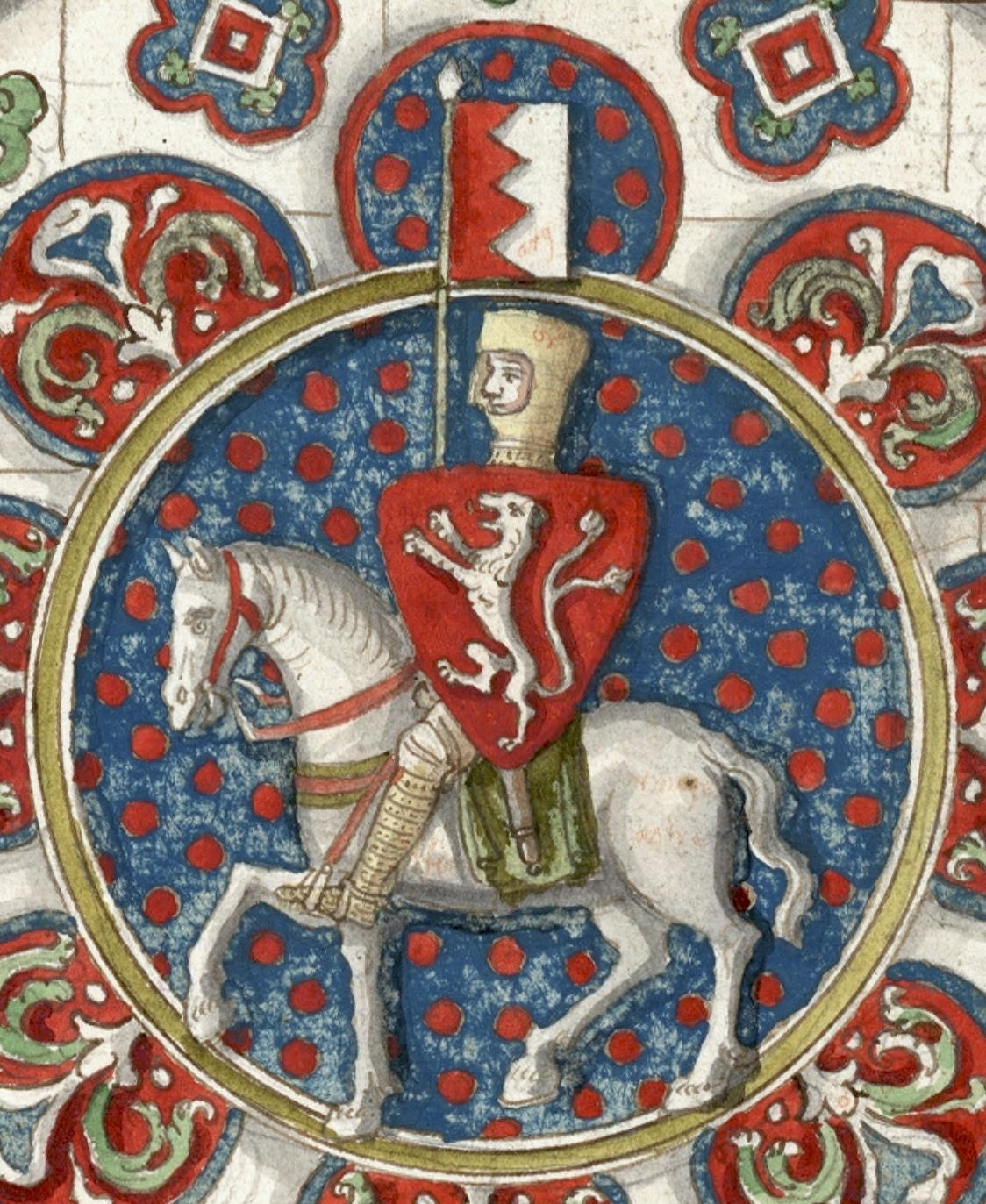
Image result for simon de montfortTo make matter worse Henry approached Parliament for funds to pay for a military mission to Sicily to put he son Prince Edward on the Sicilian throne. The time had come for the barons to voice their concerns. The group of barons, including Richard de Clare (Earl of Gloucester), John Fitz Geoffrey, Roger Bigod (Earl of Norfolk), Hugh Bigod (Roger's brother), Peter of Savoy, Peter de Montfort (not a relation of Simon), and finally Simon de Montfort (Earl of Leicester), vowed to stand together and oppose the king. Simon de Montfort was a close friend of the king and was married to the king's sister, Eleanor, but the country's future was more important to the Earl than his friendship with the king.

The barons arranged to meet King Henry at Oxford in June of 1258. As an act of faith Simon handed his castles at Odiham and Kenilworth over to the king. When the barons appeared before Henry they were fully armed and gave him no choice but to agree to their demands. The 'Provisions of Oxford' as they are known set out a system of government in which a council of fifteen members were to advise the king. The fifteen were selected by a committee of four, two from the barons and two from the king. The activities of the council were also to be checked by Parliament. A year later amendments to the running of the council were made by the 'Provisions of Westminster'.

Henry needed help to oppose the barons so he approached the French king Louis IX. At the Treaty of Paris in 1259 Henry agreed to admit that England had no rights to the lands of Normandy, Maine, Anjou and Poitou that had been lost by King John. Henry was allowed to keep lands in Gascony and Aquitaine as long as he accepted the French king as his overlord in these areas. In return King Louis promised to assist Henry in the fight against the barons.

Henry also approached the Pope for help. The Pope agreed that the Provisions of Oxford were illegal as Henry had been forced to sign the documents. Freed from the obligations forced upon him by the barons Henry resumed power. With an army of French bodyguards he went on the offensive against the barons. At the Battle of Lewes King Henry and his eldest son Prince Edward, the future king of England, were captured by the barons and held prisoner.

In 1265 Simon de Montfort laid the foundations for the current English Parliament. For the first time each county of England was allowed to elect and send two knights to Parliament to represent their areas. Each borough was also to elect and send two representatives.


The barons began to quarrel amongst themselves and a split developed. Prince Edward escaped from captivity and joined the group of barons opposing Simon de Montfort. At the Battle of Evesham on August 4, 1265 Simon de Montfort was killed. Although small pockets of resistance remained, the rebellion was over and King Henry again took control of the country.  "The murder of Evesham," wrote Robert of Gloucester, "for battle it was none."


The Song is really a family history, beginning with Simon's early life, that of his married life and political career, and finally that of his family after his death. Based heavily on the writings of Peter of les Vaux-de-Cernay, Simon's story is told in an easy - slightly romanticised- style, which at times reads like it was written in Victorian times. Much attention is given to the history and politics of the day, supported by copious notes and explanations. This is really important in telling the story of de Montfort as much of his life was taken up with political and religious campaigns.  What we also discover is that de Montfort is a man of unfailing conviction and loyalty.  He has and is for me, one of the more interesting characters from the pages of history, and someone I have read extensively on.

However, the author states, quite early on, that this tome will also contribute to scholarship on the Crusades. Having read quite extensively on the subject of the Crusades, including the Albigensian Crusade, which is more pertinent to Simon's story, the author hasn't really added anything new on that front, which is rather curious as the author is a historian of the Crusades.  

The story presented of de Montfort, his life, his career, and his legacy, is extensively research and well documented in "the Song".  Those not overly familiar with this period will have no trouble following events as they unfold, though a little knowledge is not a bad thing.  It is a tome I would quite happily have sitting on the shelves of my own personal library.

I would be interested in comparing this title with another that sits on my shelves, "Simon de Montfort" by Darren Baker (previous published as "With All For All") as well as "Simon de Montfort" by JR Maddicott (considered the definitive biography).


read also: 


Saturday, April 6, 2019

Simon V of Montfort and Baronial Government, 1195-1218 - G.E.M. Lippiatt

CoverDissenter from the Fourth Crusade, disseised earl of Leicester, leader of the Albigensian Crusade, prince of southern France: Simon of Montfort led a remarkable career of ascent from mid-level French baron to semi-independent count before his violent death before the walls of Toulouse in 1218. Through the vehicle of the crusade, Simon cultivated autonomous power in the liminal space between competing royal lordships in southern France in order to build his own principality. 

This first English biographical study of his life examines the ways in which Simon succeeded and failed in developing this independence in France, England, the Midi, and on campaign to Jerusalem. Simon's familial, social, and intellectual connexions shaped his conceptions of political order, which he then implemented in his conquests. By analysing contemporary narrative, scholastic, and documentary evidence-including a wealth of archival material-this volume argues that Simon's career demonstrates the vitality of baronial independence in the High Middle Ages, despite the emergence of centralised royal bureaucracies. More importantly, Simon's experience shows that barons themselves adopted methods of government that reflected a concern for accountability, public order, and contemporary reform ideals. 

This study therefore marks an important entry in the debate about baronial responsibility in medieval political development, as well as providing the most complete modern account of the life of this important but oft-overlooked crusader.