Tuesday, September 22, 2015

History of Taiwan Feminine Literature

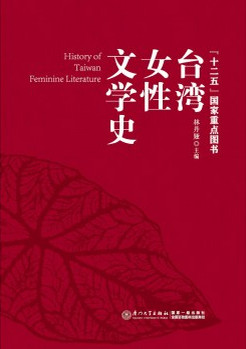
A new book, which maps out the historical lineage of Taiwan women's literature spanning from ancient times to the early 21st century, was launched at the 11th Cross-Strait Book Fair held in Xiamen, a coastal city in southeast China's Fujian Province, on September 12.
The book titled "History of Taiwan Feminine Literature", consists of nearly a million characters. It deftly portrays the origin, development and evolution of the distinctive South Asian literary arena.
Publishing insiders recognize that the book is the first on the Chinese mainland to feature such a long time span of Taiwanese literature studies, filling a notable gap in the history of Chinese literature, and of women's literature worldwide.

Tuesday, August 25, 2015

Agincourt, by Anne Curry - book review: The archers omnibus - Reviews - Books - The Independent

Agincourt, by Anne Curry - book review

Anne Curry’s interesting, commendably accessible, and admirably well researched book commemorates this autumn’s 600th anniversary and is very good at sorting fact from fiction. She begins by piecing together what actually happened when Henry V led a smallish English army against a large French one in an expansionist bid to seize France. She uses a number of contemporary or near-contemporary accounts. 

Yes, Henry really was a charismatic orator well able to whip up the morale of his men. Yes, the sky was, at one point, dark with a shower of English arrows. Yes, he named the battle after a nearby castle. And he most definitely gave an order to kill the French prisoners. Shakespeare included that, of course. Olivier omitted it. The last thing Britain needed in 1944 after five years of war with Germany was a film about an English leader with  ambivalent morality. 

University of Delaware Library acquires rare Shakespeare quarto

University of Delaware Library acquires rare Shakespeare quarto


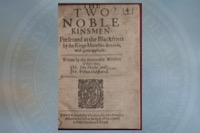
The University of Delaware Library has announced the purchased acquisition of a rare early quarto edition of a play by William Shakespeare and John Fletcher, The Two Noble Kinsmen (London: by Tho. Cotes, for John Waterson, 1634). 

The piece was made possible with support from the B.H. Breslauer Foundation; the University of Delaware Library Associates; the College of Arts and Sciences; the recently retired Lois Potter, professor emeritus of the Department of English; and Mark Samuels Lasner, senior research fellow in the Special Collections Department.

Q5: Professor emeritus explores Middle Ages with new novel


After a long and eventful military career, including battalion command in Vietnam and four tours as an intelligence officer and Russian foreign area specialist in Europe during the Cold War, Col. George Steger began a second career in academia. He is a professor emeritus in history and international affairs at the University of Saint Mary. He has written a book entitled “Sebastian's Way.”

The novel is the story of two men: Charlemagne, “The Thunderer,” master of all Europe in the 8th century, who fights and rules like the pagan enemies he seeks to conquer, and Sebastian, a young warrior who challenges the king to forge a new path to peace. The pitch of the book is how difficult it is to have radically different ideas from those around you, especially if you are right and those in authority are wrong. Being different needs courage and a very good reason, and one needs to be prepared to pay the price. The background for the novel was the 30-year war Charlemagne fought with the Saxons.

Tuesday, June 23, 2015

May Additions

Although May has long gone and June has all but vanished, below are the recent additions to the Library for May 2015.


I love Marlowe and Richard III - so these will make welcome additions to my Wars of the Roses - Elizabethan Poets shelves.  I am not averse to reading various authors - it just adds to a more rounded view of a character.  So read nothing into the choice of authors!


Monday, March 9, 2015

Review: Archie Goodwin - Nero Wolfe's Legman

Born in Ohio. Public high school, pretty good at geometry and football, graduated with honor but no honors. Went to college two weeks, decided it was childish, came to New York and got a job guarding a pier, shot and killed two men and was fired, was recommended to Nero Wolfe for a chore he wanted done, did it, was offered a full-time job by Mr. Wolfe, took it, still have it.
— Archie Goodwin addressing the suspects in "Fourth of July Picnic" (1957)


I was introduced to Archie Goodwin first through reading Rex Stout's Nero Wolfe series then watching the TV series starring Maury Chaykin and Timothy Hutton.  So it was with great pleasure that I had the opportunity to read two books featuring Wolfe's "legman" Archie in a new adaption of Stout's Nero Wolfe, now undertaken by author Robert Goldsborough.

The first was Archie Meets Nero Wolfe: A Prequel to Rex Stout's Nero Wolfe Mysteries which I though was a very well done introduction to a character that featured so prominently in Stout's "Nero Wolfe" novels - all the usual suspects are introduced in this prohibition era setting.

This was then quite recently followed by Archie in the Crosshairs, taking place in the late 1940s possibly early 1950s - about 20 years after their first meeting. And as for this outing, loved it!  This episode tackles yet another mystery to be solved by the almost reclusive Nero Wolfe with the aid of his side-kick, Archie Goodwin. I read this in one sitting as the pace and style of writing kept me intrigued to the very end. I read the complete Nero Wolfe series quite a number of years ago, and these new additions faithfully follow Stout's originals.


For further reading, could I suggest Goldsborough's Archie Meets Nero Wolf, then Stout's books, followed by Goldsborough's, possibly finishing with Archie in the Crosshairs. This would get you up-to-date with all things Nero Wolfe and Archie Goodwin.


Further Reading:
Nero Wolfe on wikipedia
Rex Stout on wikipedia
Robert Goldsborough on wikipedia


Review: Gerald Posner: God's Bankers

"God’s Bankers has it all: a rare exposé and an astounding saga marked by poisoned business titans, murdered prosecutors, mysterious deaths of private investigators, and questionable suicides; a carnival of characters from Popes and cardinals, financiers and mobsters, kings and prime ministers ..."

So with that I was eagerly anticipating a journey into the underbelly of Vatican politics and double-dealing from the time of Peter to our current Pope Francis. However, the early years were briefly touched upon until we reach the reign of Gregory XVI (1831 - 1846) when the cash-strapped Church was looking for ways to boost their coffers. Thus, the age of lay-financiers, prelates and shady businessmen begins with the Church taking uncertain steps into the world of investment and money-lending. From the reign of Leo XIII the Vatican Bank steps tentatively onto the world stage whilst headed by a select group of financial outsiders, steering the Bank through revolutionary Italy, the stock-market crash and the creation of the Papal State - the Vatican City. It is in the 20th century that the Vatican Bank takes a rather interesting stance on Germany during the 1930s and 1940s - the Vatican has spread its investments thought Fascist Italy and Germany, and is at odds with itself over preserving financial independence and fighting communism or speaking out against documented atrocities. We then move forward through the years of assisting war criminals to the influx of dubious Italian and Sicilian businessmen into the banking hierarchy, and support for fledgling anti-communist movements worldwide. 

This a is lengthy tome - with copious notes. It is not a light read - and the reader may find themselves re-reading past chapters.


Sunday, January 4, 2015

Review: The Man In The Iron Mask


This is my second reading of this fascinating work on this historical mystery: this first time was in July 2010.

"The Man In The Iron Mask" by Roger MacDonald is a very fascinating and enjoyable journey into 17th & 18th Century France during the reigns of Louis XIII and his son, Louis XIV, the Sun King.

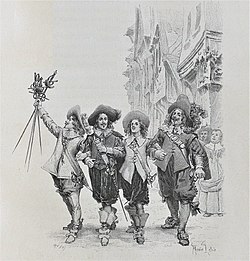
It is the time of the dominance of Cardinal Richelieu and his successor, Mazarin, and of the royal mistresses; of the intrigues and turmoils of France in the centuries preceding the Revolution; the plotting and power struggles of the French courtiers for ascendancy; of diplomats and spies; of the Musketeers.

MacDonald introduces us to three Musketeers in particular who were far from being the "bastards" of the imagination of Alexandre Dumas, writing over one century after events.
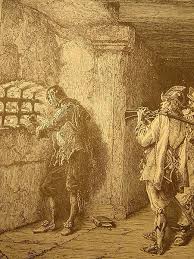
And so MacDonald has his candidate for the famous "Mask" and summarily takes the reader through events from the first appearance of the mask leading up to his final moments of freedom before his decades of incarceration.  MacDonald using original documents as he outlines his case for the Mask whilst assessing and disproving the case for other nominees, including Nicholas Fouquet and the Comte de Lauzan.

MacDonald declares that the identity of the Mask will not be revealed even if the impudent reader fast tracks to the back sections of the book outline the cast of characters, the chronology of events, and the chapter notes.  However, this reader cottoned on to the identity of the mask fairly early in the piece.

This tome has a place on the shelf of any French History enthusiast or those who love a good mystery.  For in this tome we discover a plausible candidate for the Mask and the reasons for his incarceration.

Another fascinating tome to add to my own personal library.


See Also:


January Arrivals

Just before Xmas Day, the following books were ordered for addition to my Library.

Stewart Binns' : "Conquest, Anarchy, Crusade & Lionheart".
Set in the period after the Norman Conquest till the reign of Richard I, so looking forward to this series.


Elizabeth Van Houts' "The Normans In Europe".

Another one of those books on the Normans that I had read but had not yet added to my Library.

Alexander Callander Murray's "From Roman to Merovingian Gaul".
From Roman to Merovingian Gaul documents events that are both remarkable in themselves and that demonstrate what made this era of history distinct. A nice addition to my French History shelf as I have books following this period but not dealing with this history of this area prior it.