Saturday, November 3, 2018

Empire of Enchantment: The Story of Indian Magic by John Zubrzycki

Review by Kapil Komireddi for The National:

“Ask the average man for what India is most celebrated, and the chances are ten to one that he ..... will unhesitatingly reply in one word, ‘jugglers’,” the Strand Magazine wrote in its December 1899 issue. “India’s jugglers”, the magazine went on to explain, “have been the wonder of India”. There was scarcely anyone in England who was not aware of the jugglers’ “‘Jadoo’, or magic working”. India’s reputation as a land of the occult wasn’t, as John Zubrzycki reminds us in his delightful and charming new book Empire of Enchantment: The Story of Indian Magic, just confined to Britain.


By the medieval era, magic became so inextricably linked with India – where tricks merged with, and enlivened, religious ritual – that Indian magic manuals, translated into Arabic, were being hawked on the streets of Baghdad by the city’s fabled booksellers during the Abbasid caliphate. After India fell to the British, it became an object of fascination and condescension and a source of fear for Europeans. Countless conjurers travelled to India, convinced that it was the place to find and master pure magic.

read more @ Scribe Publications  and @ The National


The End of Outrage by Breandan Mac Suibhne


Cover for 

The End of Outrage


From the time that the blight first came on the potatoes in Ireland in 1845, armed and masked men dubbed Molly Maguires had been raiding the houses of people deemed to be taking advantage of the rural poor. On some occasions, they represented themselves as "Molly's Sons," sent by their mother, to carry out justice; on others, a man attired as a woman, introducing "herself" as Molly Maguire, demanding redress for wrongs inflicted on her children. The raiders might stipulate the maximum price at which provisions were to be sold, warn against the eviction of tenants, or demand that an evicted family be reinstated to their holding. People who refused to meet their demands were often viciously beaten and, in some instances, killed-offences that the Constabulary classified as "outrages." Catholic clergymen regularly denounced the Mollies and in 1853, the district was proclaimed under the Crime and Outrage (Ireland) Act. Yet the "outrages" continued.


Central to The End of Outrage, the Irish Times Irish Nonfiction Book of the Year for 2017, is the story of a schoolmaster, Patrick McGlynn, who turned informer on the Molly Maguires, the nationalist secret society, in 1856. The following year Dublin Castle sent McGlynn to Australia– and, there, after 1862, the author Breandán Mac Suibhne lost sight of him. Now, with Jonathan Wooding, a historian and a direct descendant of the informer, he picks up the trail.

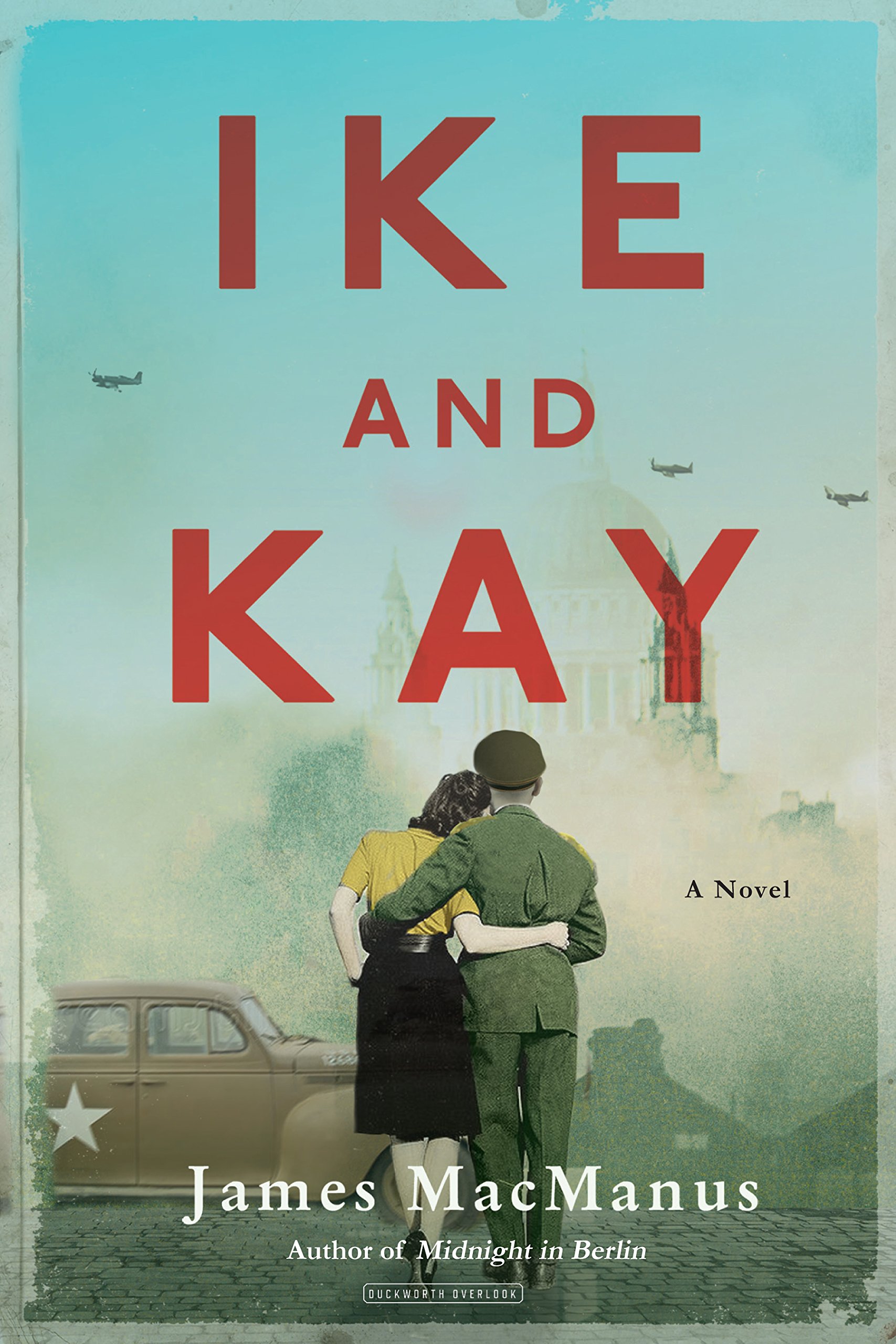
Ike & Kay by James McManus

The sweeping love story at the heart of the Second World War, vividly reimagining General Eisenhower and Kate Summersby’s infamous, star-crossed affair


Image result for ike and kayIn his latest historical novel Ike and Kay, acclaimed author James MacManus brings to life an unbelievably true and controversial romance and the poignant characters and personalities that shaped the course of world history.

In 1942, Kay Summersby’s life is changed forever when she is conscripted to drive General Eisenhower on his fact-finding visit to wartime London. Despite Eisenhower’s marriage to Mamie, the pair takes an immediate liking to each other and he buys Kay a rare wartime luxury: a box of chocolates.

So begins a tumultuous relationship that, against all military regulation, sees Kay traveling with Eisenhower on missions to far-flung places before the final assault on Nazi Germany. The general does dangerously little to conceal his affair with the woman widely known as “Ike’s shadow,” and in letters Mamie bemoans his new obsession with “Ireland.” That does not stop him from using his influence to grant Kay citizenship and rank in the US army, drawing her closer still when he returns to America. When officials discover Eisenhower’s plans to divorce from his wife they threaten the fragile but passionate affair, and Kay is forced to take desperate measures to hold onto the man she loves . . .

Based on the scandalous true story of General Eisenhower’s secret World War II love affair, Ike and Kay is a compelling story of love, duty, sacrifice, and heartbreak, set against the backdrop of the most tumultuous period of the twentieth century.

see also:


The Martin McGuinness I Knew by Jude Collins

Martin McGuinness: The Man I Knew
In 'Martin McGuinness, The Man I Knew', Jude Collins offers the reader a range of perspectives on a man who helped shape Ireland's recent history. Those who knew Martin McGuinness during his life talk frankly about him, what he did and said, what sort of man he was. Eileen Paisley speaks of the influence she believes her husband, Ian, had on him; former Assistant Chief Constable Peter Sheridan recounts how the Derry IRA targeted him as a Catholic RUC policeman; peace talks chairman Senator George Mitchell comments on the role he played in talks that led to the Good Friday Agreement; and Sinn Féin President Gerry Adams remembers the man who for so many years was his closest colleague. 


see also


Amalasuintha: The Transformation of Queenship in the Post-Roman World by Massimiliano Vitiello

AmalasuinthaUniversity of Pennsylvania Press:

In this book, Massimiliano Vitiello situates the life and career of the Ostrogothic queen Amalasuintha (c. 494/5-535), daughter of Theoderic the Great, in the context of the transitional time, after the fall of Rome, during which new dynastic regimes were experimenting with various forms of political legitimation. A member of the Gothic elite raised in the Romanized palace of Ravenna, Amalasuintha married her father's chosen successor and was set to become a traditional Gothic queen—a helpmate and advisor to her husband, the Visigothic prince Eutharic—with no formal political role of her own. But her early widowhood and the subsequent death of her father threw her into a position unprecedented in the Gothic world: a regent mother who assumed control of the government.

see also: Women of History - Amalasuntha

Papal Protection and the Crusader: Flanders, Champagne, and the Kingdom of France. 1095-1222 by Danielle Park

Synopsis:

On taking the cross, crusaders received a diverse set of privileges designed to appeal to both spiritual and more temporal concerns. Among these was the papal protection granted to them and extended over their families and possessions at home.

This book is the first full length investigation of this protection. It begins by examining the privilege from its inception in around 1095, and its development and consolidation through to 1222. It then moves on to illustrate how this privilege operated in practice through the appointments of regency governments and close communication with both the papacy and local ecclesiastical officials, centring on the rich crusading evidence from Flanders, Champagne and the Kingdom of France. While the protection privilege has been seen as unwieldy and over ambitious, close analysis of particular cases and individuals reveals that not only were regents well aware of their privileged status, but that the papacy could directly intervene when its protection was contravened. 


On the whole, though, Park argues that the crusade regents did an effective job in upholding the rights of the absentee rulers and that this was recognised when the boss returned- for instance very few of their deeds required re-authentification. The job was eased by what look like conscious attempts to clear the books of outstanding issues before the would-be crusader departed. Park also hints that the constraints of crusade regencies may have been a stimulus for developments in bureaucratic governance.

She has undoubtedly identified an important part of what one might define as the backstage mechanics underlying heroic or ghastly deeds in the Holy Land. Hopefully she may in future widen her focus to consider the fate of those unable to call on the services of Ivanhoe to protect their rights.

Olive: Princess of Cumberland - A Royal Scandal by Miles Macnair

This is the gripping story of a truly remarkable woman who claimed in her later life to be a legitimate niece of King George III, by his brother Henry Duke of Cumberland. It is a tale of seduction and corruption, of artists and courtiers, State secrets and court-cases, 'Special Agents' and inconvenient children who were never quite certain who their parents had been. 

Who was Olive Wilmot? The result of four years research and based largely on letters and documents never published before, this book unravels the mysteries of her scandalous life and, in the last chapter, offers some solutions to enigmas that have intrigued historians for nearly 200 years. 

see also: 
Hansard Entry for 14th July 1820 - Petition of Olive Wilmot
Olivia Serres - wikipedia


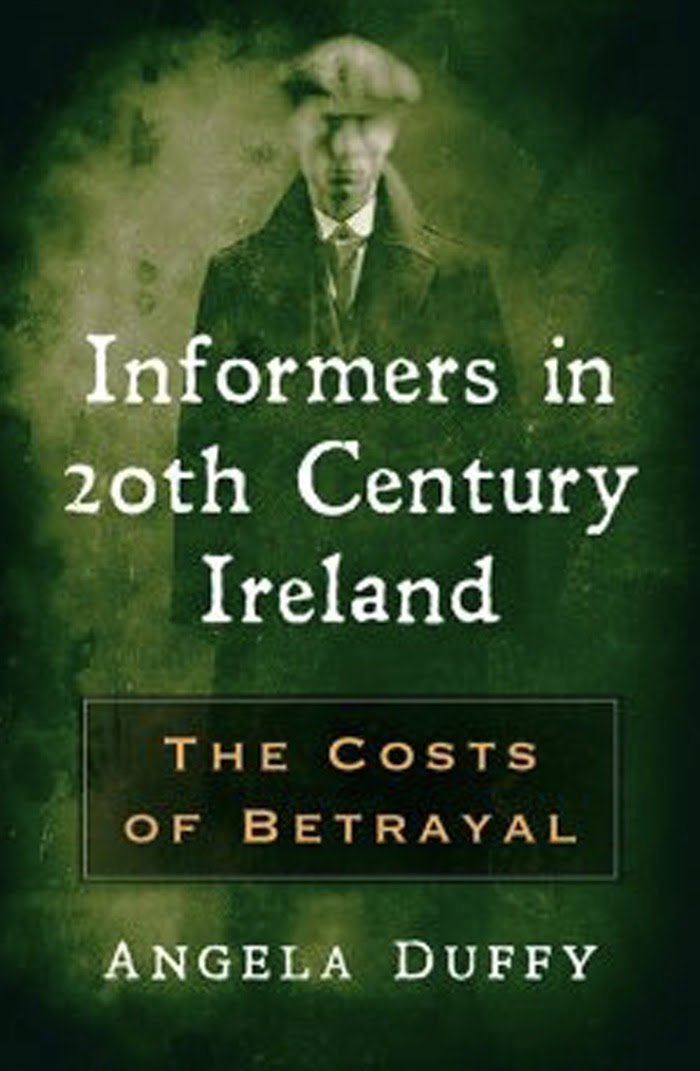
Informers in 20th Century Ireland by Angela Duffy

The following article was one on a series in this months Crime Writers Association e-newsletter.  The book had sounded like a fascinating read and was firmly placed on my TBR list some time again.  However, I could not help reproducing the article here for those interested in the author's perspective on writing the book.


I didn’t set out to write a book

Angela Duffy
I didn’t set out to write a book. Even the thesis on which Informers in 20th Century Ireland is based was only an excuse to go on being a hyper-mature student, but then I started a whole series of obsessions – all of which are in the book. I bored other postgraduates with stories (but hey! I had to listen to theirs too), which concept is utterly forbidden to the historian, so I called them case studies instead; my writing style, after many years of writing fiction, wasn’t academic; my research methods were unconventional and consisted mostly of talking to people (many of whom are now old and tried friends); and I’m still not sure why Diane, my supervisor, is still speaking to me. Though after each holiday-cum-research trip to Ireland there was always a summoning email so that she could hear about Sean in Ennis who would laugh when he saw me and say “You’re going to get shot, you know!” or the time I was kidnapped, or my exit from the archives in Dublin for a fire drill completely forgetting that I had a large wodge of precious documents under my arm. In addition I wrote the thesis (and therefore the book) backwards.

As for my case studies: they’re full of skulduggery, secrets and mayhem, all of which I like, and there is a more serious side to the book, as there should be. This is history, it really happened, and a great deal of the collusion and torture I have depicted went on in our name – yours and mine. And its effect on me has been to give me a love of research which just won’t go away – I always think of it as panning for gold: sometimes nothing, sometimes just little bits (never to be despised because one of those little bits consisted of two seemingly identical telegrams providing proof positive of one man’s guilt) and the occasional nugget when you want to dance around the archives shouting “Zoweee!”
And Diane’s final verdict: “If I can survive Angela I can survive anything!”

The Man Who Loved Books Too Much by Allison Hoover Bartlett

A compelling narrative set within the strange and genteel world of rare-book collecting: the true story of an infamous book thief, his victims, and the man determined to catch him.

Rare-book theft is even more widespread than fine-art theft. Most thieves, of course, steal for profit. John Charles Gilkey steals purely for the love of books. In an attempt to understand him better, journalist Allison Hoover Bartlett plunged herself into the world of book lust and discovered just how dangerous it can be.

John Gilkey is an obsessed, unrepentant book thief who has stolen hundreds of thousands of dollars worth of rare books from book fairs, stores, and libraries around the country. Ken Sanders is the self-appointed "bibliodick" (book dealer with a penchant for detective work) driven to catch him. Bartlett befriended both outlandish characters and found herself caught in the middle of efforts to recover hidden treasure. With a mixture of suspense, insight, and humor, she has woven this entertaining cat-and-mouse chase into a narrative that not only reveals exactly how Gilkey pulled off his dirtiest crimes, where he stashed the loot, and how Sanders ultimately caught him but also explores the romance of books, the lure to collect them, and the temptation to steal them. 

Immersing the reader in a rich, wide world of literary obsession, Bartlett looks at the history of book passion, collection, and theft through the ages, to examine the craving that makes some people willing to stop at nothing to possess the books they love.


read reviews from:

see also: