Sunday, February 16, 2020

Princely Power in Late Medieval France by Erika Graham-Goering

Princely Power in Late Medieval FranceJeanne de Penthièvre (c.1326–1384), duchess of Brittany, was an active and determined ruler who maintained her claim to the duchy throughout a war of succession and even after her eventual defeat. 

This in-depth study examines Jeanne's administrative and legal records to explore her co-rule with her husband, the social implications of ducal authority, and her strategies of legitimization in the face of conflict. While studies of medieval political authority often privilege royal, male, and exclusive models of power, Erika Graham-Goering reveals how there were multiple coexisting standards of princely action, and it was the navigation of these expectations that was more important to the successful exercise of power than adhering to any single approach. 

Cutting across categories of hierarchy, gender, and collaborative rule, this perspective sheds light on women's rulership as a crucial component in the power structures of the early Hundred Years' War, and demonstrates that lordship retained salience as a political category even in a period of growing monarchical authority.

Prisoner of History by Madeleine M. Henry

According to legend, Aspasia of Miletus was a courtesan, the teacher of Socrates, and the political adviser of her lover Pericles. Next to Sappho and Cleopatra, she is the best known woman of the ancient Mediterranean. Yet continued uncritical reception of her depiction in Attic comedy and naive acceptance of Plutarch's account of her in his Life of Pericles prevent us from understanding who she was and what her contributions to Greek thought may have been. 

Madeleine Henry combines traditional philological and historical methods of analysis with feminist critical perspectives, in order to trace the construction of Aspasia's biographical tradition from ancient times to the present. Through her analysis of both literary and political evidence, Henry determines the ways in which Aspasia has become an icon of the sexually attractive and politically influential female, how this construction has prevented her from taking her rightful place as a contributor to the philosophical enterprise, and how continued belief in this icon has helped sexualize all women's intellectual achievements. 

This is the first work to study Aspasia's biographical tradition from ancient Greece to the present day.

Saturday, February 15, 2020

New book will add to Declaration of Arbroath story

Image result for declaration of arbroath textFrom The Courier: 
Writers behind an ambitious book which will tell the story of the characters connected to the Declaration of Arbroath, gathered in the town as the manuscript nears completion.

The project has seen more than 40 people from all walks of life in Scotland contribute a chapter on each of the signatories of the Declaration, as well as biographies of King Robert the Bruce and Abbot of Arbroath Abbey, Bernard de Linton.

The book, titled Declaration of Arbroath: The People’s History, is set to be published in April as the town embarks on a community-led programme of events to mark the 700th anniversary of the signing of the document.

read more here @ The Courier

Friday, February 14, 2020

How The Pale Horse May Have Inspired A Murderer

Image result for the pale horse agatha christieFrom The Guardian: 
This year’s big Agatha Christie adaptation, The Pale Horse, is one of her less well-known murder mysteries – but in some ways it has had a much greater impact than the others. The novel is credited with saving two lives and has also been cited in a murder trial.

The novel centres around a series of apparently unrelated deaths that have all been attributed to a wide variety of natural causes. Mark Easterbrook becomes suspicious when a young woman dies just weeks after he saw her in a cafe, apparently in the prime of life, and he decides to investigate. Christie’s tale of contract killers, witches and black magic is a fantastic example of her brilliant plotting and superb ability to keep you guessing whodunnit right until the very end.

The novel, as would be expected of Christie, is packed with poisonous information and killer clues. It is sufficiently detailed that on two occasions readers recognised symptoms in people who were being poisoned and were able to intervene. It seems reading Christie could save your life. But the same novel has also been accused of inspiring a murderer.

Christie often used real life cases of murder as sources for her plots but on this occasion it was allegedly the other way round. There are certainly some uncomfortable parallels between The Pale Horse and the crimes committed by Graham Young. The novel was published in 1961, the year before Young began his poisoning activities, but at his trial in 1971 he denied having read it. It is doubtful that Christie, scientifically accurate though she was, could have taught him anything anyway, as Young had made his own extensive and detailed studies of all things toxic.

read more here @ The Guardian

Sunday, February 2, 2020

Author: Tracey Warr

Tracey Warr was not an author that had been on my reading radar at all until one of her titles crossed my path and piqued my interest.

Her Amazon bio states: "Her fiction is based on historical research and she imagines in the gaps between known historical facts. ". This is something that all writers of historical fiction do.

It was her choice of female characters that caught my eye - and the time period in which her fiction is set. So, briefly - and not having yet read any of the following - is a snapshot of four that may make it to me TBR list:

Almodis: The Peaceweaver
A story of love, adventure and scandal, based on the real life of the eleventh-century countess Almodis de la Marche. Through her marriages to three important historical figures, Almodis founds a maternal dynasty that rules southern France and northern Spain during the height of the Occitan culture. It is a time of troubadours, of cathedral and castle building, and the shaping of Europe after Charlemagne. A time in which Occitan noblewomen hold equal power with their husbands under the vestiges of Roman and Visigothic law. But Almodis path to power and happiness is fraught with drama. Her first husband scandalises her contemporaries by rejecting her, she is excommunicated by the Pope and her third husband kidnaps her from her second miserable marriage. Covert journeys across the Pyrenees, escapes from incarceration and murder punctuate this extraordinary story, vividly bringing to life Almodis early medieval world.


The Viking Hostage
Set in late 10th century France and Wales, The Viking Hostage tells the intertwining stories of three women living through turbulent times of Viking raids, Christian conversions, and struggles for power across Europe at the turn of the millennium. Sigrid is a Norwegian sold into slavery in the French Limousin, stubbornly clinging to her pagan identity. Aina is a rich heiress, betrothed as a child to a man who does not offer her the adventure she craves. Adalmode is the daughter of the Viscount of Limoges, whose father has forbidden her passion for a young man imprisoned in his dungeon for a great crime. Their stories question and tangle with the nature of human nobility and of freedom in the highly stratified, unequal, and often brutal society of early medieval Europe.


Conquest: Daughter of the Last King
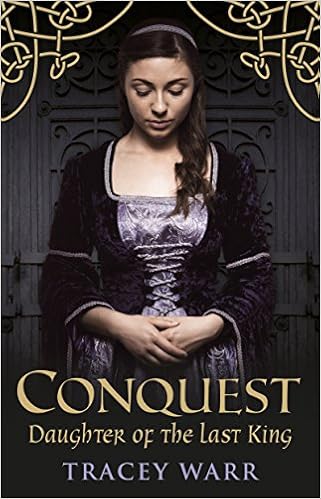
1093. The three sons of William the Conqueror - Robert Duke of Normandy, William II King of England and Count Henry - fight with each other for control of the Anglo-Norman kingdom created by their father's conquest. Meanwhile, Nest ferch Rhys, the daughter of the last independent Welsh king, is captured during the Norman assault of her lands. Raised with her captors, the powerful Montgommery family, Nest is educated to be the wife of Arnulf of Montgommery, in spite of her pre-existing betrothal to a Welsh prince. Who will Nest marry and can the Welsh rebels oust the Normans? 'Daughter of the Last King' is the first in the Conquest Trilogy.


Conquest 2: The Drowned Court
1107. Henry I finally reigns over England, Normandy and Wales, but his rule is far from secure. He faces a series of treacherous assassination attempts, and rebellion in Normandy is scuppering his plans to secure a marriage for his son and heir. With the King torn between his kingdoms and Nest settled with her Norman husband, can she evade Henry's notice or will she fall under his control once more? As her brother Gruffudd garners support in an effort to reclaim his kingdom, Nest finds she cannot escape the pull of her Welsh heritage. While the dissent grows and a secret passion is revealed, the future of Nest and her Norman sons is placed in dire peril. In this riveting sequel to 'Daughter of the Last King', Nest must decide to whom her heart and loyalty belongs.


So, not only I am interested to see the third in the Conquest Trilogy (The Anarchy and covers the years 1122-1146, the final years of the reign of Henry I and then the subsequent struggle for the throne between Henry’s daughter Matilda and his nephew, Stephen of Blois), but this new tome that she is working on - again courtesy of her Amazon bio:
She received an Author’s Foundation Award from the Society of Authors for a biography she is working on about three French noblewomen, three sisters, who held power in 11th century Toulouse, Carcassonne, Barcelona and the Pyrenees.


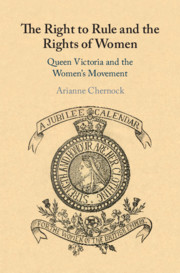
The Right to Rule and the Rights of Women by Arianne Chernock

The Right to Rule and the Rights of WomenQueen Victoria is often cast as a foe of the women's movement - the sovereign who famously declared women's rights to be a 'mad, wicked folly'. Yet these words weren't circulated publicly until after the Queen's death in 1901. 

Beginning with this insight, this book reveals Victoria as a ruler who captured the imaginations of nineteenth-century feminists. Women's rights activists routinely used Victoria to assert their own claims to citizenship. So popular was their strategy that it even motivated anti-suffragists to launch their own campaign to distance Queen Victoria from feminist initiatives. 

In highlighting these exchanges, this book draws attention to the intricate and often overlooked connections between the histories of women, the monarchy, and the state. In the process, it sheds light on the development of constitutional monarchy, concepts of female leadership, and the powerful role that the Crown - and queens specifically - have played in modern British culture and politics.

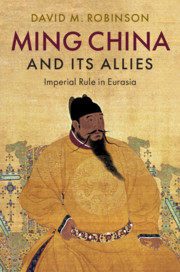
Ming China and Its Allies by David Robinson

On the eve of the early modern age, Ming emperors ruled around one-quarter of the globe's population, the majority of the world's largest urban centers, the biggest standing army on the planet, and the day's most affluent economy. 

Ming China and its AlliesFar from being isolated, the Ming court was the greatest center of political patronage in East Eurasia, likely the world. Although the Ming throne might trumpet its superiority, it understood its need for allegiance from ruling elites in neighbouring regions. 

In this major new study, David M. Robinson explores Ming emperors' relations with the single most important category of Eurasian nobles: descendants of Ghengis Khan and their Mongol supporters. 

Exploring the international dimensions of Chinese rule, this revisionist but accessible account shows that even rulers such as the Ming emperor needed allies and were willing to pay for them.

Women and Law in Late Antiquity by Antti Arjava

This is the first comprehensive account of women's legal and social positions in the west from classical antiquity right through to the early middle ages. The main focus of the book is on the late antique period, with constant reference to classical Roman law and the lives of women in the early empire. 

The book goes on to follow women's history up to the seventh century, thus bridging the notorious gap of the 'dark ages'. Major themes include daughters' succession rights; the independence of married women; sexual relations outside marriage; divorce; remarriage; and the general legal capacity of women. 

Antti Arjava argues that from the viewpoint of most women, late antiquity was not a period of radical change. In particular, the influence of Christianity has often been considerably exaggerated. It was only after the fall of the Western empire that a new legal system and a new social world emerged.

Obits: Mary Higgins Clark, MC Beaton

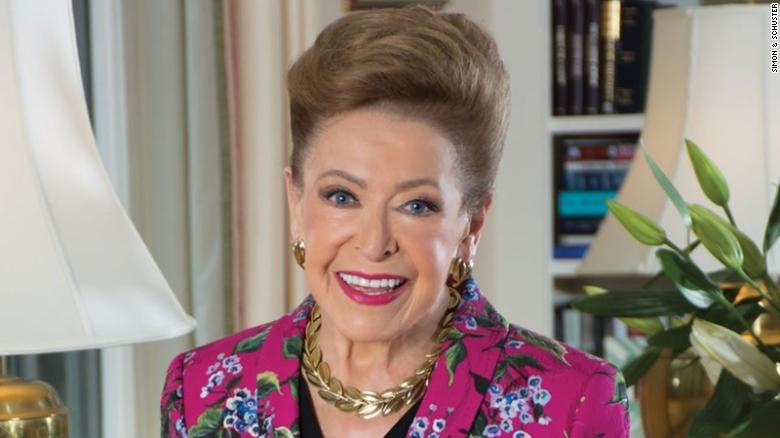
Author Mary Higgins ClarkFrom CNN: 
Mary Higgins Clark, the bestselling "Queen of Suspense" who wrote dozens of suspense novels sold worldwide, has died.

Clark's publisher, Simon & Schuster, confirmed her death in a tweet Friday night. "She passed away peacefully this evening at the age of 92 surrounded by family and friends," the publisher said.

Clark's writing career spanned decades, and included bestselling suspense titles such as "Loves Music, Loves to Dance" and "A Stranger Is Watching."  Two of her novels were made into feature films, including "A Stranger Is Watching" while others were turned into television movies.


From BBC News:
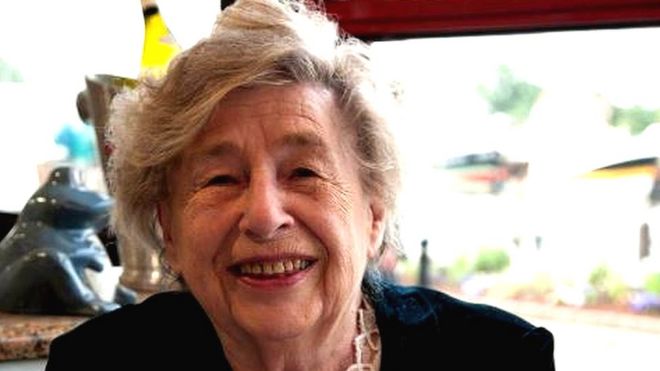
MC BeatonThe creator of two of the world's best-loved fictional detectives has died at the age of 83.

Marion Chesney Gibbons, who wrote under the pseudonym MC Beaton, was the prolific author of the Hamish Macbeth and Agatha Raisin crime novels.

Her son, Charles Gibbons, announced her death via Twitter on Thursday.  He said that "the support of her fans and the success she enjoyed in her later years were a source of great pride and satisfaction to her".  He added: "Author of over 160 novels in her prolific 40-year career, this news will sadden many of her family and friends."

MC Beaton sold more than 21 million copies of her books around the world and was regularly named as the most-borrowed adult author from UK libraries.

Her Agatha Raisin and Hamish Macbeth novels were translated into 17 languages and were both made into TV dramas.  Robert Carlyle starred as Macbeth in the BBC series and Ashley Jenson played Raisin in the Sky TV dramas.