Showing posts with label elizabethan england. Show all posts

Monday, October 19, 2026

Review: The Tudor Heresy by Samantha Burnell

Sysnopsis: A short story Introduction to the Tudor Mystery Trials. 
This short pre-quel sets the stage for the full length book - A Queen's Spy.

A gripping Historical Adventure set in 16th Century Tudor England. Elizabeth Tudor needs a hero. Murder, Mystery & Intrigue with a Splash of Romance.

Based on actual historical events, an epic tale of a young Tudor nobleman’s courage as he tries to keep his future Queen safe in one of England’s most turbulent eras.

Richard Fitzwarren is a Tudor nobleman with a dubious past who takes risks for a living.

His close friendship with Princess Elizabeth leads to his banishment to France, but when he returns he remains loyal to her.

At his side is Jack, his bastard sibling, and their relationship is a troubled one due to a family secret and their opposite personalities.  Will he keep the future Queen safe?

~ ~ ~

Short story / novella (prequel) set in 1548 to a series involving young Richard Fitzwarren, who was banished from England when set up as a fall guy for the lecherous Thomas Seymour, whose "relationship" with Princess Elizabeth in the house of his wife, dowager Queen Katherine Parr, created one almighty scandal, tarnishing the reputation of the young Elizabeth and sending Seymour to the scaffold.

This is his (adequate though hardly gripping) backstory in preparation for the following series.


Read: January 2026

Sunday, November 23, 2025

Illyria - Imbalance of Power by Armin Shimerman

Synopsis:
The Queen’s conjurer, Doctor John Dee is an Elizabethan mathematician, cryptographer, and mystic, commissioned by Her Majesty’s spymaster, Sir Francis Walsingham, to suss out a noble Count who governs an island in the English Channel. Dee’s mission? Uncover treason, reveal terrorists, and unveil threats to The Crown. 

Embarking, Dr. Dee is accosted by an eager acolyte. The unknown teen playwright, William, has just endured his first flop—Prince Amleth. Will solicits the renowned scholar’s mentorship. A winter tide sees these unlikely collaborators set sail for the Channel Islands to sleuth out sedition on Protestant England’s strategic outpost. On Illyria, clues appear as Dee comes to rely on the surprising ingenuity of his young companion. Clandestine powers collide as Queen Elizabeth’s spy tracks each slim lead. When Dee is brought to the brink of destruction, can his incipient discovery of Count Orsino’s recusants and loyalists be thwarted?

~ ~ ~

Whilst I love the use of the Elizabethan alchemist John Dee as the main character in an historical fiction tome, this one, like the others I have read, did not do the man justice.

Maybe my lack of connection was due to the fact that this is book three and this is where I began. Possibly had I started at the beginning I may have developed into and with this series, but unfortunately, this just was not for me.

I am sure there will be others who will enjoy the adventures of John Dee and the young Elizabethan playwright, Shakespar. But read the series from the beginning!

Wednesday, January 1, 2025

Review: The Queen's Lies by Oliver Clements

Synopsis: While working on a powerful new weapon for England, the country’s first secret agent John Dee finds himself threatened from all sides. First, his secret plans are stolen, then his son is kidnapped by a vengeful enemy from his past. At the same time, Dee’s wife, Jane, is sent by Queen Elizabeth I to console her cousin, Mary, Queen of Scots, as court advisors attempt to try her for treason.

But Jane suspects her assignment is much more than a visit from a sympathetic cousin. Is it possible that Elizabeth sent her to speed Mary to her death without the public trial that she knows will forever define the limits of royal power? Together, John and Jane begin to feel genuine sympathy for the Scottish queen and work to finish his invention, protect their son, and save Mary from the scaffold. But can they do that while remaining loyal to the English crown?

~ ~ ~

Fourth book in the series and honestly thought that as I started with book three, there may be some continuity for me.

Unfortunately, the second time around, I wasn't a fan. I guess I found the narrative a bit too fanciful and not truly believable, despite the fact that John Dee was mixed up in some unbelievable things!

As I previously mentioned, I have read much historical fiction set in Elizabethan England, with the focus on her notorious spy network, with characters such as Marlowe and Shakespeare, Walsingham and Cecil; as well as non-fiction on the subject to hand. And whilst this tome had all the essential elements: Elizabethan espionage, treason, rivalry, secret codes, notable nobles - jumping in the middle of a series can detract from anyone's reading pleasure.

The short paragraphs keep the story flowing and a cursory idea of the period in question is always a bonus for the reader delving into something new. There is a curious plot twist at the end which I did enjoy - and definitely kudos for taking on the character of John Dee as the main protagonist. Start at the beginning to ensure greater enjoyment of the work at hand.

Monday, February 12, 2024

Review: Fool by Peter K Andersson

Synopsis: The first biography of Henry VIII’s court fool William Somer, a legendary entertainer and one of the most intriguing figures of the Tudor age.

In some portraits of Henry VIII there appears another, striking figure―a gaunt and morose-looking man with a shaved head and, in one case, a monkey on his shoulder. This is William or "Will" Somer, the king’s fool, a celebrated wit who reportedly could raise Henry’s spirits and spent many hours with him, often alone. Was Somer an “artificial fool,” a cunning comic who could speak freely in front of the king, or a “natural fool,” someone with intellectual disabilities, like many other members of the profession? And what role did he play in the tumultuous and violent Tudor era? Fool is the first biography of Somer―and perhaps the first of a Renaissance fool.

After his death, Somer disappeared behind his legend, and historians struggled to separate myth from reality. Unearthing as many facts as possible, Peter K. Andersson pieces together the fullest picture yet of an enigmatic and unusual man with a very strange job. Somer’s story provides new insights into how fools lived and what exactly they did for a living, how monarchs and courtiers related to commoners and people with disabilities, and whether aspects of the Renaissance fool live on in the modern comedian. But most of all, we learn how a commoner without property or education managed to become the court’s chief mascot and a continuous presence at the center of Tudor power from the 1530s to the reign of Elizabeth I.

Looking beyond stereotypes of the man in motley, Fool reveals a little-known world, surprising and disturbing, when comedy was something crueler and more unpleasant than we like to think.

~ ~ ~

A strictly academic work that is neither a standard nor chronological biography on this rather enigmatic character from Tudor history.

With the use of contemporaneous sources and comparisons outside of the Tudor court, Andersson explores to what extent was the fool a servant or a courtier. Andersson also acknowledges that there is too little information on the actual man - Will Somer - for the reader to gain any real insight into him - what we know is based upon scant administration records of the Tudor period.

I came into this wanting to know more, but came away no closer to finding any real substance to the real man. I have given it three stars are this looks to be the first - for me anyway - real attempt to put some flesh on the bones of an elusive historical person. However, for my mind, this particular work is more of an exploration into the perception and the role of the fool and comedy during the early renaissance period.

Definitely one for those with an interest in the Tudor and Elizabethan courts.

Saturday, February 10, 2024

Review: The Cecils by David Lee

Synopsis: The Cecils: The Dynasty and Legacy of Lord Burghley looks at the lives of William Cecil, Lord Burghley, Elizabeth I’s Chief Minister and Secretary of State and that of his son, Robert Cecil, Earl of Salisbury.

Lord Burghley served three Tudor Monarchs in an unparalleled rise to power during the reign of Elizabeth I and his political influence on state matters, his remarkable close bond to the queen, and the self-sacrifice in his service to the state and crown, are closely examined in this unprecedented work. The life and career of William’s youngest son Robert, Earl of Salisbury, who also became Elizabeth’s Chief Minister as heir to his father’s political mantle, will also be discussed.

Robert served his queen equally to, if not more ruthlessly than his father. His powerful position remained intact during the transition of the crown from the House of Tudor to the House of Stuart upon Elizabeth’s death in 1603. Robert’s loyalties and his relationship with his father remain a topic of discussion and debate. This book will also explore the transition of power from one Cecil to another, and how both men created a powerful dynasty and legacy that continues to fascinate readers today.

The book is based on a close examination of William and Robert Cecil’s correspondence, personal papers, state papers, legal documents, and memoranda. By closely examining these sources, the author has gained a clearer insight into the lives and careers of the Cecil’s, the true powerhouse behind the throne.

~ ~ ~

A detailed look at the father / son duo of William and Robert Cecil, from their humble beginnings to their prominence under Queen Elizabeth I. Author David Lee explores their political careers and personal lives, their personalities and relationship with Elizabeth, politics and religions, their rises and rewards, and finally their legacy.

We begin with William - his family and early life, his own marriage and family, and his formation of ties to the monarchy. His career began under Henry VIII and continued under Henry's son and successor Edward VI - Lee comments that Cecil's "... early life and religiosity reflected that of the monarchs .." - a wise move no doubt under Henry. Even at this stage (1540s & 1550s), Cecil was developing his relationship with Elizabeth. When Catholic Mary Tudor came to power, Cecil, a protestant, wisely stayed away from court, and he only re-emerges when Elizabeth takes the throne.

Lee then examines Cecil's position as secretary and how he was viewed by his contemporaries; his patronage and influence; and onto his own family and their positions.

Cecil's tenure coincided with religious tensions both in England and Europe. There was also the question of Mary Queen of Scots and the secret marriages of Elizabeth's kinswomen. During this time, another key player at the Elizabethan court was on the rise - Walsingham - the Spy Master. Quite timely as the 1580s were marked by plots and treason, the execution of Mary, the rise of the Jesuits and the threat of the Spanish Armada.

Cecil's final decade witnessed the rise of his son Robert, who had taken over from Walsingham whilst his eldest son by his first marriage, Thomas, took his place in the parliament, and succeeded his father as Lord Burghley.

We move onto Robert's career under James I, which begins rather precariously due to his rivalry with Walter Raleigh. However, following the Gunpowder Plot, Robert's position stablises and he too rises in esteem. But the court of James I was a hotbed of scandal, not the least for Thomas Cecil.

What Lee provides is a valuable insight into a family whose sense of duty to the monarch and crown saw them well rewarded and regarded even if not by those courtiers who viewed them with a slightly envious eye. Their political legacy extended even into the 20th century.

Recommended for those wanting to expand their reading beyond general histories of both the Tudor, Elizabethan and Jacobite periods.

Saturday, December 23, 2023

A Fine Madness by Alan Judd

A captivating espionage novel that explores the life of theatrical genius—and spy—Christopher Marlowe, whose violent death remains one of the most fascinating mysteries of the Elizabethan Age.

In Elizabethan England, the queen’s chief spymaster, Francis Walsingham, and his team of agents must maintain the highest levels of vigilance to ward off Catholic plots and an ever-present threat of invasion from Spain.

One agent in particular—a young Cambridge undergraduate of humble origins, controversial beliefs, and literary genius who goes by the name of Kit Marlowe—is relentless in his pursuit of intelligence for the Crown. When he is killed outside an inn in Deptford, his mysterious death becomes the subject of rumor and suspicion that are never satisfactorily resolved.

Years later, when Thomas Phelippes, a former colleague of Marlowe’s, finds himself imprisoned in the Tower of London, there is one thing that might give him his freedom back. He must give the king every detail he is able to recall about his murdered friend’s life—and death. But why is King James so fascinated about Kit Marlowe—and does Phelippes know enough to secure his own redemption?

The House of Dudley by Joanne Paul

The shocking and extraordinary story of the most conniving, manipulative Tudor family you've never heard of—the dashing and daring House of Dudley.

Each Tudor monarch made their name with a Dudley by their side—or by crushing one beneath their feet.

The Dudleys thrived at the court of Henry VII, but were sacrificed to the popularity of Henry VIII. Rising to prominence in the reign of Edward VI, the Dudleys lost it all by advancing Jane Grey to the throne over Mary I. That was until the reign of Elizabeth I, when the family was once again at the center of power, and would do anything to remain there. . . .

With three generations of felled favorites, what was it that caused this family to keep rising so high and falling so low?

Here, for the first time, is the story of England's Borgias, a noble house competing in a murderous game for the English throne. Witness cunning, adultery, and sheer audacity from history's most brilliant, bold, and deceitful family.

Monday, January 2, 2023

Review: All The Queen's Spies by Oliver Clements

Synopsis: The “lively” (The New York Times) Agents of the Crown series continues with this thriller about Queen Elizabeth I’s advisor John Dee in a race to save the Empire with the help of a mysterious manuscript that offers global power.With rumors of the end times swirling, philosopher and astronomer John Dee travels to Prague in an effort to prevent one of Catherine de Medici’s seductive ladies-in-waiting from luring the Holy Roman Emperor into a crusade against England.

To convince the famously occult-loving Emperor to join his side, Dee entices him with the esoteric Book of Secrets, a volume that, if decoded, could provide the chance to control the levers of heaven and earth. But Dee faces enemies at every turn, including a female codebreaker who could be the undoing of Dee and the British Empire.

~~~

I wasn't a fan. Despite the plotline, I was not really engaged and I think the reason is that this is the third in the series - and I had not realised that at the time.

I have read much historical fiction set in Elizabethan England, with the focus on her notorious spy network, with characters such as Marlowe and Shakespeare, Walsingham and Cecil; as well as non-fiction on the subject to hand. And whilst this tome had all the essential elements: Elizabethan espionage, a notorious manuscript, secret codes, notable nobles - jumping in the middle of a series can detract from anyone's reading pleasure.

I can see why Clements chose Dee as his main character: Dee was, among other things, court astronomer for Elizabeth I of England, an occultist, mathematician, and librarian. When he embarked on his travels throughout Europe, he was accused of being a spy - which really was a standard accusation against any diplomat of the time.

One of the main storylines concern's Dee time at the court of Rudolf II in Prague with Edward Kelly - and the mysterious Voynich Manuscript. Dee has often been associated with the Voynich manuscript, and it has been suggested that Dee not only may have owned it but sold it to Rudolph II. Kelley remained at the imperial court whilst Dee returned to England.

Add to this the legendary “escadron volant” or “flying squadron” which would become as much a part of Catherine de Medici’s legend as poison and intrigue. This band of beautiful women, loyal to their queen, were hand-picked for their charms and sexual prowess, all with the aim of helping Catherine retain power. Whether this extended beyond the French kingdom is open to conjecture but it does make for an interesting sub-theme.

Start at the beginning to ensure greater enjoyment of the work at hand. The two preceding works are:

The Eyes of the Queen:
In this first novel of the exhilarating Agents of the Crown series, a man who will become the original MI6 agent protects England and Her Majesty Queen Elizabeth I from Spain’s nefarious plan to crush the Age of the Enlightenment.

After centuries locked in an endless cycle of poverty, persecution, and barbarity, Europe has finally emerged into the Age of Enlightenment. Scientists, philosophers, scholars, and poets alike believe this to be a new era of reason and hope for all. But the forces of darkness haven’t completely dissipated, as Spain hunts and butchers any who dare to defy its ironclad Catholic orthodoxy.

Only one nation can fight the black shadow that threatens this new age, and that is Britain, now ruled by a brilliant young Queen Elizabeth I. But although she may be brave and headstrong, Elizabeth knows she cannot win this war simply by force of arms. After her armies have been slashed in half, her treasury is on its knees. Elizabeth needs a new kind of weapon forged to fight a new kind of war, in which stealth and secrecy, not bloodshed, are the means.

In this tense situation, Her Majesty’s Secret Service is born with the charismatic John Dee at its head. A scholar, a soldier, and an alchemist, Dee is loyal only to the truth and to his Queen. And for her, the woman he’s forbidden from loving, he is prepared to risk his life.

The Queen's Men:
As she travels through Waltham Forest, Queen Elizabeth I is ambushed by masked gunmen who leave her carriage riddled with holes before disappearing into the night. The Queen’s Private Secretary, Sir Francis Walsingham, is tasked with finding the perpetrators, about whom they know precious little. But someone alerted the gunman to the route of the Queen’s carriage, and Walsingham knows that the assassins will not stop until she’s dead.

While Queen Elizabeth’s Privy Council debates how to best secure the throne in the wake of the attack and Catholic Spain’s further intrusion into the Low Countries, the queen herself searches for the ultimate weapon to protect her country and throne: Greek fire, the recipe of which disappeared with the collapse of the Byzantine Empire. She orders her friend John Dee—scientist, philosopher, and spy—to rediscover this vital secret, despite his misgivings. For he understands that in a world fraught with coded messages, ruthless adversaries, and deadly plot, his mission to secure his nation’s future may prove impossible, unless he deploys the most effective weapon of all: intelligence.


Wednesday, February 17, 2021

Gresham’s Law: The Life and World of Queen Elizabeth I’s Banker by John Guy

When the Anglican divine John William Burgon published his classic two-volume biography of Sir Thomas Gresham (1519-1579) in 1839, he introduced his readers to a character – government banker, founder of the Royal Exchange, putative proponent of “Gresham’s law” – who had lived a life of “unsullied honour and integrity”. 

For Burgon, Gresham was among the most illustrious ancestors “of which our metropolis can boast” – not just owing to “the skill with which he contrived to control the exchange with foreign countries”, thereby laying “the foundations of England’s commercial greatness”, but also because his qualities spoke of an upstanding friend, associate, husband, father. When Gresham died, he deserved to be remembered as a “true patriot, beloved in private life and honoured in his public station”.

Burgon’s remarks are emblematic of the 19th-century view of Gresham as an honourable and self-made man: Queen Victoria’s recorder considered him an “eminent citizen and chief benefactor of his kind”. And such depictions are not without merit. But as the historian John Guy argues in this assiduously researched new account of Gresham’s life: “Something subtler is needed.” Accordingly, Guy has consulted several “large caches of often entirely virgin sources” in order to offer a reassessment of Gresham’s professional undertakings and “a fuller investigation of Gresham’s private life than anything attempted before”. It is an enterprise from which he does not emerge well.

read more here @ The Guardian and Amazon

Tuesday, October 6, 2020

Turns Out, Elizabethan Playwright and Poet Laureate Ben Jonson was a Murderer

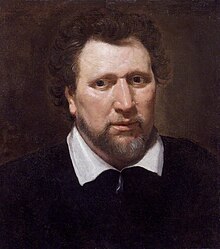
Ben Jonson (c. 1617), by Abraham Blyenberch; oil on canvas painting at the National Portrait Gallery, LondonFrom CrimeReads:
Turns out, Ben Jonson, the renowned Elizabethan playwright and the first poet laureate of England, was a murderer.

On September 22nd, 1598, when he was an (angry) young man of twenty-six, Jonson, a former bricklayer, encountered a young actor named Gabriel Spencer. Jonson was not yet an established playwright, having had his play Every Man in his Humour only very recently debuted at the prominent Curtain Theater (which would later be moved and rebuilt as the Globe). The two men found themselves embroiled in a conflict, which the courts maintained that Jonson started. They ruled this despite Spencer’s violent history; he had previously killed a young boy when the boy had threatened to throw a candlestick at him. Then again, Jonson also had a violent history; in his own accounts he mentions that before the Spencer affair, he had killed someone while abroad in the Low Countries, simply for sport? (Though he was not arrested for it.)

But Spencer and Jonson began a duel, during which he stabbed Spencer with his sword, killing him instantly. Jonson was arrested and thrown into Newgate Prison (where he panicked and converted to Catholicism from a visiting priest, which was also a felony at England in this point in history).

Jonson was arraigned on October 6th, and confessed to the crime of manslaughter, for which crime he would be hanged. But then he did something extremely calculated; he called upon an obscure legal precedent.


read more here @ CrimeReads and his works @ Project Gutenberg

Friday, June 26, 2020

Review: Chaos by AD Swanston

Chaos by A.D. SwanstonSynopsis: February 1574. Winter holds London in its icy grasp, but the city is also caught in a fervour of paranoia, superstition and rumour. Mob violence is commonplace. A whispered word is all it takes to condemn a woman to burn as a witch.

Following his success in foiling the ‘Incendium’ plot against the queen, Dr Christopher Radcliff’s standing within court is high. However, he has no time to reap any rewards. Counterfeit coins are circulating on London’s streets, bearing the likeness of his master, Robert Dudley, Earl of Leicester. This in itself is a treasonous offence, but slogans have also begun to appear. Daubed on walls and doorways, they suggest that someone close to the queen harbours treacherous intent – none other than Leicester himself . . .

So Radcliff and his team of informants and amateur spies are sent out into the city’s markets, drinking dens and brothels to track down who might be behind such outrageous and subversive acts. The investigation will lead them down a murderous path to face an elusive foe with an extraordinary agenda. And time is running out: for when rumour and fear catch fire, then surely violent insurrection and bloody chaos will follow.


Chaos follows two years after The Incendium Plot and whilst many themes from the first are touched upon in the second, I would recommend reading Incendium prior to Chaos.

The above synopsis fairly accurately sums up the storyline whereby Dr Christopher Radcliff - doctor of law, convicted killer and intelligencer for Robert Dudley, Earl of Leicester - is again sent out by Leicester to find the source and reasoning behind a spate of counterfeiting for as we are told "... currency that cannot be trusted is more dangerous than an enemy in plain sight ...".  


With mysterious slogans, funny money, pamplets, desecration, and murder, it is up to Radcliff and his rag-tag team of spies and informers to seek out "... perception and reality .. fact and rumour ..." before chaos does prevail.  And like Incendium, just when you think that things are all neatly wrapped up, you realise there is still much more of the story that is in need of telling and that nothing really has been concluded.

Alan Swanston is a writer whose works I am becoming increasingly fond of to the point where I think I will invest in the series and add these books to my own personal library.  Looking forward to the next instalment in this series.

Sunday, May 17, 2020

Review: Kit Marlowe series by MJ Trow

Kit (Christopher) Marlowe, Elizabethan playwright, intelligencer for Queen Elizabeth I, man-about-town.  In this series, MJ Trow has Marlowe in the role of investigator, commencing from this days at Cambridge right up until the final reckoning.

Elizabethan England:
In short, this period in history has been referred to as the golden age. There was the stability of a reigning monarch which contributed to economic prosperity and empirical expansion and also saw the defeat of the Spanish Armada and the flourishing of the arts, especially the theatre. 

In Elizabethan England, the "theatre became a place where people went to see, not dramatised lectures on good behaviour, but a reflection of their own spirit and day-to-day interests. They wanted to laugh and to cry – to be moved, not by divine reflection, but by human beings doing good and bad things just as they did – loving and murdering, stealing, cheating, acting sacrificially, getting into trouble and behaving nobly: in short, being human like themselves." (source: No Sweat Shakespeare).  In public or in private, these plays also provided an opportunity for a carefully crafted piece of pseudo-political propaganda - which could find an unlucky playwright secreted in the Tower.

With this series, what we get is an entree into this world of Elizabethan  theatre and the notable playwrights of the day which include one fledgling Will Shaxsper (aka Shakespeare), Robert Greene, Thomas Kyd,and Ben Johnson.  We also get a look behind the scenes at the goings-on at the various theatres including The Rose.


However, there was a darker side to Elizabethan England in that religious persecution was rife, and plots, conspiracies and rebellions against the crown were frequent. Under Sir Francis Walsingham, a dedicated spy network was established. "England’s first great experiment in government-backed spying network brought down a queen and perhaps a playwright, saw kidnappings, executions and murders. The fact that Queen Elizabeth reigned for 44 years—and died naturally in her sleep—is evidence of its success." (source History)


So, to the books in the Kit Marlowe series, please see below; and find a link to my review of those that I have read following.


Dark Entry
Dark Entry (Kit Marlowe, #1)First in the thrilling new Kit Marlowe historical mystery series - Cambridge, 1583. About to graduate from Corpus Christi, the young Christopher Marlowe spends his days studying and his nights carousing with old friends. But when one of them is discovered lying dead in his King’s College room, mouth open in a silent scream, Marlowe refuses to accept the official verdict of suicide. Calling on the help of his mentor, Sir Roger Manwood, Justice of the Peace, and the queen’s magus, Dr John Dee, a poison expert, Marlowe sets out to prove that his friend was murdered.

my review of Dark Entry


Silent Court
Silent Court (Kit Marlowe, #2)Second in the thrilling new Kit Marlowe historical mystery series - November, 1583. Desperate not to let the Netherlands fall into the hands of Catholic Spain, the Queen’s spymaster orders Cambridge scholar and novice spy Christopher Marlowe to go there to assist its beleaguered leader, William the Silent. However, travelling in disguise as part of a troupe of Egyptian players, Marlowe encounters trouble even before he leaves England. When the players make a detour to perform at the home of Dr John Dee, one of their tricks ends in tragedy – and an arrest for murder . . .


Witch Hammer
Witch Hammer (Kit Marlowe, #3)Christopher Marlowe investigates a possible act of witchcraft in the third of this intriguing historical mystery series. - July, 1585. Desperate to pursue his chosen career as a professional playwright, the young Christopher Marlowe abandons his Cambridge studies to join Lord Strange’s men, a group of travelling players. En route to perform at Oxford, the players are rehearsing amongst the famous Rollright Stones on the Warwickshire border when they are rudely interrupted by the discovery of the corpse of actor-manager Ned Sledd. Is it an act of witchcraft, a human sacrifice to mark the festival of Lammastide? Or is there a more personal reason? Kit Marlowe determines to find out.


Scorpions' Nest
Scorpions' Nest (Kit Marlowe, #4)Christopher Marlowe investigates a school for exiled Catholic priests in the fourth of this intriguing historical mystery series. October, 1586. Sir Francis Walsingham has despatched Kit Marlowe to the English College in Rheims where he suspects the Catholic traitor Matthew Baxter is hiding. Infiltrating the College undercover, Marlowe learns that the community has been rocked by a series of unexplained and violent deaths. With the help of master codebreaker Thomas Phelippes, can Christopher Marlowe unearth a murderer, track down a traitor and extract himself from the scorpions’ nest without being fatally stung?


Crimson Rose
Crimson Rose (Kit Marlowe, #5)March, 1587. Christopher Marlowe’s play Tamburlaine, with the incomparable Ned Alleyn in the title role, has opened at the Rose Theatre, and a new era on the London stage is born. Yet the play is almost shut down on its opening night. For a member of the audience, Eleanor Merchant, lies dead, hit by a musket ball fired from the stage. The man with his finger on the trigger? A bit-part player named Will Shakespeare. Convinced of Shakespeare’s innocence, Marlowe determines to find out what really happened. When a second body is found floating in the River Thames, it becomes clear that Eleanor Merchant’s death was no accident, and that something deeper and darker is afoot. And why is the Queen’s spymaster, Sir Francis Walsingham, taking a close personal interest in the case?


Traitor's Storm
Traitor's Storm (Kit Marlowe, #6)May, 1588. With Elizabeth I s court rocked by stories of an imminent invasion and one of his key undercover agents missing, Sir Francis Walsingham despatches Kit Marlowe to the Isle of Wight off the south coast: the first line of defence against the approaching Spanish Armada. Lodging at Carisbrooke Castle with the Isle of Wight s Governor, Sir George Carey, Marlowe finds the Islanders a strange and suspicious lot, with their own peculiar customs and dialect. But is there reason to doubt their loyalty to the Crown? And is the Island really haunted, as some believe? Of one thing Marlowe is certain: it s no ghost behind the series of violent and inexplicable deaths which plague the region. But will he have time to uncover the truth and expose the killer before the might of the Armada descends?


Secret World
Secret World (Kit Marlowe, #7)Christopher Marlowe tackles his most baffling case yet. June, 1589. Now a feted poet and playwright, Kit Marlowe is visiting his family in Canterbury. But it's not the happy homecoming he had hoped for. A long-standing family friend has been found dead in her bed, killed by several blows to the head. Convinced that the wrong person has been found guilty of the crime, Marlowe determines to uncover the truth. What did the dead woman mean when she spoke of 'owning the whole world'? If Marlowe could discover what she had in her possession, he would be one step closer to catching her killer. And why is the Queen's spymaster, Sir Francis Walsingham, taking such an interest in the investigation?


All Hallows' Eve: A Kit Marlowe Short StoryAll Hallows Eve
"'Tell me a story, Kit...'"
It's All Hallows' Eve and Kit Marlowe's evening is disrupted by the call of an ethereal voice, requesting a tale for the haunted night. From the depths of his creative mind comes the tale of ghostly horrors and unearthly cries which rattles even the most supernatural of beings...


Eleventh Hour
Eleventh Hour (Kit Marlowe, #8)April, 1590. The queen's spymaster, Sir Francis Walsingham, is dead, leaving a dangerous power vacuum. His former right hand man, Nicholas Faunt, believes he was poisoned and has ordered Kit Marlowe to discover who killed him. To find the answers, Marlowe must consult the leading scientists and thinkers in the country. But as he questions the members of the so-called School of Night, the playwright-turned-spy becomes convinced that at least one of them is hiding a deadly secret. If he is to outwit the most inquiring minds in Europe and unmask the killer within, Marlowe must devise an impossibly ingenious plan.

my review of Eleventh Hour


Queen's Progress
Queen's Progress (Kit Marlowe, #9)May, 1591. When Queen Elizabeth decides to embark on a Royal Progress, visiting some of the grandest homes in England, her new spymaster, Sir Robert Cecil, sends Kit Marlowe on ahead, to ensure all goes smoothly. But Marlowe’s reconnaissance mission is dogged by disaster: at Farnham Hall, a body is hurled from the battlements; at Cowdray Castle, a mock tournament ends in near tragedy; at Petworth, a body is discovered in the master bedroom, shot dead. By the time he reaches Chichester, Marlowe fears the worst. Are the incidents linked? Is there a conspiracy to sabotage the Queen’s Progress? Who is pulling the strings – and why? To uncover the truth, Marlowe must come up with a fiendishly clever plan.

my review of Queen's Progress


Black Death
As plague stalks the streets of 16th century London, Christopher Marlowe is drawn into a baffling murder investigation where nothing is as it first appears.

September, 1592. “Kit, I know we have never been friends, but you are the only man in London to whom I can write. Someone is trying to kill me”.  

Christopher Marlowe had never liked Robert Greene when he was alive. But when the former Cambridge scholar is found dead in a cheap London boarding house, shortly after sending Kit a desperate letter, Marlowe feels duty bound to find out who killed him – and why.

What secrets did Robert Greene take with him to the grave? And why is the Queen’s spymaster, Sir Robert Cecil, taking such a keen interest in the case? As plague stalks the streets of London and the stage manager of the Rose Theatre disappears without trace just days before the opening of Marlowe’s new play, the playwright-sleuth finds himself in the midst of a baffling murder investigation – where nothing is as it first appears.

my review of Black Death


The Reckoning
The inaugural performance of Christopher Marlowe's controversial new play is marred by sudden, violent death in this lively 16th century mystery. December, 1592. England is entering dangerous waters as thoughts turn to the question of the ageing Queen Elizabeth's successor. Christopher Marlowe meanwhile is leading a troupe of the Lord Chamberlain's Men on tour with a controversial new play.

Marlowe expects his latest play, Edward II, to ruffle feathers. What he doesn't expect is it to lead to is sudden, violent death. The morning the tour is due to begin, the newest member of the cast is found stabbed to death in the local brothel. And when a second murder, and then a third, disrupt rehearsals for the inaugural performance in the Great Hall at Scudbury Manor, it becomes clear that someone is determined to prevent this play from being performed – at any cost. But who ... and why?

my review of The Reckoning
I loved this latest installment in the Kit Marlowe series so much so that I did not want this to end, and as I realised where this was going, I slowed my reading to tease it out to the very end. All the old crew are back: Will Shaxsper, Burghley, Cecil, Nicholas Faunt, Tom Sledd, Ned Alleyn, Ingram Frizer, Robert Poley and Nicholas Skerries. Marlowe's path will lead him, ultimately, to a tavern in Deptford where he will meet his final reckoning. Fans of Marlowe will know what awaits the Muses' Darling.


more on Marlowe
- Roy Kendall: Christopher Marlowe and Richard Baines: Journeys Through the Elizabethan Underground
- Jstor: The Truth About Elizabethan Playwrights
- Jstor: The Death of Christopher Marlowe


Sunday, May 3, 2020

Books: Notable Nobles

Sir Francis Drake: The Queen`s Pirate by Harry Kelsey
"Sir Francis Drake" by Harry KelseyIn this lively and engaging new biography, Harry Kelsey shatters the familiar image of Sir Francis Drake. The Drake of legend was a pious, brave, and just seaman who initiated the move to make England a great naval power and whose acts of piracy against his country’s enemies earned him a knighthood for patriotism. Kelsey paints a different and far more interesting picture of Drake as an amoral privateer at least as interested in lining his pockets with Spanish booty as in forwarding the political goals of his country, a man who became a captain general of the English navy, but never waged traditional warfare with any success.

Drawing on much new evidence, Kelsey describes Drake’s early life as the son of a poor family in sixteenth-century England. He explains how Drake dabbled in piracy, gained modest success as a merchant, and then took advantage of the hostility between Spain and England to embark on a series of daring pirate raids on undefended Spanish ships and ports, preempting Spanish demands for punishment by sharing much of his booty with the Queen and her councillors. Elizabeth I liked Drake because he was a charming rogue, and she made him an integral part of her war plans against Spain and its armada, but she quickly learned not to trust him with an important command: he was unable to handle a large fleet, was suspicious almost to the point of paranoia, and had no understanding of personal loyalty. For Drake, the mark of success was to amass great wealth, preferably by taking it from someone else and the primary purpose of warfare was to afford him the opportunity to accomplish this.


Sir John Hawkins by Harry Kelsey
"Sir John Hawkins" by Harry KelseyAlthough his cousin Sir Francis Drake is more famous, Sir John Hawkins (1532–1595) was a more successful seaman and played a pivotal role in the history of England and the emergence of the global slave trade. Born into a family of wealthy pirates, Hawkins became fascinated by tales of the riches of foreign lands. Early in his career he led an illegal expedition in which he captured three hundred slaves in Sierra Leone and transported them to the West Indies. There he traded them for pearls, hides, and sugar--thus giving birth to the British slave trade. His voyages were so lucrative that Queen Elizabeth herself sponsored subsequent missions.

Discouraged from his career as a pirate by a near-fatal encounter with angry Spanish troops, Hawkins spent much of his later life in England at the service of the queen. Although he committed treason, murder, and adultery at various points in his career, he was nonetheless knighted in 1588 for his role in defeating the Spanish Armada.


Martin Frobisher: Elizabethan Privateer by James McDermott
"Martin Frobisher" by James McDermottAdventurous and willful, the swashbuckling Martin Frobisher was both a brave sea-commander who served Elizabeth I with distinction and a privateer who single-mindedly pursued his own interests. This highly entertaining biography provides the first complete picture of the life and exploits of Frobisher—from his voyages in search of the fabled Northwest Passage to his courageous resistance to the Spanish Armada and his exploits as privateer and sometime pirate. The book explores Frobisher’s vigorous personality and its manifestation in the turbulence of his career and his impact on others. It also illuminates the robust world of maritime enterprise in England in the sixteenth century, when the shifting objectives of the Elizabethan age brought together felons, merchants, and great officers of state.

James McDermott, a leading authority on Martin Frobisher and the Northwest Passage, offers a riveting account of the explorer, based on all extant manuscript and documentary sources. McDermott sets aside the distortions of Frobisher’s popular reputation as a hero and offers instead a richly detailed portrait of a fascinating but flawed man whose ceaseless search for wealth and fame defined his extraordinary life.


Arthur Tudor, Prince of Wales: Life, Death and Commemoration edited by Steven Gunn & Linda Monckton
The Tudor king who never was: Arthur's life and death newly examined.Prince Arthur (1486-1502), son of Henry VII and Elizabeth of York, was the great hope of early Tudor England. Today he is largely forgotten, remembered only as Henry VIII's shadowy elder brother, the first husband of Katherine of Aragon. But in his lifetime Arthur counted for much more than that. Groomed for kingship, sent to govern Wales and the Marches, married to secure the Spanish alliance, celebrated in portraits, poems and pageants, Arthur stood at the centre of his father's plans. His death brought a grand funeral and a lasting monument, the chantry chapel covered in Tudor badges that still stands in Worcester Cathedral. 

These richly illustrated essays, by historians, art historians and archaeologists, investigate Arthur's life and posthumous commemoration from every angle. They set him in the context of the fledgling Tudor regime and of the religion, art and architecture of late medieval death and memory. They close with an exploration of the re-enactment of Arthur's funeral at Worcester in 2002, an event that sought to rescue the prince from the oblivion that has been his lot for five hundred years.


The History of William Marshal translated by Nigel Bryant
The History of William Marshal (0)The History of William Marshal is the earliest surviving biography of a medieval knight -- indeed it is the first biography of a layman in the vernacular in European history. Composed in verse in the 1220s just a few years after his death, it is a major primary source not simply for its subject's life but for the exceptionally stormy period he had had to navigate. It could hardly be other than major, given that its subject was regarded as the greatest knight who ever lived and that he rose in the course of his long life to be a central figure in the reigns of no fewer than four kings: Henry II, Richard Lionheart, John and Henry III. This remarkable biography was brought to light in the late nineteenth century thanks to a determined hunt for the manuscript by its first editor, the eminent French scholar Paul Meyer. It gives a vigorous account of events, full of vivid detail and passionate comment and frequent flashes of humour. And it gives revelatory insights into the attitudes and perceptions of the time, especially into the experience and nature of warfare in the late twelfth and early thirteenth centuries.

But while its quality and value have been long acknowledged, the poem has sometimes been deemed less than impartial and objective. Commissioned as it was by Marshal's own son, and intended not least for his family's fond enjoyment, it is little surprise that the poem's adulation of its subject is rarely qualified by regrets for failings or what are nowadays referred to as "errors of judgement". Marshal is presented as -- to all intents and purposes -- flawless: not simply a magnificent warrior, supreme in tournaments and battles alike, but a paragon of the key chivalric virtues of prowess, largesse and unfailing loyalty. But this is not surprising: the idea of the fallible hero is a modern invention, and the writer of this work - like Marshal himself -- was steeped in the old ideals of the chansons de geste as well as the more recent ideology of chivalry. In any case, there can be no denying that Marshal's achievements -- and sometimes his behaviour -- were by any standards extraordinary and seen as such by his contemporaries, and the poem corresponds with what we know of his life from other sources.


Hugh de Lacy, First Earl of Ulster: Rising and Falling in Angevin Ireland by Daniel Brown
This book charts the striking rise, fall and restoration of the first earl of Ulster, Hugh II de Lacy, described by one contemporary chronicler as 'the most powerful of the English in Ireland'. A younger son of the lord of Meath, de Lacy ascended from relatively humble beginnings to join the top stratum of Angevin society, being granted in 1205 the first earldom in Ireland by King John. Subsequently, in 1210, having been implicated in rebellion, Hugh was expelled from Ulster by a royal army and joined the Albigensian crusade against Cathar heretics in southern France. Unusually, after almost two decades in exile and a second revolt against the English crown, de Lacy was restored to the earldom of Ulster by King Henry III in 1227, retaining it to his death, c. 1242.

Situated in the north-east of Ireland, Ulster's remoteness from centres of colonial administration allowed Hugh de Lacy to operate beyond the normal mechanisms of royal control, forging his own connections with other powerful lords of the Irish Sea province. The fluidity of noble identity in frontier zones is also underlined by the career of someone who, according to his political needs, presented himself to different audiences as a courtly sophisticate, freebooting colonist, crusading warrior, or maurauding 'Irish' ruler.

The foundation for this study is provided by Hugh de Lacy's acta, provided as an appendix, and representing the first collection of comital charters in an Irish context. These cast fresh light on the wider themes of power and identity, the intersection of crown and nobility, and the risks and rewards for ambitious frontiersmen in the Angevin world.


John de Vere, Thirteenth Earl of Oxford (1442-1513): `The Foremost Man of the Kingdom' by James Ross
John de Vere, Thirteenth Earl of Oxford (1442-1513): `the Foremost Man of the Kingdom'First book to deal with de Vere's life and extraordinary career, during the Wars of the Roses and beyond.Earl of Oxford for fifty years, and subject of six kings of England during the political strife of the Wars of the Roses, John de Vere's career included more changes of fortune than almost any other. He recovered his earldom after the execution of his father and brother for treason, but his resistance to Edward IV led to a decade in prison. He escaped in time to lead Henry Tudor's vanguard at Bosworth in 1485 and subsequently enjoyed twenty-five years as perhaps "the foremost man of the kingdom", virtually ruling East Anglia for the king.
This is the first full-length study of de Vere's life and career. Through this lens it also tackles a number of broader themes. It reconsiders the role of the nobility under Henry VII, challenging the common perception of Henry as an anti-aristocratic king. It also explores East Anglian political society in the second half of the fifteenth century, how the earl came to dominate it, how successfully he exercised his power, and the personnel, including the Paston family, he used to run the region.


Humphrey Newton (1466-1536): an early Tudor Gentleman by Deborah Youngs
Humphrey Newton (1466-1536): An Early Tudor Gentleman
The public and political lives of the fifteenth- and early sixteenth-century gentry have been extensively studied, but comparatively little is known of their private lives and beliefs. Humphrey Newton of Pownall, Cheshire, offers a rare and fascinating opportunity to redress the balance, thanks to the fortunate survival of a commonplace book he compiled c.1498-1524. Drawing upon this unique manuscript, this interdisciplinary and multi-dimensional study of Newton explores his family life, landed estate, legal work, piety, and his literary skills [he composed nearly twenty courtly love lyrics]. It charts his social advancement and the self-fashioning of his gentle image, while placing him in the context of current discussions of gentry culture.

What makes Newton even more noteworthy is that he was among the unsung and little known stratum of English society historians have labelled the 'lesser' gentry. As such, this book provides the first comprehensive biography of an early Tudor gentleman.


Robert Grosseteste as Bishop of Lincoln: The Episcopal Rolls, 1235-1253 by Edited by Philippa M. Hoskin
Robert Grosseteste as Bishop of Lincoln: The Episcopal Rolls, 1235-1253Robert Grosseteste, teacher, scholar and pastor, remains one of the dominant figures of the medieval English church. A major influence on the early history of Oxford University, his writings on a wide range of theological and scientific subjects have been widely studied. His concern for pastoral care is also well attested; as bishop of Lincoln from 1235 until his death in 1253, he had the opportunity to exercise the pastoral office in the largest diocese in western Europe. But how did Grosseteste's theories of pastoral care work out in practice?

The study of Grosseteste's career as a diocesan bishop has been hampered by the relative inaccessibility of the records of his episcopate, published in an unsatisfactory edition in 1911 and long out of print. This completely new edition of Grosseteste's episcopal rolls makes it possible to take a fresh look at how he tackled the vexed issues of clerical ignorance, pluralism and non-residence in the aftermath of the reforms of the Lateran Council of 1215. They are presented here with an introductory study and elucidatory notes.


Roger of Lauria (c.1250-1305): "Admiral of Admirals" by Charles D. Stanton
Roger of Lauria (c.1250-1305): "Admiral of Admirals" (Warfare in History)Just before Vespers on 30 March 1282 at the Church of the Holy Spirit on the outskirts of Palermo, a drunken soldier of the occupying French forces of Charles of Anjou accosted a young Sicilian noblewoman. It sparked a bloody conflagration, the so-called War of the Sicilian Vespers, that would ultimately involve every part of the Mediterranean. The struggle for the coveted throne of Sicily eventually enmeshed all the great powers of medieval Europe - the pope, the Byzantine Emperor and the kings of France, England and Aragon.

Because the core of the Kingdom of Sicily was a wealthy, strategic island dominating the centre of the Mediterranean, the battles were fought mostly at sea. And in war at sea, a single figure proved pre-eminent: Roger of Lauria - Aragon's "Admiral of Admirals". In the course of some twenty years of naval combat, he orchestrated decisive victories in six pitched battles and numerous limited actions, never once suffering a defeat: a feat never equalled - not even by the legendary Lord Horatio Nelson.

Drawing from multiple Sicilian and Catalan sources as well as Angevin and Aragonese registers, this chronological narrative details the tactics and strategy Lauria employed to become the most successful galley fleet commander of the Middle Ages, while highlighting a crucial conflict at a pivotal point in European history, long overshadowed by the Hundred Years War.

Friday, October 11, 2019

Who Was Shakespeare? Could the Author Have Been a Woman?

From The Atlantic: 
The authorship controversy has yet to surface a compelling alternative to the man buried in Stratford. Perhaps that’s because, until recently, no one was looking in the right place. The case for Emilia Bassano.


Theories that others wrote the corpus of work attributed to William Shakespeare (who was born in Stratford-upon-Avon in 1564 and died in 1616) emerged in the mid-19th century. Assorted comments by his contemporaries have been interpreted by some as suggesting that the London actor claimed credit for writing that wasn’t his. But more than two centuries passed before alternative contenders began to be promoted—Francis Bacon; Christopher Marlowe; and Edward de Vere, the 17th earl of Oxford, prominent among them.* They continue to have champions, whose fervor can sometimes border on fanaticism. In response, orthodox Shakespeare scholars have settled into dogmatism of their own. Even to dabble in authorship questions is considered a sign of bad faith, a blinkered failure to countenance genius in a glover’s son. 

The time had come, I felt, to tug at the blinkers of both camps and reconsider the authorship debate: Had anyone ever proposed that the creator of those extraordinary women might be a woman? Each of the male possibilities requires an elaborate theory to explain his use of another’s name. None of the candidates has succeeded in dethroning the man from Stratford. Yet a simple reason would explain a playwright’s need for a pseudonym in Elizabethan England: being female.


Just think of how obsessed the work is with mistaken identities, concealed women, forged and anonymous documents—with the error of trusting in outward appearances. What if searchers for the real Shakespeare simply haven’t set their sights on the right pool of candidates?


read more here @ The Atlantic

Monday, September 30, 2019

Governing by Virtue by Norman Jones

Cover for 

Governing by Virtue


Managing early modern England was difficult because the state was weak. Although Queen Elizabeth was the supreme ruler, she had little bureaucracy, no standing army, and no police force. This meant that her chief manager, Lord Burghley, had to work with the gentlemen of the magisterial classes in order to keep the peace and defend the realm. He did this successfully by employing the shared value systems of the ruling classes, an improved information system, and gentle coercion.


Using Burghley's archive, Governing by Virtue explores how he ran a state whose employees were venal, who owned their jobs for life, or whose power derived from birth and possession, not allegiance, even during national crises like that of the Spanish Armada.


Sunday, September 22, 2019

Review: The Course of all Treasons by Suzanna M Wolfe

The Course of All Treasons (An Elizabethan Spy Mystery #2)Synopsis: The Elizabethan court is beset by traitors at home and abroad as spies, rogues, and would-be usurpers of the throne vie for power.


England, 1586. Tensions rise as threats to the realm abound. Traitors are plotting for Mary Queen of Scots to depose Elizabeth I and take the throne. Rumors of a Spanish invasion by sea mount daily. And the body of one of Sir Francis Walsingham's agents is found floating in the Thames as other agents face enemies armed with crossbows and vials of poison.

Nicholas Holt, a spy in Walsingham's employ, narrowly averts the same fate while setting off in pursuit of the killer--or killers. And when he surprises a suspect in the company of a Spanish agent, he believes he's close not only to solving the case but preventing an act of high treason.


The Course of all Treasons follows on from A Murder By Any Name - and the first book is referenced throughout (in case, like me, you are starting this one first).

I found it an enjoyable read - having read much about Elizabethan England and the spy network, it was not hard for me to follow the storyline. Elizabethan England was a melting pot for all sorts of plots and treasonable activities, with a good dose of religious turmoil added for good measure. And it wasn't just threats from abroad that Elizabeth's spymaster Walsingham had to focus on, but also those from within.

This period in English history provides the historical fiction writer with so much material, from events around which to entwine a plot, to a cast of many from whom to draw either a central or a secondary one to tie a fictional one to. It was a time leading up to what is now as the Spanish Armada; Mary Queen of Scots, whilst a prisoner of Elizabeth, was a rallying point for those looking to replace the aging queen; and on a religious note, the new Protestant order was being challenged by the displaced Catholics. You could not ask for a better backdrop!

Wolfe chooses to focus on the Elizabethan spy network which was not just run by Elizabeth's chief spymaster Walsingham, but also (independently of the Crown) by a number of well-connected nobles, including two of Elizabeth's favourites - Robert Dudley, Earl of Leicester, and Robert Devereaux, Earl of Essex - and also Robert Cecil, son of Elizabeth's chief minister, Lord Burghley.

" ... the case reeked not only of agents double crossing each other but of court politics, the nastiest smell of all ..."

Image result for elizabethan spyAs one agent is killed, and others targeted, Nicholas Holt, younger brother of the Earl of Blackwell—spy, rake, and owner of the infamous Black Sheep tavern in the seedy district of Bankside - is sent by Robert Cecil to investigate. Wolfe's style has an easy flow, and is almost conversationally. There is enough tension and double dealing to keep the reader captivated. What I did enjoy was the author's notes wherein she enlightens the reader to a bit of artistic licence (no spoiler alert here).

" ... the historical novelist is like a camera trying to focus on the distant scene of the past ..."