Showing posts with label tudors. Show all posts

Sunday, December 22, 2024

Review: Tudor Executions by Helene Harrison

Synopsis: The Tudors as a dynasty executed many people, both high and low. But the nobility were the ones consistently involved in treason, either deliberately or unconsciously. Exploring the long sixteenth century under each of the Tudor monarchs gives a sense of how and why so many were executed for what was considered the worst possible crime and how the definition of treason changed over the period.

This book examines how and why Tudor nobles like Edward Stafford, 3rd Duke of Buckingham; Queen Consort Anne Boleyn; Henry Howard, Earl of Surrey; and Robert Devereux, 2nd Earl of Essex, fell into the trap of treason and ended up on the block under the executioner’s axe. Treason and the Tudor nobility seem to go hand in hand as, by the end of the sixteenth century and the advent of the Stuart dynasty, no dukes remained in England. How did this happen and why?

~ ~ ~

Rather good insight into the Tudor paranoia over the usurpation ..... I mean succession. And as the reader continues on their grisly journey, they will discover how closely related to each other were both monarch and executed noble, as well as noble to noble.

Harrison begins with Edward Plantagenet, Earl of Warwick (ex. 1499) and completed her list with Robert Devereaux, Earl of Essex (ex. 1601) - spanning the reigns of Henry VII to Elizabeth I. All those "victims" contained within the pages of this tome are already known - so no new surprises. 

The narrative is not cumbersome, the research is obvious without being overbearing, the tome is easily readable, and dare I say it, entertaining.

One definitely for the Tudor history buffs!

Sunday, December 25, 2022

Review: The Woodville Women by Sarah Hodder

Synopsis: Elizabeth Woodville, queen to Edward IV and mother of the Princes in the Tower.

Elizabeth of York, daughter of Elizabeth Woodville and the first Tudor queen of England.

Elizabeth Grey, granddaughter of Elizabeth Woodville and Countess of Kildare, whose life both in England and across the Irish sea was closely entwined with the Tudor Court.

This is the tale of three generations of women, linked by their name, Elizabeth, and by their family relationship. The story begins in the reign of the great Plantagenet Kings with the life of Elizabeth Woodville and ends in the reign of perhaps England’s most famous dynasty, that of the Tudor kings and queens. Through the life of Elizabeth of York, the first Tudor queen and Elizabeth Grey, cousin to Henry VIII and Mary Tudor, we explore the Tudor court and its dealings with the Earls of Kildare.

From the birth of our first Elizabeth to the death of our last, these three women lived through wars and coronations, births and deaths, celebration and tragedy and between them they experienced some of the most exciting and troubled times in English history. Mother, daughter and granddaughter: individually they each have their own fascinating story to tell; together their combined stories take us on a journey through a century of English life.


Okay - so what did I think. Well, what I had hoped for was a bit more about the Woodville Women - not just three Elizabeths. Whilst it is fairly obvious that there was a lot of research involved, the application could have done with some finessing. It is a very pro-Tudor piece, covering the usual myths, rumours and tropes, interspersed with assumption and supposition.

The first part deals some background including that of the period in which these women lived; Elizabeth Woodville's mother, Jacquetta of Luxembourg; the potential (and I stress potential) household dynamics, with a whole of lot of myth (including the legend of Melusine) and repeated referencing the works of Christine de Pizan. Whilst there is some merit to this introductory chapter, there is much that should have been left out.

The second part looks at mother and daughter - Elizabeth Woodville and Elizabeth Plantagenet - both queens of England, before the final part deals with Elizabeth Grey - though interesting in her own right, a rather curious choice.

Whilst we began with Jacquetta, and followed this with her daughter, granddaughter, and great granddaughter, as I mentioned, I was looking for a few more female family members. The inclusion of Elizabeth Woodville's sisters and nieces would have fleshed this out to present a more rounded overview of this particular familial branch of women. It is clear, however, that these three main women - four if we include, as we should - Jacquetta - managed to navigate the male dominated political world of their own times, to ensure that their place in it would not go unnoticed nor unremarked.

I would suggest that before diving head first into this tome, a little preemptive research of your own would be recommended.

Friday, September 10, 2021

Review: Crown & Sceptre by Tracy Borman

Synopsis: The author of The Private Lives of the Tudors illuminates the almost thousand-year history of the British monarchy.

Since William the Conqueror, duke of Normandy, crossed the English Channel in 1066 to defeat King Harold II and unite England's various kingdoms, forty-one kings and queens have sat on Britain's throne. "Shining examples of royal power and majesty alongside a rogue's gallery of weak, lazy, or evil monarchs," as Tracy Borman describes them in her sparkling chronicle, Crown & Sceptre. Ironically, during very few of these 955 years has the throne's occupant been unambiguously English--whether Norman French, the Welsh-born Tudors, the Scottish Stuarts, and the Hanoverians and their German successors to the present day.

Acknowledging the intrinsic fascination with British royalty, Borman lifts the veil to reveal the remarkable characters and personalities who have ruled and, since the Restoration of the monarchy in 1660, more ceremonially reigned. It is a crucial distinction explaining the staying power of the monarchy as the royal family has evolved and adapted to the needs and opinions of its people, avoiding the storms of rebellion that brought many of Europe's royals to an abrupt end. Richard II; Henry VIII; Elizabeth I; George III; Victoria; Elizabeth II: their names evoke eras and the dramatic events Borman recounts. She is equally attuned to the fabric of monarchy: royal palaces; the way monarchs have been portrayed in art, on coins, in the media; the ceremony and pageantry surrounding the crown.

Elizabeth II is already one of the longest reigning monarchs in history. Crown & Sceptre is a fitting tribute to her remarkable longevity and that of the magnificent institution she represents.


Again, I am very wary when it comes to books with the title "new" in them as I invariably find nothing new. And again there was really nothing new here for me. I am going to preface this review, however, by stating that I read only up to the reign of Anne for beyond that was not really within my purview - therefore whether there was anything "new" or not to be gleaned I will leave in the capable hands of another reader.

Borman compartmentalizes the book according to familial term designated for each ruler and their dynasty. As such, it is broken down as follows (making it easier to chose where you want to start):

Part One - Normans: William I to Stephen
Part Two - Plantagenets: Henry II through to Richard II
Part Three - Tudors: Henry VII to Elizabeth I
Part Four - Stuarts: James VI & I to Anne, and also includes the interegnum of the Protectorate
Part Five - Hanoverians: George I to Edward VII
Part Six - Windsors: George V to Elizabeth II.

Each section provides enough detail on and about each monarch and their reign; however, there are the usual tropes associated with a number of monarchs that I would hesitate in recommending it as an unbiased primer for someone starting.  Having said that, there is enough here from which to launch into more detailed or specialised accounts.

Now whilst I mentioned that for me there was nothing new in the bulk of the narrative - there were a couple of little nuggets that I would have loved more detail on, as Borman disappointingly does not follow up with any actual source material. These are:

Page 22: Borman mentions that Matilda of Flanders, wife to William I, had once been told some prophecy foretelling the deaths of three of her sons in the New Forest.
Page 118: Henry IV's last words acknowledging himself as an usurper to his son and heir Henry V - the only reference is the Oxford Book of Anecdotes! But that is hardly a reliable source surely. I want to know who originally documented this.
Page 155: Borman in discussing the discovery of the remains of bones in the Tower - and their general acceptance without any proof that they are the two lost princes - makes mention that workman accidentally damaged the vault of Edward IV and Elizabeth Woodville (c.1789) and discovered two smaller tombs contained within. These were then attributed to two of their children, whose actual tombs were located elsewhere within St George's Chapel. So who was buried within - again, a source for this would be appreciated.

These nuggets are the type of thing that stands out for me - but as no source was / can be provided, it just falls within the realm of whimsical hearsay, and places this book back firmly on the shelf of popularist general history.

Still, there are many who will appreciate the condensed accounts of England's monarchs, spanning a period of some nine hundred odd years.

Friday, April 2, 2021

Review: The Killer of the Princes in the Tower by MJ Trow

Synopsis: The disappearance of two boys during the summer of 1483 has never been satisfactorily explained. They were Edward, Prince of Wales, nearly thirteen at the time, and his brother, Richard of York, nearly ten. With their father, Edward IV, dying suddenly at forty, both boys had been catapulted into the spotlight of fifteenth-century politics, which was at once bloody and unpredictable.

Thanks to the work of the hack 'historians' who wrote for Henry VII, the first Tudor, generations grew up believing that the boys were murdered and that the guilty party was their wicked uncle, Richard, Duke of Gloucester. Richard crowned himself King of England in July 1483, at which time the boys were effectively prisoners in the Tower of London.  After that, there was no further sign of them.

Over the past 500 years, three men in particular have been accused of the boys' murders - Richard of Gloucester; Henry Tudor, Earl of Richmond; and Henry Stafford, Duke of Buckingham. The evidence against them would not stand up in a court of law today, but the court of history is much less demanding and most fingers remain pointed squarely at Richard of Gloucester.

This book takes a different approach, the first to follow this particular line of enquiry. It is written as a police procedural, weighing up the historical evidence without being shackled to a particular 'camp'. The supposition has always been made that the boys were murdered for political reasons. But what if that is incorrect? What if they died for other reasons entirely? What if their killer had nothing to gain politically from their deaths at all?  And, even more fascinatingly, what if the princes in the Tower were not the only victims?

And that there, readers, is the hook that will send you down the proverbial rabbit hole.

I came to this from reading Trow's earlier book on Richard III - Richard III in the North - this tome, however, covers the mystery of the princes in the tower. Using the time honoured technique of analysing means, motive and opportunity, Trow posits the question - qui bono? Who benefits?

Trow sets forth his case utilising methods familiar to anyone who has watched or read a police procedural, court room drama or forensic investigation. As the with any suspicious death, he looks at those closest to the victims - the most obvious suspects (Richard III and Henry VII), some lesser suspects (the adherents, the family) before putting forth one who he considers highly likely and almost unanimously overlooked suspect. A person who had the holy trinity of means, motive and opportunity - a person who quite literally - if it was them - got away with murder, and possibly others. In fact, someone I myself had not even considered!

I found this to be a most compelling read - it covers off the period of the Wars of the Roses, the reigns of Edward IV and Richard III, Bosworth, and the succession of Henry VII, the mystery of the princes and the pretenders rather succinctly without bogging the reader down in a mire of dry information overload (or information dump). There is enough here for even the most casual reader to follow without having to take a crash course in medieval history.

Whether you agree or disagree with Trow's conclusions, this makes for some thought-provoking reading - who knows, maybe there is another unconsidered suspect lurking in the shadows that no-one has considered ... after five centuries, nothing is conclusive but nor should it be dismissed for not following the two "standard" lines of thought.

Definitely one for my own library!

Review: Scourge of Henry VIII by Melanie Clegg

Synopsis: Although Mary, Queen of Scots continues to fascinate both historians and the general public alike, the story of her mother, Marie de Guise, is much less well known. A political power in her own right, she was born into the powerful and ambitious Lorraine family, spending her formative years at the dazzling and licentious court of Francois I. Although briefly courted by Henry VIII, she instead married his nephew, James V of Scotland, in 1538.

James' premature death four years later left their six day old daughter, Mary, as Queen and presented Marie with the formidable challenge of winning the support of the Scottish people and protecting her daughter s threatened birthright. Content until now to remain in the background and play the part of the obedient wife, Marie spent the next eighteen years effectively governing Scotland, devoting her considerable intellect, courage and energy to safeguarding her daughter s inheritance by using a deft mixture of cunning, charm, determination and tolerance.

The last serious biography of Marie de Guise was published in 1977 and whereas plenty of attention has been paid to the mistakes of her daughter s eventful but brief reign, the time has come for a fresh assessment of this most fascinating and under appreciated of sixteenth century female rulers."


Considering I already have over half of the reference sources listed at the end, this was nothing new for me. As an introduction to Marie de Guise, it is suitable and admirable in bringing to life a woman so often overshadowed by her daughter, Mary.

However, like many others, I had an issue with the title - one expected to see Marie and Henry duke it out but alas, alack,and anon ...... twould have been better titled "A Life of Marie de Guise".  And to say that the last serious biography on Marie was 1977 is to overlook quite a number of tomes published since then, including works by Linda Porter, Pamela Ritchie, even a reprint of Dr Rosalind Marshall's book (used by Clegg as a source).


Wednesday, February 17, 2021

Gresham’s Law: The Life and World of Queen Elizabeth I’s Banker by John Guy

When the Anglican divine John William Burgon published his classic two-volume biography of Sir Thomas Gresham (1519-1579) in 1839, he introduced his readers to a character – government banker, founder of the Royal Exchange, putative proponent of “Gresham’s law” – who had lived a life of “unsullied honour and integrity”. 

For Burgon, Gresham was among the most illustrious ancestors “of which our metropolis can boast” – not just owing to “the skill with which he contrived to control the exchange with foreign countries”, thereby laying “the foundations of England’s commercial greatness”, but also because his qualities spoke of an upstanding friend, associate, husband, father. When Gresham died, he deserved to be remembered as a “true patriot, beloved in private life and honoured in his public station”.

Burgon’s remarks are emblematic of the 19th-century view of Gresham as an honourable and self-made man: Queen Victoria’s recorder considered him an “eminent citizen and chief benefactor of his kind”. And such depictions are not without merit. But as the historian John Guy argues in this assiduously researched new account of Gresham’s life: “Something subtler is needed.” Accordingly, Guy has consulted several “large caches of often entirely virgin sources” in order to offer a reassessment of Gresham’s professional undertakings and “a fuller investigation of Gresham’s private life than anything attempted before”. It is an enterprise from which he does not emerge well.

read more here @ The Guardian and Amazon

Monday, October 5, 2020

Making of the Neville Family in England, 1166-1400 by Charles Young

A study of power in the middle ages: the Nevilles of Raby, who included among their members Warwick the Kingmaker, was one of the major baronial families in England.

The story of the Neville family is a fascinating one. From their inconspicuous beginnings in Lincolnshire after the Norman Conquest, by the fourteenth century the Nevilles of Raby were among the most influential groups in the north of England, virtually ruling the area by means of the royal offices they held, and their political power reached its zenith in the fifteenth century with Richard de Neville, earl of Warwick, the so-called Kingmaker. 

This new study aims to answer the question of how a family of knightly status but with no special prominence was able to rise to such heights, tracing its growth and development through a careful examination of surviving documents; it also illustrates how the governance of medieval England worked with the cooperation of baronial families in a pragmatic manner, quite apart from any abstract legal or constitutional principles.


see also:
- The Lordly Ones: A History of the Neville Family and Their Part in the Wars of the Roses by Geoffrey Richardson
- The Nevills of Middleham: England's Most Powerful Family in the Wars of the Roses by KL Clark
- Warwick the Kingmaker by Michael Hicks

Monday, May 11, 2020

Books: Notable Women

Servilia and Her Family by Susan Treggiari

Cover for 

Servilia and her Family


Servilia is often cited as one of the most influential women of the late Roman Republic. Though she was a high-born patrician, her grandfather died disgraced and her controversial father was killed before he could stand for the consulship; she herself married twice, but both husbands were mediocre. Nevertheless, her position in the ruling class still afforded her significant social and political power, and it is likely that she masterminded the distinguished marriages of her one son, Brutus, and her three daughters. During her second marriage she began an affair with Iulius Caesar, which probably lasted for the rest of his life and is further indicative of the force of her charm and her exceptional intelligence.

The patchiness of the sources means that a full biography is impossible, though in suggesting connections between the available evidence and the speculative possibilities open to women of Servilia's status this volume aims to offer an insightful reconstruction of her life and position both as a member of the senatorial nobility and within her extended and nuclear family. The best attested period of Servilia's life, for which the chief source is Cicero's letters, follows the murder of Caesar by her son and her son-in-law, Cassius, who were leaders among the crowd of conspirators in the Senate House on the Ides of March in 44 BC. We find her energetically working to protect the assassins' interests, also defending her grandchildren by the Caesarian Lepidus when he was declared a public enemy and his property threatened with confiscation. Exploring the role she played during these turbulent years of the late Republic reveals much about the ways in which Romans of both sexes exerted influence and sought to control outcomes, as well as about the place of women in high society, allowing us to conclude that Servilia wielded her social and political power effectively, though with discretion and within conventional limits.


Spartan Women by Susan Pomeroy
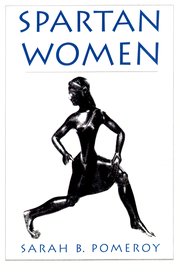
Cover for 

Spartan Women


Sparta, which existed from 800 B.C. until A.D. 200, was renowned in the ancient world as a stoic and martial city-state, and most of what we know about Sparta concerns its military history and male-dominated social structure. Yet Spartan women were in many ways among the most liberated of the ancient world, receiving formal instruction in poetry, music, dance, and physical education. And the most famous of mythic Greek women, Helen of Troy, was originally a Spartan. Written by one of the leading authorities on women in antiquity, Spartan Women seeks to reconstruct the lives and the world of Sparta's women, including how their legal status changed over time and how they held on to their surprising autonomy.

In this book, Sarah Pomeroy covers over a thousand years in the lives of Sparta's women from both the elite and lower classes. This is the first book-length examination of Spartan women, and Pomeroy comprehensively analyses ancient texts and archaeological evidence to construct the history of these elusive though much noticed women. Spartan Women is an authoritative and fresh account that will appeal to all readers interested in ancient history and women's studies.


Elizabeth of York and Her Six Daughters-in-Law: Fashioning Tudor Queenship, 1485–1547 by Retha Warnick
coverThis study of early modern queenship compares the reign of Henry VII’s queen, Elizabeth of York, and those of her daughters-in-law, the six queens of Henry VIII. It defines the traditional expectations for effective Tudor queens—particularly the queen’s critical function of producing an heir—and evaluates them within that framework, before moving to consider their other contributions to the well-being of the court. This fresh comparative approach emphasizes spheres of influence rather than chronology, finding surprising juxtapositions between the various queens’ experiences as mothers, diplomats, participants in secular and religious rituals, domestic managers, and more. More than a series of biographies of individual queens, Elizabeth of York and Her Six Daughters-in-Law is a careful, illuminating examination of the nature of Tudor queenship. 


coverThree Medieval Queens: Queenship and the Crown in Fourteenth-Century England by Lisa Benz St John
This book is an innovative study offering the first examination of how three fourteenth-century English queens, Margaret of France, Isabella of France, and Philippa of Hainault, exercised power and authority. It frames its analysis around four major themes: gender; status; the concept of the crown; and power and authority.


Berenguela of Castile (1180-1246) and Political Women in the High Middle Ages by Miriam Shadis
coverThe women in the family which ruled thirteenth-century Castile used maternity, familial and political strategy, and religious and cultural patronage to secure their personal power as well as to promote their lineage. Leonor of England, and her daughters Blanche of Castile (queen of France), Urraca (queen of Portugal), Costanza (a Cistercian nun of Las Huelgas) and Leonor, (queen of Aragon) provide the context for a study focusing on Berenguela of Castile, queen of Leon through marriage and of Castile by right of inheritance, whose most significant accomplishment was to enable the successful rule of her son Fernando.


"Trying Neaira" by Debra HamelTrying Neaira: The True Story of a Courtesan’s Scandalous Life in Ancient Greece by Debra Hamel
Neaira grew up in a Corinthian brothel in the fourth century B.C., became a high-priced courtesan and a sex slave, then settled into a thirty-year relationship with Stephanos of Athens. But next she found herself in court, charged with transgressing Athens’s marriage laws. This book reconstructs the amazing facts of Neaira’s life and trial, illuminating the social, legal, and cultural worlds of ancient Greece.


Women of Byzantium by Carolyn L. Connor
"Women of Byzantium" by Carolyn L.              ConnorWomen played key roles in Byzantine society: some ruled or co-ruled the empire, and others commissioned art and buildings, went on pilgrimages, and wrote. This engrossing book draws on evidence ranging from pictorial mosaics and inscriptions on the walls of churches to women’s poetry and histories, examining for the first time the lives, occupations, beliefs, and social roles of Byzantine women.

In each chapter Carolyn L. Connor introduces us to a single woman—from the elite to the ordinary—and uses her as a springboard to discuss Byzantine society. Frequently quoting from contemporary accounts, Connor reveals what these women thought of themselves and their lives and how they remembered the lives of women who had lived earlier.
Informative, sympathetic, and engagingly written, this book is a window into Byzantine culture and women’s history that has never before been opened.


Eleanor of Aquitaine: Lord and Lady edited by Bonnie Wheeler and John Carmi Parsons
coverEleanor's patrilineal descent, from a lineage already prestigious enough to have produced an empress in the eleventh century, gave her the lordship of Aquitaine. But marriage re-emphasized her sex which, in the medieval scheme of gender-power relations relegated her to the position of Lady in relation to her Lordly husbands. In this collection, essays provide a context for Eleanor's life and further an evolving understanding of Eleanor's multifaceted career. A valuable collection on the greatest heiress of the medieval period.


Matilda of Scotland: A Study in Medieval Queenship by Lois L. Huneycutt
Matilda of ScotlandA study of Matilda of Scotland (wife to Henry I) and the political acumen and personal skills she brought to the role of queen.Matilda of Scotland was the daughter of Malcolm II of Scotland and his Anglo-Saxon queen Margaret. Her marriage to Henry I of England in 1100 thus brought to Henry, descendant of the conquering Normans, a direct and politically desirable link to Matilda's ancestor Alfred the Great.

Her life makes clear that Matilda had outstanding talents. She was educated in the exclusive convents of Romsey and Wilton, a grounding which enabled her to further the literate court culture of the twelfth century, and under her control was a substantial demesne that allowed her to exercise both lay and ecclesiastical patronage. In the matter of ruling, she was an active partner in administering Henry's cross-channel realm, served as a member of his curia regis, and on occasion acted with what amounted to vice-regal authority in England while Henry was in Normandy.

Chroniclers of the twelfth and thirteenth centuries often refer to her as Mathilda bona regina, or Matildis beatae memoriae, and for a time she was popularly regarded as a saint. Huneycutt's study shows how Matilda achieved such acclaim, both because the political structures of her day allowed her the opportunity to do so and because she herself was skilled at manipulating those structures.

This study will be valuable to those interested in not only English political history, but also to historians of women, the medieval church, and medieval culture.


Elizabeth de Burgh, Lady of Clare (1295-1360): Household and Other Records edited by Jennifer Ward
Elizabeth de Burgh, Lady of Clare (1295-1360): Household and Other Records
Noble widows were powerful figures in the later Middle Ages, running their own estates and exercising considerable influence. Elizabeth de Burgh (1295-1360), daughter of one of the most powerful earls in England and cousin of Edward II, lost her third husband at the age of twenty-six, and spent the rest of her life as a widow. In 1317, having inherited one-third of the lands of her brother, Gilbert de Clare, earl of Gloucester and Hertford, who had been killed at Bannockburn three years earlier, she established herself at Clare, which became her main administrative centre for her estates in East Anglia, Dorset and South Wales. She enjoyed a noble lifestyle, was lavish in her hospitality to family and friends, entertaining Edward III in 1340, and she displayed her piety through her patronage of religious houses and her foundation of Clare College in Cambridge.

Her life and activities are portrayed in vivid detail in her household accounts and her will, selected extracts from which are provided in this volume. Altogether, 102 accounts of various types survive from the years of her widowhood, and the records here have been chosen to illustrate the great range of information provided, throwing light on Clare castle itself and its furnishings, daily life and religious practice, visitors, food and drink, livery and retainers, travel, and business. They paint of a vivid picture of the life and work of a noble family in the fourteenth century.


Sunday, March 1, 2020

Review: The Great Matter Monologues by Thomas Crocket

46047317Synopsis: England, 1527, King Henry seeks a divorce from his first wife, Katherine, who can't give him the male heir he desires. He sets his eyes on the younger, more daring Anne Boleyn, triggering a complex, triangular exchange of personal narratives from the protagonists, who remain entwined for the ensuing nine years. Each struggle in their pursuits of power, control and survival, ending in 1536 with Katherine's death and Anne's final miscarriage, sealing her fate and giving King Henry cause to seek yet another wife...


This is a different attempt at re-telling the events of Henry VIII's divorce from Katherine of Aragon.

Its is - as the author mentions upfront - based upon a style favoured for the stage - the character, standing alone before his / her audience, recounting their experiences, almost conversationally. In this instance, I can picture the three of them - Katherine, Henry and Anne - standing together, yet apart, with the spotlight moving from one to the other and then the next one, in alternating narrative.

A different perspective on a major event in Tudor history - for those who enjoy reading about the Tudors.

For those seeking to get an idea of what the author is attempting - link to the monologue from A Streetcar Named Desire

Saturday, November 30, 2019

Review: Plantagenet Princess, Tudor Queen by Samantha Wilcoxson

26086754. sy475 Synopsis: She was the mother of Henry VIII and wife of Henry VII, but who was Elizabeth of York? Raised as the precious eldest child of Edward IV, Elizabeth had every reason to expect a bright future until Edward died, and her life fell apart.

When Elizabeth's uncle became Richard III, she was forced to choose sides. Should she trust her father's brother and most loyal supporter or honor the betrothal that her mother has made for her to her family's enemy, Henry Tudor?

The choice was made for her on the field at Bosworth, and Elizabeth the Plantagenet princess became the first Tudor queen. Did Elizabeth find happiness with Henry? And did she ever discover the truth about her missing brothers, who became better known as the Princes in the Tower? Lose yourself in Elizabeth's world in Plantagenet Princess Tudor Queen.


I shelved this as "to read" in 2015 on Goodreads and got the opportunity to read it this year.

I'm not a fan - sorry. I don't think I was the target audience - I am thinking this was aimed at a younger reading audience, then again I might be wrong, but that's how it comes off to me. A little to much "fluff" (romance) for me - I like my historical fiction with a bit more edge to it - warts and all. Here, I am presented with - a the start - with a young woman who appears much older than she is - a 4yo (1470) with an adult's perception of events around her - not a good start. The story whisks along - years pass over mere pages; characters walk on and off as if on cue. There was no real attachment to any of them for me. The usual mythologies are given a new light, and whilst some authors take liberties with plot-lines and characters, sometimes it works, sometimes it doesn't. 

I will applaud the author for taking on the person of Elizabeth. Very little is really known about this woman who lived through so much yet remained in the background for a greater part of her life. She was the peace-weaver between the Lancastrians and Yorkists; she was the sister and mother of kings; but she had no political role in her husband's reign - except for that of wife and mother.

I have no interest in pursuing the rest of the books in this series. Just doesn't fit in with what I am looking for in my historical fiction - I will probably tackle something a little more in the realm of non-fiction. 


Thursday, October 31, 2019

Review: Dark Queen Waiting by Paul Doherty

Dark Queen Waiting (Margaret Beaufort Mystery #2)Synopsis:  October, 1471. Edward IV sits on the English throne; the House of York reigns supreme. With her young son, Henry Tudor, in exile in France, Margaret Beaufort, Countess of Richmond, shelters deep in the shadows, secretly plotting for the day when Henry can be crowned the rightful king.  But as her supporters are picked off one by one, it becomes clear that a traitor lurks within Margaret’s household. Margaret orders her sharp-witted clerk, Christopher Urswicke, to find out who has betrayed her. If he is to protect Margaret’s remaining supporters from suffering a similar fate, Urswicke must solve a baffling mystery where nothing is as it first appears.


Historical mystery fiction set in the time of the wars of the Roses. This time, from the POV of Margaret Beaufort, mother of the future Henry VII - which makes a nice change. Usually we read only from the Yorkist side wherein the Lancastrians are often portrayed as the villains (being a bit of a Yorkist myself - and so they should!). 

At this particular point of history, Margaret is married to the ailing Sir Henry Stafford (her third husband), the battle of Tewkesbury (May 1471) witnessed the death of Prince Edward, son of Henry VI and many leading Lancastrian nobles (including Henry VI himself as a consequence), and cemented the position of the House of York upon the throne of England. Margaret's son Henry Tudor has fled abroad in exile, and Margaret is still viewed with great suspicion by the Yorkists despite outwardly giving no signs of rebellion or treason. But all the while, she sits quietly plotting the the triumphant return of her son and the shining hope of the Lancastrian cause.

However, this story was slow going and again characters pop in who you are never too sure are there simply to fill the page or are actually relevant to the story. Another annoying thing is the repetition of story-telling, first by one character and then another all in the space of a few pages.

I lost interest to be quite honest, and skipped through to the end - where I finally found something of interest - the character of Christopher Urswicke - or as Doherty calls him - "the founder of the British Secret Service". Now had that been at the start ....... 

I gave this two stars on Goodreads - the second star is because of this last remark which has sent me off on the trail of Urswicke. Obviously, Doherty plans many more in this series and intends to flesh out the character of Urwiske, but as I have no intention of continuing with the series, here's a little about the man himself - Urswicke that is ...


Who Was Christopher Urswicke?
Christopher Urswicke (1448 – 1522) was a priest and confessor of Margaret Beaufort. He was Rector of Puttenham, Hertfordshire, and later Dean of Windsor. Urswicke is thought to have acted as a go-between in the plotting to place her son Henry VII of England on the throne (c.1483 - 1485). This in itself is suggestive of a protagonist in medieval mystery.

There is very little known of the early activities of Christopher Urswicke. He often said to have been the son of Sir Thomas, Recorder of London and Chief baron of the Exchequer, who during the various battles of the wars of the roses ".. made himself conspicuous by his tact and cunning in aiding the cause of the Yorkist faction.." (and this is the path Doherty takes). However, from the looks of things, he was actually the son of one John Urswicke, a lay brother of Furness Abbey. He was educated at Cambridge and ordained (1468). Sometime following this, or even before, he came to the attention of Margaret Beaufort and her son Henry Tudor, most probably through the Stanleys. Even this introduction is shrouded in mystery as Margaret will not take Thomas Stanley as her fourth husband until 1472!

These are the events that have preceded and have taken us up to our current storyline.

I will go out on a limb here and suggest Urswicke's appointment as confessor to Margaret did not occur until after this time. There are references to his being in Rome in 1480 / 1481 and then coming to the attention of Margaret who became his patron for the remainder of her life; she presented him in 1482 to his first living - Puttenham, Huntingdonshire - and made him her chaplain and confessor. It has been suggested that the family had a long association with the Stanleys and / or that Dr Lewis Caerleon, Margaret's physician may have been responsible for the introduction. Because she sought to overthrow Richard III in favor of her exiled son, Margaret needed able and discreet servants; accordingly, she took Urswicke into her household as her confessor and secretary.

Margaret apparently involved Urswicke in the negotiations between herself and John Morton, then bishop of Ely, designed to lead to the marriage of her son, the future Henry VII to Elizabeth of York (1484). After helping save Henry's life, Having helped save the earl’s life, Urswicke became his confessor, advisor, and confidential agent. Urswicke remained with Henry, and was with him in Wales when Henry was gathering troops against Richard III.

Urswicke flourished under Hnery VII and was rewarded with the prebend of St Stephen's and later to the influential position of king's clerk and almoner. He was subsequently granted other benefices, offices, and prebends. Urswicke was also involved with Roderigo de Puebla in the negotiating the Treaty of Medina del Campo that was signed on 27th March 1489. It established a common policy towards France, reduced tariffs between the two countries and agreed a marriage contract between Prince Arthur and Catherine of Aragon and also established a dowry for Catherine of 200,000 crowns.

Urswicke represented Henry VII in Rome in 1493 and met with Emperor Maximilian I in 1496. Later that year he was appointed Dean of Windsor. Urswicke was with Henry when he was poor health in the early months of 1509. 

Urswicke began to slowly retire from life at court by the early 1500s and dedicated most of his time to independent projects, such as the rebuilding of St. Augustine's, where he would ultimately die. Amongst Urswicke's friends were the well-known humanists Thomas More and Erasmus, and he supplied valuable information on Richard III to More and Polydore Virgil, both of whom wrote about the former king. 

Christopher Urswicke was all but erased from the text of Vergil's Anglica historia sometime after 1513. Evidence of his part in the dissemination of literature that Henry VIII's court (and court historian) could have considered subversive may account for Urswicke's disappearance as well as illustrate some clerical reactions to early Tudor anticlerical sentiment.

All in all, Urswicke remained a loyal servant to both Henry VII and his son and successor, Henry VIII, until the day he died (21.03.1522).


Who was Reginald Bray..?
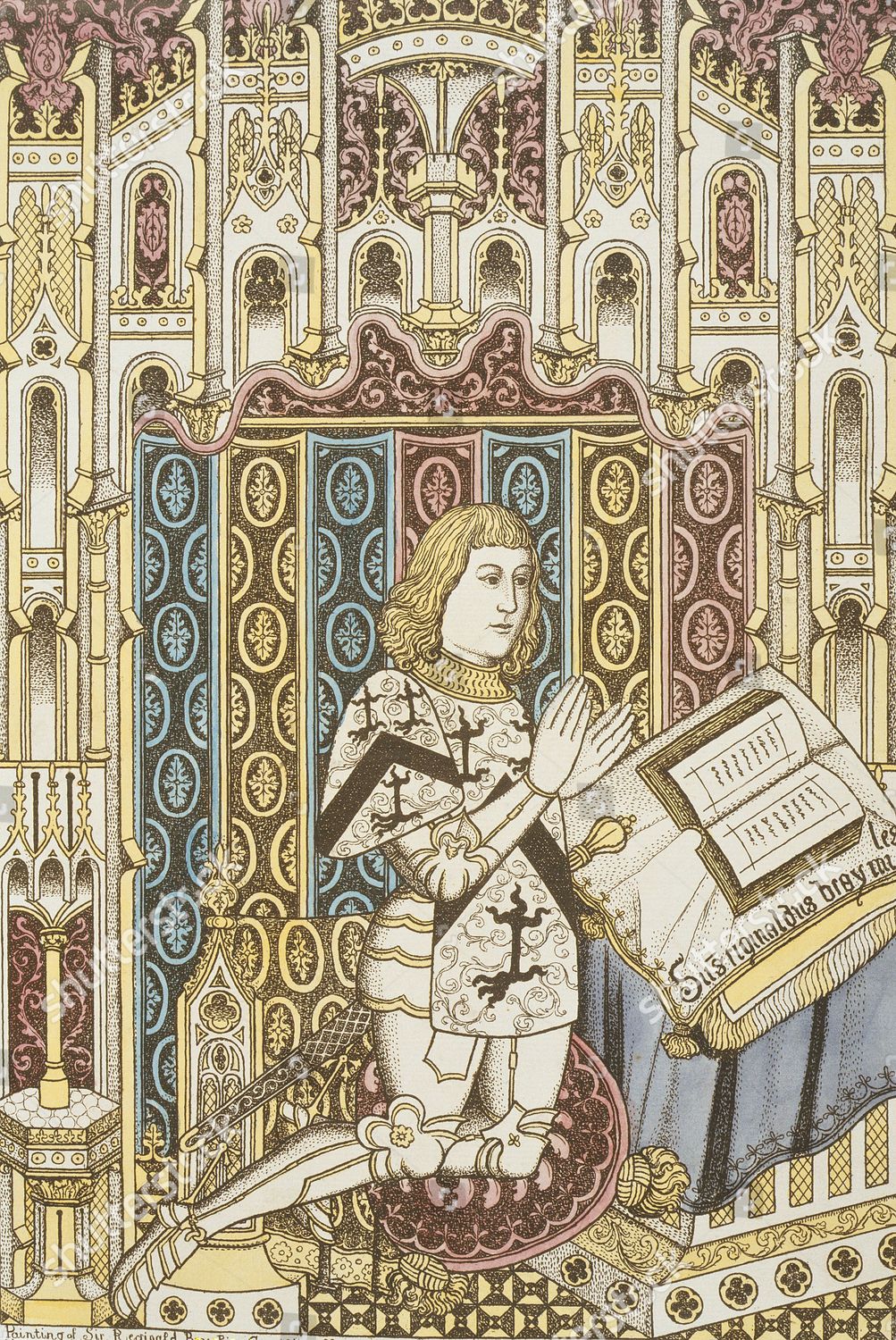
Reginald Bray (1440 - 1503), Urswicke's contemporary in Margaret Beaufort's household, played a vital role in organizing Buckingham's rebellion against Richard III during the last phase of the civil wars (1483–1487) and later became one of the most active and trusted ministers of Henry VII.

Image result for reginald brayBray began his career as receiver-general for Sir Henry Stafford, second husband of Margaret Beaufort, mother of the future Henry VII. After Stafford’s death in 1471, Bray continued to serve Lady Margaret as steward. In 1483, Bray acted as go-between for Margaret and John Morton, bishop of Ely, who was then engaged in drawing his jailer, Henry Stafford, duke of Buckingham, into the conspiracy being formed to dethrone Richard III in favor of Margaret’s son, Henry Tudor, earl of Richmond. Bray also raised much-needed funds for Richmond and won several key gentlemen to the earl’s cause, including Giles Daubeney and Richard Guildford.

After the failure of Buckingham’s Rebellion in October 1483, Bray was pardoned by Richard III, but continued to support Henry Tudorand may have gone into exile with him in France. Knighted after the Battle of Bosworth in 1485, Bray was quickly named chancellor of the Duchy of Lancaster and knight of the body. Appointed a member of the Council, Bray held various financial and administrative positions, sat in numerous Parliaments, and served on over 100 commissions. Bray’s record of loyal service to Margaret Beaufort made him a member of Henry VII’s inner circle of advisors, especially in matters of finance. Bray was responsible for the financial provisions that made possible construction of Henry VII’s chapel at Westminster and his renovations of St. George’s chapel at Windsor. He would be created a Knight of the Garter. Bray died in August 1503.


further reading: 
Urswicke also features in Robert Farrington's Henry Morane Series


Sunday, September 29, 2019

John Morton by Stuart Bradley

John Morton (c. 1420–1500) was one of the most important men in the land from the Wars of the Roses to the start of the Tudor dynasty. Yet he has been largely ignored in recent times.

He was a man of great character and influence over politics and the Church. He lived into his eighties, having served three kings as a councillor, Master of the Rolls, Lord Chancellor, bishop, Archbishop of Canterbury and Cardinal. He was a key figure in the early Tudor state. He had escaped from the Tower of London, lived in exile twice, and was a major adversary of Richard III. He funded the building of Hatfield Palace, the first drainage of the fens, and the central tower of Canterbury Cathedral. The Morton Missal contained the first printed music in England.

As S. B. Chrimes observed, ‘There can be little doubt that Morton was the key figure in Henry VII’s government, nothing approaching an adequate study of his life and role has yet been published.’ In fact, no detailed biography of Morton has been produced since Victorian times.

This book follows John Morton’s career through the reigns of Henry VI and Edward IV, and his central role in opposition to Richard III, before his fifteen years as Lord Chancellor to Henry VII, which were crucial to the establishment of the Tudor dynasty.

Sunday, August 18, 2019

Amberley Publishing - Interest History Titles

Amberley Publishing have some history titles out that have caught my eye - thought I would share:


La Reine Blanche by Sarah Bryson
This is the story of Mary Tudor, told through her own words via primary sources, state papers and letters, for the first time.


The Anarchy: the Darkest Days of Medieval England by Teresa Cole
The Anarchy blends contemporary, sometimes eyewitness accounts with modern analysis to describe a period of England’s history so dark and lawless that those who lived through it declared that ‘Christ and his saints slept.'


Edward the Elder: King of the Anglo-Saxons by Michael John Key
Edward the Elder succeeded his father Alfred the Great to the kingdom of Wessex ... and deserved to be recognised for his contribution to Anglo-Saxon history and a new assessment of his reign is overdue. He proved equal to the task of cementing and extending the advances made by his father, and paved the way for the eventual unification of the Anglo-Saxon kingdoms and the nation-state of England. The course of English medieval history after his death was a direct outcome of military successes during his reign.


Plantagenet Queens & Consorts: Family, Duty & Power by Dr Steven J. Corvi
Examination of the lives and influence of ten figures, comparing their different approaches to the maintenance of political power in what is always described as a man’s world. On the contrary, there is strong evidence to suggest that these women had more political impact than those who came later – with the exception of Elizabeth I – right up to the present day. Beginning with Eleanor of Provence, loyal spouse of Henry III, the author follows the thread of queenship: Philippa of Hainault, Joan of Navarre, Katherine Valois, Elizabeth Woodville, and others, to Henry VII’s Elizabeth of York. 


The House of Grey: Friends & Foes of Kings by Melita Thomas
The Grey family was one of medieval England’s most important dynasties, serving the kings of England as sheriffs, barons and military leaders from the reign of William the Conqueror. Family came to prominence in the period known as the Wars of the Roses and under the Tudor Monarchs.


Lovell Our Dogge: The Life of Viscount Lovell by Michèle Schindler
Francis Lovell was not only an ally of Richard III but his closest friend, and one of the wealthiest barons in England. Author Michèle Schindler returns to primary sources to reveal the man who was not only a boyhood friend of the king-to-be as a ward of Edward IV, but also linked to him by marriage: his wife, Anne FitzHugh, was first cousin to Richard’s wife, Anne Neville.


Ranulf de Blondeville: The First English Hero Iain Soden
The study of a nobleman whose exploits became the stuff of medieval romance, once recounted in the same breath as Robin Hood. Ranulf de Blondeville was fabulously rich and powerful. He served six kings, endured difficult regime-change, fought his way across half of France and back and more than once turned wrested victory from defeat. He never forgot that his roots were Norman although his efforts were for England, where he made his home.


Lawson Lies Still in the Thames: The Extraordinary Life of Vice-Admiral John Lawson by Gill Blanchard
This biography charts the tumultuous life and times of an ordinary seaman born in Scarborough who would come to play a major role in the English Civil War, the Restoration, the Anglo-Dutch Wars and the start of the transformation of England into a global political and economic power in the seventeenth century.


Saturday, June 29, 2019

Bookshelf: Wars of the Roses to Tudors

So, again, after a bit of a tidy up, I have managed to sort through the various tomes and arrange them in some sort of order.  These shelves are dedicated to various topics and biographies pertaining to the Wars of the Roses and slightly beyond to the Tudors.  It is a mix of fiction and non-fiction, and is rather an eclectic mix.


Sunday, May 19, 2019

Medieval History Titles

Below is a summary of some of the latest releases in medieval history that have sparked my interest:


The Westford Kight by David Goudswar
The Westford Knight is a mysterious, controversial stone carving in Massachusetts. Some believe it is an effigy of a 14th century knight, evidence of an early European visit to the New World by Henry Sinclair, the Earl of Orkney and Lord of Roslin. In 1954, an archaeologist encountered the carving, long known to locals and ascribed a variety of origin stories, and proposed it to be a remnant of the Sinclair expedition. The story of the Westford Knight is a mix of history, archaeology, sociology, and Knights Templar lore. This work unravels the threads of the Knight’s history, separating fact from fantasy.


The Two Walter Raleighs by Fred Tromly
Sir Walter Raleigh’s biographers have given little attention to his tragic relationship with his son Wat (Walter). They began in proud identification, each seeing himself in the other. But after the father’s political downfall and imprisonment for treason, he lost his authority in the family, and the son began to reject paternal advice and his studies and to engage in violent quarrels and duels. Often the father used his influence to rescue his son from his rash acts. Things came to a head after Wat was sued by a young woman for violent assault, and imprisoned. The aged Raleigh had been freed from the Tower to lead an expedition to Guiana, and—as recently discovered documents reveal—he delivered his son from the law by commissioning him as a captain on his flagship, ominously named the Destiny. In a shared tragedy, Wat was killed in a skirmish, and the grieving Raleigh returned to England, broken in spirit and ready for the execution that awaited him.


The Other British Isles by David Moore
Their names bespeak a rich past. From the Norse Hjaltland comes the modern Shetland: islands nominally Scottish, steeped in Nordic culture, closer to the Arctic Circle than to London. Important Neolithic sites are at Skara Brae and Maes Howe in the Orkneys. Holy Iona, island center of Celtic Christianity, the Isle of Man, former seat of rule over the Irish Sea, and Anglesey and Islay, homes of medieval courts at Aberffraw and Loch Finlaggan, are just a few of the more than 6,000 islands that form the archipelago known as the British Isles. The offshore isles are home to half a million people. Focusing on the eight islands or chains that have long supported substantial populations, this history tells the stories of Shetland, Orkney, the Hebrides, Anglesey, the Channel Islands, the Scilly Isles, and the Isles of Man and Wight, from their Neolithic settlement, to Roman, Norse and Norman occupation, to the struggle to maintain their uniqueness in today’s world.


Sworn Bond In Tudor England by Thea Cervone
The swearing of oaths is a cultural phenomenon that pervades English history and was remarkably important during the sixteenth century. This multi-disciplinary work explores how writers of the Tudor era addressed the subject in response to the profound changes of the Reformation and the creative explosion of the Elizabethan period. Topics include how the art of rhetoric was deployed in polemic, the way in which oaths formed bonds between Church and State, and how oaths functioned in literature, as ceremony and as a language England used to describe itself during times of radical change.


Rulers & Realms In Medieval Iberia 711 - 1492 by Timothy Flood
The Muslim conquest of Iberia in 711 began nearly eight centuries of struggle for control of the peninsula. The invaders quickly achieved military supremacy, but political dominance was less complete. Within a few years, a small band of Christian rebels defied Muslim authority, establishing their own ruling class in the northern mountains of Asturias. The opposing forces competed for control until the Catholic Monarchs Fernando and Isabel established absolute rule in 1492. Drawing on the latest scholarship, this comprehensive study traces the succession of Iberian sovereigns during a complicated period in early European history.


Gothic Kings of Britain by Phillip Potter
This biographical history tells the story of 31 Gothic monarchs (Cnut to Richard II of England, Malcolme III to David II of Scotland) who fought in the crusades, enforced their feudal rights throughout the kingdom, sponsored the growth of representative government through a parliament, and ultimately created a military power that would dominate European affairs. In the process, the narrative recaptures the dramatic and chaotic span of the years between 1000 and 1400, when the great European monarchies were still in their formative stages. The book discusses the lives of English and Scottish kings in the context of their eras, discussing their achievements and failures, their relations with the Church and foreign powers, and their overall influence on the suppression of the nobility and the development of the monarchy as the primary governing institution of both Scotland and England.

Monday, November 19, 2018

Review: Henry VIII and the Men Who Made Him by Tracy Borman

When we see Henry through the men in his life, a new perspective on this famous king emerges...

40527728I am not sure what I was expecting when selecting this book; however, on the basis of the title "... the men who made him" I thought I was getting a new spin of the character of Henry VIII.  What I read was nothing new, nothing I could not have read in in number of tomes on this monarch.  The only difference here is that there is very little mention of the wives.

So what was I expecting: I guess a little more on the main figures in Henry's life.  We have plenty on Wolsey, Cromwell, Cranmer, Brandon, and even a little on some of the men who served him in various capacities - his "youths of evil counsel".  But how much of an influence on Henry were any of them?

We read that Henry's father was aloof, cool, suspicious and that when Henry finally came to rule, was determined to not be like him.  We read that his tutor and chaplain John Skelton was "responsible for shaping his spiritual and intellectual upbringing".  But did either man "make him"?

From an early age - usually around the time of Arthur's marriage - we get a sense of a young Henry enjoying the spotlight, of wanting to be the centre of attention, of his future vanity, of his early need for adulation. 

As his rule progresses, we get more of a sense of the man - his jealousies, his fickleness, his insecurities, his need to be surrounded by fawning sycophants, his ability to change from benevolent patron to destroying angel.  But how much an affect did those surrounding the king actually have on him.  He swings from one direction to another - loathe to take on the task of government then micro-managing his ministers.  Some may have been able to briefly bend the ear of the king, flaming his paranoia or indulging him like a doting parent; but did they actually contributed to the development of the king's persona??

I am not sure if the brief is actually met - I had no understanding of how any of the men in Henry's circle really had so much of an influence on him that they "made" the king the man as we have come to know him.  What I would have liked, rather than yet another history of Henry and his reign, were vignettes of the more prominent men - detailing what role they played.  I wanted to know how these men actually contributed to the making of this monarch - but I was left unsatisfied. I could pick up any number of books on my own bookcase and glean the same information that was contained herein.  

Also, I am not sure that you could consider the rule of Wolsey and Cromwell to be anything other than two lowly born men, who had an aptitude for government, which merely facilitated Henry's self-indulging and aggrandizing lifestyle.  I just had no real sense that any of them shaped the man.  Afterall, to whom do we ascribe the tyranny, the volatility, the cruelty, the almost bipolar nature of Henry - who will put his hand up to this?  I had many questions that went unanswered.

I have no complaints about the writing, the research, the overall presentation - it is an acceptable biography on this great Tudor monarch (though very pro-Tudor).  But, like Oliver Twist - I wanted more and was left wanting.

Monday, April 30, 2018

Review: The Lost Tudor Princess by Alison Weir

The Lost Tudor Princess: The Life of Lady Margaret Douglas
Why do I keep giving Weir chance after chance. Yet another 500 plus pages of history lessons replacing much lacking fact. Another case of quantity over quality.

Margaret Douglas, Countess of Lennox, mother of Darnley and mother-in-law of Mary Queen of Scots - yes, a lost Tudor princess; yes, a woman whose life deserves the spotlight; yes, another case where fact is more interesting than fiction. A woman whose life reveals to us very little - and yet - 500 plus pages!

I have said this over and over - I would rather 100 pages of what is known rather than 500 pages of boring, rehashed history, personal opinion, and filling in the gaps with dates and documents. As I stated in my review of Weir's "Elizabeth of York" - "I am trying very hard to fathom the amount of actual information there is on Elizabeth that was worthy of 600 odd pages - quite frankly it required barely a quarter in my opinion. The larger the book ... overcompensating for a distinct lack of anything else.". The same can be said, I am sorry to say, of this tome on Margaret Douglas.


Sunday, September 17, 2017

Review: The Forgotten Queen

When most talk of the Tudors, the focus is usually on Henry VIII, his six wives, and his children.  Often forgotten are the siblings of Henry VIII, in this instance, his elder sister, Margaret.

Margaret was married to James IV, King of Scotland, and her offspring and their offspring, would make an indelible impact upon the political reigns of Henry and his children, notably that of Elizabeth I.

So, it was with this in mind that I was curious to see how Margaret would be portrayed in this fictional account of her life, The Forgotten Queen by DL Bogdan.
"From her earliest days, Margaret Tudor knows she will not have the luxury of choosing a husband. Her duty is to gain alliances for England. Barely out of girlhood, Margaret is married by proxy to James IV and travels to Edinburgh to become Queen of Scotland."
Margaret's story is told in the first person narrative - so we are really hearing Margaret's story from her own perspective.  This form of story-telling is, I guess, an attempt to make the reader more empathetic towards the main character, who in this instance is selfish, petulant, childish, rude and egotistic.  Whilst this behaviour is understandable in a very young woman who is married off to a complete stranger in a foreign country for purely political reasons, it wears thin as Margaret ages.  Something else that really puts me off is the attempt at native dialects - it detracts from my reading pleasure.

Margaret's real story is an exciting read - this woman was a true survivor of the politics of her day.  

Further Reading:
  • Margaret Tudor on wikipedia
  • Queen Margaret Tudor: The Story of a Courageous but Forgotten Monarch by Stuart McCabe
  • The Sisters of Henry VIII: Margaret Tudor, Queen of Scotland (November 1489-October 1541), Mary Tudor, Queen of France and Duchess of Suffolk (March 1496-June 1533) by Hester W. Chapman
  • The Thistle and the Rose: The Sisters of Henry VIII. by Hester Chapman
  • Margaret Tudor, Queen of Scots by Patricia Hill Buchanan
  • The Sisters Of Henry VIII: The Tumultuous Lives Of Margaret Of Scotland And Mary Of France by Maria Perry
  • King Harry's sister, Margaret Tudor, Queen of Scotland by Michael Glenne
  • The rose and the thorn: the lives of Mary and Margaret Tudor by Nancy Lenz Harvey