Showing posts with label mughal history. Show all posts

Monday, July 22, 2019

Royal Misses: Lost and Found

From Hindustan Times

It’s widely agreed that the French queen, Marie Antoinette, died early because she had too many frocks at a time of social unrest . History places her the way she was: her contribution to France was in lace and ruffles. In India, on the other hand, many women who made significant history, have just been projected as domestic goddesses; their exercise of political power considered overreach, or been simply sidelined.

Nur Jahan,Mughal harem,Mughal princesses
Authors, policy influencers, patrons of artists, wedding planners, in other words, alliance makers, city builders among Timurid women have, for instance, been lumped under ‘Mughal women’ in our textbooks after ‘Mughal art and architecture’ have got their due. That is, 214 years of varied achievements by women, overwritten by blocks of marble.

Women writers have recently been looking at the past with new glasses. They are examining the role women have played in the power structures of the day and are questioning the grand narrative of empire building as being the only story worth telling. In non-fiction, Ruby Lal’s Empress: The Astonishing Reign of Nur Jahan, Ira Mukhoty’s The Daughters of the Sun, Archana Garodia Gupta’s The Women Who Ruled India: Leaders, Warriors, Icons, Parvati Sharma’s Jahangir, Deepa Agarwal and Tahmina Aziz Ayub’s book, The Begum, on Ra’ana Liaquat Ali Khan, Pakistan’s first First Lady who was born Indian, all fall in this category..

In fiction, two upcoming titles, Subhadra Sen Gupta’s Mahal, and Amita Kanekar’s Pride of Lions, have prominent women figures with the Mughal era as backdrop. The latter is a thrilling story of an unlikely revolt. A group of peasants led by women fight the might of Aurangzeb’s rule. Who would not want to be drawn into that world?

read more here @ Hindustan Times


Tuesday, December 25, 2018

Sir Jadunath Sarkar’s "Fall of the Mughal Empire"

From The Hindu:

The four volumes of Fall of the Mughal Empire are the most impressive work of Indian history that I have read. They should be required reading in all of our schools for students aged 16, by when we are old enough to be able to look at the world around us through our own eyes. A lot of what we see around us in the India of 2018, we will be able to understand on reading this work. It is in that sense a shattering book, and one cannot think of too many that have such influence on the reader and have such ability to transform the way readers think.

Sir Jadunath Sarkar’s magisterial work spans only about seven decades of Indian history, from after the sack of Delhi by Nadir Shah, till the end of the Maratha power in the first few years of the 19th century. His model in writing this in some ways was a British administrator named William Irvine, who died around 1911, and had written a work called Later Mughals.


read more here @ The Hindu

Sunday, December 2, 2018

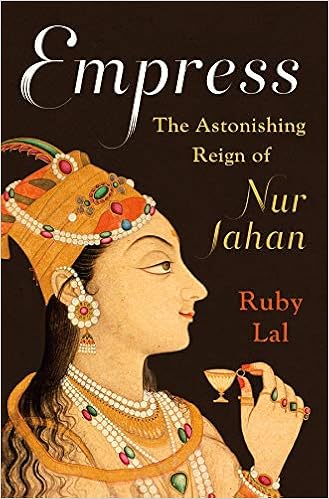
Review: Empress - The Astonishing Reign of Nur Jahan by Ruby Lal

"... finding her entails peering around the towering figures of men ..."


Nur Jahan was one of the most powerful and influential women in Indian history. Born amid a caravan traveling from Teheran to India, she became the last (eighteenth or twentieth) wife of the Mughal emperor Jahangir. When he succumbed to the effects of alcohol and drugs, she effectively took control of the government (1611-1627). Her reign is said to have marked the highpoint of the Mughal empire, during the course of which she made great contributions to the arts, religion, and the nascent trade with Europe. Her rise was swift - her downfall swifter, and she was effectively written out of Mughal history by Shah Jahan.

Ruby Lal's book is one of two biographies on this woman - the other being Ellison Banks Findly's Nur Jahan - Empress of Mughal India (which I haven't read, though a comparison between the two would be interesting). Lal says she is a feminist historian who is determined to "... tell the stories of women and girls, which are largely missing from the precolonial and colonial history of South Asia ..." - and this biography is written from a feminist viewpoint (more on that later). Her background in the study of Mughal history and culture serves her well, for the prose is very descriptive, so much so, you get a sense of actually being there.

We learn of a young girl (Mehrunissa) who meets Prince Salim (Jahangir) and they fall in love. Circumstance see her married to another, and it is only when Salim rebels against his father that they are brought together - her husband Ali Gurli was one of Salim's supporters. Upon his accession Saiem, now Jahangir, rewards her family where they take up positions within the new court. Mehrunsissa learns a lot during this period as her husband is often absent for a great portion of her marriage. When Jahangir's son rebels (1606 - 1607), Mehrusinssa's family falls under suspicion as does her husband, who later dies. Both she and her daughter are brought before the Emperor.

The trouble is, like most women whose voices are dimmed, sometimes there is just not a lot to write about and so we tend to hear more about them from the context of the males in their lives. For instance, we still don't really know how she rose to become the favoured wife - one out of many harem women. Nor the circumstances that led to her marriage to Jahangir in 1611.

We are told that she used her influence though patronage and family connections - her family had been firmly placed at the court of Jahangir's father Akbar and of Jahangir himself; her daughter from her first marriage, Ladl Begum, was married to Shahryar (d.1628) one of Jahnagir's sons (though not his successor). 

Following the deaths of both her parents Nur Jahan was left without a support network when another of Jahangir's sons - Khurram (Shah Jahan) - rebelled amid fears of being displaced in the line of succession (1622). Here, she is blamed for inciting sedition which resulted in the execution of Shahryar and a number of other princes. When Jahangir himself is captured (1626), it is Nur Jahan who engineers his rescue. However, her triumph was short-lived as Jahangir was dead the following year (1627) and Shah Jahan ascended the throne (1628). It is now that, despite her building works, that Nur Jahan fades from the pages of history (very similar situation to that of Hatshepsut of Egypt).


Lal is up front by claiming her biography of Nur Jahan is being written from a feminist viewpoint which essentially refers to the re-reading of history from a female perspective though sometimes interchangeable with feminist historiography, the restructuring of the history from the perspective of women. Why not just write a balanced (or as balanced as is possible) biography or history?  Why the need for terms and labels?

This biography however, is observational rather than factual. And it comes down to the sources used, which Lal claims, have been neglected and ignored by others - specifically Jahangir's own memoirs (wherein Nur Jahan is mentioned over 30 times) and the memoirs of Gulbadan Begum, whose descriptions of court life were extrapolated into / onto the life of Nur Jahan. Lal says she also made use later court histories and of the writing of those who visited the court: artists, tradesmen, diplomats, visitors and curious observers who were often ".. observing and assessing though his own cultural lens ..". Though how they had access to the imperial harem is a questioned I would love answered!

With nothing written in her own hand or by another expressing her own words, we know very little about this woman, except through the eyes of others. And Nur Jahan is not alone in this; there are many authors today, trying to piece together the fragmentary lives of notable women, to retell their stories from, I guess, a more retrospective and understanding voice. Some succeeded - others haven't.

There was still so much I wanted to learn about Nur Jahan that wasn't really covered here as the information was just not there. What Lal's book does do is gives us a fairly decent introduction into this woman. Lal says "... I didn't undo the legends. But I distilled them..." (CS Monitor 27th June 2018) - and sometimes, that is all we can do.

I will be looking forward to new forthcoming book on Gulbadan Begum, daughter of Mughal Emperor Babur (d.1556).  I am straying away from predominantly Euro-centric histories and seeking out more variety further afield.  Funny thing is - the stories are similar just different settings.  It really is a small world afterall.


Further reading:
Daughters of the Sun: Empresses, Queens and Begums of the Mughal Empire by Ira Mukhoty
Nur Jahan - Empress of Mughal India by Ellison Banks Findly
Private Life Of The Mughals Of India (1526-1803 A.D.) by R. Nath
Attendant Lords: Bairam Khan and Abdur Rahim, Courtiers and Poets in Mughal India by T.C.A. Raghavan
Baburnama by Zahiru’din Muhammad Babur Padshah Ghazi and trans. by Annette Susannah Beveridge
Akbar and The Rise of The Mughal Empire by GB Malleson
Light of the World”: The Life and Legacy of Nur Jahan (1577−1645) by Maggie Schuster

Nur Jahan (wikipedia)


Novels:
The Twentieth Wife by Indu Sundaresan (also: Feast of Roses and Shadow Princess)
Nur Jahan's Daughter by Tanushree Podder
Queen & Emperor: A Novel of the Mughal Empire by Tony Raosto

Saturday, June 9, 2018

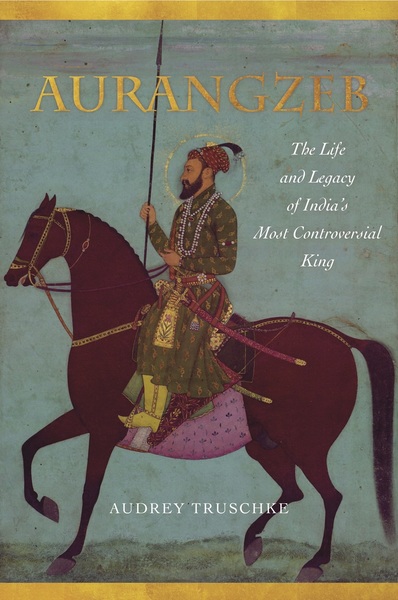
Aurangzeb: The Life and Legacy of India's Most Controversial King


The Mughal emperor Aurangzeb Alamgir is one of the most hated men in Indian history. Widely reviled as a religious fanatic who sought to violently oppress Hindus, he is even blamed by some for setting into motion conflicts that would result in the creation of a separate Muslim state in South Asia. In her lively overview of his life and influence, Audrey Truschke offers a clear-eyed perspective on the public debate over Aurangzeb and makes the case for why his often-maligned legacy deserves to be reassessed.

Aurangzeb was arguably the most powerful and wealthiest ruler of his day. His nearly 50-year reign (1658–1707) had a profound influence on the political landscape of early modern India, and his legacy—real and imagined—continues to loom large in India and Pakistan today. Truschke evaluates Aurangzeb not by modern standards but according to the traditions and values of his own time, painting a picture of Aurangzeb as a complex figure whose relationship to Islam was dynamic, strategic, and sometimes contradictory. This book invites students of South Asian history and religion into the world of the Mughal Empire, framing the contemporary debate on Aurangzeb's impact and legacy in accessible and engaging terms.


read review here @ Daily Times by Ayesha Rafiq
The book enacts a fascinating reassessment of Aurangzeb, by recognizing him as a product of his age, as opposed to previous research that makes the elementary mistake of judging Aurangzeb by modern sensibilities. Aurangzeb’s actions do begin to make sense, when he is placed within the context of Indian codes of conduct and values rather than within the context of twenty first century codes and values. 

Sunday, May 27, 2018

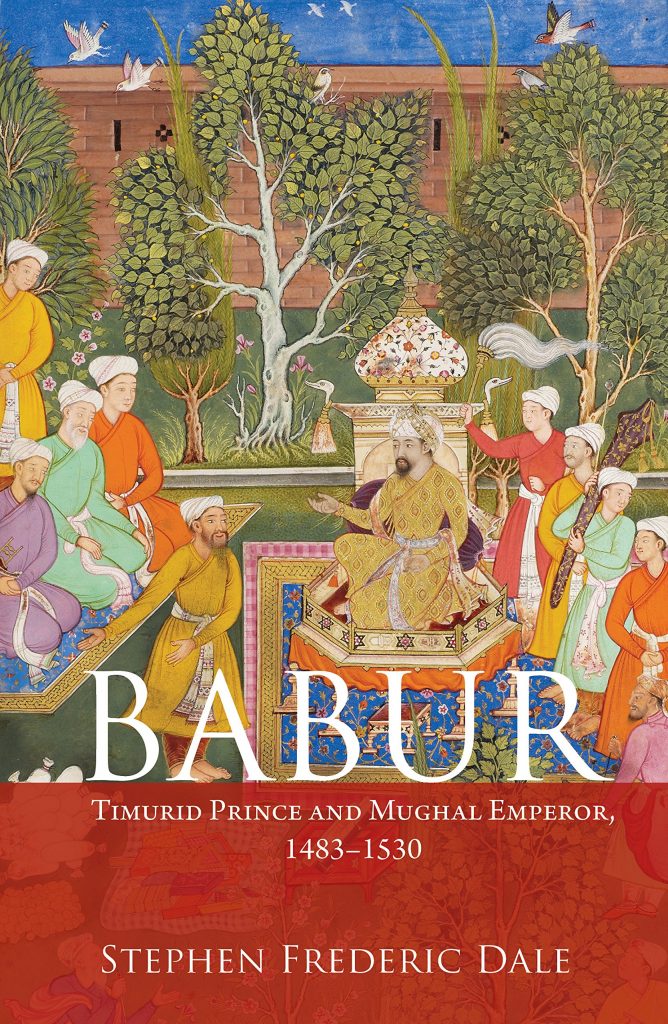
Babur – the Remarkable Emperor Who Happened to Be a Muslim

Review from Harbans Hukhia for The Wire:

Among several other records, Babur could probably be credited with having inspired the largest number of biographies among the long list of emperors of India. Babur: Timurid Prince and Mughal Emperor by Stephen Frederic Dale is one more, one which is brief, crisp and easy on the mind’s eye. This, by an old hand at the study of “Islamic” empires and societies in West and Central Asia, Iran and India. Giving us a biography of Babur is for him not a new enterprise.

Indeed, his entire quest, combined with an unapologetic age-old style narration of events of his subject, reinforces the impression that while one can look for a good summary of the existing knowledge relating to Babur, one would be hard put to find any new perspectives or new lights. The question with which he begins, “Did Babur always tell the truth?” and the observation that his account is “not absolutely truthful” (pages 5-6), lets you in on his quest, seeking out the absolute truth in history, a la Leopold von Ranke.


Sunday, November 19, 2017

Diary Lost in Translation

Raja Todar Mal's diary, considered one of the rarest among the 5 crore documents stored at the Bihar State Archives, rests unread because no current generation scholar can translate it.

"This diary of Todar Mal is actually on land records and settlement of Bhagalpur during the Mughal times. It was found lying in the record room of Bhagalpur and was transferred to us. It is in old Urdu and Persian and we have been unable to get it translated as we don't have any scholar of these languages with us," said archives director Vijay Kumar.


Vijay revealed that he had contacted a few scholars "to get the diary translated. They agreed to do so, but did not turn up. I showed it to a Muslim scholar in Patna City and he said that the diary was invaluable as it contained the names of localities of Bhagalpur over 400 years ago and information about landholdings".

read more here @ Telegraph India