Showing posts with label mughals. Show all posts

Monday, July 22, 2019

Royal Misses: Lost and Found

From Hindustan Times

It’s widely agreed that the French queen, Marie Antoinette, died early because she had too many frocks at a time of social unrest . History places her the way she was: her contribution to France was in lace and ruffles. In India, on the other hand, many women who made significant history, have just been projected as domestic goddesses; their exercise of political power considered overreach, or been simply sidelined.

Nur Jahan,Mughal harem,Mughal princesses
Authors, policy influencers, patrons of artists, wedding planners, in other words, alliance makers, city builders among Timurid women have, for instance, been lumped under ‘Mughal women’ in our textbooks after ‘Mughal art and architecture’ have got their due. That is, 214 years of varied achievements by women, overwritten by blocks of marble.

Women writers have recently been looking at the past with new glasses. They are examining the role women have played in the power structures of the day and are questioning the grand narrative of empire building as being the only story worth telling. In non-fiction, Ruby Lal’s Empress: The Astonishing Reign of Nur Jahan, Ira Mukhoty’s The Daughters of the Sun, Archana Garodia Gupta’s The Women Who Ruled India: Leaders, Warriors, Icons, Parvati Sharma’s Jahangir, Deepa Agarwal and Tahmina Aziz Ayub’s book, The Begum, on Ra’ana Liaquat Ali Khan, Pakistan’s first First Lady who was born Indian, all fall in this category..

In fiction, two upcoming titles, Subhadra Sen Gupta’s Mahal, and Amita Kanekar’s Pride of Lions, have prominent women figures with the Mughal era as backdrop. The latter is a thrilling story of an unlikely revolt. A group of peasants led by women fight the might of Aurangzeb’s rule. Who would not want to be drawn into that world?

read more here @ Hindustan Times


Tuesday, December 25, 2018

Sir Jadunath Sarkar’s "Fall of the Mughal Empire"

From The Hindu:

The four volumes of Fall of the Mughal Empire are the most impressive work of Indian history that I have read. They should be required reading in all of our schools for students aged 16, by when we are old enough to be able to look at the world around us through our own eyes. A lot of what we see around us in the India of 2018, we will be able to understand on reading this work. It is in that sense a shattering book, and one cannot think of too many that have such influence on the reader and have such ability to transform the way readers think.

Sir Jadunath Sarkar’s magisterial work spans only about seven decades of Indian history, from after the sack of Delhi by Nadir Shah, till the end of the Maratha power in the first few years of the 19th century. His model in writing this in some ways was a British administrator named William Irvine, who died around 1911, and had written a work called Later Mughals.


read more here @ The Hindu

Saturday, June 9, 2018

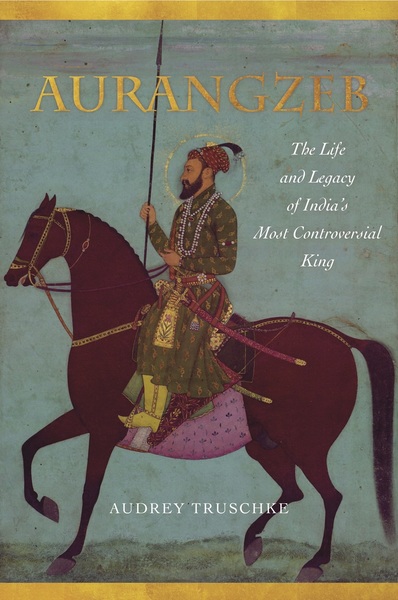
Aurangzeb: The Life and Legacy of India's Most Controversial King


The Mughal emperor Aurangzeb Alamgir is one of the most hated men in Indian history. Widely reviled as a religious fanatic who sought to violently oppress Hindus, he is even blamed by some for setting into motion conflicts that would result in the creation of a separate Muslim state in South Asia. In her lively overview of his life and influence, Audrey Truschke offers a clear-eyed perspective on the public debate over Aurangzeb and makes the case for why his often-maligned legacy deserves to be reassessed.

Aurangzeb was arguably the most powerful and wealthiest ruler of his day. His nearly 50-year reign (1658–1707) had a profound influence on the political landscape of early modern India, and his legacy—real and imagined—continues to loom large in India and Pakistan today. Truschke evaluates Aurangzeb not by modern standards but according to the traditions and values of his own time, painting a picture of Aurangzeb as a complex figure whose relationship to Islam was dynamic, strategic, and sometimes contradictory. This book invites students of South Asian history and religion into the world of the Mughal Empire, framing the contemporary debate on Aurangzeb's impact and legacy in accessible and engaging terms.


read review here @ Daily Times by Ayesha Rafiq
The book enacts a fascinating reassessment of Aurangzeb, by recognizing him as a product of his age, as opposed to previous research that makes the elementary mistake of judging Aurangzeb by modern sensibilities. Aurangzeb’s actions do begin to make sense, when he is placed within the context of Indian codes of conduct and values rather than within the context of twenty first century codes and values. 

Monday, June 5, 2017

Aurangzeb: The Man and the Myth

If history must be rewritten, the task is best left to a professional historian. In her little monograph on Aurangzeb, Audrey Truschke tries to rescue the most poorly-understood Mughal monarch from the soap opera scriptwriters of contemporary politics, who cast him as the greatest bigot in Indian history. Hindu-Muslim polarisation, she reminds the reader, is a modern game, with modern trophies and payouts which medieval India did not anticipate.

In Truschke’s words, Aurangzeb was man of his time. To single him out as a despot label him a bigot is a gross misrepresentation. We can only do justice to his life if things are viewed in context.

Truschke attributes the caricature of the bigoted Aurangzeb to later colonial history, which constructed the “eastern potentate” as a malevolent clown, with the political objective of showing British rule as enlightened by contrast. It follows, quite ironically, that the currently popular nativist readings of Muslim rule are effectively reviving a long-dead colonial project.

read more here @ Indian Express and @ Hindustan Times


Saturday, April 8, 2017

The Battle for Rama: Case of the Temple at Ayodhya

The sanctity of Ayodhya as the birthplace of Lord Rama, which has been questioned repeatedly by leftist historians, has been vouched for by not just "Hindu religious scriptures" but observers of diverse stripes across time.


From Persian works of the Medieval era to sanads issued by Mughals in the eighteenth century, ‘Muslim’ sources that acknowledge the disputed territory as Ram Janmabhoomi, for instance, have seldom been cited in mainstream discourse.

Meenakshi Jain’s The Battle for Rama includes an account of various such sources in history, shining a new light on the city, and also counters popular arguments.

read more here @ Swarajya