Sunday, November 3, 2019

Review: Russia's Women Snipers


I have lately read two compelling books on two very different, and yet very similar, women who voluntarily entered into military service for their country.
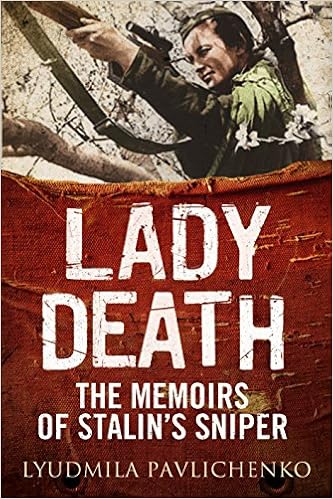
The first "Lady Death" is the story of Lyudmila Pavlichenko, one of over 2000 female snipers, yet one of the more well-known names with 309 recorded kills, including 29 enemy sniper kills, to her name. After being "retired" from active duty, she visited the USA and UK, before returning to train other snipers.

So, a little more about Lyudmila: born in today's Ukraine, Lyudmilia had an affinity with athletics and sports, and was a sharp shooter from an early age. She married at the tender age of 16, had one child, before divorcing her husband. Entering university, studying history and competing in athletics. Following the German invasion of Russia in 1941, Lyudmila signed on to join the infantry in Odessa, eventually being assigned to the 25th Chapayev Rifle Division due to her skill with the rifle. She fought in Odessa, Crimea, racking up the confirmed kills. Wounded after only a year in combat, she became the poster-girl of the Red Army's propaganda machine. Touring the USA, she famously responded to reporters by saying: "... In the Soviet Union I am looked upon as a citizen, as a fighter, as a soldier for my country.” and that "“our women were on a basis of complete equality long before the war ..."  Highly decorated and achieving the rank of major, she trained other snipers until the end of the war, returning to finish her education and work as an historian. Suffering what is now documented as post traumatic stress disorder, Pavlichenko also had to deal with the rumours the rumor that she was nothing more than a propaganda myth actually started within the Soviet armed forces. There is the possibility that Pavlichenko’s own account of her time at the front may have been doctored by Soviet military censors — a very common occurrence at the time — there is no doubting that the woman herself was “the real deal.”  She died aged 58yo.


Because of chronic problems in finding the manpower to fulfill military and industrial tasks, the Soviet government recruited some 7.75 million women, not just to support the soldiers but to join the fight. Around a million women fought in various branches of the Soviet military. Some nursed and supported, as in other countries, but others drove tanks, operated machine guns, and flew fighter planes. Between 1941–1945, it was estimated that a total of 2,484 Soviet female snipers were functioning in this role, between then, credited with more than 12,000 confirmed kills, and of whom about 500 survived the war.

Joining up as a sniper was a strange experience for many women. Though the Soviet army as an institution accepted them, some individuals did not. Families urged their daughters to stay safely at home rather than to fight. Some officers looked down upon the women under their command, not believing that they could be effective combatants. But others were supportive, especially after they saw these women in action.

At recruiting offices, women had theirs braids cut off and were put into men’s uniforms, as there were none tailored to fit women. Then they were sent off to train. Some were specially selected for sniping because they demonstrated a skill. In other cases, this was simply the most convenient place to send them. Training was intense but also hurried. The USSR needed to get troops to the front to counter the German invasion. The women trained as snipers soon found themselves on the front, often hunting their prey amid cities ruined by siege. It was believed that women made the perfect sniper because they could endure stress and cold better than men, and they had “more patience” to wait for the perfect shot.

Snipers usually worked in pairs. Together, they found a place to hide away from the main Soviet forces. There they lay concealed by scenery and camouflage, watching for an opportunity. When an enemy presented himself, they would try to take him down with a single shot to the head. Then they would wait patiently again for their next target, silent and still, or move on if they believed they were in danger. 


As mentioned, Lyudmilia was one of many. Anorther who survived, yet was not as famous as Lyudmilia, was Yulia Zhukova, whose memoirs come to us in "Girl with a Sniper Rifle".

Front CoverYulia's story is slightly different in that she was no sharp-shooter prior to enlisting, which she saw as her patriotic duty. A sickly child who worked in the local factory to support the war effort, she was determined to contribute more. She was dedicated member of the Komsomol (the Soviet communist youth organization) and her parents worked for the NKVD. Completing her training at the central Women's Sniper School, by the time Yulia saw active service in East Prussia and Poland in 1944, female snipers were not unusual. Wounded, she returned to combat until the war ended. Unlike Lyudmilia, she was not a poster-girl for the Russians, but returned to her village and life, struggling to deal with and accept her part in the war; acceptance did not come until much later in life.


Both memoirs are highly readable offering a different yet similar view of their experiences - we often comment that fact is sometimes more enthralling than fiction.  Pavlichenko, the historian, would take a more academic approach, supplementing her diary with historical research; whilst Zhukova relied on memory, letters (that escaped being destroyed as she tried to forget her past) and remembrances of her fellow cadets. Both women were dedicated in their commitment to both Russia and the Russian war effort - "... dying for the motherland was considered a worthwhile sacrifice ...".  It is hoped that readers will discover, through both works, the comradery, strength of spirit, unflinching loyalty that these two women - and the many others like them - displayed in the face of the terror of war.  How many readers are left wondering whether or not they could do the same.


further reading:
Avenging Angels: Soviet Women Snipers on the Eastern Front, 1941-1945 by Lyuba Vinogradova
Soviet Women Snipers: of the Second World War by Youri Obratztsov
The Unwomanly Face of War: An Oral History of Women in World War II by Svetlana AlexievichHeroines of the Soviet Union 1941–45 by Henry Sakaida
Roza Shanina Russian Sniper by Robert Corrigan
Soviet Women in Combat: A History of Violence on the Eastern Front by Anna Krylova

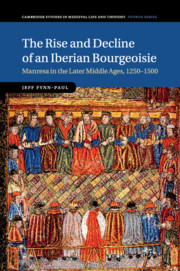
Rise and Decline of an Iberian Bourgeoisie by Jeff Fynn-Paul

The Rise and Decline of an Iberian BourgeoisieThe Rise and Decline of an Iberian Bourgeoisie is one of the first long-term studies in English of an Iberian town during the late medieval crisis. 

Focusing on the Catalonian city of Manresa, Jeff Fynn-Paul expertly integrates Iberian historiography with European narratives to place the city's social, political and economic development within the broader context of late medieval urban decline. Drawing from extensive archival research, including legal and administrative records, royal letters, and a cadastral survey of more than 640 households entitled the 1408 Liber Manifesti, the author surveys the economic strategies of both elites and non-elites to a level previously unknown for any medieval town outside of Tuscany and Ghent. 

In a major contribution to the series, The Rise and Decline of an Iberian Bourgeoisie reveals how a combination of the Black Death, royal policy, and a new public debt system challenged, and finally undermined urban resilience in Catalonia.

Medieval Lucca by M. E. Bratchel

Cover for 

Medieval Lucca


Although there are many books in English on the city and state of Lucca, this is the first scholarly study to cover the history of the entire region from classical antiquity to the end of the fifteenth century. At one level, it is an archive-based study of a highly distinctive political community; at another, it is designed as a contribution to current discussions on power-structures, the history of the state, and the differences between city-states and the new territorial states that were emerging in Italy by the fourteenth century.

There is a rare consensus among historians on the characteristic features of the Italian city-state: essentially the centralization of economic, political, and juridical power on a single city and in a single ruling class. Thus defined, Lucca retained the image of an old-fashioned, old-style city-republic right through until the loss of political independence in 1799. No consensus exists with regard to the defining qualities of the Renaissance state. Was it centralized or de-centralized; intrusive or non-interventionist? The new regional states were all these things. And the comparison with Lucca is complicated and nuanced as a result.

Lucca ruled over a relatively large city territory, in part a legacy from classical antiquity. Lucca was distinctive in the pervasive power exercised over its territory (largely a legacy of the region's political history in the early and central middle ages). In consequence, the Lucchese state showed a marked continuity in its political organization, and precociousness in its administrative structures. The qualifications relate to practicalities and resources. The coercive powers and bureaucratic aspirations of any medieval state were distinctly limited, whilst Lucca's capacity for independent action was increasingly circumscribed by the proximity (and territorial enclaves) of more powerful and predatory neighbours.

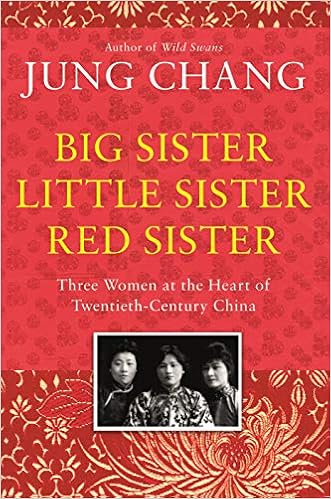
The Forgotten Women Who Shaped China in the 20th Century

In her new book, Big Sister, Little Sister, Red Sister: Three Women at the Heart of Twentieth-Century China, Jung Chang gets to the heart of China's best known modern day fairy tale - that of the Soong Sisters. It was sometimes said that 'One loved money, one loved power and one loved her country', but there was far more to the Soong sisters than these caricatures. As China battled through a hundred years of wars, revolutions and seismic transformations, each sister played an important, sometimes critical role, and left an indelible mark on history.

Red Sister, Ching-ling, married Sun Yat-sen, founding father of the Chinese republic, and later became Mao's vice-chair. Little Sister, May-ling, was Madame Chiang Kai-shek, first lady of the pre-Communist Nationalist China and a major political figure in her own right. Big Sister, Ei-ling, was Chiang's unofficial main adviser. She made herself one of China's richest women - and her husband Chiang's prime minister. All three sisters enjoyed tremendous privilege and glory, but also endured constant attacks and mortal danger. They showed great courage and experienced passionate love, as well as despair and heartbreak. The relationship between them was highly charged emotionally, especially once they had embraced opposing political camps and Ching-ling dedicated herself to destroying her two sisters' world.

Image result for Soong sistersBig Sister, Little Sister, Red Sister is a gripping story of love, war, exile, intrigue, glamour and betrayal, which takes us on a monumental journey, from Canton to Hawaii and New York, from exiles' quarters in Japan and Berlin to secret meeting rooms in Moscow, and from the compounds of the Communist elite in Beijing to the corridors of power in democratic Taiwan. In a group biography that is by turns intimate and epic, Jung Chang reveals the lives of three extraordinary women who helped shape the history of twentieth-century China.

read more here @ Time and The Soong Sisters Film

Atmospheric Pressure: The Big Sleep at Eighty

If an octogenarian Big Sleep is a shocking thought, consider that Chandler was already fifty-one when his vanguard mystery saw light of day. Chicago-born but taken young to Victorian London, he’d packed an English public school education along with an interest in poetics, and re-crossed the Atlantic before the First World War. He was in his mid-twenties then, in need of a future, and—taking the long view—the move back worked out for him. Chandler learned book-keeping, went to war himself, made and then unmade himself as a California oil executive (the unmaking just one consequence of testing seriously high on alcohol for most of a lifetime). Finally, down and out of a job in Depression-era LA, he turned to pulp writing. Not as a slumming poet, but as a man eyeing a craft he thought he could learn. Only get the hang of it and the pulp magazines were paying out a penny a word.

read more by Janet Roger @ CrimeReads

Saturday, November 2, 2019

Review: the Caribbean Irish by Miki Garcia

48541222Synopsis: The Caribbean Irish explores the little known fact that the Irish were amongst the earliest settlers in the Caribbean. They became colonisers, planters and merchants living in the British West Indies between 1620 and 1800 but the majority of them arrived as indentured servants. This book explores their lives and poses the question, were they really slaves? As African slaves started arriving en masse and taking over servants' tasks, the role of the Irish gradually diminished. But the legacy of the Caribbean Irish still lives on. 


This, for me, was a fascinating read as much of what I have read in the past relating to Irish history has been focused on the country itself. It was no news to me that a great many Irish left their homeland following war and the Famine, whether voluntarily or not - my own family arrived in Australia in less than auspicious circumstances. And it is only lately, in this last decade, that I have begun specifically exploring the full extent of the reach of Irish migration to Spain, South America, and now the Caribbean - places, except for Spain, that I was unfamiliar with. So, in addition to the recently read Paisanos: The Forgotten Irish Who Changed the Face of Latin America by Tim Fanning, I will add this tome by Miki Garcia, as a must read.

Garcia begins the story of the Irish in the Caribbean from the 17th Century, when Ireland like England was under the Cromwellian thrall following the Royalist defeat in the English Civil War. She refers to Ireland as " ... a prisoner of geography .." and for all intents and purposes, this is where it all began - with Irish prisoners, whether of war or circumstance. In an effort to clear out the prisons of the destitute, the political and criminal elements, the workhouses, transportation seemed the solution. Under the Act of Settlement of Ireland 1652, what could only be described as ethnic cleansing began in earnest. Transportation agents were employed to ensure that quotas were met and the means in which they succeeded was often overlooked - children were kidnapped, men were press-ganged, women were lied to, promises were made, people with no visible means of support, including widows and wives of serving soldiers, were swept up and shipped off. Some paid their way while others opted to work off the costs (a bit like today's human trafficking schemes). There are no actual numbers to quantify how many people ended up in the Caribbean - there were no official records kept by the less than scrupulous transportation agents; many people were misidentified (labelled English rather than Irish - or vice versa) - AND, to top it all off, this wasn't just an English thing - the Dutch, the French and the Spanish were all involved in the shipment of Irish to the Caribbean!

Related image

So where does this leave us now - firstly with those that came voluntarily - soldiers, explorers, adventurers, government officials and their families, traders and merchants. All of these folk needed servants - and here is where the bulk of the Irish come into it - as "indentured servants" - refer above as to how they arrived, though many in government considered it "... a measure beneficial to Ireland ..."

For the most part, Garcia enlightens us about the system of the indentured servant. Upon arriving, many Irish were "sold" as servants for a specific period - usually seven years. They were treated not much better than actual slaves but more on this later. Families were often separated, they were still the victims of humiliation and discrimination, the subjects of anti-Irish laws which also restricted their travel; they were the subjects of vigorous scrutiny with the government always fearing some sort of rebellion. After their period of employment was over, these servants were freed and they were usually paid in goods (their lives equivalent to pounds of tobacco, sugar or cotton). There was no guarantee of employment afterwards (only if you were skilled labour), and often they were then farmed out again (as indentured servants) to other colonies.

Garcia talks about the main industries in the Caribbean - tobacco, sugar and cotton, and on which islands they were prevalent. And this is an important component of the Irish history in the Caribbean as the introduction of slaves from Africa changed things for them on a considerable scale.

The production of sugar coincided with an increase in the African slave trade but it was not the starting point as this was already in existence across the Caribbean (though not to the extent as is commonly thought). As a result of this increase, the need for Irish servants decreased; their treatment and punishments worsened as slaves were considered to be a more valuable commodity - retained for the duration of their life rather than for a set period of employment - so no effort was spared to make the lives of the Irish any easier - their standard of living decreased to the point where I guess many might have wondered whether the grass was actually greener.
So, across how many islands in the Caribbean were the Irish spread - Garcia gives us a summary so that we don't have to do the leg-work ourselves - and it turns out to be quite a lot!

But back to the main topic - how the Irish slave myth was made. And it all boils down to terminology. The Irish in the Caribbean were not there as slaves. They arrived under the heading of one of four groups: willing and volunteers; involuntary; child labour; enforced (ie: prisoners). The last three groups were "sold" on arrival, though could not freely specify the length of their contract, whilst the last group were considered servants for life - without indenture. Observance of their treatment could be construed by some as giving rise to the myth of slavery. Garcia explains the terminology for us: an indentured servant was contracted for a period of years and then were given their freedom. A slave was the personal property of another - for life - and by default, so too were their descendants. The slave codes of the late 1600s were set up to differentiate between the two.

As a side note, the slave trade in the Caribbean ended in 1834. Large scale migration ended c.1841, and though the Irish were still encouraged to migrate, numbers were much smaller.

For me, this was a valuable insight into the Irish diaspora as well as the history of the British West Indies. As this was not really my field of expertise, I had no idea that Europeans supplanted the native Amerindian populations; that the Irish were transported in their hundreds of thousands (willingly or not) before the introduction of African slaves; and that once there, there was frequent cross migration between the islands and the Amazon basin.

Garcia's narrative style makes it easy to follow this tangled web, At times it feels as if you are sitting across from her having a conversation. It is easy, after reading this, to understand how the Irish slave myth arose and it is a topic well worth exploring further. Garcia's book will start you on your journey.


so in the words of the Beach Boys' song, Kokomo
Aruba, Jamaica, ooh I want to take ya,
Bermuda, Bahama, come on pretty mama
Key Largo, Montego, baby why don't we go, Jamaica .....

further reading:
To Hell or Barbados: The ethnic cleansing of Ireland by Sean O'Callaghan
White Cargo: The Forgotten History of Britain's White Slaves in America by Don Jordan, Michael Walsh
If the Irish Ran the World: Montserrat, 1630-1730 by Donald H. Akenson
Ireland, Slavery and Anti-Slavery: 1612-1865 by N. Rodgers
How the Irish Became White by Noel Ignatiev
To Shed a Tear: A Story of Irish Slavery in the British West Indies by Lawrence R. Kelleher


Child Emperor Rule in the Late Roman West, AD 367-455 by Meaghan A. McEvoy

Cover for 

Child Emperor Rule in the Late Roman West, AD 367-455


In this book, McEvoy explodes the myth that the remarkable phenomenon of the late Roman child-emperor reflected mere dynastic sentiment or historical accident. Tracing the course of the frequently tumultuous, but nevertheless lengthy, reigns of young western emperors in the years AD 367-455, she looks at the way in which the sophistication of the Roman system made their accessions and survival possible. 

The book highlights how these reigns allowed for individual generals to dominate the Roman state and in what manner the crucial role of Christianity, together with the vested interests of various factions within the imperial elite, contributed to a transformation of the imperial image - enabling and facilitating the adaptation of existing imperial ideology to portray boys as young as six as viable rulers. It also analyses the struggles which ensued upon a child-emperor reaching adulthood and seeking to take up functions which had long been delegated during his childhood.

Through the phenomenon of child-emperor rule, McEvoy demonstrates the major changes taking place in the nature of the imperial office in late antiquity, which had significant long-term impacts upon the way the Roman state came to be ruled and, in turn, the nature of rulership in the early medieval and Byzantine worlds to follow.

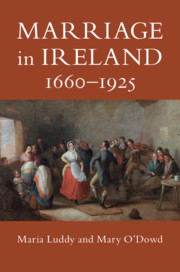
Marriage In Ireland 1660-1925 by Maria Luddy & Mary O;Dowd

Marriage in Ireland, 1660–1925What were the laws on marriage in Ireland, and did church and state differ in their interpretation? How did men and women meet and arrange to marry? How important was patriarchy and a husband's control over his wife? And what were the options available to Irish men and women who wished to leave an unhappy marriage? 

This first comprehensive history of marriage in Ireland across three centuries looks below the level of elite society for a multi-faceted exploration of how marriage was perceived, negotiated and controlled by the church and state, as well as by individual men and women within Irish society. 

Making extensive use of new and under-utilised primary sources, Maria Luddy and Mary O'Dowd explain the laws and customs around marriage in Ireland. Revising current understandings of marital law and relations, Marriage in Ireland, 1660–1925 represents a major new contribution to Irish historical studies.

Thursday, October 31, 2019

The Leopard and the Lily by Marjorie Bowen

The Leopard and the Lily by [Bowen, Marjorie]In the year 1444, Francois II reigned in Brittany.

Son of the great Duke, Jean V, he came to the throne in a time of peace. There was perfect friendship between him and his two brothers, and the wars that tore France did not disturb Brittany, which remained strong and respected.

That is, until Guy de Montauban came to the court.

A poor, penniless Breton noble, Guy befriended the Duke and, over the course of five years, his influence managed to spread. His power grew until the Duke was a mere puppet in his hands – with Brittany slipping fast into a state of internal disorder and weakness. And, with the country smote into factions, quarrels eventually spread into civil war.

It seemed that, by the mere chance infatuation of the Duke, Guy was in the powerful position of dictating to the reigning Prince and, if he willed, using the whole country for his own sport…