Friday, May 8, 2020

Review: The Doom List by Gerard O'Donovan

The Doom ListSynopsis: The Doom List - you'd rather be dead than be on it: the intriguing new 1920s mystery featuring Irish-born cop turned private investigator Tom Collins.

July, 1922. Newly-appointed 'movie czar' William H. Hays is about to arrive in town on a single-minded mission to clean up Hollywood. He is said to be compiling a list of 'undesirables' whom he plans to bar from screen work. They call it the Doom List.

With the industry in the grip of fear and paranoia, Hollywood's hottest young director Rex Ingram is determined that no hint of scandal should mar the premiere of his new movie, The Prisoner of Zenda, and hires private investigator Tom Collins, a fellow Irishman, with instructions to protect his leading lady's reputation at all costs. But, as Collins discovers, Barbara La Marr isn't the only member of the cast hiding a dangerous secret.

Meanwhile, a body is discovered in the Baldwin Hills to the south of the city. Could there be a connection? Against his better judgement, Collins is drawn into a case of scandal, forbidden love, blackmail . . . and cold-blooded murder.


This quite neatly follows on from "The Long Silence" which is set in February 1922 and has Tom investigating the disappearance of an actress with close links to the recently murdered director, William Desmond Taylor.

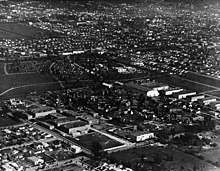
Hollywood 1922
Hollwood started out as a new land development in the 1880s.  It wasn't until 1910 that the first motion picture company - the Nestor Motion Picture Company- set up in Hollywood, which - unlike the East Coast where the majority of films were made - had ideal weather conditions and easy access to locations. The following year, four major film companies – Paramount, Warner Bros., RKO, and Columbia – had their studios in Hollywood, as did several minor companies and rental studios.

Rex Ingram in Who's Who on the Screen.jpg
Rex Ingram
Tom is no longer attached to the studios as their in-house "fixer" - he has managed to open an office of his own, and through long time "friend" Fay Parker, he meets director Rex Ingram. Rex has just finished "The Prisoner of Zenda" for Metro Studios and is about to hit the publicity trail, whilst in the process of making yet another film, Black Orchids (renamed Trifling Women).

Barbara La Marr Photoplay May 1923.jpg
Barbara La Marr
However, his leading lady, Barbara La Marr is not the only one among his cast who has secrets they would much prefer to remain hidden, especially since moral crusader Will H Hays is on his way to clean up the fledgling Tinseltown.  An up and coming young Mexican star Ramon, rumoured to be the next Valentino, has problems of his own and Barbara asked Tom to help him out. Hollywood at this time had a burgeoning Mexican population, attracted by the closeness to the border and the multitude of new employment opportunities that arose from the movie industry.

Ramon Novarro in The Blue Book of the Screen.jpg
Ramon Novarro
Hollywood had much to hide by way of scandals from secret pregnancies and abortions, drug and alcohol addiction, homosexuality, affairs, violence and murder.  Many stars burnt bright then faded back into obscurity; the lucky ones stuck around a little longer - it was the movie-going public who could make or break both a film and its stars, so the studios employed "fixers" to cover up an indiscretions and buy off silence.  Unfortunately, not everything could be swept under the carpet.


Will-H-Hays.jpg
Will H Hays
In January 1922 Will H Hays was been appointed as chairman of Chairman of the Motion Picture Producers and Distributors of America (MPPDA) shortly after the organization's founding. The goal of the organization was to renovate the image of the movie industry in the wake of the scandal surrounding the alleged rape and murder of model and actress Virginia Rappe, of which film star Roscoe "Fatty" Arbuckle was accused, and amid growing calls by religious groups for federal censorship of the movies. Hiring Hays to "clean up the pictures" was, at least in part, a public relations ploy and much was made of his conservative credentials, including his roles as a Presbyterian deacon and past chairman of the Republican Party. However, at the time of our story, Hays had not yet made a name for himself or trouble for the studios - but the implied threat was very real for some. 


I really enjoyed this second trip into old Hollywood - silents films are still the rage, talkies are barely on the scene, actors and actresses were glamourous, scandalous, mysterious and sometimes murderous. The weaving of some of these famous Hollywood folk into the story gives it a bit more of an edge, and O'Donovan again uses events from this time as a backdrop.

Whilst it is not necessary to have read the first in this series, I would recommend that you do as there are references to previous events in this new outing - events which have never quite been closed.

Film Noir Man Smoking Stock Video Footage - 4K and HD Video Clips ...In Tom Collins, ex-cop, ex-studio fixer, now private inquiry agent, O'Donovan gives us a character straight from the pages of the classic noir playbook - right up their with Spade, Hammer or Marlowe.  I enjoyed the style of storytelling, which provided enough plot twists and turns and diversions to keep the reader firmly planted on the edge of their seat.  You get a true sense of what it was like back in the early days of Hollywood and Los Angeles.


Check out
- Silent Era: The Silent Film Website
- Wikipedia: real life Hollywood Fixer, Eddie Mannix
- Atlas Obscura: the Fixers who buried Old Hollywood's biggest scandals

Sunday, May 3, 2020

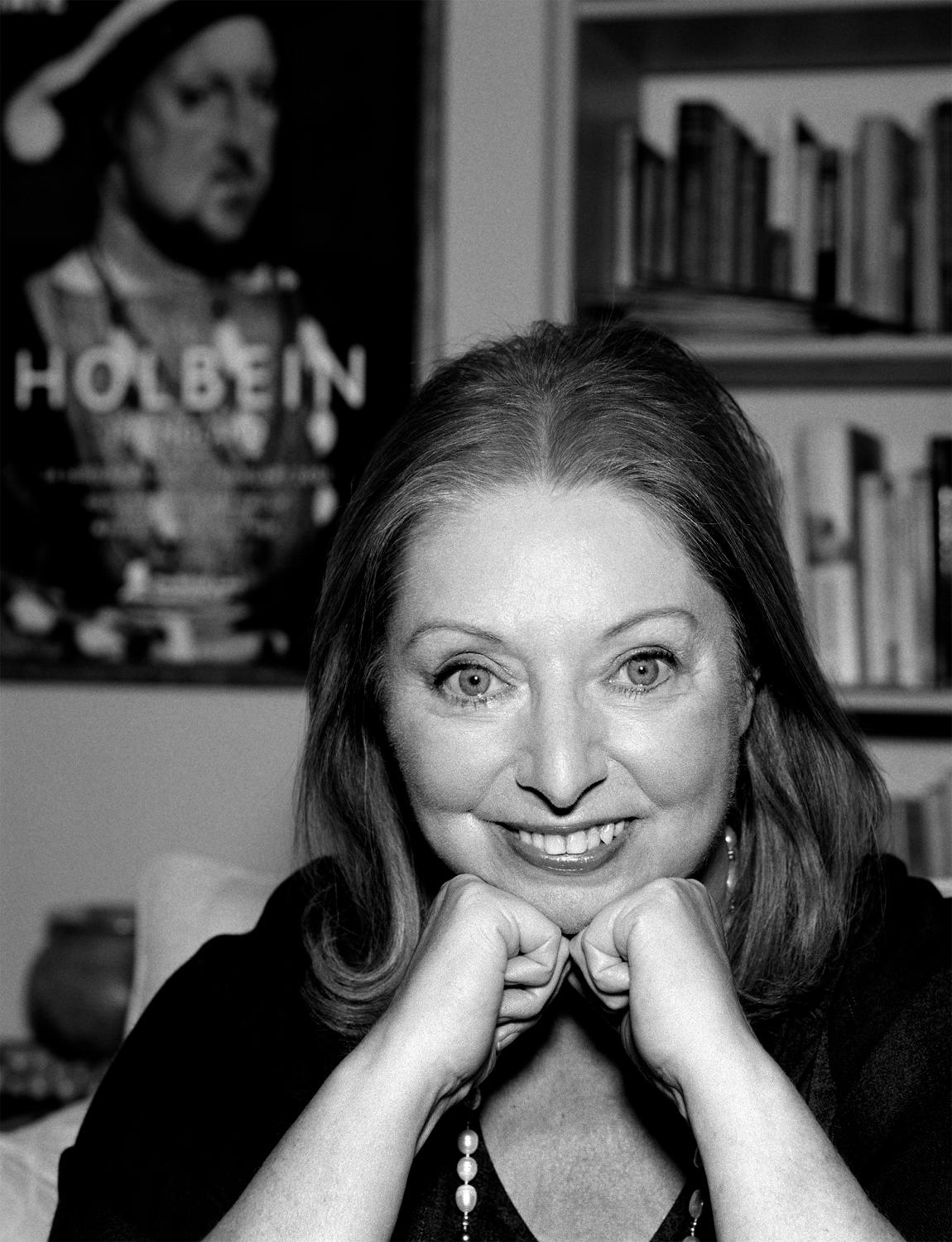
The unquiet mind of Hilary Mantel

From New Statesman (October 2012): 
A portrait of the author of the Booker-winning Wolf Hall. She talks to Sophie Elmhirst about memory, class, Bring Up the Bodies and the unsettled writer’s life.

Last year, once she’d realised that she was writing not one, not two, but three books about Thomas Cromwell, once she’d realised that the second was going to end with Anne Boleyn’s beheading, once the title – Bring Up the Bodies – had struck her as she wrote the words (it echoes the Tower of London order to bring the accused to trial), once she had told her publishers that they’d have a second instalment sooner than they’d thought (you can imagine their fists punching the air), once they had told her that they wanted to publish in the spring of 2012, Mantel began to write.

This was not writing that can be identified as writing in the ordinary sense: spasmodic, agonised, write-delete-write-delete. These were eight-, ten-, 12-hour days, marathons of prose, a 400-page book written in five months, between May and September 2011. (Don’t be encouraged. The words spilled only because Mantel had done long, professorial research into her subject. She first had the idea for a book about Thomas Cromwell in her mid-twenties; she had read everything – all the books, all the books about the books and all the original sources; she filled red Chinese chests with meticulous notes and cards and folders of information. She checked every fact, every source, every date, every letter, every name. Her Cromwell books are a combination of wild imagining and unimpeachable accuracy.)

read more here @ New Statesman and The Gentlewoman


Books: Marshal Boucicaut

The Chivalric Biography of Boucicaut, Jean II le Meingre translated by Craig Taylor & Jane H.M. Taylor
First English translation of the chivalric biography of one of France's leading figures of the middle ages.

Jean le Meingre, Maréchal Boucicaut (1364-1421), was the very flower of chivalry. From his earliest years at the royal court in Paris, he distinguished himself in knightly pursuits: sorties against seditious French nobles, ceremonial jousts against the English enemy, crusading in Tunisia and Prussia, the composition of courtly verses, and the establishment of a chivalric order for the defence of ladies, the Order of the Enterprise of the White Lady of the Green Shield. He was named Marshal of France at the age of only 27.

His chivalric biography, finished in 1409, is one of the most important accounts of the life of a knight from the Middle Ages. Whilst full of praise, it is also highly partisan and carefully selective; it glosses over the darker, much less successful, side of his career - in particular his participation in the catastrophic Nicopolis crusade (1396) and his governorship of Genoa, which came to an end shortly after the completion of the biography, when a rebellion forced him to leave the city, five years before his capture at the battle of Agincourt in 1415 and death in England in 1421.

This first English translation makes available to a wider audience a text that sheds light on the history of France, on crusading in Prussia and the Mediterranean, and on the complicated politics of Italy and the papacy during the Great Schism. It is a highly important contribution to our understanding of chivalric mentalities and attitudes in late-medieval France. It is presented with an introduction and notes.


A Virtuous Knight: Defending Marshal Boucicaut (Jean II Le Meingre, 1366-1421) by Craig Taylor
A radical re-interpretation of the chivalric biography of Boucicaut.

The Livre des fais du bon messire Jehan le Maingre (1409) is one of the most famous chivalric biographies of the Middle Ages. It presents Jean II Le Meingre, known as Boucicaut (1366-1421), as an ideal knight and role model, and has frequently been seen by modern scholars as a last-ditch effort to defend traditional chivalric values that were supposedly in decline. 

Here, however, Craig Taylor argues that the biography is a much more complex and interesting text, fusing traditional notions of chivalry with the most fashionable new ideas in circulation at the French court at the start of the fifteenth century. Rather than a nostalgic criticism of contemporary knighthood, it should be seen as a showcase of the latest ideas on chivalry, written to renew the enthusiasm of the great French princes for a man who was in grave danger of falling out of favour: its purpose was to celebrate and to defend a beleaguered Boucicaut against his critics at the royal court, and to explain his actions as governor of Genoa, his failed crusading enterprises in the Eastern Mediterranean and his unsuccessful efforts to broker a solution to the Papal Schism.

Books: Notable Nobles

Sir Francis Drake: The Queen`s Pirate by Harry Kelsey
"Sir Francis Drake" by Harry KelseyIn this lively and engaging new biography, Harry Kelsey shatters the familiar image of Sir Francis Drake. The Drake of legend was a pious, brave, and just seaman who initiated the move to make England a great naval power and whose acts of piracy against his country’s enemies earned him a knighthood for patriotism. Kelsey paints a different and far more interesting picture of Drake as an amoral privateer at least as interested in lining his pockets with Spanish booty as in forwarding the political goals of his country, a man who became a captain general of the English navy, but never waged traditional warfare with any success.

Drawing on much new evidence, Kelsey describes Drake’s early life as the son of a poor family in sixteenth-century England. He explains how Drake dabbled in piracy, gained modest success as a merchant, and then took advantage of the hostility between Spain and England to embark on a series of daring pirate raids on undefended Spanish ships and ports, preempting Spanish demands for punishment by sharing much of his booty with the Queen and her councillors. Elizabeth I liked Drake because he was a charming rogue, and she made him an integral part of her war plans against Spain and its armada, but she quickly learned not to trust him with an important command: he was unable to handle a large fleet, was suspicious almost to the point of paranoia, and had no understanding of personal loyalty. For Drake, the mark of success was to amass great wealth, preferably by taking it from someone else and the primary purpose of warfare was to afford him the opportunity to accomplish this.


Sir John Hawkins by Harry Kelsey
"Sir John Hawkins" by Harry KelseyAlthough his cousin Sir Francis Drake is more famous, Sir John Hawkins (1532–1595) was a more successful seaman and played a pivotal role in the history of England and the emergence of the global slave trade. Born into a family of wealthy pirates, Hawkins became fascinated by tales of the riches of foreign lands. Early in his career he led an illegal expedition in which he captured three hundred slaves in Sierra Leone and transported them to the West Indies. There he traded them for pearls, hides, and sugar--thus giving birth to the British slave trade. His voyages were so lucrative that Queen Elizabeth herself sponsored subsequent missions.

Discouraged from his career as a pirate by a near-fatal encounter with angry Spanish troops, Hawkins spent much of his later life in England at the service of the queen. Although he committed treason, murder, and adultery at various points in his career, he was nonetheless knighted in 1588 for his role in defeating the Spanish Armada.


Martin Frobisher: Elizabethan Privateer by James McDermott
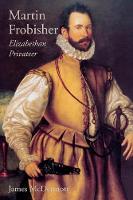
"Martin Frobisher" by James McDermottAdventurous and willful, the swashbuckling Martin Frobisher was both a brave sea-commander who served Elizabeth I with distinction and a privateer who single-mindedly pursued his own interests. This highly entertaining biography provides the first complete picture of the life and exploits of Frobisher—from his voyages in search of the fabled Northwest Passage to his courageous resistance to the Spanish Armada and his exploits as privateer and sometime pirate. The book explores Frobisher’s vigorous personality and its manifestation in the turbulence of his career and his impact on others. It also illuminates the robust world of maritime enterprise in England in the sixteenth century, when the shifting objectives of the Elizabethan age brought together felons, merchants, and great officers of state.

James McDermott, a leading authority on Martin Frobisher and the Northwest Passage, offers a riveting account of the explorer, based on all extant manuscript and documentary sources. McDermott sets aside the distortions of Frobisher’s popular reputation as a hero and offers instead a richly detailed portrait of a fascinating but flawed man whose ceaseless search for wealth and fame defined his extraordinary life.


Arthur Tudor, Prince of Wales: Life, Death and Commemoration edited by Steven Gunn & Linda Monckton
The Tudor king who never was: Arthur's life and death newly examined.Prince Arthur (1486-1502), son of Henry VII and Elizabeth of York, was the great hope of early Tudor England. Today he is largely forgotten, remembered only as Henry VIII's shadowy elder brother, the first husband of Katherine of Aragon. But in his lifetime Arthur counted for much more than that. Groomed for kingship, sent to govern Wales and the Marches, married to secure the Spanish alliance, celebrated in portraits, poems and pageants, Arthur stood at the centre of his father's plans. His death brought a grand funeral and a lasting monument, the chantry chapel covered in Tudor badges that still stands in Worcester Cathedral. 

These richly illustrated essays, by historians, art historians and archaeologists, investigate Arthur's life and posthumous commemoration from every angle. They set him in the context of the fledgling Tudor regime and of the religion, art and architecture of late medieval death and memory. They close with an exploration of the re-enactment of Arthur's funeral at Worcester in 2002, an event that sought to rescue the prince from the oblivion that has been his lot for five hundred years.


The History of William Marshal translated by Nigel Bryant
The History of William Marshal (0)The History of William Marshal is the earliest surviving biography of a medieval knight -- indeed it is the first biography of a layman in the vernacular in European history. Composed in verse in the 1220s just a few years after his death, it is a major primary source not simply for its subject's life but for the exceptionally stormy period he had had to navigate. It could hardly be other than major, given that its subject was regarded as the greatest knight who ever lived and that he rose in the course of his long life to be a central figure in the reigns of no fewer than four kings: Henry II, Richard Lionheart, John and Henry III. This remarkable biography was brought to light in the late nineteenth century thanks to a determined hunt for the manuscript by its first editor, the eminent French scholar Paul Meyer. It gives a vigorous account of events, full of vivid detail and passionate comment and frequent flashes of humour. And it gives revelatory insights into the attitudes and perceptions of the time, especially into the experience and nature of warfare in the late twelfth and early thirteenth centuries.

But while its quality and value have been long acknowledged, the poem has sometimes been deemed less than impartial and objective. Commissioned as it was by Marshal's own son, and intended not least for his family's fond enjoyment, it is little surprise that the poem's adulation of its subject is rarely qualified by regrets for failings or what are nowadays referred to as "errors of judgement". Marshal is presented as -- to all intents and purposes -- flawless: not simply a magnificent warrior, supreme in tournaments and battles alike, but a paragon of the key chivalric virtues of prowess, largesse and unfailing loyalty. But this is not surprising: the idea of the fallible hero is a modern invention, and the writer of this work - like Marshal himself -- was steeped in the old ideals of the chansons de geste as well as the more recent ideology of chivalry. In any case, there can be no denying that Marshal's achievements -- and sometimes his behaviour -- were by any standards extraordinary and seen as such by his contemporaries, and the poem corresponds with what we know of his life from other sources.


Hugh de Lacy, First Earl of Ulster: Rising and Falling in Angevin Ireland by Daniel Brown
This book charts the striking rise, fall and restoration of the first earl of Ulster, Hugh II de Lacy, described by one contemporary chronicler as 'the most powerful of the English in Ireland'. A younger son of the lord of Meath, de Lacy ascended from relatively humble beginnings to join the top stratum of Angevin society, being granted in 1205 the first earldom in Ireland by King John. Subsequently, in 1210, having been implicated in rebellion, Hugh was expelled from Ulster by a royal army and joined the Albigensian crusade against Cathar heretics in southern France. Unusually, after almost two decades in exile and a second revolt against the English crown, de Lacy was restored to the earldom of Ulster by King Henry III in 1227, retaining it to his death, c. 1242.

Situated in the north-east of Ireland, Ulster's remoteness from centres of colonial administration allowed Hugh de Lacy to operate beyond the normal mechanisms of royal control, forging his own connections with other powerful lords of the Irish Sea province. The fluidity of noble identity in frontier zones is also underlined by the career of someone who, according to his political needs, presented himself to different audiences as a courtly sophisticate, freebooting colonist, crusading warrior, or maurauding 'Irish' ruler.

The foundation for this study is provided by Hugh de Lacy's acta, provided as an appendix, and representing the first collection of comital charters in an Irish context. These cast fresh light on the wider themes of power and identity, the intersection of crown and nobility, and the risks and rewards for ambitious frontiersmen in the Angevin world.


John de Vere, Thirteenth Earl of Oxford (1442-1513): `The Foremost Man of the Kingdom' by James Ross
John de Vere, Thirteenth Earl of Oxford (1442-1513): `the Foremost Man of the Kingdom'First book to deal with de Vere's life and extraordinary career, during the Wars of the Roses and beyond.Earl of Oxford for fifty years, and subject of six kings of England during the political strife of the Wars of the Roses, John de Vere's career included more changes of fortune than almost any other. He recovered his earldom after the execution of his father and brother for treason, but his resistance to Edward IV led to a decade in prison. He escaped in time to lead Henry Tudor's vanguard at Bosworth in 1485 and subsequently enjoyed twenty-five years as perhaps "the foremost man of the kingdom", virtually ruling East Anglia for the king.
This is the first full-length study of de Vere's life and career. Through this lens it also tackles a number of broader themes. It reconsiders the role of the nobility under Henry VII, challenging the common perception of Henry as an anti-aristocratic king. It also explores East Anglian political society in the second half of the fifteenth century, how the earl came to dominate it, how successfully he exercised his power, and the personnel, including the Paston family, he used to run the region.


Humphrey Newton (1466-1536): an early Tudor Gentleman by Deborah Youngs
Humphrey Newton (1466-1536): An Early Tudor Gentleman
The public and political lives of the fifteenth- and early sixteenth-century gentry have been extensively studied, but comparatively little is known of their private lives and beliefs. Humphrey Newton of Pownall, Cheshire, offers a rare and fascinating opportunity to redress the balance, thanks to the fortunate survival of a commonplace book he compiled c.1498-1524. Drawing upon this unique manuscript, this interdisciplinary and multi-dimensional study of Newton explores his family life, landed estate, legal work, piety, and his literary skills [he composed nearly twenty courtly love lyrics]. It charts his social advancement and the self-fashioning of his gentle image, while placing him in the context of current discussions of gentry culture.

What makes Newton even more noteworthy is that he was among the unsung and little known stratum of English society historians have labelled the 'lesser' gentry. As such, this book provides the first comprehensive biography of an early Tudor gentleman.


Robert Grosseteste as Bishop of Lincoln: The Episcopal Rolls, 1235-1253 by Edited by Philippa M. Hoskin
Robert Grosseteste as Bishop of Lincoln: The Episcopal Rolls, 1235-1253Robert Grosseteste, teacher, scholar and pastor, remains one of the dominant figures of the medieval English church. A major influence on the early history of Oxford University, his writings on a wide range of theological and scientific subjects have been widely studied. His concern for pastoral care is also well attested; as bishop of Lincoln from 1235 until his death in 1253, he had the opportunity to exercise the pastoral office in the largest diocese in western Europe. But how did Grosseteste's theories of pastoral care work out in practice?

The study of Grosseteste's career as a diocesan bishop has been hampered by the relative inaccessibility of the records of his episcopate, published in an unsatisfactory edition in 1911 and long out of print. This completely new edition of Grosseteste's episcopal rolls makes it possible to take a fresh look at how he tackled the vexed issues of clerical ignorance, pluralism and non-residence in the aftermath of the reforms of the Lateran Council of 1215. They are presented here with an introductory study and elucidatory notes.


Roger of Lauria (c.1250-1305): "Admiral of Admirals" by Charles D. Stanton
Roger of Lauria (c.1250-1305): "Admiral of Admirals" (Warfare in History)Just before Vespers on 30 March 1282 at the Church of the Holy Spirit on the outskirts of Palermo, a drunken soldier of the occupying French forces of Charles of Anjou accosted a young Sicilian noblewoman. It sparked a bloody conflagration, the so-called War of the Sicilian Vespers, that would ultimately involve every part of the Mediterranean. The struggle for the coveted throne of Sicily eventually enmeshed all the great powers of medieval Europe - the pope, the Byzantine Emperor and the kings of France, England and Aragon.

Because the core of the Kingdom of Sicily was a wealthy, strategic island dominating the centre of the Mediterranean, the battles were fought mostly at sea. And in war at sea, a single figure proved pre-eminent: Roger of Lauria - Aragon's "Admiral of Admirals". In the course of some twenty years of naval combat, he orchestrated decisive victories in six pitched battles and numerous limited actions, never once suffering a defeat: a feat never equalled - not even by the legendary Lord Horatio Nelson.

Drawing from multiple Sicilian and Catalan sources as well as Angevin and Aragonese registers, this chronological narrative details the tactics and strategy Lauria employed to become the most successful galley fleet commander of the Middle Ages, while highlighting a crucial conflict at a pivotal point in European history, long overshadowed by the Hundred Years War.

Books: Medieval Spain

The Unconquered Knight: A Chronicle of the Deeds of Don Pero Niño, Count of Buelna by Gutierre Diaz de Gamez
The heroic exploits of the 15th-century Count of Buelna, including tournament glories, knightly romance and the bitter hardships of life on campaign.

Gutierre Diaz de Gamez entered the service of Pero Niño, count of Buelna, in 1402, when they were both about 23, and served as head of his military household for nearly fifty years. He began a chronicle of his master's deeds in about 1431, and it is this eyewitness account of the life of a knight, both in war and peace, which is translated here. 

It is written in praise of his master, but beneath the veneer of hero-worship a good deal of the reality of a knight's existence shows through: even in the prologue, Diaz de Gamez gives a bitter picture of the hardships of a military campaign: 'Knights who are at the wars eat their bread in sorrow; their ease in weariness and sweat... Mouldy bread or biscuit, meat cooked or uncooked, water from a pond or a butt, poor sleep with their armour still on their backs, the enemy an arrow-shot off...' On the other hand, he can evoke the glories of a tournament, in which his master excelled, and his triumphs as a military commander both by sea and land. It is a story full of colour, adventure and romance, and one which deserves its place in the chronicles of chivalry.


The Duke of Alba by Henry Kamen
"The Duke of Alba" by Henry KamenFerdinand Alvarez de Toledo, the third duke of Alba (1507–82), is known to history as “the butcher of Flanders.” The general who carried out Philip II’s repressive policies in the Netherlands, he was responsible for the massacre of thousands of men, women, and children, considering it better to lay waste an entire country than leave it in the hands of heretics. Alba came to represent for contemporaries as well as for future generations the unacceptable face of Spanish imperialism.

In this intriguing re-evaluation, Henry Kamen narrates the duke’s personal history, looking beyond the conventional image to reveal motives and to explain rather than simply to condemn. Kamen examines the early years of Alba’s life, his travels over the whole of Europe, and the complex military and political career that made him Spain’s leading general of the imperial age. Drawing on the duke’s rich and expressive surviving correspondence, Kamen explores Alba’s beliefs and considers his infamous actions within the contexts of his time and of the monarchs—Emperor Charles V and King Philip II of Spain—whom he served.


Phillip II by Henry Kamen
"Philip of Spain" by Henry KamenPhilip II of Spain—ruler of the most extensive empire the world had ever known—has been viewed in a harsh and negative light since his death in 1598. Identified with repression, bigotry, and fanaticism by his enemies, he has been judged more by the political events of his reign than by his person. This book, published four hundred years after Philip's death, is the first full-scale biography of the king. Placing him within the social, cultural, religious, and regional context of his times, it presents a startling new picture of his character and reign.

Drawing on Philip's unpublished correspondence and on many other archival sources, Henry Kamen reveals much about Philip the youth, the man, the husband, the father, the frequently troubled Christian, and the king. Kamen finds that Philip was a cosmopolitan prince whose extensive experience of northern Europe broadened his cultural imagination and tastes, whose staunchly conservative ideas were far from being illiberal and fanatical, whose religious attitudes led him to accept a practical coexistence with Protestants and Jews, and whose support for Las Casas and other defenders of the Indians in America helped determine government policy. Shedding completely new light on most aspects of Philip's private life and, in consequence, on his public actions, the book is the definitive portrayal of Philip II.


Commander of the Armada: The Seventh Duke of Medina Sidonia by Peter Pierson
"Commander of the Armada" by Peter PiersonThe seventh Duke of Medina Sidonia is best known as the man who led to defeat the Spanish Armada of 1588. This book by Peter Pierson is the first complete biography in any language of this important figure. Based on previously inaccessible documents from the Medina Sidonia archives, it offers fascinating material on sixteenth-century Spain and new and exciting details about the armada campaign.

Pierson begins by describing the Duke’s youth and his close ties to the court of Philip II. He discusses the Duke’s lifelong involvement with the shipping that navigated the treasure route from Spain to the Indies, his significant role in Philip’s successful quest for the Portuguese Crown, and his appointment as Captain General of the Ocean-Sea. Spain’s war with England dominates the central chapters of the book. Pierson relates how Medina Sidonia embargoed ships and recruited men for the armada, the largest fleet yet concentrated in early modern Europe, and he analyzes Philip’s choice of the Duke to command the armada. 

Pierson provides a radical reinterpretation of the armada campaign, and with the aid of ten superb maps and diagrams he reconstructs the positions of the two navies, the number and names of ships, and their movements from the fleet’s departure for England to the surviving vessel’s arrival home. Pierson continues with Medina Sidonia’s life after the armada campaign and discusses his second appearance on the world stage, as the unsuccessful defender of CĂ¡diz against a major Anglo-Dutch attack in 1596. 


"The Count-Duke of Olivares" by J. H. ElliottThe Count-Duke of Olivares: The Statesman in an Age of Decline by JH Elliott
A masterful biography of Don Gaspar de GuzmĂ¡n, Count Duke of Olivares—righthand advisor to Spain’s Philip IV, archrival of Cardinal Richelieu, and a central figure in seventeenth-century Europe. Written by the eminent historian J. H. Elliott and based on many original sources, this elegant book is a landmark in the study of a man and an age.


The Catalan Rule of the Templars: A Critical Edition and English Translation from Barcelona, Archivo de la Corona de AragĂ³n, `Cartas Reales', MS 3344 translated by J.M. Upton-Ward
The Catalan Rule of the Templars: A Critical Edition and English Translation from Barcelona, Archivo de la Corona de Arag�n, `cartas Reales', MS 3344The Knights Templar, part monastic order, part military force, lived by a firm code, or rule, which exists in differing versions. This Spanish version is a follow-up to J.M. Upton-Ward's highly successful edition of the French Rule. 

The introduction to this Catalan Rule, Barcelona Archivo de la Corona de AragĂ³n, Cartes Reales, MS 3344, discusses the content, language and dating of the manuscript. It also provides background information derived from the French Rule (which the reader may require for a fuller appreciation of the text - see author note below) on the circumstances of the Knights Templar.

There is a brief description of the provincial organisation of the Order with particular reference to the houses in Aragon, where it is most likely that the manuscript was used; a summary of clauses; and a concordance with de Curzon's 1886 edition of the French Rule. Compared to de Curzon's edition, the Barcelona text is incomplete, but it contains important clauses not found in other manuscripts. 

A partial transcription claiming to represent all the clauses without equivalents in de Curzon's edition was published in 1889, but it omitted several clauses now published here for the first time. 

Footnotes to the English translation elucidate the text; give biographical information on the named officers of the Order where possible; and indicate significant differences compared with the French Rule.


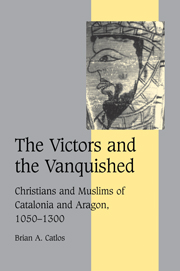
The Victors and the Vanquished: Christians and Muslims of Catalonia and Aragon, 1050–1300 by Brian A Catlos
The Victors and the VanquishedThis is a revisionary study of Muslims living under Christian rule during the Spanish 'reconquest'. It looks beyond the obvious religious distinctions and delves into the subtleties of identity in the thirteenth-century Crown of Aragon, uncovering a social dynamic in which sectarian differences comprise only one of the many factors in the causal complex of political, economic and cultural reactions. 

Beginning with the final stage of independent Muslim rule in the Ebro valley region, the book traces the transformation of Islamic society into mudéjar society under Christian domination. This was a case of social evolution in which Muslims, far from being passive victims of foreign colonisation, took an active part in shaping their institutions and experiences as subjects of the Infidel. Using a diverse range of methodological approaches, this book challenges widely held assumptions concerning Christian-Muslim relations in the Middle Ages, and minority-majority relations in general.


'The Mirror and the Light' Book Review

Hilary Mantel’s Wolf Hall was a high-cultural phenomenon. The novel, published in 2009, retold the story of the downfall of Sir (Saint) Thomas More and the rise of Thomas Cromwell: A Man for All Seasons, but with the good guy and bad guy reversed. In Mantel’s telling, More was a religious fanatic, an embodiment of the deliberate, persecuting medieval darkness, while Cromwell was the new man, an omni-talented, self-made son of a blacksmith whose virtues were above all else moderation and practicality. Written with a brilliant combination of arresting detail and swift movement, the novel won the Man Booker Prize (the “British Pulitzer”), as did its 2012 sequel Bring Up the Bodies. 

Then — nothing. The third book in what was announced as a trilogy was supposed to come out in 2018. Then, 2017 brought rumors of delay . . . 2018 . . . 2019 . . . The literati thought they knew why. While the Wolf Hall novels are fiction, their characters are, of course, historical figures. And Thomas Cromwell, after triumphing over More and Anne Boleyn, overseeing the dissolution of the monasteries, procuring Henry VIII’s marriages to his third and fourth wives, and significantly advancing the cause of Protestantism in England, was executed by orders of that monarch on July 28, 1540. If Mantel finished her trilogy, in other words, she was going to have to kill her hero.

Now the third book, The Mirror and the Light, is here. Read page by page — that is to say, taking the measure of the book by the quality of the prose — it is another masterpiece, a worthy successor to its forebears. There are some reasons, however, to think that the rumors were right — that the death of Cromwell presented a challenge for Mantel. Of the novel’s 754 pages, there is not a hint of trouble for Cromwell until around the 600th, and the crisis leading to his death does not break until about the 700th. This would not be a problem were there some other narrative arc Mantel was intent on tracing. But there isn’t, really. 

The Mirror and the Light, unlike Wolf Hall and Bring Up the Bodies, does not have a central conflict. In Wolf Hall, the clash with More and the struggle to secure Henry’s divorce and remarriage gave a narrative coherence to the work. In Bring Up the Bodies, Cromwell squared off in a zero-sum contest — death or absolute power — with Anne Boleyn. The Mirror and the Light begins where Bring Up the Bodies left off, just after the execution of Boleyn and her supposed lovers. Henry VIII, now a widower, is free to marry Jane Seymour, and does. Cromwell, having brought this state of affairs to pass, is master secretary (and soon lord privy seal), in fact if not in title the most powerful man in England.

read more here @ National Review


Who are East Anglia's greatest female authors?

Who are East Anglia’s greatest female authors? Here are 10 to get you started.

* Sarah Perry
* Ruth Rendell
* Rose Tremain
* PD James
* Esther Freud
* Anna Sewell
* Julian of Norwich
* Margery Kempe
* Liz Trenow
* Rachel Hore

read more here @ Eastern Daily Press

Historical Novelists Owe the Truth to Readers–and to History

Sharon Kay Penman for History News Network:
In an article that I did for National Public Radio in 2011, I described the past as uncharted territory, comparing it to visiting a country where we do not speak the language and depend upon the historical novelist to act as our translator. For that relationship to work, it must be based upon trust; we need to be able to rely upon a novelist’s interpretation of that past. So, truth matters. I would never have expected that statement to become controversial, but never has that bedrock value been under such relentless assault. As writers, we owe the truth to our readers—and to history. Many people accept what they read in a book or see on-screen as gospel, and that can give novelists and screenwriters more influence than even they realize. We need only think of Braveheart or Kingdom of Heaven, a visually striking film that transformed Balian d’Ibelin, one of the most influential noblemen in the Kingdom of Jerusalem, into an illegitimate French blacksmith. 

Historical novelists need to adhere to the known facts, whether they are writing of a battle, a rebellion, or the lives of the men and women caught up in these events. Writers must inevitably rely upon our imaginations to a great extent, for there are always blanks that must be filled in. Medieval chroniclers were indifferent to the needs of modern authors, neglecting to give us the date of a marriage or birth, the cause of death even of kings. 

When I am forced to fill in any significant blanks, I clear my conscience in my Author’s Notes. Since my readers often tell me how much they enjoy a writer’s “AN,” this is a win-win situation. Not all writers take it to the extremes that I do; the AN for one of my novels ran for eleven pages. But I feel disappointed when I finish a historical novel and then discover that the author has not included an AN. The best historical novelists—Bernard Cornwell and Margaret George to name just two--always offer this intriguing look behind the curtain of the creative process, telling us when they had to take liberties and why. And I think most readers are comfortable with this approach, as long as writers play fair and alert them when a diversion is coming. 

In insisting upon the importance of historical accuracy in novels, I am also making an argument that novels can add a valuable dimension to the study of history. I realize that my viewpoint is not universally accepted; to the contrary, some historians dismiss fiction as a superficial distraction from the real study of the past. I suppose it is only to be expected that I’d want to defend what is both my profession and my passion. But novelists have learned that our books can reach a wider audience than many academics can, that we can win converts to the cause—the belief that history should be an essential element in any school curriculum, as it once was. It helps us understand our place in the universe and it teaches us the importance of context, that we are united in our common humanity and there is nothing new under the sun. And learning about history is great fun, especially if camouflaged in fictional form!

read more here @ History News Network


Thursday, April 30, 2020

The Rise of Thomas Cromwell by Michael Everett

"The Rise of Thomas Cromwell" by Michael EverettHow much does the Thomas Cromwell of popular novels and television series resemble the real Cromwell? This meticulous study of Cromwell’s early political career expands and revises what has been understood concerning the life and talents of Henry VIII’s chief minister. Michael Everett provides a new and enlightening account of Cromwell’s rise to power, his influence on the king, his role in the Reformation, and his impact on the future of the nation.

Controversially, Everett depicts Cromwell not as the fervent evangelical, Machiavellian politician, or the revolutionary administrator that earlier historians have perceived. Instead he reveals Cromwell as a highly capable and efficient servant of the Crown, rising to power not by masterminding Henry VIII’s split with Rome but rather by dint of exceptional skills as an administrator.