Sunday, September 30, 2018

Women in the Military Orders of the Crusades by Myra Miranda Bom

This study of the female members of the Order or Hospital of Saint John of Jerusalem in the High Middle Ages analyses their presence in the context of female monasticism and compares their position to the position of women in other religious military orders. Introducing questions of gender into the history of the military orders.


read also 


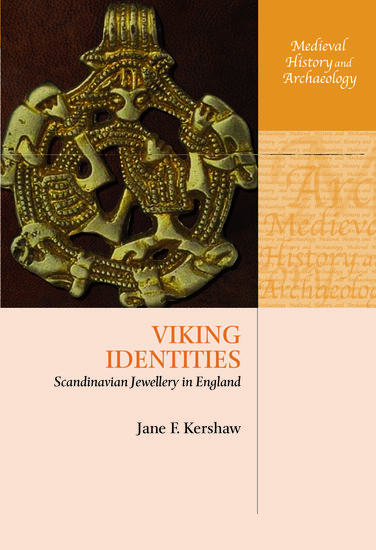
Viking Identities - Jane F. Kershaw


Viking Identities is the first detailed archaeological study of Viking-Age Scandinavian-style female dress items from England. Based on primary archival and archaeological research, including the analysis of hundreds of recent metal-detector finds, it presents evidence for over 500 brooches and pendants worn by women in the late ninth and tenth centuries. Jane F. Kershaw argues that these finds add an entirely new dimension to the limited existing archaeological evidence for Scandinavian activity in the British Isles and make possible a substantial reassessment of the Viking settlements.


The jewellery also provides a fresh perspective on one of the most elusive of topics regarding the Viking settlements, namely, their location.

Memoirs of a Bow Street Runner by Henry Goddard

“Because of the shortage of real information, so little fact and so much fiction has been written about the Runners that they seem like characters from legend rather than history. This book goes some way to restoring them to life...”

The first autobiography of a Bow Street Runner to ever be published, Henry Goddard’s memoir provides an interesting insight into life as one of Britain’s ‘first police-detectives.’


When this title popped up in my news feed - and I was intrigued. Having come across the Bow Street Runners in various Victorian Crime Fiction tomes, I was interested to see what else was out there by fictional and non-fictional accounts.


So here is a select few titles that may interest:
  • The First English Detectives: The Bow Street Runners and the Policing of London, 1750 - 1840 by J. M. Beattie
  • The history of the Bow street runners, 1729-1829 by Gilbert Armitage
  • Before the Bobbies: The Night Watch and Police Reform in Metropolitan London, 1720-1830 by Elaine A. Reynolds
  • A History of English Criminal Law and Its Administration from 1750: The clash between private initiative and public interest in the enforcement of the law by Leon Radzinowicz
  • Crime and Society in England, 1750-1900 by Clive Emsley
  • The English Police: A Political and Social History by Clive Emsley
  • The Great British Bobby: A History of British Policing from the 18th Century to the Present by Clive Emsley
  • Police Detectives in History, 1750-1950 by Clive Emsley
  • The Ascent of the Detective: Police Sleuths in Victorian and Edwardian England by Haia Shpayer-Makov
  • The Rise of Scotland Yard: A History of the Metropolitan Police by Douglas Gordon Browne
  • Scotland Yard and the Metropolitan Police by Sir John Fitzgerald Moylan
  • The Birth of the British 'Bobby': Bow Street Runners, Scotland Yard & Victorian Crime by Don Hale
  • A Certain Share of Low Cunning: A History of the Bow Street Runners, 1792-1839 by David J. Cox
  • Chronicles of Bow Street Police-office: With an Account of the Magistrates, "runners," and Police; and a Selection of the Most Interesting Cases, (2 Volumes) by Percy Hetherington Fitzgerald
  • Crime, Policing and Punishment in England, 1660-1914 by Drew D. Gray
  • Policing Victorian London: Political Policing, Public Order, and the London Metropolitan Police by Phillip Thurmond Smith
  • Crime, Policing and Punishment in England, 1750–1914 by David Taylor
  • The Queen's Peace: The Origins and Development of the Metropolitan Police, 1829-1979 by David Ascoli
There will by many more tomes out there for the interested reader - or budding author.

Saturday, September 29, 2018

Master of War Series by David Gilman

I confess to not having read the first two in the series when I embarked upon read the third - Gates of the Dead by David Gilman - but found that I could read this one with no trouble (there are hints at Blackstone's background along the way). 


What attracted me to the story was the character of Sir Thomas Blackstone - for me he was a cross between Richard I, Sir John Hawkwood, Sir John Mandeville and William Marshall (plus a few others). All were larger than life men of their times - soldiers, adventurers - where fact was far more interesting than fiction - they were the type of real historical characters that make good fictional ones.

I like epic sagas where the main protagonist embarks on a quest / a mission / revenge for a past wrong. If this is your type of history, then you will enjoy reading this series.


Here is a bit of a synopsis of each book in the series to date:

Master of War - The Blooding:
England, 1346: For Thomas Blackstone the choice is easy - dance on the end of a rope for a murder he did not commit, or take up his war bow and join the king's invasion of France. As he fights his way across northern France, Blackstone will learn the brutal lessons of war - from the terror and confusion of his first taste of combat, to the savage realities of siege warfare. Vastly outnumbered, Edward III's army will finally confront the armoured might of the French nobility on the field of Crécy. It is a battle that will change the history of warfare, a battle that will change the course of Blackstone's life, a battle that is just the first chapter in a book of legend - Blackstone: Master of War.


Master of War - Defiant Unto Death:
The Black Prince has launched a devastating raid deep into France, laying waste to everything in his path. In response, the French have mustered an army that outnumbers the English forces 10 to 1 and and are determined to drive their hated foe from the land after years of bloody conquest.  Sir Thomas Blackstone, the British archer knighted on the field of Crecy, has used the intervening years to forge his own war band and has hacked out his own fiefdom in central France. He knows the English are outnumbered, outmanoeuvred and exhausted... but that will not stop him from fighting his way to one of history's greatest military victories.  But the field of battle is not only arena in which Blackstone will have to fight for his life... Although Poitiers was a great victory for the English its aftermath will cost Blackstone dear.


Master of War - Gate of the Dead:
Tuscany, 1358: Thomas Blackstone has built a formidable reputation in exile, fighting as a mercenary amid the ceaseless internecine warring of Italy's City States. But success has bred many enemies, and when a dying man delivers a message recalling him to England, it seems almost certain to be a trap. Yet Blackstone cannot disobey – the summons is at the Queen's demand.  On his journey, Blackstone will brave the terrors of the High Alps in winter, face the Black Prince in tournament, confront the bloody anarchy of a popular revolt and submit to trial by combat.  And every step of the way, he will be shadowed by a notorious assassin with orders to despatch him to Hell.

Master of War - Viper's Blood:
1360. With the English army at the gates of Paris, Blackstone faces his deadliest mission yet in the fourth instalment of the Master of War.  Edward III has invaded France at the head of the greatest host England has ever assembled. But his attempt to win the French crown is futile. The Dauphin will no longer meet the English in the field and the great army is mired in costly sieges, scavenging supplies from a land ruined by decades of conflict.  Facing a stalemate – or worse – the English are forced to agree a treaty. But peace comes at a price. The French request that Blackstone escort their King's daughter to Italy to see her married to one of the two brothers who rule Milan – the same brothers who killed Blackstone's family to revenge the defeats he inflicted on them. Blackstone, the French are certain, will never leave Milan alive... 

Master of War - Scourge of Wolves:
Winter, 1361: After two decades of conflict, Edward III has finally agreed a treaty with the captive French King, John II. In return for his freedom, John has ceeded vast tracts of territory to the English. But for five long years mercenary bands and belligerent lords have fought over the carcass of his kingdom. They will not give up their hard-won spoils to honour a defeated king's promises.  If the English want their prize, they'll have to fight for it... Thomas Blackstone will have to fight for it.  As he battles to enforce Edward's claim, Thomas Blackstone will see his name blackened, his men slaughtered, his family hunted. He will be betrayed and, once again, he'll face the might of the French army on the field. But this time there will be no English army at his back. He'll face the French alone.

Review - Soul of Toledo by Edward Webster

The reign of Alfonso X the Wise was the one which entailed the greatest prosperity and splendour for the Jewish community of Toledo. During his reign the Jewish quarter of Toledo became known for its scale, the luxuriousness and beauty of its public buildings, and the intellectual quality of its rabbis.  This was the place where the Jews of Toledo could work, raise families and practice their religion at one of the region’s 10 synagogues, without the fear of being persecuted for their beliefs. 

However, during the 14th century, the epidemic of the Black Death (1348), and the war between Pedro I the Cruel and Enrique of Trastámara resulted in deep social ill-feeling borne out by the attacks on the Jewish quarter in 1355 and 1391. In addition, there was a fire in the enclosure of Alcaná, a commercial district where the Jews had their shops, workshops and some houses. 

Image result for toledo spain

In the latter part of the same century the construction of the cathedral cloister was planned and this began to be built on August 14th 1389. There is some doubt as to whether the fire was started by the Chapterhouse of the cathedral to allow the construction of the cloister planned by Archbishop Pedro Tenorio in the Alcaná area.

The anti-Jewish revolts of 1391 reached Toledo too. On June 18th 1391 the Jewish quarter of Toledo was attacked at night in a similar way to other cities in the kingdom. Induced by the violent exhortations of Vincente Ferrer, the city was the scene of one of the most appalling outbreaks of violence. Previously the nobles of Toledo had on the whole done their part in protecting the Jews; but when the agitation reached that city they were found among the most violent in the onslaught on the larger Jewry. This had resisted the attacks of Henry II.; but it was now entered by the rioters at different gates, almost all the Jews being put to death - The victims of the slaughter included prominent craftsmen, poets and men of letters. The majority of the synagogues of the city were destroyed or seriously damaged. This was practically the ruin of the Toledo Jewry.

The disastrous economic consequences for the city were soon felt; particularly by private individuals, monasteries and other religious institutions who lost the income they had from the taxes on the Jewish aljamas. The hardest hit was the chaplains whose ecclesiastical profits derived from the rents in the Jewish quarter.

Ferrer again visited the city for a fortnight in May, 1411, with the result that the synagogue of St. Maria la Blanca was turned into a Church. In truth, the majority of the survivors of the massacre of 1391 had saved their lives by becoming converted; so that very few true believers still remained in the city, and these were deprived in 1419 of all opportunity to hold public office; and on June 15, 1449, thirteen of them were turned out of office as "suspects in faith," among them being members of the Lunez, Lopez, Gonzalez, Herrera, and Cota families, afterward distinguished among the Maranos, whose very name is supposed to have originated in Toledo at this time .

The aggressiveness of the Christians to Jews and Moslems, which became ever more pronounced, resulted in the proclamation of a series of ordinances against them (1451) whereby they were required to obey a series of restrictive measures such as the prohibition to walk around the streets at night, enter churches or monasteries without authorisation, leave their houses during Christian festivities as well as the obligation to wear distinctive signs sewn into their clothes. The Jews of Toledo had already complained that in 1450 King Juan II had ordered the revocation and cancellation of all anti-Jewish ordinances in place in the Castilian kingdom as there had been many places where they had done so and the Jews had left. The King ordered the Town hall of Toledo to follow his order and the latter, meeting on February 23rd 1452, reviewed the ordinances, doing away with some, but modifying and maintaining others.

Several fires accompanied the conditions of social disequilibrium which were still in place in the 15th century. Supported by the League of Nobles, who symbolically dethroned Enrique IV in the so-called Farce of Ávila  and crowned his brother Alfonso (5th July 1465), the old Christians started clearing the lands of Castile of all those who had Jewish blood, whether they were Jewish or convertsas well as Moslems converted to Christianity. The latter, feeling threatened, staged an uprising in Toledo on the day of the fires of Magdalena (22nd July 1467). Heavily armed, the converts surrounded the cathedral and they kept the Christians under siege after killing two canons and a few others. A thousand Christians and reinforcements came to the rescue of those besieged. The fighting then began on the outskirts of the cathedral and continued in the Magdalena district. Those besieged were able to get out. The converts responded by setting fire to the Magdalena district. All the neighbouring houses burned to the ground immediately; due to a high wine, the fire spread quickly resulting in an estimated one thousand six hundred houses were destroyed. The old Christians, after many days of fighting, were finally able to control the fire and reduce the converts. Their ringleader, Fernando de la Torre, was put to death; the same fate would befall many other converts in the following days.

The uprising was of little benefit to the insurgents who were forced to flee from Castile with their assets. Those who decided to stay, deprived of their right to bear arms ( 1468) or hold posts in the Administration (1469), finally had to convert and attest to their good faith to be Christians before the Inquisition Court.  Yest still more persecutions, forced conversions, mass murder, and rioting was prevalent in the city 1486 - 1490) before the establishment of the Inquisition under the Catholic Monarchs.


28526087This then is the backdrop of the novel - and it is a powerful one. The character of Vincente is born in the city in the wake of the violence of 1391 - his parents are secret conversos - he is a man conflicted in a time of political and religious upheaval. His nemesis is a power-driven lawyer who wants to incite a religious purge (I am wondering if he has been based on the notorious Vincente Ferrer).

This is a well-crafted tome - there is the human, historical and political element; the characters aren't perfect - they are flawed.  The plot is engrossing, suspenseful and dramatic due - I am certain - to the research that went into the storyline (many events mentioned in the novel are based on real events).  The narrative draws the reader into the everyday struggles of a persecuted group and you can't help but empathise.

I would put this on the same shelf as Ken Follett's "Pillars of the Earth" and "Cathedral of the Sea" by  Ildefonso Falcones.  These are stories of epic proportions - and I have no doubt it will join the other two in being made into a series.

Friday, September 28, 2018

People in the Room by Norah Lange

From The Guardian:

A 17-year-old girl spends her days by her window, watching the house opposite in an affluent part of Buenos Aires. She is transfixed by a room where three women sit, the “pale clover” of their faces barely perceptible in the dim light. The unnamed narrator compiles a list of things they could be, or be made to be, in her imagination: spinsters, criminals, “wayward women”, “three governesses, with little joy in their lives” or “simply … three women who liked to pass the time in their drawing room”.

One day she intercepts an unsigned telegram addressed to the objects of her obsession. How does she guess the sender is a man? Why does she hate him straight away? As she spies on his visit to the room, her feelings – resulting, perhaps, from the fear of the unknown, of intimacy – strengthen: “Even though I knew I would hate him, I hated him even more when I saw him lean gently towards them.” Then a shared moment of beauty changes it all, “and it seemed as long as I was still young, nothing so complete or perfect could ever happen again”.

Born in 1905 in Buenos Aires, Norah Lange entered the Argentinian literary scene early, first as a poet; later, her novels and a childhood memoir became part of the Spanish-language canon. As César Aira says in his introduction to this first English translation of her work, she once told an interviewer that People in the Room had been inspired by the portrait of the three Brontë sisters painted by their brother, his own image erased from the canvas. Combining painterly qualities with poetic imagery, Lange’s prose is rich in metaphor, self-absorbed and, at its best, darkly irresistible.

read more here @ The Guardian and @ The Irish Times

The Queen and the Heretic by Derek Wilson


Derek Wilson’s The Queen and the Heretic: How two women changed the religion of England describes itself as a dual biography of Anne Askew, a noblewoman who was burnt at the stake for heresy during Henry VIII’s reign, and Catherine Parr, the King’s final wife and the first woman ever to publish a theological text under her own name.

In reality, the first part of the book is more of a history of the Reformation and religious changes in Britain during Henry’s reign, although Wilson does try to relate the changes back to the lives of both women as much as possible, besides attempting to establish where the foundations for their religious convictions stemmed from.

The book is easy to read and accessible. Wilson does not assume any prior knowledge from his readers, and is careful to give wider contextual information where relevant. Both women are brought to life with vibrancy, and as fully formed individuals. It is engaging, and the book deserves credit for highlighting the part played by Catherine’s works in influencing British religious policies and beliefs during this period of history. 

read more here @ Church Times


Amazon Buys Goodreads

Image result for goodreads logoFrom Phys Org:

Amazon.com on Thursday announced that it is buying book lovers social network Goodreads in a move that could give Kindle tablets an edge over rival electronic readers. Goodreads is the leading website for sharing book recommendations and would complement reader reviews provided at Amazon.com's online shop for digital titles.

"Goodreads has helped change how we discover and discuss books," said Amazon vice president Russ Grandinetti. Since launching in early 2007, Goodreads has grown to boast more than 16 million members and 30,000 book clubs.


Analyzing book reading behavior on Goodreads to predict Amazon Bestsellers

From TechXplore:

Researchers at Northwestern University, Microsoft Research India, and the Indian Institute of Technology Kharagpur have recently developed a model to predict whether a book will become a bestseller on Amazon within 15 days of its publication. Their model, outlined in a study pre-published on arXiv, works by analyzing reading behavior on the online platform Goodreads.

"We have been working on analyzing the popularity dynamics of various social media entities, such as hashtags in Twitter, topics in Quora etc." Animesh Mukherjee, one of the researchers who carried out the study told TechXplore. "We felt that a similar approach could be taken to analyze the popularity of books and we found Goodreads to be ideal for this investigation."

A book's popularity depends on a multitude of factors and can be measured using several parameters. In their study, the researchers focused on how book reading characteristics influence its popularity. They performed a cross-platform analysis of Goodreads entities and tried to link these with the volume of sales for books on Amazon.

Their model achieved a very promising average accuracy of 88.72 percent in predicting books that would become Amazon bestsellers a few weeks after their publication. Their method, which was based on features derived from user posts and genre-related properties, attained an improvement of 16.4 percent compared to baseline methods that only use traditional popularity factors, such as book ratings or reviews.