Showing posts with label scandinavia. Show all posts

Monday, April 28, 2025

The Queens and Royal Women of Sweden c. 970–1330

Synopsis: This is the first major piece of scholarship to provide an overview of the lives of Sweden’s earliest documented queens, together with some of their most influential female relatives, who lived between 970 and 1330.

Spanning a period over 350 years, approximately 40 biographies are included from the semi-legendary Viking queen Sigrid Storråda to Duchess Ingeborg of Norway, the first female de jure and de facto ruler of Sweden. 

Rather than merely summarising previous research, this study offers new perspectives on the evolution of queenship in medieval Sweden. It tracks the different religious, political, and socio-economic trends which defined and shaped the office of queen and identifies three main phases of development which led to royal women’s economic and political emancipation by the mid-fourteenth century. 

The study’s main strength lies in its close reading and novel interpretation of the surviving primary sources, enabling readers to understand the importance of these women and wider themes such as state formation, Christianisation, and international politics.

The Queens and Royal Women of Sweden, c. 970–1330 is of interest to scholars of queenship and gender studies, medieval historians in general, those with an interest in ecclesiastical history, and anyone studying medieval Scandinavia.


Monday, July 3, 2023

Vikings of the Irish Sea by David Griffiths

"Vikings of the Irish Sea: Conflict and Assimilation Ad 790-1050" looks at the activities of the Vikings in the Irish Sea, a band of water that has been important since prehistoric times in the history of maritime cultural exchange between Britain and Ireland as well as the Scandinavian countries. The Vikings fully exploited their naval dominance to exert their influence across this area and David Griffiths presents a unique overview of the results of this dominance. 

The book will look, in detail at the activities of the Vikings in Wales, North West England, the Isle of Man, Scotland and Ireland. The archaeological evidence such as silver hoards and burials, along with the evidence of place-names, settlement and sculpture provide a fascinating insight into the mechanisms of Viking power in these areas.

Sunday, December 25, 2022

Review: The Loki Sword by Angus Donald

Synopsis: An ancient blade, fit for the gods but tainted with a deadly curse. Bjarki Bloodhand has finally managed to subdue his gandr, the spirit that gives him the ferocity of a bear in battle. Yet losing his berserker prowess may leave him at the mercy of his foes.

Meanwhile, his half-sister, the shield maiden Tor Hildarsdottir, has slain two warriors from the personal retinue of the new Jarl of Norrland – and now faces brutal reprisals for their deaths.

Valtyr Far-Traveller claims he has a solution to their problems: a long voyage south to the wild Slav lands to find a fabled lost sword said to once belong to the Norse trickster god.

The journey will prove more perilous than anything Bjarki or Tor has ever attempted before. Can all three heroes hope to survive the desperate hunt for... The Loki Sword?


This third instalment in the Fire Born saga sees our intrepid trio - Bjarki, Tor and Valtyr - go in search of the famed Loki Sword. The epic takes place around Silesia and Prussia, with their enemies - the Black Cloaks - or Franks, hard on their heels at every turn. Will our adventurers and their motley band succeed in their quest or fall victim to betrayal and conspiracy?

As usual, Angus Donald imbues his books in the history and mythology of the period, creating an insight into 8th Century northern European world, whilst at the same time, propelling (and projecting) the reader, full body, into the story.

Sunday, May 22, 2022

Review: The Bear's Blade by Tim Hodkinson

Synopsis: How do you defeat the undefeatable?

935 AD, Norway. Recovering from horrendous injuries, Einar finds himself unable to fight. He is not strong enough to defeat his rival, Eirik, who has seized Orkney despite Einar being the rightful Jarl.

Eirik's men soon raid the Norwegian coast, led by a warrior called the Bear. Cruel and ferocious, the Bear possesses a legendary blade – one that gives him a skill in battle that cannot be matched. Such an extraordinary sword could be key to Einar's plans – but first he and the Wolf Coats must contend with the Bear himself.

Caught between old foes and new ones, Einar must use all his wits to survive. But is a man who cannot wield a sword capable of being a true Viking warrior?


Book Five in the Whale Road Series ... and it doesn't disappoint. Wounded from a dual with his father, and unable to defeat his rival and nemisis, Einar realises that the ".. powers of chaos are loose ...". Separated from the Wolf Coats, Einar must heal and adapt in the face of Viking onslaughts that gives rise to a new terror - The Bear!.

Einar soon realises that this mighty warrior wields a sword more powerful than the Wolf Coats own Ulfberht sword - and to discover the secret of this powerful weapon, Einar must become a cuckoo in the nest of the Bear! Meanwhile, Eirik Bloodaxe is still a thorn in the side of the Wolf Coats - and vice versa. Eirik's queen Gunnhild will stop at nothing to see her husband secure on the throne of Orkney even if this means performing a sacred ritual and sacrifice.

Once again, the tension mounts with the increase in action, as our motley band of warriors hurtle towards their inevitable confrontation with Eirik - will they prevail, will Einar resume the path of the warrior? All we know for sure is that the Wolf Coats will live to fight another day .... afterall, it's hard to keep a good band of warriors down!


Monday, June 14, 2021

Review: The Serpent King by Tim Hodkinson

Sysnopsis:
AD936 
The fight for vengeance has no victors...
The great warrior, Einar Unnsson, wants revenge. His mother's assassin has stolen her severed head and Einar is hungry for his blood. Only one thing holds him back. He is a newly sworn in Wolf Coat, and must accompany them on their latest quest.

The Wolf Coats are a band of fearsome bloodthirsty warriors, who roam the seas, killing any enemies who get in their way. Now they're determined to destroy their biggest enemy, King Eirik, as he attempts to take the throne of Norway.

Yet, for Einar, the urge to return to Iceland is growing every day. Only there, in his homeland, can he avenge his mother and salve his grief. But what Einar doesn't know is that this is where an old enemy lurks, and his thirst for vengeance equals Einar's...


This is a bloody brilliant series! And can I say that when we ever get to the end, I will be starting from the beginning in a self-indulgent binge session.

So, what's happening in Europe and Scandinavia in 936AD. In Iceland, what is referred to as the "age of settlement" was coming to its conclusion. The Landnámabók (“Book of the Settlements”, written c. 13th century) records how the first set of law codes was presented to the Athling (assembly of free men) in around 930AD. Communities tended to be a form of self-government, though often in co-operation with other nearby settlements; the bloodfeud was being replaced by a system of fines; and Christianity was decades away from yet taking foot.

Norway was still in thrall to Eirik Bloodaxe but not for much longer. Eirik's half-brother Haakon, who had been fostered by King Athelstan, as part of an agreement made by his father King Harald Farhair, was being fitted out with with ships and men for an expedition against his half-brother. Eirik was on the back foot and looking for allies. And it is to Orkney that Eirik looks, and where Einar's greatest foe - his own father Thorfinn Skull-Splitter - resides.

But do not for one moment suppose that medieval politics was in any way, shape or form, clear cut. Rulers and their followers formed alliances as and when it was prudent to do so; loyalty was bought and sold across the Kingdoms of Northumbria, Scotland, Dublin, Man, and Norway; kings were raised up and brought down with unnerving regularity. These leaders were often larger than life characters, who, had their deeds not been so readily documented, may have passed unremarked from the pages of history. This was the time of heroes and sagas; great battles and adventures; of an old world fighting to hold back the ever encroaching tide of the new.

It is back into this muddy whirlpool of politics, religion, loyalty and revenge that we once again find our motely band of Wolf Coats, as old enemies return and new ones are sent forth to distract and delay them at every turn. As Einar muses:" ... all the vipers are here .... I am right in the middle of a snakepit ..." Einar himself is still seeking out those responsible for his mother's murder and his journey will ultimately come full circle. Though what awaits him at its ends is quite unexpected.

Hodkinson once again draws the unaware reader ever deeper into the tale (or saga if you will) - like quicksand, once you have taken your first tentative steps, the ground falls away from under your feet, and you are carried along - in this instance, at the author's whim.  

At the end of every book, I constantly find myself asking what more can there be - how can Hodkinson keep the reader spellbound - and yet he somehow manages it, channeling the skalds of old as the words flow from pen to paper, with nary a dull moment in between.  If you haven't yet taken the journey down the Whale Road, it is high time you did.


About the author
Tim Hodkinson was born in 1971 in Northern Ireland. He studied Medieval English and Old Norse Literature at University with a subsidiary in Medieval European History. He has been writing all his life and has a strong interest in the historical, the mystical and the mysterious. After spending several happy years living in New Hampshire, USA, he has now returned to life in Northern Ireland with his wife Trudy and three lovely daughters in a village called Moira.


Tim is currently working on a series of viking novels for Aries Fiction, an imprint of Head of Zeus.

Buy links:
Amazon: https://amzn.to/3oNubLI
Kobo: https://bit.ly/3wKzs9Z
Google Play: https://bit.ly/34edsYu
iBooks: https://apple.co/3ukCyzy

Follow Tim:
Twitter: @TimHodkinson

Follow Aries:
Twitter: @AriesFiction
Facebook: @AriesFiction
Website: www.headofzeus.com


Monday, March 22, 2021

Review: The Last Berserker by Angus Donald

Synopsis: 771AD, Northern Europe. An epic battle for the soul of the North.

Bjarki Bloodhand and Tor Hildarsdottir are journeying south into Saxony. Their destination is the Irminsul, the One Tree that links the Nine Worlds of the Middle-Realm. In this most holy place, they hope to learn how to summon their animal spirits so they can enter the ranks of the legendary berserkir: the elite frenzied fighters of the North.

One Christian king Karolus, newly crowned King of the Franks, has a thorn in his side: the warlike Saxon tribes on his northern borders who shun the teachings of the Church, blasphemously continuing to worship their pagan gods.

The West’s greatest warlord vows to stamp out his neighbours’ superstitions and bring the light of the True Faith to the Northmen – at the point of a sword. It will fall to Bjarki, Tor and the men and women of Saxony to resist him in a struggle for the fate of all Europe.


Another in a great line up of "hero quest" historical fiction that is set in the Northern Hemisphere - particularly Scandinavia - from the 8th -11th centuries. So if you are a fan of Matthew Harffy's A Time for Swords and Tim Hodkinson's Whale Road Chronicles, this this one is for you.

Recently outlawed Bjarki Bloodhand suddenly finds himself on the road in the company of shield-maiden Torfinna Hildarsdottir and the mysterious Valtyr Far-Traveller, Their destination is not certain as they head towards the Dane-mark of King Siegfried. For war is looming with the Franks under the charismatic leader Karolus. However, as both display traits of the Rekkr, it is to the mysterious and sacred groves of Irminsul to find out if they have what takes to be a true Rekkr (or Berserker).

There are - of course - many adventures and battles along the way as our intrepid duo find themselves at odds not only with Charlemange but also the new religion - Christianity - which is establishing a firm foothold.  Throughout, both struggle to find and harness the power of their "gandr" or warrior totem spirit.  Will they find this inner strength in time to save the north from the Frankish incursions or will they be too late ...

Love the historical context that the author then treats us to at the end - I always like to know - apart from the obvious - where they draw their inspiration from and if based on real life events. And for those wishing to delve into this genre and the sagas of the Scandinavians, you may find certain parallels in the story of Beowulf or the saga of Bodvar Bjarki.

A great start to what promises to be the first in a new action-adventure series.


Friday, September 4, 2020

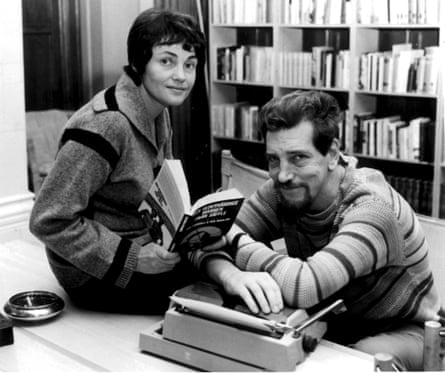
Obit: Maj Sjöwall: ‘Nordic noir’ pioneer, author of the Martin Beck series

From April's The Guardian:

Maj Sjöwall, one half of a Swedish crime-writing couple credited with inventing the “Nordic noir” genre, has died aged 84, her publisher said on Wednesday.

Sjöwall, a pioneer of gritty realism and an inspiration to modern crime writers, “passed away today after an extended period of illness,” Ann-Marie Skarp, head of publisher Piratforlaget, told AFP.

Maj Sjöwall and Per WahlööWith her partner Per Wahlöö, who died in 1975, Sjöwall penned a 10-book series centred on the dour, middle-aged and decidedly unheroic Martin Beck and his team of detectives in Stockholm’s National Homicide Bureau.

The duo penned the series decades before the likes of Henning Mankell and Stieg Larsson made the genre a worldwide hit.

The Martin Beck books have been translated into 40 languages, according to news agency TT, and served as the source material for dozens of movies.

read more here @ The Guardian


I picked up these two in my local secondhand book store - they were the only two and I nearly put them back - glad I didn't.


Tuesday, March 10, 2020

Queenship and Voice in Medieval Northern Europe by William Layher

Queenship and Voice in Medieval Northern EuropeThis book examines female lordship and the power of the political voice in medieval Northern Europe, focusing on three prominent, foreign-born queens of medieval Scandinavia - Agnes of Denmark (d. 1304), Eufemia of Norway (d. 1312) and Margareta of Denmark/Sweden (d. 1412) - who acted as cultural mediators and initiators of political change.


Saturday, April 6, 2019

This Violent, Convoluted Murder Mystery Has Been Published in 30 Countries

From RealClearLife

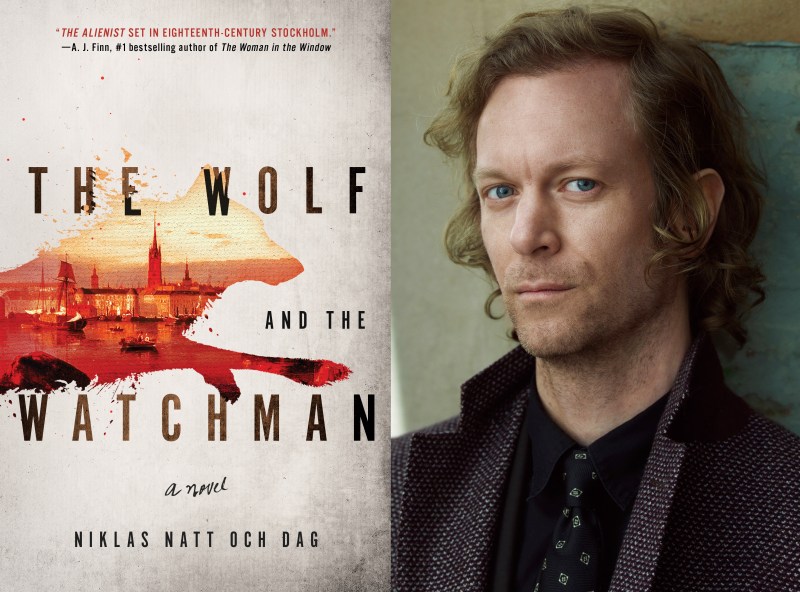
Chapter One: Swedish author Niklas Natt och Dag takes readers back in time for a thrilling whodunnit.

Drunken “watchman” Mikel Cardell is unceremoniously roused from his mid-afternoon slumber on a fall day in 1793 by a group of kids who’ve spotted a body floating in the Larder, a symbolically decrepit lake on Stockholm’s Southern Isle. The gruesomely torn apart corpse that Cardell fishes out forces him to connect with “incorruptible lawyer,” Cecil Winge, perhaps the only person in Sweden who sees value left in Cardell, setting up the adventure the pair will embark upon in author Niklas Natt och Dag’s The Wolf and the Watchman. The book is a race against time from that point on as Winge’s failing health puts an expiration date on their investigation, one that draws them into the underbelly of a crumbling and corrupt monarchy that rules over a paranoid nation divided by money and defined by greed.

chapter one
read interview with Niklas Natt och Dag here @ RealClearLife

Saturday, November 10, 2018

Guide to the Classics: The Icelandic Saga


Icelanders love books, both reading and writing them, and in recent years, translations of contemporary Icelandic literature have made it into bookshops and literary pages abroad in increasing numbers.

“Saga” is an Icelandic word that means “something said, a narrative.” Originally, the term is likely to have been applied to stories that were probably formed and transmitted orally. Later, they came to be recorded in writing, in handwritten manuscripts, many of which survive to the present day, though a good number have perished over the past 500 years or so.

Sagas of kings are historical biographies of the kings of Norway (and to a lesser extent, of Denmark) from prehistoric times into the 14th century.

The most widely accessible at present are probably the most recent Penguin translations, which are new editions of a five-volume series originally published in Iceland in 1997 as “The Complete Sagas of Icelanders.” 

My personal favourite compilation is Jane Smiley's "Sagas of the Icelanders

Sunday, September 30, 2018

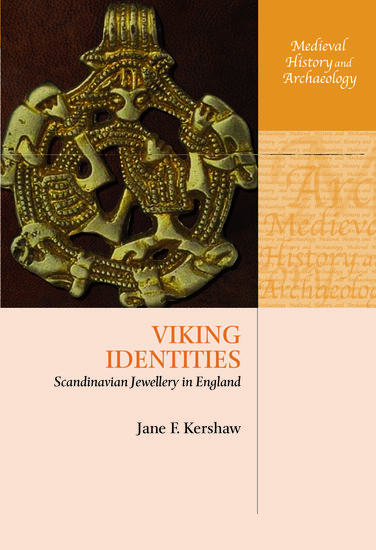
Viking Identities - Jane F. Kershaw


Viking Identities is the first detailed archaeological study of Viking-Age Scandinavian-style female dress items from England. Based on primary archival and archaeological research, including the analysis of hundreds of recent metal-detector finds, it presents evidence for over 500 brooches and pendants worn by women in the late ninth and tenth centuries. Jane F. Kershaw argues that these finds add an entirely new dimension to the limited existing archaeological evidence for Scandinavian activity in the British Isles and make possible a substantial reassessment of the Viking settlements.


The jewellery also provides a fresh perspective on one of the most elusive of topics regarding the Viking settlements, namely, their location.

Saturday, August 18, 2018

Review: The Vikings - From Odin to Christ by Martyn and Hannah Whittock

Synopsis: The popular image of the Vikings is of tall red-headed men, raping and pillaging their way around the coast of Europe, stopping only to ransack monasteries and burn longships. But the violent Vikings of the 8th century became the pious Christians of the 11th century, who gave gold crosses to Christian churches and in whose areas of rule pagan idols were destroyed and churches were built.

So how did this radical transformation happen, and why? What difference did it make to the Vikings, and to those around them, and what is their legacy today? This book takes a "global" look at this key period in Viking history, exploring all the major areas of Viking settlement. Written to be an accessible and engaging overview for the general reader.


For me, this was a highly informative journey into the transformation of the "pagan" Viking into the acceptable "christian" that is well annotated and referenced, and makes use of the voices of the Vikings themselves, through their sagas, to provide context. The authors explore the conversion of the Viking peoples and how and why this religious transformation took place.  What is interesting is the differing views on what constituted conversion, where the roots of conversion eminated from, and the how each conversion event was unique. 

The authors make clever use of their chapters to sort out and compartmentalise the history of the conversion of each group or nation, making it more accessible to the reader.  We take a look at who were the Vikings of the pre-christian world, and compare that with our modern perception of them. We look at how different forms of Christianity were the driving forces behind the conversions - German, Irish, British and Greek missionaries each had their sphere of influence and success.

First up is the raids on Anglo Saxon England, Ireland, Frisia and the Frankish Empire.  Were these raids a serious threat to the already established Christian religions - for following these attacks was a serious collapse in pastoral care throughout into which the pagan religions filled the vacuum.

To the subject at hand - we now get down to the chapters that are the most interesting, and I will give a brief summary of each, starting with Chapter 4 -"The Cross and the Hammer" - the Vikings in northern England, the dominance of pagan rule, and of co-existance and assimilation.

Chapter 5 find us in 8th Century Ireland, with the inability of local leaders to unite and form a cohesive front against the Viking attacks and the establishment of permanent bases - at least not until the Battle of Clontarf.  The foundation of Normandy is covered in Chapter 6, with the transition of conversion taking a mere century, and the development of Church reform under these newly christianised leaders gained prominance.

Now we get to the main Viking nations: Chapter 7 covers the conversion process in 10th Century Denmark under the leadership of of Harold Bluetooth, despite earlier missions two centuries prior; and also clarifies some of the misnomers of the reign of both Svein Forkbeard and Cnut.  Chapter 8 takes us to Norway, whose missionary kings - the Olafs - lead the fight against pagan resistance.  The use of burials as an indicator of the level of the reaches of conversion, and the connection between conversion and the expansion of royal power is also discussed. 

Sweden and the arrival of the German missionaries in the 9th Century is covered in Chapter 9.  This conversion took much longer as this area was not so politically unified as its neighbours.  Unity and royal power increased at the same rate as the conversion, and was more or less complete with the incorporation of Finland by 13th Century.

Chapter 10 deals with the spread of the Vikings in the east, namely through the Byzantine Empire, the Baltic, the establishment of the kingdom of Rus, the reach of trade as far as Baghdad, and of course, the hero Harald Hardrada.  The colonisation and conversion of the North Atlantic Viking outposts of Iceland, Greenland, and the Faroe Islands in Chapter 11 quite naturally leads into the the voyages of the Greenlanders to Vinland in the 11th Century, and the first American Christians.

Back we head to Anglo Saxon England, and the reign of the first Viking Kings, Svein of Denmark and his son Cnut the Great, under who, as a loyal son the the Chruch, actively suppressed paganism.  The obliteration of Pictish culture under the Vikings in the islands to the north and the west (Hebrides, Orkneys, Shetland, et el), and the missions from Germany and Ireland, forms one of our final chapters.  It is assimilation, expansion, trade, spread of ideas, and the unity of political power in the mid 12th century that finally ended the "Viking Age".

This is truly a remarkable journey of the Christianisation of the Scandinavian world that really kicked off in the late 9th century and lasted for a period of three hundred years.