Showing posts with label poets. Show all posts

Tuesday, September 7, 2021

Professors in America and the U.K. fight back against the cancelation of Geoffrey Chaucer

Academics in both America and the United Kingdom have recently taken actions to prevent Geoffrey Chaucer, the “father of English literature,” from being labeled a rapist, racist and anti-Semite.

In late July, Cambridge University medieval and renaissance English Professor Jill Mann resigned from her position on the board of the Chaucer Review, an academic journal specializing in the work of “The Canterbury Tales” author.

The journal had published an essay called “New Feminist Approaches to Chaucer” in which authors Samantha Katz Seal and Nicole Sidhu argued it is time for feminists “to move past Chaucer” because: “He is a rapist, a racist, an anti-Semite; he speaks for a world in which the privileges of the male, the Christian, the wealthy, and the white are perceived to be an inalienable aspect of human existence.”

The authors also provide evidence that Chaucer himself was a rapist, relaying on a 14th century legal document in which a woman named Cecily Chaumpaigne accused Chaucer from a crime known as “De raptu meo.”

Other scholars have argued the word “raptus” could refer to an “abduction” and point out the legal document actually showed Chaumpaigne releasing Chaucer from any legal obligation related to the claim.

Nonetheless, Katz Seal, a professor of English and women’s studies at the University of New Hampshire and Sidhu, an English professor at Eastern Carolina University, argue feminists “should identify” with Chaumpaigne and not Chaucer.

But Mann objected to the negative characterization of both Chaucer the man and his work.

“To approach Chaucer with this mind-set is to substitute a grotesque caricature for the humane values that distinguish him from many other writers of his time, and that students, in my experience, are quite capable of appreciating,” Mann wrote in a letter to the Times Literary Supplement.

It wasn’t the first time Chaucer had been attacked in British academia. Earlier this year, the University of Leicester announced a plan to remove Chaucer from the English curriculum, replacing him with a “selection of employability modules” and a “chronological literary history” determined by the school’s administrators.

The announcement was made after the school vowed to “decolonize” its curriculum.

Meanwhile, in the U.S., Texas A&M English Professor Jennifer Wollock has argued that Chaucer “was no raunchy proponent of bro culture,” but a “daring and ingenious defender of women and the innocent.”

“I believe the movement to cancel Chaucer has been bamboozled by his tradecraft – his consummate skill as a master of disguise,” Wollock wrote in an essay for The Conversation in July.

Wollock, who has researched Chaucer for decades, argues his works are fiction, and he should not be punished for accurately representing unsavory characters.

“Readers often assume Chaucer’s characters were a reflection of the writer’s own attitude because he is such a convincing role player,” writes Wollock. “Chaucer’s career in the English secret service trained him as an observer, analyst, diplomat and master at concealing his own views.”

Rather than being a sexual predator, she notes her research has found Chaucer “supported women’s right to choose their own mates and the human desire for freedom from enslavement, coercion, verbal abuse, political tyranny, judicial corruption and sexual trafficking.”

Wollock notes that Chaucer salutes the heroism of Jews in an early poem called “The House of Fame.” And she defends Chaucer in the Chaumpaigne episode, noting few authors have ever been more outspoken about man’s inhumanity to women.

“It is bizarre that one of the strongest and earliest writers in English literature to speak out against rape and support women and the downtrodden should be pilloried and threatened with cancellation,” she writes.

Neither Mann nor Wollock responded to requests for comment by The College Fix. Sidhu objected to the charge she is trying to “cancel” Chaucer.

“It is a strange kind of ‘cancel culture’ that produces an entire issue on the writer we are supposedly cancelling,” Sidhu wrote about the edition of the Chaucer Review in which her essay with Katz Seal appeared. “Not to mention that Sam has written an entire book on Chaucer, is writing another one and I have a book chapter and several articles devoted to him.”

“We love Chaucer’s writing but you don’t need to be dishonest about his personal life or his racial politics to think he is brilliant or want to study or write about him,” Sidhu wrote.

“In terms of cancelling, it seems to me that the person who resigns from an editorial board because she doesn’t like something she reads is far more an example of cancel culture than two scholars noting the nuances involved in thinking about the work and life of one of our greatest writers,” she said of Mann’s resignation.

Tuesday, October 6, 2020

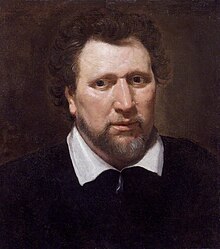
Turns Out, Elizabethan Playwright and Poet Laureate Ben Jonson was a Murderer

Ben Jonson (c. 1617), by Abraham Blyenberch; oil on canvas painting at the National Portrait Gallery, LondonFrom CrimeReads:
Turns out, Ben Jonson, the renowned Elizabethan playwright and the first poet laureate of England, was a murderer.

On September 22nd, 1598, when he was an (angry) young man of twenty-six, Jonson, a former bricklayer, encountered a young actor named Gabriel Spencer. Jonson was not yet an established playwright, having had his play Every Man in his Humour only very recently debuted at the prominent Curtain Theater (which would later be moved and rebuilt as the Globe). The two men found themselves embroiled in a conflict, which the courts maintained that Jonson started. They ruled this despite Spencer’s violent history; he had previously killed a young boy when the boy had threatened to throw a candlestick at him. Then again, Jonson also had a violent history; in his own accounts he mentions that before the Spencer affair, he had killed someone while abroad in the Low Countries, simply for sport? (Though he was not arrested for it.)

But Spencer and Jonson began a duel, during which he stabbed Spencer with his sword, killing him instantly. Jonson was arrested and thrown into Newgate Prison (where he panicked and converted to Catholicism from a visiting priest, which was also a felony at England in this point in history).

Jonson was arraigned on October 6th, and confessed to the crime of manslaughter, for which crime he would be hanged. But then he did something extremely calculated; he called upon an obscure legal precedent.


read more here @ CrimeReads and his works @ Project Gutenberg

Saturday, July 2, 2016

Shakespeare’s Bold Social Climbing

Found: Evidence of Shakespeare’s Bold Social Climbing | Atlas Obscura
William Shakespeare might have been an extraordinary writer, but he came from a fairly ordinary family. His father was a glover; his mother’s family owned land. They were doing well enough that in 1575, John, Shakespeare’s father starting working towards obtaining a coat of arms for the family—a unique symbol of social status recognizing his line as a worthy one.

Although the coat of arms was eventually granted to the Shakespeares, in 1596, the earliest well-known illustration of it was dated to around 1700, well after Shakespeare’s death in 1616. But recently, the New York Times reports, Heather Wolfe, a Shakespeare scholar at the Folger Shakespeare Library in Washington, D.C., found “a dozen unknown or forgotten depictions of the arms,” some dating back to around 1600.

These records solidify the association between William Shakespeare and the coat of arms and indicate how important it was to him that his family obtain this signifier of status. Even though the arms were technically for Shakespeares' father, still, they're often noted as arms for "Shakespeare the player." The documents also clearly link William Shakespeare the theater person to William Shakespeare who lived in Stratford-on-Avon, a connection that a handful of skeptics still doubted.

To find these records of the arms, Wolfe had to painstakingly look through records kept by the College of Arms, a British institution that traces its history back to the work of medieval heralds. She first started the hunt after seeing an image of the circa 1600 example in a book. Once she was looking for examples of the symbol, she says, “I just started finding them everywhere.”
Post by Sarah Laskow at Atlas Obscura

Monday, October 12, 2015

An Unexpected Revival For A Beloved Russian Poet Anna Akhmatova


There's a surge of interest in the work of 20th century Russian poet Anna Akhmatova. It's inspired in part by American country and folk singer-songwriter Iris Dement, who has an adopted daughter from Russia and has set some of the poet's work to music in a new album, The Trackless Woods.

Akhmatova, born in 1889, witnessed the tumultuous years of the Russian Revolution and lived through the horrors of Joseph Stalin's repressions. She survived as a beacon of artistic courage.

Akhmatova came from an aristocratic background and she knew the splendor of the palace during its pre-revolution days — when it was, as Nisnikova says, "a kind of treasure house with examples of Western European art, ancient Russian icons, armor and ancient manuscripts."

Sunday, February 2, 2014

New Poems by Sappho

From the Guardian:
Sappho is one of the most elusive and mysterious – as well as best-loved – of ancient Greek poets. Only one of her poems, out of a reputed total of nine volumes' worth, survives absolutely intact. Otherwise, she is known by fragments and shards of lines – and still adored for her delicate outpourings of love, longing and desire.
But now, two hitherto unknown works by the seventh-century lyricist of Lesbos have been discovered. One is a substantially complete work about her brothers; another, an extremely fragmentary piece apparently about unrequited love.

The poems came to light when an anonymous private collector in London showed a piece of papyrus fragment to Dr Dirk Obbink, a papyrologist at Oxford University.

Read Poem Here => http://www.theguardian.com/books/2014/jan/30/read-sappho-new-unknown-poem-papyrus-classical
Sappho's poems, which were lost from the manuscript tradition and were not collated and copied by medieval monks as were so many surviving ancient texts, have been preserved by two main means: either through quotation by other authors (often as examples of particular syntactical points by ancient grammarians) or through the discovery of fragments written on ancient papyrus. There is hope yet for more poems to come to light, preserved in the Egyptian sands.