Sunday, March 24, 2019

Review: On Copper Street by Chris Nickson

On Copper Street (DI Tom Harper, #5)
Leeds 1895: DI Tom Harper and Sergeant Ash stop in at 13 Copper Street to call on recently released Henry White who is about to reveal why he was in receipt of stolen goods.Then there is another death and an acid attack in a bakery owned by a former police inspector. Can the two solve the crimes before yet another takes place.

Between 1790 and 1840, Leeds changed beyond all recognition. A market town vanished forever, to be replaced by a landscape of mills, factories, foundries and dye works. Chimneys now dominated the skyline, pouring out black smoke and noxious vapours. Leeds was truly experiencing the excitement, drama and impact of the Industrial Revolution. By 1893, Leeds was described as being: "a great hive of workers... whose products have the whole wide world for their market... her nine hundred factories and workshops, monuments of the wealth, industry and mercantile prestige .."

Image result for working class leeds 1890s
But the working classes, the overcrowded cottages, back-to-backs, cellar dwellings and lodging houses remained notorious for their cramped and insanitary conditions. Many children lacked even a basic education there being only half the number of places available in various educational institutions compared to the actual number of children (source: Census 1870).  With  the increased levels of pollution and squalor came disease - scarlatina, diarrhoea, measles, fevers, smallpox, diphtheria and whooping cough - and  cholera and typhoid.  The local river was being used as a dumping ground not only for dead animals but also ‘thousands of tons of ash, slag, cinders, refuse from mines, chemical works, dyeing, scouring and fulling, worsted and woollen stuff, shin cleaning and tanning, slaughter, house garbage and sewerage from towns and houses’.  

Of course Leeds wasn’t unique in struggling to deal with overcrowding and poor sanitary conditions as well as the diseases and premature deaths that went hand in hand with poor living conditions. But Leeds was slow to face up to its problems and to take action.  The major changes that were needed for the city didn’t take place until the 1890s. Only then were there huge slum clearances, a re-planned city centre, a vastly improved water supply, and a leap forward in education provision for children. This came about as a result of a change in administration, a change in personnel, a broader social representation within Leeds Council, and more acceptance of central government involvement, along with public opinion more favourable to welfare provision.
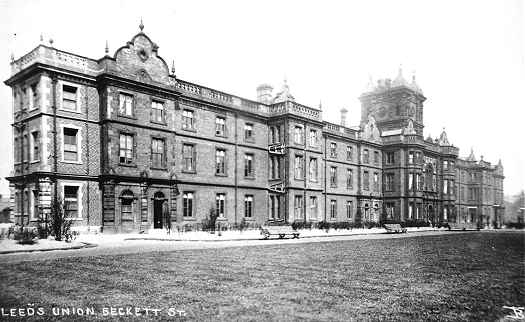
Image result for leeds 1890sOur story is told against this backdrop and over the course of a two week period, with the author providing the reader with a realistic look into life in the 1890s. The burgeoning police force was often up against rampant crime and the communal wall of silence; life was harsh; the workhouse often dominated the social landscape; and the suffragette movement was in its infancy.  All of this made for a nice historical context which was well researched, and presented throughout the story though discreetly.

I hadn't read the others in the series, but will most likely go back to the beginning and start again. Having said that, it was easy to catch up and get a sense of the interaction between the main characters. The plot was teased out chapter by chapter and clues dropped like proverbial breadcrumbs. All in all, an enjoyable read and a fascinating insight into the history of a regional city.

Further reading:
Goodreads - DI Tom Harper Series
The History of the Workhouse by Peter Higginbotham - Leeds
English Heritage - Religion & Place in Leeds
Wikipedia - History of Leeds
David Churchill - Crime, Policing and Control in Leeds, c.1830-1890
Old Maps Online - Leeds


Sunday, March 17, 2019

Review: AllmenSeries by Martin Suter

Allmen, an elegant bon vivant and fine spirit, has come into financial difficulties over the years. Five magical Art Nouveau bowls put him and his factotum Carlos on a business idea: a company for the recovery of beautiful things. The birth of an unusual investigator duo and the launch of a wonderful crime series.

Allmen and the Dragonflies
International heist mystery that is slow to start and a little confusing with regards to timeline.  The present and the past are blurred into one for the first two parts of the story before the story kicked off when we arrive back in the present.  The addition of noticeable paragraphs to signify the end of a story sequence would have worked well.


Johann Friedrich van Allmen is the antihero, who finances his lifestyle through thefts and insurance frauds, using theft as a means also to pay off his creditors.  After a night on the town with a mysterious and ethereal woman results in an opportunity too good to pass up - the theft of a Galle bowl featuring a dragonfly.  Allmen becomes perplexed when the hue and cry is not raised, and so decides to relieve the owner of even more of the collection.   With the introduction of an school chum, Terry Werensbusch, Allmen decides that there is more than meets the eye and has his manservant, Carlos, dig a little deeper.   Its is only when Allmen seems to come out on top do things actually come crashing down and all that he has helped himself to is taken away.  

Image result for galle glass dragonfly bowls
The mysterious manservant Carlos is a refreshing character; and  the setting of Switzerland makes a nice change of scenery.  A decent enough storyline sets the tone for the series, and Allmen and Carlos decide that there is money to be made (and lots of it), in the recovery of lost items.

Like all good crime fiction, this story is based upon real events. In October 27, 2004 in Gingins, Switzerland, glass artworks by Emile Galle were stolen from the Neumann Foundation. A reward 400,000 Swiss Franc was offered.


Allmen and the Pink Diamond
Allmen and the Pink Diamond 
Set two years after "dragonflies", Allmen and Carlos are now running "Allmen International Inquiries" - a business that recovers various things for reward.

Allmen is hired to find a missing "pink diamond" and thus begins an unusual game of cat and mouse with various interested parties on the trail of a missing Russian IT expert. One wonders what a mysterious Russian has to do with a missing pink diamond, and just who else is on the trail and familiar faces keep re-appearing. 
Always, just when things seem to be over they actually pick up again; and just when Allmen seems to be on the up and up, things come crashing down around him.

This second outing is a much more stream-lined story (editing & layout issues from book one attended to), and the development of the main characters - Allmen and Carlos - is nicely fleshed out.  Carlos is by far the most interesting character with still an air of mystery surrounding him.

Another enjoyable read - looking forward to the next three in this series:
  • Allmen and the Dahlias
  • Allmen and the Disappearance of Maria (using google translate here)
  • Allmen and the Erotic (again using google translate here)


Review: Sect of Angels by Andrea Camilleri

42602316I enjoy the premise of fiction based upon true events - and Camilleri makes use of an event from 1901, when a lawyer, Matteo Teresi (dc.1970), awaiting a decision on his membership to a private social club, decides to investigate an epidemic of miraculous pregnancies among the towns' young women. 

Sicily 1901: This was a period of political turmoil; from the mid 1840s, the northern part of Italy supported the partisans of Garibaldi for unification against the royalists (the Bourbons) who still ruled in the south (including Sicily). Decades of rioting and revolt ensued until the royalist were ousted and a new regime installed, supported by troops from Piedmont. The Church was losing ground and many of its institutions, including schools, were being closed. Italy at this time was akin to a police state. In the outlying smaller towns and villages, the Church and local aristocracy still held sway, as did the emerging mafia clans, and the people continued to thumb their noses at what the considered interference in local affairs by a government that ruled in absentia. 

What the lawyer Teresi will find is a wall of silence built up by key (and often conflicting) elements within the small community - the Church, the Mafia, the Nobility. It is not hard to identify with Teresi, and shake your head at the head-in-the-sand attitude of the simple (yet uniquely characterised) townsfolk who would prefer that the crime be swept under the carpet rather than face the horrible truths - an "enforced community silence on the religious prostitution of their women ..". His investigation leads him to be denounced as a troublemaker, and the more he searches for the truth, the backlash begins and his career is slowly being ruined - "... they were scorching the earth all around him ...".

The real Matteo Teresi was forced to flee to America (1907) where he became an advocate of Italian immigrants, writing a number of articles. I was interested in discovering more of the history and the person of the real Matteo Teresi, but found very little on him except for a number of articles he had written. I found even less on the real-life events, which I have narrowed down to quite possibly have taken place in the town of Alia in the provence of Palermo c.1901.

Andrea Camilleri on the novel's real-life element (source: la Republica - October 2011):
It was said of true history: it seems to understand from her note that she crossed it by chance: is it so?
"Exactly: sifting through the preface of the former mayor of Alia, Gaetano D'Andrea, to the anastatic reprint of a collection of articles by Matteo Teresi, a humanitarian socialist lawyer. I found the book in my hands I don't know how: intrigued entitled, "With the homeland in the heart", I started reading it. Needless to say, the story of the priests who found a secret sect in order to mobilize young virgins who were still virgins struck me: it was a case that crossed the Strait causing the indignation of many political and religious exponents, including Turati and Sturzo: a socialist and a priest who are together, on the same side of the barricade ".
On the other hand, however, the agrarians, the mafia and the fanatic clergy, are in league, imposing silence on the population ...
"The lawyer Matteo Teresi, who also had a degree in pharmacy, writes fiery articles on his magazine. With the result of incurring the wrath of the bishop of Cefalù, who organizes a solemn and reparative procession. In the end, with broken bones , he is forced to take arms and luggage and leave for the United States. In short, to come out is the usual, old Italian vice: that of turning the complainant into a denounced one, the innocent into guilty, the judge into a criminal ".

Saturday, March 16, 2019

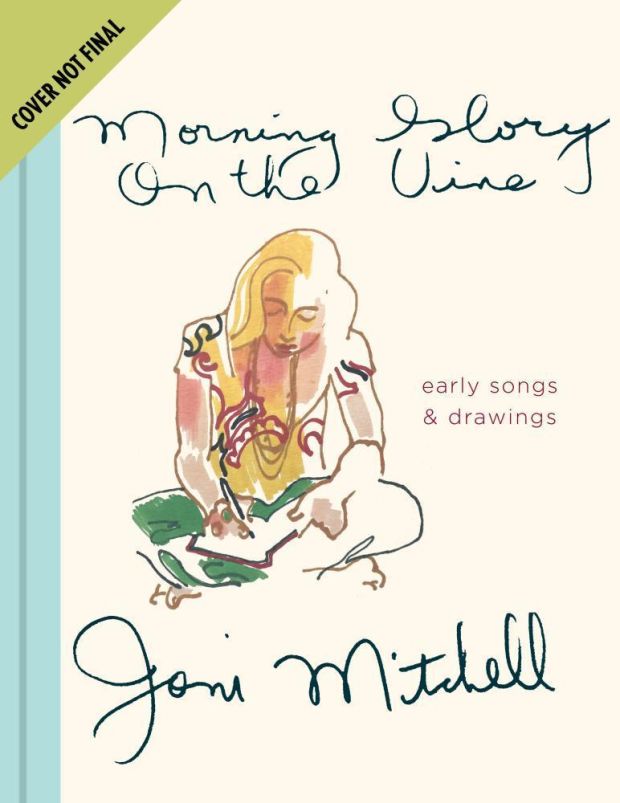
Joni Mitchell hand-drawn book for friends in 1971 set to be published

‘Simply no one like her’ … cover art for Morning Glory on the Vine. Photograph: CanongateFrom The Irish Times: 

A rare book of lyrics, poems and illustrations that Joni Mitchell created for her closest friends more than 40 years ago is to be commercially published for the first time this autumn.

The Canadian musician put together Morning Glory on the Vine in 1971, the year her album Blue topped charts around the world. Collecting lyrics, poems and more than 30 of her paintings, just 100 copies were hand-produced in Los Angeles for her friends. “Existing copies of this labour of love have rarely been seen in the past half-century,” according to the singer’s website.

The book features handwritten lyrics and poems, along with watercolour paintings depicting “a superb array of landscapes, still lifes, portraits of friends, self-portraits, innovative abstractions, and more”. The publication is part of celebrations of Mitchell’s 75th birthday year, which have also included a tribute album and concert.


Remembering a Woman Who Was a Leader of the French Resistance


Lynne Olson’s “Madame Fourcade’s Secret War” tells of a woman who led the fight against the Nazis while combating sexism among her colleagues.


Why have most of us never heard of Marie–Madeleine Fourcade? Why is her name missing from the honor roll of war heroes carved into thousands of monuments in hundreds of French village squares? Might the fact that this hero — the leader of one of France’s most successful anti-Nazi resistance organizations — was not a hero, but a heroine, have something to do with her absence from history? There is reason to believe so. At the end of World War II, the triumphant Gen. Charles de Gaulle designated 1,038 people as resistance heroes. Only six of those heroes were women, and Fourcade, who ran the longest-running spy network, was not among them. In “Madame Fourcade’s Secret War,” her fast-paced and impressively researched account, Lynne Olson corrects that historical injustice. Marie-Madeleine Fourcade emerges as a vivid and pivotal player in the French Resistance.

Olson writes with verve and a historian’s authority. Fourcade, she tells us, was beautiful and liked men, but she was obsessed with defeating the despised Boches. A master of disguises, she frequently changed her hair color, and sometimes used distorting dentures and other theatrical tricks.

read more here @ The New York Times

Monday, March 11, 2019

Marie Colvin: an Amazing Woman Whose Life Was Cut Short Trying to Present Us with the Truth

2018 was an annus horribilis for freedom of the press. Reporters Without Borders announced that 63 professional journalists were killed, of whom 49 were specifically targeted for death by an army or rebel group. 

The most famous journalistic killing came on October 2, when agents of the Saudi government murdered and dismembered Jamal Khashoggi, a Saudi dissident and columnist for The Washington Post. 

The conditions endured by journalists in war zones are portrayed in chilling detail in Lindsey Hilsum’s new book on war correspondent Marie Colvin (In Extremis). A staff reporter for The Sunday Times of London, Colvin died on February 22, 2012, aged 56, in Homs, Syria. The Syrian army, honing in on her satellite phone, targeted an artillery strike on the building where she was reporting from. 

At the time, Colvin was arguably one of the best-known war correspondents at work. With her distinctive black eyepatch, flak jacket and wavy hair tied in a bun, she was familiar to many Americans through her frequent appearances on CNN and other news outlets. 

read more here 

read also:
On The Frontline by Marie Colvin
A Private War by Marie Brenner
In Extremis: The Life and Death of the War Correspondent Marie Colvin by Lindsay Hilsum
Under the Wire by Paul Conroy
Cupcakes and Kalashnikovs: 100 years of the best Journalism by Women by Eleanor Mills
Bearing Witness: The Lives of War Correspondents and Photojournalists by Denise Leith

Sunday, March 10, 2019

Review: The Afterlife of King James IV by Keith John Coleman

The Afterlife of King James IV: Otherworld Legends of the Scottish King
To be honest this really was just not for me. Whilst the premise of exploring the mythology surrounding James IV of Scotland was what drew me to this book, the delivery failed to hold my attention. I felt that it was at times repeatative, convoluted, and disorganised. It assumes a prior knowledge of both Scottish and royal history (which I have); however, I guess I was expecting something a little more chronologically presented - dealing with specific themes (birth, life, death, afterlife) individually rather than collectively. I am sure others will like this - just not for me and I left it unfinished.


Sunday, March 3, 2019

History of Higham Ferrers to be told in new book


Image result for Higham Ferrers 1251 to 1914Higham Ferrers 1251 to 1914, a portrait of the town and its people through its historic charters, will be published in June. 

Higham Ferrers has six charters, five of which have been stored in the town hall. The charters, which set out the legal framework for how the borough of Higham Ferrers was to function, have deteriorated over the years – but Heritage Lottery money was recently made available to preserve them after a bid by Higham Ferrers Town Council, supported by the Higham Ferrers Tourism, Business and Community Partnership.

At nearly 300 pages the book tells the stories of the events that happened to Higham people from 1251 (the first charter) to 1886 (the last charter) and beyond, finishing at 1914. The book is fully illustrated with both colour and black and white pictures.

ASTERIX AT 60: The storied history of a still-indomitable gaul

Image result for asterix and obelixFrom The Mail:

There are some very special Frenchmen who have truly endeared themselves to the great British public. Victor Hugo has managed it (we all love Les Mis), Claude Monet generally goes down all right, and those of a certain persuasion may have fond memories of Thierry Henry.

But for the true adoration of the nation, one name stands (metaphorically) tall above the rest. I'm referring, of course, to Asterix the Gaul.

After six decades of boar-hunting, Roman-bashing, magic potion-swilling and menhir-delivering, the mischievous, mustachioed warrior has barely aged a day.

read more here @ The Mail