Showing posts with label 21st century. Show all posts

Sunday, April 20, 2025

Review: Agents of Change by Christine Hillsberg

Synopsis: The timely and revelatory exploration of the pioneering women who changed the insulated world of international espionage—from the barrier-crashing challenges of the 1960s to the present day reckoning—told through the eyes of a former intelligence operative herself.

Through exclusive interviews with current and former female CIA officers, many of whom have never spoken publicly, Agents of Change tells an enthralling and, at times, disturbing story set against the backdrop of the evolving women’s movement. It was the 1960s, a “secretarial” era, when women first gained a foothold and pushed against the one-dimensional, pop-culture trope of the sexy Cold War Bond Girl. Underestimated but undaunted, they fought their way, decade-by-decade, through adversity to the top of the spy game.

~ ~ ~

"... there is no crying in espionage ..."

From the 1960s through to our current decade, women have endured misogyny and sexism in the workplace, as well as both racial and gender discrimination - the agencies of the secret services are no different nor are they immune. The documented behaviour towards women by men in Hillsberg's book could apply to women anywhere - except in these instances, the women run the risk of exposure, imprisonment and death - all for serving for the greater good of their nation. 

Hillsberg documents across seven decades, the internal and external threats the women battled, with a more narrower focus on the barriers being put up to their advancement - oft times by their own gender - setting all this in context against the modern-day "Bond" franchise.

"Agents of Change" looks at the numerous milestones these women achieved across the decades, from working as secretaries and clerks, to going out in the field of covert ops, to becoming departmental heads. All the while having to walk the fine line of work-life balance that their male counterparts did not. As Hillsberg notes: "... spying was still very much a man's world ..." and some of the stories presented highlight that fact - detailing the prevalence of sexual harassment and unwelcome advances including those from both colleagues, and external agents and operatives, slut-shaming, aggression, and the constant deflection of the barrage of rumour and inuendo when advancement does come their way. Hillsberg also sadly notes, that women in the Agency did not feel able to support other women due to potential repercussions for themselves and their own careers - this is still prevalent today - women can be their own worst enemy.

As the decades roll on, Hillsberg concentrates her focus a small number of prominent women and the challenges they faced - married women were often forced to give up their careers for their families, but also in order to ensure the career advancement of their husbands. For many, they elevated themselves above societal and cultural norms to work in a field where threats to personal safety could be a daily occurrence. Hillsberg documents that for some, the inevitable toll on their mental health and personal lives and those of their families, was too much and they left the Service, a number taking on prominent roles the the government and business sectors.

This is an eye-opening chronicle of the struggles women faced in the Agency, written by one who had the insider's take on what these women experienced. There are still many more untold stories, but as the synopsis notes, this is a ".... long overdue tribute to the survivors....".

In conjunction with this book, I also recommend reading "Secret Servants of the Crown" by Claire Hubbard-Hall, which looks at the role of women in the British Secret Services.

Friday, February 7, 2025

Review: The Long Game - Inside Sinn Fein by Aoife Moore

Synopsis: Inside the rise of the political party, once subordinate to the IRA, that is on the brink of taking power in Ireland.

Sinn Féin, long widely-regarded as the political wing of the Provisional IRA, is the most popular political party in both Northern Ireland and the Republic. A movement once synonymous with a paramilitary campaign is on the brink of taking real power through purely democratic means. But if Sinn Féin has mastered the art of electoral politics, it remains strangely opaque. Who really runs the party? How is it funded? And what can we expect of it as a party of government?


Aoife Moore, Irish Journalist of the Year 2021. explores these and other burning questions in The Long Game. Drawing on exclusive interviews with current and former members of Sinn Féin, she builds up a picture of a party undergoing a profound, and still incomplete, transformation. She looks at the key individuals and moments that put the party on its present course, and she explores tensions within the party and the wider republican movement.
~ ~ ~

Moore's books is intended to provide a fair and accurate account of the rise of the Irish political party, Sinn Fein. And to be fair, Moore does this, documenting the legitimisation of Sinn Fein in 1974 through to its current incarnation today. Along the way, the narrative looks deeply into the culture and history and personalities of those within and those pulling the strings of the party.

What the reader will find when picking up this tome are the following, summarised in dot points below, and in no particular order:
  • the efforts of the party leadership to change the party's image were undercut by forces within the movement;
  • the party was and is in a state of perpetual flux;
  • the party is still tied and subservient to its historical paramilitary and political baggage;
  • there is a deep seeded culture of bullying, cover-ups, political disfunction, paranoia and suspicion, scandal, chaos, malfeasance;
  • it has a top down structure and hierarchy that is not driven by grass roots culture;
  • the party leadership worked to control its members and centralise power and no deviation from the party line is tolerated;
  • the party narrative was and is driven, controlled and censured by dominant personalities who didn't care for change until the politics became popularly unpalatable;
From available sources, historical documents, and anonymous interviews, Moore has managed to put together a history of the party. The narrative, however, goes back and forth with the introduction of each new character and key events to give perspective and context to the overall story (Irish storytelling is never linear). 

I personally, would also have preferred two things:
  1. that the actions of the Sinn Fein were viewed also in context of the actions of its political and paramilitary opponents, though understand that this would have increased what is already a decent lengthy tome;
  2. that the detail on the hierarchical structure of the party had been documented earlier in the book to aid the reader is grasping where each organisation was placed.

I have previously read a great deal about Irish history and politics leading up to the early 2000s, so I was keenly interested in what Moore (who implies that the reader has a certain level of knowledge already) had to say and what she could add to what had previously been written. There were some snippets I found of interest whilst there was much that confirmed and substantiated what I knew and suspected from my own readings and research.

Overall, from an outsiders' perspective, Moore achieves her intent. A worthwhile read for those for whom this subject matter is of interest.

Tuesday, December 31, 2024

Review: The Lady of the Mine by Sergei Lebedev

Synopsis: The mystical laundress at the center of this novel is obsessed with purity. Her task is formidable as she stands guard over a sealed shaft at a Ukrainian coalmine that hides terrible truths. The bodies of dead Jews lying in its depths seem to attract still more present-day crimes.

Acclaimed Russian author Sergei Lebedev portrays a ghostly realm riven by lust and fear just as the Kremlin invades the same part of Ukraine occupied by the Wehrmacht in World War Two.

Then corpses rain from the sky when a jetliner is shot down overhead, scattering luxury goods along with the mortal remains. Eerie coincidences and gruesome discoveries fill this riveting exploration of an uncanny place where the geography exudes violence, and where the sins of the past are never all that in the past.

Lebedev, who has won international praise for his soul-searching prose and unflinching examination of history’s evils, shines light on the fault line where Nazism met Soviet communism, evolving into the new fascism of today’s Russia.

~ ~ ~

Hauntingly brilliant.

This is my third tome from Lebedev, It is set across five days in July 2014, in Ukraine, as Russian troops invade. The story is narrated by four characters: Zhanna, daughter of the mystical laundress; Valet, a former neighbour now in the police special regiment, who is fired by jealousy and vengeance; The General (Korol), who is fascinated by the shaft and its secrets; and The Engineer, the ghostly first victim to be buried there.

It does take a little bit to get into the rhythm of the prose but persevere and you will find a gripping story with elements of the supernatural.

Saturday, December 23, 2023

Review: The Murder of Alexander Litvinenko by Boris Volodarsky

Synopsis: In his famous Moonlight and Vodka , Chris de Burgh got it Espionage is a serious business. And like every serious business, it must be taken seriously. Less than two decades after the untimely death of Sasha Litvinenko, poisoned at the heart of London’s Mayfair by Russian secret agents by the previously unknown radioactive substance containing a fatal dose of Polonium-210, it is hardly remembered by anyone in the West. No wonder, we live in an information-rich world when the wealth of information means a dearth of something a scarcity of whatever it is that information consumes. Such an obvious thing was suddenly discovered by a simple old man from Milwaukee, and he’s got a point there.

This book is about the murder of Alexander Litvinenko, whose legal case seems to many people like open-and-shut. Even to his widow Marina and their son. To MI6, MI5 and the Special Operations branch of the London’s Metropolitan Police who presented it to the public as thoroughly investigated and closed. To judge Sir Robert Owen appointed to hold the inquest “into the death of a Russian Spy” as the BBC and other media has put it – a terrible mistake. To journalists and writers who had been following this case for as long as a decade, not to mention the prime suspect living a good life in Moscow. But not for me. For me this case remains open.

~ ~ ~

The death of Alexander "Sasha" Litvinenko on 23 November 2006, after being poisoned with polonium-210 made headlines worldwide. Litvinenko was a senior investigating officer fighting organised crime and corruption in Russia before rebelling, being imprisoned and ultimately escaping and defecting to the UK, where he worked as a journalist, activist,and commentator.

However, Volodarsky's book is far from a straight forward piece of investigative journalism - which is disappointing as the author's views might have been better served had he followed this well-worn path.

For the reader, there is a lot of information of the state of Russian politics prior to Litvinenko - we begin with a brief summary of events, the author's further questions, the rise of Putin and then the focus centers on Boris Berezovsky. I seriously wondered when the author was actually going to get around to Litvinenko. The fact the there was such a focus on Berezovsky rather than Litvinenko ensured that I became rather disenchanted with the whole tme. I did push on till then end, but Volodarsky provides nothing that a google or wikipedia search could not provide. Litvinenko was never the main focus - he should have been.

Whilst I myself was deeply intrigued by the whole Litvinenko saga as it was played out in real time (at the time), this particular tome barely satisfied my curiosity and the conspiracy theorist in me.

Monday, November 29, 2021

Review: All The Old Knives by Olen Seinhauer

Synopsis: Nine years ago, terrorists hijacked a plane in Vienna. Somehow, a rescue attempt staged from the inside went terribly wrong and everyone on board was killed.

Members of the CIA stationed in Vienna during that time were witness to this terrible tragedy, gathering intel from their sources during those tense hours, assimilating facts from the ground with a series of texts coming from one of their agents inside the plane. So when it all went wrong, the question had to be asked: Had their agent been compromised, and how?

Two of those agents, Henry Pelham and Celia Harrison, were lovers at the time, and in fact that was the last night they spent together. Until now. That night Celia decided she’d had enough; she left the agency, married and had children, and is living an ordinary life in the suburbs. Henry is still an analyst, and has traveled to California to see her one more time, to relive the past, maybe, or to put it behind him once and for all.

But neither of them can forget that long-ago question: Had their agent been compromised, and how? And each of them also wonders what role tonight’s dinner companion might have played in the way things unfolded.

All the Old Knives is Olen Steinhauer’s most intimate, most cerebral, and most shocking novel to date—from the New York Times bestselling author deemed by many to be John le Carré’s heir apparent.


I came to this through a back-handed compliment from another reader - and the premise intrigued me so much so that I read it in one sitting! And verdict - definitely one for my espionage shelf!

The narrative alternates between Henry and Celia as the meeting is arranged and finally takes place. There is the most important reflection on not only past events but also of their own relationship at the time. The narrative is punctuated with emails and other documents from the period adding context and background to the events that led to this meeting.

This is a wonderfully engrossing cat and mouse standoff between two people trained to lie and be deceptive - as Celia reflects, "...  we are both trained in manipulation ... we are both less than trustworthy ...".  Who is the protagonist and who is the antagonist remains in doubt right up to the very end.

The narrative is intense, well written, skillfully plotted and slightly ambiguous with nothing being given away - Steinhauer maintains his poke face throughout.  This is also a tale of love, revenge and betrayal - as all the pieces are placed on the chessboard, does the real narrative reveals itself, and we are forced to do a double-take and retreat back through the pages to see what we missed - and when.!

I can see why this was picked up to be made into a film - it will make for a rivetting drama, and the book itself is definitely up there with the great espionage tomes of past generations.


Saturday, September 18, 2021

Review: Dear Arlo by Tom Kreffer

Synopsis: It begins immediately.

There’s no transition period, no trial run, no supervised training, no e-learning module and no simulation that you can f**k up as many times as you need to until you get it right.

As soon as the midwife hands you your newborn baby, you are responsible for keeping it alive.

Picking up moments after Dear Dory ends, Dear Arlo: Adventures in Dadding continues the story of one dad and his journal as he strives to survive the first year of parenthood, blundering his way through bottle-sterilising, night feeds and some cataclysmic nappy changes – all while a pandemic sweeps across the planet.

WARNING: ONCE AGAIN, THIS BOOK CONTAINS A LOT OF SWEARING


Right from the very start Tom asks: " ... we don't just jump into this parenthood gig .. do we? Isn't there some sort of transition phase for new parents? ..."

This self-effacing edition to the "adventures in dadding" series, will put the fear of God into first time dads, whilst bringing tears of laughter to those with their own brood of ankle-biters.

From day one, Tom questions whether or not he should be "... allowed to operate a few minutes old baby ..." , especially given the choice of baby-soothing lullabies (Yogi Bear Song).

Again, we are treated (though I question if that is the right choice of word?) to the daily rituals of feeding, napping changing (including details of the ‘cheeky, up-the-back, explosive shart’), with visits to family, friends, and healthcare professionals that all new parents go through, to first words and first steps unaided.

From Wednesday 12th February 2020:
"Today was great; I was wearing a black T-shirt when you projectile-vomited all over me. Mummy took one look, laughed and told me I looked like a Jackson Pollock painting.".

Kreffer also deals with first-time-parent issues such as leaving baby at home to spend some time together as a couple (code for out on the piss), going on a short holiday, and returning to work. Amid all of this new parent chaos, the dreaded covid is looming on the horizon and we encounter the issues of working from home with an infant under one.

Tom takes us through bed time etiquette:
"He tries to resist, like a victim in a horror movie scraping his nails on the wooden floorboards, but instead of screaming in terror, he giggles and shrieks in delight."

To little accidents:
"... you fell over .... I was holding a hot cup of tea at the time, and when I launched myself to save you from injury, the tea departed the cup and arced perfectly, before swan diving right down my .... " - read on to find out exactly where the tea landed but let us say that men will cringe and shed a small tear.

To the arrival of the first birthday, a father's reflection and a parent's realization that: MEANINGFULNESS + CONTENTMENT = HAPPINESS!


Thursday, August 19, 2021

The Chancellor by Kati Marton

This one popped into my newsfeed courtesy of Simon & Schuster:


About The Book:
The definitive biography of German Chancellor Angela Merkel, detailing the remarkable rise and political brilliance of the most powerful—and elusive—woman in the world.

The Chancellor is at once a riveting political biography and an intimate human story of a complete outsider—a research chemist and pastor’s daughter raised in Soviet-controlled East Germany—who rose to become the unofficial leader of the West.

Acclaimed biographer Kati Marton set out to pierce the mystery of how Angela Merkel achieved all this. And she found the answer in Merkel’s political genius: in her willingness to talk with adversaries rather than over them, her skill at negotiating without ever compromising on what’s most important to her, her canniness in appointing political rivals to her cabinet and exacting their policies so they have no platform to run against her, the humility to allow others to take credit for things done in tandem, the wisdom to stay out of the papers and off Twitter, and the vision to take advantage of crises to enact bold change.

Famously private, the Angela Merkel who emerges in The Chancellor is a role model for anyone interested in gaining and keeping power while holding onto one’s moral convictions—and for anyone looking to understand how to successfully bridge huge divisions within society. No modern leader has so ably confronted Russian aggression, provided homes to over a million refugees, and calmly unified Europe at a time when other countries are becoming more divided. But Marton also describes Merkel’s many challenges, such as her complicated relationship with President Obama, who she at one point refused to speak to.

This captivating portrait shows a woman who has survived extraordinary challenges to transform her own country and return it to the global stage. Timely and revelatory, this great morality tale shows the difference an exceptional leader can make for the greater good of a country and the world.

Saturday, July 24, 2021

Review: The Milan Contract by Stephen Franks

Synopsis: ‘Except for the ugly brown bullet hole, the corpse could have been the image of the man in the mirror’.

Lukas Stolz, an ex-East German maths guru is shot dead outside the Hotel Napoli in Milan. But Lieutenant Raphael Conza soon wonders whether the bullet that killed Stolz was meant for someone else.

Conza’s investigations uncover a vital witness who may know the moped rider spotted leaving the murder scene. Another witness goes missing and someone is leaking details about the case.

The gang behind the murder will stop at nothing to cover their tracks and Lieutenant Conza finds himself fighting not only the assassins, but also powerful allies determined to protect them. He soon realises he’s out of his depth in pursuit of brutal killers in both Italy and the UK and has to reconsider his options after discovering a plot that could have international repercussions.


Here you have all the ingredients of a great crime thriller: espionage, sabotage, murder, revenge, hatred, blackmail, intimidation; plausible protagonists; powerful antagonists; shady killers; long held secrets dating back decades. And then there is Milan - a city that inspires and entices with its eclectic peoples and culture, a fast-paced metropolis that ignites the senses and yet harbours a darker underbelly that few are exposed to.

And just when you thought you knew where you were being led, you take a misstep and find yourself with more questions than answers.

A fantastic first novel - and cannot wait for more!


further reading:


Tuesday, June 1, 2021

Review: The Grey Men by Ralph Hope

Synopsis: In 1990 the Berlin Wall fell and the East German security service folded. By that time, they had amassed over a billion pages of manilla files detailing the lives of their citizens. Overnight, almost a hundred thousand Stasi employees, many of them experienced officers with access to highly personal information, found themselves unemployed. This is the story of what they did next.

Former FBI Agent Ralph Hope uses critical insider knowledge and access to Stasi records to track and expose ex-officers working everywhere from the Russian energy sector to the police and even the government department tasked with prosecuting Stasi crimes. He examines why the key players have never been called to account and, in doing so, asks whether we have really learned from the past at all.

The Grey Men comes as an urgent warning from the past at a time when governments the world over are building an unprecedented network of surveillance over their citizens.


I was drawn to this for the simple reason, that I, like many others, wanted to know what happened after the fall of the Berlin Wall, which, if you can believe it, was the result of a slip of the tongue and a shrug of the shoulders.

Having read about the years of the dictatorship and other books wherein survivors tell their own personal stories, I was interested to hear how the 90000 odd members of the Stasi washed up. Curiously, that the fact that of the 90000 members, 182 were charges, 87 convicted and 1 sentenced to prison! Surely these stats were wrong! But no, having weathered the initial storm, the Stasi were still there, albeit under another name, another identity, working for another government, working for themselves, shielded by strict privacy laws which prevented the world from knowing who they actually were or are.

Hope, a former FBI agent, obviously had greater access to information and people than the average author, so the stories of survivors and the information garnered was eye-opening to say the least.

It is as we draw ever further away from post-war East Germany that Hope draws upon what he deems are the similarities between the Stasi and some of today's politically active groups, with what he terms the "decomposition of the individual" wherein social media now becomes the anonymous bogeyman to espouse ideas once shunned and to attack those who dare to speak out.

It is interesting reading for those interested.

Wednesday, January 27, 2021

Review: Angelino Heights by Adam Bregman

Synopsis: When Dalton Everest, a naive school teacher with a crackerjack, free-form way of expressing himself, forms a fast friendship with Nathan Lyme, a charmer who’s cagey about his employment, everything Dalton knew of his previous life is swiftly upended.

Set up by Nathan to fall hard for Melanee, a frequently drunk French girl and former purse snatcher, Dalton ends up in a pickle and then, paranoid out of his wits, is ultimately chased through the streets of downtown L.A.

Angelino Heights is a crime novel obsessed with Los Angeles. It traipses across the city from a crooked pawn shop in Cudahy to a secretive mecca of modernism protruding from a hill in Pasadena to the old timey dive and themed bars, where its protagonists drink up the atmosphere of old L.A. 


Firstly - apologies to Adam for my tardy review. Secondly - what a great read!

I love noir! And this is a compelling tale of a solid citizen's flirtation with the dark side that has ultimately led to where they find themselves. Bregman takes his reader on a mystery tour of the seedy side of Los Angeles as we follow mild mannered school teacher Dalton Everest as he is slowly seduced over to the dark side by one Nathan Lyme. 

The reader never really discover's Lyme's motive in his selection (or targeting) of Everest as his partner, accomplice, patsy, fall-guy . Nor do we ever really discover what made Everest so susceptible to Lyme's charms, for Lyme does manage to have a certain hold over those in his immediate sphere. 

However, I strongly suspect that it all boils down to that need to walk the fine line between good and bad, a flirtation with danger; and like the old style sobriety test, some just never manage to stay on that straight line.


LAPD Detective Orlando Talbert sums it up nicely, "... they sure don't make crazy white dumbfucks like they used to ..."


Wednesday, January 20, 2021

Review: Dear Dory by Tom Kreffer

Synopsis: Imagine discovering you're about to become a parent, even though doctors told you the chances of making a baby were close to zero.

Now, a soon-to-be first-time father is charting a course through the perilous and choppy waters of living with a pregnant woman. He's dodging hormonal right hooks, evading emotional explosions, saying all the wrong things (like 'Are you okay?') and trying to figure out how the hell you install a car seat.

Written as a journal to his unborn child, Dear Dory is the unfiltered, irreverently funny, honest and heartfelt account of one man's journey to fatherhood as he contemplates his new identity as a Daddy and prepares for the responsibility of a lifetime.

WARNING: This book contains a truckload of profanity. 


I will go out on a limb and say that this is not typical of the type of book I would normally pick up - I have a huge penchant for history and its related memoir genre. However, this book, offered by the author, Tom Kreffer, was a blast!

It is one man's documenting of his personal perspective of the events from the discovery to the leading up to that all important delivery date and his own impending fatherhood. It is written by a man for his child -- it covers the highs and lows of living with a pregnant woman - and many men will find a kinship with Tom in this - how he got away with much contained therein with his manhood still intact is a miracle!.

The diary style entries are humourous, satirical, reflective, refreshing, and heartfelt. Tom recounts his fear, joys, relief as both he and his wife travel the much worn path of scans, appointments, false alarms, "to tell or not to tell" family and friends, baby expos, mood swings (and the appearance of what Tom refers to as "Miss Heidi"). And as Tom reflects ... "... this pregnancy stuff is fucking nuts! .."

Just keep swimming, Dory! How I loved that name! I do hope Tom continues to use it as a nickname for the young squib when they arrive!

This is a must read for every prospective parent - and those already with children will no doubt be sagely nodding their heads amid bursts of laughter and self-recognition!


Wednesday, January 13, 2021

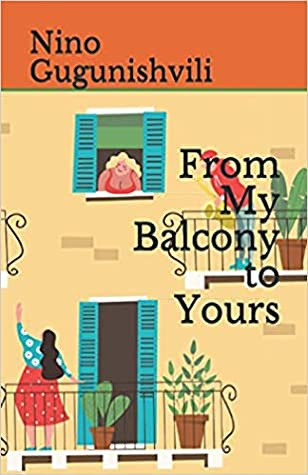
Review: From My Balcony To Yours by Nino Gugunishvili

Synopsis: Who would have thought that Global Pandemic, Self-Isolation, Cluster, and a Lockdown were to become the trendiest words in 2020? Who would have imagined the world would freeze and people would stay home shattered with fear, panic, uncertainty towards their future?How do we adjust to this changing reality, when none of our questions have answers when plans turn upside down, things get totally out of control?

In her new book: “From My Balcony to Yours,” author Nino Gugunishvili shares her personal account during the first several months of the COVID -19 global pandemic in the form of short stories and observations.


So utterly relatable - personal, humourous, emotional, compact.

A series of small observations as one woman documents her life during covid lockdown from March to September 2020. Nino writes of all the emotions she experiences, emotions that will be familiar to us all - from acceptance and contemplation, to fear, anger, apathy, anticipation. Her stories will touch everyone in some small personal way.

Nino describes covid as a "... noisy, unwanted neighbour you have to share your apartment with ..." whilst also acknowledging that " ... there were more dramatically things happening ...." around the globe, even more poignant when reminiscing about her childhood. And then there is one line that will resonate with us all - "... socks are my best friends ...".

This charming tale will find a home with all readers for we all have this one great shared experience wherever we are in the world. A must read!

Monday, July 20, 2020

Review: Starving Men by Siobhan Finkielman

Starving Men: A psychiatrist. A killer. An unthinkable revenge for history.Synopsis: Dublin, 2019: Michael Gleeson is a well-respected psychiatrist – a quiet man, a good friend, and a useless cook. He also spends part of his professional life secretly counseling former members of the disbanded IRA. Michael always thought this would be enough to satisfy his Republican heritage, but when the highly skilled yet deeply disturbed Turlough O’Sullivan enters his office, Michael sees an opportunity that he just can't overlook.


Haunted by childhood tales of the gruesome history of the Irish people under British rule, Michael enlists his new patient's help in tracking down and killing the living descendants of the worst men in Ireland's past, figures whose names still send a shiver down the spine.

But Michael's plan for a bloody revenge doesn't run smoothly: Not only must he learn the brutal truth about the role models who formed him as a child, but on his trail is a young Irish detective temporarily assigned to Scotland Yard, an officer who becomes obsessed with stopping the unknown serial killer who is out for an historical revenge that she can't understand.


How many of us have asked ourselves "would that I could right an historical wrong" - and how many of us, had we the opportunity to do so, would?

This is the premise of Finkielman's psychological thriller set in Ireland wherein Michael Gleeson, noted psychiatrist and Irish Republican sympathiser, does just that. From the stories religiously instilled in him as a young and malleable child of The Troubles by his relatives, Michael Gleeson becomes fixated on events dating back to County Mayo during the Irish Famine, but has done nothing to assuage this unrequited need for revenge until the day when the instrument of his vengeance walks through the door.

A group of 600 Irish starving during the Great Hunger set out to Doolough to find food. Most of did not survive.The Great Famine and its effects have been felt keenly by many down the ages by the Irish diaspora. This was a tragic period of mass starvation and disease from 1845 to 1849, with the most severely affected areas in the west and south of Ireland. In the period between 1841 and 1851, the population of County Mayo declined by 29 per cent from 388,887 to 247,830. Deaths and emigration accounted for the loss of 114,057 of Mayo's population - a stark figure when compared to the county's population of 130,507 (2016 Census).

It is said that " ... the Irish aren't a people for forgetting about the past ... " and it is a cry from the past that ignites Gleeson's obsession with events linked to the Famine and finally propels him to move forward and seek retribution of the victims ... "... let it be some man down the years who will take the sharpest hands ..." .

This is an engrossing tale - and I was drawn to it due to this being a part of my own family history. It did, however, start out a little patchy in places, but I put this down to the storyline - and the characters - finding its feet, so to speak. The story is related through various mediums - we have the first person narrative of Michael Gleeson - who is both likeable and detestable - in the present as well as taking us back to his childhood; we have the historical narrative in the form of letters from Honoria O'Gliasain, reliving her experiences in Mayo at the time of the Famine; we have the narrative of police officer Maggie Foster, seconded to Scotland Yard, who finally puts the pieces of the puzzle together; and we have the instrument of death. There are various smaller contributing narratives, each added another layer and perspective, and linking in the various themes in order to bring the overall narrative together.

The Troubles - Irish CultureThe history and politics of Ireland is never clear cut, especially to an outsider. Like the country itself, this tale is a contradiction wherein villains are heroes and heroes are villains, and the truth is shrouded in a fog layered over the ages, obscuring, obfuscating, complex and dense; and where one man is held captive by his own obsessive compulsion to right a historical wrong.

A very suspenseful and engaging first novel.


Useful Links:


Tuesday, April 28, 2020

Review: 21 Immortals by Rozlan Mohd Noor

21 Immortals: Inspector Mislan and the Yee Sang MurdersSynopsis: Inspector Mislan and the Yee Sang Murders is an explosive debut from the quietly talented Rozlan Mohd Noor, an ex-police officer, which explains why he knows so much about police work and inside stories. This is a true Malaysian high-tech crime thriller with good cops, bad cops (and badder cops) and triad members, with insights into the workings of the local CSI, and forays into the world of hackers and their viruses, sleeper programs, trojans, ulat, spybots, hound dogs and their link to crime, including murder.


The setting is Kuala Lumpur, global city and the cultural, financial and economic centre of Malaysia.  Kuala Lumpur is one of the leading cities in the world for tourism and shopping.  Apart from its plethora of shopping complexes, Kuala Lumpur has designated numerous zones in the city to market locally manufactured products such as textiles, fabrics and handicrafts. It has a bustling entertainment district and plays host to many notable hotel chains.

The Royal Malaysian Police or Polis Diraja Malaysia (PDRM), is a (primarily) uniformed federal police force in Malaysia. The force is a centralised organisation with its headquarters are located at Bukit Aman, Kuala Lumpur. The regular RMP is also assisted by a support group of Extra Police Constables, Police Volunteer Reserves, Auxiliary Police, Police Cadets and a civilian service element.

File:Kuala Lumpur Malaysia Kuala-Lumpur-Police-Contingent-Headquarters-02.jpgThe CID deals with the investigation, arrest and prosecution of both violent crimes such as murder, robbery, rape, etc., and less serious crimes such as theft and house-breaking. This department also specialises in investigating gambling, vice and secret societies (triads). In our story the branches we are most concerned with are: D2 – Criminal Record Registration Division, D6 – Technical Assistance Division, D7 – Gambling / Vice / Secret Societies Prevention Division, D9 – Special Investigation Division, D10 – Forensic Laboratory Division, 

Crime in Malaysia manifests in various forms, including murder, drive by killing, drug trafficking, money laundering, fraud, black marketeering, and many others. Sex trafficking in Malaysia is a significant problem.

Kuala Lumpur is pluralistic and religiously diverse. The city has many places of worship catering to the multi-religious population. Islam is practised primarily by the Malays, the Indian Muslim communities and a small number of Chinese Muslims.  Kuala Lumpur's rapid development has triggered a huge influx of low-skilled foreign workers from other Asian and Indian sub-continent nations.

Noor himself is an ex-police officer in the Malaysian police force, working as an Investigation Officer for 11 years in capital city Kuala Lumpur.  This lends a huge amount of credibility to the novel as the author is writing from personal experience. You get a real feel for the city itself and the multi-cultural population - and the repeated mentions of food made me hungry!

So, in this first Inspector Mislan mystery, Inspector Mislan Latif and Detective Sergeant Johan Kamaruddin of Special Investigations (D9), are called upon to investigate the murder of fashion magnate Robert Tham and his family. What was so special about this man to warrant such a diabolical and macabre end. As Mislan delves deeper he is no nearer to solving this, and all the while he is butting heads with the heads of other branches who want to take over his case.

What You Need to Know About Cyber Security for Small Business ...
The crime itself has a more modern touch as there is the involvement of computer technicians and hackers in assisting Mislan with his investigation.  I was particularly interested in the "method" used in the original crime, pulled straight from the headlines (spoiler altert - you can read more here @ Notes to 21 Immortals).

Aided by the lovely Dr Safia, Forensic Chief Chew, and Superintendent Samsiah Hassan (who has his back in these inter-departmental dust-ups), Mislan eventually reaches the conclusion - could it really have been as simple as all that??

My only criticism was that for the amount of effort put into the crime, the motive appeared weak.

I am looking forward to reading more in the series - see list of titles @ Goodreads.

Friday, October 11, 2019

Review: The Anatomy of a Spy by Michael Smith

46779497. sy475
Synopsis: Why do people put their lives at risk to collect intelligence? How do intelligence services ensure that the agents they recruit do their bidding and don't betray them? What makes the perfect spy? Drawing on interviews with active and former British, American, Russian, European, and Asian intelligence officers and agents, Michael Smith creates a layered portrait of why spies spy, what motivates them, and what makes them effective.

Love, sex, money, patriotism, risk, adventure, revenge, compulsion, doing the right thing— focusing on the motivations, The Anatomy of a Spy presents a wealth of spy stories, some previously unknown and some famous, from the very human angle of the agents themselves. The accounts of actual spying extend from ancient history to the present, and from running agents inside the Islamic State and al-Qaeda to the recent Russian active measures campaigns and operations to influence votes in the UK, European Union, and United States, penetrating as far as Trump Tower if not the White House.


This is a history of espionage and betrayal, peppered with real stories, predominantly from the 20th century.  Whilst outlining the difference between a spy and an agent, this book explores the motives for espionage under seven main headings, all of which cross over into each other. So why do spies spy: sex, money, tribal loyalty, revenge, control, ideology, compromise, ego, patriotism, adventure or just the right thing to do.

In summary -
(1) Sexual Relationships: the use of the honey trap, sexual coersion and blackmail.
(2) Money: contraband as currency, no loyalty when selling to the highest bidder, the need for money; unreliable method of recruiting and obtaining information.
(3) Patriotism: doing something for the good of your country, use of civilians (expats or business folk), undermining from within to bring down the rival regime (trojan horse), or the recruitment of citizens of occupied territories.
(4) Adventure: risk takers, egotists, fantasists, psychopaths, self obsession, wounded pride.
(5) Revenge: losers in a civil war, death of a loved one, exiled emigre population, anger at the ruling regime.
(6) Right Thing To Do: ideology, moral duty, belief, feeling of belonging, support for the underdog.
(7) Unwitting Agents: exertion of influence, covert use of someone without their knowledge, tactics of deception and confusion, cybercrime, whistle-blowing.

Some of these larger than life characters I was familiar with from prior reading - though not in such detail as provided here. Fleming is well featured as is that near-fictional Reilley Ace of Spies. None of these fantastical schemes would get past HR today and you are often left wondering how so many of them actually succeeded.

I was particularly interested in wartime espionage and the Cold War, as we moved further closer to our own time, my interest waned a little - but that was just me as I found the "old school" spycraft was more interesting - the human element rather than the current, modern day cybercrime and whistle-blowing (spying from a distance).

If this is your genre, it's well worth the read. 


Saturday, October 5, 2019

US College Students Just Want Normal Libraries

Yet much of the glitz may be just that—glitz. Survey data and experts suggest that students generally appreciate libraries most for their simple, traditional offerings: a quiet place to study or collaborate on a group project, the ability to print research papers, and access to books. Notably, many students say they like relying on librarians to help them track down hard-to-find texts or navigate scholarly journal databases. “Google can bring you back 100,000 answers,” as the writer Neil Gaiman once said. “A librarian can bring you back the right one.”

read more @ The Atlantic

Friday, September 27, 2019

Mick Herron’s ‘Joe Country’ Is a Brexit-Era Spy Thriller


Mick Herron writes about the broken spies sworn to protect today’s broken England.


So when somebody writes a book that grips and settles me, that makes a reader out of me again, I become quite helpless with gratitude. I feel this way about Mick Herron. Born in Newcastle upon Tyne, in England, and educated at Oxford, Herron writes squeakingly well-plotted spy thrillers. More than that, he composes—at the rate of a pulpist—the kind of efficient, darkly witty, tipped-with-imagery sentences that feel purpose-built to perforate my private daze of illiteracy. More than that, he’s a world-bringer, the creator of a still-growing fictional universe with its own gravity, lingo, and surface tension. He whacks his characters and winnows his cast with real 21st-century anti-sentimentality, but there always seems to be enough life-energy around to generate more stories. A TV series is in the works, and a new novel, Joe Country, was published in June.

At the center of Herron’s mythosphere is a terrible, terrible office: Slough House. Although … can Slough House be at the center of anything? It’s a terminus, permanently dislodged from—at odds with, even—the flow of existence. A grimly nondescript building somewhere in the London borough of Finsbury, a concrescence of London dilapidation and anonymity, Slough House is where you’ll find the “slow horses”—the MI5 operatives deemed too dysfunctional, addicted, high-risk, or failure-prone for anything but the most grinding busywork. J. K. Coe is there, monastically hoodied, sizzling with PTSD, listening to Keith Jarrett in his earbuds and not talking to anyone. Shirley Dander is there, always thinking about the wrap of cocaine in her pocket. (“It wasn’t like Shirley was an habitual user. It was a weekend thing with her, strictly Thursday to Tuesday.”) The manager of Slough House, its twice-as-toxic David Brent, its stained and farting Buddha, is Jackson Lamb. Once a formidable “joe”—Herron-speak for an agent—at Berlin Station, Lamb is now a chain-smoking, whiskey-drinking shambles and a creature of coal-black cynicism. Herron’s slow horses are always being pulled into plots, called upon to exercise their latent joe skills. As rejects, they are the natural enemies of the elite. They can smell a false-flag operation a mile off. No fake news for these genuine losers. In Joe Country, a hunt for the missing son of a deceased slow horse leads to an encounter with the most infernal echelons of the Establishment.

Espionage is a shadow battle; it looks like the psyche. “On a normal day,” muses a spy in Joe Country, “London was bright and busy, full of open spaces and well-lit squares. But it was also trap streets and ghost stations; a spook realm below the real.” In this realm, people change shape; graves open and dead things rise; stories turn inside out. Like John le Carré—with whom he has been much compared—Herron is obsessed with that area of human experience, that area of the human brain, where paranoia overlaps with an essential, feral vigilance. “Since leaving the Park he’d had that uneasy sense of footsteps in synch with his own. There were tricks you could pull—double back to check a shop window, pause to fix a shoelace, halt at a bus stop …” No such thing as coincidence. Ordinary, bovine, walking-down-the-street life is an illusion, a sleep-state. Don’t get caught standing around: bad tradecraft.

Herron has been praised for the wit and velocity of the workplace banter at Slough House—the infighting, and the awful, un-PC things that come out of Jackson Lamb’s mouth: “I’m an ardent feminist, as you know. But haven’t you girls got better things to worry your little heads about?” A little of this, I find, goes a long way. Sections of London Rules in particular seemed to me to be rather clogged with Veep-like repartee. Joe Country corrects the error. The slow horses are drawn out of fast-talking London and into wintry Wales, land of snowy ditches and burning owls. The bastions of privilege are casting their long shadow. And in joe country—the place, the mind-set, where the spies live—there are ironies and inversions, but no jokes.

Wednesday, September 25, 2019

In Spies We Trust by Rhodri Jeffreys-Jones - Oxford University Press

Cover for 

In Spies We Trust


In Spies We Trust reveals the full story of the Anglo-American intelligence relationship - ranging from the deceits of World War I to the mendacities of 9/11 - for the first time.


Why did we ever start trusting spies? It all started a hundred years ago. First we put our faith in them to help win wars, then we turned against the bloodshed and expense, and asked our spies instead to deliver peace and security. By the end of World War II, Britain and America were cooperating effectively to that end. At its peak in the 1940s and 1950s, the 'special intelligence relationship' contributed to national and international security in what was an Anglo-American century.

But from the 1960s this 'special relationship' went into decline. Britain weakened, American attitudes changed, and the fall of the Soviet Union dissolved the fear that bound London and Washington together. A series of intelligence scandals along the way further eroded public confidence. Yet even in these years, the US offered its old intelligence partner a vital gift: congressional attempts to oversee the CIA in the 1970s encouraged subsequent moves towards more open government in Britain and beyond.

So which way do we look now? And what are the alternatives to the British-American intelligence relationship that held sway in the West for so much of the twentieth century? Rhodri Jeffreys-Jones shows that there are a number - the most promising of which, astonishingly, remain largely unknown to the Anglophone world.


Monday, March 11, 2019

Marie Colvin: an Amazing Woman Whose Life Was Cut Short Trying to Present Us with the Truth

2018 was an annus horribilis for freedom of the press. Reporters Without Borders announced that 63 professional journalists were killed, of whom 49 were specifically targeted for death by an army or rebel group. 

The most famous journalistic killing came on October 2, when agents of the Saudi government murdered and dismembered Jamal Khashoggi, a Saudi dissident and columnist for The Washington Post. 

The conditions endured by journalists in war zones are portrayed in chilling detail in Lindsey Hilsum’s new book on war correspondent Marie Colvin (In Extremis). A staff reporter for The Sunday Times of London, Colvin died on February 22, 2012, aged 56, in Homs, Syria. The Syrian army, honing in on her satellite phone, targeted an artillery strike on the building where she was reporting from. 

At the time, Colvin was arguably one of the best-known war correspondents at work. With her distinctive black eyepatch, flak jacket and wavy hair tied in a bun, she was familiar to many Americans through her frequent appearances on CNN and other news outlets. 

read more here 

read also:
On The Frontline by Marie Colvin
A Private War by Marie Brenner
In Extremis: The Life and Death of the War Correspondent Marie Colvin by Lindsay Hilsum
Under the Wire by Paul Conroy
Cupcakes and Kalashnikovs: 100 years of the best Journalism by Women by Eleanor Mills
Bearing Witness: The Lives of War Correspondents and Photojournalists by Denise Leith

Sunday, August 12, 2018

Review: Baghdad Noir by Samuel Shimon

Baghdad Noir
Another instalment in the Akashic Books collection of noir fiction from around the world. This time, the setting is pre and post war Iraq; during the reign of Saddam and under the US occupation.

Don't go looking for private detectives - there is only one in this collection; the element is entirely human, and the focus is family and the political climate of fear. In the introduction, Samuel Shiman states that this type of fiction is a new concept for Arab writers, so take their journey, one so different from the noir of the 1940s & 1950s that we are more familiar with. You wont be disappointed.