Showing posts with label women. Show all posts

Monday, April 21, 2025

Review: What's Mine Is Yours by Leah Mercer

Synopsis: She invited her into her home. She shouldn’t have…

Emily: It’s been a long time since my best friend Ava stopped speaking to me. But I knew I’d find a way back in. When I hear that her daughter won’t sleep at home because of a burglary on the street, I offer to swap houses for a while. Ava is so grateful. And now I’m staying in her family home, I finally understand why she’s been avoiding me… Ava isn’t as perfect as she makes out. She’s been hiding a big secret that could ruin her idyllic life. Only now, I know all about it…

Ava: I didn’t want to let Emily back into my life, but my daughter begged me to agree to the swap. I’ll do anything for my precious girl. As I lie in Emily’s bed in her cramped apartment, I fear what she’s up to inside my home. Has she looked through my belongings? Has she found the key to the locked room in my basement? And does she know the truth about what I did?

Two friends. Two secrets. Which one is telling a deadly lie, and which is in danger?

~ ~ ~

Two women - initially friends but drifted apart, are brought back together by tragedy and decide to house swap. One is keen - one is reluctant - but both women have secrets they have no wish for the other to discover, especially now that they have swapped residences!

Quick easy chapters with flowing first person narratives that quickly build the intensity of the drama until dark secrets linking them all are finally laid bare, out in the open. The reader is left wondering just how will these revelations impact the women and their families, and will it propel one or the other into actions with unforgiving consequences.

Loved every page as I sat highly engrossed trying to discover the secrets of Ava and Emily before they were ultimately revealed to the reader.


Sunday, April 20, 2025

Review: Agents of Change by Christine Hillsberg

Synopsis: The timely and revelatory exploration of the pioneering women who changed the insulated world of international espionage—from the barrier-crashing challenges of the 1960s to the present day reckoning—told through the eyes of a former intelligence operative herself.

Through exclusive interviews with current and former female CIA officers, many of whom have never spoken publicly, Agents of Change tells an enthralling and, at times, disturbing story set against the backdrop of the evolving women’s movement. It was the 1960s, a “secretarial” era, when women first gained a foothold and pushed against the one-dimensional, pop-culture trope of the sexy Cold War Bond Girl. Underestimated but undaunted, they fought their way, decade-by-decade, through adversity to the top of the spy game.

~ ~ ~

"... there is no crying in espionage ..."

From the 1960s through to our current decade, women have endured misogyny and sexism in the workplace, as well as both racial and gender discrimination - the agencies of the secret services are no different nor are they immune. The documented behaviour towards women by men in Hillsberg's book could apply to women anywhere - except in these instances, the women run the risk of exposure, imprisonment and death - all for serving for the greater good of their nation. 

Hillsberg documents across seven decades, the internal and external threats the women battled, with a more narrower focus on the barriers being put up to their advancement - oft times by their own gender - setting all this in context against the modern-day "Bond" franchise.

"Agents of Change" looks at the numerous milestones these women achieved across the decades, from working as secretaries and clerks, to going out in the field of covert ops, to becoming departmental heads. All the while having to walk the fine line of work-life balance that their male counterparts did not. As Hillsberg notes: "... spying was still very much a man's world ..." and some of the stories presented highlight that fact - detailing the prevalence of sexual harassment and unwelcome advances including those from both colleagues, and external agents and operatives, slut-shaming, aggression, and the constant deflection of the barrage of rumour and inuendo when advancement does come their way. Hillsberg also sadly notes, that women in the Agency did not feel able to support other women due to potential repercussions for themselves and their own careers - this is still prevalent today - women can be their own worst enemy.

As the decades roll on, Hillsberg concentrates her focus a small number of prominent women and the challenges they faced - married women were often forced to give up their careers for their families, but also in order to ensure the career advancement of their husbands. For many, they elevated themselves above societal and cultural norms to work in a field where threats to personal safety could be a daily occurrence. Hillsberg documents that for some, the inevitable toll on their mental health and personal lives and those of their families, was too much and they left the Service, a number taking on prominent roles the the government and business sectors.

This is an eye-opening chronicle of the struggles women faced in the Agency, written by one who had the insider's take on what these women experienced. There are still many more untold stories, but as the synopsis notes, this is a ".... long overdue tribute to the survivors....".

In conjunction with this book, I also recommend reading "Secret Servants of the Crown" by Claire Hubbard-Hall, which looks at the role of women in the British Secret Services.

Sunday, April 13, 2025

Review: Nightbird by Shavaun Scott

Synopsis: Nightbird, by Shavaun Scott, is a profoundly intimate memoir that charts one woman's perilous journey through a childhood steeped in religious guilt, suffocating family dynamics, and an industrial hometown where "breathing was dangerous"-amid cycles of abuse, gaslighting, and heartbreak, she fights to hold onto her sense of self-until a haunting moment where the man she has loved leaves her with a devastating goodbye, casting blame at her feet.

Scott takes us through the turbulence of a life shaped by deep-rooted superstition, fundamentalist religion, and crushing grief. Themes of mental illness and intimate partner abuse are explored with unflinching honesty. Scott sheds light on this poorly understood topics, on the aggressive nature of a subtype of suicide associated with domestic violence. She show us the motivations behind revenge suicide, and the process of recover from it.

Propelled by a fierce will to understand the human mind, Shavaun discovers psychology as both salvation and profession. As she transitions from a frightened, isolated child to a crisis intervention therapist, she bears witness to the complicated truths behind mental illness and the limits of therapy. Nightbird is her raw testament: a testament to survival, the power of community, and the liberation that comes from naming our shadows and breaking free of self-destructive bonds. Visceral, unflinching, and ultimately hopeful, Nightbird reminds us that healing is possible-even after standing on the edge of our darkest fears as she paints a poignant portrait that sheds a bright light on intimate partner abuse leading to revenge suicide, grief, and the hard-won transformation of self-recovery.

~ ~ ~

Like some forms of domestic violence, this memoir sneaks up on you over time before you finally realise that you have been suckered into what is a brutally honest, yet easy to read narrative constructed by the author, and which will reasonate long after reading.

Scott documents in the form of a memoir, her life from her childhood and strict religious upbringing, to her marriages and finally her emergence as a woman who refuses to let the past define her future. Scott openly lets the reader into her life, especially the years in which she was subjected to a subtle form of domestic violence at the hands of her husband. Not all forms of domestic violence are overt and physical - some are subtle behaviours, built up progressively over times before the final realisation sets in - and for some, it is already too late. Scott herself is open, admitting that she ignored the red flags and had zero skills in setting boundaries, commenting that her emotional life with Robert was "a cyclone".

Through her work as a psychologist and crisis worker, Scott slowly begins to find form to explain her husband Robert's behaviours and it is from this point that Scott makes the decision to leave - at one point Scott says of herself: "... to admit the truth out loud would have forced me to confront the reality that I needed to leave ...". Robert, however, was determined to have the final, ugly say.

As mentioned, Scott's memoir will long resonate with the reader, many of who may see themselves in her narrative, and one hopes, that Scott's openness with her audience may provide an impetus - for some - for moving forward and finally letting go of the past.

This is not my usual style of reading .. but am so glad that I was offered the opportunity to share in Scott's story.

Saturday, July 1, 2023

Review: Carmen and Grace by Melissa Coss Aquino

Synopsis: Carmen and Grace have been inseparable since they were little girls, more like sisters than cousins, survivors of a childhood marked by neglect and addiction, and a system that never valued them—for too long all they had was each other. That is until Doña Durka swept into their lives and changed everything, taking Grace into her home, providing stability and support, and playing an outsized role in Carmen’s upbringing too.

Durka is more than a beneficent force in their Bronx neighborhood though. She’s also the leader of an underground drug empire, a larger-than-life matriarch who understands the vital importance of taking what power she can in a world too often ruled by violent men. So, when Durka dies suddenly under mysterious circumstances, Carmen and Grace’s lives are thrown into chaos. Grace has been primed to take over and has grand plans to expand the business. While Carmen is ready to move on—from the shadow of Durka and her high expectations, and most of all, from always looking over her shoulder in fear. She’s also harboring a secret: she’s pregnant and starting to show, and desperate to build a new life before the baby arrives.

But how can Carmen leave the only family she’s ever known, this tight sisterhood of women known as the D.O.D, a group of lost girls turned skilled professionals under Durka’s guiding hand, all tightly bonded in their spirituality and merciless support for one another—especially now, when outside threats are circling, and Grace’s plans are speeding recklessly forward.

~ ~ ~

This one packs a punch!

Two girls, living in the Bronx's Puerto Rican community, find that their lives take a turn - for better or worse is a matter of semantics - when the benevolent, mother-figure and protector, Dona Durka takes them under her wing. But Dona Durka is a hardened drug boss, and their girls are part of the DOD - Daughters of Durka, a sisterhood of street-toughs, banded together by friendship, loyalty and culture. It is only after the death of Dona Durka that two of the girls - Grace and Carmen - must make a decision - to stay or go.

This is a powerful debut novel that explores the complexities of sisterhood, culture and upbringing, of loyalties and the ties that bind. No decision is easily made and all decisions have consequences, not just for the self but for others.

Definitely a must read!

Sunday, June 13, 2021

‘It’s infuriating and shocking’: how medicine has failed women over time

Hippocrates, the founder of modern medicine, believed that women were controlled by their uteruses. The father of modern gynecology, James Marion Sims, in the mid-19th century experimented on enslaved black women without anesthesia, convinced that they felt less pain than white women. (Until its removal in 2018, his statue stood in New York’s Central Park for over a century.) Doctors claimed that women’s suffrage would cause injury to women’s fragile bodies and diminished minds. Such examples cast an abhorrent pall over “first, do no harm”.

The history of medicine is every bit as social and cultural as it is scientific, and male dominance is cemented in its foundations. But even the author Elinor Cleghorn, who spent the past year immersed in the history of women’s relationship to medicine, was surprised by “just how conscious and insidious it was”, she told the Guardian. “Biological theories about female bodies were used to reinforce and uphold constraining social ideas about women.”

Cleghorn’s new book, Unwell Women, enumerates a litany of ways in which women’s bodies and minds have been misunderstood and misdiagnosed through history. From the wandering womb of ancient Greece (the idea that a displaced uterus caused many of women’s illnesses) and the witch trials in medieval Europe, through the dawn of hysteria, to modern myths around menstruation, she lays bare the unbelievable and sometimes horrific treatment of women for millennia in the name of medicine.


read more here @ The Guardian

Friday, December 18, 2020

Review: The Viking Woman of Birka by David K Mullaly

Synopsis: Asa was a young woman who avenged a personal assault, was forced to become a warrior and leader during her family’s travels, and ultimately became responsible for defending Birka, one of the great Viking trade centers. This actual Norse woman made her mark during a violent time.

A Viking burial found on the Swedish island of Birka, identified as Bj.581, contained what was recently identified as the remains of a woman warrior and leader. What was found there confirmed that she was female and presented herself as such. Testing also suggested that she traveled a lot when she was young. What we cannot know for sure is how she grew into the role which typically was filled by men in the Norse culture.

This story is a riveting but plausible reconstruction of her life during a turbulent time in European and human history. It provides a realistic context based on our limited knowledge of the period, and creates a sequence of events which could have led to her becoming the extraordinary woman that she surely came to be.

Fans of the fiction of Bernard Cornwell, Robert Low, and James L. Nelson will appreciate this historical novel. Mullaly’s first two novels deal with a later period of Viking history.


Warrior Bj:581
In 2017, a research paper made waves by claiming that the remains of a supposed professional warrior found in a 10th-century grave in Birka, Sweden, could be female. The remains, originally unearthed in the 1880s by archaeologist Hjalmar Stolpe, had been long presumed to be those of a male warrior, due to their burial with weapons and other status symbols (a bag of gaming pieces (possibly to represent military command) and two horses, one bridled for riding). In the 1970s, an anatomical analysis of the bones suggested that they belonged to a female, and a 2016 analysis suggested the same thing (see: The Birka Warrior : the material culture of a martial society by Charlotte Hedenstierna-Jonson). 


Credit: Drawing by Þórhallur Þráinsson
Copyright Antiquity Publications Ltd

Despite (or in spite of) the intense scrutiny that this discovery was subjected to, genetic analysis in 2017 confirmed the warrior was indeed biologically female. Up until this point, the warrior interpretation was never challenged until the deceased was revealed to be a woman, the researchers noted. However, as one great (fictional) detective was wont to say: “When you have eliminated the impossible, whatever remains, however improbable, must be the truth?”

And in fact, our lady from Birka is not the only known female warrior, as attested by the find of a grave in Solor, Norway (source: Viking Shield Maiden). 


About Birka
In the mid-700’s, a city was born on Björkö in Lake Mälaren named Birka, a location, which is commonly called Sweden’s first town. It is believed that it was the Swedish King who took the initiative to form the city as part of a desire to control the trade in northern Scandinavia, both politically and economically.

The Swedish King himself was living a few kilometers away , at a place called Hovgården on Adelsö. At that time it was the King’s duty to keep order in the city and protect it from being looted. - at the time of our story, this was King Ring, who was in turn succeeded by his sons Eric and Emund. He is also a bit of a shady character in that not much is know about him except from the sparse writings of Adam of Breman.

In its early medieval day, Birka was a thriving city and Sweden’s most important place for trade throughout northern Europe. The city had a perfect location because it was not only centrally located, but also well protected in the Baltic Sea. There is strong archaeological evidence to support the evidence of Birka's importance as a mercantile city. However, after only a few hundred years of existence, the settlement was abandoned. No one knows exactly why Birka, but it is posited that this was based either on political decisions or that Birka lost its strategic and easily accessible location through the land rise - no maritime access, no trade.


The author covers off some fascinating (and well researched) themes throughout the novel, including the focus on trade, for which the Vikings were also noted. In this instance, it is the journey to legendary Micklagard, that large and wealthy city, know today as Constantinople or Istanbul. The journey there was fraught with challenges and danger, which our characters experience. We also have the introduction of another great trading city, that of Dublin or as it would have been known, Dubh Linn the history of which is remarkable in it own telling.

Dubh Linn was - for our purposes - under the control of one Olaf Guthfrithson, who having succeeded his father as King of Dublin in 934,  a few years later allied with Constantine II of Scotland in an attempt to reclaim the Kingdom of Northumbria. The forces of Olaf and Constantine were defeated by the English led by Æthelstan at the legendary Battle of Brunanburh in 937.


What can I say about "The Viking Woman of Birka" by David Mullaly except that I literally could not put it down! It demands to be read in one sitting. Like Lagertha, Asa - the warrior woman of Birka - provides a different and unique look at the role of women in the Viking world, one which challenges the norms of both Viking society and our own. David certainly knows his stuff as his previous books will attest, and this well researched fictional account of the warrior found in Bj:581 certainly does her justice. 

Highly recommended.


Read more here @
Cambridge Journals - Viking warrior women? Reassessing Birka chamber grave Bj.581
Wiley Online Library - A female Viking warrior confirmed by genomics

Tuesday, September 24, 2019

Concubines and Courtesans - Matthew S. Gordon & Kathryn A. Hain

Cover for 

Concubines and Courtesans


Concubines and Courtesans contains sixteen essays that consider, from a variety of viewpoints, enslaved and freed women across medieval and pre-modern Islamic social history. The essays bring together arguments regarding slavery, gender, social networking, cultural production (songs, poetry and instrumental music), sexuality, Islamic family law, and religion in the shaping of Near Eastern and Islamic society over time. They range over nearly 1000 years of Islamic history - from the early, formative period (seventh to tenth century C.E.) to the late Ottoman, Safavid and Mughal eras (sixteenth to eighteenth century C.E.) - and regions from al-Andalus (Islamic Spain) to Central Asia (Timurid Iran).


The close, common thread joining the essays is an effort to account for the lives, careers and representations of female slaves and freed women participating in, and contributing to, elite urban society of the Islamic realm. Interest in a gendered approach to Islamic history, society and religion has by now deep roots in Middle Eastern and Islamic studies. The shared aim of the essays collected here is to get at the wealth of these topics, and to underscore their centrality to a firm grasp on Islamic and Middle Eastern history.

Saturday, September 14, 2019

Invisible Agents by Nadine Akkerman

Cover for 

Invisible Agents


It would be easy for the modern reader to conclude that women had no place in the world of early modern espionage, with a few seventeenth-century women spies identified and then relegated to the footnotes of history. If even the espionage carried out by Susan Hyde, sister of Edward Hyde, Earl of Clarendon, during the turbulent decades of civil strife in Britain can escape the historiographer's gaze, then how many more like her lurk in the archives?


Nadine Akkerman's search for an answer to this question has led to the writing of Invisible Agents, the very first study to analyse the role of early modern women spies, demonstrating that the allegedly-male world of the spy was more than merely infiltrated by women. This compelling and ground-breaking contribution to the history of espionage details a series of case studies in which women - from playwright to postmistress, from lady-in-waiting to laundry woman - acted as spies, sourcing and passing on confidential information on account of political and religious convictions or to obtain money or power.

The struggle of these women to construct credibility in their own time is mirrored in their invisibility in modern historiography. Akkerman has immersed herself in archives, libraries, and private collections, transcribing hundreds of letters, breaking cipher codes and their keys, studying invisible inks, and interpreting riddles, acting as a modern-day spymistress to unearth plots and conspiracies that have long remained hidden by history.

Saturday, July 6, 2019

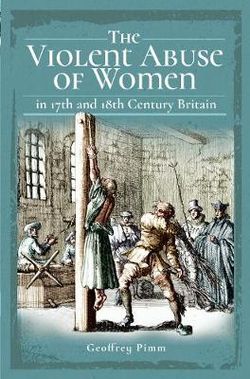
Review: The Violent Abuse of Women by Geoffrey Pimm

Synopsis: 
The Violent Abuse of Women in 17th and 18th Century Britain
The seventeenth and eighteenth centuries are the gateway between the medieval world and the modern, centuries when the western societies moved from an age governed principally by religion and superstition to an age directed principally by reason and understanding. Although the worlds of science and philosophy took giant strides away from the medieval view of the world, attitudes to women did not change from those that had pertained for centuries. 

These new and unprecedented liberties thus gained by women were perceived as a threat by the leaders of society, and thus arose an unlikely masculine alliance against the new feminine assertions, across all sections of society from Puritan preachers to court judges, from husbands to court rakes.

This reaction often found expression in the violent and brutal treatment of women who were seen to have stepped out of line, whether legally, socially or domestically. Often beaten and abused at home by husbands exercising their legal right, they were whipped, branded, exiled and burnt alive by the courts, from which their sex had no recourse to protection, justice or restitution. Many of the most brutal forms of punishment were reserved exclusively for women, and even where the same, they were more savagely applied than would be the case for similar crimes committed by men.


What Pimm's book has done is catalogue the judicial use of violence as a form of punishment for crimes - or even perceived crimes - by women over the period of the 17th and 18th centuries, with a focus on Britain (and its satellite colonies).

This isn't a faint-hearted read as the violence depicted is often brutal, and may seem to today's reader, disproportionate to the crimes for which is was being administered as a form of judicial punishment. This is even more obvious when comparing the punishments metered out towards males for the same crimes (reference treason and coining).

Women were still considered to be subjected to the rule of the men in their lives - fathers, male relatives, husbands, employers. The were often the subject of violence at the hands of those who were said to have their own interests - and safety - at heart (see chapters on domestic violence, sexual abuse, abduction and clandestine marriage). Any form of countenance was viewed as rebellion against the social order and was therefore to be dealt with in as harsh as possible way in order to set an example to those women who may also consider "stepping out of line" and showing some form of independence of thought and spirit.

Pimm's book is divided into many categories - some of which overlap - which deal with not only the types of punishments used, but the types of crimes these were applied to. These chapters are often peppered with a snippets from social and legal papers and journals, in addition to contemporary writers (including Pepys, Swift and Johnson) - all of whom seem to think that their actions towards women were justified and beyond reproach. 

Pepys writes in his diary for February 1621 " ... our little girl Susan is a most admirable slut and pleases us mightily ..." and, later in December 1664, after attending the home of friend wrote " ... I found occasion of sending him abroad, and then alone [with the man's wife] ... overcoming her resistance I did what I wanted to my contentment ..." after which he went home for his supper!

From a modern mind, I was startled by such callous and objectifying attitudes, even more so when realising that this was considered "normal". Even more disturbing was that many punishments were carried out in public with some observers gaining sexual gratification from such public displays of a woman's nakedness being exposed, especially to the whip, which lead to punishments being metered out in private - "..... it is a shameful indecency for a woman to expose her naked body to the sight of men and boys, as if it were designed rather to feat the eyes of the beholders that to correct vice ..." - really as if this were her choice!

Like today, the onus of proof of crime was often charged upon the female victim, who whether vindicated or not, was still the victim of judicial violence - usually the lash or the wipe as women were still blamed or were held accountable for being the cause of violence against them - "the sins of Eve" - that women were responsible for leading men astray; and as men were their betters, the punishment should be all the more harsh.

This is a fascinating read for the student of both social and legal history, though I won't whitewash the fact that our modern day sensibilities (such as they are) will not only be offended but challenged. Having said that, one wonders if we have advanced as far as we think - or would like to think - that we have with regards to attitudes towards women. Not the least bit thought provoking.

suggested further reading:

Monday, December 24, 2018

Review - Unquiet Women by Max Adams

Unquiet Women: From the Dusk of the Roman Empire to the Dawn of the Enlightenment
I read this one a couple of days before Pamela Toler's "Women Warriors" - and to be perfectly honest, I feel like cutting and pasting my review of that book here.

A " ... crafted patchwork of the forgotten lives of some of the most remarkable women in history ..." - only if this is not your area of interest. If it is, then this is merely a collection of things of interest to the author and organised in some sort of chapter according to their subject matter. To me personally, it reminded me of a blog that has been published as a book - some random biographies presented with archaeological discoveries and local histories to add some additional flavour.

Again, as with Toler's book, I have covered off over half of the content in my own blog and have read the very same biographies and internet articles (as I assume anyone with the remotest interest in this area would have also).

Quote: Unquiet Women brings to life the experiences of women whose voices are barely heard and whose stories are rarely told. - sorry, but the last have dozen years (if not last decade) has seen a considerable surge in this type of research, with numerous books, blogs, articles, etc, giving voice to any number of "invisible women" that you could practically trip over it with every corner turned.

Another no star rating here - I was rather bored, having a constant sense of deja vu the more I read.


Review: Women Warriors by Pamela D Toler

Women Warriors: An Unexpected History
The author states her intent is to bring women warriors out of the historical shadows; to consider the reasons that they have taken up arms and how those reasons related to their roles; and the consequences of their actions.

I am actually going to be very blunt here - this is very basic stuff that a good google search can produce. I myself have written about over half the women mentioned; have read the same books; have read the same internet articles. And if this is your area of interest, then you also have already - so nothing new, no "unexpected history". I could literally just publish my own blog - Women of History - as a book (which is what this looks like to me - at times I felt as if I was reading my own works).

There are lots of snappy titles - "father's daughter", "widows", queen" - you get the gist - but I felt it could have been better organised. Yes, there is a great spread of warrior women across time, but it is presented in a hodge-podge sort of way (under the snappy titles) rather than in chronological order. Had the author (editor, publisher) maybe presented the work in this way, we the reader may have been able to see more of a development in the ways women took to the battlefield. You don't unfortunately get this - just some randomly arranged biographies interspersed with some commentary and biographies that don't really seem to fit under any the chapter. We finish with a dozen or so references - six biographies - though the notes are a little more extensive.

No star rating from me - I surprised myself by even finishing it to be perfectly honest.

Please bear in mind that this is my review of the book and its presentation, not the author; I know how huffy people can get in defending their favourite authors.

I would be very interested in the thoughts of those for whom this area is something completely new.


Sunday, October 14, 2018

Women and the Book: A Symposium Preview


At the end of October, the University of London will host a one-day symposium called Women and the Book, noting that this year, the University of London celebrates the 150th anniversary of women’s first access to university education in Britain with the intake of eight women at Queen Mary College.

Therefore the symposium aims to explore the interaction of women and books in Britain from the Middle Ages to the present, from the time that the book left the printing house: as collectors, owners, readers, and mediators, whether curatorial (librarians) or literary (adapting and translating for new audiences).

The symposium will be held on October 26, from 9:30 am-6:45 pm, Court Room, First Floor, Senate House, University of London. And tickets can be booked online.

Saturday, May 19, 2018

Women, Crusading and the Holy Land in Historical Narrative

Narratives of crusading have often been overlooked as a source for the history of women because of their focus on martial events, and perceptions about women inhibiting the recruitment and progress of crusading armies. Yet women consistently appeared in the histories of crusade and settlement, performing a variety of roles. While some were vilified as "useless mouths" or prostitutes, others undertook menial tasks for the army, went on crusade with retinues of their own knights, and rose to political prominence in the Levant and and the West. 

This book compares perceptions of women from a wide range of historical narratives including those eyewitness accounts, lay histories and monastic chronicles that pertained to major crusade expeditions and the settler society in the Holy Land. It addresses how authors used events involving women and stereotypes based on gender, family role, and social status in writing their histories: how they blended historia and fabula, speculated on women's motivations, and occasionally granted them a literary voice in order to connect with their audience, impart moral advice, and justify the crusade ideal.


review @ University of Chicago Press
read more @ Boydell & Brewer
read more @ Wikipedia - Women in the Crusades