Showing posts with label crime and punishment. Show all posts

Thursday, January 1, 2026

Review: Louis Mie and the Trial of Hautefaye by LM Twist

Synopsis: In the birth of a new French Republic, a man must risk his honor, his marriage and even his life in a battle between his ideals and his ambition.

France, 1870. A frenzied mob brutally murders a man they believe to be a Prussian spy and a threat to the cult of Emperor Napoleon III. Louis Mie, a republican lawyer, finds himself entangled in a web of political intrigue and moral dilemmas when he is tasked with defending one of the murderers: a political show trial that could send his career to new heights.

But as Louis delves deeper into the high-profile case, he quickly realizes that defending the enigmatic Leonard Piarrouty is far more complex than he ever imagined. And now his entire life is about to fall apart as his obsession with his work takes his strained marriage to the brink of collapse.

In a gripping race against time, Louis must confront the blurred lines between justice, loyalty, and the pursuit of power, risking everything to unearth the truth: secrets that ruthless men will kill to protect.

~ ~ ~

The narrative alternates between the events that led to the trial (both the crime and the appointment of Louis Mie for the defence) and the actual "present day" of the trial and the outcome. The past narrative also includes details of Louis' life leading up to the trial.

The author notes that this is a "fictional account" of events, being a novel of speculation and interpretation, especially with regards to the main character - Louis Mie. This for me was a little disappointing, although I do understand that it is hard to surmise what an historical figure may be thinking or feeling - and without it, the main character may appear a little one dimensional.

The novel deals with the themes of mob violence, suspicion and paranoia, fear and panic in an enclosed community during the height of war; it details the violence and torture quite openly.

Myself, I would have preferred a more non-fictional account that than a fictional one; but kudos to the author for tackling such an obscure historical event, which is what drew me to this tome originally.

If you are after something different in the historical fiction genre - and are not particularly squeamish - then this might be a tome worth tackling.

Tuesday, October 28, 2025

Review: Frank's Bear Cave by Glenn Harvey

Synopsis:
The second decade of the 20th Century was a period of great transition, especially with the beginning of WWI in 1917. The war accelerated the industrial revolution and took an estimated forty million lives. The 1918 Spanish Flu pandemic decreased the world population by upwards of another fifty million.

The United States probably experienced more changes during that brief era than in any period since. The Nineteenth Amendment gave women the right to vote and serve on juries. Prohibition gave rise to the moonshine industry and associated gang activity. Automobiles were coming onto the scene. Yet, farmers and timbermen were using centuries-old horse-drawn technology. There was increasing demand for farm produce by the expanding population of mill workers who kept the factories humming. Likewise, the virgin forests of the northeastern U.S. were providing the lumber needed for new homes in the cities and mill towns.

People coped with the 1918 influenza pandemic and industrial accidents without health insurance or welfare assistance outside their family, friends, churches, and local social institutions. The introductory chapters provide the early 1900s, rural setting, through the experiences of one family. As all of the individuals cited are deceased, this content is based on both written and verbal memories passed down through the family, verified to the extent possible by public records. The complete 1921-22, "Trial Book" of over 1000 pages, tells the story of the murder trial.

At 1:00 am, April 3, 1921, an intruder in Frank Harvey’s Butler County, Pennsylvania, farmhouse opened a life-changing chapter in his life. The murder he witnessed led to a sensational trial, “The Commonwealth vs. Henry A. Blakeley." The resultant testimony, motions, and appeals dominated local news from April 1921 through Blakeley’s execution in October 1922.

The murder trial is told verbatim through selections from the original typewritten trial manuscript. More than seventy witnesses from many walks of life provide us with vivid images of the day and times through their unredacted words, slang, and local expressions. Witnesses for the prosecution left little doubt that the defendant was profane, mean-spirited, mentally unstable, and guilty of murder.

A verdict of first-degree murder was an automatic death sentence in Pennsylvania in 1921. Thus, the defendant’s attorneys pulled out all stops trying to convince the jury and the Pennsylvania Supreme Court that the murder was not first-degree. They failed, as the Supreme Court upheld the lower court's sentence. Nonetheless, the wide range of defense witnesses provided fascinating testimony. The defendant’s attorneys called more than forty witnesses, including the defendant’s children, local drunks, and distinguished physicians, to prove the witness was acting in self-defense or was unaware of his actions due to intoxication, insanity, or being in an epileptic coma.

In the end, his body was unclaimed by the family and Henry Blakeley was interned in the prison cemetery. He left behind photographs that he had taken for his friends and a final letter that prison officials refused to release due to its extremely vile language.

~ ~ ~

Begin with the family and local history leading up to the fateful events, which are interspersed with occasional fictional chapters to give colour to events are recollected by family members.

With regards to the criminal trial, Harvey states that he has presented the testimony in a different order than the actual trial: 


Harvey presents the details of the trial through the reproduction of the original transcripts which literally encompasses nearly seventy-five percent of the tome. We finish with the accused's execution and a footnote on Blakeley's final, vile missive, wherein "... he vulgarly assails those who had anything to do with the trial ..."

Harvey finishes with a comparison of times then and now and laments that things really have not changed.

A great source for local historians who get a very of life in early 20th century Pennsylvania, as well as the court proceedings in a capital trial.  Definitely one for true crime aficionados.


Saturday, July 1, 2023

Review: The Girls Who Fought Crime by Maj. Gen Mari K Eder

Synopsis: Mary "Mae" Foley was a force to be reckoned with. On one hip she held her makeup compact, on the other, her NYPD badge. When women were fighting for the vote, Mae was fighting crime in the heart of New York City - taking down rapists, boot-leggers, Nazis, and serial killers. One of the first women to be sworn into the police force, Mae not only fought crime in the city that never sleeps, but also did something much bigger - challenged the patriarchal systems that continually tried to shut her and other women down. The result of her efforts? A long career that helped over 2,000 women join her auxiliary police force, the 'Masher Squad.' Mae Foley is proof that women can do anything men can do, all while wearing corsets and the perfect shade of rouge.

~ ~ ~

Unfortunately, this failed to hit the mark for me.

Whilst to narrative had more of a conversational flow, which was easy enough to follow, it lacked specific details, which were probably not readily available. In fact, author Eder alerts the reader to this from the very start. Based upon that fact alone, Eder might have done better to focus on the "girls" of the title and include more on those she has mentioned the text, using Foley and key points in Foley's life with which to anchor the narrative.


Further reading: 
Annual Report. New York Police Department. 1918. p. 85.
More publication can be found at the same website by New York (N.Y.). Police Department.

Friday, April 2, 2021

Review: The Real Sherlock Holmes by Angela Buckley

Sysnopsis: On 6 December 1886, Arthur Foster leaves the Queen’s Theatre, Manchester with a pocket full of gold and a lady bedecked with diamonds on his arm. He hails a hansom cab unaware that a detective has been trailing him as he crisscrossed the city. As the cab pulls away, the detective slips inside and arrests the infamous ‘Birmingham Forger’. The detective is Jerome Caminada, legendary policeman and a true Victorian super-sleuth.

Known as a ‘terror to evil-doers’, Caminada is at the top of his game as he stalks nefarious criminals through the seedy streets of Manchesters underworld. Born in the slums, he has an intimate knowledge of the labyrinth of dark alleyways and the shady characters that inhabit them. Caminada’s compelling story bears all the hallmarks of Arthur Conan Doyle and establishes this indefatigable investigator as one of the most formidable detectives of the 19th century and a real-life Sherlock Holmes.


Caminada - a man's whose career rivaled and paralleled that of London's Inspector Frederick Abberline. Both men came from humble beginnings, went into a trade before entering the Police Force; both were skilled and rose through the ranks; both become private detectives after leaving the force; and both would be remembered for their most famous of cases.

Buckley provides us with a series of vignettes that introduce us to this remarkable man, his methods, his crimes (ie: the one he solved), and his life.  Caminada truly was unique among his peers and possibly, even among investigators regardless of the time period in which they worked.  Reading some of these cases, you would be inclined to think that Caminada himself was a fictional character due to his highly successful methods of crime-fighting and policing.  It is a testament to this man that we are still amazed today at his level of cunning, doggedness, and dedication to his career.  


I found this to be a most interesting read - and whether he truly was the inspiration for Conan Doyle's "Sherlock Holmes", there is no doubting the man's obvious (subconscious) influence.


See also: 

Tuesday, October 20, 2020

Review: Murder During The Hundred Years War by Melissa Julian-Jones

Murder During the Hundred Year War: The Curious Case of Sir William Cantilupe

Synopsis: In 1375, Sir William Cantilupe was found murdered in a field outside of a village in Lincolnshire. As the case progressed, fifteen members of his household were indicted for murder, and his armor-bearer and butler were convicted. Through the lens of this murder and its context, this book will explore violence, social norms and deviance, and crime and punishment 'at home' during the Hundred Years War.

The case of William Cantilupe has been of interest to historians for many years, ever since Rosamund Sillem brought it to light in her work on the Lincolnshire Peace Rolls in the 1930s, but this is the first time it has received a book-length treatment, taking relationships between the lords and their servants into account. The verdict - guilty of petty treason - makes this one of the first cases where such a verdict was given, and this reveals the deep insecurities of England at this time, where the violent rebellion of servants against their masters (and wives against their husbands) was a serious concern, enough to warrant death by hanging (for men) and death by burning (for women). The reader is invited to consider the historical interpretations of the evidence, as the motives for the murder were never recorded. The relationships between Sir William and his householders, and indeed with his own wife and, and whether the jury were right to convict him and his alleged accomplice in the first place.


This is a fascinating look at a controversial murder that took place in the period known as The Hundred Years War.

Sir William de Cantilupe, a nobleman with a lineage dating back to the Conquest, was murdered, his body left in a ditch. His entire household, including his wife, was suspect; however, both at the time and today, there are difficulties in piecing together events and provide a suitable outcome.

The investigation of crime in the 14th century was much different that today. Finding a body, Julian-Jones says, was a series matter for the village, who were considered to be collectively responsible for it and could be fined if it was found that they had concealed this fact from the authorities, who in essence were the local Sheriff and the Coroner. The role of Sheriff and Coroner were separate; the coroner represented the Crown's financial interests in court cases, and neither role technically sat in judgement - for "holding the pleas" was the jurisdiction of judges. However, the coroner - with or without a jury - could hold an inquest - an investigation to hear evidence from live witnesses who attend at court and also may be read witness statements from witnesses who are not present. Records of the crime, the victim and accused, and the verdict were documented - witness testimony was not.

In this instance, there were no surviving records of the trials of the various suspects and it is here that Julian-Jones brings to light similar criminal cases to illustrate each point she raises, whilst giving the reader a sense of proceedings. 

Medieval justice and criminal investigations is nothing like what we are used to today - social connections, social and financial position, and a person or family's good name counted for much. It is likely that juries were pulled firstly from the local gentry and then those on the next social rung under them. Thus, many of those being accused would be known - and human nature being what it is, it is hardly surprising that a person's social standing or reputation put them in a better light than some unknown person or itinerant traveller. It could also work in the reverse where one of suspect character would automatically be cast as the villain. Julian-Jones talks about "social cohesion and closing ranks" with the greater community lending its support to those within their own community.

But the question still remains - "cui bono" - who benefits? And that is possibly something that we will never really know for sure.


Using contemporary documents and accounts and past scholarship, Melissa Julian-Jones presents the reader with various hypotheses, whilst examining in detail both the members of the household (including the wife) and the extended family connections "... to consider likely scenarios ..". As such, it is necessary to gather as much background information as possible to contextualise possible narratives. In this day and age, family and familial connections were very important and it is necessary to delve into the background of all associated with this case in order to eliminate possible suspects and motives.

This is an excellent and well researched investigation of a cold case. Those with an interest in the medieval period and obscure criminal cases will enjoy this very much. 


read more here: 
Going Medieval with Melissa Julian-Jones

Tuesday, August 4, 2020

Review: Dark Archives by Megan Rosenbloom

Dark Archives: A Librarian's Investigation into the Science and History of Books Bound in Human SkinSynopsis: On bookshelves around the world, surrounded by ordinary books bound in paper and leather, rest other volumes of a distinctly strange and grisly sort: those bound in human skin. Would you know one if you held it in your hand?

In Dark Archives, Megan Rosenbloom seeks out the historic and scientific truths behind anthropodermic bibliopegy—the practice of binding books in this most intimate covering. Dozens of such books live on in the world’s most famous libraries and museums. Dark Archives exhumes their origins and brings to life the doctors, murderers, innocents, and indigents whose lives are sewn together in this disquieting collection. Along the way, Rosenbloom tells the story of how her team of scientists, curators, and librarians test rumored anthropodermic books, untangling the myths around their creation and reckoning with the ethics of their custodianship.

A librarian and journalist, Rosenbloom is a member of The Order of the Good Death and a cofounder of their Death Salon, a community that encourages conversations, scholarship, and art about mortality and mourning. In Dark Archives—captivating and macabre in all the right ways—she has crafted a narrative that is equal parts detective work, academic intrigue, history, and medical curiosity: a book as rare and thrilling as its subject.


For those with a macabre interest in death and dissection, this will provide you with a suitable overview. For those, like myself, who were wanting a bit more, then you will go away slightly less fulfilled.

My interest in anthropodermic bibliopegy dates, back to 2011, I was looking into a series of sensational murder cases dating back to the 1800s and what was the ultimate fate of those arrested. My interest was so sparked that I was compelled to write a blog post on it entitled Cadaver Books which touched on a number of books created from those executed. 

My little blog post was by no means in in-depth study which led me to request a copy of Dark Archives as a means to further enhance my knowledge on those books not created from criminals executed where " ... a dead person's skin had become a byproduct of the dissection process ... ' - dissection being a part of the sentence and a form of public humiliation (a fate intended to deter criminal activity). 

To be honest, I personally, was left a little flat. Whilst I appreciated that the author traveled throughout the USA to the libraries and universities that held these treasures, I was looking for a more broader study. The majority of tomes covered are American based, with some case studies are from the UK (ie: Burke & Hare, Red Barn Mystery) and France. 

" ... each old book is like a mystery quietly awaiting its detective ... "

I also appreciated the author's intent on seeking out those said to be cadaver books and having them tested, which often put paid to their origins when results came back in the negative. 

bookinskinAs I mentioned, those with a passing interest will find this a fascinating book which often looks at the mythology behind the antecedents of each tome; age-old myths surrounding the production of such tomes during both the French Revolution and Nazi Germany are debunked; and the science and methodology behind the production is discussed. Unfortunately I found more than one chapter waffling on before finally getting to the point in the last few paragraphs which resulted in my interest waning.

The author finishes on the matter of skin art and choice wherein today's generation with their beautifully crafted tattoos are looking at a means of preserving these post mortem, and also the current regulation surrounding the possession and display of human remains, and usage of donation to medical science. At the end there is a list of where 17 confirmed books are located.

This is a short book - barely 180 pages, with the rest made up of extensive notes. An entry level read into the subject of anthropodermic bibliopegy.


Sunday, June 28, 2020

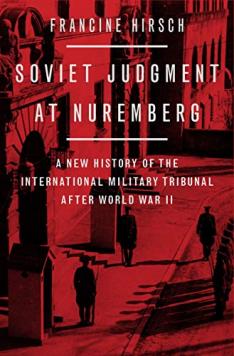
Francine Hirsch - Soviet Contributions in Nuremberg Trials

For years, accounts of the Nuremberg Trials have relied on an America-centric view and have ignored the ways the Soviet Union helped create it. Francine Hirsch produces the first in-depth history of the trials with a sharp eye on the Soviet Union’s forgotten contributions.

Soviet Judgment at Nuremberg: A New History of the International Military Tribunal after World War II (Oxford University Press) includes research from previously unavailable sources to take a new look at Nuremberg. Hirsch offers a fuller picture of the ways politics and international law intertwine, and suggests that Soviet conceptions of postwar justice and war as seen at Nuremberg have found a permanent place in international law.

read more here @ Princeton Alumni Weekly

Saturday, May 16, 2020

Review: Scotland Yard's Murder Squad by Dick Kirby

Scotland Yard's Murder SquadSynopsis: In 1906 the Metropolitan Police Commissioner was asked by the Home Office to make available skilled investigators for murder enquiries nationwide as few constabularies had sufficiently skilled - or indeed, any - detectives.

Thus was born the Reserve Squad, or Murder Squad, as it later became known. Despite a reluctance by some forces to call upon The Met, the Murder Squad has proved its effectiveness on countless occasions with its remit extended to British territories overseas. A particularly sensitive case was the murder of a local superintendent on St Kitts and Nevis.

A former Scotland Yard detective, the Author uses his contacts and experiences to get the inside track on a gruesome collection of infamous cases. Child murderers, a Peer's butler, a King's housekeeper, gangsters, jealous spouses and the notorious mass murderer Dr Bodkin Adams compete for space in this spine-chilling and gripping book which is testament to the Murder Squad's skills and ingenuity - and the evil of the perpetrators.

Brimming with gruesome killings, this highly readable book proves that there is no substitute for old fashioned footwork and instinct.


Kirby - through his vast experience and network of contacts from his Flying Squad days - is able to present an eclectic range of cases from the annals of Scotland Yard. After presenting us with a brief history, representing a nostalgic view of bygone times, we are launched into our first case, taking place at the turn of the 20th century. 

As with many of the earlier cases, forensics was in its infancy, and detectives were still expected to put in the hard slog and discover or reveal the evidence for themselves. Fingerprinting was in use as was the traditional "line up", but it was the sharp-eye witness and the sifting through the circumstantial evidence that aided in a conviction. Only one case presented featured the "court room confession" and a number of cases are still unsolved; and not all our suspects paid the ultimate price. We meet along the way a mixed bag of detectives - a "suspicion" of detectives if you like - and I enjoyed the "what happened to ..." at the end.

For those interested in true crime and / or police methods, this will prove an enjoyable read.

Friday, September 27, 2019

The Murder of William of Norwich by E.M Rose

In 1144, the mutilated body of William of Norwich, a young apprentice leatherworker, was found abandoned outside the city's walls. The boy bore disturbing signs of torture, and a story soon spread that it was a ritual murder, performed by Jews in imitation of the Crucifixion as a mockery of Christianity. The outline of William's tale swiftly gained currency far beyond Norwich, and the idea that Jews engaged in ritual murder became firmly rooted in the European imagination.


Cover for 

The Murder of William of Norwich


E.M Rose's engaging book delves into the story of William's murder and the notorious trial that followed to uncover the origin of the ritual murder accusation—known as the "blood libel"—in western Europe in the Middle Ages. Focusing on the specific historical context-the 12th—century reform of the Church, the position of Jews in England, and the Second Crusade—and suspensefully unraveling the facts of the case, Rose makes a powerful argument for why the Norwich Jews (and particularly one Jewish banker) were accused of killing the youth, and how the malevolent blood libel accusation managed to take hold. She also considers four "copycat" cases, in which Jews were similarly blamed for the death of young Christians, and traces the adaptations of the story over time.

In the centuries after its appearance, the ritual murder accusation provoked instances of torture, death and expulsion of thousands of Jews and the extermination of hundreds of communities. Although no charge of ritual murder has withstood historical scrutiny, the concept of the blood libel is so emotionally charged and deeply rooted in cultural memory that it endures even today. Rose's groundbreaking work, driven by fascinating characters, a gripping narrative, and impressive scholarship, provides clear answers as to why the blood libel emerged when it did and how it was able to gain such widespread acceptance, laying the foundations for enduring anti-Semitic myths that continue to the present.

Sunday, September 8, 2019

Books: Irish - Australian History

Some titles from The History Press focusing on the transportation of the Irish to Australia in the 18th & 19th Centuries.


Mutiny or Murder?: The Bloodsoaked Voyage of the Chapman Convict Ship by Conor Reidy
On 15 March 1817 the convict ship the Chapman departed from Cork with 200 male prisoners on board. When it dropped anchor off Sydney Cove four months later, its prison doors opened to reveal 160 gaunt and brutalised men. Twelve were dead and twenty-eight lay wounded in the hospital below deck.
As officials pieced together the horrors of the voyage many questions arose. Why did Michael Collins claim that his fellow convicts conspired to take the ship? Why was Captain Drake unable to rein in the violent and sadistic Third Mate Baxter? Was there really an attempted mutiny on the Chapman? Or was this cold-blooded murder?

Using daily journals from the crew, detailed testimony from several convicts and official colonial government correspondence, this book unravels what happened during those four months at sea. Tarnished by intrigue, suspicion and mutual hatred, this is the story of one of the darkest episodes in the history of penal transportation between Ireland and Australia.


Van Diemen's Women: A History Of Transportation To Tasmania by Joan Kavanagh & Dianne Snowden 
On 2 September 1845, the convict ship Tasmania left Kingstown Harbour for Van Diemen’s Land with 138 female convicts and their 35 children. On 3 December, the ship arrived into Hobart Town. While this book looks at the lives of all the women aboard, it focuses on two women in particular: Eliza Davis, who was transported from Wicklow Gaol for life for infanticide, having had her sentence commuted from death, and Margaret Butler, sentenced to seven years’ transportation for stealing potatoes in Carlow.

Using original records, this study reveals the reality of transportation, together with the legacy left by these women in Tasmania and beyond, and shows that perhaps, for some, this Draconian punishment was, in fact, a life-saving measure.


Undaunted by John Wright
Undaunted is a collection of true stories about Irish men and women who travelled to Australia in search of a better life and battled against the odds in a remote and harsh world. From 1788 when the first convict ships landed to the mid-20th century, these true stories about settlers, convicts and their descendants highlight the best and worst of human behaviour in the kinds of dilemma that faced newcomers. This book tells the story of the Irish contribution to this struggle.

Tuesday, August 27, 2019

The Astronomer and the Witch by Ulinka Rublack

Johannes Kepler (1571-1630) was one of the most admired astronomers who ever lived and a key figure in the scientific revolution. A defender of Copernicus´s sun-centred universe, he famously discovered that planets move in ellipses, and defined the three laws of planetary motion. Perhaps less well known is that in 1615, when Kepler was at the height of his career, his widowed mother Katharina was accused of witchcraft. The proceedings led to a criminal trial that lasted six years, with Kepler conducting his mother's defence. 


In The Astronomer and the Witch, Ulinka Rublack pieces together the tale of this extraordinary episode in Kepler's life, one which takes us to the heart of his changing world. First and foremost an intense family drama, the story brings to life the world of a small Lutheran community in the centre of Europe at a time of deep religious and political turmoil - a century after the Reformation, and on the threshold of the Thirty Years' War. 

Kepler's defence of his mother also offers us a fascinating glimpse into the great astronomer's world view, on the cusp between Reformation and scientific revolution. While advancing rational explanations for the phenomena which his mother's accusers attributed to witchcraft, Kepler nevertheless did not call into question the existence of magic and witches. On the contrary, he clearly believed in them. And, as the story unfolds, it appears that there were moments when even Katharina's children struggled to understand what their mother had done...


Saturday, August 24, 2019

Review: Misjudged Murderesses by Stephen Jakobi

Abridged Synopsis: Fuelled by a rumour-driven press and cases of notorious killers, death by poisoning was a great anxiety of Victorian Britain. In Misjudged Murderesses, Stephen Jakobi takes a forensic approach to examine the lives and trials of these eight women who were wrongly convicted and sentenced to death. Highlighting common factors in poisoning cases that led to these miscarriages of justice, Stephen Jakobi shines a light on the hypocrisy of a legal system that in practice was wholly unfit for purpose.


The author has focused on eight women from 1840s to the 1880s, who were accused and convicted of murder by poison and ultimately received the death penalty. In examining these cases, Jakobi (lawyer and advocate against capital punishment) seeks to outline a case for wrongful conviction for each. By using court testimonies and newspaper articles Jakobi attempts to show that there was some potential bias towards guilt throughout the court process, which at this period of time, was exclusively male dominated.

What should have read as a case study of each of the trials, testimonies of witnesses and forensic evidence, came across as a mish-mash of ideas that chopped and changed with each case study. Having just finished Geoffrey Pimm's "Violent Abuse Of Women", I was looking forward to this - and I really did want to like it.  However, I progressed (slowly) page by page, chapter by chapter, I was just not sure that what I was reading was relevant or not, solely background information, or just page-fillers; I found it annoying that each of the cases was not set out / presented in the same manner, thus ensuring continuity. As a result, my interest waivered and I put the book aside more times than I picked it up. I did persevere and finish it.

What I personally would have preferred and what I feel, as a reader, would have been more engaging, is a study of miscarriages of justice where poison featured, and using the examples of not only the women presented herein but also others to highlight these misnomers and inconsistencies in the court proceedings, whilst providing an analysis of guilt or innocence.

Having said that, I did enjoy reading the cases; and in fact I really enjoyed Chapter 12 - the conclusions; I just felt that whilst the premise was intriguing - it was just the execution that was lacking and detracted from what should have made for a highly readable history and study of the court system as it was applied in these examples. I just felt the book could have been set out and formatted a little better, and the cases as presented used to support the author's stance.

Sunday, July 21, 2019

Law and Order in Anglo-Saxon England - Tom Lambert


Law and Order in Anglo-Saxon England explores English legal culture and practice across the Anglo-Saxon period, beginning with the essentially pre-Christian laws enshrined in writing by King AEthelberht of Kent in c. 600 and working forward to the Norman Conquest of 1066. It attempts to escape the traditional retrospective assumptions of legal history, focused on the late twelfth-century Common Law, and to establish a new interpretative framework for the subject, more sensitive to contemporary cultural assumptions and practical realities.

The focus of the volume is on the maintenance of order: what constituted good order; what forms of wrongdoing were threatening to it; what roles kings, lords, communities, and individuals were expected to play in maintaining it; and how that worked in practice. Its core argument is that the Anglo-Saxons had a coherent, stable, and enduring legal order that lacks modern analogies: it was neither state-like nor stateless, and needs to be understood on its own terms rather than as a variant or hybrid of these models. 

Tom Lambert elucidates a distinctively early medieval understanding of the tension between the interests of individuals and communities, and a vision of how that tension ought to be managed that, strikingly, treats strongly libertarian and communitarian features as complementary. Potentially violent, honour-focused feuding was an integral aspect of legitimate legal practice throughout the period, but so too was fearsome punishment for forms of wrongdoing judged socially threatening. 


Law and Order in Anglo-Saxon England charts the development of kings' involvement in law, in terms both of their authority to legislate and their ability to influence local practice, presenting a picture of increasingly ambitious and effective royal legal innovation that relied more on the cooperation of local communal assemblies than kings' sparse and patchy network of administrative officials.

Saturday, July 6, 2019

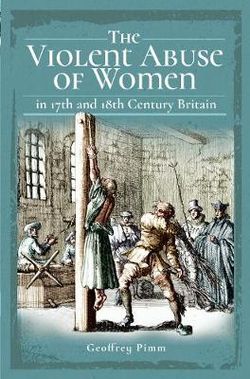
Review: The Violent Abuse of Women by Geoffrey Pimm

Synopsis: 
The Violent Abuse of Women in 17th and 18th Century Britain
The seventeenth and eighteenth centuries are the gateway between the medieval world and the modern, centuries when the western societies moved from an age governed principally by religion and superstition to an age directed principally by reason and understanding. Although the worlds of science and philosophy took giant strides away from the medieval view of the world, attitudes to women did not change from those that had pertained for centuries. 

These new and unprecedented liberties thus gained by women were perceived as a threat by the leaders of society, and thus arose an unlikely masculine alliance against the new feminine assertions, across all sections of society from Puritan preachers to court judges, from husbands to court rakes.

This reaction often found expression in the violent and brutal treatment of women who were seen to have stepped out of line, whether legally, socially or domestically. Often beaten and abused at home by husbands exercising their legal right, they were whipped, branded, exiled and burnt alive by the courts, from which their sex had no recourse to protection, justice or restitution. Many of the most brutal forms of punishment were reserved exclusively for women, and even where the same, they were more savagely applied than would be the case for similar crimes committed by men.


What Pimm's book has done is catalogue the judicial use of violence as a form of punishment for crimes - or even perceived crimes - by women over the period of the 17th and 18th centuries, with a focus on Britain (and its satellite colonies).

This isn't a faint-hearted read as the violence depicted is often brutal, and may seem to today's reader, disproportionate to the crimes for which is was being administered as a form of judicial punishment. This is even more obvious when comparing the punishments metered out towards males for the same crimes (reference treason and coining).

Women were still considered to be subjected to the rule of the men in their lives - fathers, male relatives, husbands, employers. The were often the subject of violence at the hands of those who were said to have their own interests - and safety - at heart (see chapters on domestic violence, sexual abuse, abduction and clandestine marriage). Any form of countenance was viewed as rebellion against the social order and was therefore to be dealt with in as harsh as possible way in order to set an example to those women who may also consider "stepping out of line" and showing some form of independence of thought and spirit.

Pimm's book is divided into many categories - some of which overlap - which deal with not only the types of punishments used, but the types of crimes these were applied to. These chapters are often peppered with a snippets from social and legal papers and journals, in addition to contemporary writers (including Pepys, Swift and Johnson) - all of whom seem to think that their actions towards women were justified and beyond reproach. 

Pepys writes in his diary for February 1621 " ... our little girl Susan is a most admirable slut and pleases us mightily ..." and, later in December 1664, after attending the home of friend wrote " ... I found occasion of sending him abroad, and then alone [with the man's wife] ... overcoming her resistance I did what I wanted to my contentment ..." after which he went home for his supper!

From a modern mind, I was startled by such callous and objectifying attitudes, even more so when realising that this was considered "normal". Even more disturbing was that many punishments were carried out in public with some observers gaining sexual gratification from such public displays of a woman's nakedness being exposed, especially to the whip, which lead to punishments being metered out in private - "..... it is a shameful indecency for a woman to expose her naked body to the sight of men and boys, as if it were designed rather to feat the eyes of the beholders that to correct vice ..." - really as if this were her choice!

Like today, the onus of proof of crime was often charged upon the female victim, who whether vindicated or not, was still the victim of judicial violence - usually the lash or the wipe as women were still blamed or were held accountable for being the cause of violence against them - "the sins of Eve" - that women were responsible for leading men astray; and as men were their betters, the punishment should be all the more harsh.

This is a fascinating read for the student of both social and legal history, though I won't whitewash the fact that our modern day sensibilities (such as they are) will not only be offended but challenged. Having said that, one wonders if we have advanced as far as we think - or would like to think - that we have with regards to attitudes towards women. Not the least bit thought provoking.

suggested further reading:

Monday, June 10, 2019

Family Secrets: The Scandalous History of an Extraordinary Family by Derek Malcolm

‘Some people’s secrets should never be told. The secret, though, that surrounded my parents’ unhappy life together, was divulged to me by accident . . .’


Family Secrets: The scandalous history of an extraordinary family by [Malcolm, Derek]Hidden under some papers in his father’s bureau, the sixteen-year-old Derek Malcolm finds a book by the famous criminologist Edgar Lustgarten called The Judges and the Damned. Browsing through the Contents pages Derek reads, ‘Mr Justice McCardie tries Lieutenant Malcolm – page 33.’ But there is no page 33. The whole chapter has been ripped out of the book. 

Slowly but surely, the shocking truth emerges: that Derek’s father, shot his wife’s lover and was acquitted at a famous trial at the Old Bailey.  The victim was the self-titled Count de Borch, Count de Borch, aka Anton Baumberg, a dubious character, womaniser and possibly a white slaver and spy for the Germans, who had seduced the lieutenant's wife, Dorothy.

The trial was unique in British legal history as the first case of a crime passione, where a guilty man is set free, on the grounds of self-defence. Husband and wife lived together unhappily ever after, raising Derek in their wake. 

Then, in a dramatic twist, following his father’s death, Derek receives an open postcard from his Aunt Phyllis, informing him that his real father is the Italian Ambassador to London . . . 

By turns laconic and affectionate, Derek Malcolm has written a richly evocative memoir of a family sinking into hopeless disrepair.


From The Church Times 15th September 1917
[The trial that followed the shooting in his Paddington lodgings of the self-styled Count de Borch, Anton Baumberg, by an army officer home from the Front, had provided a distraction from the war news. Was it, some were asking, a case of a husband’s right to avenge his wife’s honour?]
THE trial of Lieutenant [Douglas] Malcolm on the charge of murder let loose a flood of talk about what is known in some other countries as the “unwritten law”. Counsel for the prosecution emphatically affirmed that no such thing is known in the English Courts. If a person’s death is compassed with intention to kill, the slayer is a murderer, and counsel for the defence abstained from resting his case on the plea of the “unwritten law”. He argued that the prisoner, when he shot Baumberg, was acting in self-defence, and the jury accepted this theory, with the result that Lieut. Malcolm was acquitted. It was certainly better so: the law was not strained. This deplorable case raises the question why such people as Baumberg are allowed to be at large. He was known to the police as an undesirable alien, preying on weak women, keeping company with spies, and supporting himself by other infamous practices. He ought long ago to have been placed out of mischief, either by deportation or by internment. His removal through death rids us only of one among many of his sort. Possibly the fact that public attention has been drawn to the existence of this type of persons in our midst may induce the authorities to deal with them effectively.

The Thieves Opera by Lucy Moore

The Thieves' Opera: The Remarkable Lives and Deaths of Jonathan Wild, Thief-taker and Jack Sheppard, House-breaker by [Moore, Lucy]Jonathan Wild and Jack Sheppard were criminals as famous in their time as Dick Turpin.


They thrived in the criminal underworld of the eighteenth century.

From Gay’s ‘Beggars’ Opera’ and Hogarth’s ‘Industry and Idleness’ to the 1969 film ‘Where’s Jack’ the exploits of Jack Sheppard, burglar and escapologist extraordinaire, and Jonathan Wild, a gang boss who for twelve years convinced the Establishment of his probity, have lived in song, drama and story for almost three centuries.

Now Lucy Moore takes us deep into their world — the gaudy, bawdy, rowdy and dangerous London underworld of the early eighteenth century — and shows how in that violent yet oddly intimate society two very different criminals, who brought about each other’s downfall, could in the process achieve immortality in the popular imagination.


Saturday, April 13, 2019

Scotland Yard Casebook by Joan Lock

Scotland Yard Casebook by [Lock, Joan]In 1878 the Criminal Investigation Department replaced Scotland Yard's corrupt and discredited Detective Branch.


In this classic story of the early days of detection, Joan Lock tells the fascinating story of the creation of the CID, the scandal which preceded it, and the successes and failures of the new organization, including early cases such as the four murders by Ernest Southey, the ferocious outbreak of dockland killings in 1869 and the more familiar Bravo, Neill Cream and Jack the Ripper crimes.

She describes Scotland Yard's gradual, if sometimes tardy, acceptance of identification and communication aids such as photography, the telegraph, telephone, Bertillon's anthropometric measurements and the fingerprint system.

First World War spy and Dear John jealousy murders were followed by Roaring Twenties' swindles and the arrival of motor car bandits — which in turn led to the formation of the Flying Squad and the adoption of mobile wireless telegraphy. 

The introduction of women detectives is also discussed and the difficulties they experienced in establishing their place in a male dominated force.

Joan Lock closes the gap between the academic police historian and the writer of popular true crime, making this book a fascinating read for crime experts and the general reader alike.